
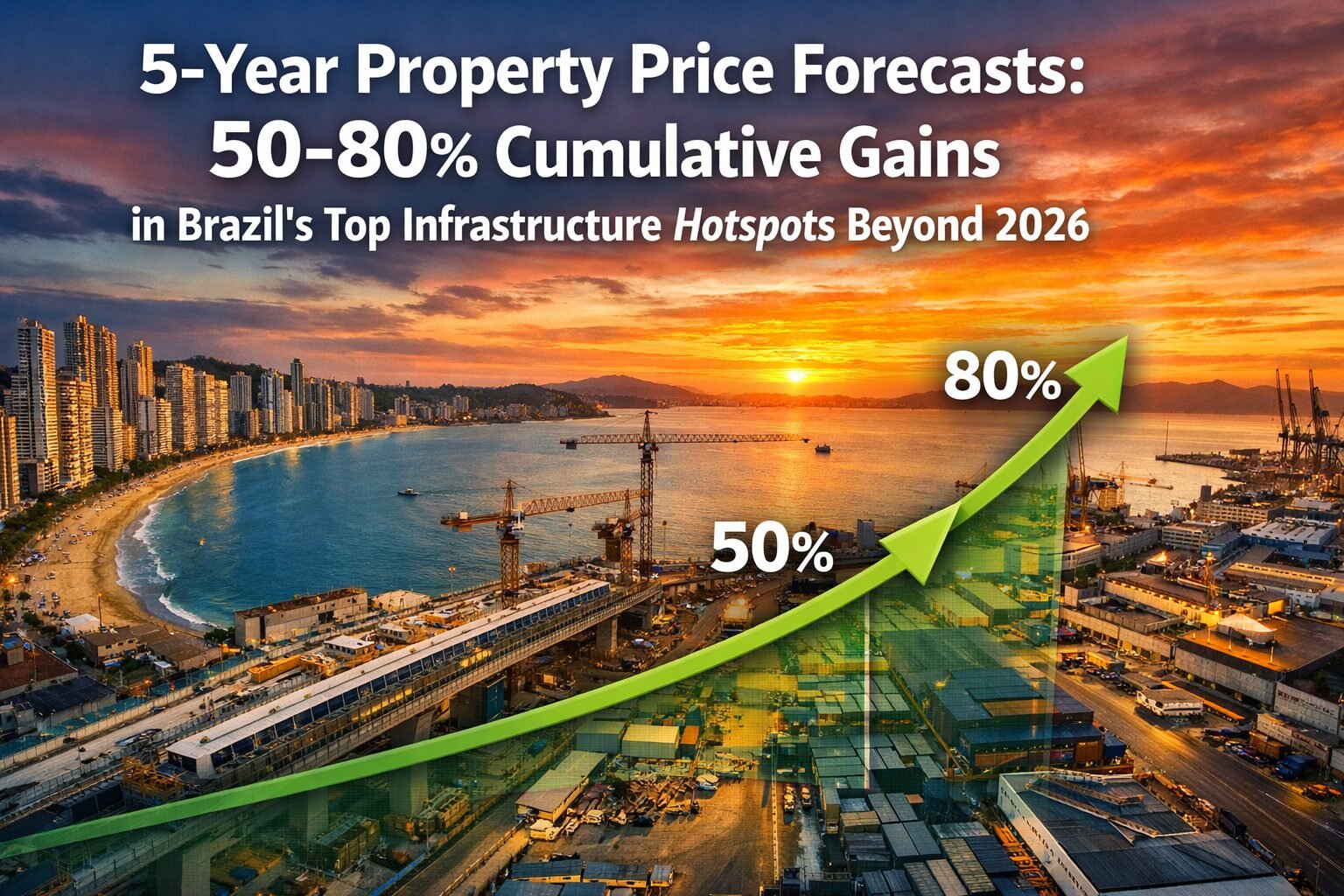
Brazil’s real estate market stands at the threshold of a transformative period. As 2026 unfolds, infrastructure megaprojects are reshaping entire metropolitan regions, creating unprecedented opportunities for property investors. The 5-Year Property Price Forecasts: 50-80% Cumulative Gains in Brazil’s Top Infrastructure Hotspots Beyond 2026 reveal a compelling narrative: strategic infrastructure investments—including Metro Line 6 expansions, the ambitious Novo PAC (Growth Acceleration Program), and comprehensive port modernization initiatives—are poised to deliver exceptional returns in carefully selected markets.
While traditional powerhouses like São Paulo and Rio de Janeiro continue their steady growth trajectories, secondary cities and coastal development zones are emerging as the true stars of Brazil’s property appreciation story. These infrastructure hotspots are experiencing demand surges that existing supply simply cannot match, creating the perfect conditions for substantial price appreciation through 2031.
Key Takeaways
- Cumulative nominal price growth of 50-80% is projected for Brazil’s top infrastructure hotspots between 2026 and 2031, with conservative estimates at 30-50% and optimistic scenarios exceeding these ranges[2]
- Secondary cities are outperforming major metros, with Salvador and João Pessoa registering price increases above 20%, significantly surpassing São Paulo and Rio de Janeiro[2]
- Small apartments and studios are delivering superior returns, with appreciation rates approaching 9% annually compared to larger properties, driven by affordability constraints and demographic shifts[2]
- Infrastructure megaprojects including Metro Line 6, Novo PAC, and port renewals are catalyzing development in previously overlooked regions, creating new property appreciation corridors
- Declining interest rates (Selic expected to drop from 15% to 12.25% by end of 2026) combined with government housing programs will expand the buyer pool and sustain price momentum[2]
Understanding Brazil’s Property Market Trajectory Through 2031
The Macro Picture: Market Valuation and Growth Fundamentals
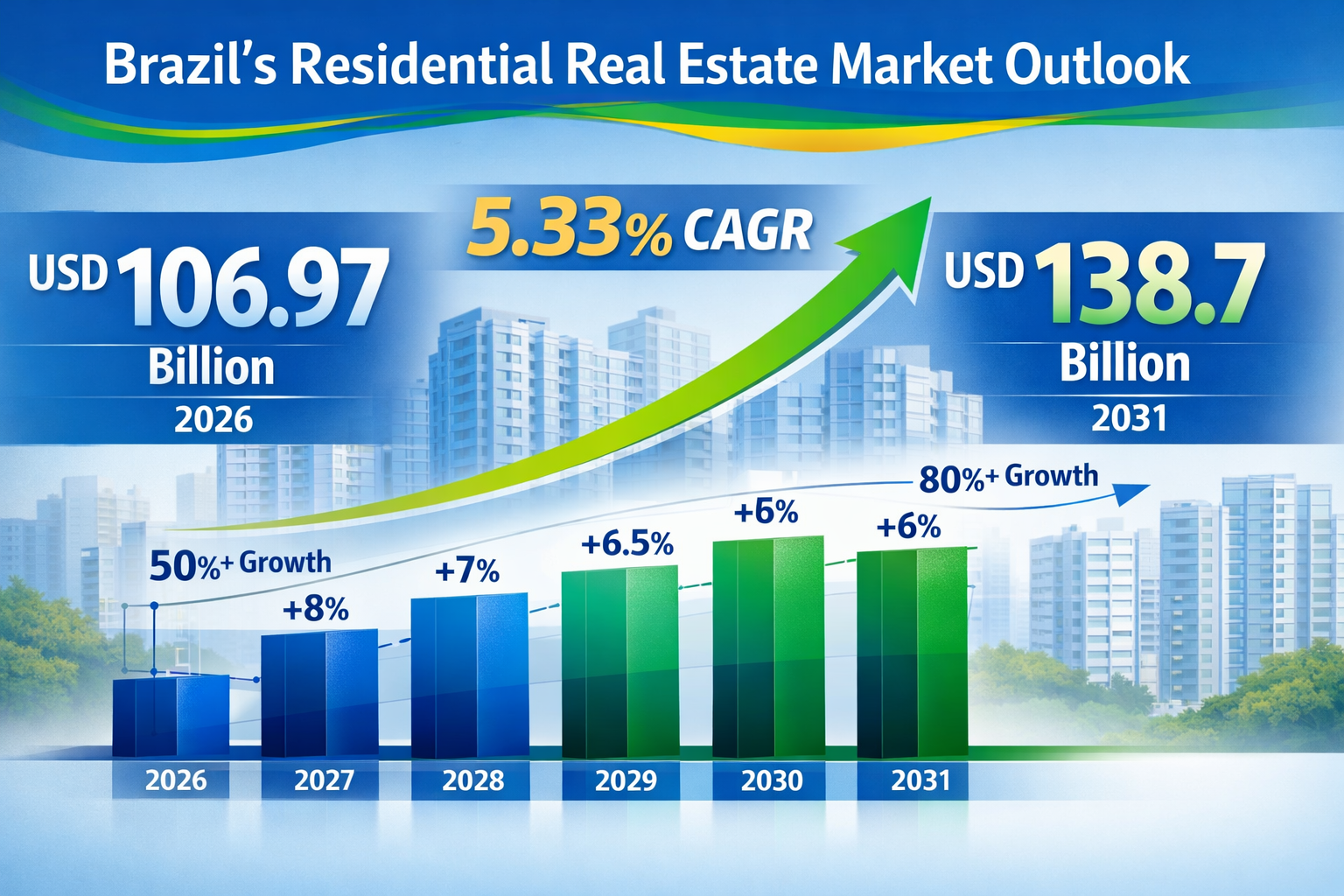
Brazil’s residential real estate market is on a robust growth path that extends well beyond 2026. According to comprehensive market analysis, the sector is projected to expand from USD 106.97 billion in 2026 to USD 138.7 billion by 2031, representing a compound annual growth rate (CAGR) of 5.33%[1]. This trajectory reflects not just natural market evolution, but the cumulative impact of strategic government interventions, demographic pressures, and infrastructure modernization.
The 5-Year Property Price Forecasts: 50-80% Cumulative Gains in Brazil’s Top Infrastructure Hotspots Beyond 2026 are grounded in several converging factors:
📊 Key Growth Drivers:
- Government housing subsidy programs stabilizing transaction volumes and developer confidence[1]
- Financing reforms making homeownership more accessible to middle-income Brazilians
- Infrastructure megaproject acceleration through Novo PAC and regional development initiatives
- International capital inflows attracted by favorable currency exchange rates[4]
- Urbanization pressures continuing to concentrate population in metropolitan regions
Nominal vs. Real Returns: What Investors Should Expect
When analyzing the 5-Year Property Price Forecasts: 50-80% Cumulative Gains in Brazil’s Top Infrastructure Hotspots Beyond 2026, distinguishing between nominal and real returns is essential for realistic planning.
Nominal price growth across Brazil’s residential market is expected to range between 30-50% cumulatively over the five-year period, with conservative estimates at 25% and optimistic scenarios reaching 55% or higher[2]. This translates to average annual appreciation between 5.5% and 8.5% per year in nominal terms[2].
However, after accounting for Brazil’s expected inflation trajectory, real returns (purchasing power gains) settle at approximately 1-4% annually[2]. For infrastructure hotspots specifically, these figures climb substantially higher, with the most favorably positioned markets potentially delivering the upper range of 50-80% cumulative nominal gains.
| Market Segment | Conservative Scenario | Base Case | Optimistic Scenario |
|---|---|---|---|
| National Average | 25% cumulative | 30-50% cumulative | 55%+ cumulative |
| Infrastructure Hotspots | 40% cumulative | 50-65% cumulative | 70-80% cumulative |
| Annual Nominal Growth | 4.5-5.5% | 5.5-8.5% | 8.5-12% |
| Annual Real Growth | 0.5-1.5% | 1-4% | 4-6% |
For investors exploring opportunities in Brazil’s top property investment locations, these projections underscore the importance of geographic selectivity and timing.
The Currency Advantage: Foreign Investment Dynamics
The historically weak Brazilian Real continues to function as a powerful magnet for international capital through 2026 and beyond. Property prices that appear elevated in Real terms remain effectively discounted by foreign standards, creating compelling entry points for dollar, euro, and other hard-currency investors[4].
This currency dynamic is the dominant factor enticing foreign capital to Brazilian markets[4], and it shows no signs of reversing through the forecast period. As infrastructure improvements enhance property fundamentals in secondary markets, the combination of currency advantage and appreciation potential creates a particularly attractive risk-reward profile for international buyers.
Infrastructure Megaprojects Reshaping Brazil’s Property Landscape
Metro Line 6 and Urban Transit Expansion
Transportation infrastructure represents one of the most powerful catalysts for property appreciation, and Brazil’s ambitious metro expansion projects are no exception. Metro Line 6 and associated urban rail developments are fundamentally altering accessibility patterns across major metropolitan regions, creating new residential development corridors and commercial hubs.
Historical data from global markets consistently demonstrates that proximity to metro stations drives property premiums of 15-30% compared to equivalent properties beyond walking distance. As new stations come online through 2027-2029, properties within 500-800 meters of these transit nodes are positioned for outsized appreciation.
🚇 Metro Expansion Impact Zones:
- São Paulo Metro Line 6: Connecting western suburbs to central business districts, opening previously underserved neighborhoods to professional commuters
- Rio de Janeiro Metro Extensions: Expanding coverage to rapidly developing northern zones
- Salvador Integrated Transit: Creating the first comprehensive metro system in Brazil’s Northeast
- Fortaleza Metro Expansion: Supporting the city’s emergence as a major economic center
Properties in these metro-adjacent zones are experiencing pre-construction appreciation as developers and investors anticipate completion timelines. The real estate market performance in emerging Brazilian cities demonstrates how infrastructure announcements alone can trigger price movements.
Novo PAC: Brazil’s Growth Acceleration Program
The Novo PAC (New Growth Acceleration Program) represents the Brazilian government’s most comprehensive infrastructure investment initiative in over a decade. Launched with multi-billion-dollar commitments, this program targets transportation, energy, urban development, and social infrastructure across all regions.
For property investors, Novo PAC creates identifiable appreciation corridors where public investment concentrates:
💰 Novo PAC Priority Zones:
- Highway modernization routes connecting secondary cities to major ports and metros
- Urban renewal districts receiving sanitation, public space, and connectivity upgrades
- Energy infrastructure zones supporting industrial and commercial development
- Social housing integration areas improving neighborhood quality and safety
The program’s five-year timeline (2023-2027) means that 2026-2031 represents the harvest period when completed infrastructure translates into tangible property value increases. Markets that secure major Novo PAC allocations are positioned within the 50-80% cumulative gain range projected for top infrastructure hotspots.
Port Modernization and Coastal Development
Brazil’s port renewal initiatives are transforming coastal cities from industrial zones into mixed-use development showcases. Major ports in Santos, Salvador, Fortaleza, and Recife are undergoing comprehensive modernization that includes:
- Waterfront redevelopment converting industrial areas to residential and commercial use
- Logistics infrastructure upgrades improving regional economic competitiveness
- Environmental remediation making previously blighted areas attractive for development
- Tourism infrastructure enhancing coastal cities’ appeal to domestic and international visitors
These port cities are experiencing a dual appreciation dynamic: improving fundamentals from infrastructure investment combined with surging demand from short-term rental markets and international buyers seeking coastal lifestyle properties[4].
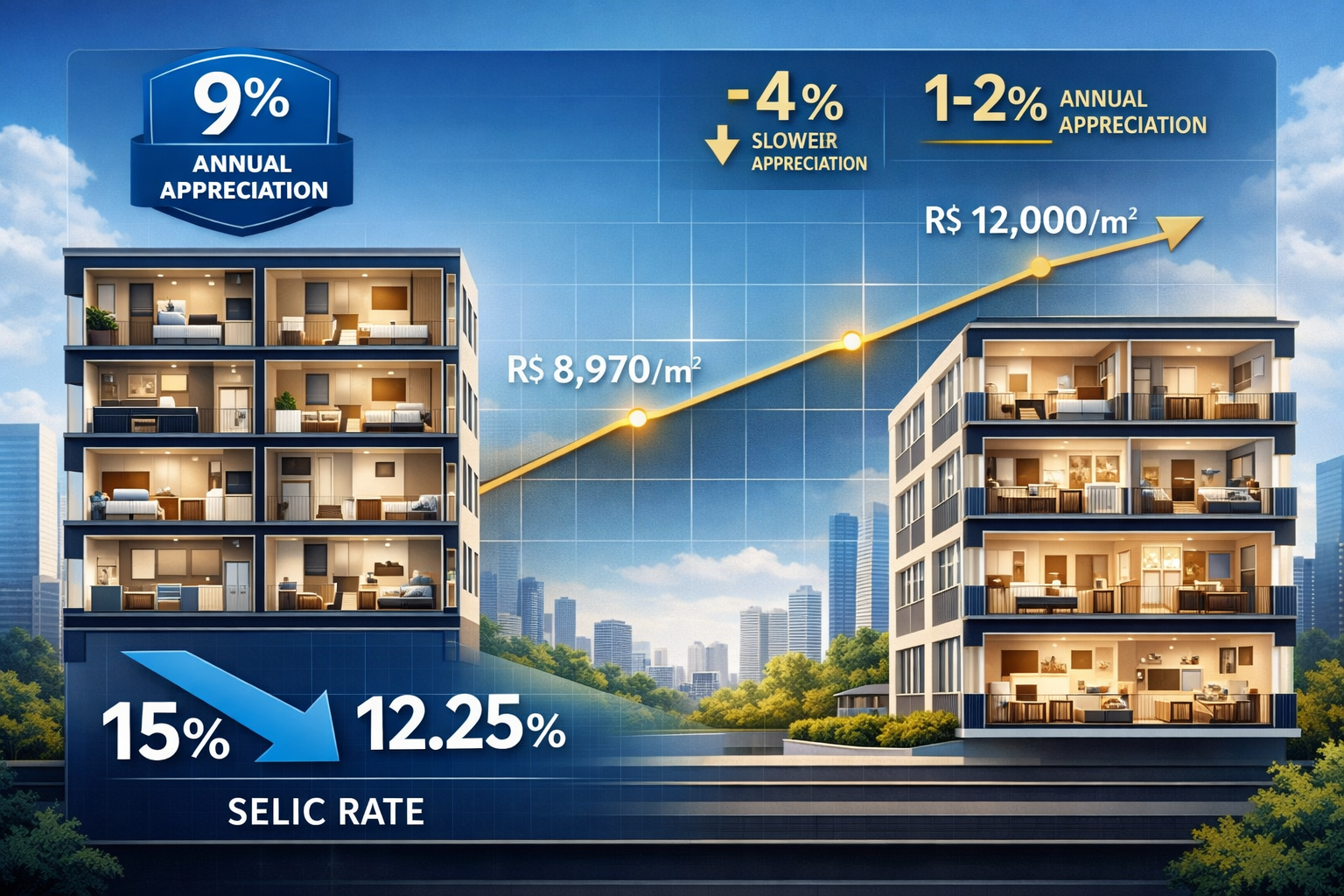
Fortaleza exemplifies this trend, with specific forecasts projecting approximately 34% cumulative growth over five years, driving price per square meter from approximately R$8,970 to R$12,000 by 2031[5]. This represents one of the clearest examples of how infrastructure investment translates directly into property appreciation.
Geographic Winners: Secondary Cities Leading the Appreciation Curve
Salvador and João Pessoa: Northeast Powerhouses
The 5-Year Property Price Forecasts: 50-80% Cumulative Gains in Brazil’s Top Infrastructure Hotspots Beyond 2026 identify Brazil’s Northeast region as containing multiple high-potential markets. Salvador and João Pessoa have already registered price increases above 20%, significantly outpacing the traditional powerhouses of São Paulo and Rio de Janeiro[2].
Salvador’s Appreciation Drivers:
- ✅ Integrated metro system under construction
- ✅ Port modernization enhancing economic base
- ✅ Tourism infrastructure expansion
- ✅ Growing middle-class population seeking homeownership
- ✅ International recognition as cultural destination
João Pessoa’s Competitive Advantages:
- ✅ Quality of life rankings attracting domestic migration
- ✅ Coastal location with limited developable land
- ✅ Government investment in urban infrastructure
- ✅ Emerging technology and services sector
- ✅ Affordability relative to southern coastal markets
These cities demonstrate how secondary markets with strong fundamentals can deliver superior returns compared to established metros. Investors seeking the highest end of projected cumulative gains should prioritize markets exhibiting Salvador and João Pessoa’s combination of infrastructure investment, demographic growth, and supply constraints.
Fortaleza: The Infrastructure Transformation Model
Fortaleza stands as perhaps the clearest example of infrastructure-driven property appreciation in Brazil’s current market cycle. The city’s comprehensive development plan includes metro expansion, port modernization, airport upgrades, and urban renewal initiatives that collectively position it for exceptional growth.
With ~34% cumulative growth forecast over five years[5], Fortaleza demonstrates how coordinated infrastructure investment creates compounding appreciation effects. The projected increase from R$8,970 to R$12,000 per square meter by 2031 represents a 33.8% nominal gain, placing it firmly within the infrastructure hotspot category.
“Fortaleza’s transformation from regional center to national economic player illustrates how strategic infrastructure investment can fundamentally reshape property market dynamics. The city’s appreciation trajectory offers a template for identifying similar opportunities in other emerging Brazilian markets.”
Investors interested in emerging market opportunities should study Fortaleza’s development pattern as a model for evaluating other secondary cities with comparable infrastructure pipelines.
Coastal Development Zones: Supply-Demand Imbalances
Secondary and coastal cities are projected to deliver the most explosive returns, particularly where supply struggles to meet demand from international buyers and short-term rental operators[4]. These markets share several characteristics:
🏖️ High-Appreciation Coastal Market Traits:
- Limited developable coastline creating natural supply constraints
- International airport accessibility facilitating tourism and foreign investment
- Established short-term rental markets providing immediate income potential
- Infrastructure improvements enhancing year-round livability
- Favorable regulatory environments for foreign ownership and rental operations
Cities including Natal, Maceió, and Florianópolis exhibit these characteristics. The growth trajectory of regions like Florianópolis demonstrates how infrastructure development combines with natural advantages to drive sustained appreciation.
The weak Real performance remains particularly influential in these coastal markets, where international buyers can acquire properties at substantial discounts to comparable coastal real estate in North America or Europe[4]. This currency arbitrage opportunity, combined with infrastructure-driven appreciation, positions select coastal zones for cumulative gains approaching or exceeding the 80% upper range.
Property Type Performance: Small Units Outperforming
The Small Apartment Advantage
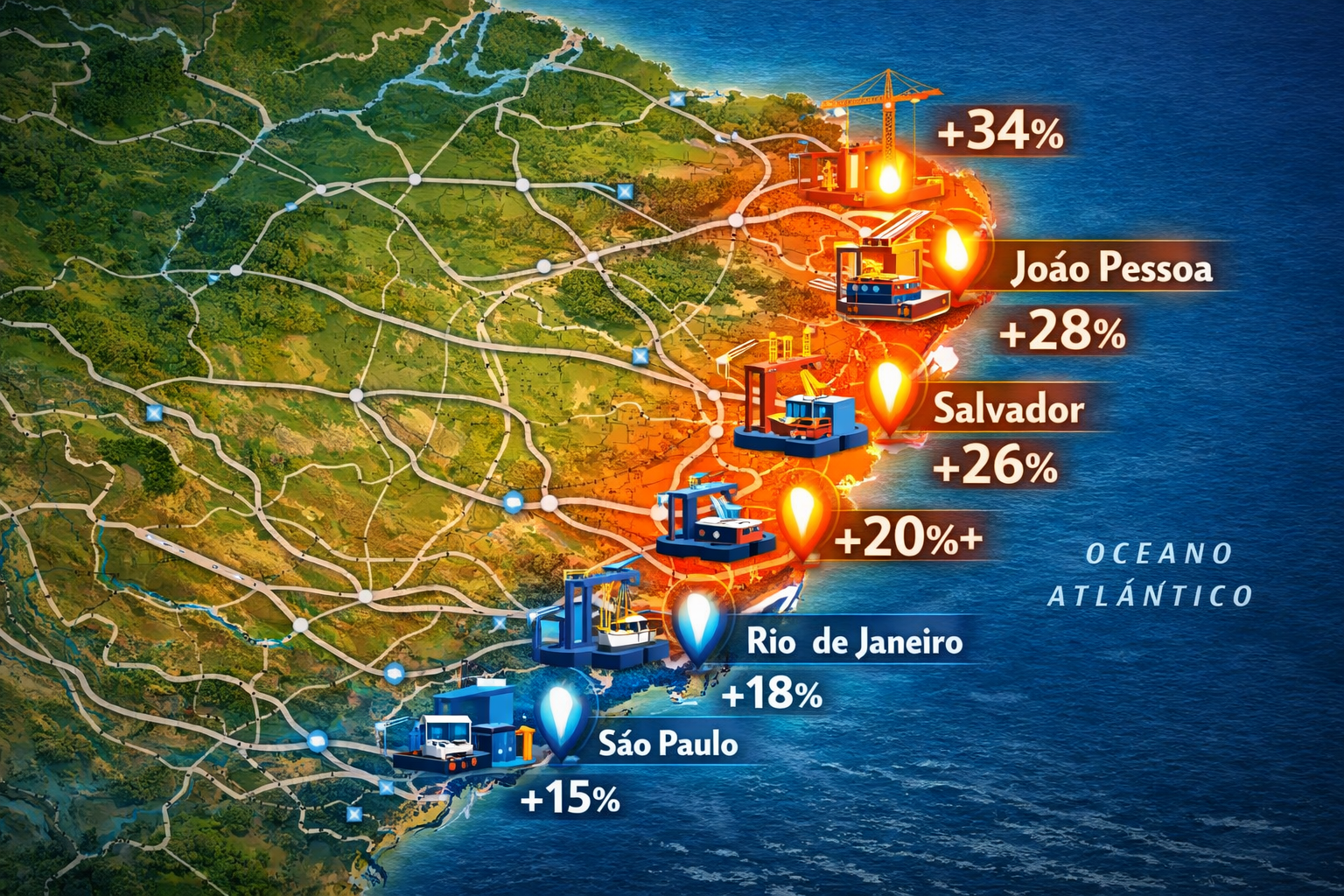
Within the broader 5-Year Property Price Forecasts: 50-80% Cumulative Gains in Brazil’s Top Infrastructure Hotspots Beyond 2026, property type selection significantly impacts actual returns. Small apartments and studios are substantially outperforming larger properties, with appreciation rates approaching 9% annually compared to 5-6% for larger units[2].
This performance differential reflects several structural market factors:
📈 Small Unit Appreciation Drivers:
- Affordability constraints limiting buyer purchasing power
- Demographic shifts toward smaller household sizes
- Urbanization patterns favoring compact living in metro-accessible locations
- Investment demand from buyers seeking rental income properties
- First-time buyer preferences concentrated in affordable segments
Approximately 70% of urban residential listings are apartments in condominium buildings[2], making smaller units the dominant market segment. This concentration creates liquidity advantages and ensures consistent demand even during market corrections.
For investors targeting the upper range of projected cumulative gains, studios and one-bedroom apartments in infrastructure hotspots represent the optimal combination of appreciation potential and market liquidity. The advantages of investing in studio apartments in emerging markets are particularly pronounced in the current cycle.
Pre-Construction Opportunities: Maximizing Appreciation
Buying pre-construction (na planta) in infrastructure hotspots offers the potential to capture appreciation during both the construction period and the post-delivery market cycle. This strategy is particularly effective when timed to coincide with infrastructure project announcements or early-stage construction.
The appreciation potential for pre-construction buyers can exceed market averages by 15-25% when projects are well-positioned relative to infrastructure developments. Key considerations include:
✅ Pre-Construction Selection Criteria:
- Developer track record and financial stability
- Proximity to planned infrastructure (metro stations, highway access, port developments)
- Construction timeline alignment with infrastructure completion dates
- Unit type and size matching market demand patterns
- Pricing relative to comparable completed properties
Projects located within 500-800 meters of planned metro stations or along Novo PAC infrastructure corridors offer particularly strong appreciation potential. The construction period itself often delivers 20-30% appreciation before the unit is even completed, with additional gains accruing as the surrounding infrastructure comes online.
Financial Environment: Interest Rates and Accessibility
Selic Rate Trajectory and Market Impact
Brazil’s Selic interest rate plays a crucial role in property market dynamics, influencing both mortgage affordability and investment opportunity costs. The rate stood at 15% in January 2026 but is expected to decline to approximately 12.25% by year-end 2026[2], with further gradual reductions anticipated through 2027-2028.
This declining rate environment creates several positive effects for property markets:
📉 Declining Interest Rate Benefits:
- Expanded buyer pool as mortgage payments become more affordable
- Increased transaction volumes supporting price discovery and liquidity
- Developer confidence encouraging new project launches
- Investment capital rotation from fixed income to real assets
- Foreign investment attractiveness as carry trade opportunities diminish
The rate decline is particularly impactful in infrastructure hotspots where pent-up demand exists but has been constrained by financing costs. As rates fall, this demand translates into transaction volume and price appreciation, creating a self-reinforcing cycle.
For the 5-Year Property Price Forecasts: 50-80% Cumulative Gains in Brazil’s Top Infrastructure Hotspots Beyond 2026 to materialize fully, continued rate normalization is essential. Current projections assume Selic stabilizes in the 9-11% range by 2028-2029, creating a sustained period of improved affordability.
Government Programs and Financing Reforms
Government housing subsidy programs and financing reforms are stabilizing transaction volumes and supporting developer confidence[1]. These initiatives include:
🏘️ Key Government Support Programs:
- Minha Casa Minha Vida (My House My Life): Subsidized financing for low and middle-income buyers
- FGTS financing reforms: Improved access to workers’ severance fund savings for home purchases
- Green financing initiatives: Preferential rates for energy-efficient developments
- First-time buyer incentives: Reduced down payment requirements and extended terms
These programs are particularly impactful in secondary cities and infrastructure hotspots where they unlock latent demand from buyers who previously lacked access to financing. The combination of declining interest rates and improved program access creates optimal conditions for sustained price appreciation through 2031.
Investment Strategies for Capturing 50-80% Gains
Geographic Diversification Within Infrastructure Corridors
Rather than concentrating capital in a single market, sophisticated investors are building diversified portfolios across multiple infrastructure hotspots. This approach balances risk while maintaining exposure to high-appreciation markets.
🎯 Portfolio Allocation Strategy:
- 40-50%: Primary infrastructure hotspot (e.g., Fortaleza, Salvador)
- 30-40%: Secondary emerging market (e.g., João Pessoa, Natal)
- 10-20%: Established metro market for stability (e.g., São Paulo, Rio)
This allocation captures the highest appreciation potential while maintaining liquidity and reducing exposure to any single market’s specific risks. Investors can explore Quadragon’s development portfolio for examples of strategically positioned projects in emerging markets.
Timing Entry Points: Infrastructure Project Phases
Timing matters significantly when targeting infrastructure-driven appreciation. The optimal entry point typically occurs during the announcement-to-construction phase, before infrastructure benefits are fully priced into property values.
Infrastructure Investment Timeline:
- Announcement Phase (Months 0-12): Initial price movement from speculation
- Planning/Approval Phase (Months 12-24): Market consolidation, optimal entry window
- Early Construction (Months 24-36): Appreciation acceleration begins
- Late Construction (Months 36-48): Peak appreciation rate
- Completion/Operation (Months 48+): Sustained appreciation at market rates
Investors entering during Phase 2 (Planning/Approval) typically capture the largest share of total appreciation while minimizing speculation risk. This timing allows for property acquisition, construction completion, and rental stabilization before infrastructure benefits fully materialize.
Value-Add Opportunities in Transitional Neighborhoods
Infrastructure hotspots often include transitional neighborhoods where property values haven’t yet adjusted to reflect coming improvements. These areas offer value-add opportunities for investors willing to undertake renovations or conversions.
Value-Add Strategies:
- Renovation of older apartments in infrastructure-adjacent locations
- Conversion to short-term rentals in emerging tourism zones
- Commercial-to-residential conversions in revitalizing urban cores
- Land assembly for small-scale development projects
These strategies can deliver returns exceeding even the optimistic 80% cumulative gain scenarios when executed successfully. However, they require local market expertise, renovation management capabilities, and tolerance for execution risk.
Risk Factors and Mitigation Strategies
Economic Volatility and Currency Risk
While the weak Real attracts foreign capital[4], it also introduces currency risk for international investors. A strengthening Real could erode returns when converted back to home currencies, even as property values appreciate in Real terms.
Currency Risk Mitigation:
- Generate Real-denominated income through rentals to create natural hedge
- Stagger entry timing across multiple years to average currency exposure
- Consider currency hedging instruments for large positions
- Maintain long-term holding periods to ride out currency cycles
Brazil’s economic volatility also creates risks around inflation, interest rates, and growth trajectories. Diversification across multiple infrastructure hotspots and property types helps mitigate these macro risks.
Infrastructure Project Delays
Infrastructure projects frequently experience delays in Brazil and globally. A metro line scheduled for 2028 completion might not open until 2030 or later, potentially deferring anticipated appreciation.
Delay Mitigation Strategies:
- Focus on projects with construction already underway rather than planning-stage initiatives
- Diversify across multiple infrastructure types (metro, highways, ports)
- Select properties with strong fundamentals independent of infrastructure timing
- Build delay assumptions into return projections (add 12-24 months to official timelines)
Properties that offer value even without infrastructure completion provide downside protection while maintaining upside potential when projects do deliver.
Market Liquidity Considerations
Secondary cities and emerging markets sometimes experience lower liquidity than established metros, potentially making exit timing challenging. This risk is particularly relevant for larger properties or those in very specific locations.
Liquidity Enhancement Approaches:
- Prioritize small apartments with broad buyer appeal
- Select locations with multiple demand drivers beyond single infrastructure projects
- Maintain properties in excellent condition to appeal to largest buyer pool
- Consider rental income as alternative to sale during low-liquidity periods
The projected market growth through 2031 should improve liquidity in infrastructure hotspots as transaction volumes increase and buyer awareness grows. Early entrants may experience temporary liquidity constraints that resolve as markets mature.
Conclusion: Positioning for Infrastructure-Driven Appreciation
The 5-Year Property Price Forecasts: 50-80% Cumulative Gains in Brazil’s Top Infrastructure Hotspots Beyond 2026 represent more than optimistic projections—they reflect the tangible impact of billions in infrastructure investment reshaping Brazil’s urban landscape. Metro Line 6 expansions, the comprehensive Novo PAC program, and port modernization initiatives are creating identifiable appreciation corridors where property values will substantially outpace national averages.
Secondary cities including Salvador, João Pessoa, and Fortaleza are leading this appreciation curve, already demonstrating price increases above 20% and positioned for continued outperformance through 2031[2]. The combination of infrastructure investment, demographic growth, supply constraints, and international capital inflows creates ideal conditions for the projected cumulative gains.
Small apartments and studios offer the optimal risk-reward profile within these markets, delivering appreciation rates approaching 9% annually while maintaining superior liquidity[2]. Pre-construction opportunities in infrastructure-adjacent locations provide the potential to capture appreciation during both construction and post-delivery phases.
The declining interest rate environment (Selic falling from 15% to 12.25% through 2026)[2] combined with government housing programs will expand the buyer pool and sustain transaction volumes. Meanwhile, the weak Real continues attracting foreign capital to markets that remain effectively discounted by international standards[4].
Actionable Next Steps for Investors
For investors seeking to capture these projected gains:
Conduct detailed market research on specific infrastructure hotspots, prioritizing cities with multiple concurrent projects (metro, highways, ports)
Identify pre-construction opportunities within 500-800 meters of planned infrastructure, focusing on small apartments and studios
Evaluate developer track records and project timelines, building delay assumptions into return projections
Structure financing to take advantage of declining interest rates, potentially using staged purchases across 2026-2027
Build diversified portfolios across 2-3 infrastructure hotspots rather than concentrating in single markets
Establish local partnerships with property managers, legal advisors, and market specialists in target cities
Monitor infrastructure project progress through official government channels and local media to adjust timing and positioning
Consider contacting specialized developers with expertise in emerging Brazilian markets and infrastructure-adjacent projects
The window for optimal entry into Brazil’s infrastructure hotspots extends through 2026-2027, as major projects transition from planning to construction phases. Investors who position strategically during this period stand to capture the substantial appreciation projected through 2031, potentially achieving or exceeding the 50-80% cumulative gain range in the most favorably positioned markets.
Brazil’s property market transformation is underway. The infrastructure investments reshaping secondary cities and coastal zones create a once-in-a-decade opportunity for investors who understand the dynamics, select strategically, and maintain the patience to allow infrastructure benefits to fully materialize. The 5-Year Property Price Forecasts: 50-80% Cumulative Gains in Brazil’s Top Infrastructure Hotspots Beyond 2026 provide the roadmap—execution and timing will determine who captures these exceptional returns.
References
[1] Brazil Residential Real Estate Market Size To Reach Usd 1387 Billion By 2031 Driven By Subsidized Housing Expansion – https://industrytoday.co.uk/market-research-industry-today/brazil-residential-real-estate-market-size-to-reach-usd-1387-billion-by-2031-driven-by-subsidized-housing-expansion
[2] Brazil Price Forecasts – https://thelatinvestor.com/blogs/news/brazil-price-forecasts
[3] Brazil Real Estate Market Outlook – https://www.6wresearch.com/industry-report/brazil-real-estate-market-outlook
[4] Brazil Property Market Predictions For 2026 – https://esalesinternational.com/2025/11/20/brazil-property-market-predictions-for-2026/
[5] Fortaleza Price Forecasts – https://thelatinvestor.com/blogs/news/fortaleza-price-forecasts
[6] Brazil Property Market In 2026 A Strategic Outlook For Investors – https://www.exclusiverealtybrasil.com/article/brazil-property-market-in-2026-a-strategic-outlook-for-investors
[7] Brazil – https://www.statista.com/outlook/fmo/real-estate/brazil
[8] Latin America Residential Property Market – https://www.researchandmarkets.com/report/latin-america-residential-property-market