
Real Estate Investment Returns in Brazil: A Comprehensive Guide for 2025

Brazil’s property market has emerged as one of Latin America’s most compelling investment destinations, attracting both domestic and international investors seeking robust returns. With Real Estate Investment Returns in Brazil reaching impressive levels across major cities, understanding the nuances of this dynamic market has never been more critical. From the sun-soaked beaches of Florianópolis to the bustling financial districts of São Paulo, Brazilian real estate offers diverse opportunities that combine capital appreciation with attractive rental yields. 🏢
The Brazilian property sector has demonstrated remarkable resilience despite global economic uncertainties, with strategic locations delivering double-digit returns to savvy investors. As the country continues its economic stabilization and urban development initiatives gain momentum, the potential for wealth creation through real estate investment has captured worldwide attention.
Key Takeaways
- Average rental yields in Brazil range from 4% to 8% annually, with premium locations like Florianópolis and São Paulo offering the highest returns
- Pre-construction investments can deliver 20-30% capital appreciation before project completion, making them particularly attractive for growth-focused investors
- Currency advantages for foreign investors have created unique entry opportunities, with the Brazilian Real offering favorable exchange rates
- Diversification strategies across residential, commercial, and vacation rental properties help maximize returns while managing risk
- Market timing and location selection remain the most critical factors determining investment success in Brazil’s real estate sector
Understanding Real Estate Investment Returns in Brazil
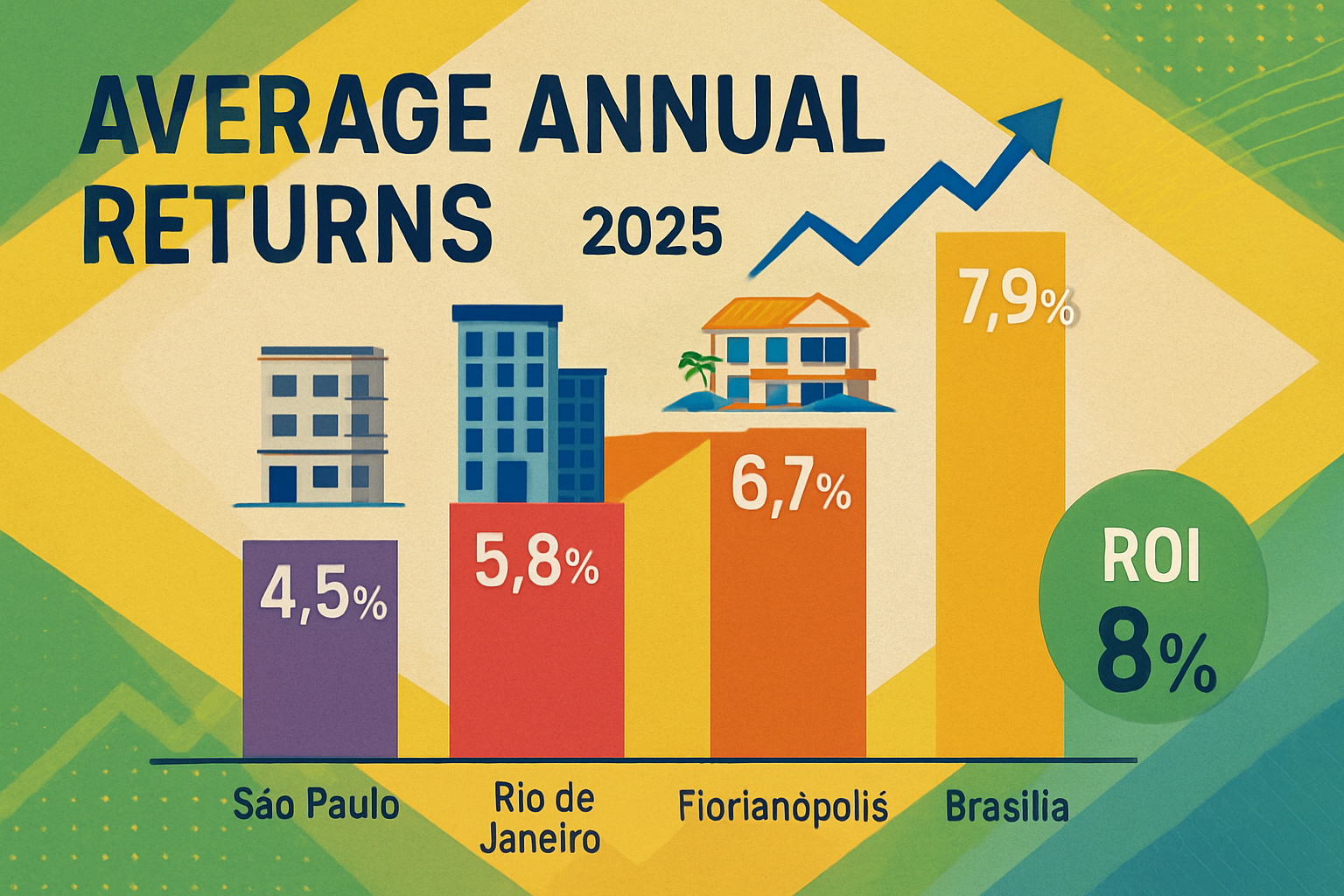
The Brazilian real estate market operates within a unique economic and regulatory framework that significantly influences investment performance. Real Estate Investment Returns in Brazil are shaped by multiple factors including location, property type, market timing, and investment strategy. Understanding these elements is essential for achieving optimal results.
The Current Market Landscape
Brazil’s property market in 2025 presents a compelling picture of recovery and growth. years Following economic adjustment, the sector has stabilized with consistent appreciation rates across major metropolitan areas. The real estate market in Greater Florianópolis exemplifies this trend, showing particularly strong performance indicators.
Key market characteristics include:
- Steady price appreciation averaging 8-12% annually in prime locations
- Strong rental demand driven by urbanization and demographic shifts
- Improved financing conditions with competitive mortgage rates
- Foreign investment incentives making cross-border transactions more accessible
- Infrastructure development boosting property values in emerging neighborhoods
Types of Returns Available
Brazilian real estate investments generate returns through multiple channels:
Capital Appreciation 📈
Property values in strategic locations have consistently increased, with beachfront developments and urban centers leading the way. Pre-construction purchases often deliver the highest appreciation rates, sometimes exceeding 30% before completion.
Rental Income 💰
Monthly rental yields provide steady cash flow, with rates varying significantly by location and property type. Studio apartments in tourist destinations can generate particularly attractive returns.
Tax Benefits
Brazilian tax regulations offer various deductions and incentives for property investors, including depreciation allowances and expense deductions that enhance net returns.
Factors Influencing Real Estate Investment Returns in Brazil
Multiple variables determine the profitability of property investments in Brazil. Successful investors carefully analyze these factors before committing capital.
Location and Regional Performance
Geography plays a decisive role in investment outcomes. Different Brazilian regions offer distinct advantages:
| Region | Average Rental Yield | Appreciation Rate | Investment Profile |
|---|---|---|---|
| Florianópolis | 6-8% | 10-15% annually | High growth, tourism-driven |
| São Paulo | 4-6% | 8-12% annually | Stable, commercial focus |
| Rio de Janeiro | 5-7% | 7-10% annually | Mixed, tourist & residential |
| Brasilia | 4-5% | 6-9% annually | Government sector stability |
The best places to invest in Brazil property combine strong fundamentals with growth catalysts. Coastal cities like Florianópolis benefit from tourism, lifestyle migration, and limited developable land, creating powerful appreciation dynamics.
Property Type Considerations
Different property categories deliver varying return profiles:
Residential Apartments
- Traditional rental yields: 4-6% annually
- Strong demand in urban centers
- Lower maintenance compared to houses
- Studio apartments in Florianópolis offer particularly attractive returns
Commercial Properties
- Higher yields: 7-10% annually
- Longer lease terms provide stability
- Economic sensitivity requires careful tenant selection
- Premium locations command significant appreciation
Vacation Rentals
- Peak season yields can exceed 12% annually
- Requires active management
- Platform integration (Airbnb, Booking.com) maximizes occupancy
- Seasonal fluctuations demand financial planning
Pre-Construction Developments
- Highest appreciation potential: 20-30%
- Payment plans reduce upfront capital requirements
- Developer reputation critical for success
- Construction progress monitoring ensures project viability
Economic and Currency Factors
Brazil’s macroeconomic environment directly impacts real estate returns:
Interest Rates
The Brazilian Central Bank’s monetary policy influences both financing costs and investment attractiveness. Lower rates stimulate property demand while reducing borrowing expenses for leveraged investors.
Inflation Dynamics
Real estate serves as an effective inflation hedge in Brazil. Property values and rental rates typically adjust upward with inflation, preserving purchasing power and real returns.
Exchange Rate Opportunities
Foreign investors benefit from currency fluctuations. The Brazilian Real’s volatility creates strategic entry points, potentially enhancing dollar-denominated returns by 15-25% when timing favorable exchange rates.
Regulatory and Tax Environment
Brazil’s legal framework for real estate investment includes:
- Property taxes (IPTU) averaging 0.5-1.5% of property value annually
- Capital gains rate of 15% on profits from property sales
- Rental income rate ranging from 7.5% to 27.5% based on income brackets
- Foreign ownership rights fully protected with minimal restrictions
- Inheritance laws requiring careful estate planning for international investors
Maximizing Real Estate Investment Returns in Brazil
Achieving superior returns requires strategic planning and execution. Experienced investors employ proven methodologies to optimize their Brazilian property portfolios.
Strategic Location Selection
Identifying high-potential areas involves analyzing multiple criteria:
Infrastructure Development 🚇
Proximity to new transportation projects, commercial centers, and amenities drives long-term appreciation. Regions experiencing infrastructure growth like the English in Florianópolis demonstrate this principle clearly.
Demographic Trends
Population growth, age distribution, and migration patterns indicate future demand. Areas attracting young professionals and families typically outperform.
Economic Diversification
Locations with varied economic bases prove more resilient during downturns. Cities dependent on single industries carry higher risk.
Supply Constraints
Limited developable land creates scarcity value. Coastal areas and environmentally protected zones often appreciate faster due to restricted supply.
Timing Your Investment
Market cycles significantly impact returns:
Pre-Launch Advantages
Purchasing during the pre-launch phase of quality developments offers the best pricing. Developers often provide 10-15% discounts compared to post-launch prices.
Market Cycle Analysis
Understanding whether the market is in expansion, peak, contraction, or recovery phases helps optimize entry and exit timing.
Seasonal Considerations
Brazilian real estate markets show seasonal patterns. Understanding these rhythms improves negotiation leverage and transaction timing.
Working with Reputable Developers
Developer selection critically influences investment outcomes. Established companies like Quadragon offer:
- Proven track records of on-time, on-budget delivery
- Quality construction that maintains value over time
- Strategic location selection in high-growth areas
- Transparent communication throughout the development process
- Post-delivery support ensuring smooth ownership transition
Reviewing current projects provides insight into developer capabilities and market positioning.
Financing Strategies
Optimizing capital structure enhances overall returns:
Leverage Utilization
Strategic use of mortgages amplifies returns on equity. With Brazilian mortgage rates ranging from 9-12%, positive leverage occurs when total returns exceed financing costs.
Payment Plans
Many Brazilian developers offer extended payment terms for pre-construction purchases, reducing immediate capital requirements and improving cash flow management.
Currency Hedging
Foreign investors should consider hedging strategies to protect against adverse exchange rate movements, particularly for long-term holdings.
Investment Vehicles and Structures
Brazil offers multiple pathways for real estate investment, each with distinct characteristics.
Direct Property Ownership
Purchasing individual properties provides:
- Complete control over asset management decisions
- Direct appreciation and rental income benefits
- Tangible asset ownership with intrinsic value
- Customization options for renovations and improvements
This approach requires active management but offers the highest potential returns for engaged investors.
Real Estate Investment Funds (REITs)
Brazilian REITs provide:
- Liquidity through stock exchange trading
- Diversification across multiple properties
- Professional management reducing operational burden
- Monthly dividend distributions from rental income
- Lower entry capital requirements compared to direct ownership
FIIs suit investors seeking passive exposure to Brazilian real estate markets.
Development Partnerships
Collaborating with established developers through:
- Joint venture structures sharing risks and rewards
- Preferred equity positions offering enhanced returns
- Mezzanine financing providing fixed-income characteristics with equity upside
- Cryptocurrency integration for modern investment approaches
Case Studies: Real Returns in Practice
Examining current investment scenarios illustrates potential outcomes:
Beachfront Studio in Florianópolis
Investment Details:
- Purchase price: R$450,000 (pre-construction)
- Completion value: R$ 585,000
- Monthly rental income: R$3,500
- Annual expenses: R$ 12,000
Returns Analysis:
- Capital appreciation: 30% over 24 months
- Rental yield: 7.2% annually (net)
- Total annual return: 22.2% (combining appreciation and income)
This example demonstrates the power of buying pre-construction in high-demand locations.
Commercial Property in São Paulo
Investment Details:
- Purchase price: R$ 1,200,000
- 10-year lease with established tenant
- Monthly rental income: R$9,000
- Annual appreciation: 8%
Returns Analysis:
- Rental yield: 7.5% annually (net)
- Capital appreciation: 8% annually
- Total annual return: 15.5%
Commercial properties offer stability through long-term leases and consistent cash flow.
Vacation Rental Portfolio
Investment Details:
- Three studio apartments: R$ 1,350,000 total
- Average occupancy: 70% annually
- Monthly revenue per unit: R$4,200
- Management costs: 25% of revenue
Returns Analysis:
- Net rental yield: 9.3% annually
- Capital appreciation: 12% annually
- Total annual return: 21.3%
Diversified vacation rental portfolios can generate exceptional returns in tourist destinations.
Risk Management and Mitigation
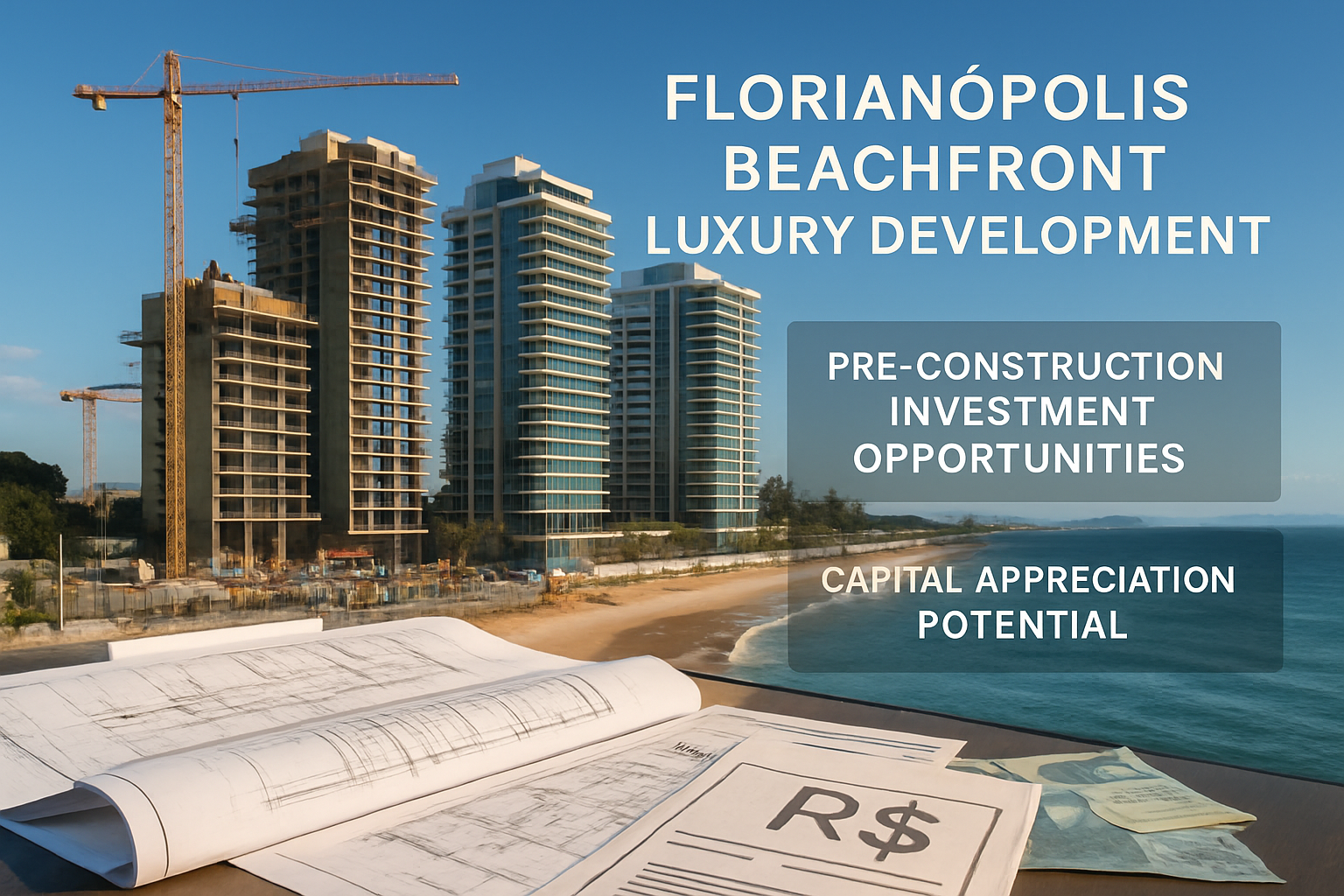
While Real Estate Investment Returns in Brazil can be substantial, prudent investors address potential risks:
Market Risk Mitigation
- Geographic diversification across multiple cities reduces regional exposure
- Property type mixing balances stability and growth
- Staged entry through dollar-cost averaging smooth market timing risk
- Professional market analysis from experienced advisors
Operational Risk Management
- Quality property management ensures tenant satisfaction and maintenance
- Adequate insurance coverage protects against property damage and liability
- Legal compliance with all Brazilian regulations and tax requirements
- Regular property inspections identify issues before they become costly
Currency and Political Risks
- Hedging strategies for foreign currency exposure
- Long-term investment horizon to weather short-term volatility
- Diversification across asset classes and geographies
- Staying informed about Brazilian political and economic developments
The Future of Real Estate Investment Returns in Brazil
Looking ahead, several trends will shape the Brazilian property market:
Demographic Drivers
Brazil’s urbanization continues, with 87% of the population now living in cities. This concentration drives demand for quality housing in well-located areas. The middle class expansion creates sustained demand for residential and commercial properties.
Technology Integration
Digital transformation is revolutionizing Brazilian real estate:
- Virtual tours expanding the investor base globally
- Blockchain for property registries improving transaction security
- Smart building technologies enhancing property values
- Data analytics enabling better investment decisions
Sustainability Focus
Environmental considerations increasingly influence property values:
- Green building certifications commanding premium prices
- Energy efficiency reducing operating costs and attracting tenants
- Sustainable development meeting regulatory requirements and buyer preferences
- Climate resilience becoming critical in coastal areas
Regional Development
Government infrastructure investments will create new high-growth areas. Monitoring market developments helps identify emerging opportunities before they become mainstream.
Getting Started with Brazilian Real Estate Investment
For investors ready to capitalize on Real Estate Investment Returns in Brazil , following a structured approach ensures success:
Step 1: Define Investment Objectives
Clarify your goals:
- Target return expectations (income vs. appreciation)
- Investment timeline and liquidity needs
- Risk tolerance and diversification requirements
- Capital availability and financing preferences
Step 2: Research and Education
Invest time understanding:
- Brazilian market dynamics and regional differences
- Legal and tax implications for your situation
- Currency considerations and hedging options
- Quality of life factors in target locations
Step 3: Build Your Team
Assemble qualified professionals:
- Local real estate attorney family with foreign investment
- Accountant experienced in Brazilian tax matters
- Reputable real estate developer or agent
- Property management company for rental properties
Step 4: Property Selection and Due Diligence
Carefully evaluate potential investments:
- Location analysis and neighborhood trends
- Developer reputation and track record
- Construction quality and completion timeline
- Legal documentation and title verification
- Financial projections and return modeling
Step 5: Execute and Monitor
Complete the transaction and actively manage:
- Secure favorable financing terms if leveraging
- Complete all legal requirements and registrations
- Implement property management systems
- Track performance against projections
- Adjust strategy based on market conditions
Conclusion: Capitalizing on Brazilian Real Estate Opportunities
Real Estate Investment Returns in Brazil offer compelling opportunities for investors seeking growth, income, and diversification. With rental yields ranging from 4% to 8% and capital appreciation often exceeding 10% annually in prime locations, the Brazilian property market deserves serious consideration in any global investment portfolio.
Success requires understanding the unique characteristics of Brazil’s real estate sector, including regional variations, property type dynamics, and macroeconomic influences. Strategic location selection, timing optimization, and working with reputable developers like Quadragon significantly enhance return potential while managing risks.
The combination of demographic trends, infrastructure development, and economic stabilization positions Brazil for continued real estate market strength. Investors who conduct thorough research, build qualified teams, and execute disciplined strategies can achieve exceptional returns while participating in one of Latin America’s most dynamic property markets.
Next Steps
Ready to explore Brazilian real estate investment opportunities? Consider these actions:
- Review available projects from established developers to understand current offerings and pricing
- Analyze specific locations matching your investment criteria and return objectives
- Consult with specialists experienced in Brazilian real estate and international transactions
- Develop your investment plan including budget, timeline, and target properties
- Contact experienced developers to discuss specific opportunities and receive personalized guidance
The Brazilian real estate market rewards informed, strategic investors with substantial returns. By applying the principles outlined in this guide and partnering with reputable professionals, you can successfully navigate this exciting market and build meaningful wealth through property investment.
References
[1] Brazilian Central Bank – Monetary Policy Reports (2024-2025)
[2] ABECIP (Brazilian Association of Real Estate Credit and Savings Entities) – Market Statistics 2025
[3] CBIC (Brazilian Chamber of Construction Industry) – Annual Real Estate Market Analysis
[4] SECOVI-SP (Real Estate Union of São Paulo) – Rental Yield Studies
[5] FGV (Fundação Getulio Vargas) – Brazilian Real Estate Index Reports
[6] Brazilian Federal Revenue Service – Property Tax Guidelines
[7] IBGE (Brazilian Institute of Geography and Statistics) – Demographic and Housing Data