
Property Investment in Brazil: A Complete Guide to Real Estate Opportunities in 2025
Brazil’s real estate market is experiencing a remarkable transformation, attracting savvy investors from around the globe who recognize the untapped potential of South America’s largest economy. With property prices significantly lower than comparable markets in North America and Europe, combined with a growing middle class and tourism boom, Property Investment in Brazil presents compelling opportunities for those seeking portfolio diversification and strong returns. Whether you’re considering beachfront condos in Florianópolis, commercial spaces in São Paulo, or vacation rentals in Rio de Janeiro, understanding the Brazilian property landscape is essential for making informed investment decisions.
Key Takeaways
- Brazil offers competitive property prices compared to developed markets, with strong appreciation potential in emerging regions like Florianópolis and coastal areas
- Foreign investors have full property ownership rights in Brazil, although specific documentation (CPF registration) and legal processes must be followed
- Rental yields range from 4-8% annually depending on location and property type, with vacation rentals in tourist areas generating higher returns
- The Brazilian real estate market is rebounding in 2025, with increased construction activity and favorable financing conditions driving growth
- Due diligence is critical – working with experienced local professionals and understanding tax obligations ensures successful property transactions
Understanding the Brazilian Real Estate Market in 2025
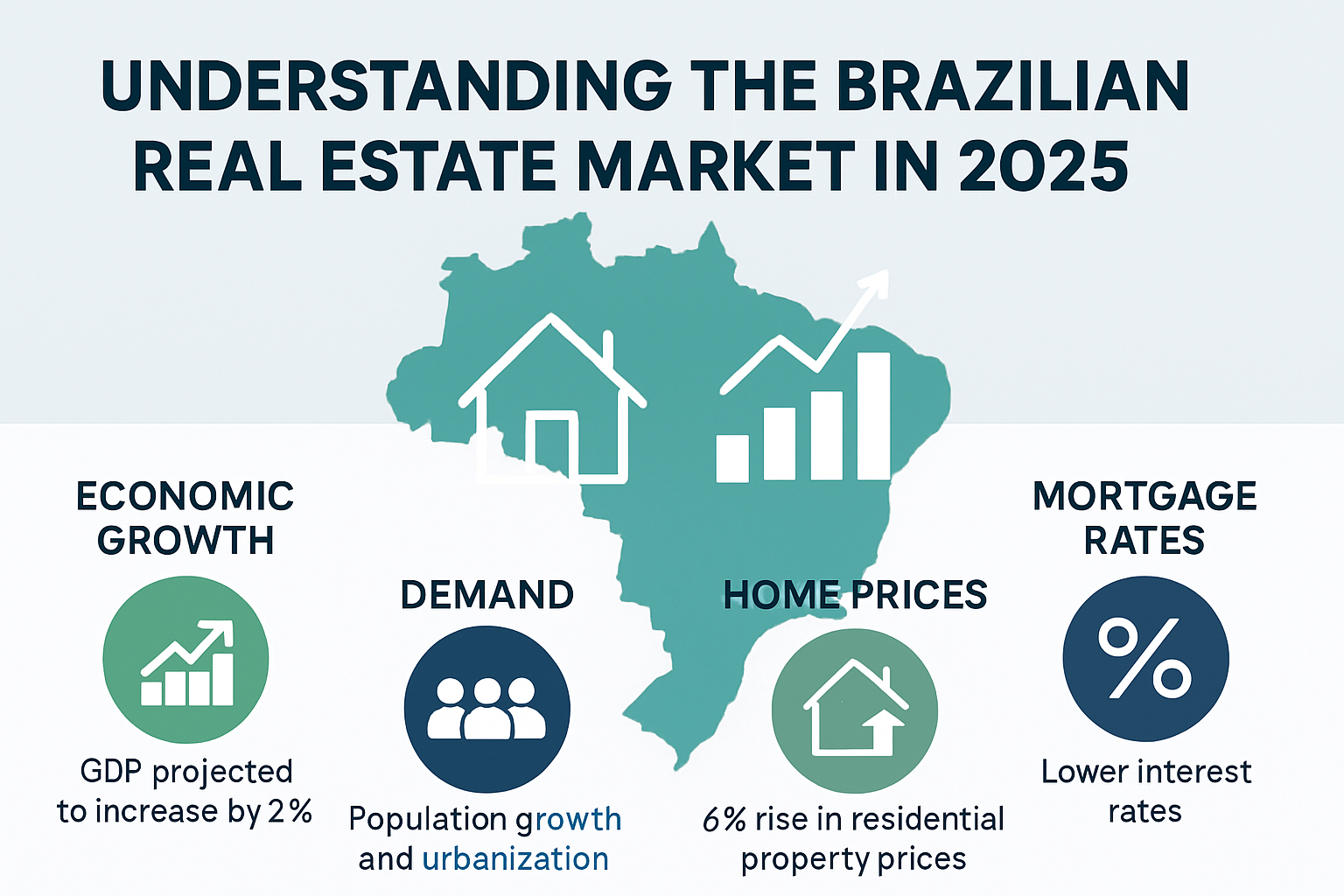
The Brazilian property market has evolved significantly over the past decade, weathering economic challenges and emerging stronger with improved regulations and transparency. In 2025, several factors are converging to create favorable conditions for property investment in Brazil.
Current Market Conditions
Brazil’s economy is showing renewed stability, with inflation rates moderating and interest rates becoming more favorable for real estate transactions. The Central Bank of Brazil has implemented policies that support sustainable growth, making property financing more accessible to both domestic and international buyers [1].
The residential property sector is experiencing steady demand, particularly in major metropolitan areas and coastal regions. Cities like São Paulo, Rio de Janeiro, and increasingly Florianópolis are witnessing construction booms, with developers launching projects that cater to both local residents and foreign investors seeking vacation properties or rental income opportunities.
Market Segmentation
Brazilian real estate can be broadly categorized into several investment segments:
| Segment | Typical Yield | Risk Level | Liquidity |
|---|---|---|---|
| Residential (Major Cities) | 4-6% | Medium | Moderate |
| Vacation Rentals (Beach Areas) | 6-8% | Medium-High | Seasonal |
| Commercial Properties | 5-7% | Medium | Lower |
| Development Projects | 15-25%* | High | Low |
| Land Banking | Variable | High | Very Low |
*Development project returns are potential gains, not guaranteed yields
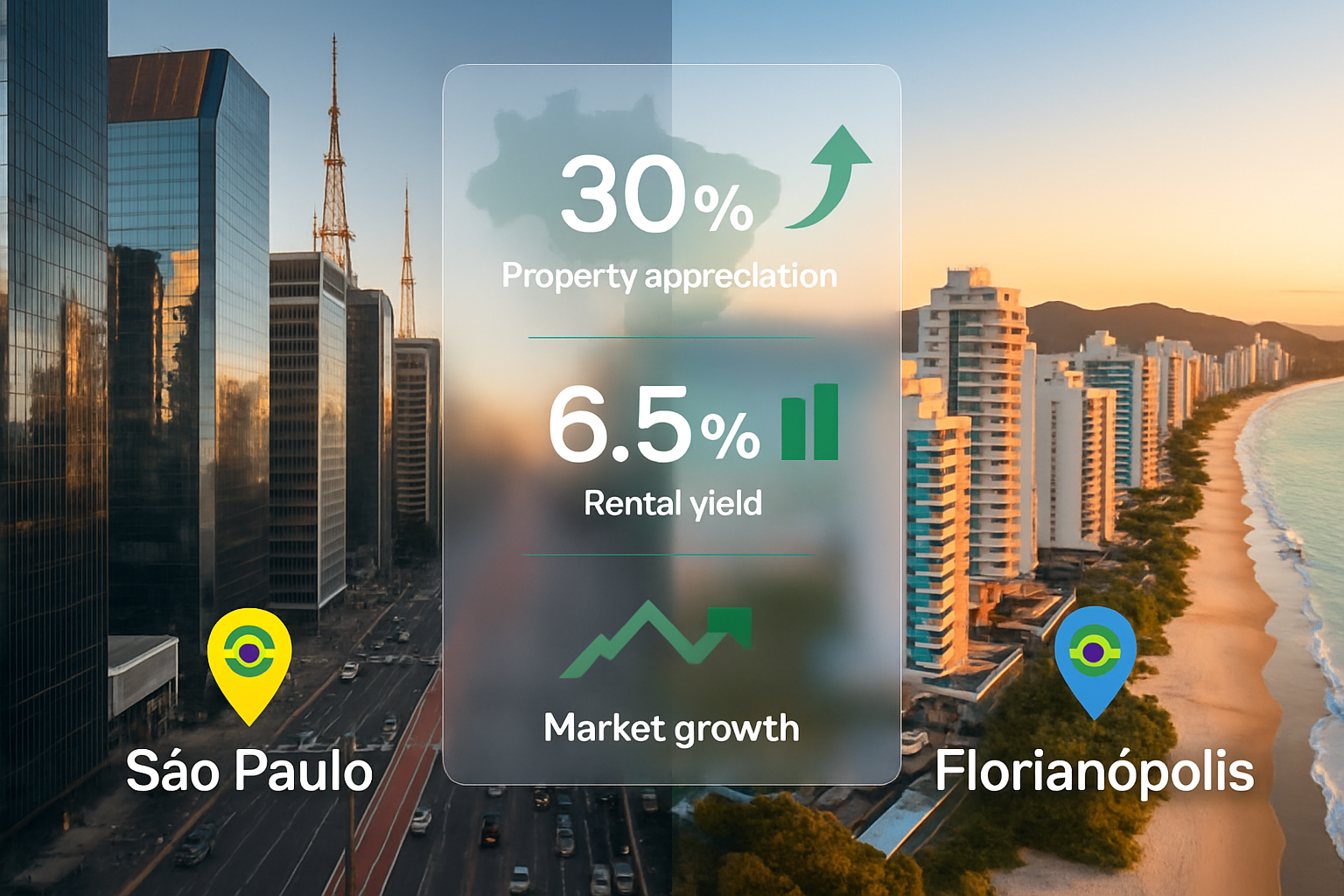
The real estate market in Greater Florianópolis exemplifies the growth trajectory many Brazilian regions are experiencing, with infrastructure improvements and quality of life factors driving property appreciation.
Why Consider Property Investment in Brazil?
Several compelling factors make Brazil an attractive destination for real estate investment, particularly for those seeking emerging market opportunities with developed-world amenities.
💰 Competitive Pricing and Value
Property prices in Brazil remain significantly lower than comparable markets in the United States, Canada, or Western Europe. A beachfront apartment in Florianópolis might cost 40-60% less than similar properties in Miami or Barcelona, while offering comparable or superior quality of life [2].
This pricing advantage creates multiple opportunities:
- Entry-level accessibility for first-time international investors
- Portfolio diversification at reasonable capital commitments
- Higher potential appreciation as markets mature and align with global standards
🌴 Tourism and Rental Income Potential
Brazil attracted over 6.3 million international tourists in 2024, with numbers projected to grow in 2025 as global travel continues rebounding [3]. This tourism boom directly benefits property investors, particularly those focusing on:
- Short-term vacation rentals in beach destinations
- Furnished apartments in business centers like São Paulo
- Properties near major attractions and events
The advantages of investing in studio apartments in Florianópolis demonstrate how strategic property selection can maximize rental returns in high-demand tourist areas.
📈 Appreciation Potential
Historical data shows that well-located Brazilian properties have delivered strong appreciation over medium to long-term holding periods. Coastal cities, in particular, have seen property values increase as infrastructure improvements and domestic migration patterns shift toward quality-of-life destinations.
“The Brazilian real estate market offers a unique combination of affordability, growth potential, and lifestyle benefits that few emerging markets can match. Strategic investors who understand local dynamics can achieve returns that significantly outperform developed markets.” – Brazilian Real Estate Association, 2025
Legal Framework for Foreign Ownership
Unlike some countries that restrict foreign property ownership, Brazil allows international investors to own property with the same rights as Brazilian citizens . There are minimal restrictions, with exceptions primarily limited to rural properties in border areas or properties exceeding certain size thresholds in agricultural zones [4].
This ownership security provides peace of mind and simplifies estate planning, as foreign-owned properties can be inherited, sold, or transferred according to standard legal procedures.
Best Locations for Property Investment in Brazil
Location selection is perhaps the most critical decision in any real estate investment strategy. Brazil’s vast geography offers diverse opportunities, each with distinct characteristics and investment profiles.
São Paulo: Economic Powerhouse
As Brazil’s largest city and financial center, São Paulo offers:
- Strong rental demand from corporate relocations and business travelers
- Established infrastructure and transportation networks
- Diverse property types from luxury high-rises to commercial spaces
- Stable, long-term appreciation in established neighborhoods
Best for: Investors seeking stability, long-term rental income and capital preservation.
Rio de Janeiro: Iconic Destination
Rio combines global recognition with beach lifestyle appeal:
- International tourism driving short-term rental demand
- Iconic neighborhoods like Copacabana, Ipanema, and Leblon
- Event-driven opportunities (conferences, cultural festivals)
- Higher volatility but potential for strong returns
Best for: Investors comfortable with market fluctuations and vacation rental management.
Florianópolis: Emerging Star
The island city of Florianópolis has emerged as one of Brazil’s hottest property markets:
- Exceptional quality of life with 42 beaches and modern amenities
- Growing tech sector attracting young professionals and digital nomads
- Infrastructure development supporting property appreciation
- Lower entry prices compared to Rio and São Paulo
The growth of the Ingleses region in Florianópolis showcases how specific neighborhoods are experiencing rapid development and value appreciation.
For comprehensive analysis of top investment locations, explore the best places to invest in Brazil property .
Other Notable Markets
- Brasília: Stable government-driven demand, consistent rental market
- Curitiba: High quality of life, growing economy, educated workforce
- Salvador: Tourism potential, cultural significance, coastal appeal
- Fortaleza: Beach destination, strong domestic tourism, development opportunities
The Process of Buying Property in Brazil as a Foreigner
Understanding the purchase process is essential for successful property investment in Brazil. While the system is well-established, there are specific requirements for international buyers.
Step 1: Obtain a CPF Number
The Cadastro de Pessoa Fisicas (CPF) is Brazil’s tax identification number, required for all property transactions. Foreign investors can obtain a CPF through:
- Brazilian consulates in their home country
- The Brazilian Federal Revenue Service website
- Through a legal representative in Brazil
The process typically takes 1-2 weeks and requires basic identification documents [5].
Step 2: Secure Financing or Prepare Funds
While Brazilian banks occasionally offer mortgages to foreigners, terms are generally less favorable than those available to residents. Most international investors either:
- Purchase with cash transferred from overseas accounts
- Secure financing in their home country using other assets as collateral
- Partner with local investors who can access domestic financing
Step 3: Property Search and Selection
Working with reputable real estate professionals is crucial. Consider:
- Licensed real estate agents familiar with foreign investor requirements
- Property developers offering new construction with payment plans
- Legal advisors who can conduct due diligence
Quadragon’s development projects exemplify professional real estate development with transparent processes designed to accommodate international investors.
Step 4: Legal Due Diligence
Before committing to purchase, comprehensive legal review should verify:
- Clear title with no encumbrances or disputes
- Property registration accuracy in public records
- Tax compliance of the seller
- Zoning regulations and permitted uses
- Condominium rules and financial health (for apartments)
Step 5: Purchase Agreement and Closing
The formal purchase process involves:
- Promissory purchase agreement
- Deposit payment (typically 10-30% of purchase price)
- Final deed preparation by a notary public
- Property registration at the local Real Estate Registry Office
- Transfer of funds and property ownership
Step 6: Post-Purchase Requirements
After acquisition, investors must:
- Register the property with the Central Bank of Brazil (for amounts exceeding certain thresholds)
- Obtain property tax registration (IPTU)
- Set up utility accounts and condominium payments
- Consider property management services for rental properties
The appreciation potential of buying off-plan properties offers additional benefits for investors willing to commit during the construction phase.
Financial Considerations and Tax Implications
Understanding the complete financial picture is essential for calculating current investment returns and ensuring compliance with both Brazilian and home-country regulations.
Purchase Costs
Beyond the property price, buyers should budget for:
- Property transfer tax (ITBI): 2-4% of property value (varies by municipality)
- Notary and registration fees: 0.5-1.5% of property value
- Legal fees: 1-2% of property value
- Real estate agent commission: Typically paid by seller, but verify
- Currency exchange costs: 1-3% depending on transfer method
Ongoing Ownership Costs
Annual expenses include:
- Property tax (IPTU): 0.5-1.5% of assessed value annually
- Condominium fees: Variable, R$200-2,000+ monthly depending on amenities
- Utilities: Water, electricity, gas, internet
- Property management: 8-12% of rental income if using management services
- Insurance: Optional but recommended, 0.1-0.3% of property value annually
Rental Income Taxation
Rental income in Brazil is subject to progressive taxation:
- Monthly income up to R$1,903.98: Example
- R$1,903.99 to R$2,826.65: 7.5%
- From R$2,826.66 to R$3,751.05: 15%
- R$3,751.06 to R$4,664.68: 22.5%
- Above R$4,664.68: 27.5%
Foreign investors must also consider tax obligations in their home country , as most nations tax worldwide income. However, tax treaties between Brazil and many countries prevent double taxation [6].
Capital Gains Tax
When selling property, capital gains are taxed at progressive rates:
- Up to R$5 million: 15%
- R$5-10 million: 17.5%
- R$10-30 million: 20%
- Above R$30 million: 22.5%
Examples may apply for certain circumstances, such as selling a primary residence or reinvesting proceeds in specific situations.
Currency Considerations
Property investment in Brazil involves currency risk as the Brazilian Real (BRL) fluctuates against major currencies. Strategies to manage this risk include:
- Timing investments during favorable exchange rate periods
- Generating rental income in BRL to match currency exposure
- Hedging strategies through financial instruments
- Long-term perspective to smooth short-term volatility
Risks and Challenges of Property Investment in Brazil
While opportunities are substantial, investors must understand and prepare for potential challenges inherent in emerging market real estate investment.
Economic Volatility
Brazil’s economy has historically experienced periods of instability, including:
- Currency fluctuations affecting property values in foreign currency terms
- Inflation cycles impacting purchasing power and construction costs
- Interest rate changes affecting financing availability and costs
- Political uncertainty occasionally disrupting economic policy
Mitigation strategies:
- Focus on fundamentally strong locations with diverse economic bases
- Maintain long-term investment horizons (5+ years)
- Diversify across property types or locations
- Stay informed about economic indicators and policy changes
Bureaucratic Complexity
Brazil’s legal and administrative systems can be challenging:
- Complex regulations varying by municipality
- Lengthy processes for permits, registrations, and legal procedures
- Documentation requirements that may seem excessive for foreign investors
- Language barriers for non-Portuguese speakers
Mitigation strategies:
- Work with experienced local professionals (lawyers, accountants, agents)
- Budget extra time for administrative processes
- Ensure all documentation is properly translated and notarized
- Consider professional development companies with experience serving international clients
Property Management Challenges
For investors not residing in Brazil, property management presents unique challenges:
- Distance management of maintenance and tenant issues
- Finding reliable property managers with appropriate incentives
- Quality control for renovations and repairs
- Tenant screening and lease enforcement
Mitigation strategies:
- Engage professional property management companies with proven track records
- Establish clear communication protocols and regular reporting
- Budget conservatively for maintenance and vacancy periods
- Consider properties in well-managed condominium buildings
Legal and Title Issues
While Brazil has established property registration systems, issues can arise:
- Title disputes from previous ownership claims
- Informal constructions or additions without proper permits
- Environmental restrictions on certain coastal or protected areas
- Inheritance complications involving multiple heirs
Mitigation strategies:
- Conduct thorough legal due diligence before purchase
- Purchase title insurance when available
- Work with specialized real estate attorneys
- Verify all construction permits and approvals
Maximizing Returns on Property Investment in Brazil
Strategic approaches can significantly enhance investment performance and minimize risks associated with Brazilian real estate.
Buy Off-Plan for Maximum Appreciation
Purchasing properties during the construction phase offers several advantages:
- Lower entry prices compared to completed properties
- Payment plans spreading investment over construction period
- Appreciation potential as project nears completion
- First choice of units and locations within developments
Projects like Tramonto and Solis demonstrate how quality developments can deliver value to early investors.
Focus on High-Demand Rental Markets
Targeting locations with strong, consistent rental demand improves cash flow stability:
- University areas with student housing demand
- Business districts attracting corporate tenants
- Tourist destinations for vacation rental income
- Emerging neighborhoods experiencing gentrification
Optimize for Tax Efficiency
Strategic tax planning can significantly impact net returns:
- Holding structure (personal vs. corporate ownership)
- Expense documentation to maximize deductible costs
- Depreciation schedules for tax purposes
- Exit timing to minimize capital gains exposure
Consult with tax professionals familiar with both Brazilian and home-country tax codes to develop optimal strategies.
Add Value Through Improvements
Strategic renovations can substantially increase property values and rental income:
- Modernizing kitchens and bathrooms delivers highest ROI
- Adding amenities like air conditioning or smart home features
- Improving energy efficiency reduces operating costs
- Enhancing curb appeal attracts higher-quality tenants
Stay Informed About Market Trends
The Brazilian real estate market evolves rapidly. Staying current on trends helps identify opportunities:
- Monitor sales performance transforming Florianópolis’s market
- Follow industry news and developments
- Understand emerging trends like cryptocurrency in real estate development
- Network with other investors and industry professionals
Working with Professional Partners
Success in property investment in Brazil often depends on the quality of professional relationships and partnerships established.
Choosing the Right Real Estate Developer
When considering new construction, evaluate developers based on:
- Track record of completed projects delivered on time
- Financial stability and transparent business practices
- Quality standards in construction and finishes
- After-sales support and warranty provisions
- Experience with international clients
Reputable developers provide comprehensive information about their development portfolio and maintain open communication throughout the investment process.
Engaging Legal Professionals
A qualified real estate attorney should:
- Be licensed to practice in the relevant Brazilian jurisdiction
- Have specific experience with foreign investor transactions
- Provide clear fee structures and service agreements
- Offer references from previous international clients
- Communicate effectively in your preferred language
Selecting Property Managers
Professional property management is crucial for non-resident investors. Quality managers should offer:
- Tenant screening and lease administration
- Rent collection and financial reporting
- Maintenance coordination and emergency response
- Regular property inspections with photo documentation
- Transparent fee structures aligned with industry standards
Financial and Tax Advisors
Cross-border investment requires specialized expertise:
- Brazilian accountants familiar with foreign investor requirements
- Home-country tax advisors understanding international property income
- Currency specialists for optimal fund transfers
- Financial planners integrating Brazilian assets into overall portfolio strategy
The Future of Property Investment in Brazil
Looking ahead, several trends are shaping the Brazilian real estate investment landscape in 2025 and beyond.
Infrastructure Development
Significant infrastructure investments are enhancing property values:
- Transportation improvements (metro expansions, highways, airports)
- Utility upgrades (water, sewage, electricity grid modernization)
- Digital infrastructure (fiber optic networks, 5G deployment)
- Public amenities (parks, cultural facilities, healthcare)
These developments create appreciation opportunities in previously underserved areas while enhancing the appeal of established markets.
Demographic Shifts
Brazil’s demographic trends favor real estate investment:
- Urbanization continuing with migration to major cities
- Middle class expansion increasing housing demand
- Aging population creating demand for specific property types
- Remote work adoption driving demand in quality-of-life destinations
Sustainability and Green Building
Environmental consciousness is influencing development:
- Green building certifications becoming market differentiators
- Energy-efficient properties commanding premium rents
- Sustainable communities attracting environmentally conscious buyers
- Regulatory incentives for sustainable construction practices
Technology Integration
PropTech innovations are transforming the market:
- Virtual property tours facilitating international investment
- Blockchain-based title registration and transaction processing
- Smart building technologies enhancing property management
- Data analytics improving investment decision-making
Regulatory Evolution
Brazil continues modernizing its real estate regulatory framework:
- Simplified registration processes reducing transaction times
- Enhanced transparency in property ownership records
- Improved foreign investment reporting and compliance systems
- Consumer protection strengthening buyer rights
Conclusion: Taking the Next Steps in Property Investment in Brazil
Property investment in Brazil offers compelling opportunities for investors seeking emerging market exposure, portfolio diversification, and attractive returns. The combination of competitive pricing, strong appreciation potential, favorable ownership laws for foreigners, and diverse market options creates an environment where informed investors can build substantial wealth.
However, success requires thorough preparation, professional guidance, and realistic expectations. The Brazilian market rewards investors who:
✅ Conduct comprehensive research on locations, property types, and market conditions
✅ Engage qualified professionals for legal, financial, and property management support
✅ Maintain long-term perspectives rather than seeking quick profits
✅ Understand and prepare for currency, economic, and political risks
✅ Stay informed about market trends and regulatory changes
Actionable Next Steps
For those ready to explore property investment in Brazil:
- Define your investment objectives – rental income, appreciation, vacation home, or combination
- Research target locations – compare markets based on your goals and risk tolerance
- Establish your budget – including purchase costs, ongoing expenses, and reserve funds
- Connect with professionals – contact experienced real estate developers and advisors
- Visit potential markets – experience locations firsthand when possible
- Start with manageable investments – consider beginning with a single property to learn the market
- Develop your network – build relationships with other investors and local professionals
The Brazilian real estate market in 2025 presents opportunities that may not persist indefinitely as the market matures and aligns more closely with global pricing standards. For investors willing to navigate the unique characteristics of this dynamic market, property investment in Brazil can deliver both financial returns and lifestyle benefits that few other markets can match.
Whether you’re drawn to the beaches of Florianópolis, the business opportunities of São Paulo, or the iconic appeal of Rio de Janeiro, the time to begin your Brazilian property investment journey is now. With proper preparation, professional guidance, and strategic execution, you can position yourself to benefit from one of South America’s most promising real estate markets.
Explore more about living in Florianópolis and discover how this emerging market can fit into your investment portfolio.
References
[1] Central Bank of Brazil. (2024). Economic Outlook and Monetary Policy Report.
[2] Brazilian Real Estate Market Association. (2024). Comparative International Property Price Index.
[3] Brazilian Ministry of Tourism. (2024). Annual Tourism Statistics Report.
[4] Brazilian Civil Code, Article 1,134 – Foreign Property Ownership Regulations.
[5] Brazilian Federal Revenue Service. (2025). CPF Registration Guidelines for Foreign Nationals.
[6] Brazilian Federal Revenue Service. (2024). International Tax Treaty Provisions and Foreign Income Taxation.