
Investing in Real Estate in Brazil: Your Complete Guide to Property Investment Success in 2025

Brazil’s real estate market is experiencing a remarkable transformation in 2025, offering international and domestic investors unprecedented opportunities for wealth creation. With a population exceeding 215 million people, a growing middle class, and strategic economic reforms, Investing in Real Estate in Brazil has become one of the most attractive emerging market opportunities for savvy property investors seeking diversification and strong returns.
The Brazilian property market presents a unique combination of factors that make it particularly appealing: affordable entry points compared to developed markets, strong rental yields in key cities, currency advantages for foreign investors, and significant infrastructure development driving property appreciation. Whether you’re considering residential apartments in bustling São Paulo, beachfront condos in Florianópolis, or commercial properties in emerging neighborhoods, understanding the nuances of this dynamic market is essential for success.
Key Takeaways
- Brazil offers competitive property prices with entry points significantly lower than North American and European markets, making it accessible for various investor budgets
- Foreign investors have full property ownership rights in Brazil, with straightforward legal processes once you obtain a CPF tax identification number
- High rental yields of 6-10% annually are achievable in prime locations, particularly in tourist destinations and major metropolitan areas
- Currency fluctuations can work in favor of foreign investors, especially those holding US dollars or euros
- Strategic location selection is critical—cities like Florianópolis, São Paulo, and Rio de Janeiro each offer distinct advantages and risk profiles for property investors
Understanding the Brazilian Real Estate Market in 2025
The Brazilian property landscape has evolved significantly over the past decade, shaped by economic cycles, political reforms, and demographic shifts. In 2025, the market demonstrates renewed strength following previous periods of volatility, with several key indicators pointing toward sustained growth.
Current Market Conditions
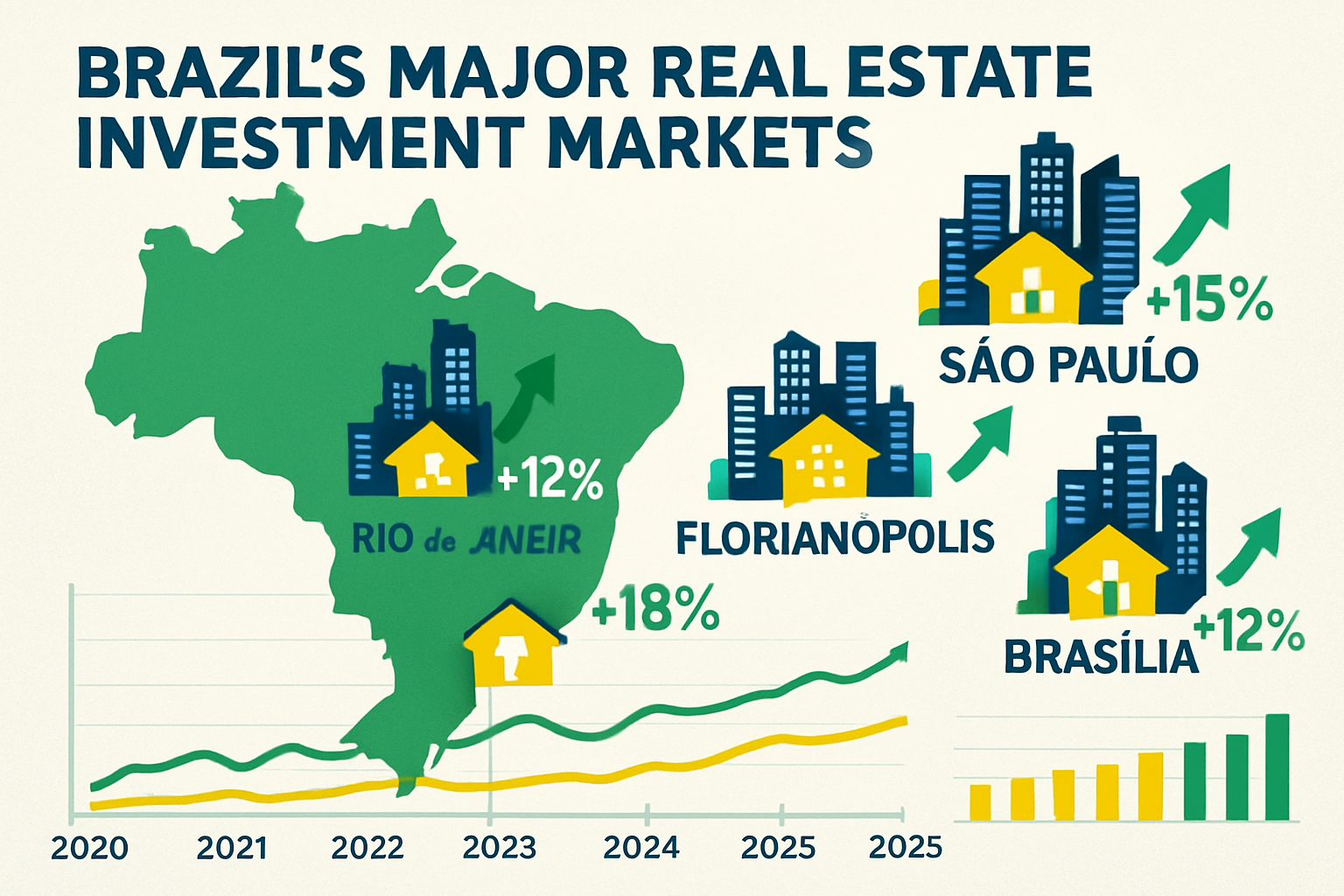
Brazil’s real estate sector is benefiting from historically low interest rates (relative to previous decades), improved economic stability, and increased consumer confidence. The residential market has shown particular resilience, with property values in major cities appreciating between 8-15% annually in select neighborhoods [1].
The real estate market in Greater Florianópolis exemplifies this trend, with robust sales performance and strong demand for quality developments. This coastal region has emerged as a hotspot for both domestic and international investors seeking lifestyle properties with appreciated potential.
Economic Factors Driving Investment
Several macroeconomic factors make this an opportune time for property investment:
- 📈 GDP Growth : Brazil’s economy is projected to grow 2.5-3% in 2025, supporting employment and housing demand
- 💰 Inflation Control : Central bank policies have successfully stabilized inflation, protecting real estate values
- 🏗️ Infrastructure Investment : Government spending on transportation, utilities, and urban development enhances property values
- 👥 Demographic Trends : Urbanization continues, with millions moving to cities annually, creating sustained housing demand
The convergence of these factors creates a favorable environment for investors who understand how to navigate the market effectively.
Why Investing in Real Estate in Brazil Makes Financial Sense
Brazilian property investment offers compelling advantages that distinguish it from other emerging and developed markets. Understanding these benefits helps investors make informed decisions aligned with their financial goals.
Attractive Price Points and Affordability
Compared to major cities in North America, Europe, or Asia, Brazilian real estate remains remarkably affordable . A modern two-bedroom apartment in a desirable São Paulo neighborhood might cost $150,000-250,000, while equivalent properties in New York or London would command 3-5 times that price [2].
This affordability extends across property types:
| Property Type | Average Price Range (USD) | Typical Location |
|---|---|---|
| Studio Apartment | $80,000 – $150,000 | Urban centers |
| 2-Bedroom Condo | $150,000 – $300,000 | Mid-tier neighborhoods |
| 3-Bedroom Luxury Unit | $300,000 – $600,000 | Premium areas |
| Beachfront Property | $250,000 – $800,000 | Coastal cities |
| Commercial Space | $200,000 – $1,000,000+ | Business districts |
Strong Rental Yields and Cash Flow
One of the most attractive aspects of Brazilian real estate investment is the potential for strong rental income . Annual gross rental yields typically range from 6-10%, significantly higher than the 2-4% common in many developed markets [3].
Tourist destinations like Florianópolis offer particularly strong short-term rental opportunities. Properties in strategic locations can generate substantial income during peak seasons, with some investors reporting annual returns exceeding 12% when combining rental income and property appreciation.
The advantages of investing in studios in Florianópolis demonstrate how strategic property selection can maximize rental returns while minimizing initial investment.
Currency Advantages for Foreign Investors
The Brazilian Real (BRL) has historically traded at favorable exchange rates against major currencies like the US Dollar and Euro. This creates opportunities for foreign investors to:
- Purchase properties at advantageous rates during currency dips
- Benefit from currency appreciation when converting rental income or sale proceeds
- Hedge against home currency depreciation through geographic diversification
“Currency fluctuations have historically provided foreign investors with an additional 10-20% advantage on top of property appreciation when timing their entry and exit strategically.” – Brazilian Real Estate Investment Report, 2025
Tax Benefits and Incentives
Brazil offers several tax considerations that can benefit property investors:
- No capital gains tax on the sale of a primary residence (certain conditions apply)
- Deductible expenses including property management, maintenance, and mortgage interest
- Depreciation benefits for rental properties that reduce taxable income
- Special economic zones in some regions offering additional tax advantages
Understanding these benefits requires working with qualified local tax professionals who can structure investments optimally.
Best Locations for Investing in Real Estate in Brazil
Location selection is perhaps the most critical decision when investing in Brazilian real estate. Different cities and regions offer distinct advantages, risks, and return profiles.
São Paulo: Brazil’s Economic Powerhouse
As Latin America’s largest city and Brazil’s financial capital, São Paulo offers:
✅ Consistent demand from corporate relocations and business travelers
✅ Diverse neighborhoods catering to various budget levels
✅ Strong infrastructure including metro systems and international airports
✅ Cultural amenities attracting long-term residents
The city’s sheer size (12+ million residents) ensures sustained housing demand, although competition among investors is intense in prime areas.
Rio de Janeiro: Iconic Beauty with Tourism Appeal
Rio combines natural beauty with urban sophistication, offering:
✅ Tourism-driven rental demand year-round
✅ Beachfront properties with strong appreciation potential
✅ International recognition attracting global investors
✅ Upcoming infrastructure projects improving connectivity
However, investors should carefully investigate neighborhoods, as safety and infrastructure quality vary significantly across the city.
Florianópolis: The Rising Star of Brazilian Real Estate
Florianópolis has emerged as one of Brazil’s most promising real estate markets, combining quality of life with investment potential. The best places to invest in Brazil property increasingly include this island city for several compelling reasons:
✅ Exceptional quality of life with 42 beaches and natural beauty
✅ Growing tech sector attracting young professionals and digital nomads
✅ Strong appreciation rates averaging 12-18% annually in select areas
✅ Tourism infrastructure supporting short-term rental income
✅ Safety and cleanliness above Brazilian averages
The growth of the English region in Florianópolis exemplifies how strategic development and infrastructure improvements drive property values. This northern beach neighborhood has seen remarkable transformation, with new commercial centers, improved roads, and quality residential developments attracting both residents and investors.
Brasília: Government Stability and Planned Development
Brazil’s capital city offers unique advantages:
✅ Government employment providing economic stability
✅ Planned urban design with organized infrastructure
✅ Growing population of civil servants and contractors
✅ Lower volatility compared to market-driven cities
Emerging Markets and Secondary Cities
Savvy investors are also exploring secondary cities like Curitiba, Belo Horizonte, and Porto Alegre, which offer:
- Lower entry prices with growth potential
- Less competition from institutional investors
- Local economic drivers supporting demand
- Opportunity for early-stage appreciation
Legal Framework for Investing in Real Estate in Brazil
Understanding Brazil’s legal requirements is essential for successful property investment. While the process is straightforward, several important steps and regulations must be followed.
Foreign Ownership Rights
Brazil welcomes foreign real estate investment with minimal restrictions . Foreign individuals and companies can purchase property with the same rights as Brazilian citizens, with few exceptions:
- Properties in border areas or security zones may require special authorization
- Agricultural land purchases have specific size limitations
- All other residential and commercial properties are freely available to foreigners
This open policy makes Brazil one of the most accessible emerging markets for international property investors.
Obtaining a CPF (Tax Identification Number)
The CPF (Cadastro de Pessoa Fisicas) is Brazil’s tax identification number, required for all property transactions. Foreign investors can obtain a CPF through:
- Brazilian consulates in their home country
- Federal Revenue Service offices in Brazil
- Authorized representatives with proper documentation
The process typically takes 1-2 weeks and requires:
- Valid passport
- Proof of address (home country)
- Completed application form
- Nominal fee (approximately $5-10 USD)
Once obtained, the CPF enables property purchases, bank account opening, and tax compliance.
The Property Purchase Process
Buying real estate in Brazil follows a structured process:
Step 1: Property Selection and Due Diligence
- Research properties and locations
- Verify property titles and legal status
- Confirm no outstanding debts or liens
- Inspect physical condition
Step 2: Preliminary Agreement
- Negotiate purchase price and terms
- Sign preliminary contract (purchase and sale agreement)
- Pay deposit (typically 10-30% of purchase price)
Step 3: Final Purchase and Registration
- Complete payment
- Sign final deed before a notary
- Register property at the local Real Estate Registry (Cartório de Registro de Imóveis).
- Pay registration fees and transfer taxes
Step 4: Post-Purchase Requirements
- Obtain property tax registration
- Set up utility accounts
- Arrange property insurance
- Consider property management if needed
Working with Legal Professionals
Engaging qualified professionals is crucial:
- 👨⚖️ Real Estate Attorney : Reviews contracts, conducts due diligence, ensures legal compliance
- 🏢 Real Estate Agent : Identifies properties, negotiates terms, facilitates transactions
- 💼 Accountant : Structures ownership, manages tax obligations, optimizes returns
- 🔍 Property Inspector : Assesses physical condition, identifies potential issues
These professionals typically charge 2-5% of the property value collectively, but their expertise prevents costly mistakes.
Taxes and Ongoing Costs
Property ownership in Brazil involves several taxes and expenses:
Purchase Taxes:
- ITBI (Property Transfer Tax): 2-3% of property value
- Registration fees: 0.5-1% of property value
- Legal and notary fees: 1-2% of property value
Annual Taxes:
- IPTU (Property Tax): 0.3-1.5% of assessed value annually
- Condominium fees: Varies widely by property type and amenities
Rental Income Taxes:
- Non-residents: 15% withholding tax on gross rental income
- Residents: Progressive rates from 0-27.5% on net rental income
Capital Gains Tax:
- 15% on profits from property sales (with exemptions for primary residences)
Understanding these costs helps investors accurately calculate returns and budget appropriately.
Financing Options for Property Investment in Brazil
While many foreign investors purchase Brazilian property with cash, several financing options exist for those seeking leverage.
Mortgage Financing for Foreign Investors
Obtaining mortgage financing as a foreign investor is challenging but possible . Brazilian banks typically require:
- Larger down payments (40-50% minimum)
- Proof of income from verifiable sources
- Brazilian bank account and financial history
- Higher interest rates compared to local borrowers
Interest rates for foreign investors typically range from 8-12% annually, higher than rates for Brazilian citizens (6-9%) but still reasonable by emerging market standards [4].
Developer Financing and Payment Plans
Many Brazilian developers offer attractive payment plans , particularly for pre-construction properties. These arrangements typically include:
- Low initial deposit (10-20% of total price)
- Monthly installments during construction (24-36 months)
- Final payment upon delivery (30-50% of total price)
- No interest or low interest during construction period
The appreciation potential for buying off-plan can be substantial, with properties often appreciating 15-30% between purchase and delivery.
Alternative Financing Structures
Creative investors use various strategies:
- Home equity loans from their home country at lower rates
- Partnership structures sharing investment with local investors
- Cryptocurrency financing through specialized platforms
- Seller financing negotiated directly with property owners
Each approach has advantages and risks that should be carefully evaluated with financial advisors.
Investment Strategies for Maximum Returns
Successful Brazilian real estate investment requires strategic planning and clear objectives. Different strategies suit different investor profiles and goals.
Buy-and-Hold for Long-Term Appreciation
This conservative strategy focuses on:
- Purchasing quality properties in appreciating neighborhoods
- Holding for 5-10+ years to capture value growth
- Generating rental income to cover expenses
- Benefiting from currency appreciation and market cycles
Ideal for investors seeking steady wealth accumulation with minimal active management.
Short-Term Rentals and Tourism Properties
Brazil’s tourism industry supports strong short-term rental opportunities:
- Beachfront properties in Florianópolis, Rio, or Bahia
- Urban apartments near business districts and attractions
- Vacation homes in resort areas
- Seasonal pricing maximizing peak period income
Platforms like Airbnb and local equivalents make management accessible, although regulations vary by city. Some municipalities require registration and limit rental days annually.
Pre-Construction and Development Projects
Buying during the construction phase offers significant advantages:
✅ Lower entry prices (15-30% below completion value)
✅ Payment flexibility with extended installment plans
✅ Appreciation during construction as the project progresses
✅ Modern amenities and designs appealing to renters
Quality developers like Quadragon offer well-located projects with strong appreciation potential. Their Tramonto development demonstrates how strategic location and quality construction drive investor returns, with construction progress proceeding on schedule.
Fix-and-Flip Opportunities
For hands-on investors, renovation projects can generate quick returns:
- Undervalued properties requiring cosmetic improvements
- Renovation and modernization increasing market value
- Quick resale capturing 20-40% appreciation
- Local market knowledge essential for success
This strategy requires understanding local construction costs, contractor reliability, and buyer preferences.
Commercial Real Estate Investment
Commercial properties offer different risk-return profiles:
- Office spaces in business districts
- Retail locations in high-traffic areas
- Mixed-use developments combining residential and commercial
- Industrial properties in growing logistics hubs
Commercial investments typically require larger capital but can provide stable long-term tenants and professional lease structures.
Risks and Challenges of Investing in Real Estate in Brazil

While opportunities abound, investors must understand and mitigate various risks associated with Brazilian property investment.
Economic Volatility and Currency Risk
Brazil’s economy has historically experienced cycles of growth and contraction. Key risks include:
- Currency fluctuations affecting property values in foreign currency terms
- Inflation potentially eroding purchasing power
- Interest rate changes impacting financing costs and buyer demand
- Political uncertainty occasionally disrupting economic stability
Mitigation strategies:
- Diversify across multiple properties and locations
- Focus on hard assets with intrinsic value
- Maintain adequate cash reserves for market downturns
- Consider currency hedging for large investments
Legal and Bureaucratic Complexities
Brazil’s legal system can be challenging for foreign investors:
- Complex regulations varying by municipality
- Slow bureaucratic processes for permits and registrations
- Language barriers in legal documentation
- Property title issues requiring thorough due diligence
Mitigation strategies:
- Hire experienced local legal counselor
- Conduct comprehensive title searches
- Allow extra time for administrative processes
- Work with reputable developers and agents
Property Management Challenges
Managing Brazilian property from abroad presents unique challenges:
- Distance and time zones complicating oversight
- Maintenance coordination requiring local presence
- Tenant management and rent collection
- Cultural and language differences in business practices
Mitigation strategies:
- Engage professional property management companies
- Establish clear communication protocols
- Visit properties regularly or appoint local representatives
- Use technology for remote monitoring and management
Market Liquidity Considerations
Real estate liquidity varies significantly by location and property type:
- Prime locations sell relatively quickly (3-6 months)
- Secondary markets may require 6-12+ months to sell
- Unique or luxury properties can take longer to find buyers
- Economic downturns significantly extend selling timelines
Mitigation strategies:
- Invest with a long-term horizon (5+ years)
- Maintain emergency funds for unexpected expenses
- Price competitively when selling
- Consider properties with broad market appeal
Working with Developers and Real Estate Professionals
Selecting the right partners is crucial for investment success in Brazil. Quality developers and professionals significantly reduce risks and enhance returns.
Choosing Reputable Developers
When evaluating developers, consider:
- Track record of completed projects and satisfied buyers
- Financial stability ensuring project completion
- Quality of construction and attention to detail
- Location selection in appreciating areas
- Transparency in communication and documentation
Established developers with proven portfolios offer greater security than unknown entities. Reviewing current development projects helps assess quality standards and market positioning.
The Role of Real Estate Agents
Professional agents provide valuable services:
- Market knowledge and pricing guidance
- Property access to listings and off-market opportunities
- Negotiation expertise securing favorable terms
- Transaction coordination managing paperwork and deadlines
Agent commissions typically range from 3-6% of the purchase price, usually paid by the seller.
Property Management Services
Professional management companies handle:
- Tenant screening and lease agreements
- Rent collection and financial reporting
- Maintenance coordination and emergency repairs
- Legal compliance with local regulations
- Marketing for vacancies
Management fees typically range from 8-15% of monthly rental income, but quality management protects your investment and maximizes returns.
Building Your Investment Team
A comprehensive team might include:
| Professional | Role | Typical Cost |
|---|---|---|
| Real Estate Attorney | Legal compliance, contract review | $1,000-3,000 per transaction |
| Accountant | Tax planning, financial structuring | $500-2,000 annually |
| Real Estate Agent | Property sourcing, negotiation | 3-6% of purchase price |
| Property Manager | Day-to-day operations | 8-15% of rental income |
| Inspector | Property condition assessment | $300-800 per inspection |
Investing in quality professionals pays dividends through avoided problems and optimized returns.
Emerging Trends in Brazilian Real Estate for 2025
The Brazilian property market is evolving rapidly, with several trends shaping investment opportunities.
Technology and Cryptocurrency Integration
Brazil is at the forefront of cryptocurrency and real estate development integration , with some developers accepting Bitcoin and other cryptocurrencies for property purchases. This innovation offers:
- International payment flexibility bypassing traditional banking
- Transaction speed reducing settlement times
- Privacy benefits for qualified investors
- Hedging opportunities against currency volatility
Sustainable and Green Building
Environmental consciousness is driving demand for:
- Energy-efficient designs reducing operating costs
- Solar power integration in new developments
- Water conservation systems addressing resource concerns
- Green certifications (LEED, AQUA) commanding premium prices
Properties with sustainability features often achieve 10-15% higher rental rates and faster appreciation [5].
Remote Work and Lifestyle Migration
The global shift toward remote work has impacted Brazilian real estate:
- Increased demand in coastal and lifestyle cities like Florianópolis
- Home office requirements driving preference for larger units
- Digital nomad influx supporting short-term rental markets
- Quality of life prioritization over proximity to offices
This trend particularly benefits cities offering natural beauty, safety, and modern infrastructure.
Mixed-Use and Smart Developments
Modern developments increasingly feature:
- Integrated commercial and residential spaces
- Smart home technology and building automation
- Shared amenity spaces (coworking, fitness, recreation)
- Community-focused designs enhancing livability
These features attract premium tenants and support higher valuations.
Practical Steps to Start Investing in Real Estate in Brazil
Ready to begin your Brazilian property investment journey? Follow these actionable steps:
Step 1: Define Your Investment Objectives
Clarify your goals:
- Investment timeline (short-term flip vs. long-term hold)
- Return expectations (rent income vs. appreciation)
- Risk tolerance (established vs. emerging markets)
- Involvement level (hands-on vs. passive investment)
- Budget and financing (cash purchase vs. leveraged)
Step 2: Research and Education
Invest time learning about:
- Market conditions in target cities
- Legal requirements and processes
- Tax implications in Brazil and your home country
- Currency considerations and exchange strategies
- Cultural and business practices in Brazil
Step 3: Build Your Professional Network
Connect with:
- Experienced real estate attorneys specializing in foreign investment
- Reputable developers with strong track records
- Licensed real estate agents in target markets
- Property management companies for ongoing operations
- Other investors for insights and referrals
Consider reaching out to established developers to learn more about current opportunities .
Step 4: Visit Brazil and Inspect Properties
Nothing replaces on-the-ground research:
- Tour multiple neighborhoods to understand character and amenities
- Inspect properties personally or via trusted representatives
- Meet with professionals face-to-face to establish relationships
- Experience local lifestyle to assess long-term potential
- Attend property viewings and developer presentations
Step 5: Conduct Thorough Due Diligence
Before purchasing:
- Verify property titles and ownership history
- Check for liens or encumbrances on the property
- Review building permits and legal compliance
- Assess physical condition through professional inspection
- Analyze comparable sales to confirm fair pricing
- Understand all costs including taxes, fees, and ongoing expenses
Step 6: Structure Your Investment
Determine optimal ownership structure:
- Personal ownership (simplest for single properties)
- Brazilian corporation (for multiple properties or commercial investment)
- Foreign entity (depending on tax treaties and home country laws)
- Partnership structures (sharing investment with others)
Consult with tax professionals in both Brazil and your home country.
Step 7: Execute the Purchase
Follow the formal process:
- Obtain CPF if not already completed
- Open Brazilian bank account for transactions
- Sign preliminary contract and pay deposit
- Complete due diligence during contingency period
- Finalize financing if applicable
- Final sign deed before notary.
- Register property at local registry
- Obtain property tax registration and insurance
Step 8: Implement Management Strategy
After purchase:
- Engage property management if needed
- Market for tenants or short-term rentals
- Set up accounting systems for income and expense tracking
- Establish maintenance protocols for property upkeep
- Monitor performance against investment objectives
- Stay informed about market conditions and regulatory changes
Conclusion: Your Path to Successful Brazilian Real Estate Investment
Investing in Real Estate in Brazil presents compelling opportunities for investors seeking diversification, strong returns, and exposure to one of the world’s most dynamic emerging markets. With affordable entry points, attractive rental yields, favorable foreign ownership laws, and growing economic stability, Brazil’s property market offers advantages that few other countries can match.
Success requires understanding the unique characteristics of the Brazilian market, from legal requirements and tax considerations to location selection and risk management. By working with reputable professionals, conducting thorough due diligence, and maintaining a long-term perspective, investors can navigate challenges and capitalize on the substantial opportunities available.
The key to success lies in strategic planning and informed decision-making . Whether you’re attracted to the cosmopolitan energy of São Paulo, the iconic beaches of Rio de Janeiro, or the exceptional quality of life in Florianópolis, Brazilian real estate offers pathways to wealth creation suited to various investment styles and objectives.
Your Next Steps
Ready to explore Brazilian real estate investment opportunities? Consider these immediate actions:
- Research specific markets that align with your investment criteria and goals
- Connect with established developers to learn about current and upcoming projects
- Consult with legal and tax professionals to understand implications for your situation
- Visit Brazil to experience markets firsthand and build local relationships
- Start small with a single property to gain experience before scaling your portfolio
The Brazilian real estate market rewards those who approach it with preparation, patience, and partnership with knowledgeable local experts. By following the guidance in this comprehensive guide, you’re well-equipped to begin your journey toward successful property investment in Brazil.
For more information about quality investment opportunities in Florianópolis and other Brazilian markets, explore available developments and stay informed through market news and insights .
References
[1] Brazilian Real Estate Market Report, FipeZap Index, 2025
[2] Global Property Guide, “Brazil Property Price Comparisons,” 2025
[3] Brazilian Association of Real Estate Credit and Savings Entities (ABECIP), Annual Report 2025
[4] Central Bank of Brazil, Mortgage Rate Statistics, 2025
[5] Green Building Council Brazil, “Sustainability Premium Study,” 2024