
How to Invest in Brazil: Your Complete 2025 Guide

Brazil’s economy is booming, and savvy investors worldwide are taking notice. With a GDP exceeding $2 trillion, abundant natural resources, and a growing middle class of over 100 million people, Brazil presents compelling opportunities for those looking to diversify their portfolios beyond traditional markets. Whether you’re interested in stocks, real estate, or emerging sectors, understanding how to invest in Brazil can unlock significant returns in one of the world’s most dynamic emerging markets.
Key Takeaways
- 🌎 Brazil offers diverse investment opportunities across stocks, bonds, real estate, and commodities, making it ideal for portfolio diversification
- 📈 The Brazilian stock market (B3) provides access to leading companies in banking, energy, agriculture, and technology sectors
- 🏠 Real estate investments in cities like Florianópolis show strong appreciation potential, especially in beachfront and tourism-focused developments
- 💰 Foreign investors can access Brazilian markets through ADRs, ETFs, and direct investments with proper registration
- ⚖️ Understanding tax implications and regulatory requirements is essential before committing capital to Brazilian investments
Understanding Brazil’s Investment Landscape in 2025
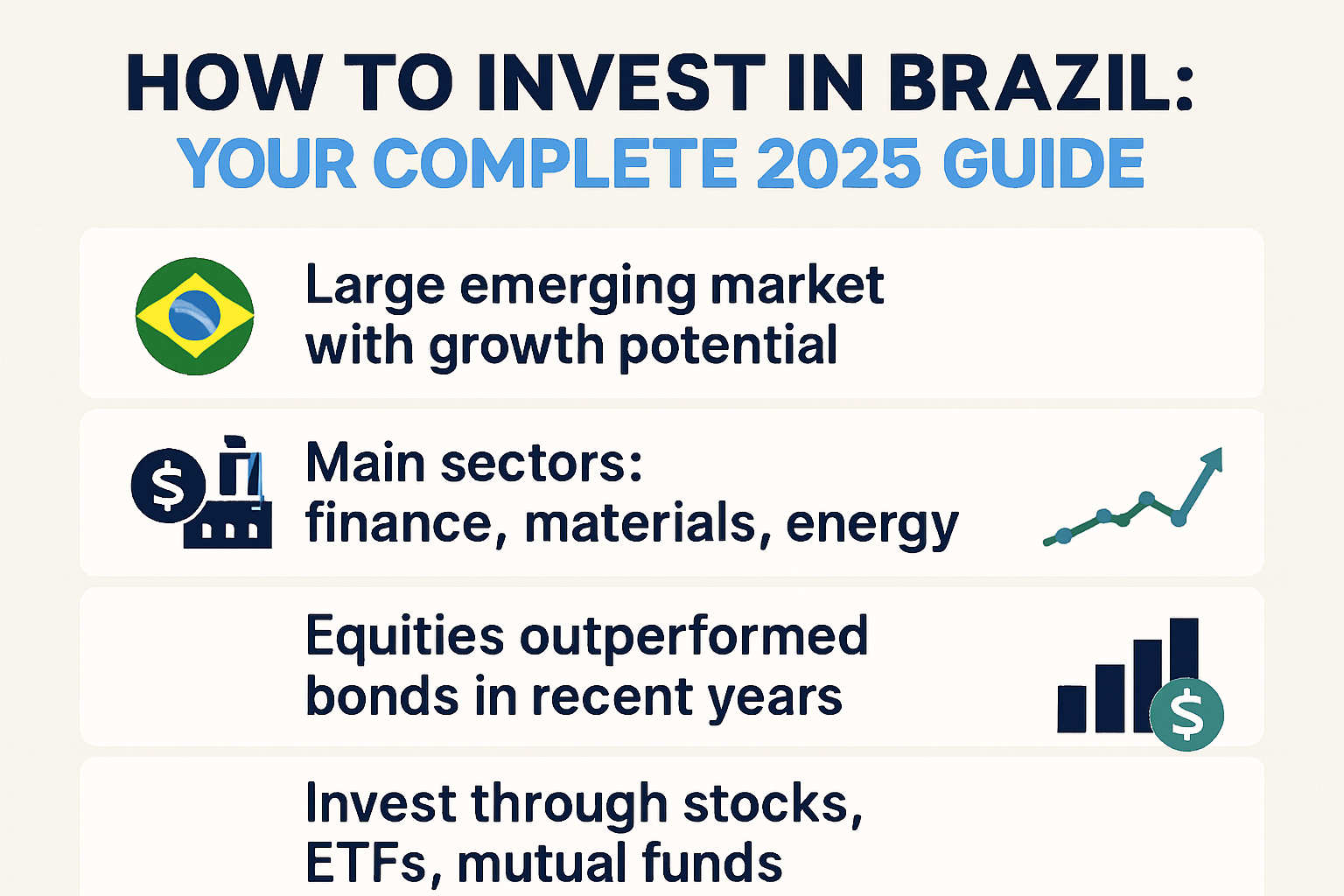
Brazil stands as Latin America’s largest economy and the world’s ninth-largest by GDP. The country’s economic diversity spans agriculture, mining, manufacturing, and services, creating multiple entry points for investors. The Brazilian Real (BRL) serves as the national currency, and exchange rate fluctuations can significantly impact investment returns for foreign investors.
Why Invest in Brazil?
Several factors make Brazil an attractive investment destination:
Economic Growth Potential 📊
Brazil’s economy continues to expand, driven by domestic consumption, infrastructure development, and export growth. The country’s young population and increasing urbanization create sustained demand across multiple sectors.
Natural Resource Wealth
Brazil ranks among the world’s top producers of coffee, soybeans, iron ore, and oil. This resource abundance provides stability and growth opportunities in commodity-related investments.
Strategic Market Position
As a member of BRICS (Brazil, Russia, India, China, South Africa), Brazil plays a crucial role in emerging market dynamics and benefits from regional trade agreements throughout South America.
Improving Business Environment
Recent regulatory reforms and digital transformation initiatives have made it easier for foreign investors to enter Brazilian markets. The government’s commitment to privatization and infrastructure modernization creates additional opportunities.
How to Invest in Brazil: Stock Market Opportunities
The B3 (Brasil Bolsa Balcão) represents Brazil’s primary stock exchange, hosting over 400 publicly traded companies. For international investors, several pathways exist to access Brazilian equities.
Direct Stock Purchases
Foreign investors can purchase Brazilian stocks directly through:
- Opening a Brazilian brokerage account with firms like XP Investimentos or BTG Pactual
- Completing CPF registration (Cadastro de Pessoas Físicas) – Brazil’s tax identification number
- Transferring funds through international wire transfers or specialized currency exchange services
American Depositary Receipts (ADRs)
ADRs provide a simpler route for U.S.-based investors to gain exposure to Brazilian companies without dealing with foreign exchange complexities. Major Brazilian ADRs include:
| Company | Ticker | Sector |
|---|---|---|
| Petrobras | PBR | Energy |
| Vale | VALE | Mining |
| Itaú Unibanco | ITUB | Banking |
| Ambev | ABEV | Beverages |
| Banco Bradesco | BBD | Banking |
Brazilian ETFs
Exchange-traded funds offer diversified exposure to Brazilian markets with lower individual stock risk. Popular options include:
- iShares MSCI Brazil ETF (EWZ) – Tracks large and mid-cap Brazilian stocks
- VanEck Brazil Small-Cap ETF (BRF) – Focuses on smaller Brazilian companies
- Global X Brazil Mid Cap ETF (BRAZ) – Targets mid-sized Brazilian firms
“Brazil’s stock market offers exceptional value compared to developed markets, with many quality companies trading at significant discounts to their intrinsic value.” – Emerging Markets Investment Analyst
Real Estate Investment Opportunities in Brazil
Real estate represents one of the most tangible and potentially lucrative ways to invest in Brazil. The country’s property market offers diverse opportunities from residential developments to commercial properties and vacation rentals.
Prime Investment Locations
Understanding where to invest in Brazilian property is crucial for maximizing returns. Key markets include:
São Paulo 🏙️
Brazil’s financial capital offers commercial real estate opportunities, luxury residential properties, and strong rental yields in established neighborhoods.
Rio de Janeiro
Tourism-driven demand supports vacation rental investments, while established neighborhoods provide stable long-term appreciation.
Florianópolis
This coastal paradise has emerged as a top investment destination. The real estate market in Florianópolis is experiencing remarkable growth in 2025, driven by quality of life, infrastructure development, and increasing domestic and international demand.
Investment Strategies for Brazilian Real Estate
Pre-Construction Purchases
Buying properties during the construction phase can significantly enhance returns. Developers often offer attractive payment plans and prices below market value for completed units.
Studio Apartments
Investing in studio apartments in Florianópolis provides entry-level opportunities with strong rental demand from students, young professionals, and tourists.
Beachfront Developments
Coastal properties in emerging neighborhoods like Ingleses in Florianópolis offer appreciation potential as infrastructure improves and tourism increases.
Working with Reputable Developers
Partnering with established real estate developers ensures project completion and quality construction. Quadragon specializes in premium developments in Florianópolis, offering transparent processes and proven track records. Their current projects showcase modern design and strategic locations.
How to Invest in Brazil: Bonds and Fixed Income
Brazilian government and corporate bonds offer attractive yields compared to developed markets, though they carry additional risk considerations.
Government Bonds (Títulos Públicos)
The Brazilian Treasury offers several bond types through the Tesouro Direto program:
- Tesouro Selic – Floating rate bonds tied to Brazil’s benchmark interest rate
- Tesouro IPCA+ – Inflation-indexed bonds protecting purchasing power
- Tesouro Prefixado – Fixed-rate bonds with predetermined returns
Corporate Bonds (Debêntures)
Brazilian corporations issue bonds to finance expansion and operations. These typically offer higher yields than government bonds but require careful credit analysis.
Key Considerations:
- Credit ratings from agencies like Moody’s and Fitch
- Company financial health and sector outlook
- Bond maturity dates and liquidity
- Currency exposure and hedging options
Alternative Investment Paths in Brazil
Beyond traditional stocks and bonds, Brazil offers unique investment opportunities across various sectors.
Agricultural Investments
Brazil’s agricultural sector dominates global markets in soybeans, coffee, sugar, and beef production. Investment options include:
- Agricultural land purchases
- Farmland investment funds (FIPs)
- Agribusiness company stocks
- Commodity futures contracts
Cryptocurrency and Blockchain
Cryptocurrency adoption in real estate development represents an emerging trend in Brazil. Some developers now accept cryptocurrency payments, and blockchain technology is being explored for property registration and transactions.
Private Equity and Venture Capital
Brazil’s startup ecosystem is thriving, particularly in fintech, agtech, and e-commerce. International investors can access these opportunities through:
- Brazilian venture capital funds
- Direct startup investments
- Private equity funds focused on mid-market companies
Regulatory Requirements and Tax Considerations
Understanding Brazil’s regulatory framework is essential for successful investing.
Registration Requirements
CPF (Cadastro de Pessoas Físicas)
All foreign investors must obtain a CPF number from the Brazilian Federal Revenue Service. This tax identification number is required for:
- Opening brokerage accounts
- Purchasing real estate
- Conducting financial transactions
- Filing tax returns
Foreign Investment Registration
Investments exceeding certain thresholds require registration with the Central Bank of Brazil through the RDE-IED (Registro Declaratório Eletrônico – Investimento Estrangeiro Direto) system.
Tax Implications
Capital Gains Tax 💰
- Stock market gains: 15% on profits
- Real estate gains: 15% on profits (with exemptions for primary residences under certain conditions)
- Foreign investors face similar rates to Brazilian residents
Withholding Tax
- Dividends: Generally exempt from withholding tax
- Interest payments: 15-25% depending on investment type
- Rental income: 15% for foreign property owners
Tax Treaties
Brazil maintains tax treaties with numerous countries to prevent double taxation. Investors should consult with tax professionals familiar with both Brazilian and home country regulations.
Risk Management When Investing in Brazil

While Brazil offers substantial opportunities, investors must acknowledge and manage inherent risks.
Currency Risk
The Brazilian Real can be volatile against major currencies. Strategies to manage currency risk include:
- Hedging through currency futures or options
- Diversification across multiple currency-denominated assets
- Long-term perspective to ride out short-term fluctuations
- Natural hedging by investing in export-oriented companies
Political and Economic Stability
Brazil’s political landscape can impact markets significantly. Staying informed about:
- Government policy changes
- Central Bank interest rate decisions
- Regulatory reforms
- Election cycles and political developments
Market Volatility
Emerging markets typically experience higher volatility than developed markets. Investors should:
- Maintain appropriate position sizing
- Use dollar-cost averaging for long-term investments
- Set realistic expectations for returns and drawdowns
- Diversify across sectors and asset classes
Step-by-Step Guide: How to Invest in Brazil
Ready to begin your Brazilian investment journey? Follow these practical steps:
Step 1: Define Your Investment Goals
Clarify your objectives:
- Investment timeline (short-term vs. long-term)
- Risk tolerance level
- Target returns
- Portfolio allocation percentage for Brazilian assets
Step 2: Choose Your Investment Vehicle
Select the approach that matches your goals:
- Direct investments for hands-on control
- ETFs and mutual funds for diversification
- Real estate for tangible assets and rental income
- Bonds for fixed income and lower volatility
Step 3: Complete Required Documentation
Obtain necessary registrations:
- Apply for CPF number online or through Brazilian consulates
- Open international brokerage account (if using ADRs/ETFs)
- Complete Brazilian brokerage account application (if investing directly)
- Register foreign investment with Central Bank (if applicable)
Step 4: Fund Your Investment Account
Transfer capital through:
- International wire transfers
- Currency exchange specialists for better rates
- International brokerage platforms with multi-currency support
Step 5: Conduct Due Diligence
Research thoroughly before committing capital:
- Analyze financial statements and company fundamentals
- Review market trends and sector outlooks
- Assess property locations and developer reputations
- Consult with local experts and advisors
Step 6: Execute Your Investment Strategy
Make informed purchases:
- Start with smaller positions to gain experience
- Implement dollar-cost averaging for market volatility
- Maintain disciplined entry and exit criteria
- Document all transactions for tax purposes
Step 7: Monitor and Rebalance
Actively manage your Brazilian investments:
- Review portfolio performance quarterly
- Stay updated on Brazilian economic news
- Rebalance allocations as market conditions change
- Adjust strategy based on performance and goals
Working with Local Experts and Advisors
Navigating Brazil’s investment landscape becomes significantly easier with professional guidance.
Real Estate Professionals
For property investments, partnering with experienced developers and real estate companies provides crucial advantages. Quadragon’s expertise in Florianópolis real estate offers investors access to premium developments with proven appreciation potential. Their latest projects demonstrate commitment to quality and strategic location selection.
Financial Advisors
Seek advisors with specific Brazilian market experience who can:
- Navigate regulatory requirements
- Optimize tax strategies
- Identify suitable investment opportunities
- Provide ongoing portfolio management
Legal Counsel
Brazilian real estate and investment law requires specialized knowledge. Qualified attorneys assist with:
- Contract review and negotiation
- Title searches and due diligence
- Corporate structure optimization
- Compliance with foreign investment regulations
Success Stories: Brazilian Investment Returns
Real-world examples illustrate the potential of Brazilian investments:
Case Study 1: Florianópolis Real Estate
An international investor purchased a pre-construction beachfront apartment in Florianópolis in 2020 for $150,000. By 2025, with the area’s development and tourism growth, the property’s market value reached $240,000 – a 60% appreciation over five years, plus rental income averaging 6% annually.
Case Study 2: B3 Stock Portfolio
A diversified portfolio of Brazilian blue-chip stocks including Vale, Itaú Unibanco, and Petrobras purchased in early 2020 delivered average annual returns of 18% through 2025, significantly outperforming global emerging market indices.
Case Study 3: Agricultural Land Investment
Farmland in Brazil’s agricultural heartland purchased in 2018 appreciated 45% by 2025 while generating annual lease income of 4-5%, demonstrating the dual benefits of capital appreciation and cash flow.
Future Outlook: Brazil’s Investment Prospects
Looking ahead, several trends support Brazil’s investment appeal:
Infrastructure Development
Brazil’s government has committed billions to infrastructure modernization including:
- Highway and railway expansion
- Port facility upgrades
- Airport privatization and expansion
- Renewable energy projects
Digital Transformation
Brazil’s technology sector is expanding rapidly with:
- Fintech innovation leading Latin America
- E-commerce growth exceeding 20% annually
- Digital payment adoption accelerating
- Cloud computing and AI implementation increasing
Sustainability Initiatives
Environmental, Social, and Governance (ESG) investing is gaining prominence:
- Amazon rainforest preservation efforts
- Renewable energy expansion (hydroelectric, wind, solar)
- Sustainable agriculture practices
- Green bond issuance increasing
Demographic Advantages
Brazil’s population dynamics favor long-term growth:
- Young, increasingly educated workforce
- Growing middle class with rising consumption
- Urbanization creating housing demand
- Digital native generation driving innovation
Conclusion: Taking Action on Brazilian Investment Opportunities
Brazil’s investment landscape in 2025 offers compelling opportunities for investors willing to navigate its unique characteristics. From the B3 stock exchange to Florianópolis real estate developments, from government bonds to agricultural investments, the country provides diverse pathways to portfolio growth and diversification.
Success in Brazilian markets requires thorough research, proper registration and compliance, risk management strategies, and often, partnerships with local experts. The rewards—potentially substantial returns, portfolio diversification, and exposure to one of the world’s most resource-rich economies—make the effort worthwhile for many investors.
Your Next Steps
Ready to explore how to invest in Brazil? Consider these immediate actions:
- Assess your investment goals and determine appropriate allocation to Brazilian assets
- Research specific opportunities that align with your risk tolerance and timeline
- Obtain your CPF registration to enable Brazilian investment transactions
- Consult with specialists in Brazilian taxation and investment regulations
- Connect with experienced developers if real estate investment interests you
- Start small with ETFs or ADRs to gain market exposure while learning
- Stay informed about Brazilian economic developments and market trends
Brazil’s economic dynamism, natural resource wealth, and strategic importance in global emerging markets create a compelling investment case. By understanding how to invest in Brazil effectively and managing the associated risks, investors can potentially capture significant returns while diversifying their portfolios beyond traditional developed markets.
The journey to successful Brazilian investing begins with education and careful planning. Whether you’re drawn to the growth potential of Brazilian stocks, the tangible value of real estate in cities like Florianópolis, or the income generation of bonds and agricultural investments, Brazil offers opportunities worth serious consideration in 2025 and beyond.