
Best Areas to Buy in Rio for Foreigners: Your Complete 2025 Investment Guide

Imagine waking up to the sound of waves crashing on Copacabana Beach, sipping your morning coffee while gazing at the iconic Christ the Redeemer statue, and knowing you’ve made one of the smartest investment decisions of your life. Rio de Janeiro isn’t just a postcard-perfect destination—it’s a thriving real estate market offering exceptional opportunities for foreign investors who know where to look. Understanding the best areas to buy in Rio for foreigners can mean the difference between a property that appreciates steadily and one that becomes a financial burden.
The Brazilian real estate market has evolved significantly in 2025, with Rio de Janeiro emerging as a top destination for international property buyers seeking both lifestyle benefits and solid returns on investment. However, navigating this vibrant city’s diverse neighborhoods requires insider knowledge, cultural understanding, and strategic planning.
Key Takeaways
- 🏖️ South Zone neighborhoods like Ipanema, Leblon, and Copacabana offer the highest property values and best infrastructure for foreign investors
- 💰 Property prices in Rio vary dramatically by neighborhood, with premium areas commanding $3,000-$6,000 per square meter
- 🔒 Safety, accessibility, and amenities are the three critical factors determining long-term property value appreciation
- 📈 Foreign ownership is legal in Brazil with minimal restrictions, making Rio an accessible market for international buyers
- 🏗️ Pre-construction purchases can offer significant discounts and appreciation potential, similar to opportunities in other Brazilian markets
Understanding Rio’s Real Estate Landscape for Foreign Buyers
Before diving into specific neighborhoods, foreign investors need to grasp the fundamental dynamics shaping Rio’s property market in 2025. The city’s real estate sector has rebounded strongly from previous economic challenges, driven by currency advantages for dollar and euro holders, infrastructure improvements, and renewed international interest.
Legal Framework for Foreign Property Ownership
Brazil welcomes foreign real estate investment with relatively few restrictions. International buyers can purchase property without needing residency status, though certain limitations apply to rural land and properties in border regions. The process requires obtaining a CPF (Cadastro de Pessoas Físicas), Brazil’s tax identification number, which any foreigner can acquire regardless of residency status.
Key legal considerations include:
- No citizenship required for urban property purchases
- Foreign buyers have the same rights as Brazilian nationals in most transactions
- Currency exchange must be documented through official banking channels
- Property taxes are generally lower than in North America and Europe
- Inheritance laws follow Brazilian civil code, which may differ from your home country
Working with experienced legal counsel familiar with international transactions is essential. Quadragon’s team has extensive experience guiding foreign investors through the Brazilian property acquisition process.
Market Trends Shaping 2025
The Rio real estate market in 2025 is characterized by several important trends:
Currency Advantage: The Brazilian Real’s exchange rate continues to favor foreign currency holders, providing purchasing power advantages for international buyers.
Infrastructure Development: Major transportation projects, including metro line expansions and the revitalization of the port area, are creating new value pockets across the city.
Remote Work Migration: The global shift toward remote work has increased demand for Rio properties among digital nomads and international professionals seeking lifestyle upgrades.
Sustainable Development: Eco-friendly buildings and developments with green certifications are commanding premium prices and attracting environmentally conscious buyers.
Best Areas to Buy in Rio for Foreigners: South Zone Neighborhoods
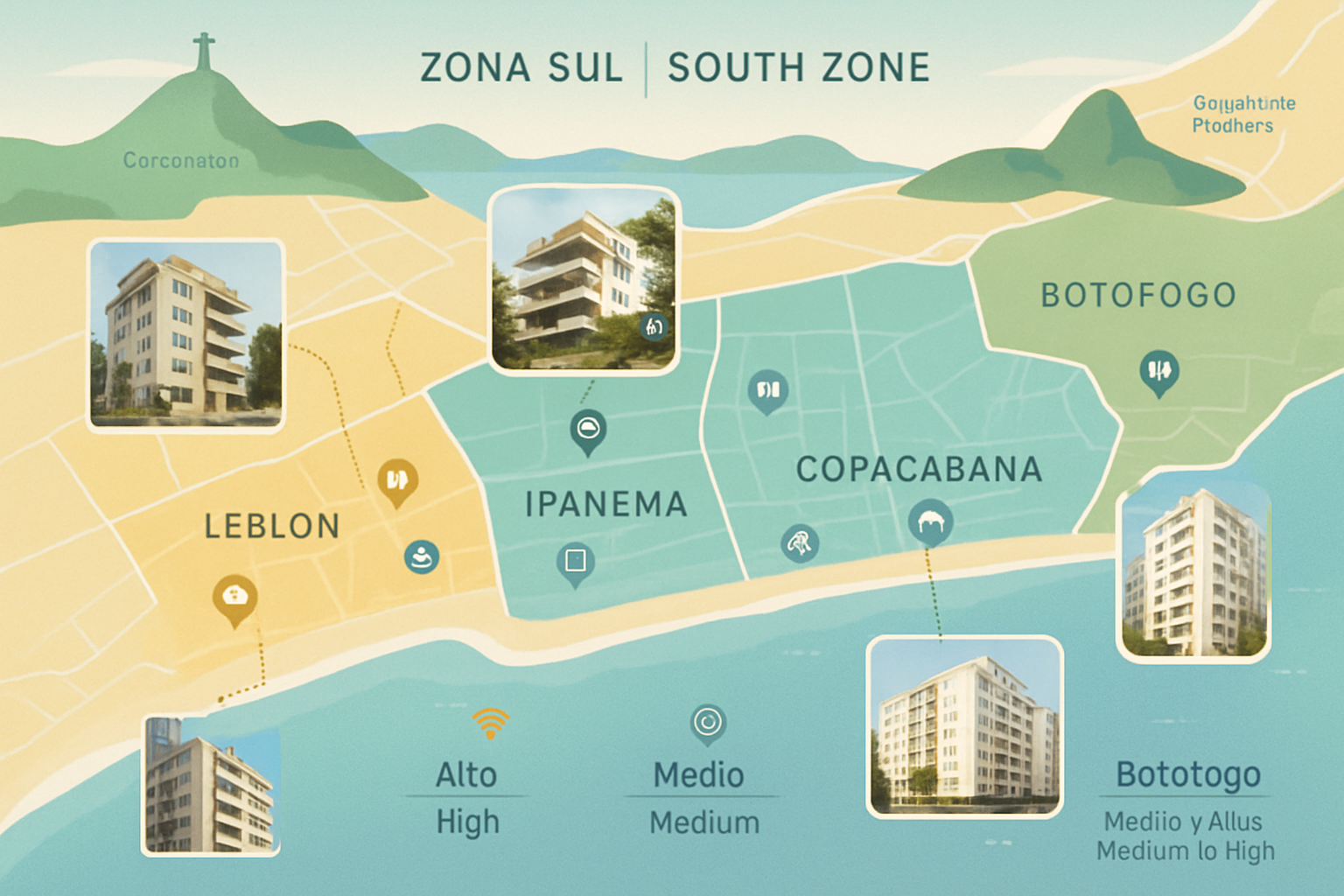
The South Zone (Zona Sul) represents the crown jewel of Rio’s real estate market and consistently ranks as the top choice for foreign property buyers. This coastal region combines stunning natural beauty, world-class infrastructure, and strong property value retention.
Ipanema: The Premium Choice
Ipanema stands as perhaps the most coveted address in Rio de Janeiro. This sophisticated neighborhood offers an unbeatable combination of beach lifestyle, cultural amenities, and investment security.
Property Profile:
- Average price per square meter: $4,500-$6,000
- Typical 2-bedroom apartment: $500,000-$900,000
- Rental yield potential: 4-6% annually
- Appreciation trend: Steady 3-5% annual growth
Why Foreigners Love Ipanema:
✅ Safety: One of Rio’s safest neighborhoods with active community policing
✅ Walkability: Everything accessible on foot—restaurants, shops, healthcare, entertainment
✅ Beach Culture: The famous Ipanema Beach offers world-class swimming, sports, and social scenes
✅ International Community: Large expat population creates familiar support networks
✅ Infrastructure: Excellent public transportation, including metro access
The streets between the beach and Lagoa Rodrigo de Freitas are particularly desirable, offering proximity to both water features. Properties with ocean views command significant premiums, often 30-50% above comparable inland units.
Leblon: Exclusivity and Prestige
Adjacent to Ipanema, Leblon represents Rio’s most exclusive residential neighborhood. Often called the “Beverly Hills of Rio,” this area attracts wealthy Brazilians and discerning foreign investors seeking the ultimate in prestige.
Property Profile:
- Average price per square meter: $5,000-$7,000
- Typical 2-bedroom apartment: $600,000-$1,200,000
- Rental yield potential: 3-5% annually
- Appreciation trend: Strong value retention, 4-6% annual growth
Leblon’s Distinctive Features:
- Upscale Shopping: High-end boutiques and shopping centers
- Gourmet Dining: Rio’s finest restaurants concentrated here
- Family-Friendly: Excellent schools and safe parks
- Low Crime: Consistently lowest crime rates in Rio
- Limited Supply: Strict zoning preserves exclusivity and property values
Leblon properties rarely depreciate and maintain value even during broader market downturns, making this neighborhood ideal for conservative investors prioritizing capital preservation.
Copacabana: Classic Rio Living
Copacabana offers a more accessible entry point into South Zone living while maintaining excellent infrastructure and iconic Rio atmosphere. This historic neighborhood has undergone significant revitalization in recent years.
Property Profile:
- Average price per square meter: $3,000-$4,500
- Typical 2-bedroom apartment: $350,000-$600,000
- Rental yield potential: 5-7% annually
- Appreciation trend: Moderate 2-4% annual growth
Copacabana Advantages:
🏖️ Iconic Beach: The world-famous 4km stretch of sand
🚇 Metro Access: Multiple stations providing excellent connectivity
💼 Commercial Hub: Mix of residential and business creates vibrant atmosphere
🏥 Healthcare: Numerous hospitals and clinics
🎭 Entertainment: Theaters, cinemas, and cultural venues
Properties closer to Ipanema (the Leme end) command higher prices and offer better long-term appreciation potential. Beachfront apartments provide exceptional rental income opportunities from short-term vacation rentals.
Botafogo: The Emerging Favorite
Botafogo has emerged as a favorite among younger foreign investors and digital nomads seeking South Zone amenities at more reasonable prices. This neighborhood combines residential comfort with commercial vitality.
Property Profile:
- Average price per square meter: $2,500-$4,000
- Typical 2-bedroom apartment: $300,000-$500,000
- Rental yield potential: 6-8% annually
- Appreciation trend: Strong 5-7% annual growth
Why Botafogo Appeals to Foreigners:
- Value Proposition: 30-40% cheaper than Ipanema with similar amenities
- Metro Hub: Central location with excellent public transport
- Young Demographics: Vibrant nightlife and restaurant scene
- Botafogo Bay: Beautiful waterfront with recreational areas
- Tech Scene: Growing startup and coworking community
Botafogo represents one of the best opportunities for foreign investors seeking both lifestyle benefits and strong appreciation potential. The neighborhood’s ongoing gentrification continues attracting young professionals and international residents.
Strategic Considerations for Foreign Investors in Rio
Identifying the best areas to buy in Rio for foreigners extends beyond neighborhood selection. Smart investors consider multiple strategic factors that impact long-term success.
Property Type Selection
Different property types serve different investment objectives:
Apartments (Apartamentos): The most common choice for foreign investors, offering:
- Lower maintenance responsibilities
- Building security features
- Amenity access (pools, gyms, concierge)
- Easier rental management
- Better liquidity when selling
Houses (Casas): Less common in prime areas but available in neighborhoods like:
- Santa Teresa (bohemian hillside community)
- Jardim Botânico (upscale garden district)
- Barra da Tijuca (suburban beach neighborhood)
Pre-Construction Developments: Purchasing off-plan offers significant advantages, including lower entry prices and payment plans. Understanding how pre-construction purchases maximize gains can substantially improve investment returns.
Size and Configuration
Market demand patterns in Rio favor specific property configurations:
| Unit Type | Best For | Rental Demand | Appreciation |
|---|---|---|---|
| Studio (Kitchenette) | Budget investors | High (students, singles) | Moderate |
| 1-Bedroom | Young professionals | Very High | Strong |
| 2-Bedroom | Families, couples | High | Very Strong |
| 3+ Bedroom | Luxury market | Moderate | Variable |
Two-bedroom apartments in the 70-90 square meter range typically offer the best balance of affordability, rental demand, and appreciation potential. Similar principles apply to studio investments in other Brazilian markets.
Financing Options for Foreign Buyers
Unlike many international markets, Brazilian banks rarely extend mortgages to non-residents. Foreign investors typically need to:
Pay Cash: Most international buyers purchase properties outright using:
- Foreign currency transfers through official banking channels
- Cryptocurrency conversions (increasingly popular for real estate transactions)
- Installment plans offered by developers for pre-construction purchases
Developer Financing: Some developers offer payment plans allowing:
- 20-30% down payment
- Monthly installments during construction
- Final balloon payment upon delivery
- No interest or low-interest terms
Home Country Financing: Some investors secure loans against assets in their home countries to fund Brazilian purchases.
Tax Implications and Ongoing Costs
Understanding the complete cost structure ensures accurate investment projections:
Purchase Costs (One-Time):
- Transfer tax (ITBI): 2-3% of property value
- Registration fees: 0.5-1% of property value
- Legal fees: 1-2% of property value
- Real estate agent commission: 5-6% (typically paid by seller)
Ongoing Annual Costs:
- Property tax (IPTU): 0.5-1.5% of assessed value
- Condominium fees: $100-$500 monthly depending on building amenities
- Utilities: $50-$150 monthly
- Property management: 8-10% of rental income (if renting)
Income and Capital Gains Tax:
- Rental income: Taxed at progressive rates (15-27.5%)
- Capital gains: 15% on profits when selling
- Tax treaties: Check if your home country has agreements with Brazil to avoid double taxation
Beyond the South Zone: Alternative Areas Worth Considering
While the South Zone dominates discussions about the best areas to buy in Rio for foreigners, several alternative neighborhoods offer compelling value propositions for specific investor profiles.
Barra da Tijuca: The Modern Alternative
Barra da Tijuca represents Rio’s newest major development zone, often compared to Miami with its wide avenues, modern high-rises, and extensive beach coastline.
Property Profile:
- Average price per square meter: $2,000-$3,500
- Typical 2-bedroom apartment: $250,000-$450,000
- Rental yield potential: 5-7% annually
Advantages:
- Modern infrastructure and buildings
- Extensive beach (18km)
- Shopping centers and amenities
- Parking availability (rare in South Zone)
- Family-oriented environment
Considerations:
- Car-dependent lifestyle
- Distance from cultural center
- Less walkable than South Zone
- Public transport limited
Barra appeals to foreign investors seeking modern amenities, families with children, and those comfortable with suburban-style living.
Flamengo and Laranjeiras: Hidden Gems
These central neighborhoods offer South Zone proximity at more accessible prices:
Flamengo:
- Beautiful waterfront park
- Metro access
- Cultural institutions
- $2,200-$3,500 per square meter
Laranjeiras:
- Residential tranquility
- Tree-lined streets
- Local Brazilian character
- $2,500-$3,800 per square meter
Both neighborhoods attract foreigners seeking authentic Rio living without premium South Zone prices.
Santa Teresa: Bohemian Charm
Perched on a hillside overlooking downtown, Santa Teresa offers colonial architecture, artistic community, and unique character.
Best For:
- Artists and creative professionals
- Those seeking unique properties
- Cultural enthusiasts
- Renovation investors
Considerations:
- Hilly terrain (accessibility challenges)
- Variable safety depending on specific location
- Older building stock
- Limited modern amenities
Properties here are highly individual, requiring careful due diligence but offering distinctive lifestyle and potential for value-add renovations.
Practical Steps for Foreign Property Buyers in Rio
Successfully purchasing property in Rio requires methodical execution across several critical phases.
Phase 1: Research and Planning (2-3 Months)
Define Your Objectives:
- Investment return goals (rental income vs. appreciation)
- Usage intentions (personal use, pure investment, mixed)
- Budget parameters (purchase price and ongoing costs)
- Timeline expectations
Market Research:
- Study neighborhood characteristics and trends
- Review property listings on major platforms
- Connect with other foreign property owners
- Engage with local real estate professionals
Exploring comprehensive property options from reputable developers provides valuable market insights.
Phase 2: On-Ground Exploration (1-2 Weeks)
Visit Rio Personally:
- Never purchase property sight-unseen
- Visit multiple neighborhoods at different times
- Experience local transportation and amenities
- Meet with real estate agents and developers
- Consult with legal and tax professionals
Property Viewings:
- Schedule 10-15 property viewings
- Assess building condition and management
- Review condominium financial statements
- Check for pending legal issues or debts
- Evaluate renovation needs
Phase 3: Due Diligence (4-6 Weeks)
Legal Verification:
- Verify clear title through property registry
- Confirm no outstanding debts or liens
- Review building permits and zoning compliance
- Check condominium regulations and restrictions
Financial Analysis:
- Obtain professional property appraisal
- Calculate total acquisition costs
- Project ongoing expenses
- Model rental income scenarios
- Assess appreciation potential
Professional Team Assembly:
- Real estate attorney specializing in foreign transactions
- Accountant familiar with international tax implications
- Property manager (if planning to rent)
- Currency exchange specialist
Phase 4: Purchase Execution (2-3 Months)
Formal Steps:
- Obtain CPF (Brazilian tax ID)
- Open Brazilian bank account for transactions
- Sign promissory agreement with deposit (typically 10-30%)
- Arrange currency transfer through official channels
- Execute final purchase deed (escritura) at notary
- Register property at Real Estate Registry Office
- Transfer utilities and services to your name
Payment Methods:
- International wire transfer (most common)
- Cryptocurrency conversion (increasingly accepted)
- Developer payment plans (for new construction)
Working with experienced professionals streamlines this process significantly. Contacting specialists who understand foreign investor needs can prevent costly mistakes.
Maximizing Your Rio Property Investment
Purchasing property represents just the beginning of your investment journey. Maximizing returns requires active management and strategic decision-making.
Rental Strategy Optimization
Short-Term Vacation Rentals:
- Higher gross yields (8-12% possible)
- Requires active management
- Best in beach neighborhoods
- Seasonal income fluctuation
- Platform fees (Airbnb, Booking.com)
Long-Term Residential Rentals:
- Stable, predictable income
- Lower management intensity
- Tenant screening essential
- Standard 30-month contracts
- Lower gross yields (4-7%)
Corporate Rentals:
- Premium rates possible
- Furnished units required
- Longer-term stability
- Limited tenant pool
- Professional management recommended
Property Management Considerations
Foreign investors living abroad should engage professional property managers who provide:
- Tenant screening and placement
- Rent collection and accounting
- Maintenance coordination
- Legal compliance
- Financial reporting
- Emergency response
Management fees typically range from 8-10% of rental income for long-term rentals and 15-20% for short-term vacation rentals.
Value Enhancement Strategies
Strategic improvements can significantly boost property value and rental income:
High-ROI Renovations:
- Kitchen and bathroom updates
- Air conditioning installation
- Modern lighting and fixtures
- Fresh paint and flooring
- Smart home technology
Amenity Additions:
- Quality furnishings (for rental properties)
- Workspace setup (appealing to remote workers)
- Security upgrades
- Energy-efficient appliances
Maintenance Excellence:
- Preventive maintenance programs
- Prompt repair response
- Building relationship cultivation
- Documentation of all improvements
Exit Strategy Planning
Successful investors plan their exit strategy from the beginning:
Holding Period Considerations:
- Minimum 3-5 years recommended for appreciation
- Tax implications of selling before 5 years
- Market cycle timing
- Currency exchange rate impacts
Sale Preparation:
- Professional staging and photography
- Comprehensive documentation
- Strategic pricing based on comparable sales
- Marketing to both local and international buyers
Common Pitfalls Foreign Buyers Should Avoid
Learning from others’ mistakes saves money and frustration. Common errors foreign investors make in Rio include:
❌ Buying Without Personal Inspection
The Mistake: Purchasing based solely on photos, videos, or virtual tours.
The Consequence: Discovering unexpected issues with property condition, neighborhood character, or building management after purchase.
The Solution: Always visit Rio and inspect properties personally before committing. Schedule multiple visits at different times of day.
❌ Neglecting Proper Legal Due Diligence
The Mistake: Skipping thorough title searches, lien checks, and legal verification to save costs or time.
The Consequence: Inheriting debts, legal disputes, or discovering clouded title that prevents future sale.
The Solution: Invest in experienced legal counsel who specializes in foreign transactions. The cost is minimal compared to potential losses.
❌ Underestimating Total Costs
The Mistake: Budgeting only for purchase price without accounting for taxes, fees, renovations, and ongoing expenses.
The Consequence: Financial strain, inability to complete purchase, or forced sale at unfavorable terms.
The Solution: Build comprehensive budget including 10-15% buffer for unexpected costs. Calculate ongoing expenses accurately.
❌ Ignoring Currency Risk
The Mistake: Failing to consider exchange rate fluctuations when planning purchases or projecting returns.
The Consequence: Purchasing power erosion or reduced returns when converting back to home currency.
The Solution: Develop currency strategy, consider hedging options, and model various exchange rate scenarios.
❌ Choosing Location Based on Tourist Experience
The Mistake: Buying in areas that appeal as vacation destinations without considering livability and investment fundamentals.
The Consequence: Poor rental demand, weak appreciation, or difficulty selling.
The Solution: Evaluate neighborhoods based on local resident preferences, infrastructure, safety, and long-term development trends.
The Future of Rio’s Real Estate Market
Understanding market trajectory helps foreign investors make informed decisions about timing and location selection.
Development Trends Shaping 2025-2030
Several major initiatives are reshaping Rio’s real estate landscape:
Infrastructure Expansion:
- Metro line extensions to underserved areas
- Port zone revitalization (Porto Maravilha)
- Bus rapid transit (BRT) network improvements
- Coastal pathway enhancements
Sustainability Focus:
- Green building certifications becoming standard
- Solar energy integration
- Water conservation systems
- Sustainable materials and construction methods
Technology Integration:
- Smart building management systems
- High-speed internet infrastructure
- Security technology advances
- Proptech platforms streamlining transactions
Demographic Shifts:
- Remote work enabling lifestyle migration
- Aging population creating demand for accessible units
- Young professionals seeking urban walkability
- International residents increasing in key neighborhoods
Price Projections and Market Outlook
Expert consensus for Rio’s prime neighborhoods through 2030:
Conservative Scenario:
- Annual appreciation: 2-4% above inflation
- Rental yields: 4-6% in prime areas
- Currency fluctuations: Moderate volatility
Optimistic Scenario:
- Annual appreciation: 5-8% above inflation
- Rental yields: 6-8% in prime areas
- Currency strengthening favoring early buyers
Risk Factors:
- Brazilian economic policy changes
- Political instability
- Global economic downturns
- Climate change impacts on coastal areas
Most analysts project continued strength in South Zone neighborhoods with established infrastructure, while emerging areas like Barra and the revitalized port zone offer higher risk-reward profiles.
Conclusion: Making Your Rio Property Investment a Reality
The best areas to buy in Rio for foreigners combine safety, infrastructure, lifestyle amenities, and solid appreciation potential. South Zone neighborhoods—particularly Ipanema, Leblon, Copacabana, and Botafogo—consistently deliver on these criteria, making them the top choice for international investors in 2025.
However, successful property investment extends beyond simply choosing the right neighborhood. Foreign buyers who thrive in Rio’s market share common characteristics:
✅ They conduct thorough research before committing capital
✅ They visit properties personally and experience neighborhoods firsthand
✅ They assemble professional teams including legal, tax, and property management experts
✅ They understand total costs and maintain realistic financial projections
✅ They plan for the long term with clear investment objectives and exit strategies
The Brazilian real estate market offers exceptional opportunities for foreign investors willing to navigate its unique characteristics. Currency advantages, relatively low property prices compared to major global cities, and Rio’s unmatched lifestyle create a compelling value proposition.
Your Next Steps
Ready to explore Rio property investment opportunities? Take these actionable steps today:
- Define your investment criteria (budget, objectives, timeline)
- Research neighborhoods matching your preferences and goals
- Connect with experienced professionals who specialize in foreign investor transactions
- Plan a property exploration trip to Rio to experience neighborhoods personally
- Review available properties from reputable developers and agents
- Begin the CPF application process to establish your Brazilian tax identification
Explore current property opportunities from developers with proven track records serving international investors. Whether you’re seeking a beachfront apartment in Copacabana, a sophisticated residence in Ipanema, or a value-oriented investment in Botafogo, Rio de Janeiro offers options matching every investor profile.
The Brazilian real estate market rewards informed, patient investors who understand local dynamics and work with experienced professionals. By focusing on the best areas to buy in Rio for foreigners and following proven investment principles, you can build wealth while enjoying one of the world’s most spectacular cities.
Don’t let this opportunity pass—start your Rio property investment journey today and secure your place in one of South America’s most dynamic real estate markets. Contact experienced advisors who can guide you through every step of the process, from initial research to successful property ownership.