
Best Urban Areas for Real Estate Investment: A Comprehensive 2025 Guide
The global real estate market is experiencing a dramatic transformation in 2025, with urban centers emerging as powerhouses of investment opportunity. While some investors chase the latest trends without proper research, savvy real estate professionals know that identifying the best urban areas for real estate investment requires a strategic approach backed by solid economic fundamentals, demographic trends, and infrastructure development. Whether you’re a seasoned investor or just beginning your real estate journey, understanding which cities offer the highest potential returns can mean the difference between exceptional profits and disappointing losses.
Key Takeaways
- 🏙️ Economic diversification is the cornerstone of sustainable urban real estate investment, with cities hosting multiple thriving industries offering better risk mitigation than single-industry towns
- 📊 Population growth and migration patterns directly correlate with rental demand and property appreciation, making demographic analysis essential for investment decisions
- 🚇 Infrastructure development including transit systems, airports, and digital connectivity significantly impacts property values and long-term investment returns
- 💼 Job market strength and employment diversity create stable rental markets and consistent property demand across economic cycles
- 🌱 Emerging markets in developing regions often provide higher appreciation potential compared to established markets, though with increased risk factors
Understanding What Makes Urban Areas Prime for Real Estate Investment
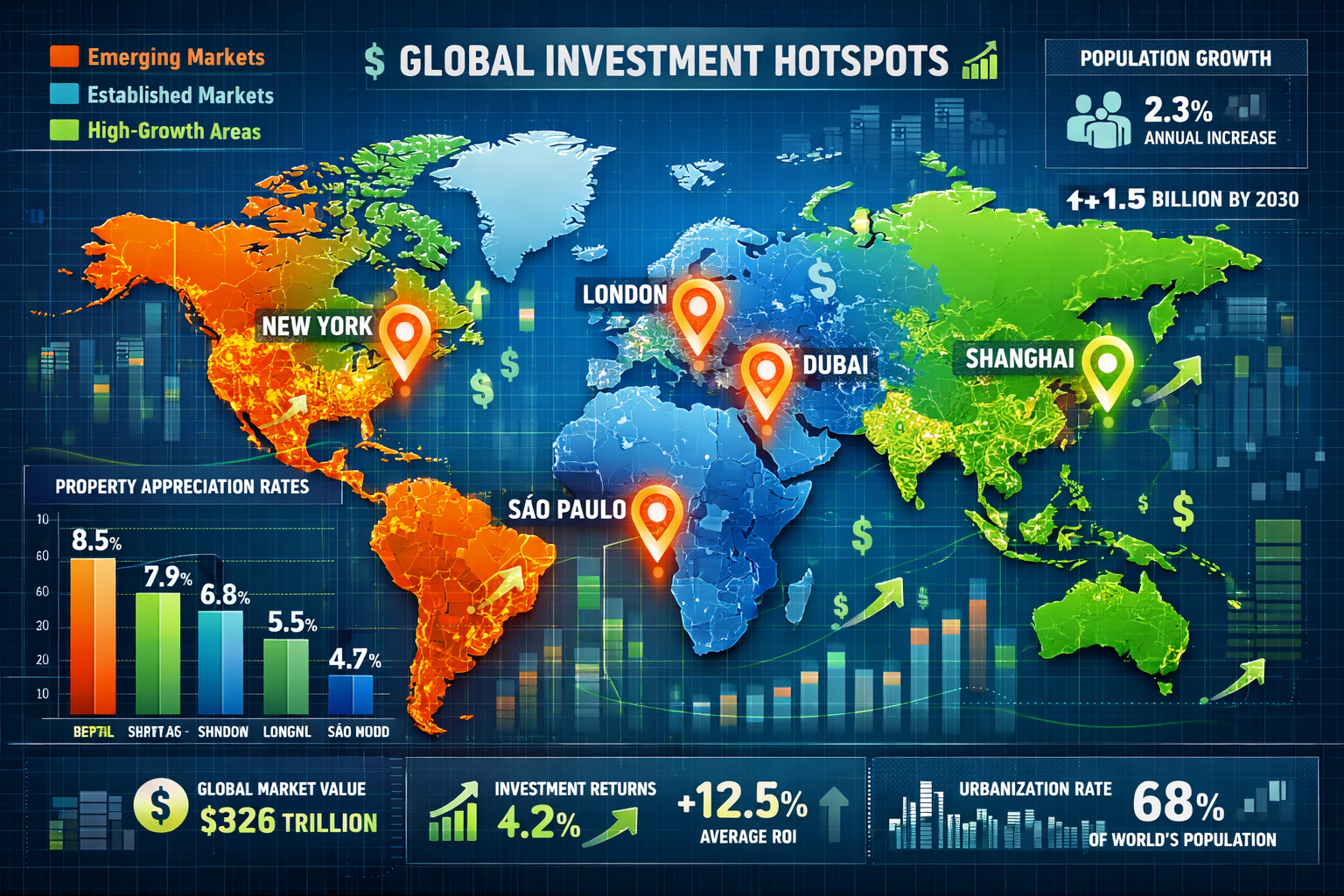
Before diving into specific locations, investors must understand the fundamental characteristics that separate exceptional urban real estate markets from mediocre ones. The best urban areas for real estate investment share common traits that create favorable conditions for both short-term cash flow and long-term appreciation.
Economic Indicators That Matter
Strong local economies form the foundation of successful real estate investments. Cities with diverse economic bases typically weather economic downturns better than those dependent on single industries. Key economic indicators include:
- GDP growth rates exceeding national averages
- Unemployment rates below national benchmarks
- Business formation rates showing entrepreneurial activity
- Corporate headquarters and Fortune 500 company presence
- Wage growth outpacing inflation
Cities demonstrating consistent economic expansion attract workers, which in turn drives housing demand. This fundamental relationship between economic vitality and real estate performance cannot be overstated.
Demographic Trends and Population Dynamics
Population growth serves as one of the most reliable predictors of real estate appreciation. Urban areas experiencing net positive migration benefit from increased housing demand, which naturally drives property values upward. Consider these demographic factors:
| Demographic Factor | Impact on Real Estate |
|---|---|
| Population Growth | Increased housing demand, higher occupancy rates |
| Age Distribution | Influences property types (studios vs. family homes) |
| Education Levels | Correlates with income and rental affordability |
| Household Formation | Creates new housing unit demand |
| Immigration Patterns | Expands rental markets and cultural districts |
Young, educated populations typically generate strong rental demand, particularly for modern amenities and urban lifestyle options. Understanding local market dynamics helps investors align their strategies with demographic realities.
Infrastructure and Connectivity
Modern infrastructure dramatically influences property values and investment returns. Cities investing heavily in transportation networks, digital infrastructure, and public amenities create environments where property values naturally appreciate. Critical infrastructure elements include:
- 🚄 Mass transit systems (metro, light rail, bus rapid transit)
- ✈️ International airports with expanding routes
- 🌐 High-speed internet and 5G coverage
- 🏥 Healthcare facilities and educational institutions
- 🏞️ Parks and recreational spaces
Properties located near transit hubs or within walking distance of amenities command premium prices and experience lower vacancy rates. Infrastructure development often signals future growth corridors where early investors can capture significant appreciation.
Evaluating the Best Urban Areas for Real Estate Investment in 2025
The landscape of urban real estate investment continues evolving, with several cities worldwide demonstrating exceptional potential for investors seeking strong returns. These markets combine economic strength, population growth, and favorable investment climates.
North American Investment Hotspots
Austin, Texas 🇺🇸
Austin continues dominating conversations about top-tier real estate investments in North America. The city’s technology sector boom, combined with no state income tax and a vibrant cultural scene, attracts thousands of new residents annually. Major tech companies including Tesla, Oracle, and numerous startups have established significant presences, creating high-paying jobs that support robust rental markets.
Property appreciation in Austin has consistently outpaced national averages, with certain neighborhoods experiencing double-digit annual growth. The city’s commitment to expanding public transportation and maintaining its “Keep Austin Weird” cultural identity ensures continued appeal to young professionals and families alike.
Nashville, Tennessee 🇺🇸
Nashville’s transformation from country music capital to diverse economic hub makes it one of the best urban areas for real estate investment in the American South. Healthcare, technology, automotive manufacturing, and entertainment industries create economic resilience that supports steady property value growth.
The city’s relatively affordable cost of living compared to coastal markets attracts both businesses and residents seeking quality of life without exorbitant expenses. Nashville’s downtown revitalization and expanding neighborhoods offer numerous entry points for investors at various price ranges.
Raleigh-Durham, North Carolina 🇺🇸
The Research Triangle’s concentration of universities, research institutions, and technology companies creates an innovation ecosystem that drives sustained economic growth. This region’s educated workforce, reasonable housing costs, and excellent quality of life metrics make it exceptionally attractive for real estate investors.
Population growth in the Raleigh-Durham area consistently ranks among the nation’s highest, with migration from higher-cost Northeast and West Coast markets providing steady demand for housing across all price points.
European Urban Investment Opportunities
Lisbon, Portugal 🇵🇹
Lisbon has emerged as a European investment darling, combining Old World charm with modern innovation. Portugal’s favorable tax policies for foreign investors, including the Non-Habitual Resident program, attract international capital. The city’s growing technology sector, dubbed the “Silicon Valley of Europe” by some enthusiasts, creates employment opportunities supporting rental demand.
Lisbon’s Mediterranean climate, rich culture, and relatively affordable property prices compared to other Western European capitals make it particularly attractive. The city’s infrastructure improvements and tourism industry provide multiple revenue streams for property investors.
Berlin, Germany 🇩🇪
Despite recent regulatory changes, Berlin remains one of Europe’s most dynamic real estate markets. The city’s position as Germany’s startup capital, combined with its cultural significance and relatively affordable living costs, ensures continued population growth and housing demand.
Berlin’s extensive public transportation network and commitment to sustainable urban development create neighborhoods where car-free living is not only possible but desirable. This appeals to younger demographics who prioritize walkability and environmental consciousness.
Latin American Emerging Markets
Latin America presents compelling opportunities for investors seeking higher risk-adjusted returns in emerging markets. Brazil’s property market offers particularly interesting prospects for those willing to navigate local regulations and market conditions.
Florianópolis, Brazil 🇧🇷
Florianópolis stands out among Latin American cities as an exceptional real estate investment destination. This island city combines natural beauty, strong economic fundamentals, and growing infrastructure that positions it as one of the best urban areas for real estate investment in South America.
The city’s technology sector, tourism industry, and quality of life metrics attract both domestic and international investors. The region’s ongoing development demonstrates commitment to sustainable growth that protects property values while enhancing livability.
Specific neighborhoods in Florianópolis offer diverse investment opportunities, from beachfront properties to urban studios catering to young professionals. The city’s university population and growing corporate presence create stable rental demand across multiple property types.
Medellín, Colombia 🇨🇴
Medellín’s remarkable transformation from troubled past to innovation hub represents one of Latin America’s greatest urban success stories. The city’s perfect spring-like climate, modern metro system, and thriving entrepreneurial ecosystem attract digital nomads, retirees, and investors seeking emerging market opportunities.
Property prices remain accessible compared to North American and European markets, while rental yields often exceed those available in developed markets. Medellín’s commitment to social urbanism and public space development creates neighborhoods where property values steadily appreciate.
Asian Pacific Growth Centers
Ho Chi Minh City, Vietnam 🇻🇳
Vietnam’s economic growth engine, Ho Chi Minh City offers investors exposure to one of Southeast Asia’s fastest-growing economies. The city’s young population, expanding middle class, and increasing foreign direct investment create robust demand for modern housing and commercial properties.
Infrastructure development, including new metro lines and improved road networks, opens previously inaccessible areas to development. Early investors in emerging neighborhoods can capture significant appreciation as infrastructure projects complete.
Brisbane, Australia 🇦🇺
Brisbane’s selection as host for the 2032 Olympic Games catalyzed infrastructure investment that will reshape the city’s real estate landscape. The subtropical climate, strong job market, and lifestyle amenities attract interstate migration from more expensive Sydney and Melbourne.
The city’s relatively affordable property prices compared to other major Australian capitals provide entry points for investors seeking developed market stability with growth potential. Brisbane’s commitment to sustainable development and livability ensures long-term value preservation.
Key Investment Strategies for Urban Real Estate Markets
Understanding which cities offer opportunity is only half the equation. Successful investors implement specific strategies tailored to urban market characteristics and their investment objectives.
Buy-and-Hold for Long-Term Appreciation
The buy-and-hold strategy remains the most reliable approach for building wealth through urban real estate. This method involves:
- Purchasing properties in growth corridors where infrastructure development signals future appreciation
- Holding through market cycles to capture long-term value increases
- Generating rental income that covers expenses while waiting for appreciation
- Leveraging equity from appreciated properties to acquire additional investments
Buying pre-construction properties in emerging neighborhoods offers particularly strong appreciation potential, as values typically increase significantly between purchase and completion.
Value-Add Renovations
Urban markets often contain older properties requiring modernization. The value-add strategy involves:
- Identifying undervalued properties in desirable locations
- Implementing strategic renovations that increase rental income and property value
- Targeting specific demographics through design choices and amenity packages
- Repositioning properties to capture higher market segments
This approach requires more active management but can generate superior returns compared to passive buy-and-hold strategies. Understanding local preferences and design trends is essential for successful value-add investments.
Short-Term Rental Optimization
In tourist-heavy urban markets, short-term rentals through platforms like Airbnb can generate significantly higher returns than traditional long-term leases. Successful short-term rental strategies include:
- Selecting properties near tourist attractions or business districts
- Professional property management to maintain high ratings and occupancy
- Strategic pricing that adjusts for seasonal demand fluctuations
- Compliance with local regulations governing short-term rentals
However, investors must carefully research local laws, as many cities have implemented restrictions on short-term rentals to preserve housing stock for residents.
Diversification Across Property Types
Smart investors diversify across multiple property types to balance risk and return. Urban markets offer various options:
Studio Apartments 📐
Studio apartments in growing cities provide excellent cash flow relative to purchase price. They appeal to:
- Young professionals starting careers
- Students attending urban universities
- Digital nomads seeking flexible living arrangements
- Divorced or separated individuals downsizing
Studios typically experience lower vacancy rates in dynamic urban markets with strong job growth and educational institutions.
Multi-Family Properties 🏢
Apartment buildings offer economies of scale and reduced per-unit vacancy risk. Benefits include:
- Multiple income streams from various units
- Professional management justification at scale
- Value-add opportunities through building-wide improvements
- Stronger negotiating position with service providers
Mixed-Use Developments 🏬
Properties combining residential and commercial spaces provide diversification within a single investment. Ground-floor retail or office space generates income from different economic drivers than residential units above.
Risk Management in Urban Real Estate Investment
While the best urban areas for real estate investment offer tremendous opportunity, all investments carry risks that must be understood and managed appropriately.
Market Cycle Awareness
Real estate markets move in cycles of expansion, peak, contraction, and recovery. Successful investors:
- Monitor leading indicators like building permits, employment trends, and inventory levels
- Avoid overleveraging during market peaks when prices may be inflated
- Maintain cash reserves to weather unexpected vacancies or market downturns
- Plan exit strategies before purchasing properties
Understanding where a market sits in its cycle helps investors make informed decisions about timing and leverage.
Regulatory and Political Considerations
Government policies significantly impact real estate returns through:
- Zoning regulations affecting development potential
- Rent control laws limiting income growth
- Tax policies influencing after-tax returns
- Foreign ownership restrictions in certain markets
- Environmental regulations requiring costly compliance
Staying informed about regulatory trends and maintaining relationships with local professionals helps investors anticipate and adapt to policy changes. Understanding market-specific regulations is particularly important when investing in international markets.
Currency and Economic Risks
International real estate investment introduces currency fluctuation risks that can significantly impact returns. Strategies to manage these risks include:
- Hedging currency exposure through financial instruments
- Matching debt and income currencies when possible
- Diversifying across multiple countries to reduce concentration risk
- Understanding local economic policies affecting exchange rates
Economic instability in emerging markets can create both opportunities and risks. Conservative investors may prefer developed markets with stable currencies, while aggressive investors might accept higher volatility for potentially superior returns.
Property-Specific Risks
Individual properties carry unique risks requiring due diligence:
- Structural issues requiring expensive repairs
- Environmental contamination creating liability
- Title defects complicating ownership
- Neighborhood decline reducing property values
- Natural disaster exposure in vulnerable locations
Comprehensive property inspections, title insurance, and adequate insurance coverage protect against many property-specific risks. Working with experienced local professionals helps identify issues that might escape outside investors’ notice.
Financing Strategies for Urban Real Estate Investments
Accessing capital efficiently separates successful investors from those who struggle to scale their portfolios. Multiple financing options exist for urban real estate investments, each with distinct advantages and limitations.
Traditional Mortgage Financing
Conventional mortgages remain the most common financing method for residential investment properties. Benefits include:
- Lower interest rates compared to alternative financing
- Long amortization periods improving cash flow
- Predictable payment schedules simplifying budgeting
- Established processes with clear qualification criteria
However, traditional mortgages typically require substantial down payments (20-25% for investment properties) and have strict qualification requirements based on income and credit history.
Portfolio Loans and Commercial Financing
Investors with multiple properties often benefit from portfolio loans that consider the entire investment portfolio rather than individual properties. Commercial financing options provide:
- Higher loan amounts for larger acquisitions
- More flexible terms negotiated based on property performance
- Relationship-based lending rewarding experienced investors
- Cross-collateralization opportunities using multiple properties
These options typically require established track records and relationships with commercial lenders who understand real estate investment.
Creative Financing Alternatives
Beyond traditional lending, creative financing strategies include:
Seller Financing 💰
Property owners may finance purchases directly, offering terms more flexible than institutional lenders. This works particularly well when:
- Sellers own properties free and clear
- Market conditions favor buyers
- Properties have characteristics making traditional financing difficult
- Both parties benefit from structured payment terms
Partnerships and Syndications 🤝
Pooling resources with other investors provides access to larger opportunities. Partnership structures include:
- Joint ventures with complementary skills
- Real estate syndications raising capital from passive investors
- Crowdfunding platforms democratizing access to commercial properties
- Family office partnerships for substantial acquisitions
Hard Money and Bridge Loans 🌉
Short-term financing at higher interest rates serves specific purposes:
- Funding time-sensitive acquisitions
- Financing renovations before refinancing
- Bridging gaps during property repositioning
- Accessing capital when traditional financing unavailable
These should be used strategically as part of comprehensive investment plans, not as permanent financing solutions.
Emerging Trends Shaping Urban Real Estate Investment in 2025
The real estate investment landscape continuously evolves as technology, demographics, and social preferences shift. Understanding emerging trends helps investors position portfolios for future success.
Technology Integration and Smart Buildings
Modern tenants increasingly expect technology integration in their living and working spaces. Smart building features include:
- IoT devices controlling lighting, temperature, and security
- High-speed internet as essential infrastructure
- Mobile apps for rent payment, maintenance requests, and community engagement
- Energy management systems reducing operating costs
- Keyless entry and package delivery solutions
Properties incorporating these technologies command premium rents and attract quality tenants who value convenience and efficiency. Innovation in real estate development continues reshaping how investors approach property acquisition and management.
Sustainability and ESG Considerations
Environmental, Social, and Governance (ESG) factors increasingly influence real estate investment decisions. Sustainable properties offer:
- Lower operating costs through energy efficiency
- Higher tenant retention among environmentally conscious renters
- Premium valuations as ESG investing gains prominence
- Regulatory compliance as environmental standards tighten
- Future-proofing against climate-related risks
Green building certifications like LEED, BREEAM, and local equivalents signal commitment to sustainability that resonates with modern tenants and investors.
Remote Work and Flexible Spaces
The remote work revolution permanently altered urban real estate dynamics. Implications include:
- Increased demand for home office space and larger units
- Suburban resurgence as workers prioritize space over commute times
- Co-working integration in residential buildings
- Neighborhood diversification as employment centers decentralize
- Amenity evolution emphasizing work-from-home support
Investors must consider how remote work trends affect different property types and locations within urban markets.
Demographic Shifts and Generational Preferences
Understanding generational preferences helps investors align properties with tenant demands:
Millennials and Gen Z 👥
- Prioritize experiences and amenities over space
- Value walkable neighborhoods with dining and entertainment
- Embrace technology and expect digital integration
- Prefer flexible lease terms and furnished options
- Demonstrate environmental consciousness
Baby Boomers 👴👵
- Seek downsizing options with accessibility features
- Value proximity to healthcare and cultural amenities
- Prefer low-maintenance living arrangements
- Represent significant purchasing power for urban condos
- Drive demand for age-restricted communities in urban settings
Successful investors tailor property features and marketing to specific demographic segments most likely to occupy their properties.
Due Diligence Essentials When Evaluating Urban Investment Properties
Thorough due diligence separates profitable investments from costly mistakes. Systematic evaluation processes protect investors from unforeseen problems while identifying opportunities others might miss.
Financial Analysis and Underwriting
Rigorous financial analysis forms the foundation of sound investment decisions. Key metrics include:
Cash-on-Cash Return 💵
This metric measures annual pre-tax cash flow relative to invested capital:
Cash-on-Cash Return = Annual Pre-Tax Cash Flow / Total Cash Invested
Strong urban markets typically generate 6-12% cash-on-cash returns, though this varies by property type and location.
Capitalization Rate (Cap Rate) 📊
Cap rates help compare properties and assess relative value:
Cap Rate = Net Operating Income / Property Purchase Price
Lower cap rates indicate higher property values relative to income, common in competitive markets. Higher cap rates may signal value opportunities or increased risk.
Internal Rate of Return (IRR) 📈
IRR accounts for time value of money and projected appreciation:
- Considers purchase price, holding period cash flows, and sale proceeds
- Incorporates assumptions about appreciation and exit timing
- Enables comparison across different investment types
- Typically targets 12-20% for value-add strategies
Debt Service Coverage Ratio (DSCR) 🏦
Lenders evaluate ability to service debt using DSCR:
DSCR = Net Operating Income / Annual Debt Service
Most lenders require DSCR of 1.25 or higher, ensuring adequate cushion to cover mortgage payments.
Physical Property Inspection
Professional inspections identify issues affecting value and operating costs:
- Structural integrity including foundation, roof, and load-bearing elements
- Mechanical systems (HVAC, plumbing, electrical)
- Code compliance and required upgrades
- Environmental concerns including mold, asbestos, or contamination
- Deferred maintenance requiring immediate attention
Inspection costs represent tiny fractions of purchase prices but can prevent catastrophically expensive surprises.
Market and Competitive Analysis
Understanding competitive positioning helps project realistic rental income and occupancy:
- Comparable property analysis establishing market rent ranges
- Vacancy rates indicating market strength or weakness
- New construction pipeline affecting future supply
- Neighborhood trends suggesting appreciation or decline
- Tenant demographics and demand drivers
Visiting properties personally and speaking with local property managers provides insights unavailable through online research alone.
Legal and Title Review
Legal due diligence protects against ownership complications:
- Title search revealing liens, easements, or ownership disputes
- Zoning verification confirming intended use compliance
- Lease review for inherited tenant obligations
- HOA documents outlining fees, restrictions, and financial health
- Property tax assessment and appeal opportunities
Working with experienced real estate attorneys familiar with local regulations prevents legal problems that could jeopardize investments.
Building Your Urban Real Estate Investment Team
Successful real estate investing requires assembling a team of professionals with complementary expertise. No investor possesses all necessary skills, making strategic partnerships essential.
Essential Team Members
Real Estate Agent/Broker 🏘️
Local market experts provide:
- Access to off-market opportunities
- Neighborhood knowledge and trend insights
- Negotiation expertise reducing purchase prices
- Transaction coordination and paperwork management
- Ongoing market updates and investment opportunities
Select agents who specialize in investment properties rather than primary residences, as their focus and expertise differ significantly.
Property Manager 🔑
Professional management becomes essential as portfolios grow:
- Tenant screening and placement
- Rent collection and accounting
- Maintenance coordination and vendor management
- Lease enforcement and legal compliance
- Market rate analysis and rent optimization
Quality property managers typically charge 8-10% of collected rent but often increase net income through superior operations and tenant retention.
Accountant/Tax Advisor 💼
Real estate tax implications require specialized knowledge:
- Depreciation schedules maximizing tax benefits
- 1031 exchange coordination for tax-deferred growth
- Entity structuring (LLC, S-Corp, partnership)
- Tax loss harvesting and carryforward strategies
- International tax considerations for foreign investments
Working with CPAs specializing in real estate ensures compliance while minimizing tax liability.
Attorney ⚖️
Legal counsel protects interests throughout the investment lifecycle:
- Purchase agreement review and negotiation
- Entity formation and asset protection
- Landlord-tenant dispute resolution
- Contract drafting for partnerships and vendors
- Estate planning incorporating real estate holdings
Real estate attorneys familiar with local regulations provide jurisdiction-specific guidance that general practice attorneys cannot match.
Lender/Mortgage Broker 🏦
Financing relationships enable portfolio growth:
- Competitive rate shopping across multiple lenders
- Creative financing structure recommendations
- Pre-approval expediting offers in competitive markets
- Portfolio loan coordination as holdings expand
- Refinancing opportunities optimizing capital structure
Cultivating relationships with multiple lenders provides options when market conditions shift or specific deals require unique financing approaches.
Taking Action: Your Roadmap to Urban Real Estate Investment Success
Understanding the best urban areas for real estate investment provides the knowledge foundation, but successful investing requires converting knowledge into action through systematic implementation.
Step 1: Define Your Investment Criteria
Clarity about objectives guides all subsequent decisions:
- Return targets (cash flow vs. appreciation focus)
- Risk tolerance (emerging vs. established markets)
- Investment timeline (short-term flip vs. long-term hold)
- Geographic preferences (local vs. remote vs. international)
- Property types (residential, commercial, mixed-use)
- Management involvement (active vs. passive)
Written investment criteria prevent emotional decisions and keep focus on properties matching strategic objectives.
Step 2: Conduct Market Research
Deep market knowledge separates successful investors from speculators:
- Study economic reports and employment trends
- Analyze population growth and migration patterns
- Review infrastructure development plans
- Assess competitive supply and demand dynamics
- Understand regulatory environment and political climate
Researching specific markets provides insights that generic national trends cannot capture.
Step 3: Build Your Network
Relationships create opportunities and facilitate execution:
- Attend local real estate investment association meetings
- Connect with agents, lenders, and property managers
- Join online forums and social media groups
- Partner with experienced investors as mentors
- Develop vendor relationships for inspections and repairs
Networks provide deal flow, knowledge, and support systems essential for long-term success.
Step 4: Analyze and Acquire Your First Property
Begin building your portfolio through systematic property evaluation:
- Review multiple properties to develop market feel
- Run detailed financial analysis on promising candidates
- Conduct thorough due diligence on finalists
- Make competitive offers based on objective criteria
- Close efficiently with your assembled team
The first property represents the hardest step, as inexperience creates uncertainty. However, systematic processes reduce risk and build confidence for future acquisitions.
Step 5: Optimize Operations and Scale
After acquiring initial properties, focus shifts to optimization and growth:
- Implement systems for property management and accounting
- Track key performance metrics and adjust strategies
- Refinance or sell underperforming assets
- Reinvest profits into additional acquisitions
- Continuously educate yourself on market trends and strategies
Successful investors view real estate as businesses requiring ongoing attention and improvement rather than passive investments requiring no management.
Conclusion: Positioning for Success in Urban Real Estate Investment
The best urban areas for real estate investment in 2025 share fundamental characteristics: strong economic growth, favorable demographics, infrastructure development, and quality of life factors attracting residents and businesses. Cities like Austin, Nashville, Florianópolis, Lisbon, and Brisbane demonstrate these qualities while offering diverse entry points for investors with varying risk tolerances and capital availability.
Successful urban real estate investment requires more than identifying promising markets. Investors must develop systematic approaches to property analysis, assemble professional teams, implement appropriate financing strategies, and manage properties effectively to capture available returns. The complexity of real estate investing demands continuous learning and adaptation as markets evolve and new opportunities emerge.
For those willing to commit time and resources to understanding markets and implementing proven strategies, urban real estate investment offers exceptional wealth-building potential. The combination of cash flow, appreciation, tax benefits, and leverage creates returns difficult to replicate through other investment vehicles.
Next Steps
Ready to begin your urban real estate investment journey? Consider these immediate actions:
- Research markets that align with your investment criteria and risk tolerance
- Connect with local professionals who can provide market insights and deal flow
- Analyze your financing options to understand purchasing power and leverage strategies
- Visit target markets personally to develop firsthand knowledge
- Explore current opportunities in high-growth urban areas
Whether you’re considering established developments or emerging projects, the key to success lies in thorough research, strategic planning, and decisive action. The urban real estate markets of 2025 offer tremendous opportunities for informed investors ready to capitalize on demographic shifts, economic growth, and infrastructure development reshaping cities worldwide.
Don’t let analysis paralysis prevent you from capturing these opportunities. Start small if necessary, but start now. The best time to invest in real estate was ten years ago; the second-best time is today. Contact experienced professionals who can guide you through the investment process and help you identify opportunities matching your specific objectives.
The best urban areas for real estate investment await those prepared to take informed action. Your future wealth depends on the decisions you make today.