
Real Estate in Brazil: A Comprehensive Guide to Investment Opportunities in 2026

Picture this: a country with over 215 million people, a growing middle class, and government programs pumping nearly $40 billion into housing development this year alone. Welcome to the dynamic world of real estate in Brazil, where opportunity meets tropical paradise, and savvy investors are discovering returns that outpace many developed markets. Whether you’re considering rental properties in bustling São Paulo, beachfront condos in Florianópolis, or high-yield apartments in the capital city of Brasília, understanding the Brazilian property landscape has never been more critical—or more promising.
Brazil’s property market in 2026 represents a unique convergence of favorable conditions: massive government investment, rising rental demand, and neighborhoods experiencing rapid appreciation. For international and domestic investors alike, real estate in Brazil offers diverse opportunities across multiple asset classes and geographic regions, each with distinct advantages and considerations.
Key Takeaways
- 🏗️ Brazil’s government is investing $39.8 billion in housing programs in 2026, creating unprecedented opportunities in subsidized and mid-market residential developments
- 📈 Rental demand is surging, with 23% of Brazilian households now renting (up from 18% eight years ago), providing strong fundamentals for income-focused investors
- 💰 Brasília leads rental yields at 6.35%, significantly outperforming São Paulo and Rio de Janeiro for cash-flow-oriented property investments
- 🎯 Strategic neighborhoods like Águas Claras offer yields exceeding 7%, combining affordable entry points with strong Metro connectivity and population growth
- 📊 New financing rules expanded access for lower-income families as of January 2, 2026, broadening the buyer pool and supporting long-term market stability
Understanding the Brazilian Real Estate Market Landscape
The Brazilian property market operates within a framework quite different from North American or European markets. Real estate in Brazil is characterized by strong government involvement, unique financing structures, and regional variations that can significantly impact investment returns.
Market Size and Economic Context
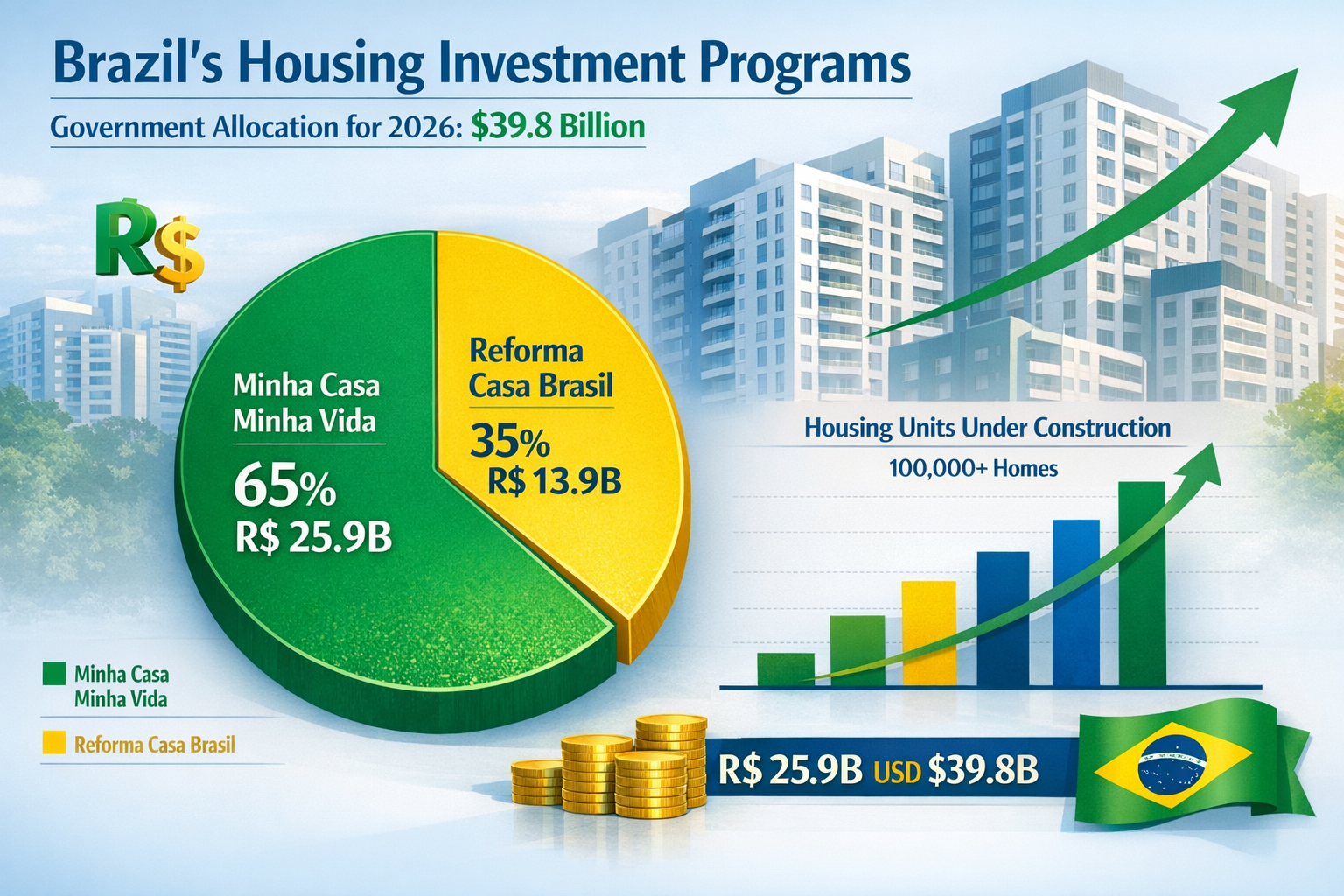
Brazil’s construction and real estate sector represents a substantial portion of the national economy. The market has evolved considerably since the 2009 launch of the “Minha Casa, Minha Vida” (My House, My Life) program, which has mobilized approximately $140-145 billion in total investment and now accounts for roughly half of all new housing launches nationwide[2].
In 2026, the government expects to deliver more than 100,000 housing units under subsidized MCMV lines alone, out of 170,000 units currently under construction[2]. This massive pipeline demonstrates the scale of opportunity available to developers, investors, and homebuyers across different price segments.
Government Housing Programs Driving Growth
Two major programs are reshaping real estate in Brazil this year:
Minha Casa, Minha Vida (MCMV): This flagship affordable housing program received a significant boost with new financing rules that took effect on January 2, 2026[2]. The updated regulations expanded access for lower-income families by increasing maximum property values to approximately 255,000-270,000 Reais for families earning around $875 monthly in larger urban centers[2].
Reforma Casa Brasil: Launched as a complementary initiative, this new program focuses on housing renovation and improvement, adding another dimension to government support for the residential sector[2].
Together, these programs create a $39.8 billion investment commitment for 2026[2], providing substantial support for construction activity, employment, and housing accessibility across income brackets.
Investment Opportunities in Real Estate in Brazil
The diversity of Brazil’s geography, economy, and demographics creates multiple investment pathways for those interested in real estate in Brazil. Understanding where and how to invest requires analyzing rental yields, appreciation potential, and local market dynamics.
High-Yield Rental Markets
For investors prioritizing cash flow, certain Brazilian cities offer exceptional rental yields that compete favorably with global alternatives.
Brasília: The Capital Advantage
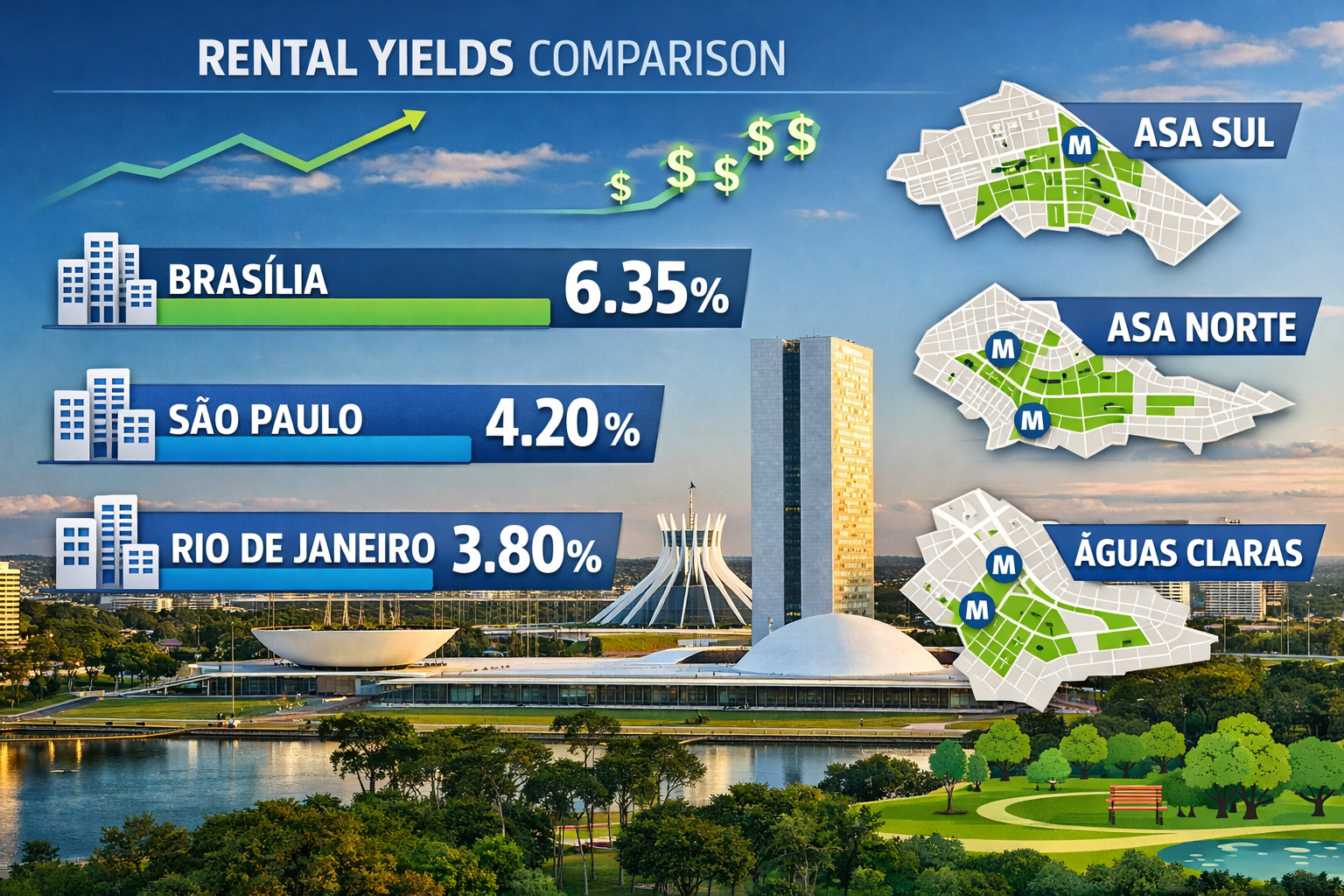
Brasília stands out as a premier destination for rental-focused investors. The city’s gross rental yield averages 6.35% as of early 2026[1], substantially outperforming Brazil’s largest cities, São Paulo and Rio de Janeiro[1].
Several factors drive Brasília’s strong rental performance:
- Government employment stability: As the nation’s capital, Brasília hosts thousands of federal employees with reliable incomes
- Rising rental rates: Rents increased approximately 9-10% in 2025, more than double Brazil’s official inflation rate[1]
- Limited ownership: Many residents prefer renting due to the transient nature of government postings
- Consistent demand: The city’s administrative function ensures steady tenant pools
Top Neighborhoods for Rental Investment
Not all Brasília neighborhoods deliver equal returns. Investors should focus on areas combining strong fundamentals with practical tenant appeal:
| Neighborhood | Yield Potential | Key Advantages | Typical Absorption |
|---|---|---|---|
| Águas Claras | 7%+ | Metro access, affordable entry, population doubled since 2010[1] | 20-40 days |
| Asa Sul | 6-6.5% | Prime location, established infrastructure, government proximity | 15-30 days |
| Asa Norte | 6-6.5% | Central Plano Piloto location, excellent transport links | 15-35 days |
| Lago Sul | ~4.5% | Prestige location, lower yields due to high purchase prices[1] | 40-70 days |
| Lago Norte | ~4.5% | Luxury market, appreciation-focused rather than yield[1] | 40-70+ days |
Águas Claras deserves special attention as Brasília’s top “yield play” neighborhood. This district has doubled its population since 2010[1] and offers strong Metro access with entry prices significantly below the central Plano Piloto area, generating yields of 7% or more[1].
Rental Absorption Rates
Understanding how quickly properties rent is crucial for cash flow planning. In Brasília, rental absorption varies significantly based on pricing and location[1]:
- Well-priced apartments in prime areas like Asa Sul and Asa Norte typically rent within 15-35 days[1]
- Overpriced units can sit vacant for 70+ days[1], eroding annual returns
- Properties in emerging areas like Águas Claras with competitive pricing generally find tenants within 20-40 days
Features That Command Higher Rents
The top three property features that increase rent the most in Brasília reflect the city’s car-centric culture and security priorities[1]:
- Dedicated parking space (essential in a city with limited public transport outside Metro corridors)
- 24-hour security with staffed concierge (highly valued by Brazilian renters)
- Proximity to a Metro station (significantly reduces commute times and transportation costs)
Investors should prioritize properties offering these amenities to maximize rental income and minimize vacancy periods.
Regional Opportunities Beyond Brasília
While Brasília offers exceptional rental yields, real estate in Brazil presents diverse opportunities across the country’s varied regions. For those exploring different markets, understanding regional dynamics is essential.
São Paulo: Brazil’s Economic Powerhouse
São Paulo, Latin America’s largest city, offers scale, economic diversity, and established real estate infrastructure. While rental yields typically run lower than Brasília (averaging 4-5%), the city compensates with:
- Deeper liquidity: Larger buyer and renter pools facilitate faster transactions
- Economic diversity: Less dependent on any single employment sector
- International appeal: Attracts multinational corporations and expatriate renters
- Established neighborhoods: Mature infrastructure and amenities
Rio de Janeiro: Tourism and Lifestyle Markets
Rio combines residential investment with tourism-oriented short-term rental opportunities. The city’s iconic beaches and cultural attractions support:
- Vacation rental potential: Properties in Copacabana, Ipanema, and Leblon command premium short-term rates
- Lifestyle buyers: International buyers seeking second homes in tropical settings
- Event-driven demand: Major cultural and sporting events periodically boost occupancy
Florianópolis: The Emerging Coastal Star
For investors seeking growth potential, Florianópolis represents one of Brazil’s most dynamic emerging markets. This island city in southern Brazil combines natural beauty with rapid development. Those interested in best places to invest in Brazil property should consider Florianópolis’s compelling fundamentals:
- Quality of life: Consistently ranked among Brazil’s most livable cities
- Technology sector growth: Emerging as a tech hub attracting young professionals
- Tourism infrastructure: Strong seasonal rental demand supplements long-term leasing
- Beach lifestyle: Over 40 beaches offering diverse neighborhood options
The life in Florianópolis combines outdoor recreation, modern amenities, and a more relaxed pace than São Paulo or Rio, attracting both domestic migrants and international investors.
Understanding Brazilian Real Estate Financing
Financing structures significantly impact real estate in Brazil investment strategies. The market operates differently from North American or European mortgage systems, with unique considerations for both domestic and international buyers.
Buyer Financing Options
Domestic Buyers: Brazilian citizens and residents access several financing channels:
- Bank mortgages: Traditional financing through major banks (Caixa Econômica Federal, Banco do Brasil, Itaú, Bradesco)
- MCMV subsidized loans: For qualifying income brackets, offering below-market rates
- Developer financing: Many projects offer direct payment plans, particularly for pre-construction purchases
- FGTS (Severance Fund): Brazilians can use accumulated severance funds for down payments
International Buyers: Foreign investors face more restrictions:
- Limited mortgage access: Most Brazilian banks don’t offer mortgages to non-residents
- Cash purchases: International buyers typically purchase outright or arrange financing in their home countries
- Developer payment plans: Some developers offer installment plans during construction phases
The Advantage of Pre-Construction Purchases
Buying “na planta” (off-plan/pre-construction) represents a popular strategy in real estate in Brazil. This approach offers several advantages:
- Lower entry prices: Pre-construction units typically sell at 20-30% below completed market values
- Payment plans: Developers often offer extended payment schedules during construction
- Appreciation potential: Properties can appreciate significantly between purchase and completion
For detailed analysis of this strategy, investors should review insights on appreciation for those who buy off-plan.
Structural Trends Supporting Real Estate in Brazil
Beyond immediate investment opportunities, several long-term trends provide fundamental support for real estate in Brazil over the coming decade.
The Rental Revolution
Brazil is experiencing a significant shift toward renting rather than ownership. About 23% of Brazilian households now rent[1], up from 18% just eight years ago[1]. This structural change indicates:
- Changing cultural attitudes: Younger Brazilians increasingly prioritize flexibility over ownership
- Urbanization: Migration to cities where ownership is less affordable
- Economic uncertainty: Some households prefer renting to preserve capital flexibility
- Long-term rental demand: Sustained tenant pools supporting investment properties
This trend particularly benefits investors in well-located urban properties with strong rental fundamentals.
Infrastructure Development
Government and private sector infrastructure investments enhance property values in targeted corridors:
- Metro expansions: New transit lines increase accessibility and property values
- Highway improvements: Better connectivity between neighborhoods and employment centers
- Commercial development: Shopping centers and office parks create employment anchors
Areas experiencing infrastructure upgrades often see accelerated appreciation, as evidenced by the growth of the Ingleses region in Florianópolis.
Demographic Tailwinds
Brazil’s demographics support continued housing demand:
- Young population: Median age around 33 years creates ongoing household formation
- Middle class growth: Expanding purchasing power increases qualified buyer pools
- Urban migration: Continued movement from rural to urban areas drives city housing demand
Risks and Considerations for Real Estate in Brazil
While opportunities abound, real estate in Brazil carries specific risks that investors must understand and manage.
Economic Volatility
Brazil’s economy experiences periodic fluctuations that impact real estate:
- Currency risk: The Brazilian Real can be volatile against major currencies
- Interest rate cycles: Central bank policy affects mortgage rates and affordability
- Inflation: While rental income can adjust upward, inflation erodes purchasing power
- Economic recessions: Periodic downturns impact employment and housing demand
Legal and Regulatory Framework
Brazil’s legal system presents unique challenges:
- Complex bureaucracy: Property transactions involve extensive documentation and registration
- Title verification: Thorough due diligence is essential to confirm clear ownership
- Taxation: Property taxes, transaction taxes, and income taxes vary by location and property type
- Rental regulations: Tenant protections can make evictions lengthy and complex
Market Liquidity
Compared to developed markets, real estate in Brazil can experience lower liquidity:
- Longer transaction times: Sales processes often take 60-90 days or more
- Smaller buyer pools: Particularly for higher-priced properties or secondary markets
- Economic sensitivity: Market activity can slow significantly during economic uncertainty
Property Management Considerations
Successful rental investments require effective property management:
- Language barriers: International investors may need Portuguese-speaking management
- Maintenance standards: Brazilian buildings often require more frequent maintenance than comparable properties in developed markets
- Tenant screening: Proper vetting reduces default risk and vacancy
- Legal compliance: Rental contracts must comply with local regulations
Practical Steps for Investing in Real Estate in Brazil
For those ready to explore real estate in Brazil, a systematic approach increases success probability and reduces risk.
Step 1: Define Investment Objectives
Clarify your primary goals:
- Rental income (prioritize high-yield markets like Brasília)
- Capital appreciation (focus on emerging neighborhoods with infrastructure development)
- Personal use (coastal lifestyle properties in Florianópolis or Rio)
- Portfolio diversification (geographic and currency diversification)
Step 2: Select Target Markets
Based on objectives, narrow focus to 1-2 cities:
- Research economic fundamentals, population trends, and infrastructure plans
- Analyze rental yields and appreciation patterns
- Consider personal factors (language, travel distance, cultural affinity)
For comprehensive market analysis, review resources on the real estate market in Greater Florianópolis.
Step 3: Engage Local Expertise
Partner with qualified professionals:
- Real estate agents: Local market knowledge and property access
- Attorneys: Legal due diligence and transaction support
- Accountants: Tax planning and compliance
- Property managers: Ongoing operations and tenant relations
Established developers and agencies like Quadragon offer integrated services supporting international investors.
Step 4: Conduct Thorough Due Diligence
Before committing capital:
- Verify legal title: Ensure clear ownership and no encumbrances
- Inspect property condition: Professional inspections reveal maintenance needs
- Analyze comparable sales: Confirm pricing aligns with market values
- Review building financials: For condominiums, examine reserve funds and fee payment rates
- Assess rental potential: Research comparable rents and vacancy rates
Step 5: Understand Total Costs
Budget for all expenses beyond purchase price:
- Transaction costs: Typically 3-5% (transfer taxes, registration fees, legal costs)
- Ongoing property taxes: Annual IPTU (property tax) varies by municipality
- Condominium fees: Monthly fees for building maintenance and amenities
- Property management: Typically 8-10% of monthly rent
- Maintenance reserves: Budget for repairs and updates
Step 6: Plan Exit Strategy
Consider future liquidity needs:
- Hold period: Longer holds (5+ years) typically optimize returns in Brazilian markets
- Market cycles: Plan to sell during favorable economic conditions
- Tax implications: Understand capital gains treatment for your situation
- Succession planning: If holding long-term, consider estate planning implications
Emerging Investment Themes in 2026
Several newer trends are reshaping real estate in Brazil and creating specialized opportunities.
Studio Apartments and Compact Living
Urbanization and changing demographics drive demand for smaller, efficient units. The advantages of investing in studios in Florianópolis highlight how compact properties can deliver strong yields with lower capital requirements.
Technology Integration
Modern developments increasingly incorporate:
- Smart home systems: Automated climate, lighting, and security
- Digital payment platforms: Streamlined rent collection and fee payment
- Virtual property management: Remote monitoring and tenant communication
Some forward-thinking investors are even exploring cryptocurrency and real estate development as alternative investment structures.
Sustainable Development
Environmental consciousness is growing in Brazilian real estate:
- Green building certifications: LEED and similar standards
- Energy efficiency: Solar panels and efficient HVAC systems
- Water conservation: Rainwater collection and efficient fixtures
- Sustainable materials: Locally sourced, low-impact construction materials
Properties incorporating sustainability features often command premium rents and resale values.
Mixed-Use Developments
Integrated projects combining residential, commercial, and retail components create self-contained communities:
- Convenience: Residents access services without extensive travel
- Community: Shared amenities foster social connections
- Investment diversity: Multiple revenue streams within single development
Conclusion: Navigating Real Estate in Brazil Successfully
Real estate in Brazil in 2026 presents a compelling opportunity landscape for investors willing to navigate its unique characteristics. With government programs injecting nearly $40 billion into housing development, rental demand at historic highs, and cities like Brasília delivering yields exceeding 6%, the fundamentals support strategic property investment across multiple markets and asset classes.
Success in Brazilian real estate requires understanding regional variations, from Brasília’s government-driven rental market to Florianópolis’s emerging coastal appeal. It demands respect for local legal frameworks, realistic assessment of risks, and partnership with qualified local professionals who can navigate bureaucratic complexities.
The structural shift toward renting, ongoing urbanization, and infrastructure development provide long-term tailwinds supporting property values and rental income. Meanwhile, new financing rules expanding access for lower-income families broaden the buyer pool and support market stability.
Your Next Steps
Ready to explore real estate in Brazil? Consider these actionable steps:
- Research specific markets aligned with your investment objectives (rental income vs. appreciation)
- Connect with established developers offering quality projects in target cities—explore available developments to understand current opportunities
- Visit properties in person when possible to assess neighborhoods, building quality, and local amenities
- Build your professional team including local attorney, accountant, and property manager
- Start with manageable exposure to gain experience before scaling investments
- Stay informed about market trends through regular news and updates
For personalized guidance on Brazilian property investment, contact experienced local professionals who can provide market-specific insights and identify opportunities matching your investment criteria.
The Brazilian real estate market rewards patient, informed investors who approach it with realistic expectations and proper professional support. Whether seeking rental income, capital appreciation, or lifestyle benefits, real estate in Brazil offers diverse pathways to achieve your investment goals in one of the world’s most dynamic emerging markets.
References
[1] Brasilia Buy Rent Out – thelatinvestor.com
[2] Brazils Construction Sector 2026 Housing Programs Support Rates High Risks Persist – fastmarkets.com