
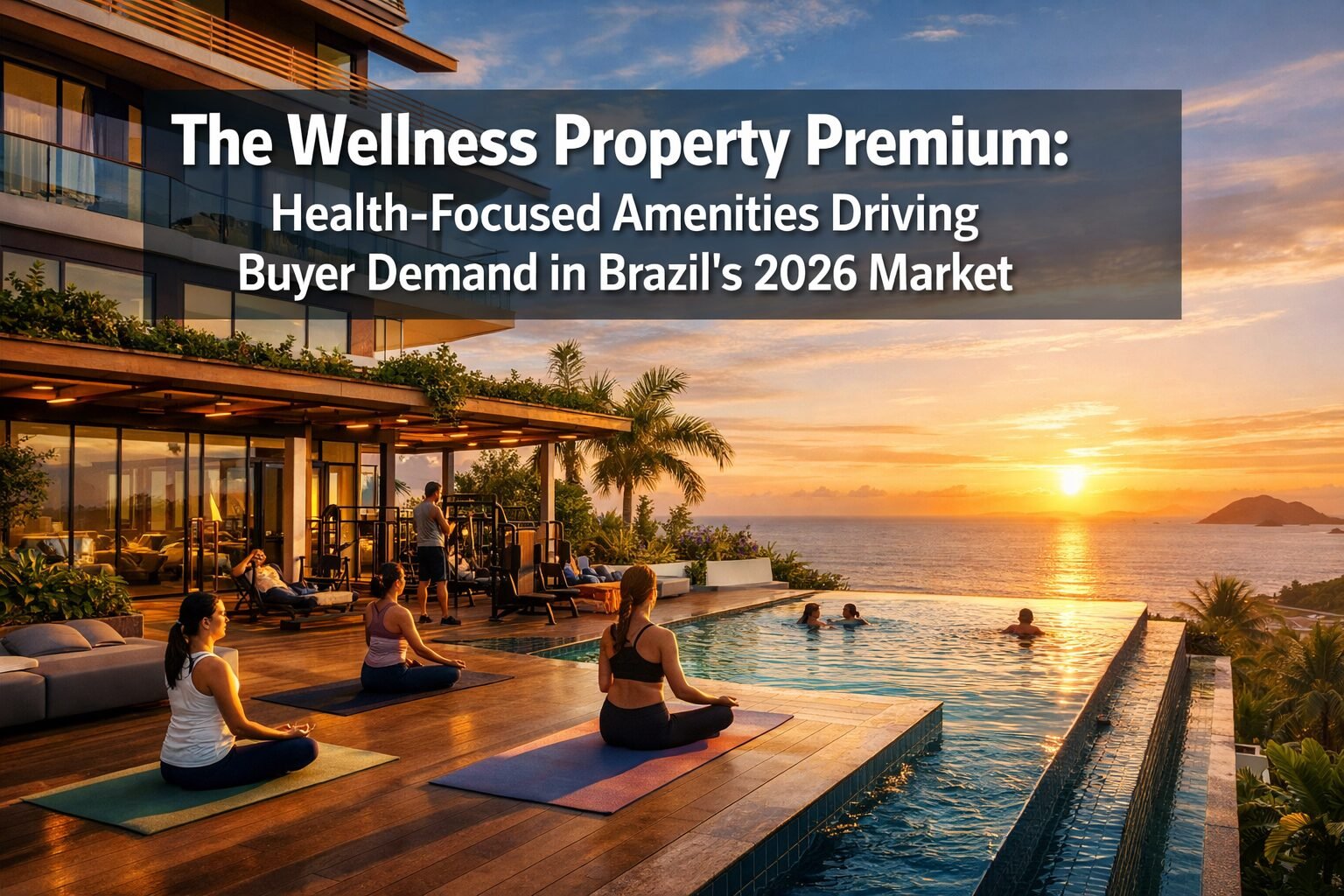
The Brazilian real estate landscape is undergoing a dramatic transformation in 2026, driven by an unexpected force: wellness. High-end gyms, yoga studios, and proximity to healthy food markets are no longer luxury add-ons—they’ve become non-negotiable amenities commanding significant price premiums. As developers race to incorporate wellness infrastructure into their projects, The Wellness Property Premium: Health-Focused Amenities Driving Buyer Demand in Brazil’s 2026 Market has emerged as the defining trend reshaping investment strategies across the country’s most dynamic property markets.
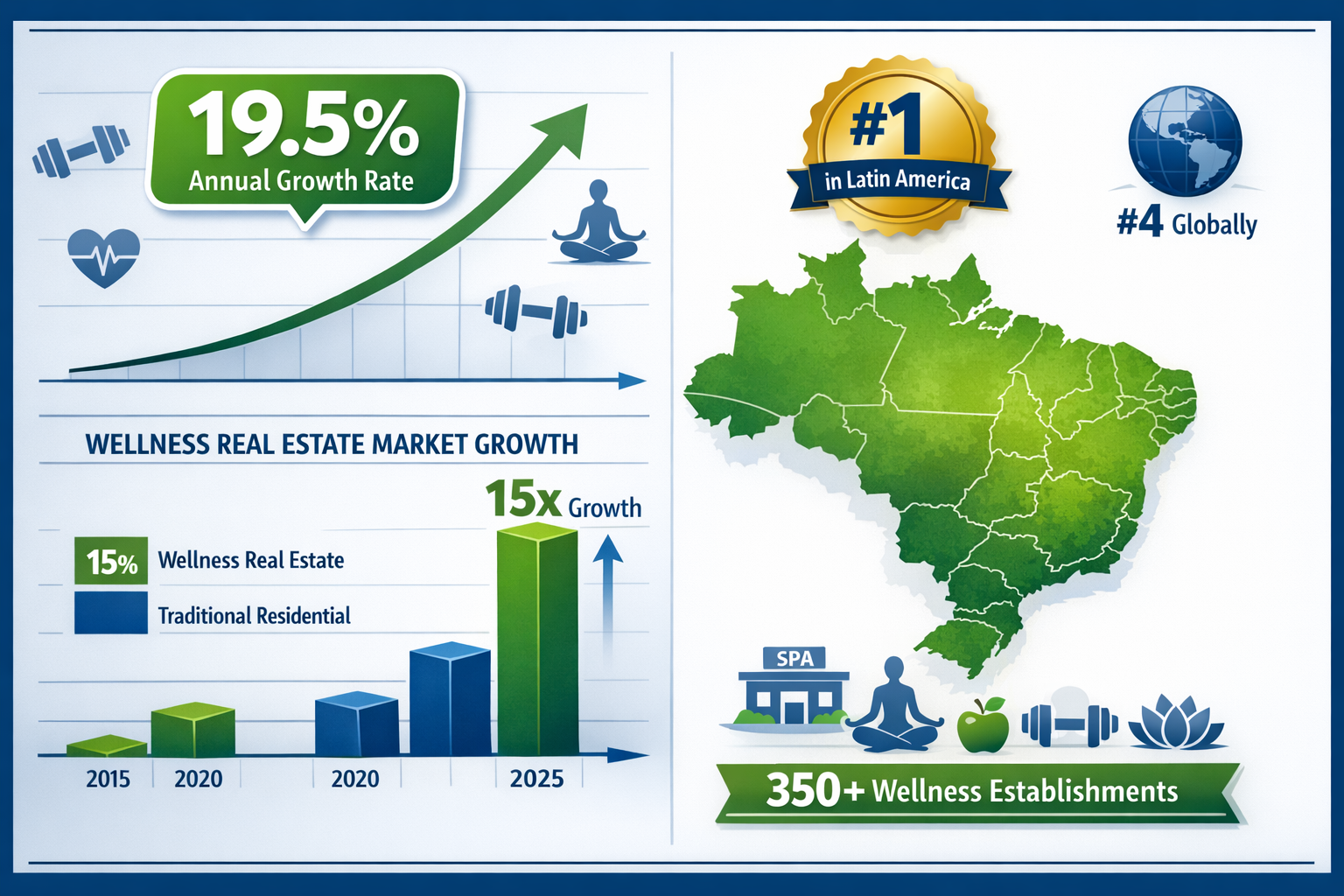
This shift represents more than a passing trend. Brazil now ranks #1 in Latin America and #4 globally in total wellness economy size, positioning the country ahead of established markets like France, Italy, and Canada.[1] With the Brazilian health and wellness market projected to surge from USD 91.3 billion in 2025 to USD 222.4 billion by 2034—representing a compound annual growth rate of 10.40%—property developers who integrate wellness features are capturing unprecedented buyer demand and commanding premium valuations.[2]
Key Takeaways
- 🏢 Wellness real estate is expanding at 19.5% annually—nearly four times faster than traditional residential markets—with the sector now valued at $548 billion globally[1]
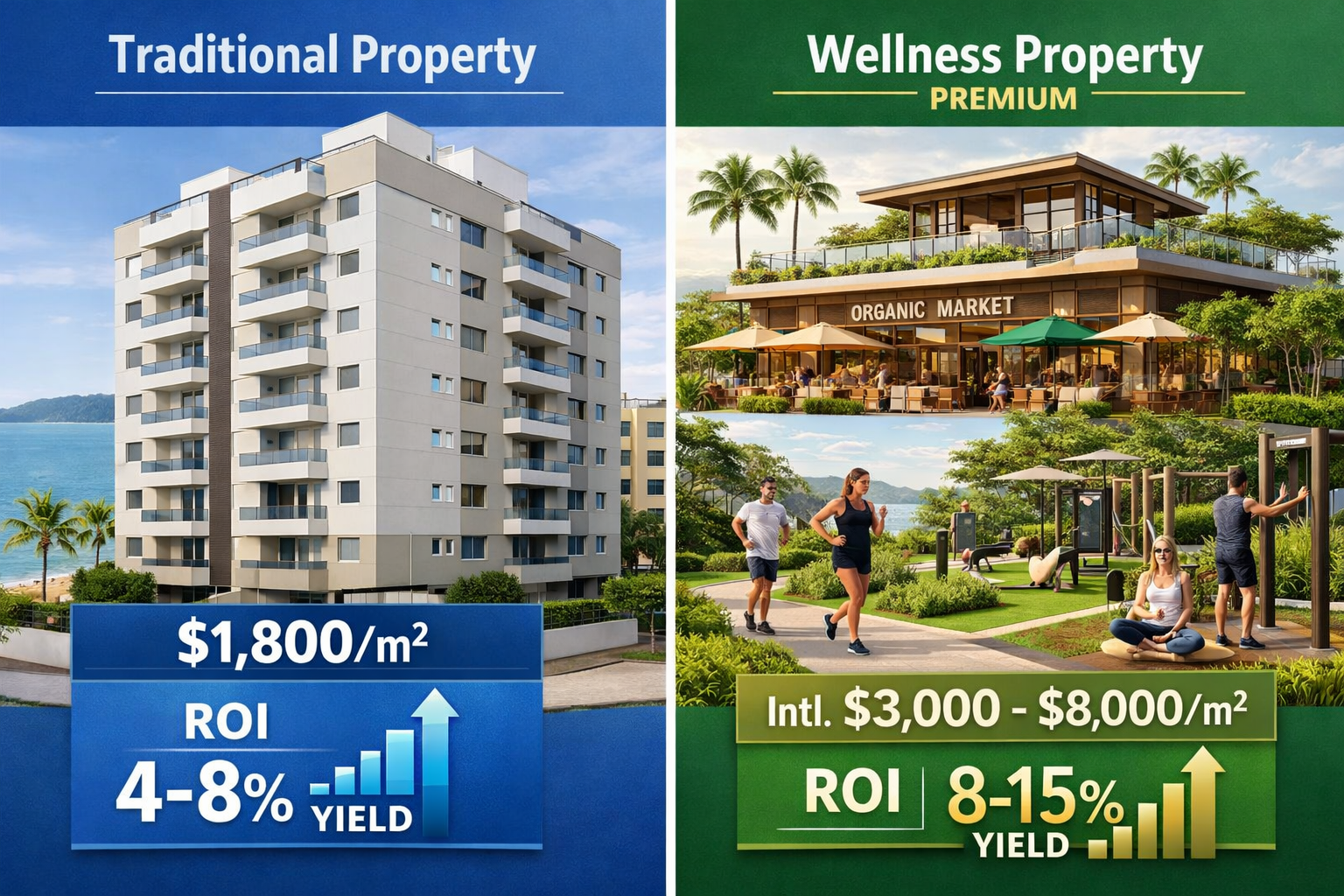
- 💰 Wellness properties in Brazil command 8-15% yields compared to 4-8% in traditional developments, creating significant ROI advantages for developers[1]
- 📈 Market share explosion: Wellness real estate evolved from less than 1% of new construction in 2015 to over 15% in 2025—a 15x increase in just one decade[1]
- 🎯 High-end gyms, yoga studios, and healthy food access have transitioned from luxury amenities to essential features driving buyer decisions in Brazil’s 2026 market[3]
- 🌱 Sustainable building features including solar energy and water conservation are predicted to see price premiums, particularly in eco-tourism development zones[3]
Understanding The Wellness Property Premium in Brazil’s 2026 Real Estate Landscape
The concept of The Wellness Property Premium: Health-Focused Amenities Driving Buyer Demand in Brazil’s 2026 Market extends far beyond adding a gym to a residential building. It represents a fundamental reimagining of how properties support residents’ physical, mental, and emotional health through integrated design and amenities.
The Global Context Driving Local Demand
The wellness real estate sector’s explosive growth—19.5% annually—reflects a global paradigm shift in how people prioritize their living environments.[1] This acceleration, nearly quadruple the growth rate of traditional residential markets, has created a $548 billion global industry that’s reshaping development priorities worldwide.
Brazil’s position as the fourth-largest wellness economy globally provides unique advantages for developers.[1] The country’s established wellness infrastructure—including over 350 wellness establishments—creates a foundation upon which residential developers can build integrated wellness communities that resonate with increasingly health-conscious buyers.
Market Share Evolution: From Niche to Mainstream
Perhaps the most compelling evidence of wellness real estate’s staying power is its market share trajectory. In 2015, wellness-focused properties represented less than 1% of new residential construction. By 2025, that figure had exploded to over 15%—a 15-fold increase that signals a permanent shift in buyer priorities rather than a temporary trend.[1]
This evolution mirrors broader societal changes accelerated by the pandemic. Remote work liberation, quantified wellness through wearable technology, and heightened health awareness have converged to make wellness amenities essential rather than optional. For investors exploring top locations for high returns, understanding this shift is critical to identifying properties with long-term appreciation potential.
Demographic Drivers Reshaping Demand
Several demographic forces are amplifying wellness property demand in Brazil’s 2026 market:
- Post-pandemic health awakening: COVID-19 permanently altered how buyers evaluate living spaces, with health and wellness features now ranking among top priorities
- Millennial and Gen Z preferences: Younger buyers prioritize experiences and wellness over traditional luxury markers, willing to pay premiums for properties supporting active lifestyles
- Aging population: Brazil’s demographic shift toward older populations increases demand for properties with accessible wellness amenities and health-supporting design
- Remote work permanence: With more Brazilians working from home, residential spaces must support both productivity and wellness throughout the day
The Non-Negotiable Amenities: What Buyers Demand in 2026
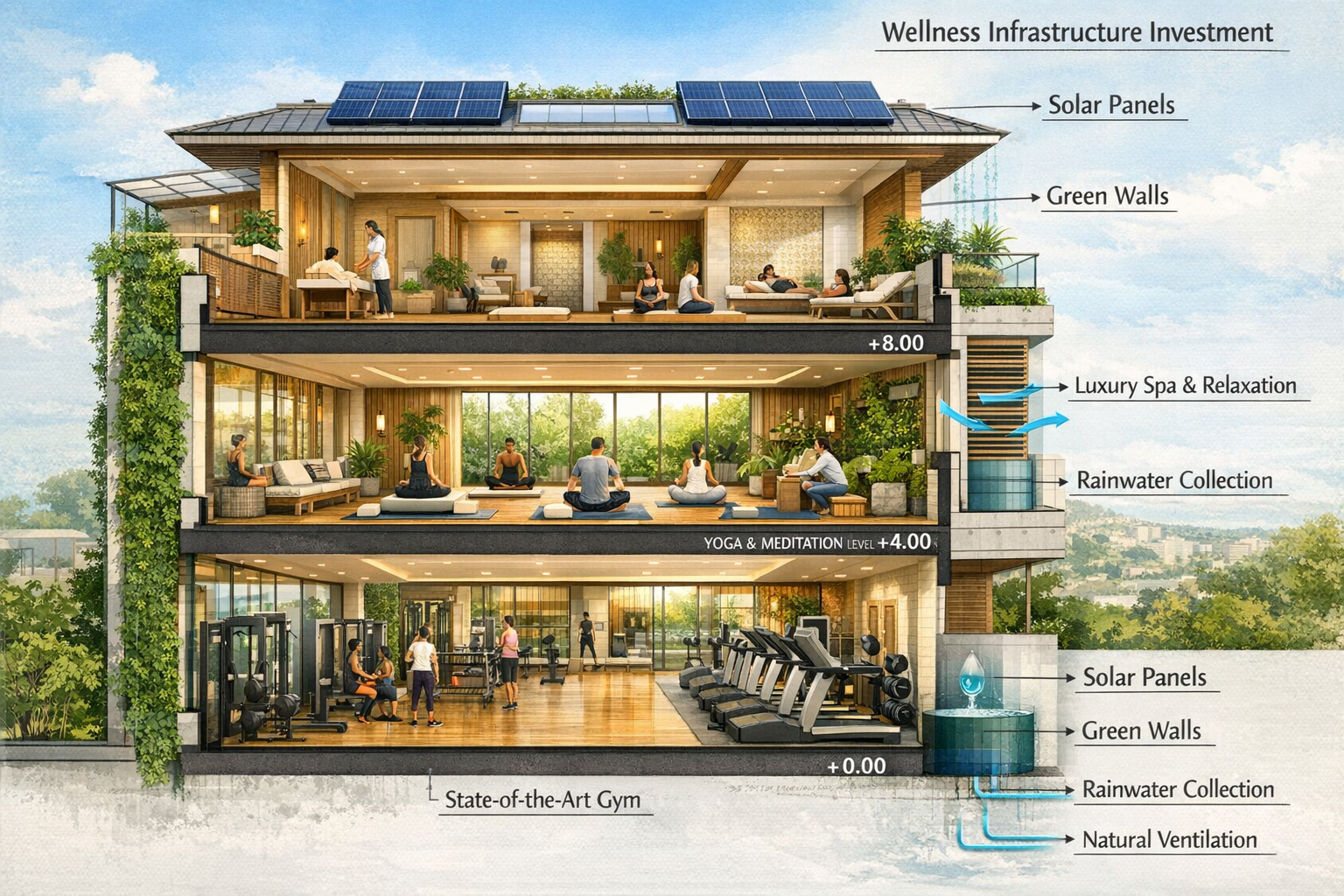
As The Wellness Property Premium: Health-Focused Amenities Driving Buyer Demand in Brazil’s 2026 Market continues to reshape development priorities, specific amenities have emerged as essential features commanding the highest premiums.
High-End Fitness Centers: Beyond Basic Gyms
Today’s wellness-conscious buyers expect far more than a room with a few treadmills. High-end gyms in premium developments now feature:
- Professional-grade equipment: Commercial-quality cardio machines, free weights, functional training areas, and specialized equipment like rowing machines and assault bikes
- Dedicated training spaces: Separate zones for different workout styles, including CrossFit areas, Olympic lifting platforms, and stretching zones
- Technology integration: Smart equipment with performance tracking, virtual training classes, and app connectivity
- Professional design: Floor-to-ceiling mirrors, proper ventilation, acoustic treatment, and motivating aesthetics
- Extended hours or 24/7 access: Flexibility for residents with varying schedules
Properties featuring comprehensive fitness centers are commanding significant price premiums compared to developments with basic or no gym facilities.[3] For developers, the investment in high-quality fitness infrastructure—typically ranging from $300-600 per square meter for equipment and finishes—generates substantial returns through higher unit prices and faster sales velocity.
Yoga Studios and Mindfulness Spaces
The integration of dedicated yoga studios represents one of the fastest-growing wellness amenities in Brazilian residential developments. These specialized spaces offer:
- Proper flooring: Bamboo, cork, or specialized yoga flooring that provides appropriate grip and cushioning
- Natural lighting: Large windows or skylights creating connection with nature and circadian rhythm support
- Acoustic design: Sound insulation allowing for meditation and peaceful practice
- Storage solutions: Built-in cubbies for mats, blocks, straps, and personal belongings
- Flexible programming: Spaces designed to accommodate yoga, Pilates, meditation, and other mindfulness practices
Developments incorporating yoga studios are particularly attractive to female buyers and younger demographics who prioritize mental wellness alongside physical fitness. The relatively modest investment—typically $150-300 per square meter—delivers disproportionate marketing value and buyer appeal.
Proximity to Healthy Food Markets and Organic Options
One of the most overlooked yet increasingly important wellness features is access to healthy food sources. Properties near organic markets, farmer’s markets, or developments incorporating ground-floor healthy food retailers are commanding premiums in Brazil’s 2026 market.[3]
Smart developers are addressing this demand through:
- On-site organic markets: Ground-floor retail spaces leased to health-focused grocers or organic food cooperatives
- Community gardens: Shared growing spaces allowing residents to cultivate herbs, vegetables, and fruits
- Partnerships with delivery services: Exclusive arrangements with organic food delivery providers
- Proximity advantages: Strategic site selection near established healthy food retailers
This amenity category represents a relatively low-cost way for developers to enhance wellness positioning while generating additional revenue through retail leases.
Outdoor Wellness Infrastructure
Brazil’s favorable climate creates unique opportunities for outdoor wellness amenities that enhance property value:
- Running and walking paths: Landscaped trails with distance markers and exercise stations
- Outdoor fitness equipment: Weather-resistant strength training and cardio equipment
- Meditation gardens: Landscaped quiet zones with seating, water features, and native plants
- Rooftop wellness decks: Elevated spaces for yoga, stretching, or outdoor classes with views
These features are particularly effective in markets like Florianópolis, where year-round outdoor activity is possible and residents prioritize connection with nature.
Spa and Recovery Facilities
Premium wellness developments are increasingly incorporating spa-level recovery amenities:
- Saunas and steam rooms: Thermal facilities supporting recovery and relaxation
- Cold plunge pools: Contrast therapy options for athletic recovery
- Massage rooms: Professional treatment spaces available for resident booking
- Relaxation lounges: Quiet spaces with comfortable seating, calming design, and healthy refreshments
While representing higher capital investment ($500-1,000+ per square meter), these amenities create significant differentiation in competitive markets and justify substantial price premiums.
ROI Analysis: The Financial Case for Wellness Infrastructure Investment
For developers evaluating whether to incorporate wellness amenities, The Wellness Property Premium: Health-Focused Amenities Driving Buyer Demand in Brazil’s 2026 Market offers compelling financial justification beyond intuition and market trends.
Price Premium Quantification
Properties incorporating comprehensive wellness amenities are commanding measurable premiums across Brazilian markets:
| Amenity Category | Typical Investment (per unit) | Price Premium Achieved | ROI Timeline |
|---|---|---|---|
| High-end gym | $3,000-6,000 | 8-12% | 18-24 months |
| Yoga studio | $1,500-3,000 | 5-8% | 12-18 months |
| Spa facilities | $5,000-10,000 | 12-18% | 24-36 months |
| Outdoor wellness | $2,000-4,000 | 6-10% | 12-18 months |
| Healthy food access | $1,000-2,000 | 4-7% | 6-12 months |
These premiums translate directly to higher per-square-meter prices. In emerging wellness markets like Florianópolis, where entry prices average $1,800/m² compared to $3,000-8,000/m² in established international wellness destinations, the opportunity for value creation is particularly pronounced.[1]
Yield Advantages in Brazilian Markets
Beyond sale price premiums, wellness properties demonstrate superior rental yields. Florianópolis wellness properties are achieving projected yields of 8-15% versus 4-8% in traditional developments—nearly double the returns in some cases.[1]
This yield advantage stems from multiple factors:
- Higher rental rates: Tenants pay premiums for wellness amenities, typically 15-25% above comparable non-wellness properties
- Lower vacancy rates: Wellness properties attract longer-term tenants and experience faster re-letting when turnover occurs
- Reduced maintenance costs: Health-focused residents tend to care for properties better, reducing damage and turnover expenses
- Premium short-term rental potential: Wellness amenities attract health-conscious travelers willing to pay premium rates
For investors considering studio investments in Florianópolis, wellness amenities can significantly enhance rental performance and occupancy rates.
Sales Velocity Benefits
Beyond price and yield advantages, wellness amenities dramatically improve sales velocity—a critical factor for developers managing construction financing and cash flow:
- Faster pre-sales: Wellness-positioned developments typically achieve 30-50% faster pre-sale rates
- Reduced marketing costs: Distinctive wellness amenities generate organic interest and word-of-mouth referrals
- Lower discount pressure: Strong differentiation reduces need for promotional pricing or incentives
- Institutional investor appeal: Professional investors increasingly target wellness properties for portfolio diversification
Developments like Tramonto that incorporate wellness thinking from initial design demonstrate how health-focused amenities can accelerate market absorption.
Long-Term Appreciation Potential
The most compelling financial argument for wellness infrastructure investment lies in long-term appreciation potential. As wellness real estate transitions from niche to mainstream—evidenced by the 15x market share increase over the past decade—properties with authentic wellness features are positioned to outperform traditional developments over 5-10 year holding periods.[1]
Several factors support this appreciation thesis:
- Supply-demand imbalance: Wellness properties remain scarce outside São Paulo and Rio, creating opportunity in emerging markets[1]
- Demographic tailwinds: Millennial and Gen Z buyers entering peak earning years prioritize wellness features
- Irreversible lifestyle changes: Post-pandemic health consciousness represents permanent behavioral shift
- Certification premium: Properties achieving WELL Building Standard or Fitwel certification—now covering 4,600+ projects across 100 countries—command measurable premiums[1]
For investors focused on property value appreciation, wellness amenities represent a strategic differentiator with compounding value over time.
Regional Opportunities: Where The Wellness Property Premium Is Strongest
The Wellness Property Premium: Health-Focused Amenities Driving Buyer Demand in Brazil’s 2026 Market manifests differently across Brazilian regions, creating distinct opportunities for developers and investors.
Florianópolis: The Emerging Wellness Real Estate Hub
Florianópolis represents perhaps the most compelling opportunity in Brazil’s wellness real estate landscape. The city combines favorable fundamentals—natural beauty, quality of life, growing economy—with virtually nonexistent wellness-focused developments outside São Paulo and Rio, creating a massive supply-demand imbalance.[1]
Key advantages include:
- Entry price advantage: At $1,800/m², Florianópolis offers 40-75% lower entry prices than comparable international wellness destinations
- First-mover opportunity: Terrá Jurerê represents the first true wellness-focused residential development in Santa Catarina, establishing proof of concept[1]
- Infrastructure growth: The region’s expanding infrastructure supports wellness development viability
- Lifestyle alignment: The island’s outdoor-focused culture naturally aligns with wellness property positioning
For developers and investors, Florianópolis offers the rare combination of underserved demand, favorable pricing, and lifestyle authenticity that characterizes early-stage wellness markets before institutional capital drives valuations higher.
São Paulo and Rio: Mature Markets with Premium Positioning
Brazil’s largest cities represent mature wellness real estate markets where competition is intense but buyer sophistication and willingness to pay premiums are highest.
In these markets, success requires:
- Authentic differentiation: Generic wellness amenities no longer suffice; developments must offer unique programming, partnerships, or design
- Certification pursuit: WELL Building Standard or Fitwel certification provides credible third-party validation
- Integrated wellness ecosystems: Connections to surrounding wellness infrastructure—healthy restaurants, fitness studios, parks—enhance value
- Technology integration: Smart home features supporting wellness (air quality monitoring, circadian lighting, etc.) create competitive advantages
Interior Bahia and Eco-Tourism Zones: The Sustainability Premium
Properties in interior Bahia and ecological tourism resort developments are particularly well-positioned to capture premiums through sustainability features.[3] These markets attract buyers specifically seeking:
- Sustainable building materials: Reclaimed wood, bamboo, low-VOC finishes, and locally-sourced materials
- Water conservation systems: Rainwater harvesting, greywater recycling, and efficient fixtures
- Solar energy integration: Photovoltaic systems reducing operating costs and environmental impact
- Biophilic design: Architecture integrating natural elements, views, and indoor-outdoor flow
The sustainability premium in these markets often exceeds traditional wellness amenities, as buyers are motivated by environmental values alongside personal health.
Short-Term Rental Regulatory Considerations
A critical 2026 factor affecting wellness property investment is evolving short-term rental regulation. Stricter rules in Rio de Janeiro and São Paulo regarding zoning, taxation, and registration are making these markets more complex for investors seeking rental income.[3]
However, smaller dedicated resort communities—particularly those with wellness positioning—may offer more regulatory leniency, making them more attractive for investors seeking minimal operational constraints. This regulatory divergence could accelerate wellness property development in secondary markets where short-term rental flexibility remains intact.
Implementation Strategies for Developers
Successfully capturing The Wellness Property Premium: Health-Focused Amenities Driving Buyer Demand in Brazil’s 2026 Market requires strategic planning beyond simply adding amenities to standard developments.
Design Integration from Concept Phase
The most successful wellness developments integrate health-focused thinking from initial concept rather than retrofitting amenities into conventional designs:
- Neuroarchitecture principles: Incorporating research-backed design elements supporting mental health and cognitive function
- Natural light maximization: Unit layouts and building orientation prioritizing daylight access
- Air quality systems: Advanced HVAC with filtration exceeding standard building codes
- Acoustic design: Sound insulation and layout strategies minimizing noise pollution
- Biophilic elements: Integration of natural materials, views, and indoor-outdoor connections
Projects like Solis demonstrate how wellness thinking can inform overall development approach rather than serving as an amenity add-on.
Programming and Community Building
Physical amenities alone don’t create wellness communities. Successful developments incorporate programming and community building:
- Resident wellness events: Yoga classes, meditation sessions, nutrition workshops, and fitness challenges
- Expert partnerships: Relationships with local wellness professionals providing exclusive resident access
- Digital platforms: Apps or portals facilitating amenity booking, class registration, and community connection
- Wellness concierge services: Staff dedicated to helping residents maximize wellness amenity usage
This programming transforms amenities from underutilized spaces into vibrant community hubs that justify premium pricing.
Certification Pursuit for Credibility
As wellness real estate matures, third-party certification provides credible differentiation. The WELL Building Standard and Fitwel certification systems—now covering 4,600+ projects across 100 countries—establish objective wellness standards.[1]
Certification benefits include:
- Marketing differentiation: Credible third-party validation in increasingly crowded market
- Premium justification: Objective standards supporting higher pricing
- Institutional investor appeal: Many funds prioritize certified properties for ESG mandates
- Design guidance: Certification frameworks provide implementation roadmaps
While certification adds costs ($15,000-50,000+ depending on project size and certification level), the marketing and pricing advantages typically justify investment.
Phased Investment Strategies
For developers concerned about capital requirements, phased wellness amenity implementation can balance investment with market validation:
Phase 1 (Launch):
- High-impact, moderate-cost amenities (yoga studio, outdoor fitness equipment)
- Basic gym with quality equipment
- Wellness-focused marketing and positioning
Phase 2 (Post-50% Sales):
- Enhanced gym equipment and expansion
- Spa facilities or recovery amenities
- Programming launch with resident events
Phase 3 (Post-Completion):
- Advanced technology integration
- Certification pursuit
- Community partnerships and programming expansion
This approach allows developers to validate demand before committing full capital while still capturing wellness positioning advantages from launch.
The Future Trajectory: 2026 and Beyond
As The Wellness Property Premium: Health-Focused Amenities Driving Buyer Demand in Brazil’s 2026 Market continues evolving, several trends will shape the next phase of wellness real estate development.
Technology Integration Acceleration
The next generation of wellness properties will incorporate advanced technology supporting resident health:
- Air quality monitoring: Real-time tracking and automated adjustment of ventilation and filtration
- Circadian lighting systems: Automated lighting adjusting color temperature throughout day to support natural rhythms
- Biometric integration: Wearable device connectivity allowing personalized amenity recommendations
- Virtual wellness programming: Hybrid in-person and digital class offerings expanding access
Wellness-as-a-Service Models
Some developers are exploring subscription-based wellness services as alternative revenue streams:
- Tiered membership models: Different amenity access levels at varying price points
- External membership sales: Opening wellness facilities to non-residents for additional revenue
- Partnership revenue sharing: Arrangements with wellness service providers generating ongoing income
- Integrated health services: On-site practitioners (nutritionists, physical therapists, etc.) paying rent or revenue shares
Expanding Definition of Wellness
The wellness property concept is expanding beyond physical health to encompass:
- Social wellness: Amenities and design supporting community connection and relationship building
- Financial wellness: Co-working spaces, business centers, and programming supporting professional development
- Environmental wellness: Sustainable features connecting personal and planetary health
- Purpose wellness: Community service spaces and programming supporting meaning and contribution
This holistic approach creates additional differentiation opportunities for developers willing to think beyond conventional wellness amenities.
Conclusion: Capitalizing on Brazil’s Wellness Property Revolution
The Wellness Property Premium: Health-Focused Amenities Driving Buyer Demand in Brazil’s 2026 Market represents far more than a temporary trend—it’s a fundamental restructuring of what buyers expect from residential properties. With wellness real estate expanding at 19.5% annually and commanding 8-15% yields compared to 4-8% for traditional developments, the financial case for wellness infrastructure investment is compelling.[1]
Brazil’s position as the #1 wellness economy in Latin America and #4 globally, combined with the health and wellness market’s projected growth to USD 222.4 billion by 2034, creates an unprecedented opportunity for developers and investors who act decisively.[1][2]
Key Action Steps for Stakeholders
For Developers:
- ✅ Integrate wellness thinking from initial concept phase rather than retrofitting amenities
- ✅ Prioritize high-impact amenities: high-end gyms, yoga studios, and outdoor wellness infrastructure
- ✅ Consider certification (WELL or Fitwel) for credibility and premium justification
- ✅ Develop programming strategies to activate amenities and build community
- ✅ Target emerging markets like Florianópolis where supply-demand imbalances create opportunity
For Investors:
- ✅ Prioritize properties with authentic wellness amenities in acquisition decisions
- ✅ Focus on emerging wellness markets before institutional capital drives valuations higher
- ✅ Evaluate long-term appreciation potential alongside immediate yield
- ✅ Consider regulatory environments for short-term rental flexibility
- ✅ Explore investment opportunities in high-growth regions with wellness development potential
For Buyers:
- ✅ Evaluate wellness amenities as value drivers, not just lifestyle benefits
- ✅ Prioritize properties with comprehensive wellness infrastructure for appreciation potential
- ✅ Consider emerging markets offering entry price advantages before premiums fully materialize
- ✅ Assess amenity quality and programming, not just presence
- ✅ Explore developments incorporating wellness thinking from design phase
The wellness property revolution is reshaping Brazil’s real estate landscape in 2026, creating winners among developers and investors who recognize that health-focused amenities have transitioned from luxury add-ons to essential features commanding measurable premiums. As the market continues its rapid evolution—from less than 1% to over 15% of new construction in just a decade—the opportunity to capitalize on this transformation remains significant for those who act strategically.
The question is no longer whether wellness amenities justify investment, but rather how quickly stakeholders can position themselves to capture the substantial premiums and yields that wellness properties are commanding in Brazil’s dynamic 2026 market.
References
[1] Wellness Real Estate Florianopolis – https://www.elisainvestimentos.com.br/en/wellness-real-estate-florianopolis/
[2] Brazil Health Wellness Market – https://www.imarcgroup.com/brazil-health-wellness-market
[3] Brazil Property Market Predictions For 2026 – https://esalesinternational.com/2025/11/20/brazil-property-market-predictions-for-2026/