
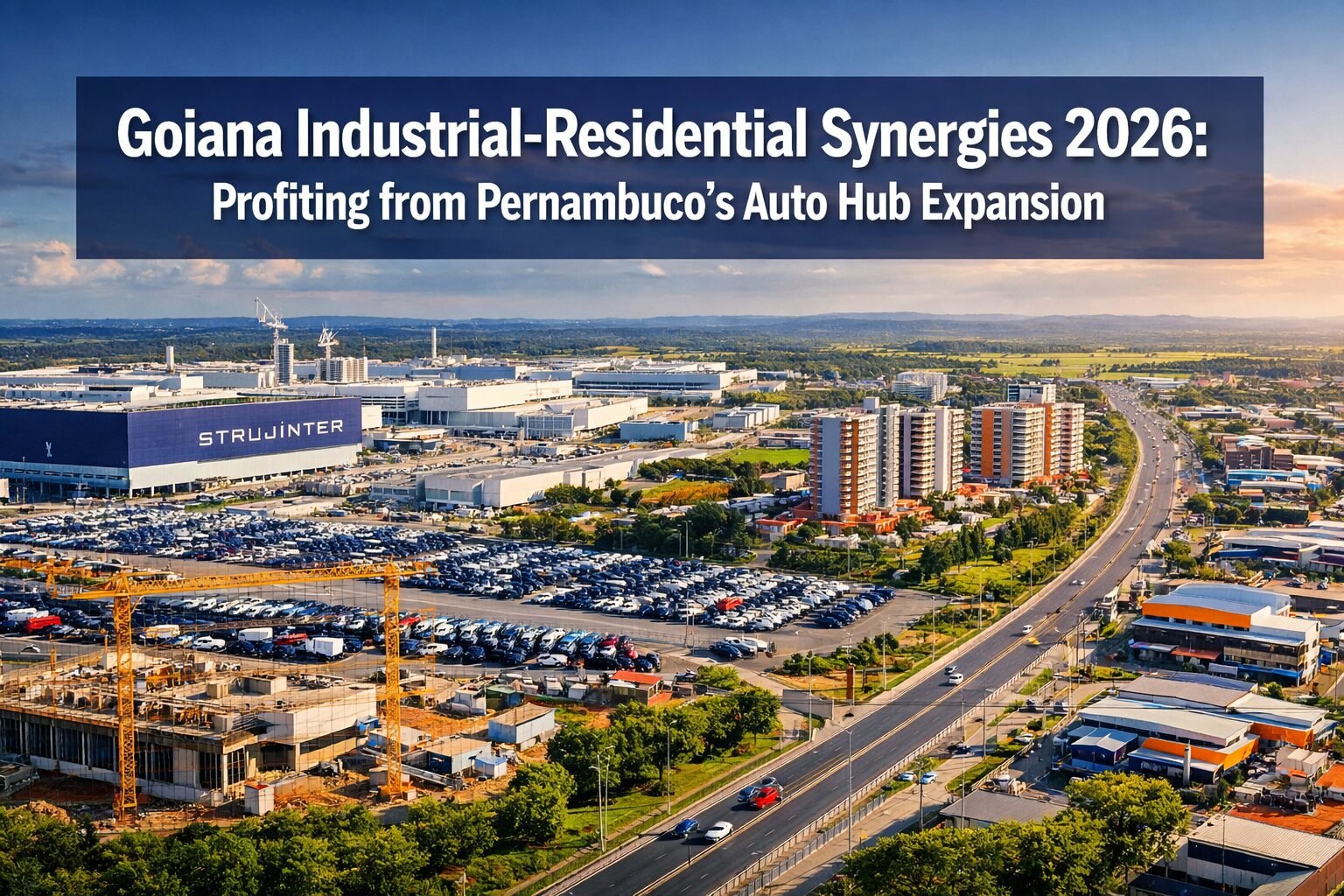
The northeastern Brazilian city of Goiana is experiencing an unprecedented transformation that’s creating exceptional opportunities for savvy real estate investors. As Goiana Industrial-Residential Synergies 2026: Profiting from Pernambuco’s Auto Hub Expansion takes center stage, the convergence of massive automotive manufacturing investments and strategic residential development is reshaping the investment landscape. With Stellantis pouring R$13 billion into the region and production milestones reaching historic heights, the timing has never been better to understand how industrial growth translates directly into residential real estate profits.
The automotive hub that began operations in 2015 has now produced over 2 million vehicles, creating a ripple effect that extends far beyond factory walls. This industrial powerhouse is generating stable demand for housing, commercial services, and mixed-use developments that offer investors compelling 10-15% annual returns. The key lies in understanding the synergies between industrial expansion and residential opportunity—a relationship that’s creating wealth-building potential across Pernambuco’s fastest-growing municipality.
Key Takeaways
✅ Massive Industrial Investment: Stellantis committed R$13 billion (US$2.5+ billion) to Goiana through 2030, with four new bio-hybrid models and expanded production capacity driving sustained economic growth [3]
✅ Strong Employment Foundation: The automotive hub has created 14,700+ direct jobs with supplier ecosystem expansion targeting 100 companies, ensuring stable residential demand and rental income potential [2]
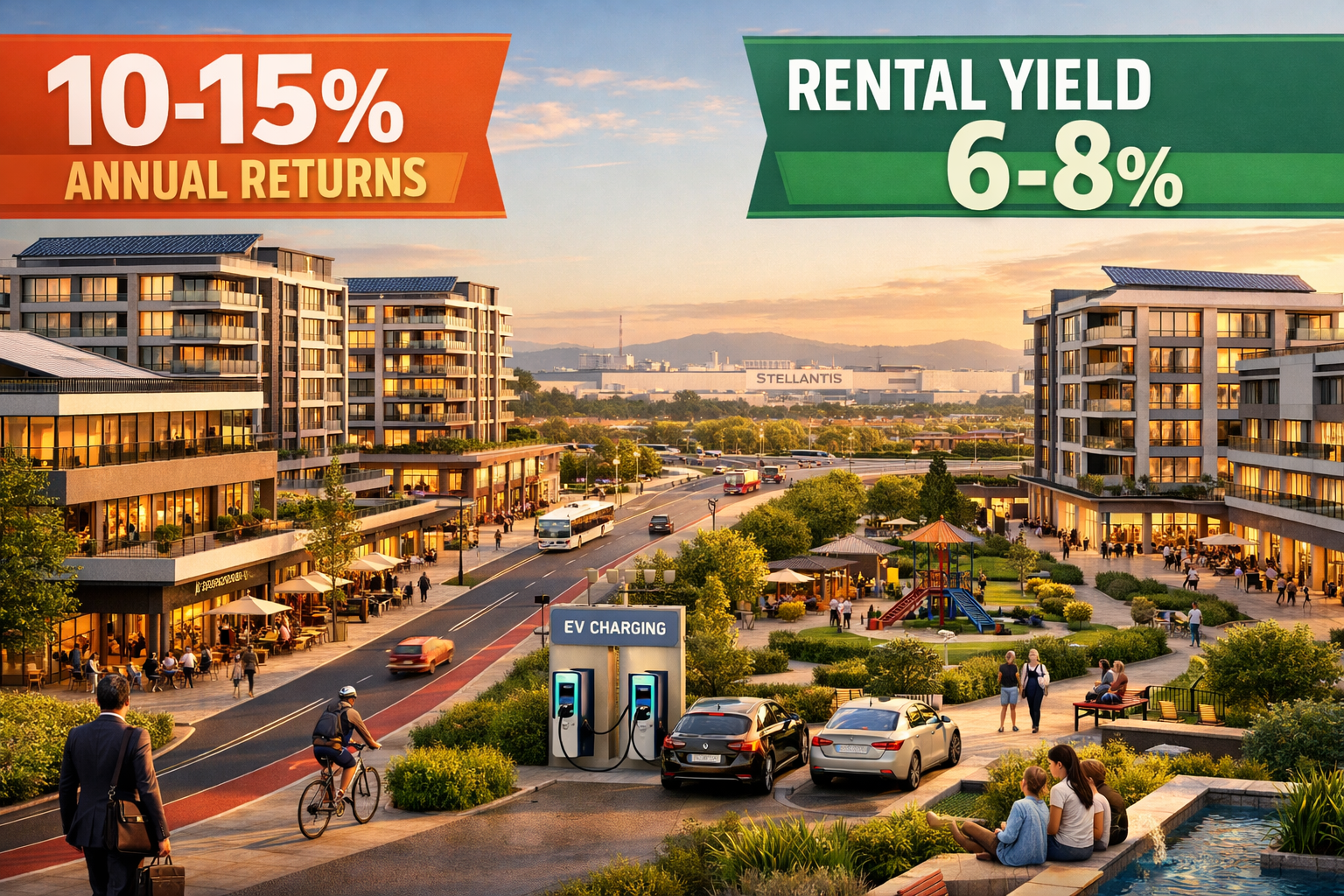
✅ Strategic Mixed-Use Opportunities: Proximity-based developments combining residential, commercial, and service infrastructure near the industrial zone are delivering consistent 10-15% returns with 6-8% rental yields
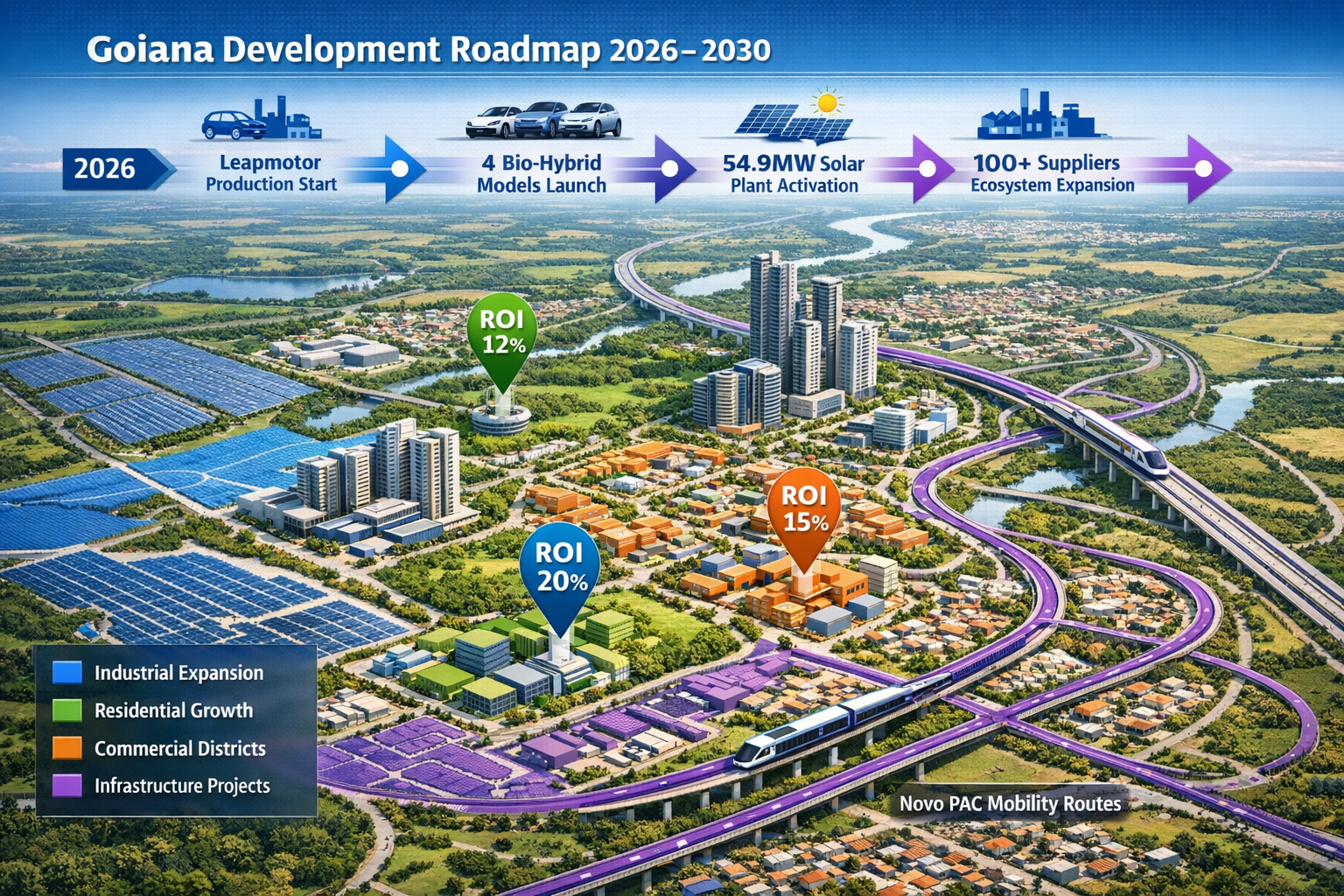
✅ Technology-Driven Growth: Launch of Brazil’s first 48V mild-hybrid vehicle and Leapmotor production starting in 2026 position Goiana as a long-term automotive technology hub [1][5]
✅ Infrastructure Modernization: Novo PAC mobility projects and sustainable energy initiatives (54.9MW solar plant) are enhancing connectivity and property values across the region [7]
Understanding Goiana’s Automotive Hub Transformation
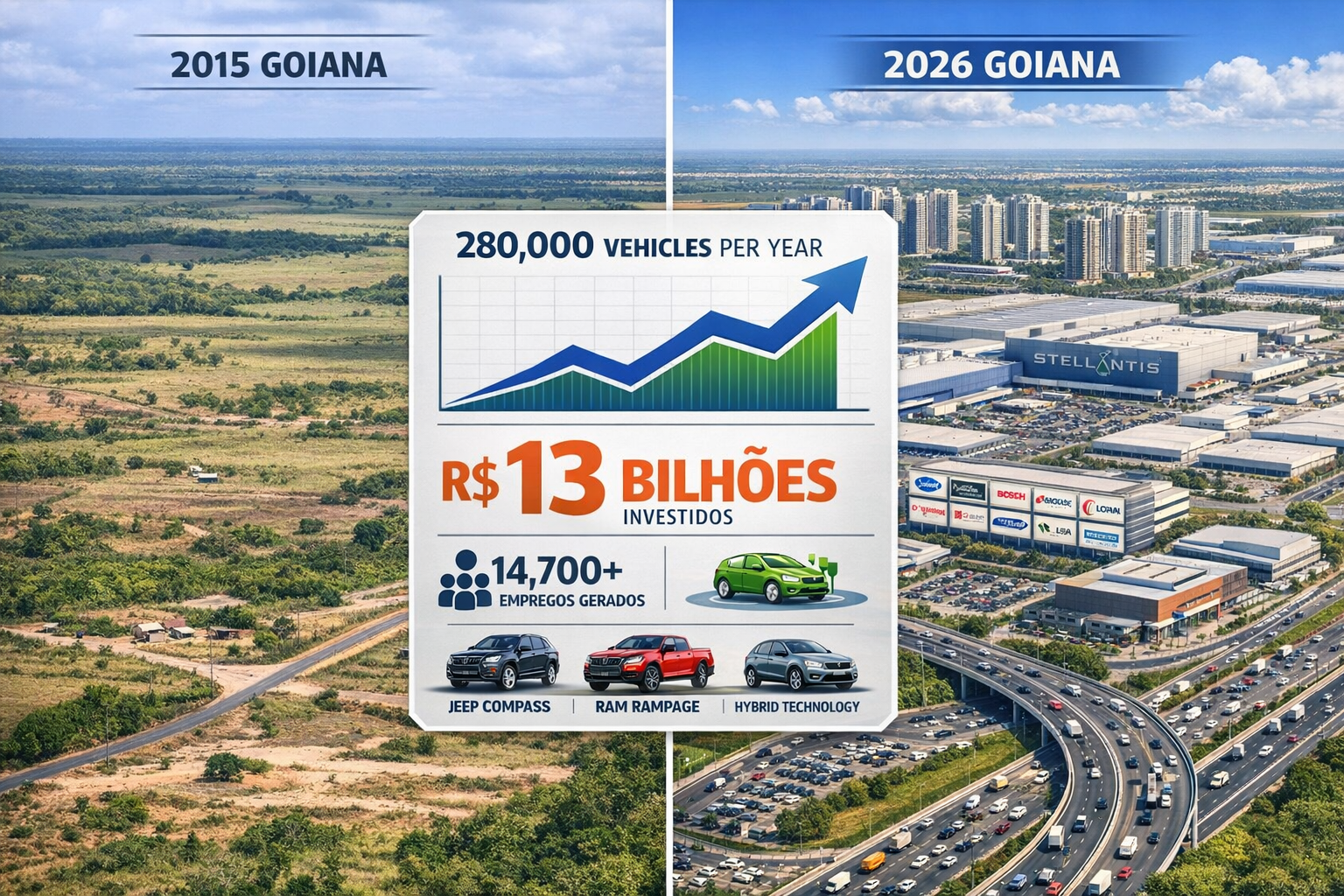
From Agricultural Land to Industrial Powerhouse
The Goiana Automotive Pole represents one of Brazil’s most dramatic industrial transformations. Since opening in 2015, this Stellantis facility has evolved from greenfield agricultural land into a sophisticated manufacturing complex producing five vehicle models: Jeep Renegade, Jeep Compass, Jeep Commander, Fiat Toro, and Ram Rampage [6].
The facility’s recent achievement of 2 million vehicles produced marks a significant milestone, with the 2,000,000th vehicle being a 2026 Ram Rampage R/T—the first Ram truck designed and built entirely outside North America [2]. This achievement demonstrates the hub’s technological sophistication and strategic importance within Stellantis’ global operations.
Record Investment Driving Sustained Growth
The R$13 billion investment commitment for 2025-2030 focuses on three critical areas [3]:
- New product platforms adapted for Brazilian market conditions
- Hybrid and electric technologies including bio-hybrid systems
- Supplier ecosystem expansion from 38 to approximately 100 local suppliers
This investment isn’t speculative—it’s backed by concrete production plans. In early 2026, Stellantis announced the launch of Brazil’s first flex mild-hybrid vehicle with 48V MHEV technology, developed and produced at Goiana during the first half of the year [1]. Additionally, four new bio-hybrid models entered production specifically designed for local market needs [4].
Technology Leadership Creating Long-Term Stability
Goiana’s evolution into a technology hub rather than just a manufacturing facility provides crucial stability for real estate investors. The facility is producing:
🚗 Six bio-hybrid models planned through 2030, with over 50,000 units already produced in models like Fiat Pulse, Fastback, Peugeot 208 Hybrid, and 2008 Hybrid [4]
🔋 Leapmotor electric vehicles starting production in 2026, confirming Stellantis’ industrial localization and technology transfer strategy [5]
⚡ Sustainable energy infrastructure including a 54.9MW solar plant to support operations [7]
🌱 100% ethanol pre-fueling for all flex-fuel vehicles, reducing CO2 emissions by approximately 2,100 tons and 87% during first refueling [8]
This technological sophistication ensures the hub won’t become obsolete as automotive technology evolves—instead, it’s positioned at the forefront of Brazil’s transition to hybrid and electric mobility.
Goiana Industrial-Residential Synergies 2026: The Investment Opportunity Framework
Why Industrial Proximity Creates Residential Value
The relationship between industrial employment centers and residential real estate value follows predictable patterns that create measurable investment opportunities. In Goiana’s case, several factors amplify this relationship:
Employment Stability: With 14,700+ direct jobs and expanding supplier networks, the employment base provides consistent rental demand [2]. Unlike speculative residential markets, industrial-adjacent housing benefits from workers who need proximity to shift-based manufacturing schedules.
Income Predictability: Automotive manufacturing jobs offer above-average wages compared to regional standards, supporting higher-quality housing demand and premium rental rates.
Long-Term Commitment: The R$13 billion investment through 2030 provides visibility that most residential markets lack, allowing investors to plan multi-year holding strategies with confidence [3].
Mixed-Use Development: The Optimal Strategy
The most compelling opportunities in Goiana Industrial-Residential Synergies 2026 involve mixed-use developments that serve multiple market segments:
| Development Type | Target Market | Typical Returns | Risk Level |
|---|---|---|---|
| Worker Housing | Factory employees, suppliers | 12-15% annual | Low-Medium |
| Executive Residences | Management, engineers | 10-13% annual | Medium |
| Commercial Services | Restaurants, retail, services | 8-12% annual | Medium |
| Mixed-Use Complexes | Multiple segments | 10-15% annual | Low |
Mixed-use complexes combining residential towers with ground-floor commercial spaces offer the best risk-adjusted returns because they:
✅ Diversify income streams across residential and commercial tenants
✅ Create self-contained communities that attract premium renters
✅ Benefit from both industrial worker demand and general population growth
✅ Maintain occupancy through economic cycles due to essential services
For investors exploring best practices in real estate development, understanding these synergies is crucial for maximizing returns.
Profiting from Pernambuco’s Auto Hub Expansion: Practical Investment Strategies
Location Strategy: The Proximity Premium
Real estate value in Goiana follows clear geographic patterns based on distance from the automotive hub:
Zone 1 (0-3km): Highest worker demand, premium rental yields (7-9%), ideal for apartment complexes targeting shift workers and young professionals
Zone 2 (3-7km): Balanced residential-commercial mix, family housing, schools, and services, offering 6-8% rental yields with appreciation potential
Zone 3 (7-15km): Executive housing, larger properties, lifestyle amenities, delivering 5-7% yields with higher capital appreciation
The key insight: Zone 2 properties offer the optimal balance of rental income and capital appreciation, particularly mixed-use developments that serve both industrial workers and the broader community.
Infrastructure Catalysts Amplifying Returns
Several infrastructure initiatives are creating value acceleration zones across Goiana:
Novo PAC Mobility Projects: Federal infrastructure investments improving connectivity between residential areas and the industrial hub enhance property accessibility and reduce commute friction—a primary concern for industrial workers.
Solar Energy Infrastructure: The 54.9MW solar plant authorization signals Stellantis’ commitment to sustainable operations and energy independence [7]. Properties incorporating solar technology or located near energy infrastructure benefit from reduced operating costs and environmental appeal.
Supplier Park Development: As the supplier ecosystem expands from 38 to 100 companies [3], secondary employment centers emerge throughout the municipality, creating multiple demand nodes rather than single-point dependency.
Timing the Market: 2026-2030 Sweet Spot
The current investment window offers exceptional timing advantages:
Early-Stage Expansion: While Stellantis’ investment is committed, much of the residential development is still catching up to employment growth, creating supply-demand imbalances that favor investors.
Pre-Construction Opportunities: Developers are launching projects now that will deliver into peak demand periods in 2027-2028. For those interested in buying pre-construction properties, this timing maximizes appreciation potential.
Technology Transition Period: As hybrid and electric vehicle production ramps up, Goiana will attract higher-skilled workers commanding premium wages, supporting upscale residential demand.
Financial Modeling: Expected Returns
Conservative financial projections for Goiana Industrial-Residential Synergies 2026 investments:
Rental Income: 6-8% annual gross yields for well-located properties
Capital Appreciation: 4-7% annually through 2030 based on industrial expansion
Total Returns: 10-15% annually combining income and appreciation
Occupancy Rates: 90-95% in proximity zones due to sustained employment demand
These returns compare favorably to traditional Brazilian real estate markets while offering lower volatility due to the industrial employment anchor. Investors can explore current development opportunities to identify projects aligned with these parameters.
Risk Mitigation Strategies
While the opportunity is compelling, prudent investors implement several risk controls:
🛡️ Diversification: Spread investments across multiple properties or development phases rather than concentrating in single projects
🛡️ Due Diligence: Verify developer track records, construction quality, and legal compliance—particularly important in rapidly developing markets
🛡️ Exit Strategy: Maintain liquidity options through properties with strong resale potential to both investors and end-users
🛡️ Market Monitoring: Track Stellantis production volumes, employment figures, and supplier announcements as leading indicators of residential demand
Novo PAC and Regional Development Multipliers
Federal Infrastructure Investment Impact
Brazil’s Novo PAC (Programa de Aceleração do Crescimento) represents significant federal investment in infrastructure modernization. For Goiana, this translates into:
Transportation Connectivity: Improved road networks linking the automotive hub to Recife metropolitan area and Port of Suape, reducing logistics costs and enhancing residential accessibility
Urban Mobility Solutions: Public transportation investments serving industrial zones, reducing worker transportation costs and expanding viable residential locations
Utility Infrastructure: Water, sewage, and electrical grid upgrades supporting both industrial expansion and residential development
These infrastructure multipliers amplify the direct impact of Stellantis’ investment by enabling broader economic development beyond the automotive sector.
Supplier Ecosystem: Secondary Employment Centers
The expansion from 38 to 100 suppliers creates distributed employment centers throughout the region [3]. This geographic distribution of economic activity:
✅ Reduces single-point dependency on the main Stellantis facility
✅ Creates multiple residential demand nodes across the municipality
✅ Supports commercial development serving diverse worker populations
✅ Enhances overall economic resilience and property value stability
For investors, this means opportunities extend beyond immediate factory proximity to include areas near major supplier facilities and logistics hubs.
Sustainability as Value Driver
Goiana’s emphasis on sustainable industrial practices creates long-term value protection:
The 100% ethanol pre-fueling initiative reduces emissions by 2,100 tons annually [8], positioning the hub as an environmental leader. The planned 54.9MW solar plant [7] demonstrates commitment to renewable energy. These initiatives:
- Attract environmentally-conscious workers willing to pay premium rents
- Reduce regulatory risk from future environmental requirements
- Enhance corporate reputation, supporting long-term facility viability
- Create opportunities for green building certifications in residential projects
Properties incorporating sustainability features command 8-12% premium rents in industrial markets, making green development a competitive advantage.
Comparing Goiana to Other Brazilian Investment Markets
Competitive Advantages Over Traditional Markets
Goiana Industrial-Residential Synergies 2026 offers distinct advantages compared to traditional Brazilian real estate markets:
São Paulo/Rio de Janeiro: While offering larger markets, these cities face saturation, higher entry costs, and political uncertainty. Goiana provides growth-stage opportunities with clearer value drivers.
Florianópolis: Beach markets like Florianópolis offer lifestyle appeal but depend on tourism and seasonal demand. Goiana’s industrial anchor provides year-round stability.
Amazon Region: Resource extraction markets face commodity price volatility. Automotive manufacturing offers more predictable long-term demand.
Risk-Return Profile Comparison
| Market | Expected Returns | Volatility | Liquidity | Growth Drivers |
|---|---|---|---|---|
| Goiana | 10-15% | Low-Medium | Medium | Industrial expansion |
| São Paulo | 6-10% | Medium | High | Diversified economy |
| Florianópolis | 8-14% | Medium-High | Medium | Tourism, lifestyle |
| Brasília | 5-9% | Low | Medium | Government employment |
Goiana’s combination of double-digit returns with relatively low volatility stems from the industrial employment anchor—a factor missing in most Brazilian markets.
Portfolio Integration Strategy
For investors building diversified Brazilian real estate portfolios, Goiana serves as an industrial-growth component that balances:
- Lifestyle markets (beach, mountain) providing appreciation potential
- Urban centers offering liquidity and transaction volume
- Industrial hubs delivering stable income and employment-driven demand
This diversification approach, similar to strategies used in high-return property markets, optimizes risk-adjusted returns across economic cycles.
Actionable Steps for Investors in 2026
Due Diligence Checklist
Before committing capital to Goiana Industrial-Residential Synergies 2026 opportunities, complete this verification process:
✓ Developer Verification: Research track record, completed projects, financial stability, and legal compliance
✓ Location Analysis: Confirm proximity to employment centers, transportation access, and planned infrastructure
✓ Market Research: Validate rental rates, occupancy levels, and absorption rates in comparable properties
✓ Legal Review: Ensure clear title, proper zoning, environmental permits, and construction licenses
✓ Financial Modeling: Project cash flows, returns, and exit scenarios under various market conditions
Property Selection Criteria
Prioritize properties meeting these criteria for optimal returns:
🏢 Mixed-use configuration with residential and commercial components
🚗 Proximity to industrial zones (3-7km optimal range)
🏗️ Quality construction meeting modern building standards
🌳 Amenities package including parking, security, common areas
📱 Technology infrastructure supporting remote work and connectivity
♻️ Sustainability features reducing operating costs and environmental impact
Partnership and Management
Successful Goiana investments typically require:
Local Partners: Work with developers and property managers familiar with Pernambuco market dynamics and regulatory environment
Professional Management: Engage experienced property managers to handle tenant relations, maintenance, and rent collection—particularly important for investors based outside the region
Legal Representation: Retain qualified real estate attorneys to navigate Brazilian property law and protect investment interests
Investors can contact specialized developers to explore partnership opportunities and access local market expertise.
Monitoring and Adjustment
Implement ongoing monitoring to optimize returns:
📊 Quarterly Reviews: Track occupancy rates, rental income, and operating expenses
📈 Market Updates: Monitor Stellantis production volumes, employment announcements, and supplier expansions
🏗️ Development Pipeline: Stay informed about competing projects and market supply
💰 Exit Opportunities: Evaluate refinancing, sale, or expansion options as market evolves
Conclusion
Goiana Industrial-Residential Synergies 2026: Profiting from Pernambuco’s Auto Hub Expansion represents a compelling investment thesis built on concrete fundamentals rather than speculation. With Stellantis’ R$13 billion commitment through 2030, production of innovative hybrid and electric vehicles, and expansion to 100 supplier companies, the industrial foundation supporting residential demand is exceptionally strong.
The convergence of massive automotive manufacturing investment, federal infrastructure modernization through Novo PAC, and strategic mixed-use development creates a unique window for investors seeking stable 10-15% annual returns. Unlike speculative markets dependent on economic cycles or tourism trends, Goiana’s growth is anchored in industrial employment—providing predictable, long-term demand for quality housing and commercial services.
The key to success lies in understanding the synergies between industrial expansion and residential opportunity: proximity-based location strategy, mixed-use development approaches, and timing that captures the 2026-2030 expansion phase. Properties positioned 3-7km from the automotive hub, incorporating commercial components, and serving both industrial workers and the broader community offer the optimal risk-return profile.
Next Steps for Investors
Immediate Actions (Next 30 Days):
- Research current development projects in Goiana and surrounding municipalities
- Connect with local developers and property managers specializing in industrial-adjacent residential properties
- Conduct preliminary financial modeling based on 6-8% rental yields and 4-7% annual appreciation
- Review legal and tax implications of Brazilian real estate investment for your specific situation
Medium-Term Planning (3-6 Months):
- Visit Goiana to evaluate properties, meet partners, and assess market conditions firsthand
- Complete due diligence on 3-5 specific investment opportunities
- Secure financing or partnership arrangements for selected properties
- Establish property management relationships for ongoing operations
Long-Term Strategy (12+ Months):
- Build diversified portfolio across multiple properties or development phases
- Monitor Stellantis production milestones and supplier ecosystem expansion
- Evaluate additional investment opportunities as market evolves
- Plan exit strategies or portfolio expansion based on performance
The transformation of Goiana from agricultural land to advanced automotive manufacturing hub is creating generational wealth-building opportunities for investors who understand the industrial-residential synergies at play. With clear growth drivers, measurable returns, and manageable risks, 2026 represents an optimal entry point for capturing value from Pernambuco’s auto hub expansion.
For personalized guidance on navigating Goiana Industrial-Residential Synergies 2026 opportunities, explore available properties and development projects or contact investment specialists familiar with the Pernambuco market.
References
[1] marklines – https://www.marklines.com/en/news/341023
[2] Stellantis Goiana Pole Produces Its 2000000th Vehicle – https://moparinsiders.com/stellantis-goiana-pole-produces-its-2000000th-vehicle/
[3] Stellantis Will Invest Billions To Manufacture New Models In Brazil Argentina – https://www.bloomberglinea.com/english/stellantis-will-invest-billions-to-manufacture-new-models-in-brazil-argentina/
[4] Stellantis Announces Major 2026 Upgrades For Its Automotive Hubs In Brazil 29806 – https://www.clubalfa.it/en/stellantis-announces-major-2026-upgrades-for-its-automotive-hubs-in-brazil-29806
[5] marklines – https://www.marklines.com/en/news/336277
[6] Stellantis Goiana Pole Produces Its 2000000th Vehicle – https://moparinsights.com/stellantis-goiana-pole-produces-its-2000000th-vehicle/
[7] Stellantis Requests Authorization For Another Solar Plant In Brazil – https://www.bnamericas.com/en/news/stellantis-requests-authorization-for-another-solar-plant-in-brazil
[8] Vice President Geraldo Alckmin Performs The First 100 Ethanol Refueling Of Flex Fuel Vehicles During A Visit To The Stellantis Hub In Goiana – https://advancedbiofuelsusa.info/vice-president-geraldo-alckmin-performs-the-first-100-ethanol-refueling-of-flex-fuel-vehicles-during-a-visit-to-the-stellantis-hub-in-goiana