

The Brazilian short-term rental market is experiencing a dramatic shift in 2026. While established destinations like Trancoso and Florianópolis continue to attract investors, savvy property developers are discovering exceptional opportunities in emerging Northeast markets where acquisition costs remain low and international demand for eco-tourism experiences is surging. With Brazil’s approximately 350,000 active Airbnb listings concentrated primarily in Rio de Janeiro and São Paulo [2], the Northeast Brazil Airbnb Hotspots 2026: High-Yield Short-Term Rental Strategies Beyond Trancoso and Florianópolis represent the next frontier for investors seeking dollar-based returns amplified by favorable BRL exchange rates.
This comprehensive guide reveals the data-driven opportunities in overlooked coastal cities and protected interior regions where occupancy rates exceed 40% and monthly revenues consistently outperform saturated southern markets.
Key Takeaways
- João Pessoa and Maceió deliver superior occupancy rates (38-42%) compared to oversaturated markets, with monthly revenues exceeding $500-700 per property [1]
- Low regulatory barriers across all Northeast markets create favorable conditions for short-term rental operations without restrictive licensing requirements [1]
- Eco-tourism rentals in Bahia’s interior and protected coastal areas capture premium rates from international travelers seeking authentic experiences
- Dollar-based returns benefit significantly from BRL exchange rate advantages, with acquisition costs 40-60% lower than comparable southern properties
- Strategic property management and dynamic pricing optimization can increase revenues by 25-35% in emerging Northeast destinations
Understanding the Northeast Brazil Airbnb Market Landscape in 2026
The Northeast region of Brazil has emerged as a compelling alternative to traditional investment markets. While destinations like Florianópolis continue to experience growth, the concentration of listings in southern cities has created saturation that drives down yields. The Northeast offers a refreshing contrast: lower competition, authentic cultural experiences, and year-round tropical climate that international tourists increasingly prefer.
Market Saturation Analysis
Brazil’s short-term rental market shows clear geographic concentration patterns. With approximately 350,000 active Airbnb listings nationwide as of January 2026 [2], the majority cluster in Rio de Janeiro and São Paulo. This saturation creates pricing pressure and reduces occupancy rates in these traditional markets.
The Northeast, by contrast, remains undersaturated despite offering comparable or superior amenities. This imbalance creates a strategic opportunity for developers who understand regional dynamics and can position properties effectively.
Regulatory Environment Advantages
One of the most significant advantages for investors exploring Northeast Brazil Airbnb Hotspots 2026: High-Yield Short-Term Rental Strategies Beyond Trancoso and Florianópolis is the favorable regulatory landscape. All identified Brazilian Airbnb markets show “Low” regulation status [1], meaning:
- ✅ No restrictive licensing requirements
- ✅ Minimal operational barriers
- ✅ Straightforward registration processes
- ✅ Limited local restrictions on short-term rentals
This regulatory clarity contrasts sharply with increasingly restrictive markets in Europe and North America, where cities impose caps on rental days, require expensive licenses, or ban short-term rentals entirely.
Top Northeast Brazil Airbnb Hotspots 2026: Data-Driven Location Analysis
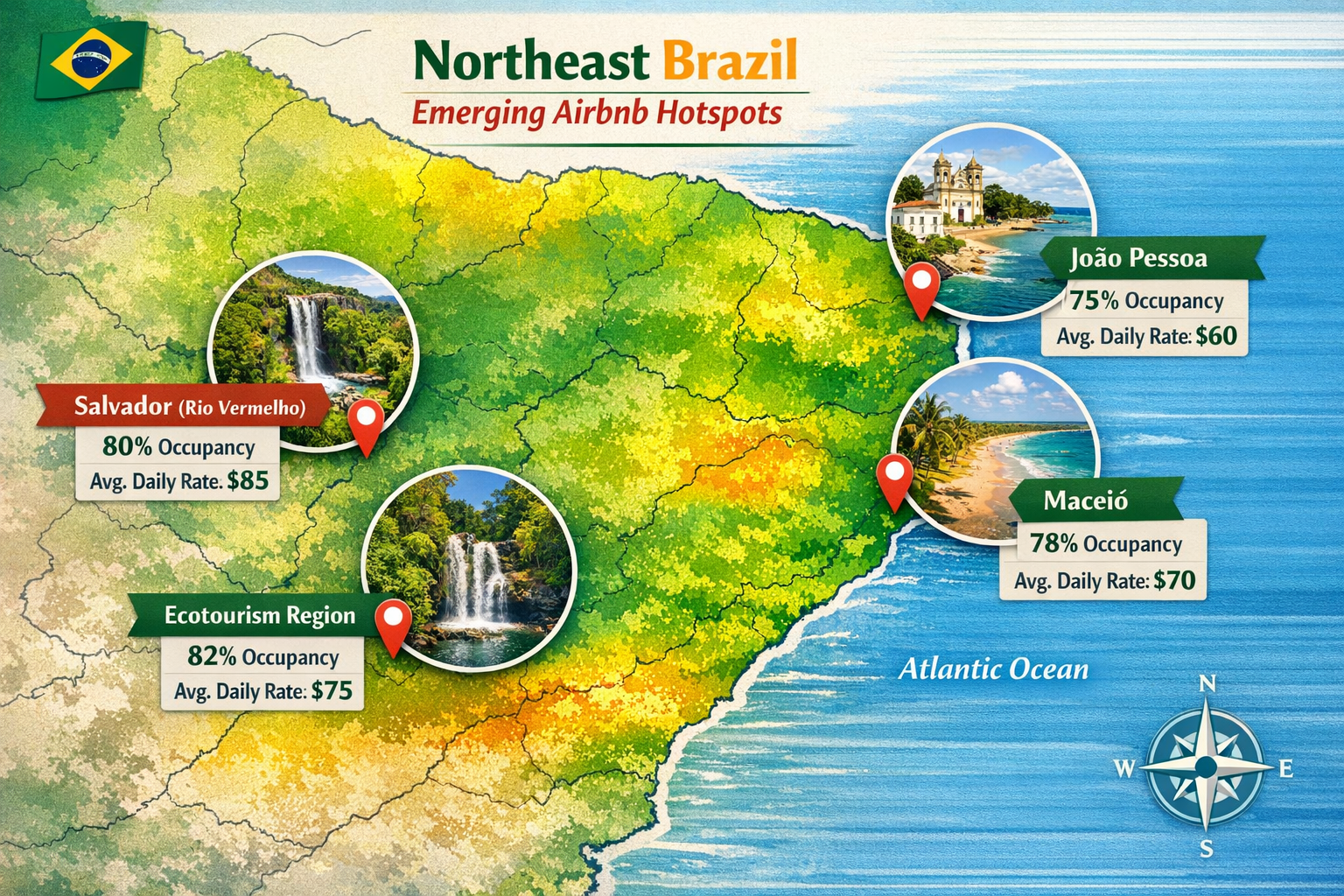
João Pessoa: The Undervalued Coastal Gem 🏖️
João Pessoa, the capital of Paraíba, ranks as the #12 Airbnb market in Brazil [1], yet remains relatively unknown to international investors. This positioning creates exceptional value:
Key Performance Metrics:
- 4,825 active properties [1]
- $538.68 average monthly revenue per property [1]
- $61.10 average daily rate (ADR) [1]
- 38.20% occupancy rate [1]
The city offers pristine beaches, vibrant cultural scenes, and significantly lower acquisition costs compared to southern markets. Properties in beachfront neighborhoods like Tambaú and Cabo Branco deliver consistent bookings from Brazilian domestic travelers and growing international tourism.
Investment Advantage: Acquisition costs typically range from $80,000-150,000 USD for well-positioned two-bedroom apartments, representing 40-50% savings compared to equivalent Florianópolis properties while delivering comparable monthly revenues.
Maceió: The Occupancy Leader 📈
Maceió, Alagoas’ capital, demonstrates the strongest operational performance among Northeast markets, ranking #27 nationally [1]. The city’s natural beauty—featuring crystal-clear lagoons and protected reef systems—attracts premium-paying guests.
Key Performance Metrics:
- 2,821 active properties [1]
- $714.43 average monthly revenue per property [1]
- $69.93 average daily rate [1]
- 41.89% occupancy rate (highest among analyzed Northeast listings) [1]
The 41.89% occupancy rate significantly outperforms most Brazilian markets, indicating strong demand relative to supply. This metric is particularly important for investors seeking consistent cash flow rather than speculative appreciation.
Strategic Positioning: Properties near Praia do Francês and Praia de Pajuçara command premium rates while maintaining high occupancy. The combination of natural attractions and limited supply creates ideal conditions for new entrants.
Salvador’s Rio Vermelho: The Undersaturated Opportunity 🎭
Salvador, Brazil’s first capital, offers rich cultural heritage and Afro-Brazilian traditions that appeal to experience-seeking travelers. The Rio Vermelho neighborhood specifically represents an undersaturated opportunity with lower listing density compared to saturated markets [2].
Why Rio Vermelho Works:
- Bohemian atmosphere attracts cultural tourists
- Restaurant and nightlife hub ensures consistent foot traffic
- Beach access with local authenticity
- Lower competition than central Salvador or southern markets
The neighborhood combines residential affordability with tourism appeal—a rare combination that maximizes both acquisition value and rental potential. Properties here serve both leisure travelers and digital nomads seeking longer stays in culturally rich environments.
Bahia’s Interior: Eco-Tourism Gold 🌳
Beyond coastal cities, Bahia’s interior regions near protected Atlantic Forest areas and the Chapada Diamantina National Park represent the highest-yield opportunities for 2026. International demand for eco-tourism experiences has surged, with travelers willing to pay premium rates for:
- Sustainable construction and operations
- Proximity to hiking, waterfalls, and wildlife
- Authentic local community experiences
- Wellness and retreat-style accommodations
Investment Profile: Eco-lodges and boutique properties in these areas command $120-200 per night from international guests, with occupancy rates of 50-65% during peak seasons (June-September, December-February). Acquisition costs for land and construction remain remarkably low—often $150,000-250,000 USD for complete 4-6 guest properties.
The favorable BRL exchange rate amplifies returns for dollar-based investors, as operational costs (maintenance, cleaning, utilities) remain in local currency while a significant portion of revenue comes from international bookings paid in USD or EUR.
For investors seeking diversification beyond traditional coastal markets, exploring the best places to invest in Brazil property provides valuable context for regional opportunities.
High-Yield Strategies for Northeast Brazil Airbnb Success
Property Selection and Acquisition Strategy
Success in Northeast Brazil Airbnb Hotspots 2026: High-Yield Short-Term Rental Strategies Beyond Trancoso and Florianópolis begins with strategic property selection. The most profitable properties share common characteristics:
Winning Property Profiles:
Beachfront Apartments (2-3 bedrooms)
- Target: Families and small groups
- Location: Within 200m of beach access
- Features: Ocean views, equipped kitchen, air conditioning
- Expected ROI: 8-12% annually
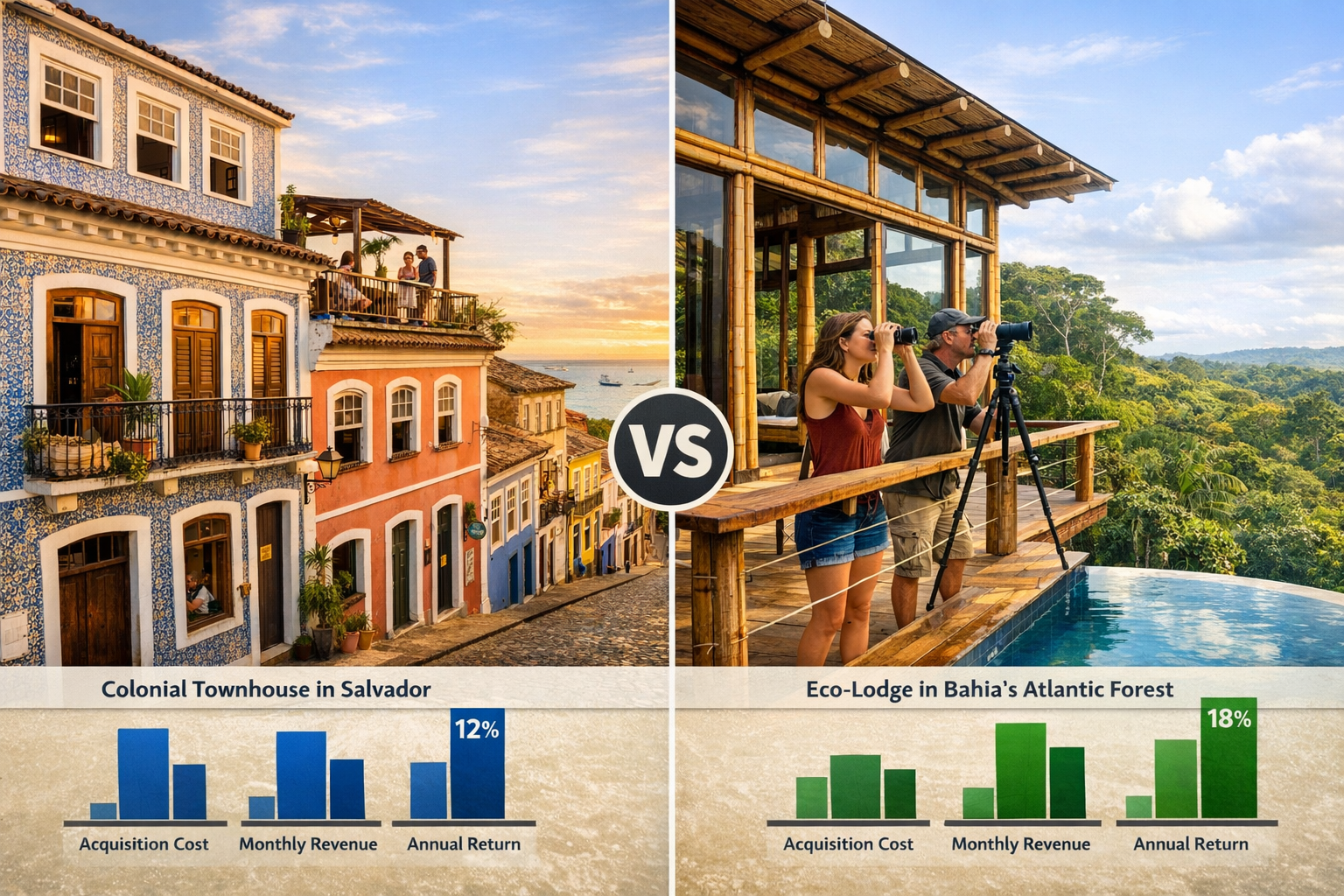
Historic Center Townhouses
- Target: Cultural tourists and digital nomads
- Location: Walkable neighborhoods with restaurants/culture
- Features: Authentic architecture, modern amenities, workspace
- Expected ROI: 10-14% annually
Eco-Lodges and Rural Retreats
- Target: International eco-tourists and wellness travelers
- Location: Interior regions near protected areas
- Features: Sustainable design, nature immersion, privacy
- Expected ROI: 12-18% annually
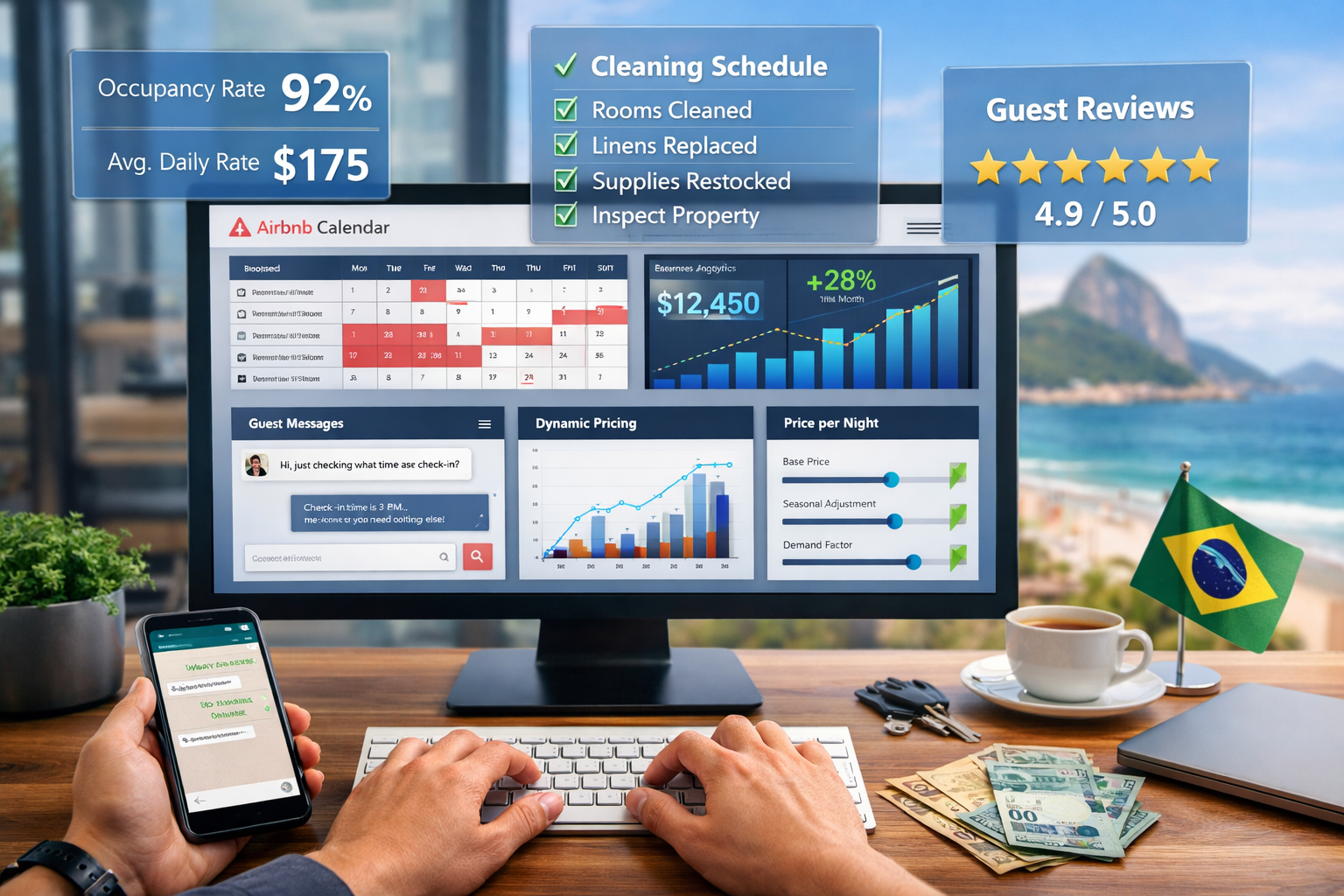
Dynamic Pricing and Revenue Optimization
The difference between average and exceptional performance often comes down to pricing strategy. Static pricing leaves money on the table during high-demand periods and reduces occupancy during slower seasons.
Optimization Tactics:
- Seasonal Adjustments: Increase rates 40-60% during Brazilian holidays (Carnaval, New Year, July school vacation)
- Event-Based Pricing: Monitor local festivals, conferences, and sporting events
- Length-of-Stay Discounts: Offer 15-20% discounts for weekly bookings to attract digital nomads
- Last-Minute Pricing: Reduce rates 20-30% for bookings within 7 days to maximize occupancy
- Currency Strategy: Price in USD for international platforms to capture exchange rate advantages
Professional revenue management tools can automate these adjustments, typically increasing revenues by 25-35% compared to static pricing approaches.
Property Management and Operational Excellence
Successful short-term rentals in Northeast markets require responsive, professional management. Distance and language barriers make this particularly important for international investors.
Critical Management Components:
Guest Communication:
- 24/7 response capability (within 1 hour for inquiries)
- Multilingual support (Portuguese, English, Spanish minimum)
- Clear check-in/check-out procedures
- Local recommendations and concierge services
Property Maintenance:
- Weekly inspections between guests
- Preventive maintenance schedules
- Rapid response to issues (air conditioning, plumbing)
- Quality cleaning with attention to detail
Financial Management:
- Transparent reporting of revenues and expenses
- Tax compliance and documentation
- Dynamic pricing implementation
- Performance analytics and optimization
Many investors partner with local property management companies charging 20-30% of revenues. While this reduces net returns, professional management typically increases gross revenues by more than the management fee costs, resulting in higher net income.
Marketing and Positioning Strategy
Standing out in competitive markets requires strategic positioning and compelling marketing. Properties that tell authentic stories and showcase unique experiences consistently outperform generic listings.
Effective Marketing Approaches:
- Professional Photography: Invest $500-800 in high-quality photos showing property and surroundings
- Compelling Descriptions: Emphasize unique local experiences, not just amenities
- Guest Reviews: Actively manage and respond to reviews; maintain 4.8+ rating
- Multi-Platform Presence: List on Airbnb, Booking.com, and VRBO simultaneously
- Social Media: Create Instagram presence showcasing property and destination
- SEO Optimization: Use location-specific keywords in titles and descriptions
Properties with professional marketing typically achieve 15-20% higher occupancy rates and can command 10-15% premium pricing compared to similar properties with amateur presentation.
Financial Modeling and Return Projections for 2026
Sample Investment Analysis: João Pessoa Beachfront Apartment
Acquisition Costs:
- Property purchase: $120,000 USD
- Furnishing and setup: $15,000 USD
- Legal and transaction fees: $5,000 USD
- Total Investment: $140,000 USD
Monthly Revenue Projections:
- Average occupancy: 38% (conservative, matching market average) [1]
- Average daily rate: $95 USD (premium to market average)
- Monthly revenue: $1,083 USD
- Annual gross revenue: $13,000 USD
Operating Expenses:
- Property management (25%): $3,250 USD
- Utilities and internet: $1,200 USD
- Cleaning and supplies: $1,800 USD
- Maintenance reserve: $1,000 USD
- Platform fees (3%): $390 USD
- Property taxes and insurance: $1,200 USD
- Annual expenses: $8,840 USD
Net Annual Income: $4,160 USD Cash-on-Cash Return: 2.97%
With Optimization (45% occupancy, $110 ADR):
- Annual gross revenue: $17,820 USD
- Annual expenses: $10,255 USD
- Net annual income: $7,565 USD
- Cash-on-Cash return: 5.4%
These projections exclude property appreciation, which historically averages 3-5% annually in growing Northeast markets, and the currency advantage for dollar-based investors when the BRL weakens.
Sample Investment Analysis: Bahia Interior Eco-Lodge
Acquisition Costs:
- Land purchase (2 hectares): $40,000 USD
- Construction (4-guest capacity): $180,000 USD
- Furnishing and landscaping: $30,000 USD
- Legal and permits: $10,000 USD
- Total Investment: $260,000 USD
Monthly Revenue Projections:
- Average occupancy: 55% (eco-tourism premium)
- Average daily rate: $165 USD
- Monthly revenue: $2,723 USD
- Annual gross revenue: $32,670 USD
Operating Expenses:
- Property management (20%): $6,534 USD
- Utilities (solar reduces costs): $800 USD
- Cleaning and supplies: $2,400 USD
- Maintenance and grounds: $3,000 USD
- Platform fees: $980 USD
- Taxes and insurance: $1,800 USD
- Staff (part-time caretaker): $6,000 USD
- Annual expenses: $21,514 USD
Net Annual Income: $11,156 USD Cash-on-Cash Return: 4.29%
With Premium Positioning (65% occupancy, $190 ADR):
- Annual gross revenue: $45,125 USD
- Annual expenses: $27,539 USD
- Net annual income: $17,586 USD
- Cash-on-Cash return: 6.76%
Eco-lodges benefit from premium pricing, international clientele paying in hard currency, and significant appreciation potential as eco-tourism demand continues growing.
Currency Advantage and Dollar-Based Returns
For international investors, the BRL exchange rate creates additional return layers. When investors acquire properties during periods of BRL weakness (historically 5.0-5.5 BRL/USD), they benefit from:
- Lower acquisition costs in dollar terms
- Operating expenses paid in local currency
- Revenue partially or fully in USD/EUR from international guests
- Appreciation that compounds when converting back to dollars
This currency arbitrage can add 2-4% annually to total returns, making Northeast Brazil particularly attractive for dollar-based portfolios seeking geographic diversification.
Investors interested in broader Brazilian market dynamics should review insights on how sales performance is transforming Florianópolis real estate to understand comparative market trends.
Risk Mitigation and Due Diligence
Legal and Regulatory Considerations
While Northeast markets show favorable regulation [1], investors must still navigate Brazilian property law:
Essential Legal Steps:
- Engage qualified real estate attorney familiar with foreign ownership
- Verify clear title and absence of liens
- Understand condominium rules regarding short-term rentals
- Register with local tax authorities
- Obtain CPF (Brazilian tax ID) for foreign investors
- Structure ownership appropriately (individual vs. corporate)
Tax Obligations:
- Income tax on rental revenues (15-27.5% progressive rates)
- Property tax (IPTU) varies by municipality
- Service tax (ISS) on rental activities (2-5%)
- Potential withholding tax for foreign owners
Professional accounting services specializing in short-term rentals typically cost $100-200 monthly and ensure compliance while optimizing tax positions.
Market and Operational Risks
Key Risks to Monitor:
- Currency Volatility: BRL fluctuations affect dollar-denominated returns
- Economic Cycles: Brazilian economic downturns reduce domestic travel
- Oversupply: Rapid market entry can reduce occupancy and rates
- Property Management: Poor management destroys returns and property value
- Maintenance Costs: Tropical climate accelerates wear and requires vigilance
Mitigation Strategies:
- Maintain 6-12 months operating expense reserve
- Diversify across multiple properties or locations
- Use professional management with proven track records
- Budget conservatively for maintenance (3-5% of property value annually)
- Monitor market supply growth and adjust strategy accordingly
Insurance and Protection
Comprehensive insurance coverage protects against property damage, liability, and income loss:
- Property insurance: Fire, theft, natural disasters
- Liability insurance: Guest injuries or damages
- Loss of income: Coverage during repairs or forced closures
- Contents insurance: Furnishings and equipment
Annual insurance costs typically range from 0.5-1.0% of property value but provide essential protection for remote investors.
Future Outlook: Northeast Brazil Airbnb Market Trends
Emerging Demand Patterns
Several trends will shape Northeast Brazil Airbnb Hotspots 2026: High-Yield Short-Term Rental Strategies Beyond Trancoso and Florianópolis through 2026 and beyond:
Growing International Tourism: Brazil’s visa-free policies for major markets (US, EU, Canada, Australia) continue driving international arrivals. Northeast destinations benefit disproportionately as travelers seek alternatives to crowded southern cities.
Digital Nomad Migration: Remote work normalization creates demand for month-long stays in affordable, high-quality-of-life locations. Northeast cities offer excellent value propositions with modern infrastructure, reliable internet, and lower costs than traditional nomad hubs.
Eco-Tourism Acceleration: Environmental consciousness drives travelers toward sustainable, nature-based experiences. Bahia’s interior and protected coastal areas perfectly align with this preference shift.
Domestic Market Growth: Brazil’s expanding middle class increasingly travels domestically, with Northeast beaches offering accessible alternatives to international destinations.
Infrastructure Development Impact
Government and private investment in Northeast infrastructure enhances market fundamentals:
- Airport expansions: João Pessoa and Maceió receiving upgraded facilities
- Highway improvements: Better connectivity to interior eco-tourism areas
- Technology infrastructure: Fiber optic expansion enabling remote work
- Tourism development: Marketing campaigns positioning Northeast internationally
These improvements reduce friction for travelers while maintaining the authentic character that attracts visitors.
Competitive Positioning
As markets mature, differentiation becomes critical. Properties that succeed in 2026 and beyond will offer:
- Authentic local experiences rather than generic accommodations
- Sustainable practices aligned with environmental values
- Technology integration (smart locks, automated systems)
- Personalized service creating memorable guest experiences
- Community connections linking guests to local culture
Investors who position properties strategically within these trends will outperform those treating rentals as purely transactional accommodations.
For those considering broader investment strategies in Brazilian real estate, understanding the advantages of investing in studios in Florianópolis provides useful comparison points for different property types and markets.
Conclusion
The Northeast Brazil Airbnb Hotspots 2026: High-Yield Short-Term Rental Strategies Beyond Trancoso and Florianópolis represent exceptional opportunities for investors seeking dollar-based returns in emerging markets. With cities like João Pessoa and Maceió delivering occupancy rates exceeding 38-42% [1] and monthly revenues of $500-700+ per property [1], combined with favorable regulatory environments [1] and low acquisition costs, the region offers compelling value propositions.
Success requires strategic property selection, professional management, dynamic pricing optimization, and authentic positioning that resonates with evolving traveler preferences. Eco-tourism properties in Bahia’s interior and undersaturated neighborhoods like Salvador’s Rio Vermelho [2] present particularly attractive opportunities for investors willing to look beyond saturated traditional markets.
Actionable Next Steps
- Conduct Market Research: Visit target cities personally to assess neighborhoods, infrastructure, and competition
- Build Local Networks: Connect with real estate agents, property managers, and other investors in target markets
- Analyze Comparable Properties: Study successful listings to understand pricing, positioning, and guest expectations
- Secure Professional Partners: Engage qualified attorneys, accountants, and property managers before purchasing
- Start Conservatively: Consider beginning with one well-positioned property to learn market dynamics before scaling
- Monitor Performance: Implement analytics systems to track occupancy, revenue, and guest satisfaction metrics
- Optimize Continuously: Regularly adjust pricing, marketing, and operations based on performance data
The combination of low acquisition costs, favorable exchange rates, minimal regulatory barriers, and surging international demand creates a limited-window opportunity for early movers in Northeast Brazil’s short-term rental markets. Investors who act strategically in 2026 position themselves to capture outsized returns as these emerging destinations mature into established tourism markets.
References
[1] Brazil – https://www.airroi.com/report/world/brazil
[2] Brazil Airbnb – https://thelatinvestor.com/blogs/news/brazil-airbnb