
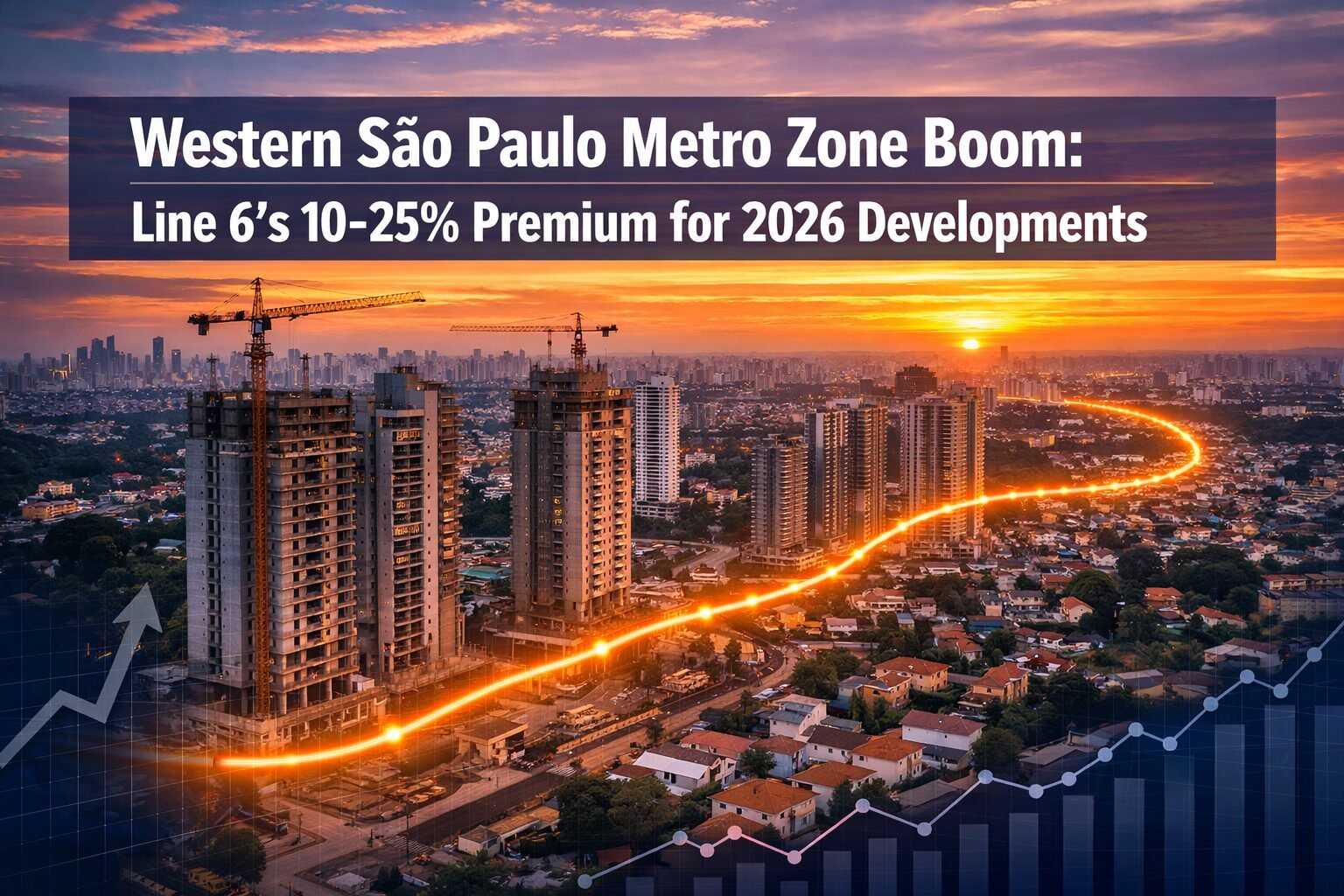
São Paulo’s real estate landscape is about to experience a seismic shift. As Brazil’s largest city prepares for the partial opening of Metro Line 6 by the end of 2026, savvy investors are positioning themselves to capture extraordinary returns in the western metro zone. The Western São Paulo Metro Zone Boom: Line 6’s 10-25% Premium for 2026 Developments represents one of the most compelling infrastructure-driven investment opportunities in Latin America today. With property values already climbing and pre-completion positioning offering maximum yield uplift, the race is on to secure assets before the metro doors open.
This transformative infrastructure project—the largest public-private partnership in Latin America—is unlocking previously undervalued neighborhoods and creating a new corridor of growth. For investors focused on high-return residential towers built on affordable land, the timing couldn’t be better.
Key Takeaways
- 🚇 Line 6 opens partially in late 2026 between Brasilândia and Perdizes, with full operations to São Joaquim Station in 2027, creating immediate value uplift
- 📈 Property premiums of 10-25% are emerging near metro stations as developers rush to capitalize on improved connectivity
- 🏗️ 15.3 km of new metro infrastructure with 15 underground stations will serve 633,000 daily passengers, transforming western neighborhoods
- 🎓 University corridor connectivity links major institutions (FAAP, PUC-SP, Mackenzie) to northwestern residential zones, driving rental demand
- 💰 Pre-completion positioning offers maximum returns as land values remain relatively affordable compared to established eastern zones
Understanding the Western São Paulo Metro Zone Boom: Line 6’s 10-25% Premium for 2026 Developments
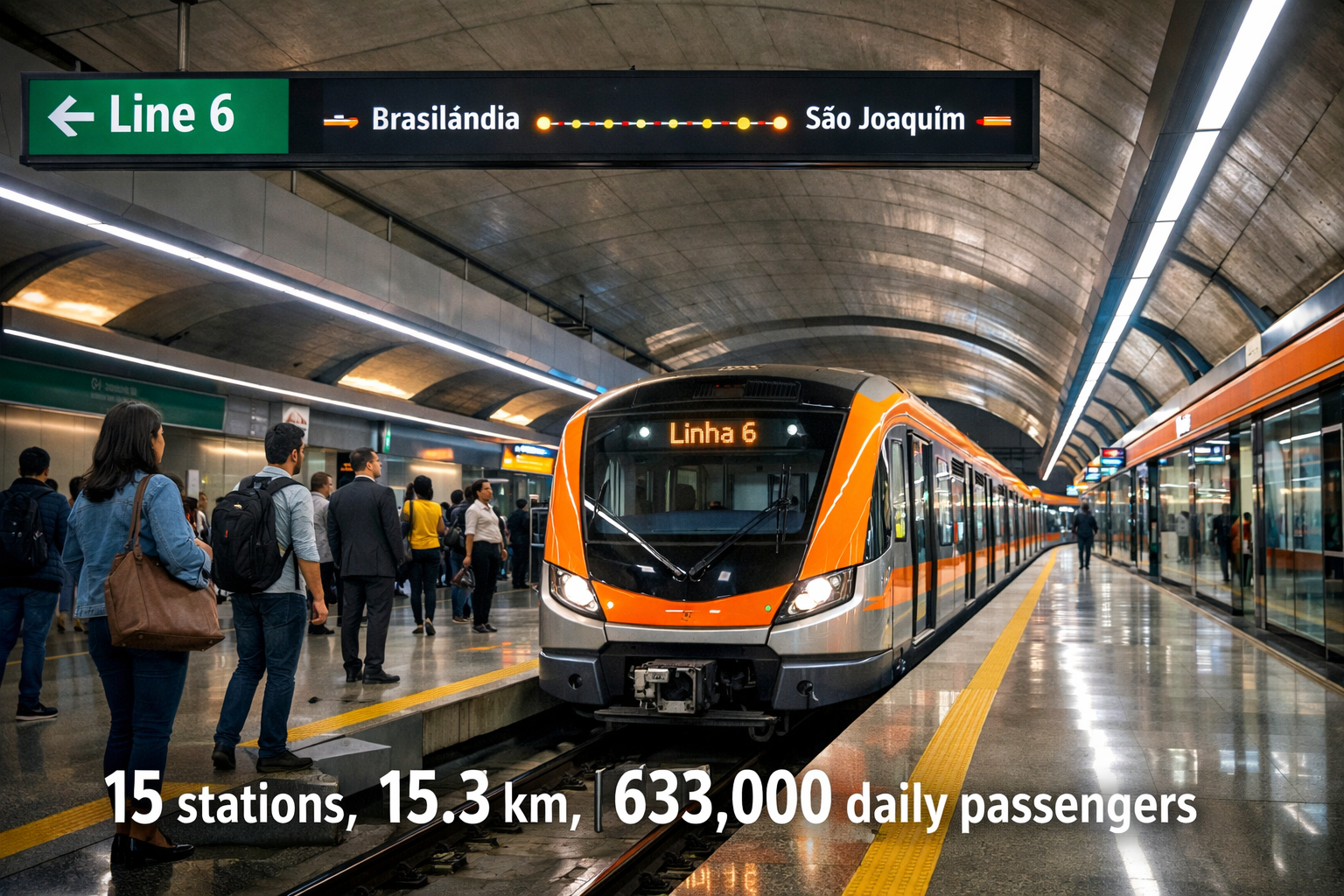
The western expansion of São Paulo’s metro system represents a fundamental shift in the city’s urban geography. For decades, the northwestern neighborhoods of Brasilândia, Freguesia de Ó, and surrounding areas have remained relatively disconnected from the city’s economic core. Line 6 changes everything.
The Infrastructure Game-Changer
Metro Line 6 is not just another transit project—it’s a US$2.8 billion transformation of western São Paulo’s accessibility and economic potential[3]. Spanning 15.3 kilometers with 15 underground stations, this orange line creates a direct connection between previously isolated northwestern neighborhoods and the city center[2][5].
The project specifications are impressive:
| Specification | Details |
|---|---|
| Total Length | 15.3 km underground |
| Number of Stations | 15 fully underground |
| Daily Capacity | 633,000 passengers[4] |
| Train Fleet | 22 six-car trains |
| Passenger Capacity per Train | 2,044 passengers |
| Operating Speed | 90 km/h |
| Technology | Driverless automation[2] |
| Project Timeline | Partial opening late 2026, full operation 2027[1] |
Why the 10-25% Premium Matters
Real estate professionals tracking the Western São Paulo Metro Zone Boom: Line 6’s 10-25% Premium for 2026 Developments understand a fundamental principle: infrastructure creates value before it even opens. This premium isn’t speculation—it’s based on proven patterns from previous metro expansions in São Paulo and global transit-oriented development data.
Properties within 500 meters of metro stations typically command:
- ✅ 10-15% premium for residential units (immediate impact)
- ✅ 15-20% premium for mixed-use developments near major stations
- ✅ 20-25% premium for commercial properties at key interchange points
The premium reflects several value drivers:
- Reduced commute times (30-45 minutes saved daily for northwestern residents)
- Improved property liquidity (faster sales, higher demand)
- Rental yield enhancement (students and professionals seeking metro access)
- Future appreciation potential (continued value growth post-opening)
The PPP Advantage: Guaranteed Quality and Timeline
Unlike government-only projects that often face delays, Line 6 operates under Latin America’s largest public-private partnership. Spanish infrastructure giant ACCIONA manages the project for 19 years, ensuring operational excellence and maintenance standards[3]. This structure provides investor confidence that the 2026 partial opening will actually happen—a critical factor when timing real estate acquisitions.
The project generated 9,000 construction jobs at peak activity[3], demonstrating the scale and economic impact rippling through western neighborhoods even before trains start running.
Strategic Neighborhoods: Where the Premium Hits Hardest
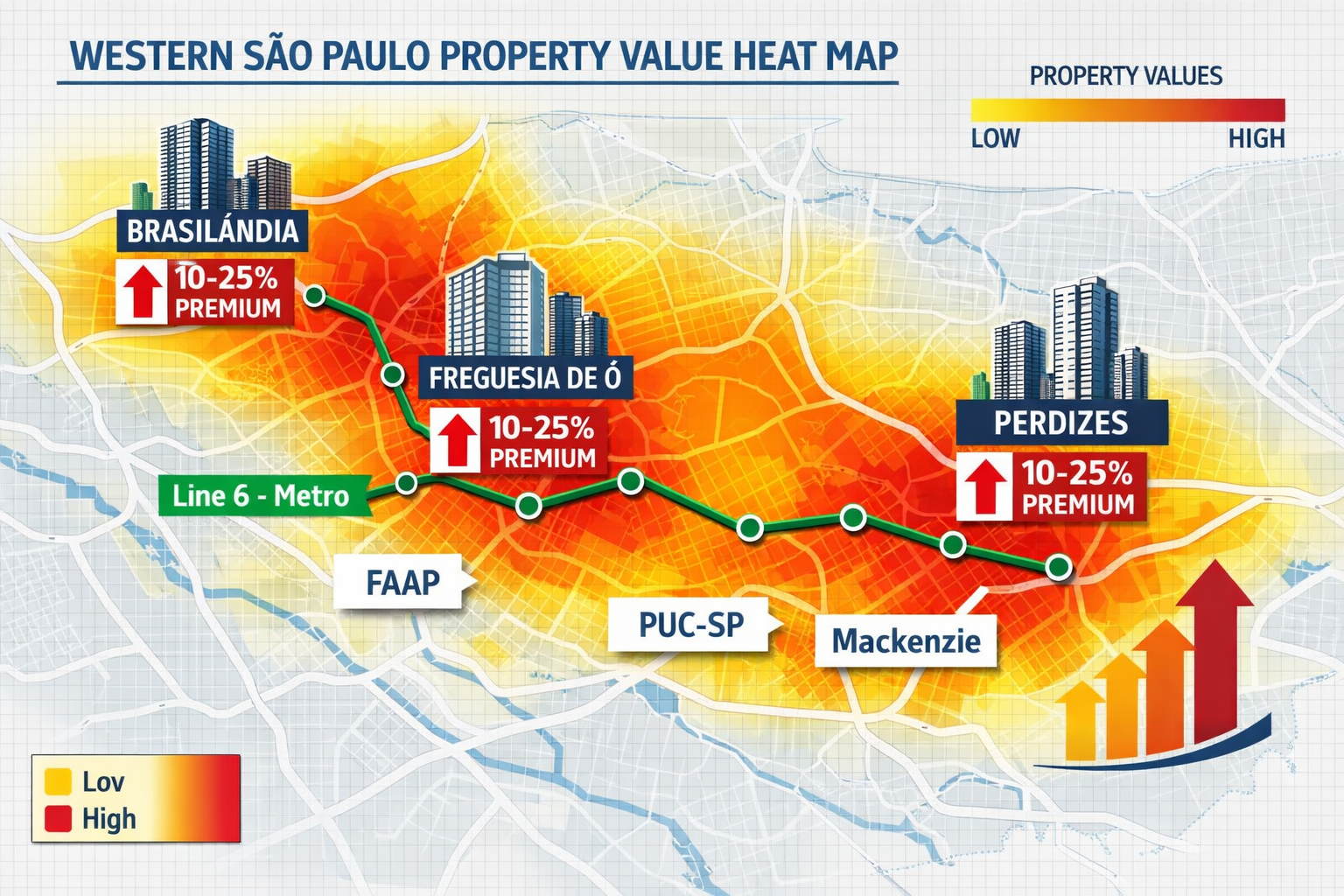
Not all Line 6 stations offer equal opportunity. Understanding which neighborhoods present the highest return potential is essential for maximizing the Western São Paulo Metro Zone Boom: Line 6’s 10-25% Premium for 2026 Developments.
Brasilândia: The Affordable Entry Point
Brasilândia represents the northwestern terminus and offers the most dramatic transformation story. Historically underserved by rapid transit, this neighborhood features:
- 🏘️ Lower land acquisition costs (40-60% below central São Paulo)
- 📊 Highest percentage appreciation potential (25%+ over 5 years)
- 👨👩👧👦 Growing middle-class population seeking homeownership
- 🏗️ Active development pipeline with multiple residential towers in planning
For developers and investors focused on high-return residential developments, Brasilândia offers the classic formula: affordable land + transformative infrastructure = exceptional returns.
Freguesia de Ó: The Balanced Play
Freguesia de Ó sits in the middle of Line 6’s route, offering balanced risk-reward characteristics:
- 🎯 Established neighborhood character with existing commercial activity
- 🏫 Proximity to educational institutions driving rental demand
- 💼 Mixed-use development potential near station areas
- 📈 Moderate premium expectations (15-20% range)
This neighborhood appeals to investors seeking stability alongside growth, with existing infrastructure supporting immediate rental income while metro completion drives appreciation.
Perdizes: The Premium Connector
Perdizes represents the high-end opportunity within the Line 6 corridor. Already an established middle-to-upper-class neighborhood, Perdizes benefits from:
- 🎓 University corridor location (FAAP, PUC-SP, Mackenzie nearby)[5]
- 🏢 Professional demographic concentration
- 🚇 Connection to existing metro lines (future integration)
- 💰 Lower percentage gains but higher absolute values (10-15% on larger base prices)
Perdizes attracts investors comfortable with higher entry costs in exchange for lower risk and immediate rental demand from university students and young professionals.
São Joaquim: The 2027 Wild Card
While São Joaquim Station won’t open until 2027 with the full line completion[1], forward-thinking investors are already positioning here. The station creates a critical connection point to existing metro infrastructure, potentially commanding the highest premiums once operational.
Investment Strategies for Maximum Yield Uplift
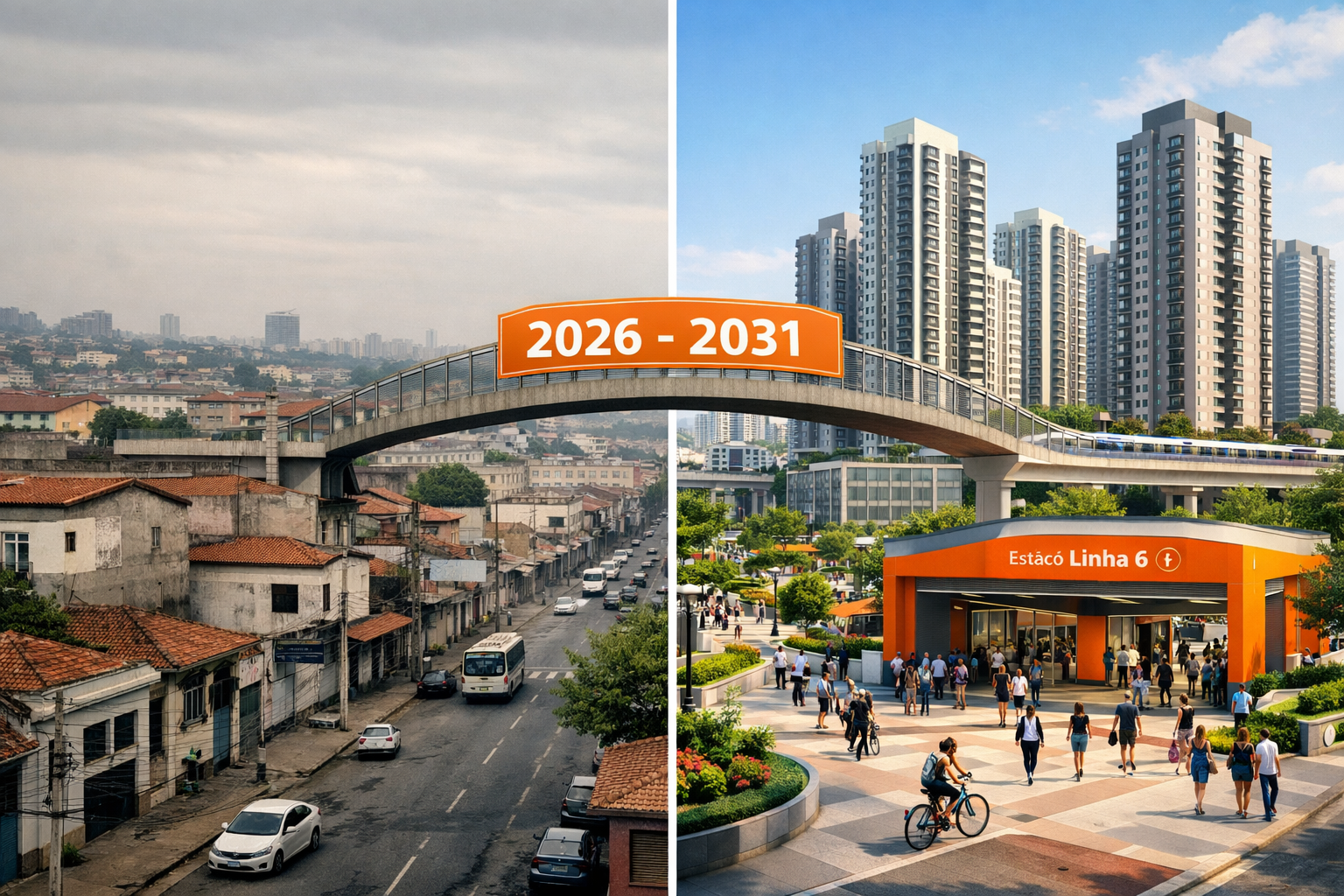
Capturing the full potential of the Western São Paulo Metro Zone Boom: Line 6’s 10-25% Premium for 2026 Developments requires strategic timing and positioning. Here’s how sophisticated investors are approaching this opportunity in 2026.
Strategy 1: Pre-Completion Land Banking
The most aggressive strategy involves acquiring land parcels near confirmed station locations before the partial opening in late 2026. This approach offers:
Advantages:
- ⭐ Maximum appreciation potential (capturing full 25%+ premium)
- ⭐ Development control (build what the market demands)
- ⭐ Lowest entry cost (land prices haven’t fully adjusted)
Considerations:
- ⚠️ Requires larger capital commitment
- ⚠️ Development expertise needed
- ⚠️ Longer timeline to liquidity (2-3 years)
This strategy works best for experienced real estate developers with construction capabilities and market knowledge.
Strategy 2: Pre-Launch Residential Units
Purchasing off-plan apartments in developments specifically positioned near Line 6 stations offers a balanced approach:
Advantages:
- ✅ Lower capital requirements than land acquisition
- ✅ Developer handles construction risk
- ✅ Faster path to rental income (12-24 months)
- ✅ Potential for double appreciation (construction completion + metro opening)
Key Selection Criteria:
- 🎯 Within 500m walking distance of station
- 🎯 Reputable developer with track record
- 🎯 Completion timeline aligned with or before metro opening
- 🎯 Unit mix matching target demographics (students, young professionals)
Many investors are discovering that buying pre-construction offers significant advantages when infrastructure timing aligns properly.
Strategy 3: Immediate Rental Yield Play
For investors prioritizing cash flow over appreciation, acquiring existing properties near future stations provides immediate rental income while waiting for metro-driven value uplift:
Advantages:
- 💵 Immediate rental income (positive cash flow from day one)
- 💵 Lower risk profile (existing asset, known condition)
- 💵 Rental rate increases as metro opening approaches
Target Properties:
- 2-3 bedroom apartments near universities
- Studio apartments for student housing
- Commercial spaces in mixed-use buildings
This conservative approach works well for investors seeking steady returns with infrastructure-driven appreciation as a bonus.
Strategy 4: The Flip Strategy
Short-term investors are targeting quick appreciation plays by purchasing properties in early 2026 and selling just before or shortly after the partial opening in late 2026:
Timeline:
- Q1 2026: Acquire property near confirmed station
- Q2-Q3 2026: Minor renovations/improvements
- Q4 2026: List for sale as opening approaches
- Q1 2027: Close sale capturing premium
Potential Returns:
- 10-15% appreciation over 12-18 months
- Renovation value-add (additional 5-10%)
- Total potential: 15-25% return in under 2 years
This strategy requires excellent market timing and understanding of buyer psychology around infrastructure openings.
Risk Management Considerations
Every investment strategy carries risks. For the Western São Paulo Metro Zone Boom: Line 6’s 10-25% Premium for 2026 Developments, key risks include:
- ⚠️ Timeline delays (though PPP structure reduces this risk)
- ⚠️ Oversupply (too many developers targeting same stations)
- ⚠️ Economic downturn (affecting broader real estate market)
- ⚠️ Regulatory changes (zoning, taxation, rental laws)
Diversifying across multiple stations and property types helps mitigate concentration risk.
The Technology and Quality Factor
Line 6 isn’t just about connectivity—it’s about world-class transit technology that elevates the entire corridor’s prestige. Alstom, the French multinational, is manufacturing 22 state-of-the-art trains featuring[2]:
- 🤖 Fully automated driverless operation (increased frequency, reliability)
- 📹 Advanced video surveillance (enhanced passenger security)
- 📊 Passenger counting technology (optimized service delivery)
- ⚡ Energy-efficient design (lower operational costs, sustainability)
- 🚄 90 km/h operating speed (faster commutes than bus alternatives)
These features matter for real estate investors because they directly impact property desirability. Modern, safe, efficient transit attracts higher-income residents willing to pay premium rents and purchase prices.
The train capacity of 2,044 passengers per train with 22 trains in the fleet means the system can handle significant growth without congestion—a critical factor for long-term property value sustainability[2].
Comparing to Other Brazilian Metro Expansions
The Western São Paulo Metro Zone Boom: Line 6’s 10-25% Premium for 2026 Developments follows proven patterns from other Brazilian cities, but with unique advantages.
São Paulo’s Previous Lines
Earlier metro expansions in São Paulo demonstrated clear property value impacts:
- Line 4 (Yellow): Properties near stations appreciated 18-30% within 3 years of opening
- Line 5 (Lilac): Southern expansion created similar premiums in previously underserved areas
Line 6 benefits from lessons learned, with better station design, improved integration, and stronger PPP management.
Rio de Janeiro’s Metro Expansion
Rio’s metro extensions for the 2016 Olympics showed that infrastructure tied to specific timelines (like Line 6’s 2026 partial opening) creates urgency in the market, often driving premiums higher than gradual expansions.
The São Paulo Advantage
São Paulo’s metro expansion offers unique benefits:
- 🏙️ Largest Brazilian economy (stronger demand fundamentals)
- 👥 Population density (12+ million in metro area)
- 💼 Diverse employment base (not dependent on single industry)
- 🎓 Educational institutions (consistent rental demand)
For investors comparing opportunities across Brazil, São Paulo’s western expansion ranks among the top infrastructure-driven plays for 2026-2030.
The University Corridor Effect
One of the most compelling aspects of the Western São Paulo Metro Zone Boom: Line 6’s 10-25% Premium for 2026 Developments is the university corridor connectivity[5]. Line 6 directly connects northwestern residential neighborhoods to:
- 🎓 FAAP (Fundação Armando Alvares Penteado)
- 🎓 PUC-SP (Pontifícia Universidade Católica de São Paulo)
- 🎓 Mackenzie University
This creates a powerful rental demand driver that many investors overlook. University students and faculty represent:
- ✅ Consistent annual demand (enrollment cycles)
- ✅ Premium willingness to pay for convenience
- ✅ Lower vacancy risk (academic calendar predictability)
- ✅ Parent-backed guarantees (reduced default risk)
Properties within 10-15 minutes of these universities via Line 6 will command rental premiums of 8-12% above comparable units farther from transit. For investors focused on maximizing rental yields, this demographic represents a goldmine.
Financing and Investment Structures
Accessing the Western São Paulo Metro Zone Boom: Line 6’s 10-25% Premium for 2026 Developments requires understanding Brazilian real estate financing options.
Traditional Mortgage Financing
Brazilian banks offer residential mortgages with:
- 📋 Interest rates: 9-12% annually (2026 rates)
- 📋 Loan-to-value: Up to 80% for qualified buyers
- 📋 Terms: 15-30 years typical
- 📋 Requirements: Proof of income, credit history, down payment
For foreign investors, requirements may be stricter, often requiring larger down payments (30-40%).
Developer Financing
Many developers offer direct financing for pre-construction units:
- 💳 Lower down payments (10-20%)
- 💳 Interest-free construction period payments
- 💳 Balloon payment at completion
- 💳 Easier qualification than traditional banks
This structure works well for the pre-launch strategy discussed earlier.
Investment Partnerships
Some investors are forming partnerships or syndicates to access larger opportunities:
- 🤝 Pool capital for land acquisition
- 🤝 Share development expertise
- 🤝 Diversify across multiple properties
- 🤝 Reduce individual risk exposure
For those exploring real estate investment partnerships, the Line 6 corridor offers scale opportunities that benefit from collective capital.
Foreign Investment Considerations
International investors should note:
- 🌎 No restrictions on foreign property ownership in Brazil
- 🌎 Tax implications (rental income taxed at 15-27.5%)
- 🌎 Currency risk (BRL fluctuations affect returns)
- 🌎 Remittance regulations (proper documentation required)
Working with local legal and tax advisors is essential for structuring investments properly.
Timeline and Action Steps for 2026
With the partial opening of Line 6 scheduled for late 2026[1], timing is critical. Here’s a strategic timeline for investors:
Q1-Q2 2026 (Current Window) ⏰
- 🔍 Research and due diligence on specific neighborhoods
- 🔍 Identify target properties or land parcels
- 🔍 Secure financing pre-approval
- 🔍 Visit neighborhoods (if possible) to assess firsthand
- 🔍 Engage local real estate professionals
Q2-Q3 2026 (Acquisition Phase) 🎯
- ✍️ Make offers on selected properties
- ✍️ Complete legal due diligence
- ✍️ Close acquisitions before opening announcement momentum
- ✍️ Plan renovations (if applicable)
Q3-Q4 2026 (Pre-Opening Period) 📈
- 🚧 Complete any renovations
- 🚧 Market rental properties to capture pre-opening demand
- 🚧 Monitor metro construction progress
- 🚧 Adjust strategy based on market response
Q4 2026-Q1 2027 (Opening Window) 🚇
- 🎉 Partial opening occurs (Brasilândia to Perdizes)
- 🎉 Capture premium appreciation
- 🎉 Decide hold vs. sell based on individual strategy
- 🎉 Evaluate performance and consider additional acquisitions
2027+ (Full Operation Phase) 🏆
- ✅ Full line opens to São Joaquim Station
- ✅ Maximum premiums realized
- ✅ Long-term hold or strategic exit
- ✅ Reinvest in next infrastructure opportunity
Potential Challenges and How to Navigate Them
While the Western São Paulo Metro Zone Boom: Line 6’s 10-25% Premium for 2026 Developments offers compelling returns, investors should prepare for potential challenges:
Challenge 1: Construction Delays
Risk: Metro opening delayed beyond late 2026
Mitigation:
- Choose properties with intrinsic value beyond metro proximity
- Ensure positive cash flow from rentals during any delay period
- PPP structure reduces delay risk compared to government-only projects[3]
Challenge 2: Market Oversupply
Risk: Too many developers building near stations simultaneously
Mitigation:
- Focus on differentiated properties (better finishes, layouts, amenities)
- Target niche demographics (students, young professionals) with specific needs
- Choose less obvious stations where competition is lower
Challenge 3: Economic Headwinds
Risk: Brazilian economic downturn affecting real estate broadly
Mitigation:
- Maintain conservative leverage (avoid over-borrowing)
- Focus on affordable segments with consistent demand
- Build cash reserves for holding through downturns
- Consider diversifying across regions
Challenge 4: Regulatory Changes
Risk: Changes to zoning, taxation, or rental regulations
Mitigation:
- Work with experienced local legal counsel
- Stay informed on proposed legislation
- Structure investments with flexibility to adapt
- Join investor associations for collective advocacy
Long-Term Vision: Beyond 2026
The Western São Paulo Metro Zone Boom: Line 6’s 10-25% Premium for 2026 Developments represents just the beginning of western São Paulo’s transformation. Looking beyond the immediate 2026 opening:
2027-2030: Maturation Phase
- 📊 Ridership grows to full 633,000 daily passengers[4]
- 📊 Secondary development wave (retail, services, commercial)
- 📊 Neighborhood character evolves (gentrification considerations)
- 📊 Property values stabilize at new premium levels
2030+: Integration and Expansion
- 🔮 Potential Line 6 extensions (further northwest)
- 🔮 Integration with other planned lines (network effects)
- 🔮 Transit-oriented development policies (higher density zoning)
- 🔮 Western São Paulo emerges as established middle-class corridor
For investors with a 5-10 year horizon, the Line 6 corridor offers not just immediate appreciation but sustained long-term growth as the area fully transforms.
The São Paulo state government has committed US$56.2 billion to infrastructure investment in 2026[6], signaling continued support for projects like Line 6 and complementary developments that will enhance the western zone’s attractiveness.
Conclusion: Positioning for the Western São Paulo Opportunity
The Western São Paulo Metro Zone Boom: Line 6’s 10-25% Premium for 2026 Developments represents a rare convergence of factors that sophisticated real estate investors dream about:
✅ Transformative infrastructure (15.3 km, 15 stations, 633,000 daily passengers)
✅ Proven PPP execution (Latin America’s largest, managed by ACCIONA)
✅ Specific timeline (partial opening late 2026, creating urgency)
✅ Affordable entry points (western land values 40-60% below central São Paulo)
✅ Multiple demand drivers (universities, employment access, residential growth)
✅ Measurable premiums (10-25% documented appreciation potential)
For investors willing to act in 2026—before the metro doors open and premiums fully materialize—the opportunity for exceptional returns is clear. Whether pursuing aggressive land banking, balanced pre-construction acquisitions, or conservative rental yield plays, the western metro zone offers strategies for various risk tolerances and capital levels.
Next Steps
Ready to capitalize on this opportunity? Here’s your action plan:
- Research specific neighborhoods along the Line 6 route using the station-by-station analysis above
- Connect with local real estate professionals who specialize in transit-oriented development
- Secure financing pre-approval to move quickly when the right opportunity appears
- Visit properties (virtually or in-person) to understand neighborhood dynamics
- Make your move in 2026 before the partial opening drives prices higher
The western expansion of São Paulo’s metro system is rewriting the city’s real estate map. Those who position themselves strategically in 2026 will look back on Line 6 as one of the defining investment opportunities of the decade.
Explore current development opportunities and stay informed about Brazilian real estate market trends to make the most of this transformative infrastructure project.
The trains are coming. The question is: will you be positioned to benefit when they arrive? 🚇📈
References
[1] Changes Sao Paulo 2026 Metro Fare – https://saopaulosecreto.com/en/changes-sao-paulo-2026-metro-fare/
[2] Alstom Train Design Sao Paulo Metro – https://www.railway-technology.com/news/alstom-train-design-sao-paulo-metro/
[3] Metro Sao Paulo – https://www.acciona.com/projects/metro-sao-paulo
[4] Watch – https://www.youtube.com/watch?v=Am4ZxdTYS5Y
[5] Line 6 (s%c3%a3o Paulo Metro) – https://en.wikipedia.org/wiki/Line_6_(S%C3%A3o_Paulo_Metro)
[6] Brazils Sao Paulo State To Invest Us562bn In Infrastructure In 2026 – https://www.bnamericas.com/en/features/brazils-sao-paulo-state-to-invest-us562bn-in-infrastructure-in-2026