
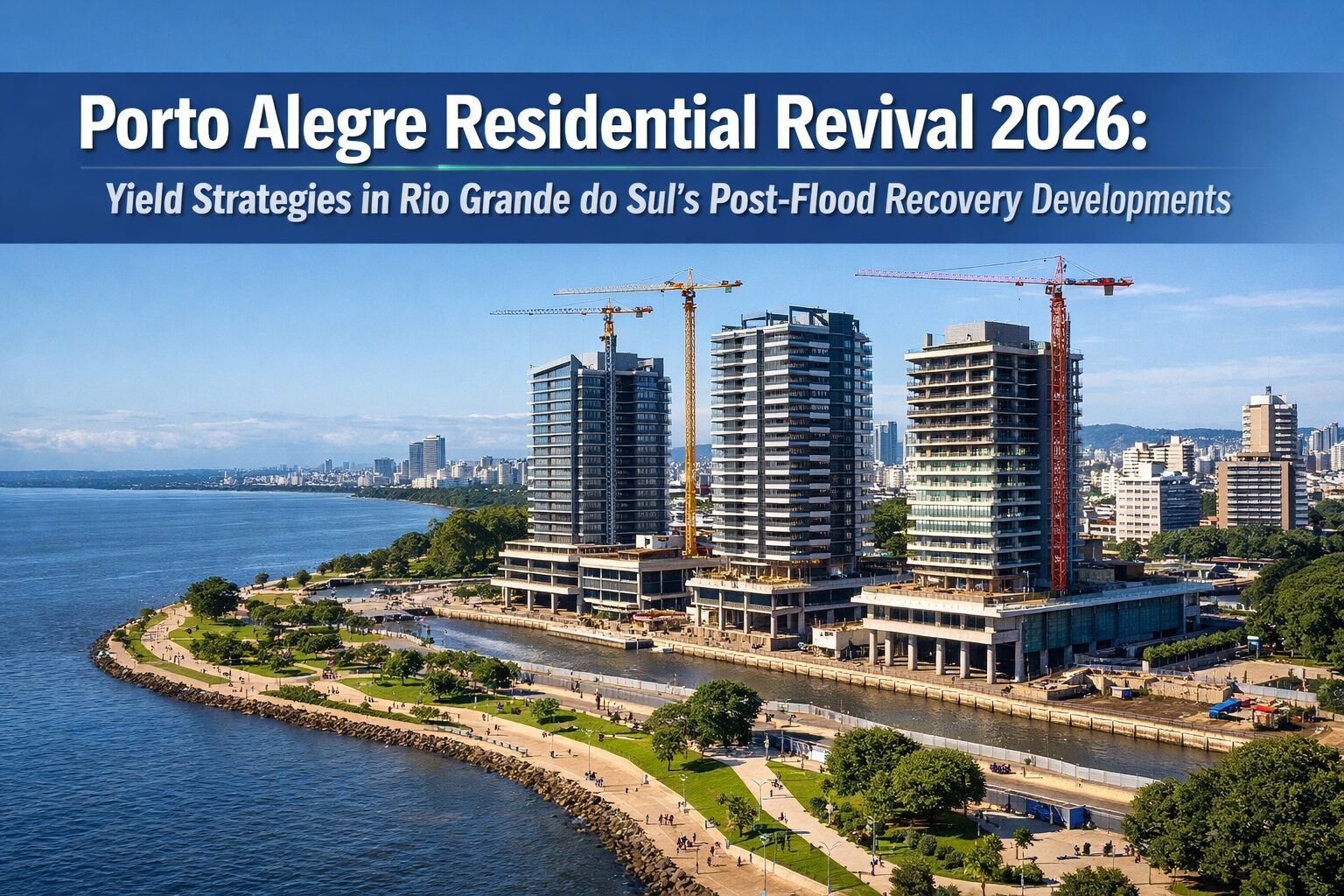
When devastating floods swept through Rio Grande do Sul in 2024, the real estate landscape of Porto Alegre faced unprecedented challenges. Yet from adversity comes opportunity. As 2026 unfolds, Porto Alegre Residential Revival 2026: Yield Strategies in Rio Grande do Sul’s Post-Flood Recovery Developments represents a transformative moment for investors and developers seeking resilient, high-yield opportunities in Brazil’s southernmost metropolitan hub. With federal reconstruction funds flowing and innovative flood-resistant designs emerging, the city is rebuilding smarter, stronger, and more profitable than ever before.
The convergence of government support, engineering innovation, and pent-up housing demand creates a unique investment window. Developers who understand the nuances of Porto Alegre Residential Revival 2026: Yield Strategies in Rio Grande do Sul’s Post-Flood Recovery Developments can position themselves to capture yields ranging from 8-12% while contributing to the city’s sustainable future.
Key Takeaways
- 🏗️ Federal reconstruction funds are accelerating residential development in Porto Alegre, with priority given to flood-resistant, elevated construction projects
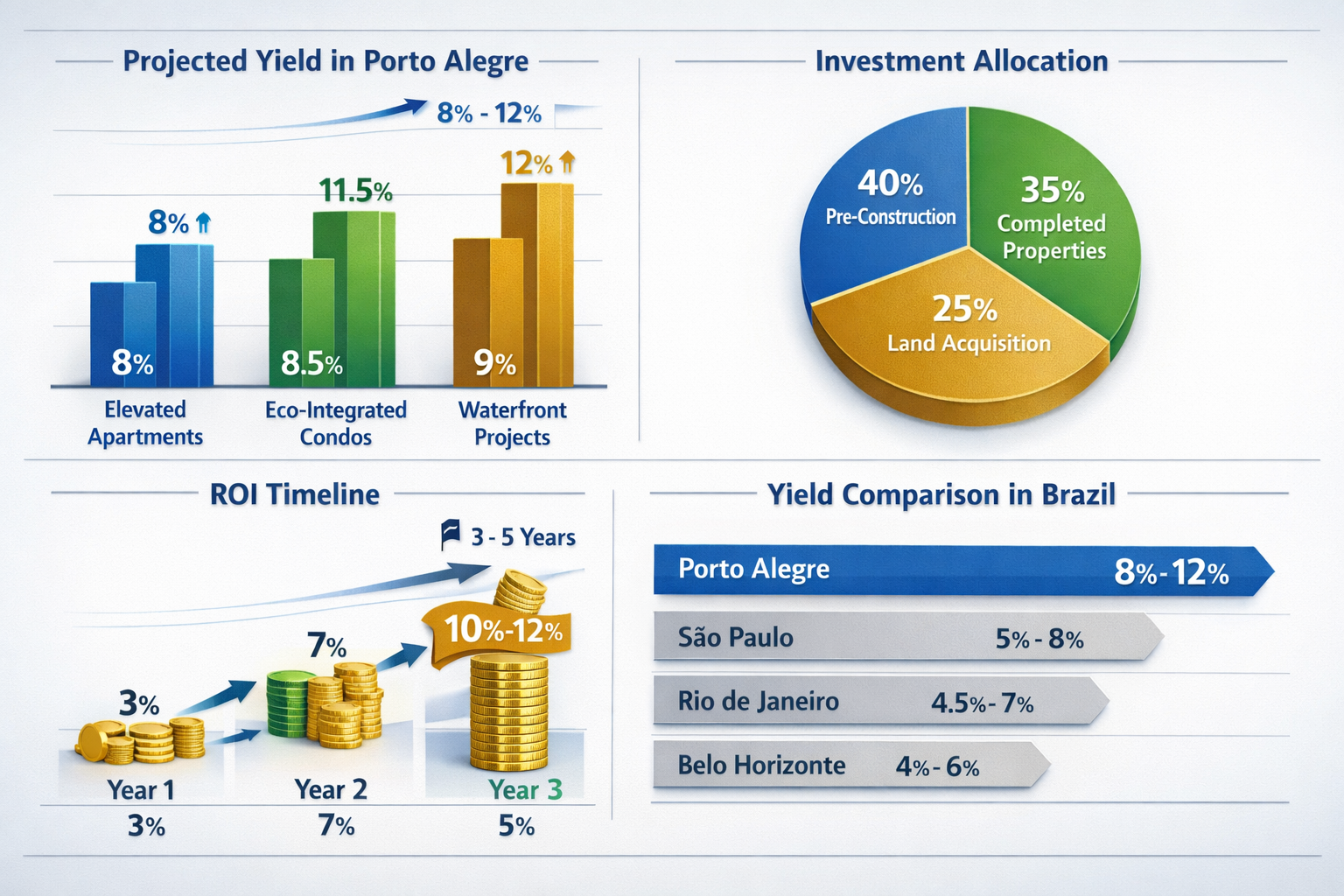
- 💰 Yield potential of 8-12% is achievable through strategic investment in mid-tier housing near revitalized infrastructure zones
- 🌊 Flood-resistant design standards now mandatory, creating premium value for compliant developments and reducing long-term risk
- 🌱 Eco-integrated projects combining sustainability with resilience command higher rental rates and faster absorption
- 📈 Market recovery momentum shows Porto Alegre residential prices stabilizing in Q1 2026, with growth projected through 2028
Understanding Porto Alegre’s Post-Flood Real Estate Landscape
The Impact and Recovery Timeline
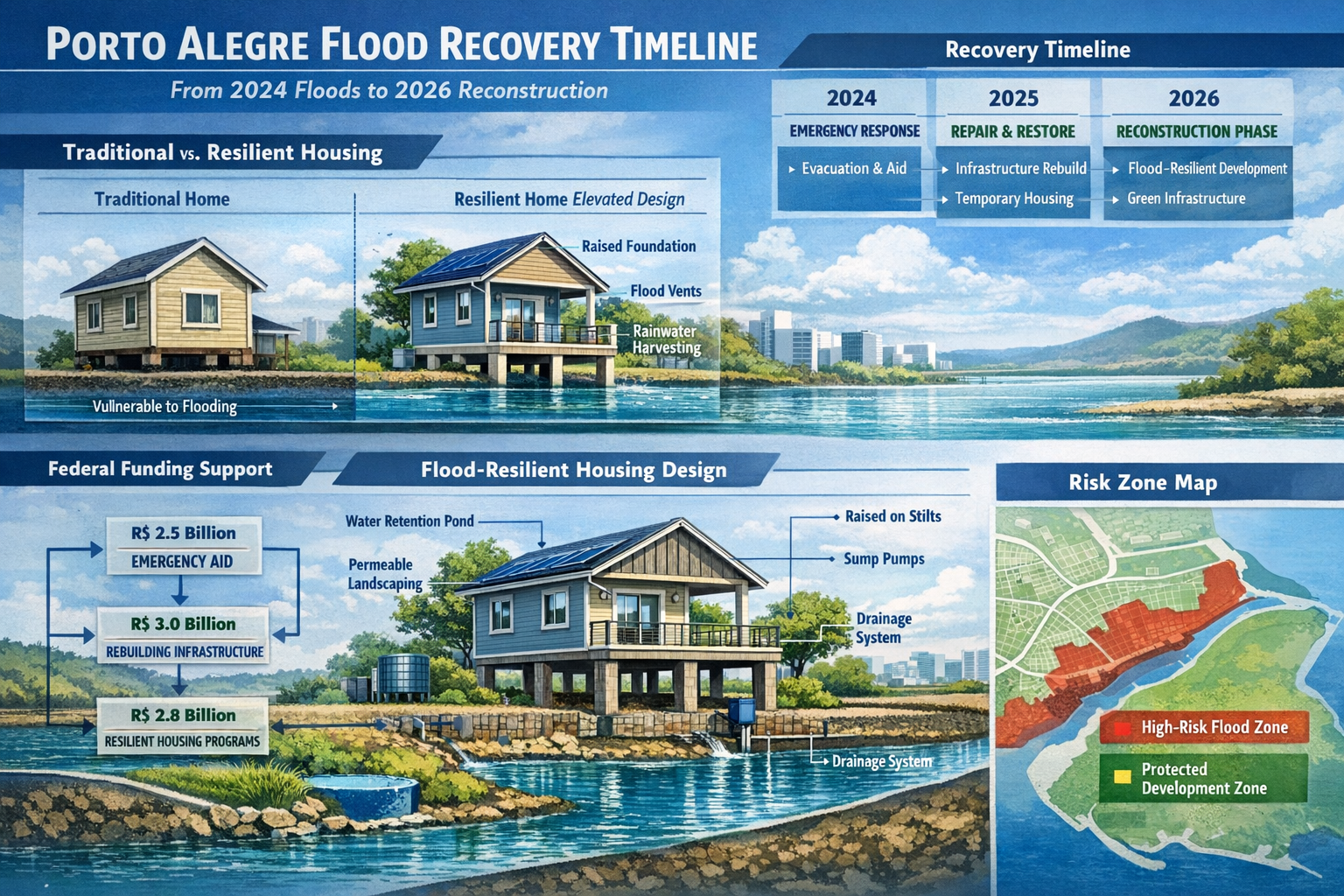
The 2024 floods fundamentally reshaped Porto Alegre’s residential market. Entire neighborhoods experienced displacement, while infrastructure damage exceeded R$2 billion across the metropolitan region. However, the recovery has been remarkably swift, driven by coordinated federal, state, and municipal efforts.
By early 2026, reconstruction initiatives have transformed the crisis into a catalyst for urban renewal. New building codes mandate elevated foundations, improved drainage systems, and reinforced construction standards. These requirements, while initially increasing development costs by 12-18%, create long-term value through reduced insurance premiums and enhanced property resilience.
The recovery has prioritized strategic development zones—areas with naturally higher elevation, proximity to economic centers, and access to upgraded infrastructure. These zones offer the most attractive risk-adjusted returns for investors pursuing Porto Alegre Residential Revival 2026: Yield Strategies in Rio Grande do Sul’s Post-Flood Recovery Developments.
Current Market Dynamics in 2026
Porto Alegre’s residential market in 2026 demonstrates remarkable resilience. According to recent property listings, the city offers diverse investment opportunities across multiple neighborhoods[2]. The market has segmented into three distinct tiers:
Premium Segment: High-end developments like the Golden Lake project, which represents Porto Alegre’s first private neighborhood. The Lake Eyre phase includes two residential towers with 127 apartments ranging from 127 to 186 square meters, plus five penthouses up to 326 square meters[1]. With construction scheduled for completion in March 2028, this project exemplifies the luxury resilience market.
Mid-Tier Recovery Developments: This segment offers the highest yield potential for strategic investors. Properties in this category typically range from R$450,000 to R$850,000, targeting young professionals and growing families. These developments incorporate mandatory flood-resistant features while maintaining affordability.
Affordable Housing Initiatives: Government-subsidized projects addressing displacement from flood-affected areas. While yields are lower (5-7%), these projects benefit from guaranteed absorption and federal backing.
Understanding where Brazilian property investment opportunities align with recovery priorities is essential for maximizing returns.
Yield Strategies for Porto Alegre Residential Revival 2026
Targeting the Mid-Tier Sweet Spot
The most compelling opportunities within Porto Alegre Residential Revival 2026: Yield Strategies in Rio Grande do Sul’s Post-Flood Recovery Developments lie in the mid-tier segment. This market sweet spot combines several advantageous factors:
Strong Demand Fundamentals: Porto Alegre’s population of 1.4 million, combined with displacement from flood zones, creates sustained housing demand. Mid-tier properties near employment centers experience vacancy rates below 4%, significantly lower than the national average.
Favorable Price-to-Rent Ratios: Current market conditions show gross rental yields of 6-8% for standard properties. However, flood-resistant certified developments command rental premiums of 15-25%, pushing effective yields into the 8-12% range.
Capital Appreciation Potential: Properties in designated recovery zones benefit from infrastructure improvements funded by federal reconstruction budgets. Road upgrades, drainage systems, and public transit enhancements typically drive 3-5% annual appreciation independent of rental income.
Elevated Construction: The New Standard
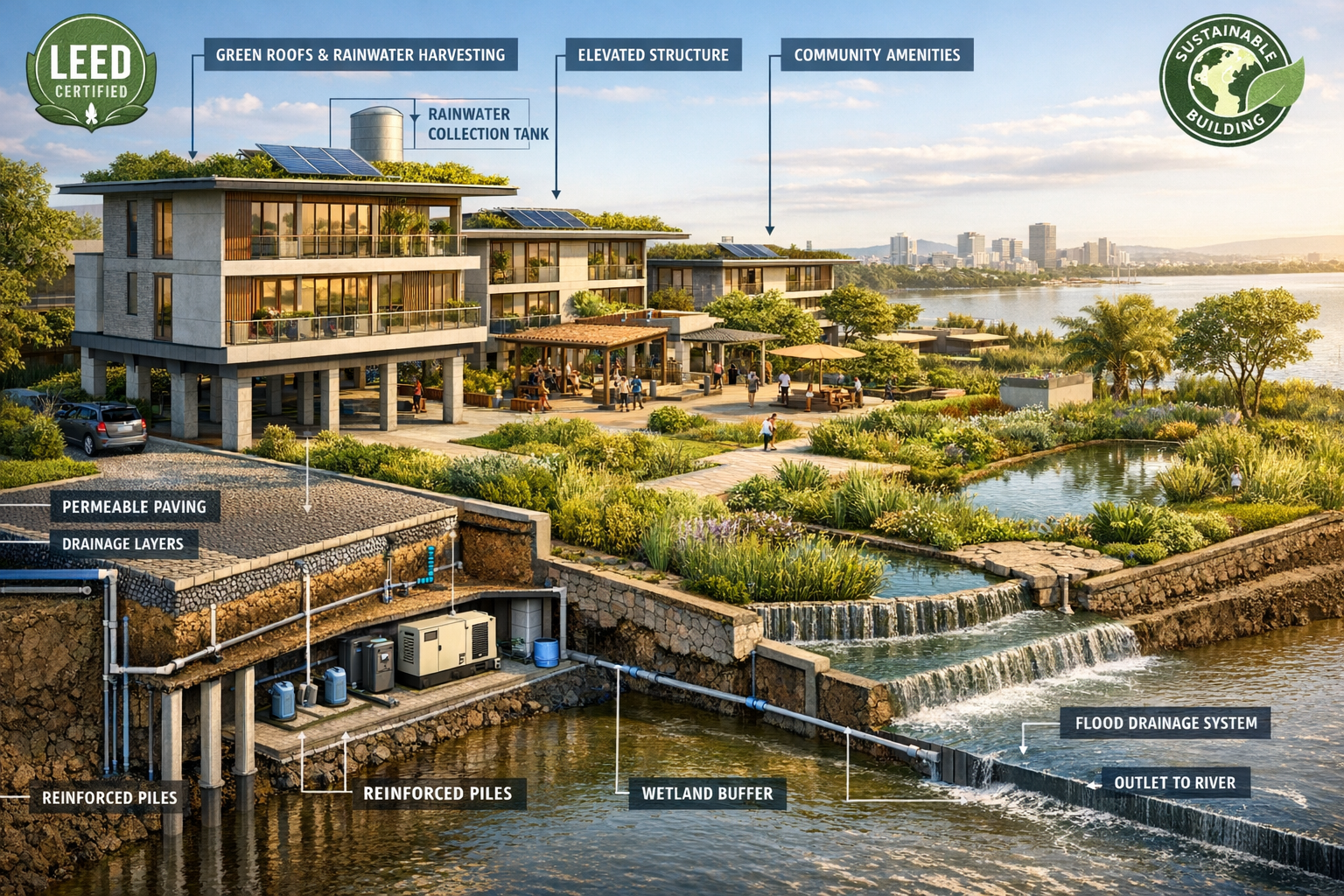
Elevated design has become the cornerstone of profitable development in Porto Alegre’s revival. Buildings with ground floors raised 1.5-2.5 meters above historical flood levels receive preferential treatment in:
- Financing: Banks offer 0.5-1% interest rate reductions for certified flood-resistant projects
- Insurance: Premium reductions of 30-40% compared to traditional construction
- Tax Incentives: Municipal property tax reductions of up to 15% for the first five years
- Market Perception: Faster sales velocity with 20-30% shorter time-to-market
The Golden Lake development demonstrates this approach at scale, with Multiplan investing approximately R$250 million in the Lake Eyre phase alone[1]. While this represents luxury-tier development, the principles apply across all market segments.
For developers exploring property development strategies in growing Brazilian markets, Porto Alegre’s mandatory elevation standards create both challenges and opportunities.
Eco-Integrated Development Approach
Sustainability integration amplifies yields in Porto Alegre’s recovery market. Eco-integrated projects—combining flood resilience with environmental features—attract premium buyers and renters while qualifying for additional incentives.
Key eco-integrated features driving higher returns include:
✅ Rainwater harvesting systems (reduces utility costs 15-20%)
✅ Native landscaping with bioswales (natural drainage + aesthetic appeal)
✅ Solar panel integration (energy cost reduction + green certification)
✅ Permeable parking surfaces (flood mitigation + environmental compliance)
✅ Green roofs and vertical gardens (temperature regulation + market differentiation)
Projects incorporating three or more eco-features report 12-18% faster absorption rates and command rental premiums averaging 22% above comparable conventional properties.
The combination of environmental consciousness and flood resilience resonates particularly strongly with Porto Alegre’s educated, environmentally-aware demographic. This creates a virtuous cycle where sustainable features drive both immediate yields and long-term value appreciation.
Strategic Location Selection Within Porto Alegre
High-Potential Neighborhoods for 2026
Not all Porto Alegre neighborhoods offer equal opportunity within Porto Alegre Residential Revival 2026: Yield Strategies in Rio Grande do Sul’s Post-Flood Recovery Developments. Strategic location selection requires analyzing elevation, infrastructure investment, and demographic trends.
Top-Tier Recovery Zones:
| Neighborhood | Elevation Advantage | Infrastructure Investment | Projected 3-Year Appreciation |
|---|---|---|---|
| Três Figueiras | High | R$180M (roads, drainage) | 18-22% |
| Boa Vista | Medium-High | R$145M (transit, utilities) | 15-19% |
| Petrópolis | Medium-High | R$120M (flood barriers) | 14-18% |
| Auxiliadora | Medium | R$95M (drainage systems) | 12-16% |
| Santana | Medium | R$85M (road upgrades) | 11-15% |
Três Figueiras stands out as the premier recovery zone, combining natural elevation advantages with substantial infrastructure investment. The neighborhood’s proximity to shopping centers, schools, and employment hubs creates sustained rental demand. Properties here typically yield 9-11% with strong appreciation potential.
Boa Vista offers excellent value for investors seeking slightly lower entry prices while maintaining strong fundamentals. The neighborhood benefits from R$145 million in transit and utility upgrades, improving connectivity to Porto Alegre’s central business district.
For comparison, investors might also consider opportunities in other growing Brazilian regions to diversify their portfolio strategy.
Proximity to Revitalized Infrastructure
Infrastructure proximity directly correlates with yield performance. Federal reconstruction funds prioritize:
🚇 Public Transit Corridors: Properties within 800 meters of bus rapid transit (BRT) stations or metro access command 18-25% rental premiums
🏥 Healthcare Facilities: Proximity to rebuilt hospitals and clinics increases property values 8-12%
🏫 Educational Institutions: Neighborhoods near quality schools experience 15-20% lower vacancy rates
🛒 Commercial Centers: Access to shopping and services drives consistent rental demand
The Golden Lake project exemplifies strategic infrastructure integration, with completed amenities including Main Lake and Golden Park tennis courts already opened for resident use[1]. Such amenity-rich developments create lifestyle value that translates directly into higher yields.
Investors should prioritize properties within 10-minute walking distance of at least two infrastructure categories. This “walkability premium” has intensified post-flood as residents increasingly value accessibility and reduced flood-related transportation disruption.
Financial Mechanisms and Investment Structures
Leveraging Federal Reconstruction Funds
Understanding available financial mechanisms is crucial for maximizing returns in Porto Alegre Residential Revival 2026: Yield Strategies in Rio Grande do Sul’s Post-Flood Recovery Developments. Several programs offer advantageous terms:
Casa Verde e Amarela Program: Government-backed financing for mid-tier housing with interest rates as low as 4.5% annually. Developers meeting flood-resilience standards receive priority processing and enhanced credit limits.
BNDES Recovery Lines: The Brazilian Development Bank offers construction financing at 6.5-7.5% for projects incorporating sustainability and resilience features. Loan-to-value ratios up to 75% available for qualified developments.
Municipal Tax Incentives: Porto Alegre’s municipal government provides:
- IPTU (property tax) reductions of 10-15% for certified resilient construction
- ISS (service tax) waivers during construction phase for recovery zone projects
- Expedited permitting reducing time-to-market by 3-6 months
Private Investment Partnerships: Joint ventures with established developers like Multiplan (Golden Lake investor) provide access to expertise, capital, and market credibility. The combined Golden Lake phases represent R$910 million in gross sales value across 221 units[1], demonstrating the scale achievable through strategic partnerships.
Similar to buying off-plan property strategies, early-stage investment in recovery developments offers maximum appreciation potential.
Structuring for Optimal Returns
Investment structure significantly impacts net yields. Consider these approaches:
Direct Ownership Model: Purchase and hold strategy capturing both rental income and appreciation. Best for investors with 5-7 year horizons seeking 8-12% total returns.
Development Joint Venture: Partner with local developers, contributing capital while they manage construction and sales. Typical profit splits of 60/40 (developer/investor) with IRRs of 15-20%.
Fund Participation: Real estate investment funds (FIIs) focused on Porto Alegre recovery offer liquidity and diversification. Expected yields of 7-10% with lower individual risk exposure.
Pre-Construction Purchase: Buying during construction phase at 15-25% discounts, then selling upon completion or holding for rental income. This approach mirrors successful studio apartment investment strategies in other Brazilian markets.
Each structure offers distinct risk-return profiles. Mid-tier investors typically achieve optimal results through direct ownership of 2-3 properties in different recovery zones, diversifying location risk while maintaining control over property management and tenant selection.
Risk Mitigation in Post-Flood Development
Understanding and Managing Flood Risk
While Porto Alegre Residential Revival 2026: Yield Strategies in Rio Grande do Sul’s Post-Flood Recovery Developments offers compelling returns, prudent investors must address residual flood risk through multiple strategies:
Elevation Verification: Ensure properties exceed minimum elevation standards by at least 0.5 meters. This buffer protects against regulatory changes and provides marketing advantages.
Insurance Requirements: Comprehensive flood insurance remains essential despite improved construction standards. Policies should cover:
- Structural damage (replacement cost basis)
- Loss of rental income (minimum 12 months coverage)
- Tenant displacement costs
- Emergency repairs and mitigation
Hydrological Analysis: Commission independent flood risk assessments from qualified engineers. Historical flood data combined with climate projections provides realistic risk quantification.
Diversification: Spread investments across multiple elevation zones and neighborhoods. Avoid concentration in single buildings or developments.
The new building codes implemented post-2024 significantly reduce risk, but zero-risk environments don’t exist. Properties in designated recovery zones with proper elevation and flood-resistant design typically face annual flood risk below 0.5%, comparable to many coastal developments worldwide.
Legal and Regulatory Considerations
Regulatory compliance protects investments and ensures eligibility for incentives. Key requirements include:
📋 Environmental Licensing: All new developments require environmental impact assessments and municipal approval. Processing typically takes 4-6 months.
🏗️ Construction Standards: Compliance with updated building codes (NBR standards) for flood-resistant construction. Third-party certification recommended.
📝 Property Documentation: Clear title verification essential, particularly for properties previously affected by floods. Title insurance strongly recommended.
⚖️ Tenant Regulations: Understanding Rio Grande do Sul’s tenant protection laws ensures smooth property management and realistic yield projections.
Working with experienced local legal counsel familiar with post-flood recovery regulations minimizes compliance risk and accelerates project timelines. Budget 2-3% of project costs for legal and regulatory expenses.
Market Outlook and Future Projections
2026-2028 Growth Trajectory
The Porto Alegre residential market shows strong momentum entering 2026, with several indicators pointing to sustained growth through 2028:
Supply-Demand Dynamics: Current housing deficit estimated at 18,000-22,000 units across the metropolitan region. New construction, while accelerating, won’t fully address this gap until late 2027, supporting price stability and rental demand.
Infrastructure Completion Timeline: Major federal infrastructure projects scheduled for completion in 2026-2027 will further enhance property values in recovery zones. The R$1.8 billion infrastructure investment program includes:
- Flood barrier system completion (Q3 2026)
- BRT corridor expansion (Q4 2026)
- Drainage system upgrades (Q2 2027)
- Road network improvements (ongoing through 2028)
Economic Recovery: Rio Grande do Sul’s GDP growth projected at 3.2-3.8% annually through 2028, outpacing national averages. Agricultural sector recovery and industrial expansion drive employment growth, supporting housing demand.
Demographic Trends: Porto Alegre continues attracting young professionals and families from smaller cities, maintaining population growth of 1.2-1.5% annually. This demographic prefers modern, amenity-rich developments in safe, well-connected neighborhoods.
The Golden Lake project’s timeline—with Lake Eyre phase completion targeted for March 2028[1]—aligns with broader market recovery, positioning early investors to capture maximum appreciation as the market matures.
Comparative Analysis with Other Brazilian Markets
How does Porto Alegre Residential Revival 2026 compare to other Brazilian investment destinations?
Porto Alegre vs. São Paulo: While São Paulo offers larger scale and liquidity, Porto Alegre provides better value with 30-40% lower entry prices and comparable yields. Post-flood reconstruction creates unique appreciation catalysts absent in mature markets.
Porto Alegre vs. Rio de Janeiro: Rio’s security concerns and political volatility contrast with Porto Alegre’s stability and improving infrastructure. Yield potential favors Porto Alegre by 2-3 percentage points in comparable segments.
Porto Alegre vs. Florianópolis: Both cities offer strong fundamentals, but serve different investor profiles. Florianópolis attracts lifestyle and vacation rental investors, while Porto Alegre focuses on traditional rental income and capital appreciation. Porto Alegre’s larger population and economic base provide more stable, predictable returns.
Porto Alegre vs. Curitiba: Similar in size and demographics, Curitiba lacks Porto Alegre’s current reconstruction momentum and federal funding support. Porto Alegre offers 1.5-2% higher yield potential in 2026-2027.
For investors exploring Brazil’s top property investment locations, Porto Alegre’s unique combination of recovery momentum, government support, and resilient infrastructure creates a compelling value proposition.
Practical Implementation: Getting Started in 2026
Step-by-Step Investment Process
Ready to pursue Porto Alegre Residential Revival 2026: Yield Strategies in Rio Grande do Sul’s Post-Flood Recovery Developments? Follow this systematic approach:
Phase 1: Research and Planning (Weeks 1-4)
- Define investment objectives (yield target, timeline, risk tolerance)
- Establish budget including acquisition, renovation, and reserve funds
- Research neighborhoods using elevation maps and infrastructure plans
- Identify 3-5 target properties or developments
- Assemble professional team (lawyer, architect, property manager)
Phase 2: Due Diligence (Weeks 5-8)
- Commission flood risk assessments for target properties
- Verify title documentation and legal compliance
- Analyze comparable sales and rental data
- Review building plans and flood-resistant features
- Calculate detailed pro forma projections (conservative scenarios)
Phase 3: Acquisition (Weeks 9-12)
- Negotiate purchase terms (target 10-15% below asking for negotiation buffer)
- Secure financing through optimal structure (local banks vs. international)
- Complete legal documentation and title transfer
- Arrange insurance coverage (flood, liability, loss of rent)
- Establish property management arrangements
Phase 4: Optimization and Operation (Ongoing)
- Complete any necessary improvements or certifications
- Implement marketing strategy for tenant acquisition
- Establish maintenance protocols emphasizing flood preparedness
- Monitor market conditions and property performance
- Review and adjust strategy quarterly
The entire process typically requires 10-14 weeks from initial research to property acquisition. For pre-construction purchases, add 18-36 months for development completion.
Building Your Professional Network
Success in Porto Alegre’s recovery market depends heavily on local expertise. Essential network components include:
Local Real Estate Broker: Specializing in recovery zone properties with flood risk expertise. Commission typically 3-6% of purchase price.
Construction/Renovation Specialist: Experienced in flood-resistant construction and familiar with updated building codes. Critical for property improvements and due diligence.
Property Manager: Local management company with Porto Alegre experience. Fees typically 8-10% of monthly rental income, but essential for non-resident investors.
Legal Counsel: Attorney specializing in real estate transactions and familiar with post-flood regulatory environment. Budget R$8,000-15,000 for full transaction support.
Insurance Broker: Specialist in flood insurance and investment property coverage. Essential for proper risk management.
Architect/Engineer: For due diligence on structural integrity and flood-resistant features. One-time assessment fees R$3,000-6,000 per property.
Building these relationships before property acquisition accelerates the process and reduces costly mistakes. Many successful investors spend 2-3 months networking and building local connections before making their first purchase.
For insights into successful real estate development approaches, studying established developers’ strategies provides valuable lessons applicable to Porto Alegre’s market.
Conclusion: Seizing the Porto Alegre Opportunity
Porto Alegre Residential Revival 2026: Yield Strategies in Rio Grande do Sul’s Post-Flood Recovery Developments represents a rare convergence of factors creating exceptional investment potential. The combination of federal reconstruction funding, mandatory flood-resistant construction standards, infrastructure improvements, and sustained housing demand establishes a foundation for 8-12% yields with strong appreciation prospects through 2028.
The key to success lies in strategic execution: targeting mid-tier properties in elevated recovery zones, prioritizing eco-integrated developments, leveraging available financial incentives, and implementing rigorous risk management. Investors who act decisively in 2026 position themselves to capture maximum value as Porto Alegre completes its transformation into a more resilient, modern, and valuable real estate market.
Actionable Next Steps
Ready to pursue Porto Alegre investment opportunities? Take these immediate actions:
Conduct Market Research: Review current listings on property platforms[2][3] to understand pricing and availability in target neighborhoods
Assess Financial Capacity: Calculate your investment budget including acquisition, improvements, reserves, and professional fees (typically 115-125% of property price)
Connect with Local Experts: Reach out to Porto Alegre real estate brokers and property managers to begin building your professional network
Visit the Market: Plan a research trip to Porto Alegre to tour properties, meet professionals, and assess neighborhoods firsthand
Develop Investment Criteria: Define specific parameters for property selection (location, price range, property type, yield targets)
Monitor Infrastructure Progress: Track federal reconstruction project timelines to identify emerging value zones before broader market recognition
Consider Professional Guidance: Engage with experienced Brazilian real estate development companies for partnership or advisory services
The window of maximum opportunity in Porto Alegre’s recovery market is now. As infrastructure projects complete and market awareness grows, entry prices will rise and yield potential will compress. Investors who position themselves strategically in 2026 will reap the rewards of Porto Alegre’s resilient revival for years to come.
The city that rose from the floods is building back better—and smart investors are building wealth alongside it. 🏗️💰🌱
References
[1] Multiplans Golden Lake Porto Alegres First Private Neighborhood Expands – https://www.riotimesonline.com/multiplans-golden-lake-porto-alegres-first-private-neighborhood-expands/
[2] Porto Alegre Rio Grande Do Sul – https://www.realtor.com/international/br/porto-alegre-rio-grande-do-sul/
[3] House – https://www.realtor.com/international/br/porto-alegre-rio-grande-do-sul/house/