
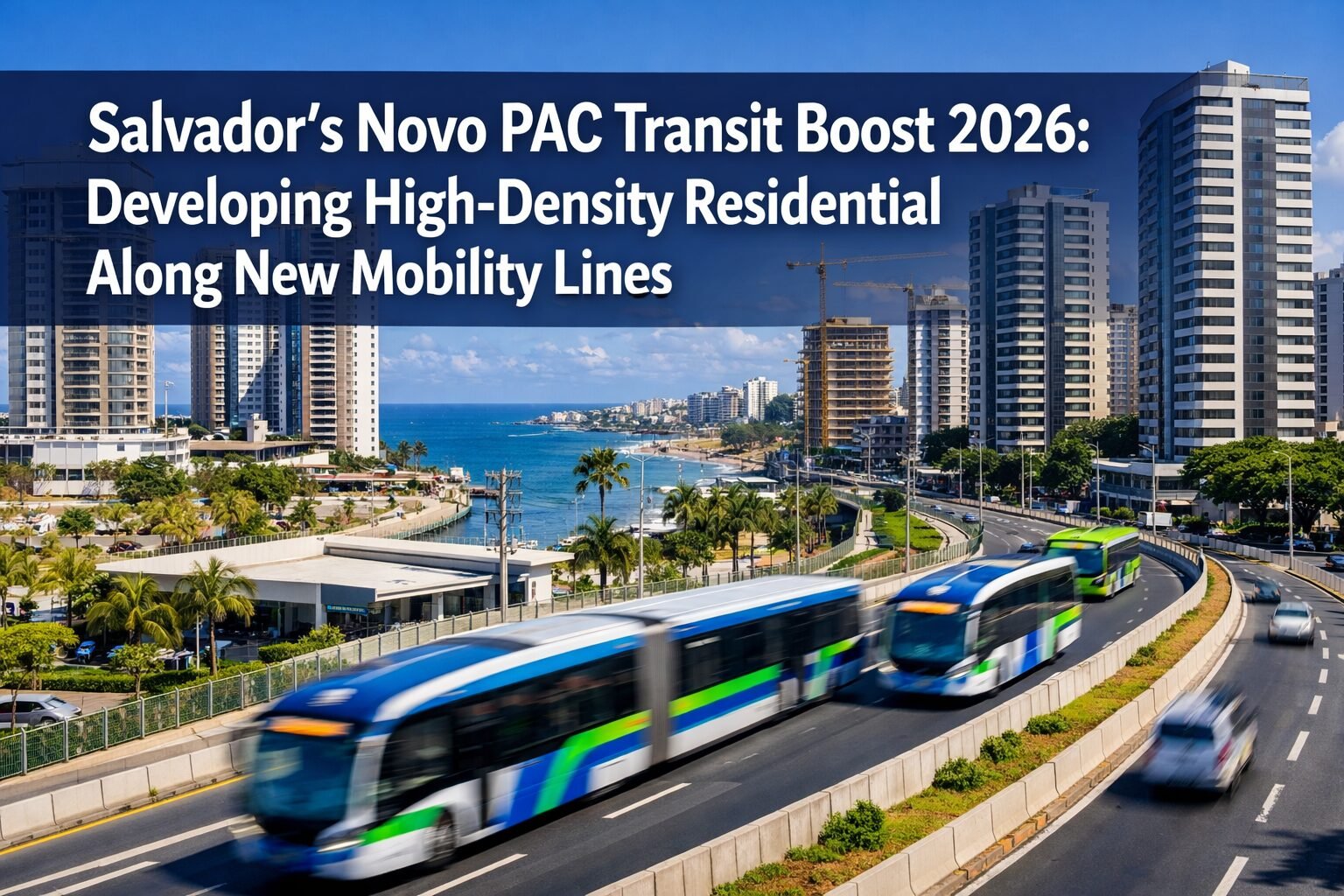
Salvador, Brazil is experiencing a transformative moment in urban development as Salvador’s Novo PAC Transit Boost 2026: Developing High-Density Residential Along New Mobility Lines reshapes the city’s landscape. With the city recently winning the prestigious 2026 Sustainable Transport Award and benefiting from billions in federal infrastructure investment, developers and investors are racing to capitalize on transit-oriented development opportunities that promise 15-20% appreciation potential along new mobility corridors.[1]
The convergence of Brazil’s ambitious Novo PAC (New Growth Acceleration Program) funding, Salvador’s expanding electric BRT system, and growing demand for transit-accessible housing creates a unique window for high-density residential development. This comprehensive transformation isn’t just about transportation—it’s about reimagining urban living through mixed-use towers that blend affordability with premium amenities, creating vibrant neighborhoods where residents can live, work, and thrive without dependence on private vehicles. 🚍
Key Takeaways
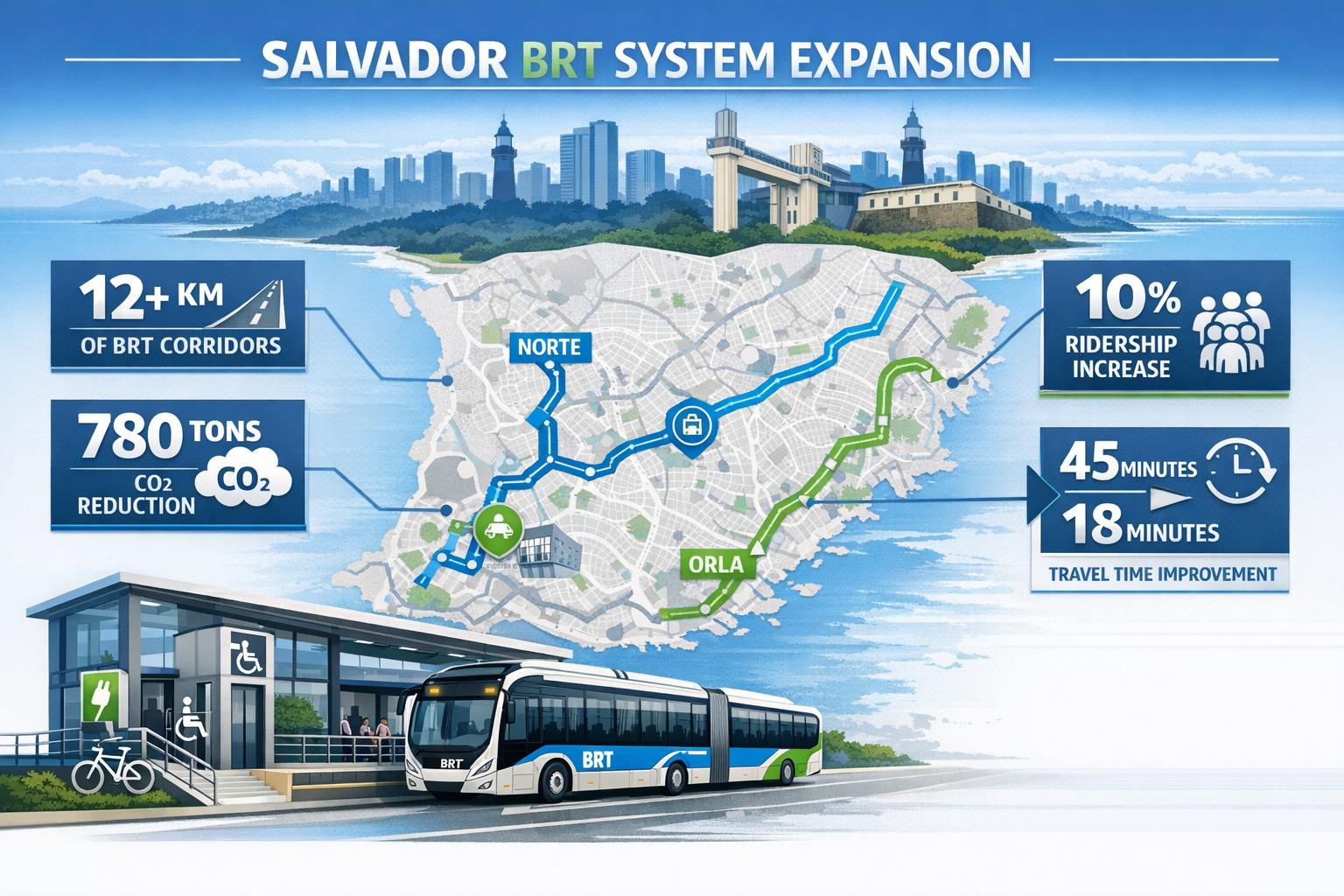
- Award-Winning Infrastructure: Salvador won the 2026 Sustainable Transport Award for its electric BRT expansion, featuring 12+ kilometers of corridors with Brazil’s first dedicated electric bus terminal[1]
- Massive Federal Investment: Novo PAC allocated R$10.6 billion for electric buses and rail vehicles across 98 Brazilian cities, with Salvador as a flagship beneficiary[2]
- Transit-Driven Appreciation: Properties within 500 meters of new BRT stations show 15-20% appreciation potential, creating premium pricing zones for developers
- Mixed-Income Strategy: Successful developments blend MCMV (Minha Casa Minha Vida) affordable units with luxury amenities to maximize occupancy and social diversity
- Sustainability Gains: The new BRT corridor reduced 780 tons of CO₂ emissions and cut travel times from 45 to 18 minutes on key routes[1]
Understanding Salvador’s Novo PAC Transit Boost 2026 Infrastructure Investment
The Novo PAC Framework and National Impact
Brazil’s Novo PAC represents one of Latin America’s most ambitious infrastructure programs, with R$614.5 billion allocated to the Sustainable and Resilient Cities axis alone.[2] This comprehensive national initiative extends beyond Salvador, benefiting over 2,100 cities that have registered projects spanning basic sanitation, solid waste management, urban transportation, and flood prevention.[2]
For Salvador specifically, the transit investment focuses on:
- Electric bus fleet expansion with dedicated charging infrastructure
- BRT corridor development connecting major employment and residential hubs
- Multi-modal integration linking buses with bike-sharing and active mobility options
- Accessibility upgrades including elevators and level boarding at stations[1]
The R$10.6 billion earmarked for electric buses and rail vehicles across 98 cities includes local content requirements that strengthen Brazil’s domestic manufacturing sector, creating jobs while advancing sustainability goals.[2]
Salvador’s BRT System: A Model for Sustainable Urban Mobility
Salvador’s BRT network now operates across more than 12 kilometers along two major corridors, with a newly inaugurated 7-kilometer corridor that opened in 2024 serving as the centerpiece of the system’s expansion.[1] This infrastructure achievement earned Salvador recognition as the 2026 Sustainable Transport Award winner, announced at a ceremony on February 11, 2026.[1]
Key Performance Metrics:
| Metric | Achievement | Impact |
|---|---|---|
| CO₂ Reduction | 780 tons (2024-2025) | Expected to increase as buses reach 220 km/day capacity[1] |
| Travel Time Savings | 45 min → 18 min | 60% reduction on Lapa-Rodoviária route[1] |
| Ridership Growth | +10% increase | Demonstrates strong public adoption[1] |
| System Length | 12+ kilometers | Two corridors with expansion planned |
The system’s electric bus fleet operates from Brazil’s first and only dedicated electric terminal for recharging vehicles, positioning Salvador as a national leader in clean transportation technology.[1] This infrastructure milestone creates a replicable model for other Brazilian cities pursuing sustainable mobility solutions.
Creating Premium Pricing Zones Around Transit Hubs
The transit infrastructure investment directly translates to real estate value appreciation in predictable patterns. Properties located within 500-800 meters (approximately 5-10 minute walking distance) of BRT stations experience the most significant value increases, with developers reporting 15-20% appreciation potential for well-designed transit-oriented developments.
Premium pricing zones emerge around stations that offer:
✅ Direct connections to major employment centers
✅ Multi-modal integration with bike-sharing and pedestrian infrastructure
✅ 24-hour security and well-maintained facilities
✅ Commercial amenities within the station or immediate vicinity
✅ Accessibility features attracting diverse demographics[1]
The Lapa and Rodoviária Terminal hubs represent particularly attractive development zones, given their role as major transfer points with dramatically improved connectivity. The semi-direct line connecting these hubs reduced travel times by 27 minutes, fundamentally changing the accessibility profile of surrounding neighborhoods.[1]
Salvador’s Novo PAC Transit Boost 2026: High-Density Residential Development Strategies
Mixed-Use Towers: Blending Affordability with Premium Amenities
The most successful high-density residential developments along Salvador’s new mobility lines employ a mixed-income strategy that combines MCMV (Minha Casa Minha Vida) affordable housing units with market-rate and luxury apartments in the same building complex. This approach maximizes both social impact and financial returns while ensuring consistent occupancy rates.
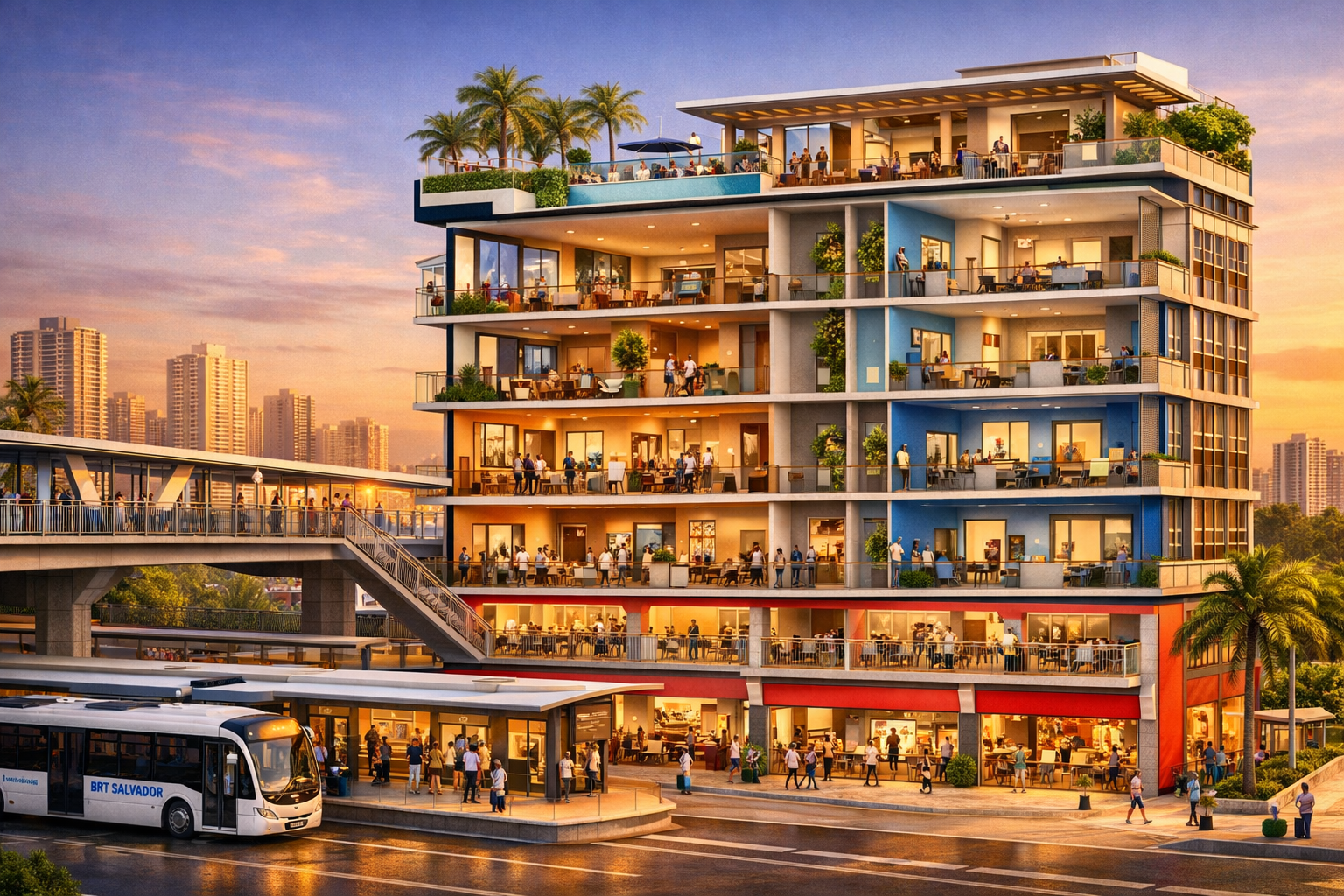
Typical Mixed-Use Tower Configuration:
🏢 Ground Floor (0-2 stories)
- Commercial retail spaces (cafes, convenience stores, services)
- Direct pedestrian connections to BRT stations
- Bike storage and sharing facilities
- Building lobby and amenity access
🏢 Mid-Levels (3-12 stories)
- MCMV affordable housing units (30-40% of residential space)
- Compact 1-2 bedroom layouts optimized for families and young professionals
- Shared amenities access (pool, fitness center, coworking spaces)
🏢 Upper Levels (13-20+ stories)
- Market-rate and luxury apartments (60-70% of residential space)
- Premium finishes, larger floor plans, private balconies
- Enhanced views and access to rooftop amenities
- Concierge services and premium parking options
This vertical integration creates broad market appeal while maintaining project viability. The MCMV units qualify for federal subsidies and guaranteed demand, providing stable cash flow, while luxury units generate higher margins and attract buyers seeking investment opportunities in Brazil’s growing property market.
Design Principles for Transit-Oriented Developments
Successful developments along Salvador’s Novo PAC Transit Boost 2026 corridors incorporate specific design principles that maximize both livability and investment returns:
1. Pedestrian-First Design
- Wide, covered walkways connecting buildings to transit stations
- Ground-level activation with retail and services
- Minimal setbacks to create urban streetscape
- Traffic-calming features and enhanced crosswalks
2. Density Optimization
- Floor Area Ratios (FAR) of 4.0-6.0 near major stations
- Tower spacing that preserves light and air circulation
- Efficient unit layouts maximizing usable square footage
- Shared amenity spaces reducing individual unit size requirements
3. Multi-Modal Integration
- Secure bicycle parking (minimum 1 space per 2 units)
- Car-sharing spaces instead of traditional parking ratios
- Electric vehicle charging infrastructure
- Scooter and bike-sharing station integration[1]
4. Sustainability Features
- Solar panels for common area electricity
- Rainwater harvesting for irrigation and non-potable uses
- Green roofs and vertical gardens for urban heat mitigation
- Energy-efficient appliances and LED lighting throughout
These design elements align with the broader sustainability goals of the Novo PAC program while creating differentiated products that command premium pricing. Developers who understand how property appreciation works when buying off-plan can leverage these features to maximize returns.
Neighborhood Selection and Site Analysis
Not all locations along Salvador’s BRT corridors offer equal development potential. Strategic site selection requires analyzing multiple factors:
High-Priority Development Zones:
🎯 Station Areas with Employment Centers
- Proximity to office districts, universities, hospitals
- Daytime population density creating retail demand
- Reverse-commute potential for residential tenants
🎯 Underutilized Land Near New Stations
- Former industrial sites available for redevelopment
- Surface parking lots ripe for vertical development
- Low-density commercial strips suitable for mixed-use conversion
🎯 Neighborhoods with Existing Amenities
- Schools, parks, healthcare facilities within walking distance
- Established retail and dining options
- Cultural attractions and community facilities
🎯 Areas with Complementary Infrastructure
- Recent street improvements and pedestrian upgrades
- New bike lanes and active mobility infrastructure[1]
- Planned public space enhancements
The stations offering monitored bicycle docks, bike and scooter sharing stations, and connections to new bike infrastructure represent particularly attractive development sites, as they signal municipal commitment to comprehensive mobility improvements.[1]
Investment Opportunities and Financial Considerations for Salvador’s Novo PAC Transit Boost 2026
Appreciation Potential and Market Dynamics
The 15-20% appreciation potential for transit-oriented developments stems from multiple value drivers that compound over time:
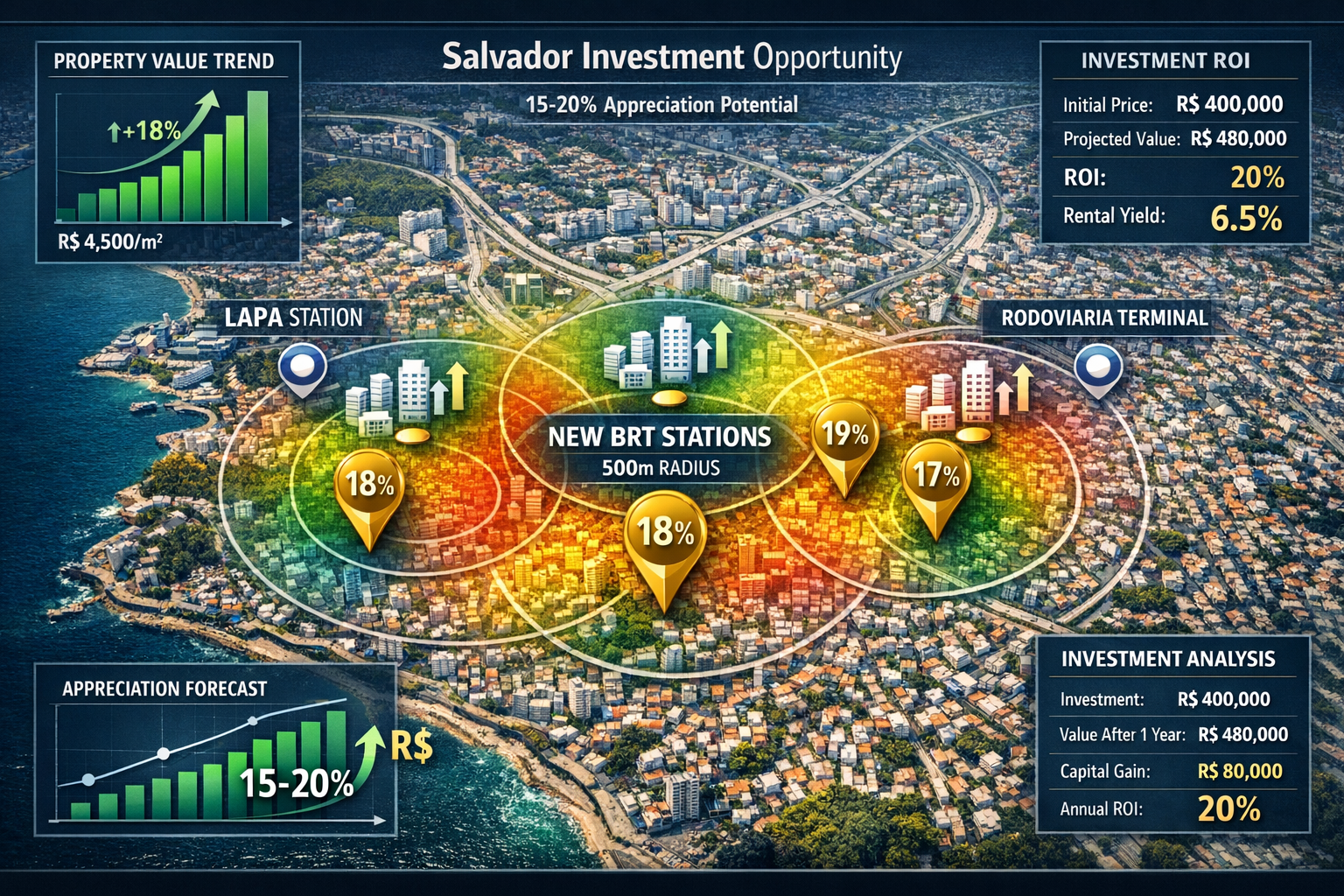
Primary Value Drivers:
💰 Transit Accessibility Premium
- Reduced transportation costs for residents (30-40% savings vs. car ownership)
- Time savings increasing quality of life and work-life balance
- Access to employment opportunities across the metropolitan area
💰 Infrastructure Investment Halo Effect
- Municipal commitment signals long-term neighborhood improvement
- Private sector follows public investment with complementary developments
- Property values rise as neighborhood perception improves
💰 Demographic Shifts
- Young professionals and families prioritizing walkability
- Growing environmental consciousness favoring public transit
- Aging population seeking accessible, car-free living options
💰 Supply Constraints
- Limited developable land within optimal walking distance of stations
- Zoning restrictions protecting certain areas from high-density development
- Competition among developers for prime sites
The 10% ridership increase on Salvador’s new BRT corridor demonstrates strong public adoption, validating the transit-oriented development thesis.[1] As more residents experience the convenience and cost savings of electric public transport, demand for transit-accessible housing will continue strengthening.
Financial Structuring and Funding Sources
Developers pursuing high-density residential projects along Salvador’s mobility lines can access multiple funding sources:
Federal Programs:
- MCMV subsidies for affordable housing components (30-40% of units)
- Novo PAC infrastructure grants for site improvements connecting to transit
- Green building incentives for sustainable design features
Private Financing:
- Construction loans from Brazilian development banks (BNDES, Caixa Econômica)
- Equity partnerships with institutional investors seeking transit-oriented assets
- Presale financing leveraging buyer deposits for construction funding
International Investment:
- Growing foreign interest in Brazilian real estate, particularly in high-return locations
- Infrastructure-focused funds targeting transit-adjacent developments
- ESG-oriented capital attracted to sustainable mobility projects
The combination of federal support, strong fundamentals, and international capital creates favorable financing conditions for well-structured projects. Developers who can demonstrate expertise in mixed-income development and transit-oriented design will find receptive lenders and equity partners.
Risk Mitigation Strategies
While Salvador’s transit expansion creates compelling opportunities, prudent developers implement risk mitigation strategies:
Market Risk Management:
- Phased development releasing units in stages aligned with absorption rates
- Mixed-income strategy ensuring demand across market cycles
- Flexible unit configurations adaptable to changing buyer preferences
Construction Risk Controls:
- Fixed-price contracts with experienced local contractors
- Contingency budgets of 10-15% for unforeseen conditions
- Milestone-based payment structures protecting developer cash flow
Regulatory Risk Mitigation:
- Early engagement with municipal planning departments
- Compliance with accessibility and sustainability requirements[1]
- Community consultation reducing opposition and delays
Transit Dependency Risk:
- Site selection prioritizing multiple transit options and walkable amenities
- Mixed-use components reducing reliance on external services
- Parking flexibility allowing adaptation if transit adoption disappoints
The 24-hour security at several stations and gender-balanced staff with welcome teams demonstrate Salvador’s commitment to creating safe, inclusive transit environments that will sustain long-term ridership.[1] These operational features reduce the risk that transit infrastructure will underperform, protecting adjacent real estate values.
Broader Regional Context and Comparative Opportunities
Salvador’s Position in Brazil’s Northeast Growth Story
Salvador’s transit transformation occurs within Brazil’s broader Northeast regional growth, which is outpacing national averages in several economic indicators.[6] This regional momentum creates favorable conditions for real estate development:
- Population growth driven by internal migration and natural increase
- Economic diversification beyond traditional industries
- Infrastructure investment from federal and state governments
- Tourism expansion leveraging coastal location and cultural heritage
While Salvador leads in transit innovation, investors should also monitor developments in other Brazilian cities benefiting from Novo PAC funding. The program’s R$614.5 billion investment across 2,100+ cities creates multiple opportunities for transit-oriented development nationwide.[2]
Lessons from Other Brazilian Markets
Salvador’s approach can be compared to transit-oriented development in other Brazilian cities:
Florianópolis has experienced significant real estate market growth driven by quality of life factors and infrastructure improvements. The city’s experience with regional development in areas like Ingleses demonstrates how targeted infrastructure investment catalyzes property appreciation.
Key Comparative Insights:
| Factor | Salvador | Other Brazilian Markets |
|---|---|---|
| Transit Technology | Electric BRT (leading edge) | Mixed diesel/electric systems |
| Federal Support | 2026 Award winner, flagship program | Varying levels of Novo PAC funding |
| Appreciation Potential | 15-20% near stations | 10-15% typical for transit zones |
| Development Maturity | Early stage (high opportunity) | Varies by city and corridor |
Salvador’s first-mover advantage with electric bus infrastructure and dedicated charging facilities positions the city favorably for sustained growth.[1] Developers entering the market now can establish market presence before competition intensifies.
Implementation Roadmap for Developers and Investors
Phase 1: Market Entry and Site Acquisition (Months 1-6)
Immediate Action Steps:
Conduct comprehensive market research
- Analyze ridership data and growth projections for each BRT corridor
- Identify underserved demographics and housing gaps
- Study competitive developments and pricing strategies
Establish local partnerships
- Connect with Salvador-based architects familiar with transit-oriented design
- Engage construction firms experienced with high-density projects
- Build relationships with municipal planning officials
Secure strategic sites
- Target properties within 500m of high-performing stations
- Prioritize locations with existing zoning for high-density development
- Negotiate purchase options allowing time for due diligence
Structure financing
- Apply for MCMV program participation for affordable housing components
- Approach Brazilian development banks with preliminary project concepts
- Cultivate equity partners interested in transit-oriented investments
Phase 2: Design and Permitting (Months 7-18)
Development Activities:
Create mixed-use master plan
- Design vertical integration of commercial, affordable, and market-rate units
- Incorporate sustainability features qualifying for green building incentives
- Plan pedestrian connections to transit stations and surrounding amenities
Engage community stakeholders
- Present project vision to neighborhood associations
- Address concerns about density and traffic impacts
- Highlight affordable housing and public space contributions
Navigate regulatory approvals
- Submit applications for building permits and environmental clearances
- Comply with accessibility requirements aligned with BRT station standards[1]
- Secure MCMV program certification for affordable units
Launch presales campaign
- Market to both local buyers and investors seeking high-return opportunities
- Emphasize transit accessibility and sustainability features
- Offer flexible payment terms leveraging off-plan purchase advantages
Phase 3: Construction and Delivery (Months 19-36)
Execution Focus:
Manage construction efficiently
- Implement milestone-based contractor payments
- Maintain quality control ensuring luxury units justify premium pricing
- Coordinate with transit authorities on pedestrian connections
Continue marketing and sales
- Release units in phases aligned with construction progress
- Adjust pricing based on market absorption and comparable sales
- Maintain strong presales ratio (60%+) before completion
Prepare for occupancy
- Establish property management for rental units
- Create community programming for shared amenity spaces
- Coordinate move-ins to minimize disruption
Monitor performance and iterate
- Track appreciation rates and compare to projections
- Gather resident feedback on design and amenities
- Apply lessons learned to subsequent phases or projects
Conclusion
Salvador’s Novo PAC Transit Boost 2026: Developing High-Density Residential Along New Mobility Lines represents a transformative opportunity for developers and investors who understand the powerful synergy between transit infrastructure and real estate value creation. With Salvador earning the 2026 Sustainable Transport Award, operating Brazil’s first dedicated electric bus terminal, and benefiting from billions in federal Novo PAC funding, the foundation for sustained property appreciation is firmly established.[1][2]
The 15-20% appreciation potential for well-designed transit-oriented developments reflects fundamental shifts in how Brazilians live and move through cities. As Salvador’s electric BRT system continues reducing CO₂ emissions, cutting travel times by 60% on key routes, and attracting 10% ridership growth, demand for transit-accessible housing will only intensify.[1]
Strategic developers who act now can secure prime sites near high-performing stations, structure mixed-income projects blending MCMV affordability with luxury amenities, and establish market leadership before competition intensifies. The combination of federal support, proven transit performance, and regional economic growth creates a compelling investment thesis that extends beyond Salvador to other Brazilian cities benefiting from the Novo PAC program’s R$614.5 billion commitment to sustainable urban development.[2]
Next Steps for Stakeholders
For Developers:
- Conduct site reconnaissance within 500m of Salvador’s BRT stations
- Engage local partners with transit-oriented development expertise
- Structure preliminary financing combining MCMV subsidies with private capital
- Review available development opportunities in high-growth Brazilian markets
For Investors:
- Evaluate transit-adjacent properties in Salvador’s premium pricing zones
- Consider off-plan purchases to maximize appreciation potential
- Diversify across multiple transit corridors and development phases
- Monitor Novo PAC funding announcements for emerging opportunities in other cities
For Municipal Officials:
- Continue investing in transit operations and multi-modal integration[1]
- Streamline permitting for high-density development near stations
- Implement zoning reforms encouraging mixed-use, transit-oriented projects
- Maintain station security and accessibility features that sustain ridership
The convergence of award-winning infrastructure, massive federal investment, and proven market fundamentals makes Salvador’s transit corridors one of Brazil’s most compelling real estate opportunities in 2026. Stakeholders who move decisively to capitalize on Salvador’s Novo PAC Transit Boost 2026 will position themselves at the forefront of sustainable urban development while generating attractive financial returns. 🚀
References
[1] Salvador Brazil Announced As 2026 Sustainable Transport Award Winner – https://cruxalliance.org/salvador-brazil-announced-as-2026-sustainable-transport-award-winner/
[2] New Pac Sustainable And Resilient Cities For A New Brazil – https://www.gov.br/fazenda/pt-br/acesso-a-informacao/acoes-e-programas/transformacao-ecologica/novo-brasil-ecological-transformation-plan/featured-programs/new-pac-sustainable-and-resilient-cities-for-a-new-brazil
[6] Brazils Northeast Leads Growth Expectations – https://www.coatingsworld.com/brazils-northeast-leads-growth-expectations/