
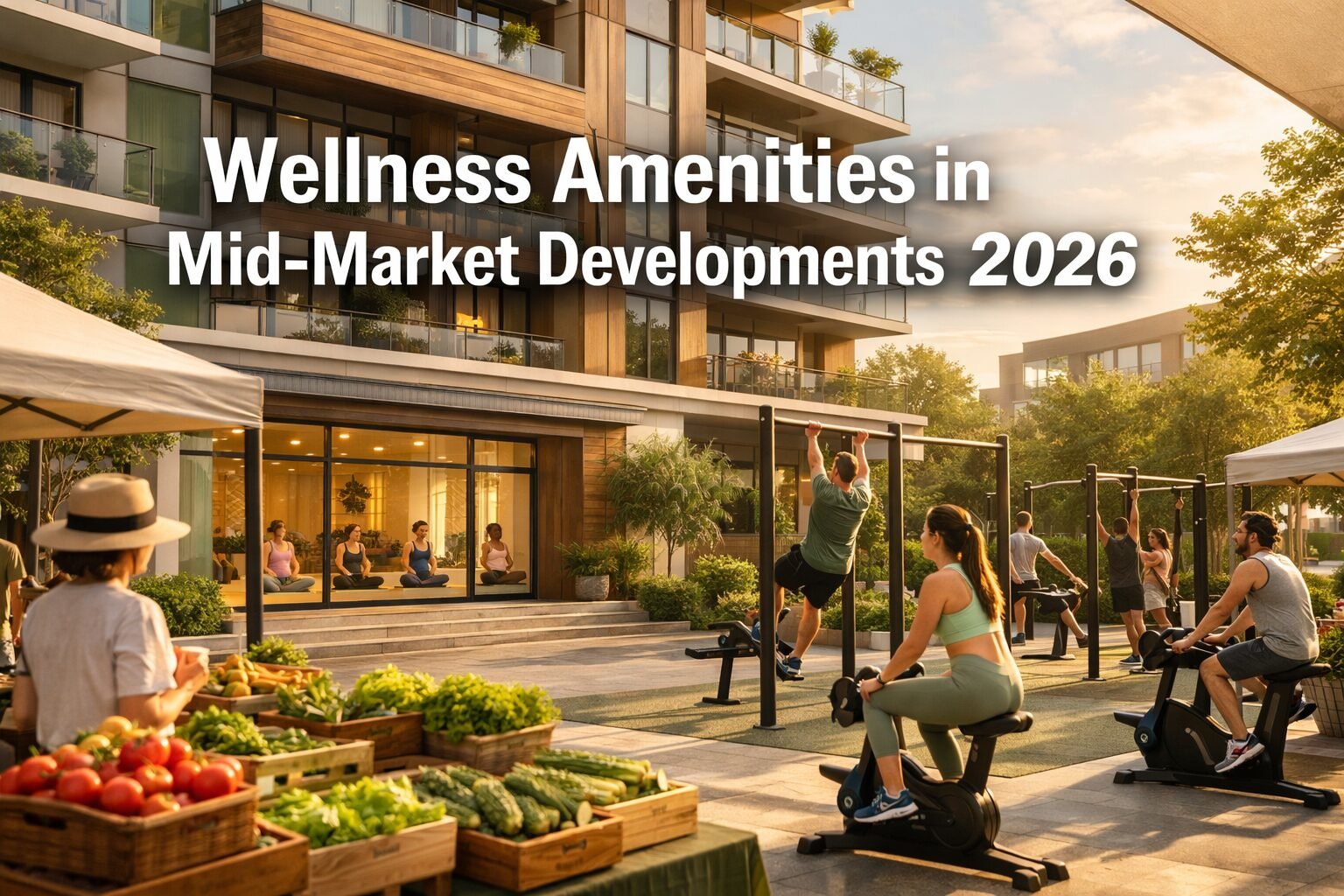
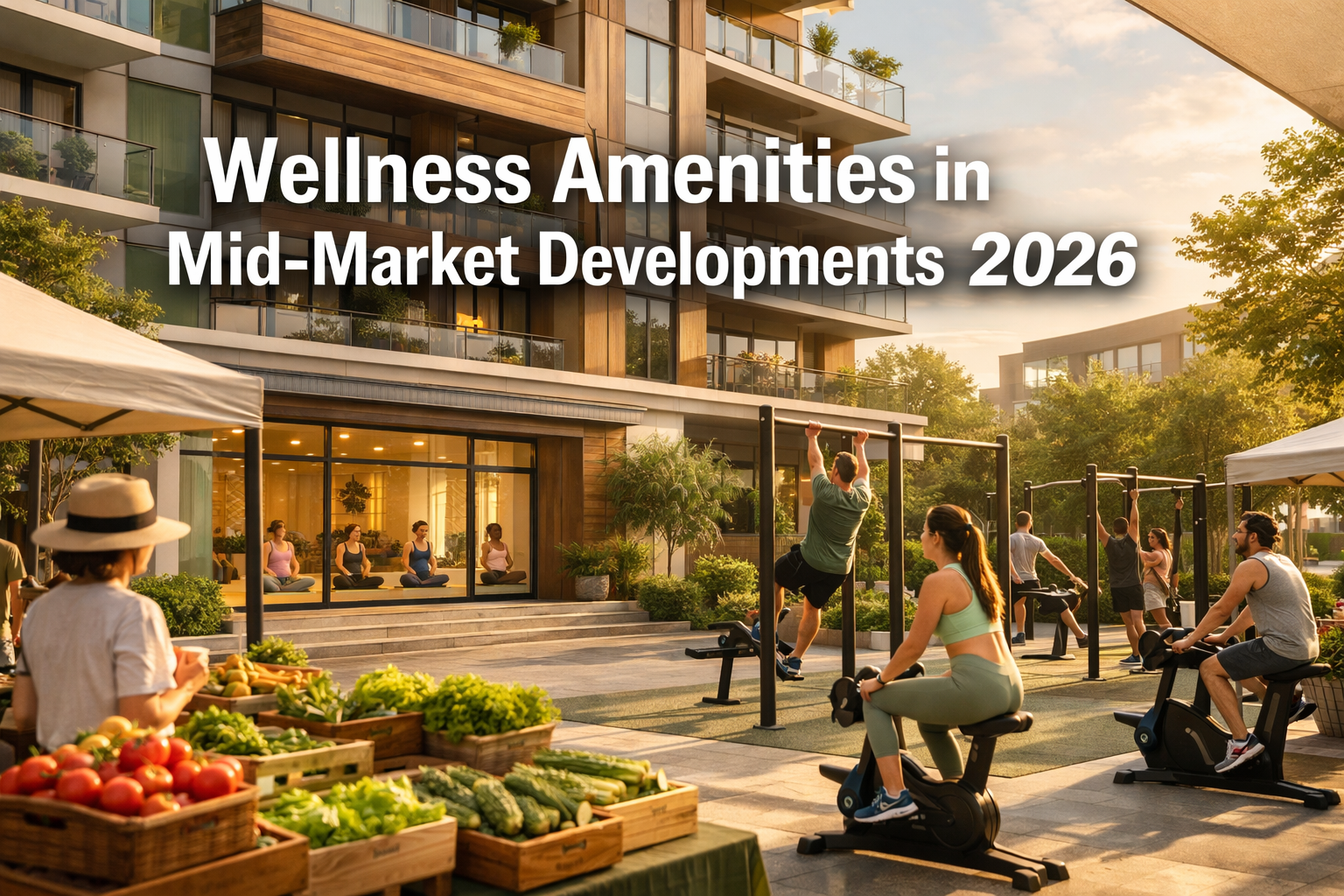
The real estate landscape has transformed dramatically since the pandemic, with wellness no longer a luxury reserved for high-end properties. In 2026, mid-market developments are experiencing a fundamental shift as buyers actively seek homes that support their health and well-being. Wellness Amenities in Mid-Market Developments 2026: Integrating Gyms, Yoga Spaces, and Healthy Markets for Post-Pandemic Buyer Premiums represents more than a trend—it’s a market evolution that’s reshaping how developers approach affordable housing in urbanizing secondary cities.
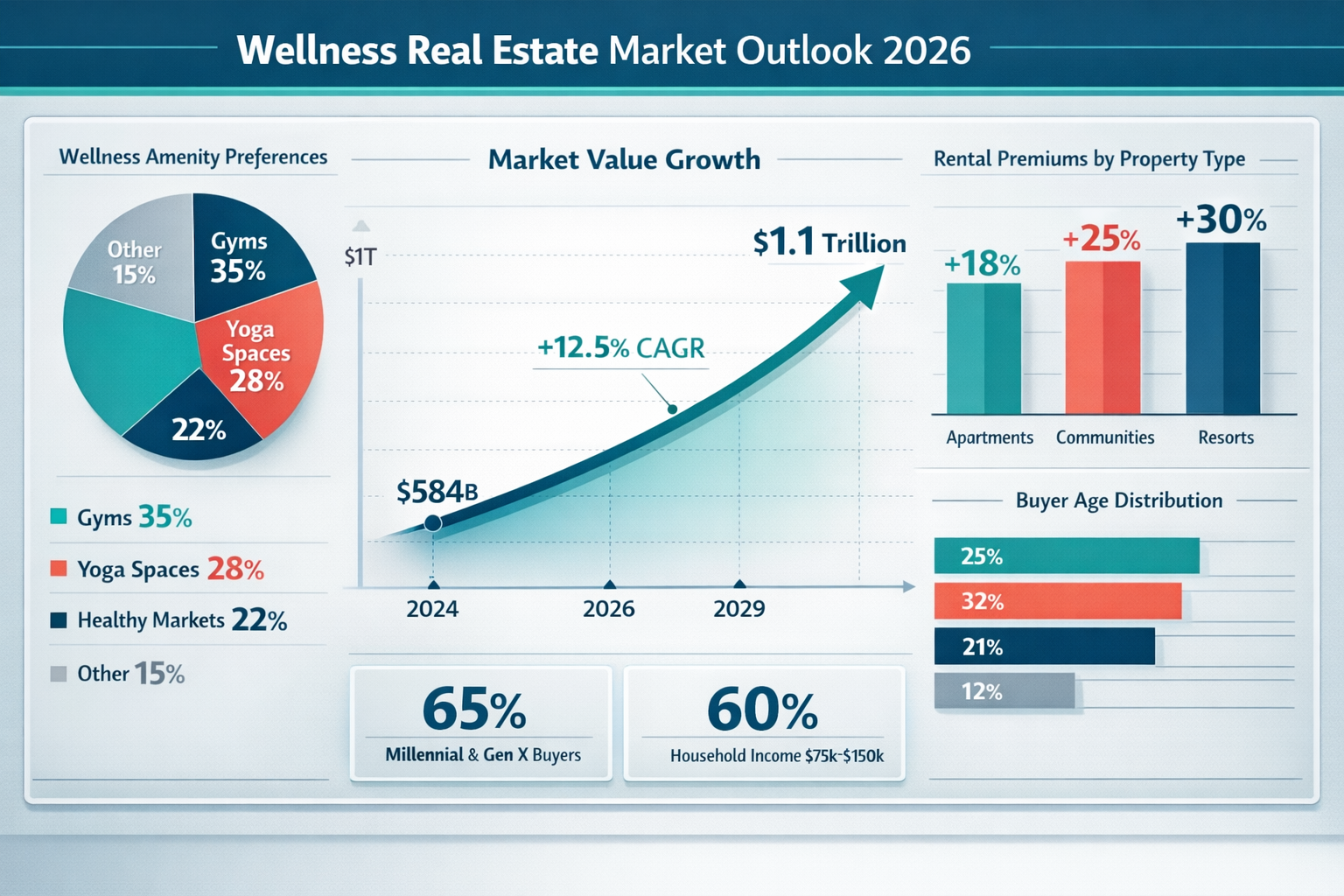
The numbers tell a compelling story: wellness real estate reached $584 billion in 2024 and is forecast to double to $1.1 trillion by 2029[1]. More importantly for mid-market developers, properties with wellness features command a 10-25% price premium at the middle and upper ends of the market[1]. This premium isn’t just theoretical—it’s driving real purchasing decisions as buyers prioritize health-focused living spaces over traditional amenities.
Key Takeaways
- Wellness amenities deliver measurable premiums: Mid-market properties with gyms, yoga spaces, and healthy markets command 10-25% higher prices compared to traditional developments[1]
- Market growth is accelerating: The wellness real estate sector is expanding at 18% year-over-year, with mid-market segments leading adoption[1]
- Affordability meets wellness: Co-living, build-to-rent, and mid-market housing are successfully integrating wellness features previously exclusive to luxury properties[1]
- Community connection drives value: Shared wellness spaces like communal saunas and group fitness areas create social infrastructure that buyers increasingly prioritize[5]
- Secondary cities benefit most: Urbanizing markets gain competitive advantage by differentiating through wellness amenities and proximity to organic markets
The Post-Pandemic Shift: Why Wellness Amenities Matter in Mid-Market Developments 2026
The pandemic fundamentally changed how people view their homes. No longer just a place to sleep, residences became offices, gyms, sanctuaries, and social hubs. This shift created lasting demand for properties that support multiple dimensions of well-being.
The Data Behind the Demand
Research reveals that wellness real estate is expanding beyond luxury into new property classes including commercial, workplace, senior living, and crucially, mid-market residential developments[1]. This democratization of wellness amenities reflects changing buyer priorities across income levels.
Key statistics shaping the 2026 market:
- 18% year-over-year growth from 2023-2024 in wellness real estate[1]
- 4.4-7.7% rental premium per square foot for commercial buildings with wellness features[1]
- Connection as healthcare infrastructure driving demand for community wellness spaces[5]
The shift from luxury-only to affordable wellness models represents a significant opportunity for mid-market developers targeting price-conscious buyers who still prioritize health.
What Today’s Mid-Market Buyers Want
Modern buyers evaluate properties through a wellness lens. They’re asking:
- ✅ Can I maintain my fitness routine without a gym membership?
- ✅ Are there spaces for yoga, meditation, or mindfulness practices?
- ✅ Can I access fresh, healthy food options nearby?
- ✅ Does the building foster community and reduce isolation?
- ✅ Will this property support my long-term health goals?
These questions drive purchasing decisions, particularly among millennials and Gen Z buyers entering the mid-market segment. For developers in growing regions like Florianópolis, integrating wellness amenities creates immediate differentiation.
Integrating Essential Wellness Amenities: Gyms, Yoga Spaces, and Healthy Markets
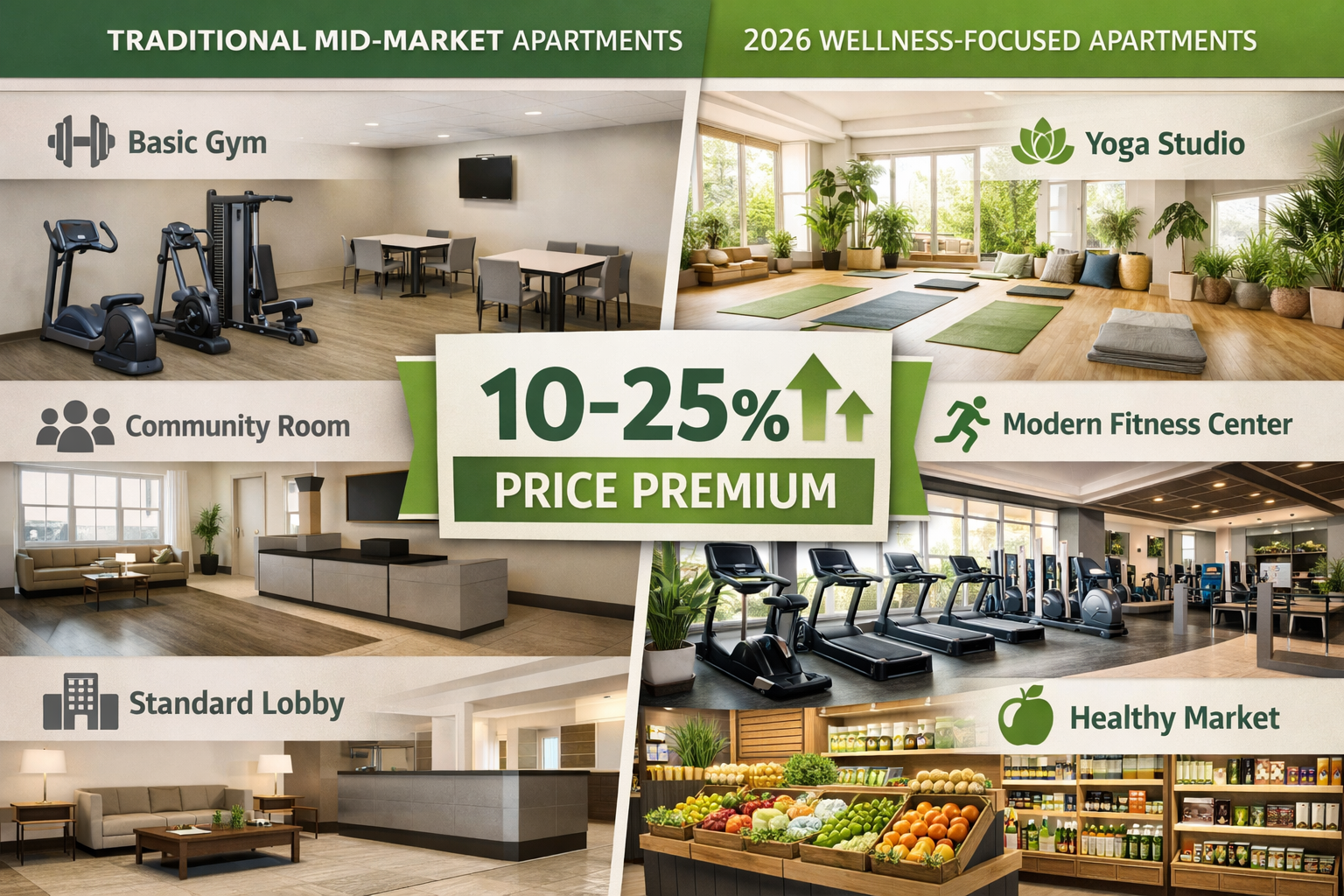
Successfully integrating wellness amenities requires strategic planning that balances cost, space, and buyer preferences. In 2026, three core amenity categories dominate mid-market developments.
On-Site Fitness Centers: Beyond Basic Equipment
Modern mid-market gyms have evolved far beyond a treadmill in a basement room. Today’s fitness centers feature:
Essential Equipment Mix:
- Cardio machines with entertainment systems
- Free weights and resistance training zones
- Functional fitness areas for bodyweight exercises
- Stretching and recovery spaces
Design Considerations:
- Natural lighting: Floor-to-ceiling windows improve mood and motivation
- Ventilation: High-quality air circulation systems prevent stuffiness
- Acoustics: Sound dampening protects neighboring units
- Accessibility: Ground-floor or elevator-adjacent locations
A well-designed 800-1,200 square foot fitness center can serve developments of 50-100 units effectively. The investment typically ranges from $50,000-$100,000 but generates significant buyer appeal and justifies price premiums.
Yoga and Mindfulness Spaces: Meeting Mental Health Needs
The mental health crisis accelerated by the pandemic has made dedicated yoga and meditation spaces highly desirable. These areas serve multiple purposes:
Space Requirements:
- 400-600 square feet minimum
- Bamboo or cork flooring for comfort
- Mirrors along one wall
- Storage for mats and props
- Dimmable lighting and sound systems
Multi-Use Functionality:
- Morning yoga classes
- Evening meditation sessions
- Pilates and stretching
- Wellness workshops and seminars
- Small group fitness training
These spaces cost significantly less than full gyms—typically $15,000-$30,000—while delivering outsized value in buyer perception. The trend toward wellness as community infrastructure[5] makes these shared spaces particularly attractive for residents seeking connection.
Healthy Markets and Fresh Food Access
Perhaps the most innovative wellness amenity gaining traction in 2026 is on-site or adjacent healthy markets. This concept takes several forms:
Integration Models:
| Model | Description | Best For |
|---|---|---|
| Weekly Farmers Markets | Dedicated outdoor space for weekly vendor markets | Larger developments (100+ units) |
| Healthy Market Corner | Small retail space with organic/local products | Mid-size buildings (50-100 units) |
| CSA Pickup Location | Partnership with local farms for produce delivery | Any size development |
| Rooftop Gardens | Resident-tended gardens with shared harvest | Properties with roof access |
The proximity to organic markets and healthy food options has become a significant selling point, particularly in secondary cities where such access may be limited. This amenity type requires minimal capital investment but creates substantial lifestyle value.
For developers working in emerging markets with strong growth potential, healthy market integration can be a key differentiator.
Community Thermal Therapy: The Rising Trend
An emerging amenity category for 2026 involves communal thermal therapy equipment including saunas and cold plunge pools[5]. While traditionally luxury features, these are becoming more accessible in mid-market properties through:
- Shared rooftop sauna facilities
- Outdoor cold plunge pools
- Steam rooms in fitness centers
- Contrast therapy zones
These amenities support both physical recovery and social connection, addressing the isolation many experienced during lockdowns. The investment ranges from $20,000-$60,000 depending on scale and quality.
Wellness Amenities in Mid-Market Developments 2026: Financial Impact and Buyer Premiums
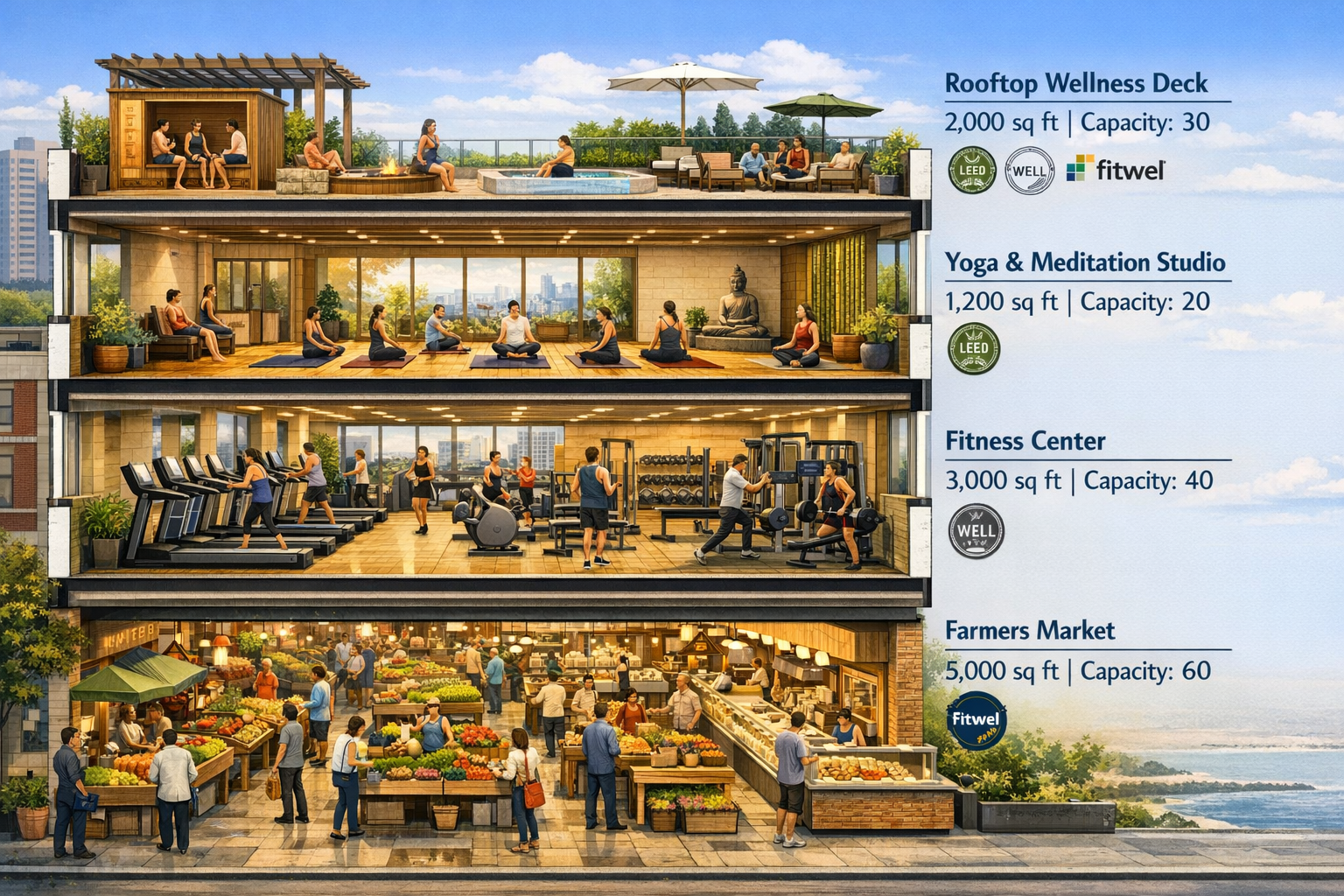
The business case for wellness amenities rests on measurable financial returns through higher prices, faster sales, and improved resident retention.
Understanding the Premium
Research across over 300 peer-reviewed studies confirms that wellness real estate commands a 10-25% price premium for residential properties at the middle and upper ends of the market[1]. This premium manifests in several ways:
Direct Price Impact:
- Higher per-square-foot selling prices
- Reduced time on market
- Multiple offers and competitive bidding
- Lower price negotiation from list price
Operational Benefits:
- Higher occupancy rates in rental properties
- Reduced tenant turnover
- Lower marketing costs
- Premium rental rates (4.4-7.7% higher per square foot)[1]
For a mid-market development with 75 units averaging $250,000, a conservative 12% premium translates to $2.25 million in additional revenue—far exceeding the $150,000-$300,000 investment in comprehensive wellness amenities.
ROI Calculation Framework
Developers should evaluate wellness amenities using this framework:
Investment Costs:
- Construction and equipment: $150,000-$300,000
- Ongoing maintenance: $15,000-$25,000 annually
- Programming and staffing: $10,000-$20,000 annually
Revenue Enhancement:
- Price premium per unit: 10-15% ($25,000-$37,500 per $250,000 unit)
- Faster sales velocity: 20-30% reduction in carrying costs
- Marketing differentiation: Reduced advertising spend
Payback Period: Typically 3-6 months through accelerated sales and price premiums
This financial model makes wellness amenities particularly attractive for developers focused on value creation.
Target Demographics and Willingness to Pay
Understanding which buyers value wellness amenities most helps developers target marketing effectively:
High-Value Segments:
Health-Conscious Millennials (28-43 years old)
- Prioritize fitness and mental health
- Willing to pay 15-20% premium
- Seek community and social connection
Remote Workers and Digital Nomads
- Need home-based wellness options
- Value work-life balance amenities
- Premium tolerance: 12-18%
Young Families
- Want safe, convenient fitness access
- Appreciate community spaces
- Premium tolerance: 10-15%
Active Retirees and Pre-Retirees
- Focus on longevity and health maintenance
- Value low-impact exercise spaces
- Premium tolerance: 12-16%
These demographics align perfectly with mid-market price points, creating a natural market fit for wellness-focused developments.
Implementation Strategies for Secondary Cities and Emerging Markets
The greatest opportunity for Wellness Amenities in Mid-Market Developments 2026: Integrating Gyms, Yoga Spaces, and Healthy Markets for Post-Pandemic Buyer Premiums exists in urbanizing secondary cities where competition is lower and differentiation matters more.
Why Secondary Cities Are Ideal
Secondary markets offer unique advantages for wellness-focused development:
Market Conditions:
- 🎯 Less competition from luxury wellness properties
- 🎯 Growing populations seeking urban amenities
- 🎯 Limited existing wellness infrastructure
- 🎯 Price points aligned with mid-market buyers
- 🎯 Strong demand for lifestyle differentiation
Cities experiencing rapid growth, such as regions in Brazil with expanding infrastructure, represent prime opportunities for wellness-integrated developments.
Phased Implementation Approach
Developers can minimize risk through phased wellness amenity integration:
Phase 1: Core Amenities (Launch)
- Basic fitness center (800-1,000 sq ft)
- Multi-purpose yoga/community room
- Outdoor fitness equipment or walking paths
Phase 2: Enhanced Offerings (6-12 months)
- Farmers market partnerships
- Wellness programming and classes
- Community garden or rooftop space
Phase 3: Premium Features (12-24 months)
- Thermal therapy equipment
- Expanded fitness offerings
- Healthy café or market corner
This approach allows developers to test market response while maintaining financial flexibility.
Partnership Models to Reduce Costs
Strategic partnerships can significantly reduce the capital and operational burden of wellness amenities:
Effective Partnership Types:
Fitness Studio Operators
- Lease space for boutique fitness studios
- Provide resident discounts
- Reduce developer operational responsibility
Local Farmers and Food Cooperatives
- Host weekly markets in common areas
- Create CSA pickup locations
- Minimal cost, high resident value
Wellness Instructors and Trainers
- Independent contractors for classes
- Revenue-share arrangements
- No full-time staffing costs
Health Food Retailers
- Ground-floor retail tenants
- Curated healthy product offerings
- Generate lease income while providing amenity
These partnerships transform wellness amenities from cost centers to revenue opportunities while enhancing resident experience.
Design Best Practices and Space Optimization
Effective wellness amenity integration requires thoughtful design that maximizes value within space and budget constraints typical of mid-market developments.
Space Allocation Guidelines
Optimal space allocation for a 75-unit mid-market development:
- Fitness Center: 800-1,200 sq ft (1.5-2% of total building area)
- Yoga/Wellness Studio: 400-600 sq ft (0.75-1% of total area)
- Outdoor Wellness Space: 1,000-2,000 sq ft (rooftop or ground level)
- Healthy Market Area: 200-400 sq ft indoor + outdoor space for events
Total wellness amenity footprint: 2,400-4,200 sq ft or approximately 3-5% of total development area.
Multi-Use Design Principles
Maximize ROI through spaces that serve multiple functions:
Flexible Wellness Studio:
- Morning: Yoga and Pilates classes
- Afternoon: Meditation and mindfulness sessions
- Evening: Community meetings and workshops
- Weekend: Children’s activities and family events
Fitness Center Integration:
- Attached outdoor terrace for boot camps
- Sliding doors connecting to yoga studio
- Juice bar or healthy snack station
- Lounge seating for post-workout socializing
Common Area Activation:
- Lobby space for weekly farmers markets
- Courtyard for outdoor fitness classes
- Rooftop for wellness events and gatherings
This approach delivers multiple amenities without proportional space requirements.
Technology Integration
Modern wellness amenities benefit from strategic technology integration:
Smart Fitness Solutions:
- Keyless entry systems with usage tracking
- Equipment reservation apps
- Virtual fitness class streaming
- Air quality and temperature monitoring
Community Engagement Platforms:
- Amenity booking systems
- Class schedules and registration
- Resident wellness challenges
- Community bulletin boards
Maintenance Optimization:
- Equipment usage analytics
- Predictive maintenance alerts
- Energy consumption tracking
- Space utilization data
Technology investments of $10,000-$25,000 enhance amenity value while reducing operational costs.
Marketing and Sales Strategies for Wellness-Focused Developments
Successfully capitalizing on wellness amenities requires strategic marketing that communicates value to target buyers.
Messaging Framework
Effective wellness amenity marketing emphasizes lifestyle benefits over features:
Feature-Focused (Weak): “Our building includes a 1,000 sq ft fitness center with cardio equipment.”
Benefit-Focused (Strong): “Start your day with sunrise yoga, then grab fresh organic produce from our weekly farmers market—all without leaving home.”
The second approach creates emotional connection and helps buyers envision their lifestyle.
Visual Marketing Assets
Wellness amenities are highly visual and should dominate marketing materials:
Essential Content:
- Professional photography of amenity spaces
- Lifestyle videos showing residents using facilities
- Virtual tours highlighting wellness features
- Testimonials from health-conscious residents
- Before/after comparisons with traditional developments
For developers looking to maximize their sales performance, wellness amenities provide compelling visual content that differentiates properties.
Wellness-Focused Events and Programming
Generate buzz through wellness-centered events:
Pre-Launch Events:
- Community yoga classes at the site
- Healthy living seminars and workshops
- Farmers market pop-ups
- Wellness influencer partnerships
Grand Opening Activities:
- Free fitness classes for attendees
- Healthy food tastings
- Wellness vendor fair
- Guided amenity tours
Ongoing Programming:
- Monthly wellness challenges
- Seasonal fitness events
- Nutrition workshops
- Mental health awareness activities
These events create community before move-in and generate organic word-of-mouth marketing.
Regulatory Considerations and Wellness Certifications
As wellness real estate matures, certification standards and regulatory frameworks are emerging to validate wellness claims.
Wellness Building Standards
Several certification programs provide third-party validation:
WELL Building Standard:
- Focuses on human health and wellness
- Addresses air, water, light, fitness, comfort
- Mid-market adaptations available
- Marketing differentiation value
Fitwel Certification:
- More affordable than WELL
- Evidence-based health impact
- Suitable for mid-market projects
- Strong ROI on certification investment
LEED with Wellness Credits:
- Combines sustainability and wellness
- Widely recognized brand
- Multiple certification levels
- Can justify price premiums
While certification adds costs ($15,000-$50,000), it provides credible third-party validation that supports premium pricing.
Local Regulatory Compliance
Wellness amenities must comply with local building codes and regulations:
Key Compliance Areas:
- Accessibility requirements (ADA compliance)
- Ventilation and air quality standards
- Noise regulations for fitness spaces
- Food handling permits for markets
- Liability insurance for shared facilities
Working with experienced development teams ensures compliance while maximizing amenity value.
Future Trends: Where Wellness Amenities Are Heading
The wellness real estate market continues to evolve rapidly. Understanding emerging trends helps developers stay ahead of buyer expectations.
Expanding Wellness Concepts
New amenity categories gaining traction in 2026 include:
Biophilic Design Integration:
- Living walls and indoor gardens
- Natural materials and textures
- Maximized natural light
- Connection to outdoor spaces
Mental Health Amenities:
- Quiet rooms and meditation pods
- Sound therapy spaces
- Aromatherapy integration
- Stress reduction zones
Longevity-Focused Features:
- Red light therapy rooms
- Circadian lighting systems
- Sleep optimization technology
- Age-in-place wellness design
Community Wellness Infrastructure:
- Shared thermal therapy facilities[5]
- Group fitness and accountability programs
- Intergenerational wellness spaces
- Social connection areas
These trends reflect the evolution from physical fitness to holistic wellness[4].
Technology-Enabled Wellness
Digital integration is transforming how residents interact with wellness amenities:
Emerging Technologies:
- AI-powered fitness coaching
- Biometric health tracking integration
- Virtual reality meditation experiences
- Personalized wellness recommendations
- Community health challenges and gamification
Data-Driven Optimization:
- Usage pattern analysis
- Amenity preference tracking
- Predictive maintenance
- Energy efficiency optimization
Technology enables personalized wellness experiences at scale, even in mid-market developments.
Affordable Wellness Models
The shift toward accessible wellness continues with innovative models:
Co-Living Wellness Communities:
- Shared wellness amenities reduce per-unit costs
- Built-in social connection and accountability
- Targeting diverse demographics including single parents and older adults[1]
Build-to-Rent Wellness Properties:
- Professional amenity management
- Consistent programming and classes
- Wellness-focused tenant screening
- Long-term resident wellness tracking
Public-Private Wellness Partnerships:
- Municipal support for wellness infrastructure
- Shared community wellness facilities
- Tax incentives for wellness integration
- Public health alignment
These models make wellness amenities financially viable across all market segments.
Conclusion: Capitalizing on the Wellness Premium in 2026
Wellness Amenities in Mid-Market Developments 2026: Integrating Gyms, Yoga Spaces, and Healthy Markets for Post-Pandemic Buyer Premiums represents a fundamental shift in real estate development strategy. The data is clear: wellness features deliver measurable price premiums of 10-25% while the overall market grows at 18% annually[1]. For developers in secondary cities and emerging markets, this presents an unprecedented opportunity to differentiate properties and capture premium pricing.
The successful integration of wellness amenities requires:
✅ Strategic investment in core amenities (fitness centers, yoga spaces, healthy markets)
✅ Thoughtful design that maximizes multi-use functionality
✅ Partnership models that reduce costs while enhancing value
✅ Targeted marketing that emphasizes lifestyle benefits
✅ Community programming that activates spaces and builds connections
The wellness real estate market is projected to reach $1.1 trillion by 2029[1], with mid-market segments leading growth as wellness democratizes beyond luxury properties. Developers who embrace this shift now will establish competitive advantages that compound over time.
Actionable Next Steps
For developers ready to integrate wellness amenities:
- Conduct market research to understand local wellness preferences and gaps
- Evaluate your property for optimal wellness amenity placement and sizing
- Develop partnership strategies with local fitness instructors, farmers markets, and wellness providers
- Create a phased implementation plan that balances investment with market testing
- Build marketing campaigns that emphasize wellness lifestyle benefits
- Explore development opportunities in growing markets with wellness demand
- Connect with experienced developers who have successfully integrated wellness amenities
The post-pandemic era has permanently elevated wellness in buyer priorities. Mid-market developments that respond to this shift with thoughtful amenity integration will capture premium pricing, faster sales, and loyal resident communities. The question isn’t whether to integrate wellness amenities—it’s how quickly you can implement them to capitalize on this growing market opportunity.
References
[1] Build Well To Live Well 2025 – https://globalwellnessinstitute.org/press-room/press-releases/build-well-to-live-well-2025/
[2] The Future Of Wellness 2026 Trends Report Key Takeaways – https://beautymatter.com/articles/the-future-of-wellness-2026-trends-report-key-takeaways
[3] 2026 Wellness Tourism Trends Us – https://iges.us/2026-wellness-tourism-trends-us/
[4] Global Wellness Summit Releases 10 Wellness Trends For 2026 – https://www.globalwellnesssummit.com/press/press-releases/global-wellness-summit-releases-10-wellness-trends-for-2026/
[5] 2026 Health Trends Market Dynamics Reshaping The 15 Trillion Wellness Industry – https://www.sourcingcares.com/post/2026-health-trends-market-dynamics-reshaping-the-15-trillion-wellness-industry
[6] Wellness 2026 These Trends Are Shaping Movement Regeneration And Community – https://www.fitnessmarkt.com/magazine/article/wellness-2026-these-trends-are-shaping-movement-regeneration-and-community