

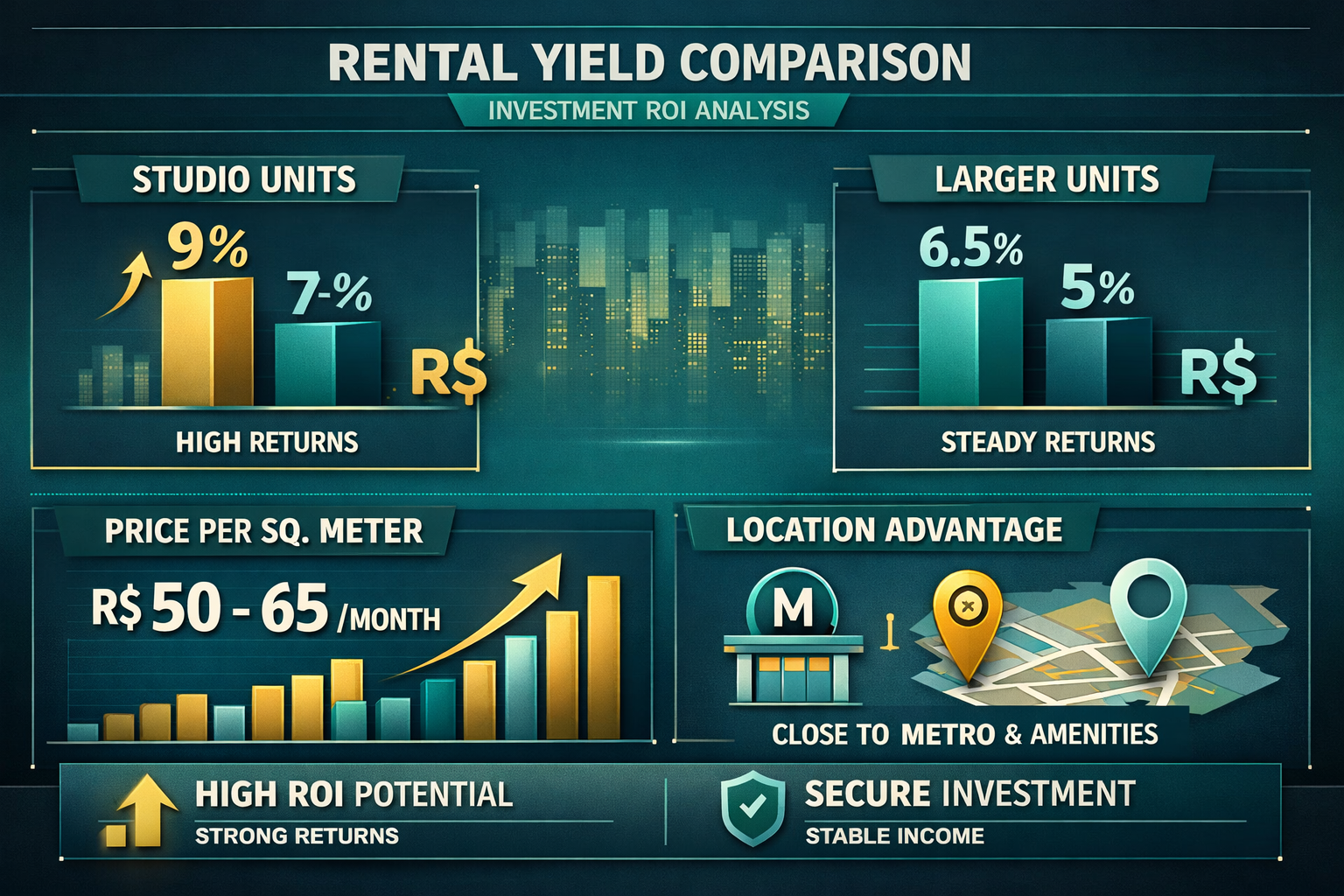
Brazil’s residential real estate market is experiencing a dramatic transformation in 2026, with compact living spaces capturing unprecedented investor attention. The Small Apartment Boom in Brazil 2026: Why Studios and 1-Bedroom Units Are Outperforming Larger Properties with 9% Annual Growth represents more than a temporary trend—it signals a fundamental restructuring of how Brazilians live, invest, and build wealth through property. With high Selic interest rates constraining buyer pools and rental yields on studios reaching 7-9% compared to just 5-6.5% for larger units, developers and investors are rapidly pivoting toward the affordable segment that’s reshaping urban landscapes from São Paulo to Florianópolis. 🏢

This shift toward micro-apartments and compact units isn’t happening in isolation. Brazil faces a structural housing deficit of approximately 230,000 units in São Paulo alone—part of a staggering 6.2 million unit shortfall nationally [4]. Young professionals, students, and urban workers are driving demand for economical, well-located housing that prioritizes commuting convenience over square footage. For developers and investors seeking maximum returns in 2026’s challenging credit environment, understanding the dynamics behind this small apartment boom has become essential.
Key Takeaways
- Studios and 1-bedroom units deliver 7-9% gross rental yields compared to 5-6.5% for larger properties, with studios commanding R$50-65 per square meter monthly [1]
- Supply of micro-apartments under 30 m² multiplied by 35 between 2016 and 2022 in São Paulo, demonstrating unprecedented market transformation [4]
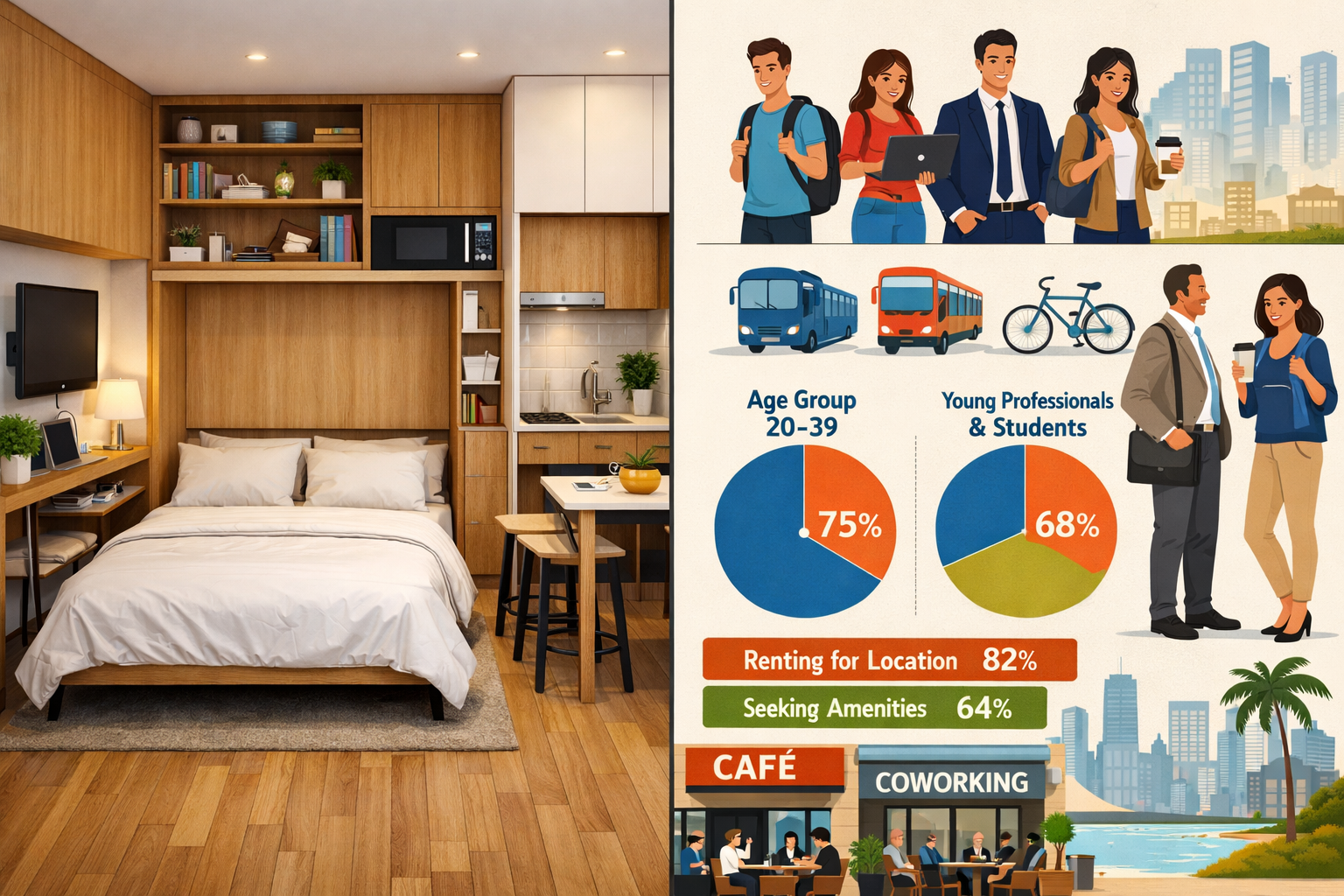
- Young professionals aged 20-39 are the primary demographic driving demand for compact, well-located units near metro stations and employment centers [4]
- Small apartments command the highest price per square meter because land and location premiums are distributed across fewer square meters [6]
- Brazil’s residential market is projected to grow from USD 63.2 billion in 2025 to USD 102.6 billion by 2034, with compact units leading appreciation [3]
Understanding the Small Apartment Boom in Brazil 2026: Market Fundamentals Driving 9% Growth
The Small Apartment Boom in Brazil 2026 is rooted in powerful economic and demographic forces that are reshaping Brazilian cities. Unlike previous real estate cycles driven by broad market expansion, 2026’s growth is characterized as moderate and highly localized, with appreciation concentrated in segments accessible to international capital and domestic first-time buyers [2].
The Rental Yield Advantage
Studios and one-bedroom apartments are delivering exceptional returns that larger properties simply cannot match. Current market data shows studios generating 7-9% gross rental yields while two and three-bedroom units languish at 5-6.5% [1]. This performance gap stems from several factors:
- Higher price per square meter efficiency: Small apartments maximize the value of expensive urban land
- Lower absolute purchase prices: Entry points of R$385,000-R$550,000 attract broader buyer pools [6]
- Stronger tenant demand: Studios near metro stations are the top in-demand property type for renters in 2026 [1]
- Reduced vacancy periods: Compact units rent faster due to larger tenant pools
The rental rate structure favors compact units significantly. Studios command approximately R$50 to R$65 per square meter monthly (roughly USD 8-11 or EUR 7-10) [1], meaning a 30 m² studio generates R$1,500-R$1,950 monthly—often matching or exceeding the absolute rental income of a 60 m² two-bedroom unit that costs twice as much to purchase.
The Housing Deficit Crisis
Brazil’s massive housing shortage is accelerating acceptance of compact living formats. São Paulo alone faces a structural deficit of approximately 230,000 units, while the national shortage exceeds 6.2 million homes [4]. This crisis has made micro-apartments not just acceptable but necessary to increase accessible housing supply.
Between 2016 and 2022, the supply of micro-apartments under 30 m² in São Paulo multiplied by 35, demonstrating the dramatic scale of market transformation [4]. This explosive growth reflects both developer response to demand and regulatory evolution that increasingly permits compact unit construction in urban centers.
For investors exploring opportunities across Brazil’s diverse markets, understanding best places to invest in Brazil property becomes crucial when evaluating which cities offer the strongest fundamentals for small apartment investments.
Why Studios and 1-Bedroom Units Are Outperforming Larger Properties: Demographics and Lifestyle Shifts
The outperformance of studios and 1-bedroom units in 2026 is directly tied to profound demographic changes sweeping through Brazilian cities. Understanding who is renting and buying these compact spaces reveals why this trend has staying power beyond short-term market cycles.
The Young Professional and Student Demographic
Young professionals and students aged 20-39 represent the primary demographic driving micro-apartment demand [4]. This cohort prioritizes:
- Location over space: Proximity to employment centers, universities, and urban amenities
- Affordability: Lower absolute costs that fit entry-level salaries and student budgets
- Flexibility: Shorter lease commitments and easier relocation for career opportunities
- Urban lifestyle: Access to restaurants, entertainment, and cultural venues within walking distance
This demographic shift is particularly pronounced in major employment hubs. Studios and kitnets located near metro stations and employment centers are consistently the top in-demand property type for renters in 2026 [1], reflecting tenant preferences that value commuting convenience over additional bedrooms.
The Economics of Space
Large three-plus bedroom apartments in non-premium locations are significantly underperforming because purchase prices outpace rental demand from a narrower tenant pool [1]. The mathematics are straightforward:
| Property Type | Typical Size | Purchase Price Range | Monthly Rent | Gross Yield |
|---|---|---|---|---|
| Studio | 25-35 m² | R$385,000-R$550,000 | R$1,500-R$2,275 | 7-9% |
| 1-Bedroom | 40-50 m² | R$550,000-R$750,000 | R$2,000-R$3,250 | 6-7.5% |
| 2-Bedroom | 60-75 m² | R$750,000-R$950,000 | R$3,000-R$4,875 | 5.5-6.5% |
| 3-Bedroom | 85-100 m² | R$950,000-R$1,200,000 | R$4,250-R$6,500 | 5-6% |
Small apartments command the highest price per square meter in Brazilian cities because land and location premiums are distributed across fewer square meters [6]. While this might seem counterintuitive, it creates a powerful investment advantage: the absolute purchase price remains accessible while the rental income per invested Real maximizes returns.
Short-Term Rental Platform Impact
Short-term rental platforms like Airbnb are the single most powerful driver of foreign investment in Brazilian residential property [2]. Studios and one-bedroom units are particularly well-suited for this market because:
- Lower furnishing costs: Equipping a studio costs 40-60% less than furnishing larger units
- Higher occupancy rates: Business travelers and solo tourists prefer compact, well-located units
- Premium nightly rates: Studios in prime locations command R$200-R$350 per night
- Simplified management: Smaller spaces require less cleaning time and maintenance
However, investors should note that regulatory challenges for short-term rentals are anticipated in 2026, with major cities like Rio de Janeiro and São Paulo expected to introduce stricter local regulations regarding zoning, taxation, and registration [2]. This evolving regulatory landscape makes traditional long-term rental yields increasingly important for investment calculations.
Developers in cities like Florianópolis are capitalizing on these trends, as evidenced by the advantages of investing in studios in Florianópolis from an incorporation perspective.
Developer Strategies for Maximizing ROI in Brazil’s Small Apartment Market
For developers and investors seeking to capitalize on the Small Apartment Boom in Brazil 2026, specific strategies are proving most effective in maximizing returns while managing risk in a market characterized by high interest rates and localized growth patterns.
Location Selection: The Metro Station Premium
The single most important factor determining small apartment success is proximity to metro stations and employment centers [1]. Properties within 500 meters of rapid transit stations consistently achieve:
- 15-25% higher rental rates compared to similar units farther from transit
- 30-40% shorter vacancy periods between tenants
- Higher appreciation rates as urban density increases around transit nodes
Developers should prioritize sites in neighborhoods undergoing infrastructure improvements, particularly new metro line extensions or bus rapid transit corridors. The growth of regions like Ingleses in Florianópolis demonstrates how infrastructure development drives property appreciation.
Optimal Unit Mix and Sizing
Market data from 2026 reveals optimal specifications for small apartment developments:
Studio Apartments (25-32 m²)
- Most efficient size for maximizing rental yield
- Target monthly rent: R$1,500-R$2,000 in secondary markets, R$2,000-R$2,500 in prime locations
- Ideal for student housing and young professionals
- Lowest construction cost per unit
One-Bedroom Units (35-45 m²)
- Broader tenant appeal including young couples
- Target monthly rent: R$2,000-R$2,800 in secondary markets, R$2,800-R$3,500 in prime locations
- Better long-term tenant retention (12-18 month leases versus 6-12 months for studios)
- Slightly lower yields but reduced turnover costs
Design Features That Command Premium Rents:
- ✅ Integrated kitchen and living areas with efficient layouts
- ✅ Built-in storage solutions and Murphy beds
- ✅ High-speed internet infrastructure
- ✅ Shared amenities (coworking spaces, fitness centers, rooftop terraces)
- ✅ Smart home technology and keyless entry systems
Pre-Construction Sales and Capital Efficiency
The appreciation potential for buyers purchasing off-plan (na planta) can significantly enhance project economics valorizacao-para-quem-compra-na-planta. Small apartments offer particular advantages:
- Lower absolute prices make pre-construction payment plans more accessible to first-time buyers
- Faster construction timelines for smaller unit buildings reduce carrying costs
- Higher sales velocity during construction phase due to broader buyer pool
Current market conditions show housing prices in Brazil typically close about 6% below listing prices, with 80% of residential properties priced between R$385,000 and R$1,050,000 [6]. This negotiation margin should be factored into pricing strategies, with studios positioned at the lower end of this range to maximize absorption rates.
Navigating the 2026 Regulatory Environment
Developers must carefully navigate evolving regulations affecting small apartment developments:
Short-Term Rental Regulations: Major cities are implementing stricter rules for Airbnb properties in 2026 [2], including:
- Registration requirements with municipal authorities
- Zoning restrictions limiting short-term rentals in residential buildings
- Additional taxation on short-term rental income
- Condominium approval requirements
Building Code Considerations:
- Minimum unit size requirements vary by municipality (typically 25-28 m² for studios)
- Parking space ratios may be reduced for transit-oriented developments
- Accessibility requirements for a percentage of units
- Energy efficiency certifications increasingly required for financing
Developers should engage with local planning authorities early in the project conception phase to ensure compliance and potentially secure incentives for affordable housing components.
Financial Structuring in a High-Interest Environment
Brazil’s elevated Selic rates in 2026 are constraining buyer pools but also creating opportunities for developers who structure projects intelligently:
Buyer Financing Solutions:
- Partnership with banks offering subsidized mortgage programs (Minha Casa Minha Vida for qualifying projects)
- In-house financing with extended payment terms
- Rent-to-own structures for qualified tenants
- Cryptocurrency payment options for international buyers criptomoedas-e-incorporacao-imobiliaria
Developer Capital Management:
- Phased construction allowing earlier cash flow from completed units
- Pre-sales targets of 30-40% before breaking ground
- Joint ventures with institutional investors seeking stable yields
- Land banking in emerging transit corridors for future phases
The broader Brazil residential real estate market is projected to grow from USD 63.2 billion in 2025 to USD 102.6 billion by 2034, exhibiting a compound annual growth rate (CAGR) of 5.52% [3]. Small apartments are positioned to capture disproportionate share of this growth due to their accessibility and yield characteristics.

Regional Opportunities: Where Small Apartments Are Thriving
While the Small Apartment Boom in Brazil 2026 is a national phenomenon, performance varies significantly by region. Understanding these geographic nuances is essential for optimizing investment returns.
São Paulo: The Micro-Apartment Capital
São Paulo leads Brazil’s compact living revolution, with micro-apartment supply multiplying by 35 times between 2016 and 2022 [4]. Key neighborhoods showing strongest performance:
- Vila Madalena: Creative professionals, proximity to startups and agencies
- Pinheiros: Metro access, university students, young professionals
- República/Centro: Urban revitalization, historical buildings converted to studios
- Brooklin: Corporate employment centers, international companies
São Paulo’s massive housing deficit of 230,000 units ensures sustained demand for affordable, well-located compact housing [4].
Rio de Janeiro: Tourism-Driven Demand
Rio’s small apartment market is heavily influenced by short-term rental demand, though regulatory changes in 2026 are reshaping investment strategies [2]. Prime areas include:
- Copacabana: Beach proximity, international tourists
- Ipanema: Premium locations, higher-end studio market
- Botafogo: Metro access, local professionals, mixed-use neighborhoods
- Centro: Business district, weekday occupancy focus
Florianópolis: Emerging Market Leader
Florianópolis is experiencing exceptional growth in small apartment development, driven by quality of life factors and infrastructure improvements. The real estate market performance in Florianópolis is transforming the city’s residential landscape.
Advantages of Florianópolis for Small Apartment Investment:
- Lower absolute property prices compared to São Paulo and Rio
- Strong domestic tourism supporting short-term rental demand
- Growing tech sector attracting young professional demographic
- Infrastructure development in neighborhoods like Ingleses
- Less regulatory pressure on short-term rentals compared to major metros
Projects like Tramonto demonstrate how developers are meeting demand for compact, well-designed units in emerging markets.
Secondary Cities: Untapped Potential
University cities and regional economic hubs offer compelling opportunities:
- Belo Horizonte: University students, lower entry prices
- Curitiba: Planned urban development, strong public transit
- Porto Alegre: Southern Brazil’s economic center
- Brasília: Government workers, consistent rental demand
These markets typically offer 2-3 percentage points higher gross yields than São Paulo and Rio due to lower purchase prices while maintaining strong rental demand from local employment and education centers.
Investment Risks and Mitigation Strategies
Despite strong fundamentals driving the Small Apartment Boom in Brazil 2026, investors must carefully evaluate and mitigate several key risks:
Regulatory Risk
Short-term rental restrictions represent the most immediate regulatory challenge [2]. Mitigation strategies include:
- Designing projects that perform well as traditional long-term rentals
- Diversifying portfolio across multiple cities with different regulatory environments
- Engaging with condominium associations early regarding rental policies
- Building compliance costs (registration, taxation) into financial models
Market Saturation Risk
As developers rush to capitalize on small apartment demand, certain neighborhoods risk oversupply. Warning signs include:
- Multiple competing projects launching simultaneously within 500m radius
- Declining pre-sales velocity compared to previous quarters
- Increasing vacancy rates in existing small apartment buildings
- Rental rate compression despite strong broader market fundamentals
Mitigation: Conduct thorough competitive analysis before site acquisition, focusing on neighborhoods with strong employment growth and limited pipeline supply.
Interest Rate Risk
High Selic rates are constraining buyer financing availability. If rates remain elevated or increase further:
- Buyer pool shrinks, extending sales timelines
- Rental yields become less attractive relative to fixed-income alternatives
- Construction financing costs increase, pressuring project economics
Mitigation: Structure flexible payment terms, target cash buyers and international investors, maintain conservative leverage ratios.
Construction Cost Inflation
Material and labor costs continue rising in Brazil’s construction sector. Small apartment projects are somewhat insulated due to:
- Simpler finishes and smaller absolute material quantities per unit
- Faster construction timelines reducing exposure to cost escalation
- Higher unit density spreading fixed costs across more sellable units
Mitigation: Lock in material pricing through forward contracts, negotiate fixed-price construction agreements with reputable contractors, maintain 10-15% contingency reserves.
Conclusion: Capitalizing on Brazil’s Small Apartment Boom in 2026
The Small Apartment Boom in Brazil 2026: Why Studios and 1-Bedroom Units Are Outperforming Larger Properties with 9% Annual Growth represents a fundamental restructuring of Brazil’s residential real estate market. With studios delivering 7-9% gross rental yields compared to 5-6.5% for larger units, compact apartments are capturing disproportionate investor interest and capital appreciation [1].
This trend is driven by powerful, sustainable forces: a 6.2 million unit national housing deficit, demographic shifts toward urban young professionals aged 20-39, and the economic efficiency of compact living in expensive urban locations [4]. The supply of micro-apartments multiplied by 35 times in São Paulo between 2016 and 2022, demonstrating that this boom is well-established and accelerating [4].
For developers and investors, the path to maximizing returns is clear:
Immediate Action Steps:
- Prioritize location over unit size – Focus on sites within 500 meters of metro stations and employment centers [1]
- Target optimal unit sizing – Studios of 25-32 m² and one-bedrooms of 35-45 m² deliver best yield-to-cost ratios
- Design for dual-use flexibility – Create units that perform well as both traditional rentals and short-term accommodations given regulatory uncertainty [2]
- Structure accessible financing – Partner with lenders offering subsidized programs and develop in-house payment plans to expand buyer pools
- Diversify geographically – Balance exposure across São Paulo, Rio, Florianópolis, and emerging secondary markets
- Build in amenities that command premium rents – Coworking spaces, fitness centers, and smart home technology differentiate projects
The broader Brazil residential real estate market is projected to grow from USD 63.2 billion in 2025 to USD 102.6 billion by 2034, with a CAGR of 5.52% [3]. Small apartments are positioned to capture outsized share of this growth due to their accessibility, superior yields, and alignment with demographic trends reshaping Brazilian cities.
While risks exist—particularly around short-term rental regulations and potential market saturation in prime neighborhoods—the fundamental drivers of small apartment outperformance remain robust. Housing deficits aren’t disappearing, young professionals continue migrating to urban centers, and the economic advantages of compact living in expensive locations are structural rather than cyclical.
For developers seeking to understand how real estate development can maximize gains, the small apartment segment offers the most compelling risk-adjusted returns in Brazil’s 2026 market. The boom is real, the fundamentals are sound, and the opportunity window remains open for those who act strategically. 🚀
References
[1] Brazil Rental Yields – https://thelatinvestor.com/blogs/news/brazil-rental-yields
[2] Brazil Property Market Predictions For 2026 – https://esalesinternational.com/2025/11/20/brazil-property-market-predictions-for-2026/
[3] Brazil Residential Real Estate Market – https://www.imarcgroup.com/brazil-residential-real-estate-market
[4] Micro Apartments Brazil Solution Small Budgets – https://www.jarniascyril.com/international-real-estate/investing-brazil-real-estate/micro-apartments-brazil-solution-small-budgets/
[6] Brazil Housing Prices – https://thelatinvestor.com/blogs/news/brazil-housing-prices