

Brazil’s housing landscape is experiencing a seismic shift in 2026. With over 12 million households facing structural challenges and the government committing R$40 billion (approximately $7.4 billion USD) to address urban housing deficiencies, the Reforma Casa Brasil 2026: Unlocking $7.4B for Urban Housing Upgrades and Developer Retrofit Opportunities program represents the country’s most ambitious residential retrofit initiative to date. For developers, construction firms, and real estate professionals, this isn’t just another government program—it’s a blueprint for capturing market share in Brazil’s rapidly expanding renovation economy.
Launched in November 2025 and now fully operational, this third major housing initiative combines accessible financing with strategic market opportunities. As the Minha Casa Minha Vida (MCMV) program expands toward delivering 1 million new units, the retrofit market presents parallel growth channels for developers seeking diversified revenue streams and supply chain optimization.

Key Takeaways
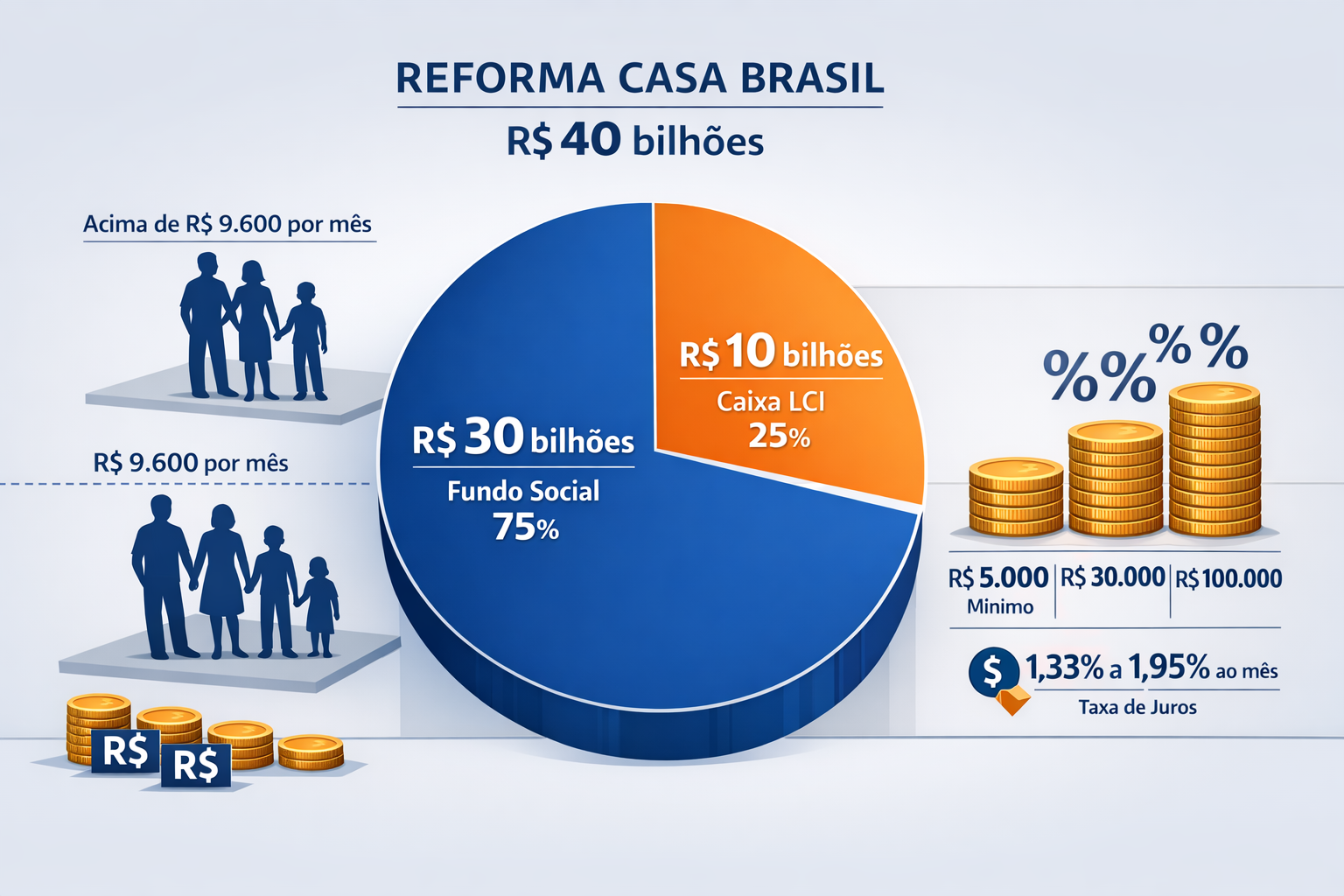
- 💰 R$40 billion in total credit available through two funding streams: R$30 billion for families earning up to R$9,600 monthly and R$10 billion for higher-income households
- 🏘️ Over 12 million households eligible for financing, far exceeding initial government projections of 1.5 million contracts
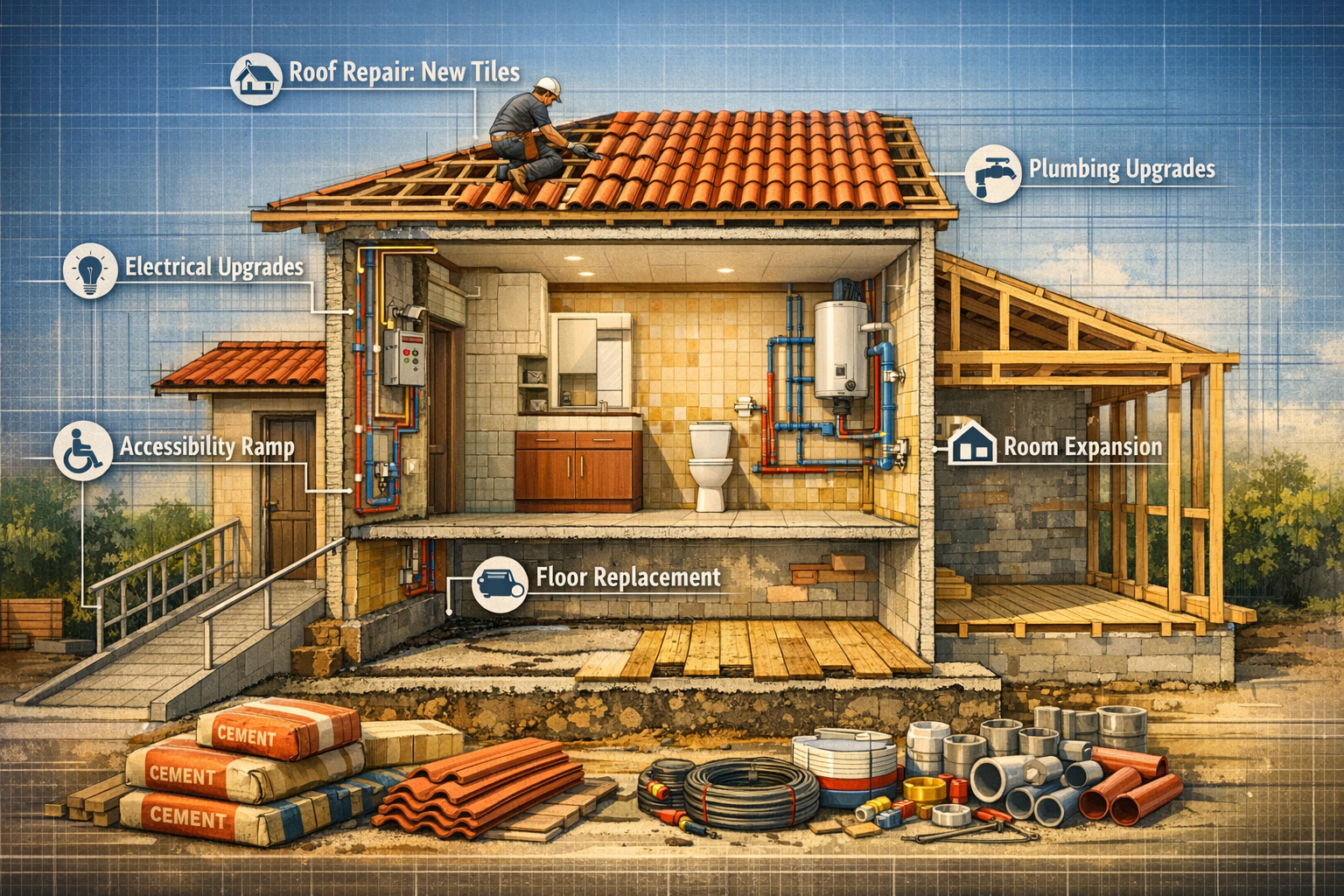
- 🔧 Seven approved renovation categories including structural repairs, electrical/hydraulic upgrades, accessibility improvements, and room additions
- 📊 Interest rates from 1.33% to 1.95% monthly for lower-income families, with financing starting at R$5,000 minimum
- 🏗️ Developer opportunities in supply chain integration, material procurement, labor coordination, and retrofit project management for high-volume residential upgrades
Understanding the Reforma Casa Brasil 2026 Financial Structure
The financial architecture of Reforma Casa Brasil 2026: Unlocking $7.4B for Urban Housing Upgrades and Developer Retrofit Opportunities divides resources strategically across Brazil’s income spectrum, creating distinct market segments for developers to target.
Two-Tier Funding Model
The program operates through two separate funding mechanisms, each serving different household income brackets and offering unique opportunities for construction professionals.[1]
Social Fund Allocation (R$30 Billion)
The larger portion—R$30 billion—originates from Brazil’s Social Fund and exclusively serves families earning up to R$9,600 monthly. This segment represents the program’s core social mission while simultaneously creating the largest volume opportunity for developers specializing in mid-tier residential retrofits.[1]
Caixa LCI Allocation (R$10 Billion)
The remaining R$10 billion comes from Caixa Econômica Federal’s Letras de Crédito Imobiliário (LCI), targeting middle-class homeowners with higher incomes. These borrowers face stricter requirements, including property collateral and loan-to-value caps at 50% of appraised property value.[1]
Interest Rates and Payment Terms
For families in the lower-income bracket (up to R$9,600 monthly), interest rates range from 1.33% to 1.95% monthly, varying based on total loan amount.[1] This translates to annual rates significantly below market alternatives, making renovations financially accessible to millions of households who previously deferred maintenance.
The program implements crucial affordability safeguards:
- ✅ Minimum financing: R$5,000
- ✅ Maximum monthly payment: 25% of household income
- ✅ Flexible loan terms: Adjusted based on borrower capacity
- ✅ Digital application process: Fully online through Caixa’s platform[3][7]
For developers, these favorable terms translate into sustained demand over multi-year timeframes, enabling strategic planning for material procurement and labor allocation.
Market Size and Growth Projections
Initial government announcements in October 2025 projected 1.5 million contracts. However, recent data indicates the program can benefit more than 12 million households across Brazil—an eight-fold increase that fundamentally alters market opportunity calculations.[5]
This expansion reflects Brazil’s substantial housing maintenance deficit. Millions of properties require structural interventions that owners have postponed due to financing constraints. The Brazilian real estate market now faces unprecedented renovation demand that will reshape construction sector dynamics through 2028 and beyond.
Approved Renovation Categories and Developer Opportunities
Understanding which improvements qualify for financing is essential for developers positioning themselves to capture Reforma Casa Brasil 2026: Unlocking $7.4B for Urban Housing Upgrades and Developer Retrofit Opportunities market share.
Seven Core Renovation Categories
The program funds seven specific improvement types, each representing distinct supply chain requirements and profit margins:[1]
| Renovation Category | Description | Developer Opportunity |
|---|---|---|
| Roofing Repairs | Damaged or compromised roof structures | High-volume tile/material procurement, waterproofing systems |
| Flooring Replacement | Compromised or unsafe floor surfaces | Ceramic, porcelain, laminate supply chains |
| Electrical Upgrades | Faulty wiring, inadequate capacity, safety hazards | Certified electrician networks, modern component sourcing |
| Hydraulic Installations | Plumbing repairs, water system improvements | PVC/copper piping, fixture upgrades, leak remediation |
| Accessibility Modifications | Ramps, handrails, bathroom adaptations | Specialized accessibility product lines |
| Room Additions | Expanding living space with new rooms | Full construction materials, structural engineering |
| Bathroom Additions | Adding new bathroom facilities | Plumbing fixtures, tile, ventilation systems |
Use of Funds Flexibility
Borrowers can allocate financing across three primary expense categories:[1]
- 🛠️ Construction materials: Cement, tiles, lumber, fixtures, electrical components
- 👷 Labor costs: Skilled tradespeople, general contractors, specialized technicians
- 📋 Related expenses: Permits, inspections, architectural consultations, project management
This flexibility creates opportunities for developers to offer turnkey renovation packages that bundle materials, labor, and project coordination—capturing larger margins than material sales alone.
Strategic Positioning for High-Volume Projects
Developers can maximize returns by focusing on standardized renovation packages that leverage economies of scale. For example:
“Essential Safety Package” (R$8,000-R$12,000)
- Electrical system upgrade
- Hydraulic repairs
- Basic roofing maintenance
- Standardized material selections
- Pre-negotiated labor rates
“Expansion Package” (R$18,000-R$25,000)
- Room or bathroom addition
- Complete electrical/plumbing integration
- Flooring installation
- Architectural consultation included
- Project management coordination
By creating pre-defined packages aligned with common financing amounts, developers reduce customization costs while accelerating project timelines—essential advantages when targeting the program’s 12 million potential households.
Developer Strategies for Reforma Casa Brasil 2026 Market Capture
Successfully capitalizing on Reforma Casa Brasil 2026: Unlocking $7.4B for Urban Housing Upgrades and Developer Retrofit Opportunities requires strategic positioning across multiple operational dimensions.
Supply Chain Integration and Material Procurement
The program’s scale—potentially 12 million households—creates unprecedented demand for construction materials. Developers who establish preferential supplier relationships gain decisive competitive advantages.
Volume Procurement Strategies:
- 📦 Bulk purchasing agreements: Negotiate fixed pricing for tiles, cement, electrical components with 6-12 month delivery schedules
- 🚚 Logistics optimization: Establish regional material distribution centers near high-density eligible neighborhoods
- 🤝 Manufacturer partnerships: Direct relationships with producers eliminate intermediary markups
- 📊 Inventory management systems: Real-time tracking prevents project delays and reduces carrying costs
For developers operating in growing markets like Florianópolis, integrating Reforma Casa Brasil projects with new construction developments creates dual revenue streams while optimizing material ordering and labor scheduling.
Labor Network Development
Skilled tradespeople represent the critical constraint in high-volume retrofit operations. Developers must build reliable labor networks capable of executing standardized renovations at consistent quality levels.
Workforce Strategies:
- 👥 Certified contractor pools: Pre-vet electricians, plumbers, masons for quality and reliability
- 📚 Training programs: Standardize installation techniques for common renovation packages
- 💼 Subcontractor agreements: Lock in labor rates and availability commitments
- 📱 Digital coordination platforms: Project management software for scheduling and quality control
Geographic Market Selection
Not all regions offer equal opportunity. Developers should prioritize markets with:
- ✅ High concentrations of households in the R$2,400-R$9,600 monthly income range
- ✅ Aging housing stock (15+ years) with visible maintenance deficits
- ✅ Strong local economic growth supporting sustained employment
- ✅ Established Caixa Econômica Federal branch presence for application support
The real estate market dynamics in regions experiencing population growth and infrastructure investment create ideal conditions for retrofit project concentration.
Digital Marketing and Customer Acquisition
Most eligible homeowners lack awareness of program details or application processes. Developers who educate and facilitate access capture disproportionate market share.
Customer Acquisition Tactics:
- 🌐 Educational content marketing: Blog posts, videos, and guides explaining program benefits and application steps
- 📱 Social media campaigns: Targeted advertising to homeowners in eligible income brackets
- 🏘️ Community workshops: Free information sessions in partnership with local associations
- 🤝 Caixa partnership programs: Coordinate with bank branches to receive qualified referrals
- 📞 Application assistance services: Help homeowners navigate digital application process
Developers who position themselves as trusted advisors rather than mere contractors build sustainable competitive moats in local markets.
Integration with MCMV Expansion
As the Minha Casa Minha Vida program targets 1 million new housing units, developers can create synergistic operations that leverage shared resources:
- 🏗️ Dual project pipelines: Balance new construction with retrofit projects to smooth revenue and labor utilization
- 📦 Shared material procurement: Combine ordering across new builds and renovations for volume discounts
- 👷 Flexible labor allocation: Shift crews between project types based on seasonal demand patterns
- 💰 Diversified risk profile: Reduce dependency on single program or market segment
This integrated approach particularly benefits developers with existing real estate development portfolios who can add retrofit services without building entirely new operational capabilities.
Financial Structuring and Project Financing
While homeowners secure financing through Caixa, developers need working capital to:
- Purchase materials before project completion
- Cover labor costs during construction
- Manage cash flow across multiple simultaneous projects
- Finance inventory and equipment investments
Developer Financing Options:
- 🏦 Construction lines of credit: Revolving facilities sized to average project pipeline
- 🤝 Supplier credit terms: Extended payment periods from material vendors
- 💳 Receivables financing: Accelerate cash collection from completed projects
- 📊 Equity partnerships: Joint ventures for larger-scale operations
Developers with strong financial structures can scale operations rapidly to capture market share during the program’s peak demand periods (2026-2028).
Application Process and Timeline Considerations
Understanding the borrower application process helps developers position services effectively and anticipate project pipeline development.
Digital Application Through Caixa
Eligible homeowners can simulate and request loans directly through Caixa Econômica Federal’s website—a process available since the program’s November 2025 launch.[7] The digital-first approach accelerates approvals but creates information gaps that developers can fill through advisory services.
Application Steps:
- 🖥️ Online simulation: Calculate eligible loan amount based on income and property value
- 📄 Documentation submission: Upload income verification, property documents, renovation plans
- 🏠 Property appraisal: Caixa-approved assessors evaluate property value (for higher-income applicants)
- ✅ Credit approval: Typically 15-30 days for complete applications
- 💰 Fund disbursement: Staged payments tied to renovation progress milestones
Timeline Optimization for Developers
Developers who streamline the application-to-construction pipeline gain competitive advantages:
- 📋 Pre-application consulting: Help homeowners gather required documentation before formal submission
- 🏗️ Renovation planning services: Provide detailed project scopes that satisfy Caixa requirements
- ⚡ Fast-start capabilities: Begin work quickly after approval to capture motivated customers
- 📊 Progress documentation: Systematic photo and milestone documentation for disbursement approvals
Average project timelines vary by renovation scope:
- Minor repairs (electrical, plumbing, roofing): 2-4 weeks
- Moderate upgrades (flooring, accessibility, multiple systems): 4-8 weeks
- Major expansions (room additions, bathrooms): 8-16 weeks
Developers should maintain rolling project pipelines with staggered start dates to optimize labor utilization and cash flow.
Regional Market Opportunities and Growth Corridors
While Reforma Casa Brasil 2026: Unlocking $7.4B for Urban Housing Upgrades and Developer Retrofit Opportunities operates nationwide, certain regions offer superior risk-adjusted returns for developers.
High-Opportunity Market Characteristics
Target regions should demonstrate:
- 📈 Population growth: Expanding employment and income levels
- 🏘️ Aging housing stock: Properties built 1990-2010 requiring systematic upgrades
- 💼 Economic diversification: Reduced dependency on single industries
- 🏗️ Infrastructure investment: Government projects improving regional connectivity
- 🏦 Financial services access: Strong Caixa branch networks
Southern Brazil Focus: Santa Catarina Case Study
Regions like Greater Florianópolis exemplify ideal market conditions:
- Strong tech sector growth driving middle-class expansion
- Established residential neighborhoods with 20-30 year old housing stock
- High homeownership rates among eligible income brackets
- Robust construction sector with skilled labor availability
- Growing demand for studio apartments and compact housing creating retrofit opportunities
Developers operating in these growth corridors can combine new construction with retrofit services, leveraging shared operational infrastructure for maximum efficiency.
Urban vs. Suburban Targeting
Urban core opportunities:
- Higher property values supporting larger loan amounts
- Concentrated eligible households reducing travel costs
- Established contractor networks and material suppliers
- Greater awareness of government programs
Suburban/peripheral opportunities:
- Lower competition from established contractors
- Larger properties enabling more extensive renovations
- Higher proportion of households in target income ranges
- Greater need for structural repairs and upgrades
Balanced geographic strategies capture advantages from both segments while diversifying market risk.
Risk Management and Compliance Considerations
Operating at scale within Reforma Casa Brasil 2026: Unlocking $7.4B for Urban Housing Upgrades and Developer Retrofit Opportunities requires robust risk management frameworks.
Regulatory Compliance
Developers must ensure:
- ✅ Licensed contractors: All tradespeople hold current professional certifications
- ✅ Building permits: Proper municipal approvals for structural modifications
- ✅ Safety standards: Compliance with Brazilian construction codes (NBR standards)
- ✅ Environmental regulations: Proper disposal of construction waste and hazardous materials
- ✅ Labor law adherence: Formal employment contracts and social security contributions
Quality Control Systems
Reputation damage from poor workmanship spreads rapidly in community networks. Implement:
- 📋 Standardized inspection protocols: Multi-stage quality checks during construction
- 📸 Photo documentation: Before, during, and after images for every project
- ⭐ Customer satisfaction surveys: Systematic feedback collection and response
- 🛠️ Warranty programs: 6-12 month guarantees on workmanship and materials
- 🏆 Certification programs: Third-party quality verification for marketing differentiation
Financial Risk Mitigation
Protect against common financial hazards:
- 💰 Deposit requirements: Collect 10-20% upfront to cover initial material costs
- 📊 Staged payments: Tie disbursements to completion milestones, not calendar dates
- 🏦 Separate project accounts: Isolate funds to prevent cross-project contamination
- 📉 Material price hedging: Lock in pricing for 3-6 month periods during volatile markets
- 🤝 Payment guarantees: Secure commitments from Caixa for approved projects
Scaling Challenges and Solutions
Rapid growth creates operational stress. Address through:
Challenge: Maintaining quality across multiple simultaneous projects Solution: Standardized checklists, dedicated quality inspectors, contractor performance scorecards
Challenge: Cash flow constraints during expansion Solution: Revolving credit facilities, strategic supplier partnerships, receivables financing
Challenge: Labor shortages in high-demand periods Solution: Multi-region contractor networks, training programs, competitive compensation packages
Challenge: Customer acquisition costs Solution: Referral programs, community partnerships, digital marketing strategies
Long-Term Market Evolution and Strategic Positioning
The Reforma Casa Brasil 2026: Unlocking $7.4B for Urban Housing Upgrades and Developer Retrofit Opportunities program represents the beginning of a multi-year renovation cycle that will reshape Brazil’s construction sector.
2026-2028 Market Trajectory
Phase 1 (2026): Initial adoption by early-aware homeowners, program awareness building, developer market entry
Phase 2 (2027): Peak demand as program awareness saturates target demographics, supply chain optimization, competitive consolidation
Phase 3 (2028): Mature market with established players, focus on efficiency and specialization, potential program extensions or modifications
Developers who establish market position in 2026 gain sustainable advantages through:
- Brand recognition and trust in local communities
- Optimized supply chains and contractor networks
- Refined operational processes reducing costs
- Customer databases for future renovation cycles
Beyond Reforma Casa Brasil
The program creates lasting infrastructure that extends beyond government financing:
- 🏗️ Renovation service sector: Permanent market for ongoing home improvement
- 📚 Skilled labor pools: Trained workforce available for private-pay projects
- 🤝 Supplier relationships: Established procurement channels for future projects
- 💼 Business capabilities: Operational systems applicable to diverse construction segments
Developers building sustainable businesses—not just capturing short-term subsidies—position for long-term profitability as Brazil’s housing stock requires continuous maintenance and modernization.
Integration with Broader Real Estate Strategies
For developers with diversified portfolios, Reforma Casa Brasil complements:
- New property development: Shared resources and market intelligence
- Property management services: Add renovation capabilities to existing service offerings
- Investment property strategies: Retrofit services enhance property values
- Commercial construction: Cross-sector operational capabilities
This integrated approach builds resilient businesses capable of adapting to changing market conditions and policy environments.
Conclusion: Capturing the $7.4B Renovation Opportunity
The Reforma Casa Brasil 2026: Unlocking $7.4B for Urban Housing Upgrades and Developer Retrofit Opportunities program represents Brazil’s most significant residential renovation initiative, with R$40 billion in financing supporting up to 12 million households. For developers, construction firms, and real estate professionals, this creates unprecedented market opportunities through 2028 and beyond.
Success requires strategic positioning across multiple dimensions:
✅ Supply chain optimization: Establish preferential material procurement relationships and regional distribution capabilities
✅ Labor network development: Build certified contractor pools capable of executing standardized renovations at scale
✅ Geographic market selection: Target regions with aging housing stock, growing middle-class populations, and strong economic fundamentals
✅ Customer acquisition systems: Educate eligible homeowners and facilitate application processes through digital marketing and community engagement
✅ Financial structuring: Secure working capital facilities supporting multi-project pipelines and rapid scaling
✅ Quality management: Implement systematic inspection protocols and warranty programs protecting reputation
✅ Integration strategies: Combine retrofit services with existing development operations for operational efficiency
The developers who move decisively in 2026—establishing market presence, optimizing operations, and building sustainable competitive advantages—will capture disproportionate value from this multi-year renovation cycle.
Next Steps for Developers
Immediate Actions (Next 30 Days):
- Analyze local market demographics to identify high-concentration eligible neighborhoods
- Contact material suppliers to negotiate volume pricing agreements
- Develop standardized renovation packages aligned with common financing amounts
- Create educational marketing content explaining program benefits to homeowners
- Establish relationships with Caixa branch managers for referral partnerships
Short-Term Initiatives (90 Days):
- Complete 5-10 pilot projects to refine operational processes
- Build certified contractor network with performance agreements
- Implement project management software for multi-project coordination
- Launch digital marketing campaigns targeting eligible homeowners
- Secure working capital facilities supporting expanded operations
Long-Term Positioning (6-12 Months):
- Scale to 20+ simultaneous projects with systematic quality control
- Expand geographic coverage to multiple high-opportunity markets
- Develop proprietary training programs for contractor standardization
- Build brand recognition as trusted renovation partner
- Integrate retrofit services with broader real estate development strategy
The Reforma Casa Brasil 2026 program unlocks $7.4 billion in urban housing upgrades while creating sustainable business opportunities for developers who execute strategically. The question isn’t whether this market will grow—it’s which developers will capture it.
For more insights on Brazilian real estate development opportunities, explore our latest market analysis and current projects.
References
[1] Lula Anuncia Reforma Casa Brasil 3a Iniciativa Do Mandato No Setor Habitacional Veja Detalhes – https://www.broadcast.com.br/ultimas-noticias/lula-anuncia-reforma-casa-brasil-3a-iniciativa-do-mandato-no-setor-habitacional-veja-detalhes/
[2] Watch – https://www.youtube.com/watch?v=yePOmStI3KE
[3] Watch – https://www.youtube.com/watch?v=G25mbNCkJUs
[4] Government Launches Casa Brasil Renovation With R$40 Billion Investment. More Than 1 Million Families Will Have Up To R$30 To Repair Homes. Ctl01 – https://en.clickpetroleoegas.com.br/Government-launches-Casa-Brasil-renovation-with-R$40-billion-investment.-More-than-1-million-families-will-have-up-to-R$30-to-repair-homes.-ctl01/
[5] Watch – https://www.youtube.com/watch?v=ja5g3JsXUAI
[6] New Government Program Offers Up To R$40 Billion In Credit For Renovations. Find Out If You Are Eligible. – https://en.clickpetroleoegas.com.br/New-government-program-offers-up-to-R$40-billion-in-credit-for-renovations.-Find-out-if-you-are-eligible./
[7] Watch – https://www.youtube.com/watch?v=F9JoUrWc-48&vl=en-US
[8] Government Announces 40 Billion Reais In Credit For Home Renovations See Who Can Benefit Sima00 – https://en.clickpetroleoegas.com.br/government-announces-40-billion-reais-in-credit-for-home-renovations-see-who-can-benefit-sima00/