
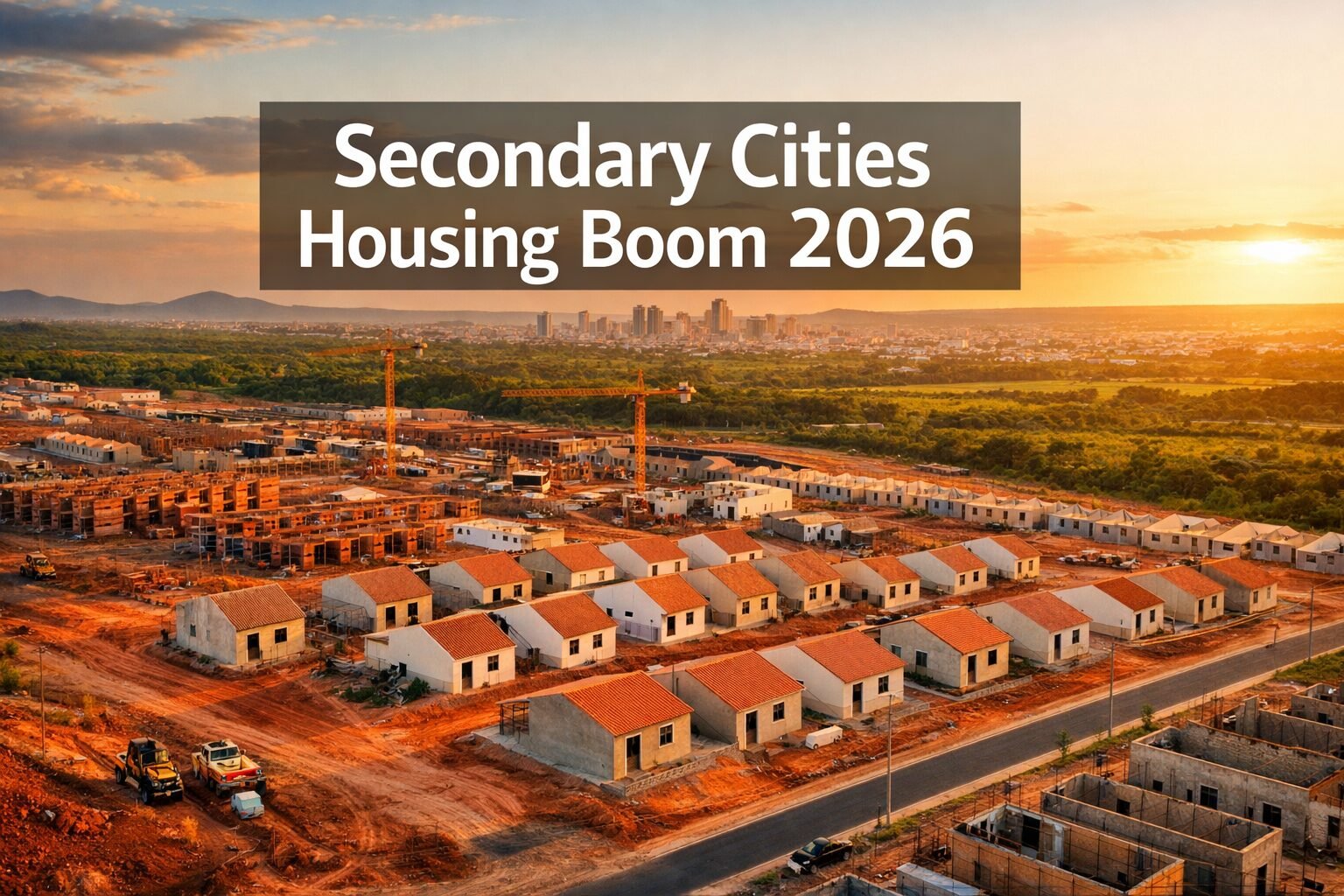
Brazil’s housing deficit sits at roughly 6 million units in 2026 — and the government is spending R$15 billion this year alone to close the gap [1][2]. That single budget line is quietly reshaping where the country’s most compelling real estate opportunities now exist: not in São Paulo’s saturated luxury corridors, but in secondary cities, Northeast interiors, and the fast-growing outskirts of the state’s metropolitan ring.
The Secondary Cities Housing Boom 2026: MCMV-Driven Development Plays in Northeast Interiors and São Paulo Outskirts is no longer a niche thesis. It is a structural, government-backed investment cycle generating 15–20% projected yields on multi-family projects, low entry costs, and rapid absorption rates driven by internal migration and demographic demand. For developers, investors, and urban planners, understanding this shift is no longer optional.
Key Takeaways 🏗️
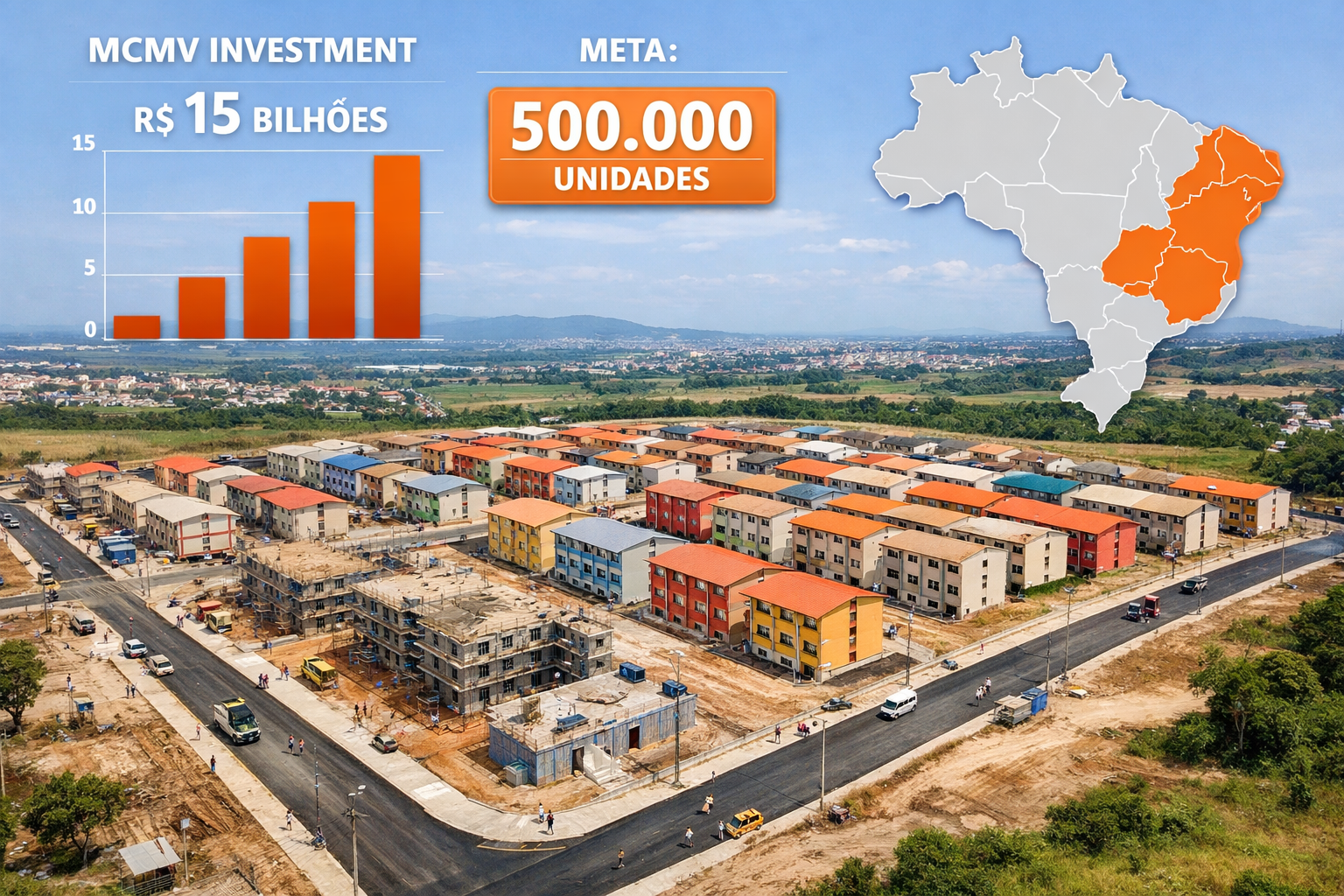
- R$15 billion in 2026 government funding targets 500,000 new MCMV units, with priority given to Northeast regions and São Paulo state outskirts [2]
- MCMV now accounts for ~50% of all new housing launches nationwide, making it the single most dominant force in Brazil’s construction sector [5]
- Secondary cities offer lower land acquisition costs, faster permitting cycles, and strong demand from urban overflow migrants
- Industrialized off-site construction is accelerating delivery timelines and reducing per-unit costs across interior corridors [1]
- Institutional investors — including international pension funds — are actively entering this segment, signaling confidence in secondary market valuations [3]
Understanding the MCMV Engine: Scale, Funding, and Secondary City Priority
The Minha Casa, Minha Vida (MCMV) program is not simply a welfare initiative — it is the largest single driver of Brazil’s construction economy in 2026. The numbers tell the story clearly:
| Metric | Figure |
|---|---|
| 2026 Government Allocation | R$15 billion |
| Units Targeted for 2026 | 500,000 |
| Units Delivered in 2026 (to date) | 100,000+ |
| Total Units Contracted Through 2025 | 2 million |
| Additional Units Targeted from 2026 | 1 million+ |
| Units Currently Under Construction | 1 million+ |
| MCMV Share of All New Launches | ~50% |
Sources: [2][5]
💡 Pull Quote: “MCMV’s share of all new housing launches has reached roughly 50% nationwide — no other program, developer, or market segment comes close to this level of concentrated activity.” [5]
What makes this cycle different from previous MCMV phases is the deliberate geographic targeting. Priority regions in 2026 explicitly include the Northeast interior — states like Ceará, Piauí, Maranhão, and Bahia’s inland municipalities — alongside the outer ring of São Paulo state, where land costs are a fraction of the capital’s prices but infrastructure investment is accelerating [2].
Why Secondary Cities Are the New Frontier
Several structural forces converge to make secondary cities the most attractive development plays in 2026:
- 🏘️ Urban overflow: São Paulo and Rio de Janeiro cores face saturation and affordability ceilings. Internal migrants are redirecting to cities with 200,000–800,000 residents where cost of living is manageable
- 📉 Lower land costs: Land acquisition in secondary Northeast cities can run 60–80% cheaper per square meter than comparable São Paulo suburban plots
- ⚡ Faster absorption: MCMV-targeted income brackets in secondary cities show strong demand with limited competing inventory
- 🏗️ Infrastructure tailwinds: Federal logistics investments in Northeast highways and energy grids are increasing the economic viability of interior corridors
- 👨👩👧 Young demographics: Northeast states have younger median populations, translating into sustained first-time buyer demand through the late 2020s
For investors exploring the best places to invest in Brazil property, this geographic rebalancing represents one of the clearest structural opportunities currently available in the market.
Investment Mechanics: Yields, Entry Costs, and the Secondary Cities Housing Boom 2026 Play
The Secondary Cities Housing Boom 2026: MCMV-Driven Development Plays in Northeast Interiors and São Paulo Outskirts is generating investor interest for a specific reason: the risk-adjusted return profile is unusually attractive compared to primary market alternatives.
The Yield Thesis
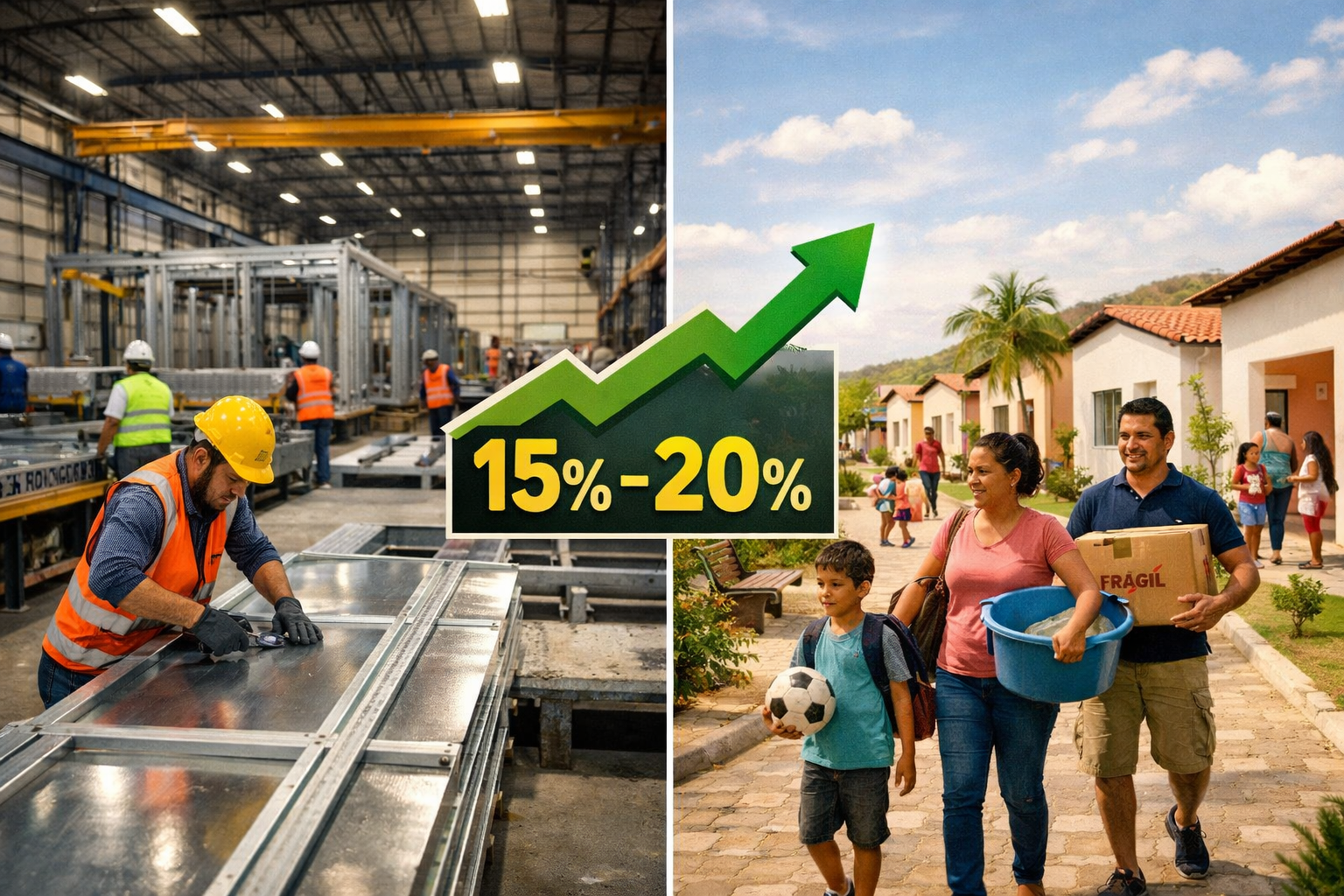
Multi-family affordable housing projects in secondary cities are generating projected yields in the 15–20% range when structured correctly. This compares favorably to:
- São Paulo luxury residential: 6–9% yield, high competition, elevated land costs
- Commercial real estate in primary markets: 8–11% yield, vacancy risk elevated post-pandemic
- Secondary city MCMV multi-family: 15–20% projected yield, government-subsidized demand, low vacancy risk
The yield premium exists because of three compounding advantages:
- Subsidized demand: MCMV buyers receive government-backed financing, reducing default and vacancy risk for rental operators
- Low entry costs: Land in secondary markets allows developers to build at significantly lower per-unit costs, expanding margin
- Rapid delivery: Industrialized construction methods are cutting build times, improving IRR on development projects
The Institutional Signal 📊
When institutional capital moves, it is worth paying attention. In 2025, Canadian pension fund CPP and developer Cyrela committed R$1.7 billion ($354 million) to São Paulo residential development — a clear signal that international money views Brazilian affordable and mid-market housing as investment-grade [3]. This institutional validation is beginning to flow downstream into secondary market structures.
The broader market context matters here. Brazil’s construction sector is experiencing what analysts describe as a “dual-speed market”: premium urban cores face inventory saturation, while MCMV-targeted secondary regions experience accelerating absorption [1]. Savvy capital is rotating accordingly.
São Paulo Outskirts: The Proximity Premium
The outskirts of São Paulo state — municipalities like Sorocaba, Campinas’s outer ring, São José dos Campos’s secondary neighborhoods, and the Vale do Paraíba corridor — offer a specific sub-strategy. These areas benefit from:
- Proximity to São Paulo’s economic engine without the capital’s land cost premium
- Established logistics and road infrastructure
- Strong employment bases in manufacturing and agribusiness
- MCMV eligibility for a large share of the local workforce
For developers already tracking real estate market performance and what to expect going forward, the São Paulo outskirts model offers a replicable template: identify municipalities with employment anchors, limited existing MCMV supply, and active infrastructure investment, then move early on land acquisition.
The Off-Site Manufacturing Advantage 🏭
One of the most significant operational shifts in 2026 is the mainstreaming of industrialized off-site construction. São Paulo has emerged as a continental anchor for modular factories exporting light-gauge steel frames and timber panel systems to secondary market deployment zones across Brazil and the broader region [1].
This matters for investors because:
- Build times drop by 30–40% compared to traditional on-site construction
- Per-unit costs fall due to factory economies of scale and reduced site labor
- Quality consistency improves, addressing past MCMV criticisms about construction standards
- IRR improves as capital is deployed and recovered faster
The combination of off-site manufacturing and MCMV subsidy structures creates a delivery model that was not economically viable in previous cycles. In 2026, it is becoming standard practice among leading developers.
Northeast Interior Plays: Region-by-Region Opportunity Map
The Northeast interior is not a monolithic market — it is a collection of distinct micro-economies, each with its own demand drivers, infrastructure trajectory, and MCMV absorption profile.
🌵 Ceará Interior Corridor
Cities like Juazeiro do Norte, Sobral, and Crato represent established secondary markets with strong retail and service economies. Juazeiro do Norte, in particular, has seen consistent population growth driven by religious tourism, healthcare services, and regional commerce. MCMV absorption rates in these cities have been among the strongest in the Northeast, with units selling within weeks of launch.
🌾 Piauí and Maranhão: Emerging Frontiers
These states represent earlier-stage opportunities with higher risk but also higher potential upside. Teresina (Piauí’s capital) is technically a primary city, but its satellite municipalities and the Maranhão interior are seeing first-wave MCMV development. Land costs are extremely low, and federal infrastructure investment in the Cerrado agricultural frontier is driving economic activity and population inflows.
🏙️ Bahia’s Interior Cities
Salvador dominates Bahia’s real estate narrative, but cities like Feira de Santana, Vitória da Conquista, and Ilhéus are experiencing genuine secondary city dynamics. Feira de Santana — Brazil’s second-largest city in the Northeast by economic output — has a diversified industrial base and a housing deficit that MCMV is only beginning to address.
Key Selection Criteria for Northeast Plays
When evaluating specific secondary city targets, the following criteria should guide due diligence:
- ✅ Population above 150,000 with positive growth trend
- ✅ Presence of at least one major employment anchor (industry, agribusiness, healthcare, education)
- ✅ Active federal or state infrastructure investment nearby
- ✅ Existing MCMV demand with limited current supply
- ✅ Municipal government with streamlined permitting track record
Understanding how sales performance is transforming real estate markets in growth cities provides useful benchmarks for evaluating absorption velocity in secondary Northeast markets.
Risks, Headwinds, and the Secondary Cities Housing Boom 2026 Reality Check
No investment thesis is complete without an honest assessment of risks. The Secondary Cities Housing Boom 2026 carries real headwinds that investors must price in.
⚠️ Interest Rate Environment
Brazil’s Selic rate remains elevated in 2026, creating financing cost pressure for both developers and end buyers. While MCMV’s subsidized financing rates partially insulate the program from this pressure, market-rate tranches of development financing remain expensive [5]. Developers must structure projects to minimize reliance on floating-rate construction credit.
⚠️ Execution Risk in Secondary Markets
Secondary cities offer lower costs but also thinner contractor ecosystems, less experienced local labor pools, and more variable municipal permitting processes. Off-site manufacturing mitigates some of this, but on-the-ground project management capability remains a critical success factor.
⚠️ Policy Dependency
MCMV’s scale is a function of political will and budget allocation. While the 2026 commitment is strong, investors with long development cycles (3–5 years) must assess political risk around program continuity beyond the current administration’s priorities.
⚠️ Infrastructure Gaps
Some Northeast interior targets remain underserved by basic infrastructure — water, sewage, and road connectivity. Projects in municipalities without adequate infrastructure can face cost overruns and absorption delays that erode projected yields.
Mitigating the Risks
The most effective risk mitigation strategies include:
- Partnering with experienced local operators who have existing municipal relationships
- Prioritizing municipalities with confirmed infrastructure investment rather than speculative future development
- Using off-site construction to reduce execution dependency on local labor markets
- Structuring phased development to match absorption velocity and reduce capital at risk
For investors interested in understanding how buying off-plan can amplify returns in real estate development, secondary city MCMV projects offer a compelling application of this principle — especially when combined with the enhanced environmental and urban planning standards now integrated into the program [2].
Quality Upgrades and Long-Term Value Creation
One of the most underappreciated dimensions of the 2026 MCMV cycle is the quality upgrade embedded in current program requirements. Enhanced environmental standards, better urban planning integration, and improved construction specifications are now mandatory for MCMV-registered projects [2].
This matters for long-term value creation because:
- Units built to higher standards appreciate faster and maintain value better
- Better-planned neighborhoods attract ancillary commercial investment, creating multiplier effects
- Environmental compliance reduces future remediation costs and regulatory risk
- Higher-quality stock is more attractive to institutional buyers in secondary market transactions
💡 Pull Quote: “MCMV’s 2026 quality standards are repositioning affordable housing from a subsistence solution to an investment-grade asset class in secondary cities.” [2]
This quality trajectory mirrors what has happened in other markets globally where government-backed affordable housing programs matured from minimum-standard delivery to genuine community-building. For investors with a 5–10 year horizon, the combination of current yield and long-term appreciation in secondary cities creates a compelling total return profile.
Those tracking new developments and construction progress can see how quality-focused execution translates directly into market confidence and faster absorption. Similarly, understanding how real estate development projects are structured provides context for evaluating secondary city opportunities against established development benchmarks.
Conclusion: Actionable Steps for Capturing the Secondary Cities Housing Boom 2026
The Secondary Cities Housing Boom 2026: MCMV-Driven Development Plays in Northeast Interiors and São Paulo Outskirts is not a speculative trend — it is a government-funded, institutionally validated, demographically driven structural shift in where Brazil’s housing economy is growing. With R$15 billion in active allocation, 1 million+ units under construction, and 15–20% projected yields available to well-positioned investors, the opportunity window is open now [2][5].
Actionable Next Steps ✅
- Map target municipalities using the selection criteria outlined above — focus on 150,000+ population cities with employment anchors and confirmed infrastructure investment
- Evaluate off-site construction partners in São Paulo’s modular manufacturing ecosystem for deployment in Northeast targets
- Structure phased development to match local absorption velocity and reduce capital concentration risk
- Engage local municipal governments early to understand permitting timelines and infrastructure commitments
- Monitor MCMV program updates for 2026–2027 budget cycles to identify emerging priority regions before capital concentrates
- Consider institutional co-investment structures that allow access to secondary market deals with experienced operating partners
The secondary cities of Brazil’s Northeast and São Paulo’s outskirts are no longer overlooked markets. They are the new center of gravity for the country’s housing economy — and in 2026, the structural tailwinds have never been stronger.
References
[1] The Global Squeeze 2026 And The Architecture Of Necessity – https://homeandartmagazine.com/the-global-squeeze-2026-and-the-architecture-of-necessity/
[2] Brazil Real Estate Market Trends 2026 – https://www.riotimesonline.com/brazil-real-estate-market-trends-2026/
[3] Sao Paulo Luxury Real Estate 10x Appreciation 2026 – https://www.riotimesonline.com/sao-paulo-luxury-real-estate-10x-appreciation-2026/
[4] Sao Paulo Good Time – https://thelatinvestor.com/blogs/news/sao-paulo-good-time
[5] Brazils Construction Sector 2026 Housing Programs Support Rates High Risks Persist – https://www.fastmarkets.com/insights/brazils-construction-sector-2026-housing-programs-support-rates-high-risks-persist/
[6] Brazil Property Market In 2026 A Strategic Outlook For Investors – https://www.exclusiverealtybrasil.com/article/brazil-property-market-in-2026-a-strategic-outlook-for-investors