
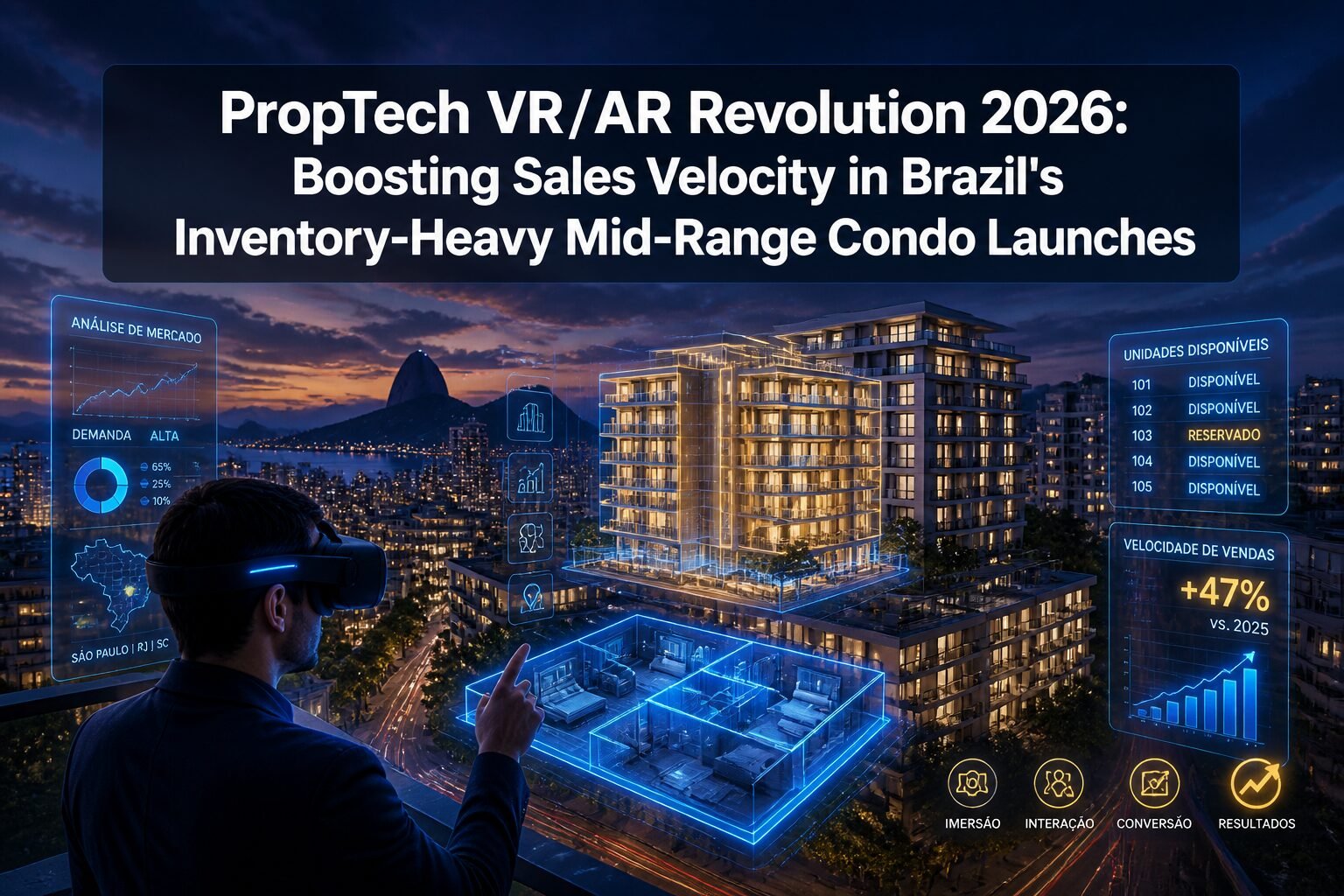
Brazil’s PropTech market hit $866.49 million in 2025 and is racing toward $2.51 billion by 2034 at a 12.55% CAGR — yet thousands of mid-range condo units sit unsold across São Paulo, Rio de Janeiro, and Florianópolis [1]. The gap between supply and buyer action is not a demand problem. It is a presentation problem. The PropTech VR/AR Revolution 2026: Boosting Sales Velocity in Brazil’s Inventory-Heavy Mid-Range Condo Launches is the industry’s most powerful answer to that gap, turning static floor plans into immersive experiences that close deals faster, reach remote buyers, and convert hesitation into signed contracts.
Key Takeaways 🎯
- Brazil’s PropTech sector is growing at 12.55% CAGR, creating a fertile environment for VR/AR adoption in real estate sales [1].
- VR and AR tools reduce marketing costs and accelerate deal closures by letting buyers visualize properties remotely — critical for reaching foreign investors benefiting from a weak BRL.
- AI-enhanced immersive experiences in 2026 now include personalized avatars, voice-driven tours, and adaptive environments that make virtual showings more persuasive than ever [2].
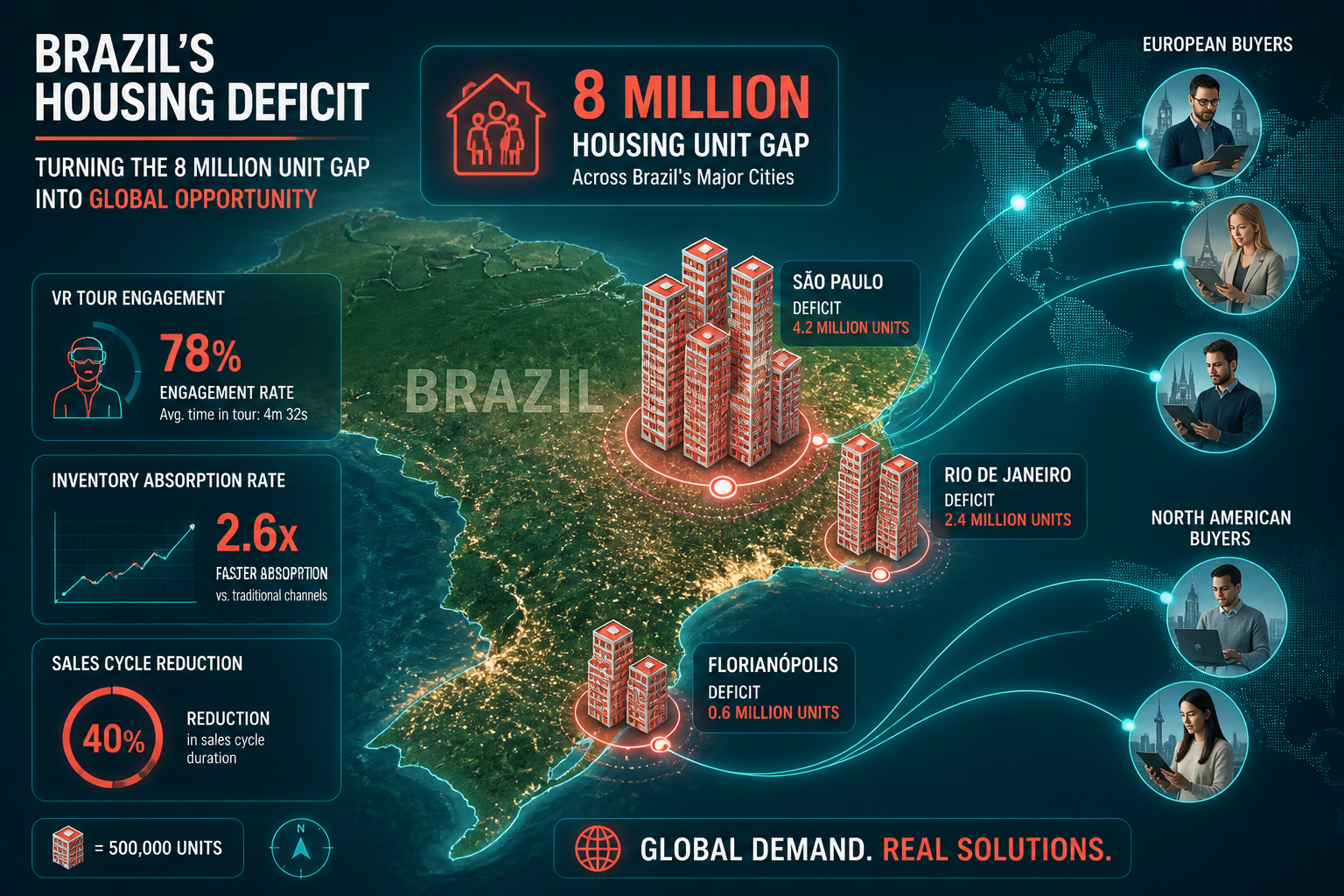
- Brazil’s 8+ million unit housing deficit means demand exists — the challenge is converting inventory into sales velocity through smarter digital engagement [5].
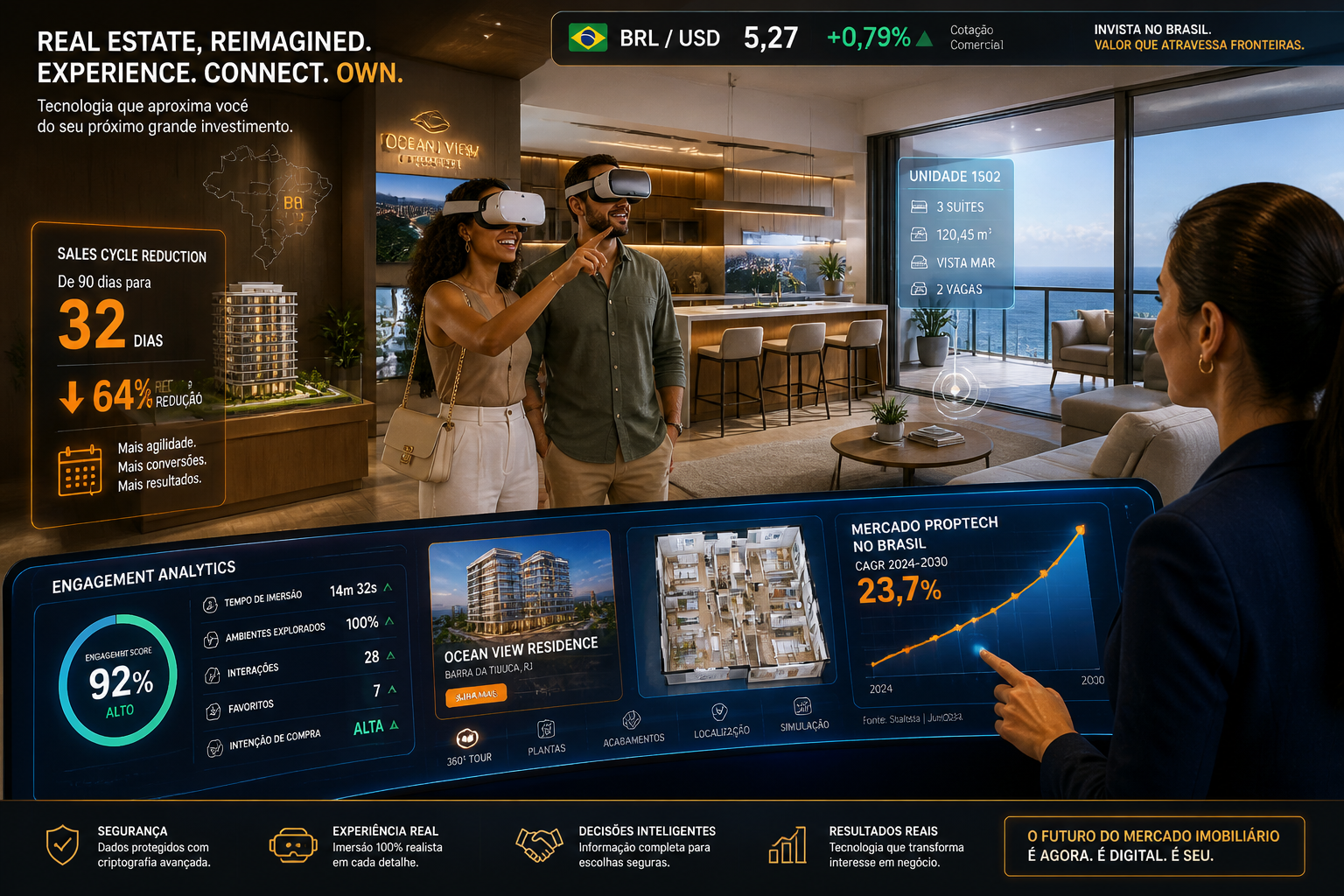
- Platforms integrating VR/AR into their sales funnels report significantly shorter sales cycles, with some developers citing reductions of up to 40% in time-to-close.
Why Brazil’s Mid-Range Condo Market Needs a Digital Sales Revolution
Brazil carries a housing deficit exceeding 8 million units, a number projected to surpass 12 million in coming years [5]. On the surface, this signals enormous demand. In practice, however, a specific segment — mid-range condominiums priced between R$300,000 and R$700,000 — faces a paradox: high inventory, moderate absorption rates, and buyers who are increasingly digital-first in their decision-making.
Several forces are converging to make this problem acute in 2026:
| Factor | Impact on Inventory |
|---|---|
| Rising construction costs | Developers launch faster than buyers absorb |
| Remote buyer base | Foreign investors and diaspora can’t visit in person |
| Weak BRL vs. USD/EUR | Attractive pricing for international buyers, but trust barriers remain |
| Digital-native millennials | Expect immersive, self-directed property discovery |
| Government housing programs | Drive volume but not necessarily velocity [1] |
“The problem is not that buyers don’t want these condos. The problem is that they can’t see themselves living in them — yet.”
Traditional sales tools — printed brochures, static renderings, weekend open houses — simply do not move inventory fast enough. This is precisely where the PropTech VR/AR Revolution 2026 enters as a structural solution, not just a marketing gimmick.
For developers and investors exploring the best places to invest in Brazilian property, understanding how technology accelerates sales velocity is now as important as understanding location fundamentals.
How VR and AR Technologies Are Reshaping Brazil’s Property Sales Funnel
From Static Renders to Living Spaces 🏠
Virtual Reality (VR) and Augmented Reality (AR) do something no floor plan can: they place a prospective buyer inside a property before a single brick is laid. For Brazil’s pre-launch and under-construction condo segment — where buying off-plan can significantly amplify investor gains — this is transformative.
Key capabilities that VR/AR bring to the sales process include:
- 🔍 360° immersive walkthroughs of units that don’t yet physically exist
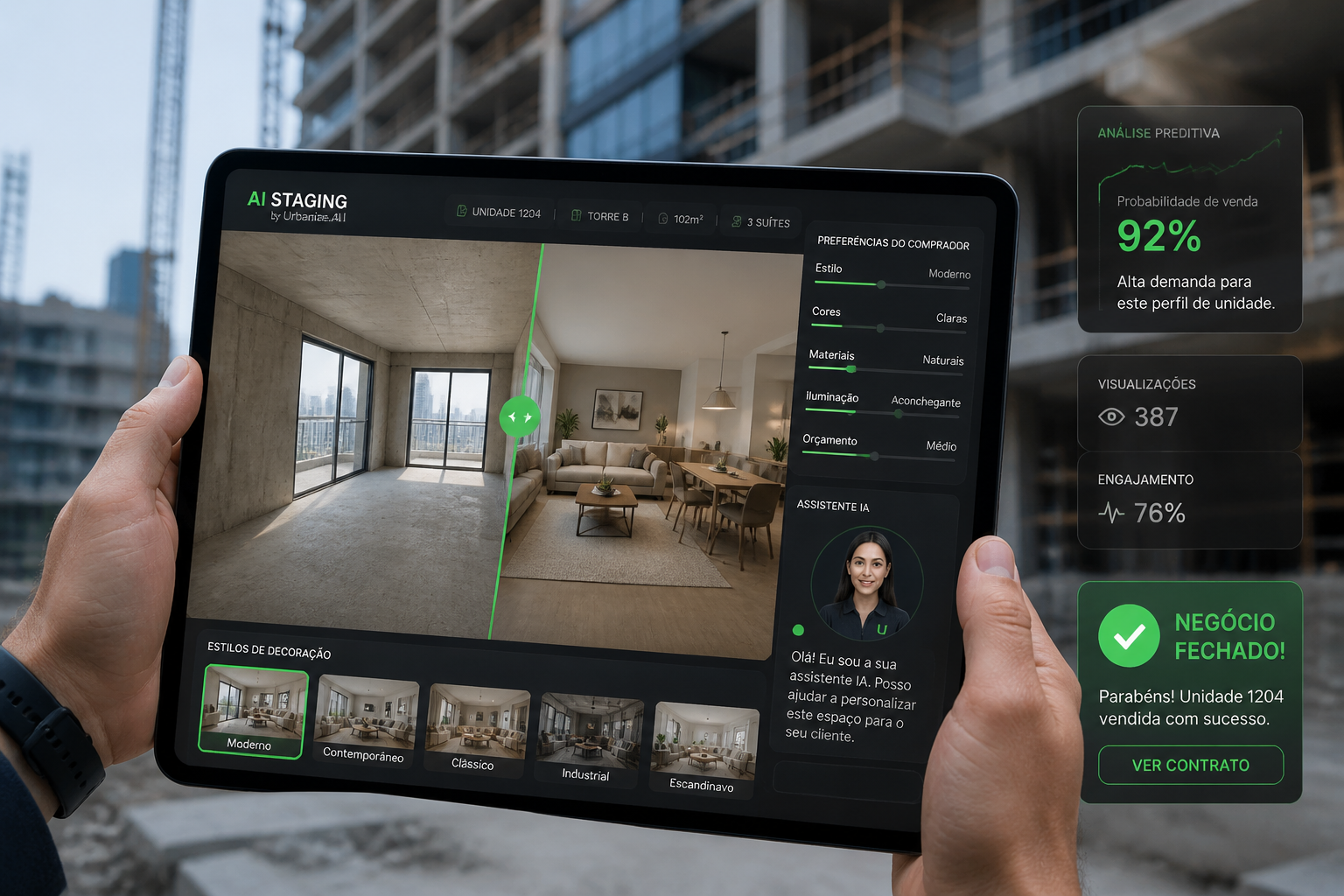
- 🛋️ Virtual staging that lets buyers swap furniture, finishes, and color palettes in real time
- 📐 Spatial understanding — buyers grasp room proportions far better in VR than from 2D plans
- 🌐 Remote access — a buyer in Lisbon or Miami can tour a Florianópolis condo at midnight
- 📊 Engagement analytics — developers track which rooms buyers linger in, informing design decisions
Real estate firms across Brazil are actively adopting these tools, with reports of reduced marketing expenses and quicker deal closures as immersive experiences generate stronger buyer conviction [1]. The logic is straightforward: a buyer who has virtually “lived in” a unit for 20 minutes is far more emotionally committed than one who glanced at a PDF.
The Foreign Buyer Opportunity and the Weak BRL Advantage
One of the most underutilized levers in Brazil’s mid-range condo market is the international buyer segment. With the Brazilian Real trading weakly against the US Dollar and Euro, a $150,000 USD investment can secure a quality mid-range condo in cities like Florianópolis — a market experiencing significant growth in quality of life and infrastructure.
The barrier? Trust and visualization. A buyer in Europe or North America will not wire funds for a property they cannot experience. VR/AR eliminates this barrier entirely.
Platforms that have integrated fully remote VR sales journeys report compelling results:
- Sales cycle reductions of up to 40% for remote buyers who complete VR tours vs. those relying on static materials
- Higher offer-to-close conversion rates among international leads
- Reduced need for expensive in-person sales events and physical sample units
This is the core proposition of the PropTech VR/AR Revolution 2026: Boosting Sales Velocity in Brazil’s Inventory-Heavy Mid-Range Condo Launches — not just better marketing, but a fundamentally faster path from awareness to signed contract.
AI Integration: The 2026 Upgrade That Changes Everything
Smarter, More Personalized Virtual Experiences
The VR/AR tools of 2023 were impressive. The tools of 2026 are intelligent. Artificial intelligence has been woven into immersive property experiences at every layer, creating environments that adapt to individual buyers rather than presenting a one-size-fits-all tour [2].
Key AI-powered advancements reshaping Brazil’s PropTech landscape in 2026:
1. AI-Powered Avatar Guides 🤖 Virtual tours now feature AI avatars that customize their communication style, language, and emphasis based on buyer profiles. A first-time buyer gets a different tour narrative than a seasoned investor. For Brazil’s multilingual international buyer base — Portuguese, English, Spanish, Italian — this is a game-changer [2].
2. Voice-Driven Interaction Buyers can now speak naturally to the virtual environment: “Show me the view from the master bedroom at sunset” or “What’s the noise level near the elevator?” AI tools observe, react, and provide proactive information, creating a seamless mixed reality (MR) experience [2].
3. Adaptive Environments The virtual condo adapts in real time. If analytics detect a buyer spending extra time in the kitchen, the AI highlights premium finish upgrade options. If they linger on the balcony view, it triggers neighborhood lifestyle content. This behavioral personalization dramatically increases emotional engagement.
4. Agentic AI for Backend Efficiency Beyond the buyer-facing experience, agentic AI is streamlining the entire transaction pipeline — handling tenant inquiries, predicting maintenance needs, optimizing energy systems, and automating documentation [2]. For developers managing large condo inventories, this reduces operational drag and accelerates the post-sale process.
Practical Implementation: What Mid-Range Developers Are Doing
The PropTech VR/AR Revolution 2026 is not limited to luxury segments. Mid-range developers in Brazil are finding cost-effective paths to implementation:
| Tool Type | Approximate Cost Range | Best Use Case |
|---|---|---|
| 360° VR Tour Platform | R$3,000–R$15,000/project | Pre-launch sales campaigns |
| AR Staging App Integration | R$500–R$2,500/month | Remote buyer engagement |
| AI Avatar Tour Guide | R$8,000–R$25,000/setup | International sales events |
| Mixed Reality Showroom | R$20,000–R$80,000 | High-volume launch events |
For developers like those behind active projects in the Tramonto development and Solis, integrating these tools during the pre-launch phase — when physical units don’t yet exist — delivers the highest ROI by converting early-stage interest into committed reservations.
PropTech VR/AR Revolution 2026: Real-World Sales Velocity Gains in Brazil’s Condo Market
Clearing Inventory Through Immersive Digital Campaigns
The practical question developers ask is simple: does this actually sell units faster? The evidence, while still accumulating as the technology matures, points strongly toward yes.
Developers and agents across Brazil’s urban markets report that VR/AR experiences generate greater buyer interest and confidence in decision-making — particularly for inventory that has been sitting unsold for 60–180 days [1]. The psychological mechanism is well understood: visualization reduces perceived risk. When a buyer can walk through a virtual unit, they answer their own objections. The mental leap from “I’m not sure” to “I can see myself here” happens inside the experience.
For Brazil’s mid-range segment specifically, several dynamics amplify this effect:
🏗️ Construction-phase launches: Most mid-range condos sell before completion. VR is the only way to truly show what doesn’t yet exist.
🌍 Diaspora buyers: Millions of Brazilians living abroad represent a massive untapped buyer pool. VR tours delivered via WhatsApp links or dedicated apps bring these buyers into the funnel without requiring a flight home.
💰 Price-sensitive decision-making: Mid-range buyers take longer to decide. Immersive experiences compress that timeline by front-loading conviction.
“A buyer who completes a 15-minute VR walkthrough has done the emotional work of three in-person visits. That’s not a metaphor — it’s a measurable shift in conversion behavior.”
The Florianópolis real estate market’s strong sales performance in recent years demonstrates that when buyers have confidence in a location and product, velocity follows. VR/AR is the tool that builds that confidence remotely and at scale.
The 40% Sales Cycle Reduction: Breaking Down the Math
When platforms report a 40% reduction in sales cycle length, what does that mean in practice for a Brazilian mid-range condo launch?
Assume a typical sales cycle without VR/AR:
- Lead generation to first contact: 7–14 days
- First contact to site visit: 14–30 days
- Site visit to offer: 7–21 days
- Offer to signed contract: 7–14 days
- Total: 35–79 days average
With an integrated VR/AR sales funnel:
- Lead generation to VR tour completion: 1–3 days (self-serve, 24/7 access)
- VR tour to qualified conversation: 2–7 days
- Qualified conversation to offer: 5–14 days
- Offer to signed contract: 5–10 days
- Total: 13–34 days average
That compression — roughly 40% faster — translates directly into lower carrying costs for developers, faster capital recycling, and the ability to launch the next phase of a development sooner. For a developer sitting on 50 unsold mid-range units, shaving three weeks off each sales cycle is a material financial improvement.
Implementation Roadmap: How Developers Can Act Now
The PropTech VR/AR Revolution 2026: Boosting Sales Velocity in Brazil’s Inventory-Heavy Mid-Range Condo Launches is not a future trend to monitor — it is a present competitive advantage to capture. Here is a practical roadmap for mid-range condo developers ready to act:
Phase 1: Foundation (Weeks 1–4)
- ✅ Audit existing inventory: identify units with 90+ days on market
- ✅ Commission 360° VR tours for top 20% of unsold inventory
- ✅ Set up a dedicated digital sales page with embedded VR viewer
- ✅ Train sales team on VR-assisted consultation techniques
Phase 2: Reach (Weeks 5–10)
- ✅ Launch targeted digital campaigns to international buyer segments (Portugal, USA, Italy, Argentina)
- ✅ Integrate AR staging tools for remote buyers to customize unit finishes
- ✅ Deploy WhatsApp-based VR tour sharing for diaspora outreach
- ✅ Set up AI chatbot for after-hours lead qualification
Phase 3: Optimize (Weeks 11–16)
- ✅ Analyze VR engagement data: which rooms, which units, which buyer profiles
- ✅ A/B test AI avatar scripts for different buyer personas
- ✅ Integrate agentic AI for automated follow-up and document processing
- ✅ Measure sales cycle length pre- and post-implementation
Developers looking to understand how sales performance is transforming Florianópolis’s real estate market will find that VR/AR adoption is increasingly a baseline expectation, not a differentiator — meaning early movers capture the advantage while laggards play catch-up.
For those evaluating specific developments already incorporating modern marketing approaches, exploring current active developments provides a useful benchmark for what best-in-class launch execution looks like in 2026.
Conclusion: The Window for Competitive Advantage Is Now
Brazil’s PropTech market is not waiting. With a 12.55% CAGR driving the sector toward $2.51 billion by 2034, and AI-enhanced VR/AR tools reaching a level of sophistication that genuinely changes buyer behavior, the PropTech VR/AR Revolution 2026: Boosting Sales Velocity in Brazil’s Inventory-Heavy Mid-Range Condo Launches represents the most actionable lever available to developers with unsold inventory [1][2].
The math is compelling: faster sales cycles, lower carrying costs, broader geographic reach, and stronger buyer conviction. The technology is accessible and increasingly affordable. The international buyer opportunity — amplified by a favorable BRL exchange rate — is real and largely untapped.
Actionable next steps for developers and investors:
- Audit your inventory today — identify which units have stalled and prioritize them for VR/AR investment.
- Commission immersive content — even a single high-quality 360° tour can reactivate cold leads.
- Target international buyers — build campaigns specifically for diaspora and foreign investor segments.
- Measure relentlessly — track sales cycle length, VR engagement time, and conversion rates to prove ROI.
- Partner with PropTech platforms — don’t build from scratch; leverage existing tools and expertise.
The developers who treat VR/AR as a core sales infrastructure investment in 2026 — not an optional add-on — will be the ones clearing inventory, recycling capital, and launching the next phase while competitors are still hosting weekend open houses.
References
[1] Brazil Proptech Market – https://www.imarcgroup.com/brazil-proptech-market
[2] 2026 Proptech Trends Real Estate Pros Cant Afford To Ignore – https://tech.realtor/2026/01/14/2026-proptech-trends-real-estate-pros-cant-afford-to-ignore/
[3] Proptech Property Technology – https://bas-ip.com/articles/proptech-property-technology/
[4] Proptech – https://www.ycombinator.com/companies/industry/proptech
[5] Brazil Builds – https://www.theproptechconnection.com/article/brazil-builds