
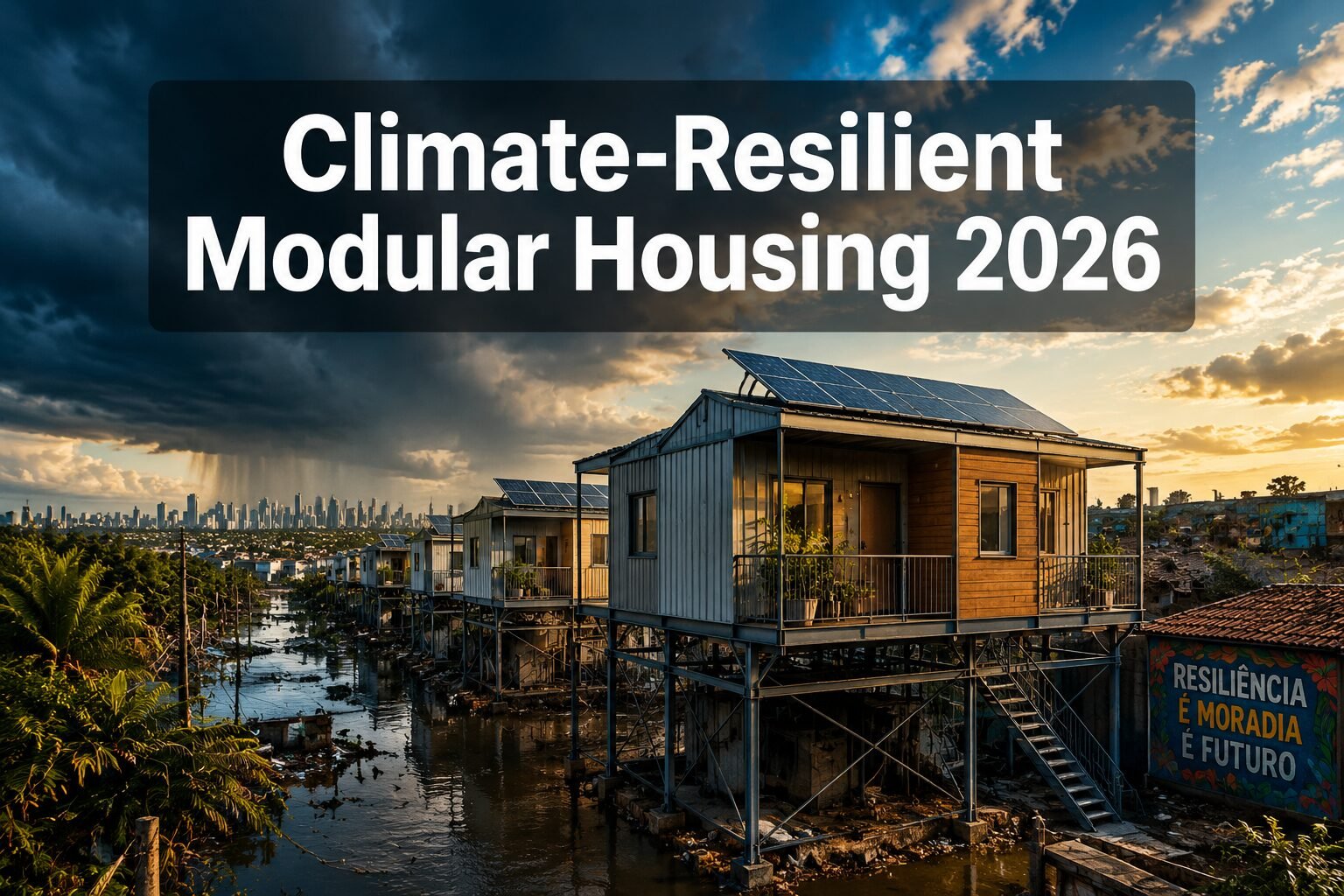
Over 40 million Brazilians living in low-income housing zones face escalating flood risk — and the traditional construction model that built those homes is now the single biggest obstacle to fixing the problem. In 2026, a convergence of Construction Technology and Engineering (CTE) innovation, federal housing policy, and climate urgency is forcing a rethink of how the Minha Casa Minha Vida (MCMV) program delivers homes in the flood-prone peripheries of Brazil’s Northeast. Climate-Resilient Modular Housing 2026: CTE Trends Driving MCMV Upgrades in Flood-Prone Northeast Peripheries is no longer a niche conversation among architects — it is the central challenge shaping housing delivery for millions of vulnerable families.
Key Takeaways 🏠
- Modular construction is now the industry default in 2026, not an experimental alternative, offering up to 20% lower build costs and 60% fewer carbon emissions from construction [1][2].
- Flood-resistant design features — elevated steel frames, waterproof exteriors, and climate-specific engineering — are now standard in leading modular systems, not premium add-ons [2].
- CTE pillars in 2026 are pushing MCMV developers to adopt off-site prefabrication to overcome labor shortages and reduce delivery timelines in vulnerable Northeast communities.
- Net-zero energy systems including solar PV, aerothermal units, and AI-powered energy management are pre-integrated at the factory stage, cutting long-term operational costs by 30% [2][4].
- Green certifications (LEED, BREEAM, Passive House) are becoming accessible benchmarks for social housing projects, validating climate resilience claims for funders and regulators [2].
Why CTE in 2026 Is Rewriting the Rules for MCMV Construction
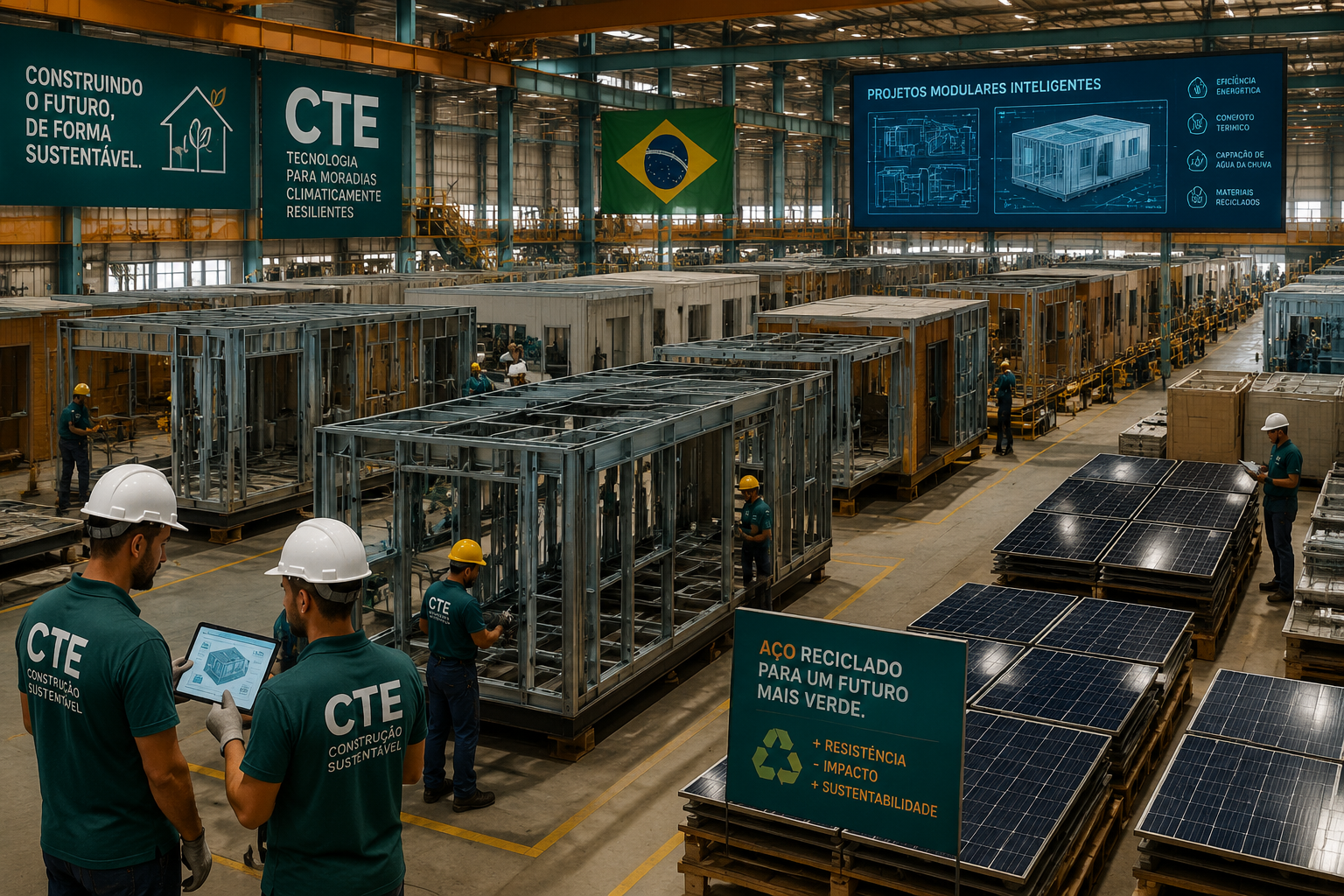
The Construction Technology and Engineering (CTE) landscape in 2026 has shifted dramatically. What were once considered premium or experimental building methods — off-site prefabrication, recycled structural materials, integrated renewable energy — are now baseline industry expectations [3][4].
💬 “Performance-first homes with enhanced airtightness are no longer a luxury tier. In 2026, they are the practical starting point for any serious developer.” — Trident Modular [3]
For MCMV developers operating in Brazil’s Northeast, this shift creates both pressure and opportunity. The pressure: funding bodies, municipal governments, and climate regulators are demanding higher resilience standards. The opportunity: the tools to meet those standards are now cost-competitive.
The Three CTE Pillars Reshaping Social Housing
| CTE Pillar | What It Means for MCMV | Impact |
|---|---|---|
| Off-site prefabrication | Modules built in factories, not on waterlogged sites | 60% fewer construction emissions [2] |
| Recycled structural materials | 70% of frames use recycled steel/aluminum | 40% lower embodied carbon [2] |
| Integrated energy systems | Solar PV, aerothermal pre-installed at factory | 30% lower lifecycle costs [2] |
These pillars are not theoretical. Manufacturers are already delivering modular units with elevated steel frames engineered for flood-prone zones, reflective aluminum panels that cut cooling energy use by 50% in hot climates, and lithium-ion battery storage for off-grid resilience during flood-related power outages [2].
Labor Shortages Are Accelerating the Shift
Brazil’s Northeast construction sector faces a persistent skilled labor deficit, worsened by climate-related displacement. Traditional on-site construction in flood-prone peripheries is increasingly impractical — sites flood, workers cannot access them, and timelines collapse.
Factory-based modular construction sidesteps this entirely. Modules are assembled in controlled environments, then transported and installed rapidly. Build costs drop by up to 20% compared to conventional methods [1], and delivery timelines shrink from months to weeks. For MCMV project managers under budget and schedule pressure, this is transformative.
Developers exploring high-performance real estate investment in resilient regions can explore best places to invest in Brazil property for context on where climate-resilient housing demand is concentrating.
Flood-Resistant Design: How Modular Systems Are Built for Northeast Peripheries
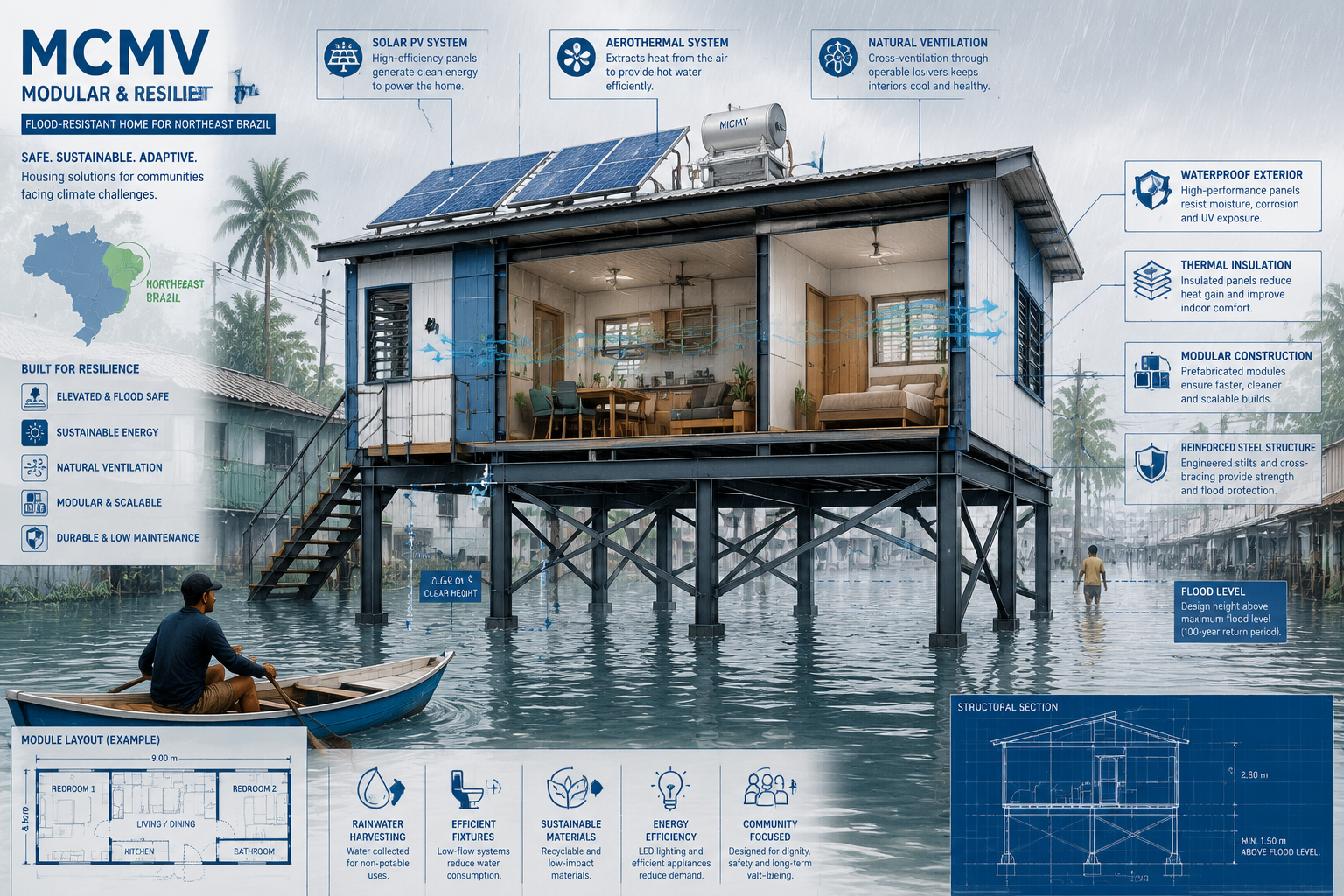
The Northeast of Brazil experiences some of the country’s most extreme climate variability — prolonged drought followed by intense rainfall events that overwhelm drainage infrastructure in low-income peripheries. Designing for this reality requires more than good intentions. It requires engineering specificity.
Core Flood-Resistant Features Now Standard in 2026 Modular Systems
🔩 Elevated Steel Frame Foundations Modular units are mounted on reinforced steel frames that raise living spaces above projected flood levels. These frames are engineered to resist lateral water pressure and debris impact — features that traditional masonry construction cannot easily replicate [2].
🛡️ Waterproof Exterior Systems Exterior panels in leading 2026 modular systems use sealed composite materials that prevent water ingress even during prolonged inundation. Joints between modules are sealed with marine-grade compounds, eliminating the gaps that cause catastrophic failure in conventional flood events [2].
🌬️ Natural Ventilation for Hot-Climate Resilience In the Northeast’s tropical climate, cooling is a major energy burden. Modular designs now integrate passive ventilation pathways — reducing mechanical cooling dependence and cutting energy use by up to 50% in hot climates [2]. This matters enormously for MCMV residents who face high electricity costs relative to income.
☀️ Pre-Integrated Renewable Energy Solar PV panels, aerothermal systems, and AI-powered energy management units are installed during factory construction — not retrofitted after [4]. This approach improves aesthetics, reduces installation errors, and ensures systems are calibrated for the specific climate zone of the deployment site.
♻️ Recycled Material Structures Approximately 70% of modular structural frames in leading 2026 systems use recycled steel and aluminum, reducing embodied carbon by up to 40% compared to virgin materials [2]. Some manufacturers use 80% recycled aluminum for exterior cladding — a standard that was a premium specification just three years ago.
Comparing Modular vs. Traditional Construction for Flood-Prone MCMV Sites
| Factor | Traditional MCMV Construction | Climate-Resilient Modular 2026 |
|---|---|---|
| Flood resistance | Requires expensive retrofitting | Engineered-in from factory stage |
| Construction emissions | Baseline | 60% lower [2] |
| Build cost | Baseline | Up to 20% lower [1] |
| Lifecycle energy costs | Baseline | 30% lower [2] |
| Labor dependency | High (on-site skilled workers) | Low (factory-controlled) |
| Delivery timeline | Months | Weeks |
| Green certification | Rarely achieved | LEED/BREEAM accessible [2] |
For developers and investors tracking how construction performance is reshaping real estate markets, the real estate market performance analysis offers useful comparative context on how construction quality drives market value.
Climate-Resilient Modular Housing 2026: Implementation Pathways for MCMV Developers
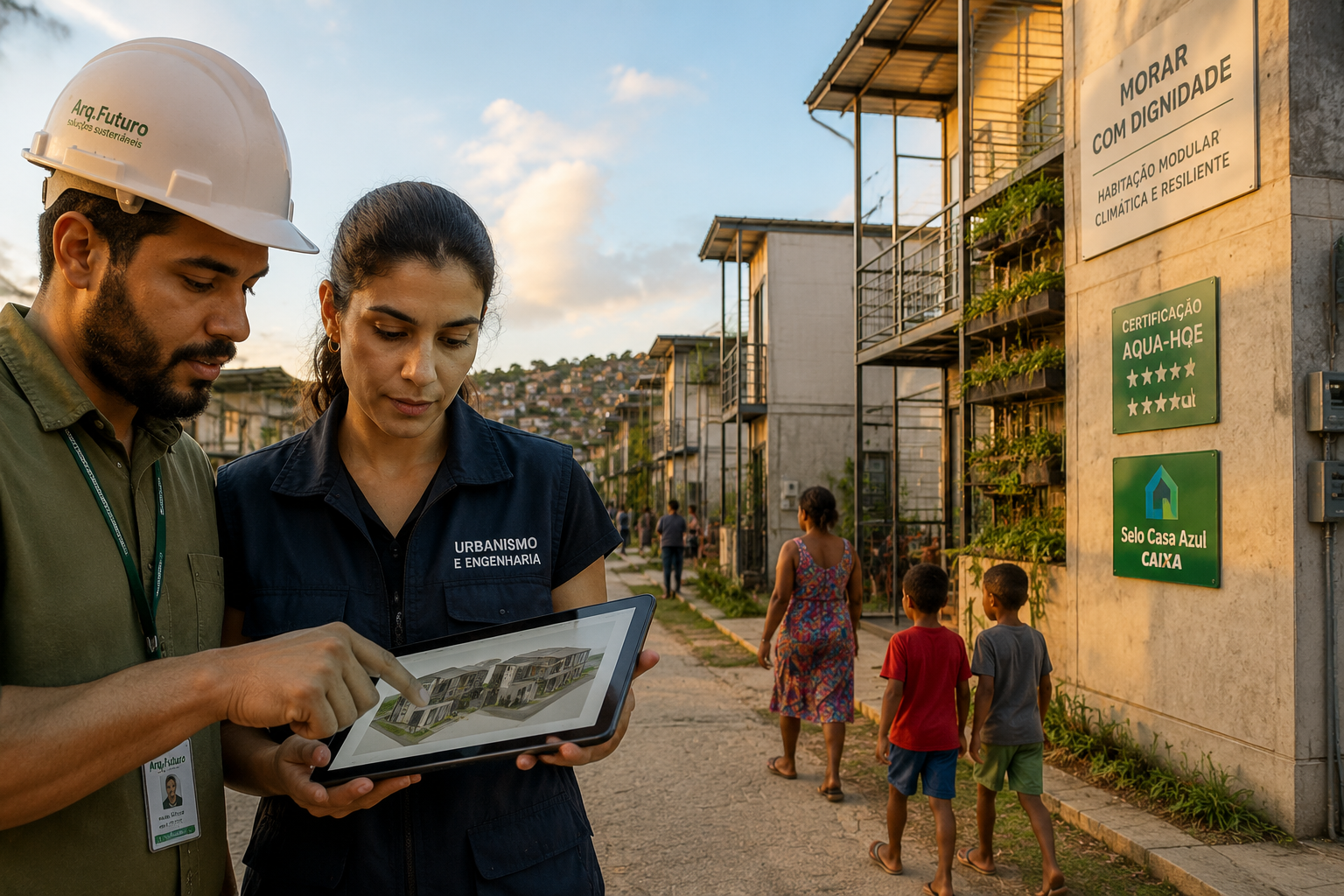
Knowing that climate-resilient modular housing is superior is not enough. MCMV developers need clear implementation pathways that fit within federal program constraints, municipal approval processes, and community expectations.
Step 1: Site Assessment and Flood Risk Mapping
Before any module is designed, developers must conduct detailed hydrological assessments of target sites in Northeast peripheries. This means mapping 50-year and 100-year flood return periods, identifying soil saturation risks, and modeling drainage capacity under projected climate scenarios for 2026 and beyond.
This data directly informs foundation elevation requirements, drainage system design, and the selection of exterior waterproofing specifications.
Step 2: Factory Partner Selection and Module Specification
Not all modular manufacturers deliver climate-resilient systems. Developers should prioritize partners who:
- ✅ Use minimum 70% recycled structural materials [2]
- ✅ Pre-integrate solar PV and aerothermal systems at factory stage [4]
- ✅ Engineer flood-specific foundation frames for the target climate zone
- ✅ Hold or are pursuing LEED, BREEAM, or Passive House certification [2]
- ✅ Can demonstrate off-site carbon reduction of at least 60% vs. conventional methods [2]
Step 3: Navigating MCMV Program Requirements
The MCMV program has specific cost-per-unit ceilings and technical standards. The good news: modular construction’s 20% cost reduction [1] creates headroom within those ceilings to incorporate climate-resilient features that would otherwise exceed budget.
Developers should engage with Caixa Econômica Federal’s technical teams early to document how modular systems meet or exceed MCMV structural standards. Green certifications from recognized bodies provide third-party validation that simplifies this approval process [2].
Step 4: Community Integration and Long-Term Maintenance
Climate-resilient modular homes in Northeast peripheries must be designed with community maintenance capacity in mind. This means:
- Simple, accessible maintenance points for solar and aerothermal systems
- Modular replacement components that can be swapped without specialized labor
- Community education programs on system operation
Residents who understand and can maintain their homes’ climate systems are far more likely to realize the 30% lifecycle cost savings that make these projects economically sustainable long-term [2].
The Green Certification Advantage 🏆
More modular buildings are achieving LEED, BREEAM, and Passive House certifications in 2026 [2]. For MCMV projects, these certifications serve multiple strategic purposes:
- Funding access: Many climate finance instruments require certified green standards
- Regulatory compliance: Municipal climate adaptation plans increasingly mandate certified resilience
- Property value: Certified homes in resilient locations command measurable value premiums
Developers interested in how green and performance credentials translate into property appreciation can explore insights on real estate investment appreciation for off-plan buyers.
The Economic Case: Why Climate-Resilient Modular Housing Makes Financial Sense in 2026
Skeptics of modular social housing often frame resilience features as cost additions. The data in 2026 tells a different story.
Cost-Benefit Breakdown
🏗️ Construction Phase
- Up to 20% lower build costs through factory efficiency [1]
- Reduced site supervision costs (factory-controlled quality)
- Shorter timelines reduce financing carry costs
⚡ Operational Phase
- 30% lower lifecycle energy and maintenance costs [2]
- Pre-integrated solar reduces grid electricity dependence
- Heat-resistant design cuts cooling costs by up to 50% [2]
🌊 Climate Risk Phase
- Flood-resistant design eliminates or dramatically reduces repair costs after flood events
- Elevated foundations prevent the total losses that devastate traditional low-income housing in flood events
- Modular replacement of damaged units is faster and cheaper than traditional reconstruction
💬 “Sustainable modular buildings deliver 30% lower lifecycle energy and maintenance costs — making them economically competitive with traditional construction even before factoring in climate damage avoidance.” [2]
For context on how infrastructure quality and resilience translate into long-term investment value in Brazilian real estate markets, the analysis of growth and infrastructure in high-demand regions provides relevant benchmarks.
Addressing the Financing Gap
The primary barrier to scaling Climate-Resilient Modular Housing 2026: CTE Trends Driving MCMV Upgrades in Flood-Prone Northeast Peripheries is not technology — it is financing structure. MCMV’s cost-per-unit model does not always capture lifecycle savings, making upfront modular investment appear more expensive than it is.
Solutions gaining traction in 2026 include:
- Green bonds tied to certified climate-resilient housing portfolios
- Performance-based MCMV subsidies that reward lower lifecycle costs
- Public-private partnerships where developers absorb upfront modular costs in exchange for long-term maintenance contracts
Developers exploring innovative financing models — including digital asset integration — can find relevant perspectives on cryptocurrency and real estate investment frontiers.
Conclusion: Actionable Next Steps for Developers, Planners, and Policymakers
The convergence of CTE innovation, climate urgency, and MCMV program evolution makes 2026 a pivotal year for social housing in Brazil’s Northeast. Climate-Resilient Modular Housing 2026: CTE Trends Driving MCMV Upgrades in Flood-Prone Northeast Peripheries is not a future aspiration — the technology, the economics, and the policy frameworks are aligned today.
Actionable Next Steps 🎯
For MCMV Developers:
- Commission flood risk mapping for all active Northeast sites before the next rainy season
- Issue RFPs specifically requiring certified climate-resilient modular systems with minimum 70% recycled materials
- Engage Caixa Econômica Federal technical teams now to establish green certification approval pathways
For Municipal Planners:
- Update zoning codes to require elevated foundations in mapped flood-risk zones
- Create fast-track permitting for modular construction projects with green certifications
- Integrate climate-resilient housing targets into municipal climate adaptation plans
For Policymakers:
- Reform MCMV cost-per-unit ceilings to reflect lifecycle costs, not just construction costs
- Create performance-based subsidy tiers that reward certified flood resilience
- Establish a national modular housing standards framework aligned with 2026 CTE benchmarks
The families living in Northeast peripheries cannot wait for the next flood to prove the case. The tools exist. The economics work. The only remaining variable is the will to implement.
For developers ready to explore high-performance, climate-aware real estate projects, Quadragon’s portfolio of developments demonstrates how construction quality and resilience thinking translate into lasting value — a model worth studying as the MCMV sector evolves.
References
[1] Future Proofing Real Estate Why Developers Are Turning To Modular For Sustainability And Resilience – https://www.housingwire.com/articles/future-proofing-real-estate-why-developers-are-turning-to-modular-for-sustainability-and-resilience/
[2] Sustainable Modular Construction Key 2026 Trends – https://www.hyysprefabhouse.com/sustainable-modular-construction-key-2026-trends.html
[3] 2026 Trends In Modular Housing – https://tridentmodular.com/blog/2026-trends-in-modular-housing/
[4] Construction Trends For 2026 – https://modularhome.es/en/blog/Construction-trends-for-2026/
[5] Why Container Homes Are Booming In 2026 The Untold Modular Housing Surge – https://yescontainers.com/why-container-homes-are-booming-in-2026-the-untold-modular-housing-surge/
[6] Building Climate Resilient Manufactured Housing Stock – https://www.urban.org/research/publication/building-climate-resilient-manufactured-housing-stock
[8] climateresilienthousing – https://climateresilienthousing.org
[9] Why Prefabricated Modular Buildings Are Booming In 2026 – https://www.prefabex.com/posts/why-prefabricated-modular-buildings-are-booming-in-2026