
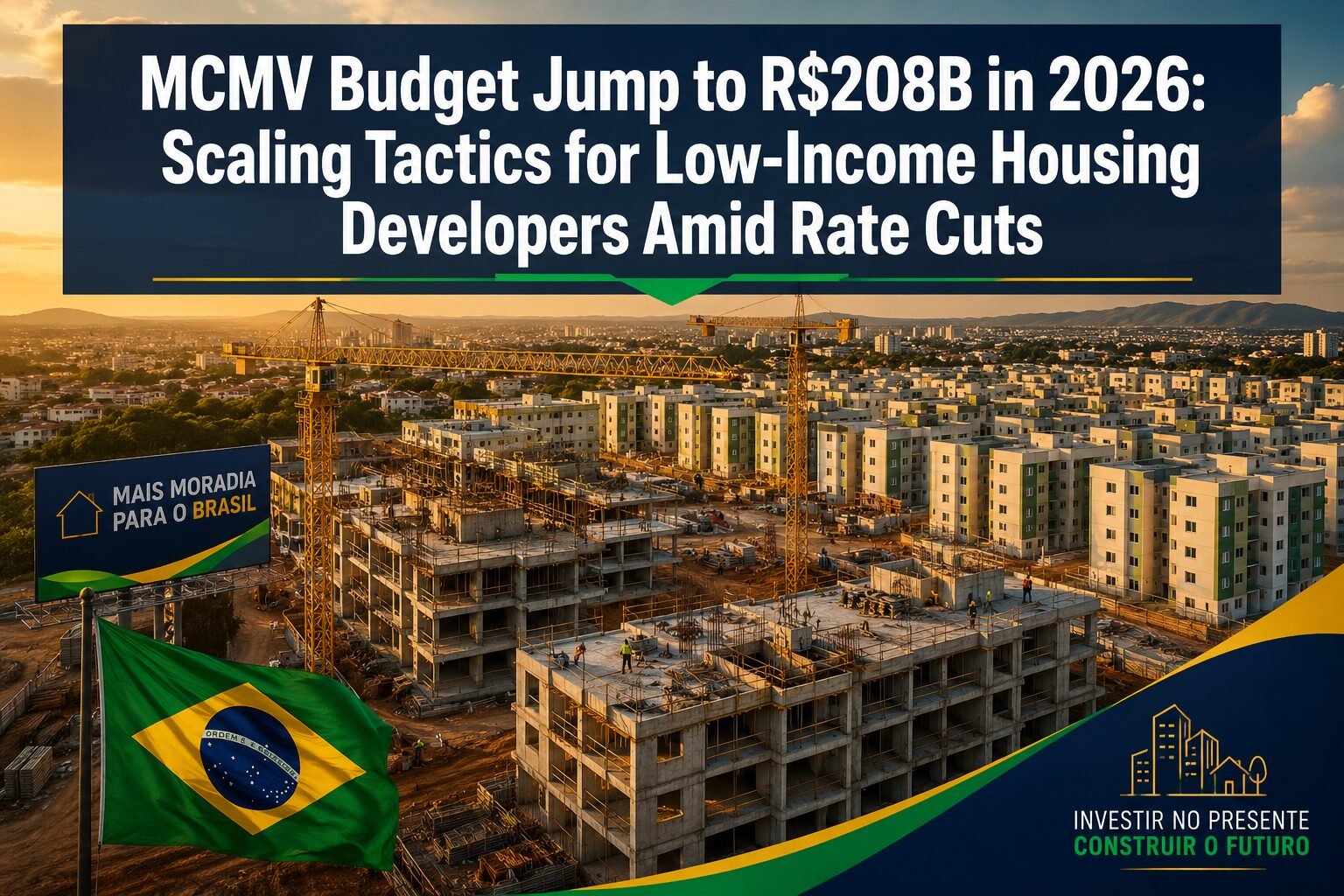
Brazil’s Minha Casa, Minha Vida (MCMV) program has just received its most significant funding injection in years — a R$20 billion transfer from the Pré-Sal Social Fund announced on May 15 by President Lula, pushing the total housing envelope to approximately R$208 billion for 2026 [1]. For low-income housing developers, this is not just a budget headline. It is a structural shift that opens a rare multi-year window for scaling operations, locking in approvals, and capturing volume at a moment when falling interest rates are simultaneously expanding the pool of eligible buyers.
The MCMV Budget Jump to R$208B in 2026: Scaling Tactics for Low-Income Housing Developers Amid Rate Cuts is the defining opportunity of this cycle — and the developers who move fastest with the right operational model will capture a disproportionate share of contracts.
Key Takeaways 📌
- The MCMV budget has surged to approximately R$208 billion in 2026, driven by a R$20 billion Social Fund injection, creating the largest low-income housing funding envelope in the program’s history [1].
- Faixa 1 families are the primary beneficiaries of the new subsidy boost, giving developers in the lowest-margin segment faster sales velocity and reduced absorption risk.
- Declining Selic rates expand the addressable buyer pool, especially in Faixa 2 and Faixa 3, allowing developers to model higher ticket prices without breaching affordability thresholds.
- Industrialized construction — prefabrication, steel framing, aluminum formwork — is the margin-protection strategy for developers operating under government price caps at high volume.
- The policy window is time-sensitive: the government’s goal of 3 million contracted units by end of 2027 creates political pressure to fast-track approvals, reward high-volume developers, and maintain subsidized credit lines [1].
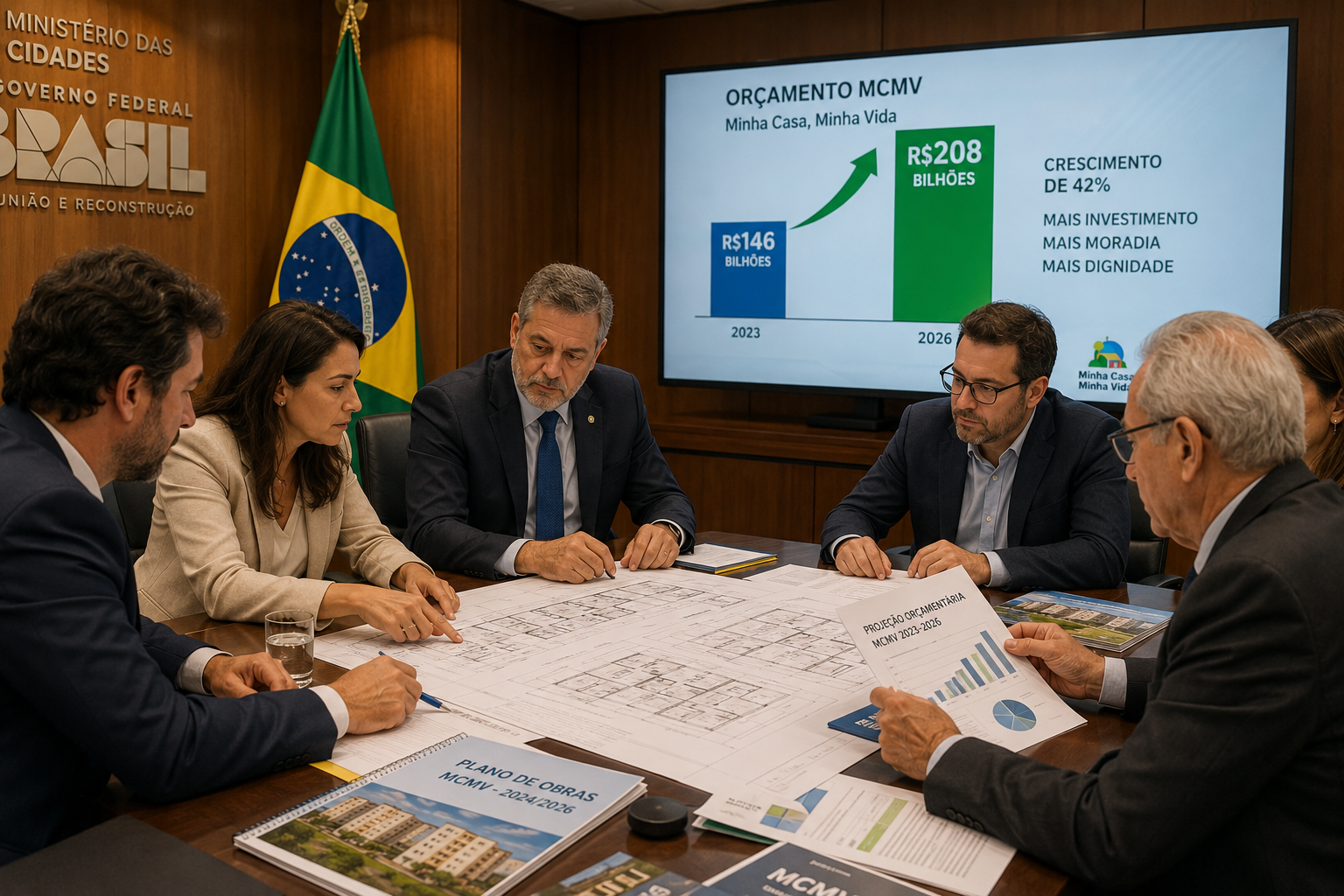
Understanding the Budget Surge: From R$146B to R$208B
To appreciate the scale of what is happening in 2026, consider the baseline. CEIC data shows that discretionary federal expenditure specifically allocated to MCMV was approximately R$700 million in 2018 — a reflection of the severe fiscal compression under the Temer and early Bolsonaro governments [3]. The program was essentially in hibernation.
Fast-forward to 2026, and the official MCMV envelope stands at roughly R$200 billion, with broader housing-related appropriations and earlier 2026 budget lines bringing the combined figure to approximately R$208 billion [1]. That is not a marginal increase. It is a fundamental repositioning of civil construction as a national economic growth engine.
💬 “The government explicitly framed the Social Fund injection as part of measures to strengthen civil construction as an economic growth vector.” [1]
What the R$20 Billion Social Fund Transfer Actually Means
The new R$20 billion is not general program funding. It is specifically directed at subsidy and financing conditions for lower-income families, with a heavy emphasis on Faixa 1 — the segment where the government covers the largest share of the unit price and offers interest rates well below market [1].
This matters operationally for developers because:
| MCMV Segment | Income Range | Government Subsidy Share | Rate Sensitivity |
|---|---|---|---|
| Faixa 1 | Up to R$2,640/month | Very High (up to 95%) | Low (mostly subsidized) |
| Faixa 1.5 | Up to R$4,400/month | High | Moderate |
| Faixa 2 | Up to R$8,000/month | Moderate | High |
| Faixa 3 | Up to R$12,000/month | Low | Very High |
For Faixa 1 and 1.5 developers, the new budget means higher presales velocity and faster absorption from the second half of 2026 onward, as the fresh capital is deployed through Caixa Econômica Federal’s contracting pipeline [1].
Scaling Tactics for Low-Income Housing Developers Amid Rate Cuts
The MCMV Budget Jump to R$208B in 2026: Scaling Tactics for Low-Income Housing Developers Amid Rate Cuts is not just about accessing more money — it is about being operationally ready to deploy that access at scale. Three core strategies define the developers who will win this cycle.
Tactic 1: Industrialize Construction to Protect Margins Under Price Caps 🏗️
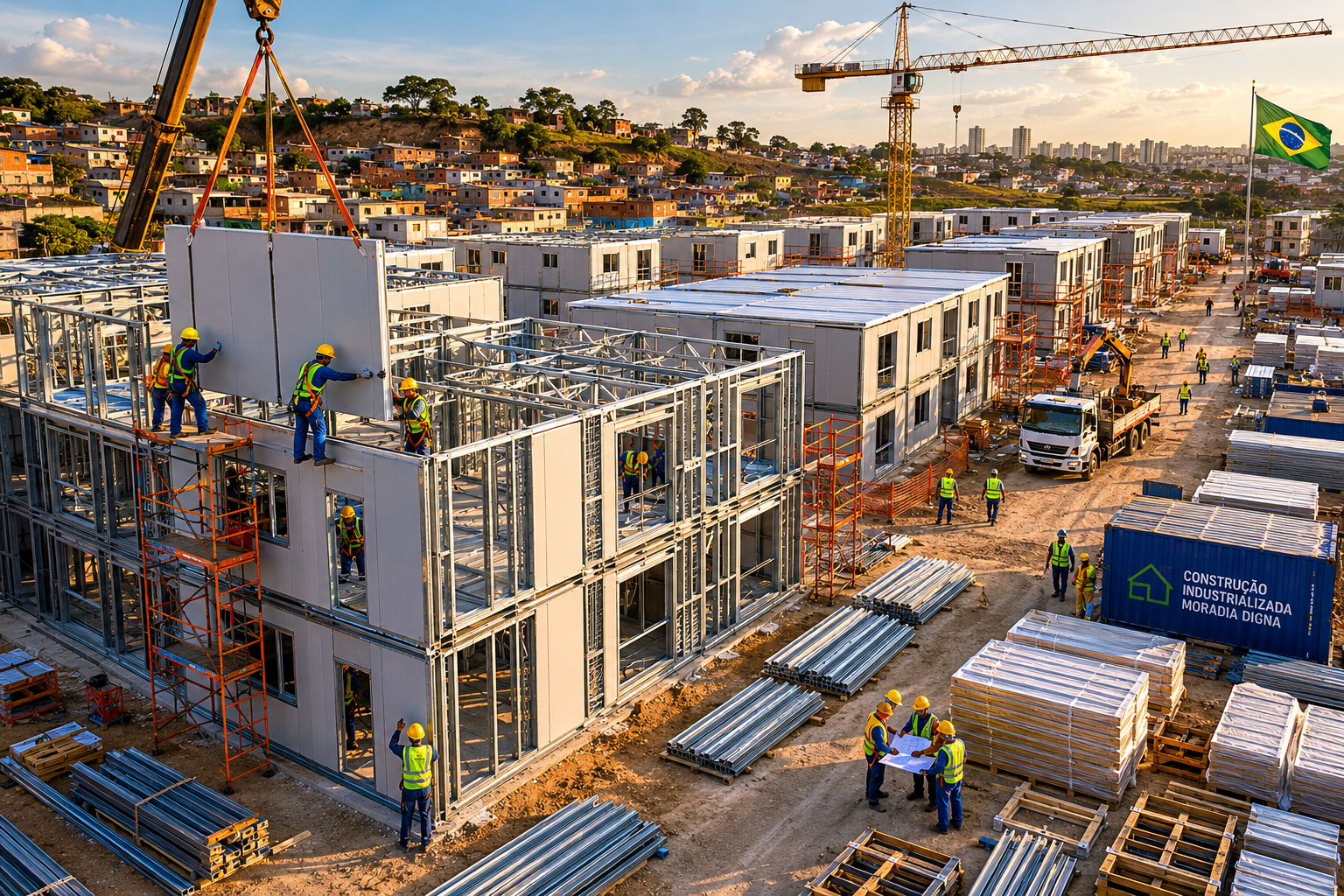
MCMV projects operate under government-set unit price ceilings. As volumes grow, conventional construction methods compress margins through labor costs, material waste, and schedule overruns. The solution — consistently validated in World Bank research on affordable housing programs — is industrialized construction [7].
Key industrialization levers for MCMV developers in 2026:
- Steel framing and aluminum formwork systems: Reduce cycle times per floor by 30–40% compared to conventional masonry, enabling faster turnover on multi-block sites.
- Prefabricated modular components: Bathrooms, staircases, and facade panels manufactured off-site reduce on-site labor dependency and improve quality consistency across hundreds of units.
- Standardized typologies: A library of 3–5 repeatable floor plans and building configurations allows the same engineering, procurement, and construction playbook to be deployed across multiple municipalities simultaneously.
- Centralized procurement: Volume purchasing of steel, concrete, and finishing materials at the company level — rather than project level — delivers 8–15% cost savings that are critical when selling prices are capped.
Developers exploring high-volume project pipelines in growth markets like Florianópolis can see how industrialized methods translate into faster delivery timelines and stronger investor returns. For a real-world example of accelerated construction execution, the Tramonto development’s foundation milestone illustrates how disciplined site management compresses delivery schedules.
Tactic 2: Front-Load the Launch Pipeline While the Policy Window Is Open 📅
The federal government’s goal of 3 million contracted MCMV units by the end of 2027 creates a finite and politically charged contracting window [1]. Bureaucratic momentum — approvals, environmental licensing, infrastructure connections — tends to accelerate when a program is a stated national priority.
Practical steps for developers:
- Accelerate land-banking in target municipalities — particularly those with existing MCMV infrastructure agreements and Caixa regional office capacity.
- Pre-submit technical documentation to municipal planning authorities now, before the 2H 2026 contracting rush creates bottlenecks.
- Engage Caixa Econômica Federal’s regional teams early to understand local quota allocations under the expanded 2026 budget.
- Structure phased launches — commit to Phase 1 blocks under current approvals while Phase 2 and 3 permitting runs in parallel.
The political framing of MCMV as a “growth vector” also implies coordination between federal, state, and municipal authorities to prioritize infrastructure connections (water, sewage, roads) for approved MCMV sites [1]. Developers who have sites ready will benefit disproportionately from this coordination.
Tactic 3: Model Rate-Cut Scenarios to Optimize Faixa 2–3 Ticket Prices 📊
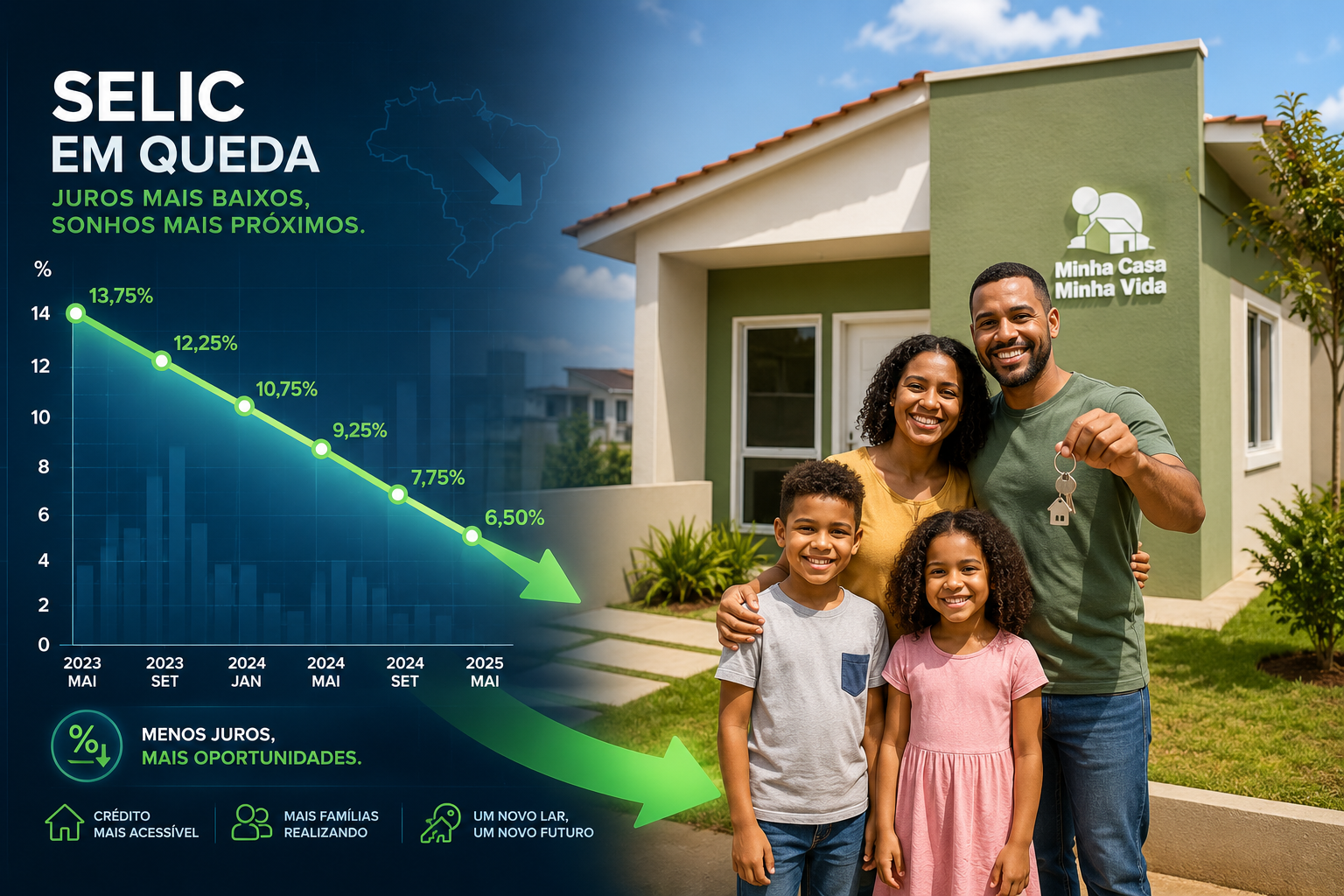
The Selic rate easing cycle is not just a macroeconomic backdrop — it is a direct demand lever for MCMV’s middle segments. In Faixa 2 and Faixa 3, where government subsidies are smaller and mortgage affordability is more rate-sensitive, each 100-basis-point reduction in effective mortgage rates meaningfully expands the addressable income bracket [1].
What this means for project economics:
- A family earning R$6,000/month that could not qualify for a R$250,000 unit at 9% effective annual rate may qualify at 8%, opening up a new buyer cohort.
- Developers can model slightly higher ticket prices within program limits as rates fall, improving project IRR without pushing monthly payments above affordability thresholds.
- Mixed Faixa 2/3 projects in well-located urban areas become more viable as the rate environment improves, since these projects carry higher absolute margins per unit.
For investors and developers evaluating the best places to invest in Brazilian property, understanding the interaction between Selic cuts and MCMV segment demand is essential for accurate IRR modeling.
The Macro Context: Why 2026 Is a Structural Inflection Point
The MCMV Budget Jump to R$208B in 2026: Scaling Tactics for Low-Income Housing Developers Amid Rate Cuts does not exist in isolation. Several macro forces are converging simultaneously.
The Housing Deficit Remains Enormous
Brazil’s structural housing deficit — estimated at over 8 million units, concentrated heavily in lower-income households — means that demand for MCMV product is not manufactured by the program; it is real and persistent. The expanded 2026 budget is accelerating supply to meet a genuine need, which reduces the market risk that developers face in other segments.
Civil Construction as GDP Policy
When a government explicitly links a housing program to GDP growth strategy, it changes the risk profile for developers [1]. It means:
- Subsidized credit lines are politically protected even during periods of fiscal pressure.
- Regulatory fast-tracking becomes more likely for compliant developers with strong track records.
- Multi-year budget visibility improves, allowing developers to make capital commitments — land, equipment, workforce — with greater confidence.
This is fundamentally different from the post-2018 environment, when MCMV was treated as a discretionary line item that could be cut at any budget review [3].
Regional Opportunities Beyond the Major Metros
While São Paulo and Rio de Janeiro dominate MCMV volume in absolute terms, the 2026 budget expansion creates opportunities in secondary cities and coastal growth markets where land costs are lower, municipal approval processes are faster, and competition for Caixa quota is less intense.
Markets like the Greater Florianópolis region — which has seen consistent real estate appreciation and strong demand fundamentals — represent exactly the kind of environment where a well-capitalized MCMV developer can combine favorable land economics with the expanded federal budget. Developers considering studio and compact unit formats in these markets can align MCMV-compatible typologies with strong local absorption.
Risk Management: What Developers Must Watch ⚠️
No policy window is without risk. Developers scaling into the MCMV Budget Jump to R$208B in 2026 environment should actively manage the following:
| Risk Factor | Mitigation Strategy |
|---|---|
| Budget execution delays (funds announced ≠ funds disbursed) | Stagger launch commitments; maintain 6-month working capital buffer |
| Construction cost inflation (steel, labor) | Lock in supply contracts early; invest in industrialized methods to reduce labor dependency |
| Municipal approval bottlenecks | Pre-submit documentation; engage municipal housing secretariats proactively |
| Caixa credit analysis delays | Ensure buyer documentation packages are complete before unit launch |
| Program rule changes (price ceilings, income limits) | Maintain flexible project designs that can be repositioned across Faixas if needed |
The key principle: capture the upside of the policy window while building operational resilience against execution risk.
Conclusion: Act Now, Scale Smart
The convergence of a record R$208 billion MCMV budget, a Selic easing cycle, and an explicit federal commitment to using civil construction as a growth engine creates a once-in-a-decade opportunity for low-income housing developers in Brazil.
Actionable next steps for developers in 2026:
- ✅ Audit your land bank — identify sites in municipalities with active MCMV infrastructure agreements and fast-track them through pre-approval.
- ✅ Invest in industrialized construction capacity now — steel framing, aluminum formwork, and prefabricated components are margin-protection tools, not luxury upgrades [7].
- ✅ Build your Caixa relationship at the regional level — quota allocation under the expanded budget will favor developers with proven delivery track records and complete documentation.
- ✅ Model multiple Selic scenarios for your Faixa 2–3 pipeline — each rate cut expands your addressable buyer pool and may justify a ticket price adjustment.
- ✅ Launch Phase 1 blocks before end of 2026 to lock in current subsidy conditions and meet the government’s 3-million-unit contracting target window [1].
For developers and investors looking to stay ahead of Brazil’s evolving real estate landscape, following the latest market news and analysis and understanding how off-plan purchases can amplify returns are essential steps in building a resilient, high-volume strategy.
The budget is there. The demand is real. The rate environment is improving. The developers who scale smart — with industrialized methods, front-loaded pipelines, and disciplined risk management — will define this generation of Brazilian affordable housing.
References
[1] The Government Will Contribute R 20 Billion From The Social Fund To The Mcmv Minha Casa Minha Vida Program – ground.news
[3] Central Government Expenditure Discretionary Expenses Mcmv – ceicdata.com
[7] World Bank Affordable Housing & Construction Industrialization – documents1.worldbank.org