

Brazil’s logistics-focused Fundos de Investimento Imobiliário (FIIs) delivered a stunning 62% share price gain over 12 months in 2025 — more than double the Ifix index’s 26% return — and the momentum entering 2026 shows no sign of slowing [5]. The FII Market Surge 2026: High-Yield Funds Fueling Logistics and Mixed-Use Property Developments is not a speculative headline; it is a data-backed reality reshaping how developers raise capital, how investors allocate portfolios, and which property types dominate new construction pipelines across Brazil and beyond.
As interest rates stabilize globally and real estate fundamentals improve, yield-focused real estate funds are attracting capital at a pace not seen since the pre-rate-hike era. For developers and investors alike, understanding the forces behind this surge — and where the best opportunities lie — is essential in 2026.
Key Takeaways
- Logistics FIIs in Brazil surged 62% over 12 months in 2025, far outpacing the broader Ifix benchmark [5].
- BMO Capital Markets projects a 17% total return for U.S. REITs in 2026, driven by a 4% dividend yield and mid-single-digit FFO growth [2].
- The FTSE Nareit All Equity REIT Index has already gained 11.5% year-to-date as of May 2026, beating the S&P 500’s 8.1% return [1].
- Logistics, urban income properties, and mixed-use developments are the preferred FII segments for 2026 [6].
- Declining new construction supply is restoring pricing power for landlords, supporting rent growth and earnings [10].

Why the FII Market Is Surging in 2026
The FII Market Surge 2026: High-Yield Funds Fueling Logistics and Mixed-Use Property Developments is rooted in a convergence of macroeconomic and structural forces that have been building for several years.
Stabilizing Interest Rates Are the Catalyst
For most of 2022 through 2024, rising interest rates globally suppressed real estate fund valuations. Investors demanded higher yields from risk-free assets, making the relatively stable distributions from FIIs and REITs less attractive by comparison. That dynamic has shifted decisively in 2026.
As of May 2026, the FTSE Nareit All Equity REIT Index has gained 11.5% year-to-date, surpassing the S&P 500’s 8.1% return over the same period [1]. BMO Capital Markets forecasts a 17% total return for U.S. REITs across the full year 2026, built on a 4% dividend yield, mid-single-digit growth in funds from operations (FFO), and modest multiple expansion [2]. Analysts at major brokerages now describe high-yielding real estate funds as positioned to surge as rates turn supportive [3].
In Brazil, the story carries its own distinct character. The Selic rate trajectory, combined with structural demand for industrial and urban-use properties, has created a particularly favorable window for FII issuers. Market analyses for 2026 highlight logistics, shopping centers, urban income properties, and high-grade CRI (Certificados de Recebíveis Imobiliários) funds as the preferred segments, driven by sensitivity to interest rates and demand for recurring income with controlled risk [6].
Supply Constraints Are Restoring Pricing Power
A critical but often overlooked driver of the current surge is the decline in new construction across major property types. Years of elevated borrowing costs discouraged speculative development, and the pipeline of new supply across logistics, industrial, and mixed-use segments has thinned considerably. This supply constraint is now restoring pricing power for landlords, with resilient demand supporting growth in rents and earnings [10].
Portfolio managers cite healthy balance sheets, solid fundamentals, and limited new supply as the three pillars supporting their optimism for real estate fund outperformance in 2026 [8]. For developers who secured land and began construction during the downturn, this environment is exceptionally rewarding.
“Stability is replacing volatility in the real estate cycle, and disciplined underwriting is being rewarded at a pace not seen in several years.” — GlobeSt, March 2026 [7]
Private Equity Is Repositioning
Real estate private equity investors entered 2026 with cautious optimism, emphasizing disciplined underwriting and thoughtful capital structuring as the market transitions from a period of volatility to one of measured growth [7]. This shift in private equity posture has direct implications for FIIs: as institutional capital seeks yield with managed risk, logistics parks and mixed-use urban projects become the natural destination.
Logistics FIIs: The Engine of the 2026 Surge
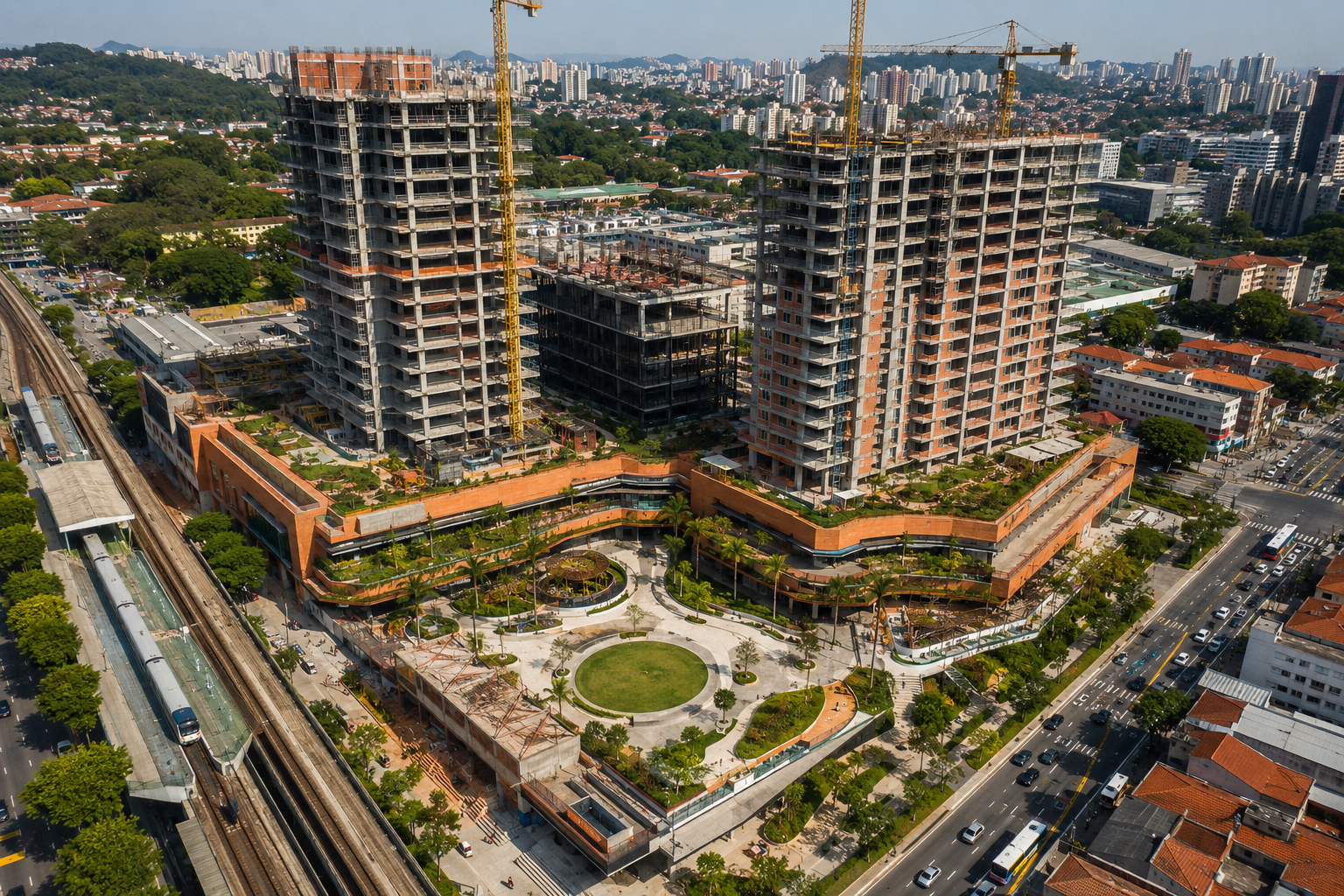
No segment illustrates the FII Market Surge 2026: High-Yield Funds Fueling Logistics and Mixed-Use Property Developments more vividly than logistics real estate. Industrial and logistics properties have emerged as the backbone of the current FII boom, driven by e-commerce growth, supply chain restructuring, and the chronic undersupply of modern warehouse space in major Brazilian urban corridors.
Record Performance in 2025 Sets the Stage
Logistics-focused FIIs delivered exceptional results in 2025. Pátria Logística (PATL11), one of the most closely watched logistics FIIs in Brazil, saw its shares increase by 62% over 12 months, dramatically outperforming the Ifix index’s 26% gain [5]. This performance attracted a wave of new retail and institutional investors into the segment, raising the profile of logistics FIIs as a serious portfolio allocation rather than a niche bet.
The reasons for this outperformance are structural. Brazil’s e-commerce sector continues to grow at double-digit annual rates, creating sustained demand for last-mile distribution centers near major metropolitan areas. At the same time, the modernization of Brazil’s logistics infrastructure — driven partly by regulatory improvements and partly by corporate investment — is raising the quality bar for warehouse facilities, pushing tenants toward newer, better-equipped properties managed by professional FII operators.
Industrial REITs: A Global Parallel
The logistics FII story in Brazil mirrors trends in the global industrial REIT market. Despite flat returns earlier in 2026, industrial REITs globally are expected to benefit from both secular and cyclical trends, with demand normalizing and potential for inflationary rent growth emerging by 2027 [4]. Analysts point to e-commerce penetration, nearshoring of manufacturing, and supply chain diversification as the secular drivers that will sustain demand for logistics real estate well beyond the current cycle.
In Brazil specifically, the combination of a large domestic consumer market, improving port and road infrastructure, and a growing base of multinational tenants seeking compliant, modern facilities creates a uniquely compelling investment case. For those exploring the best places to invest in Brazil property, logistics-adjacent corridors near major cities consistently rank among the top locations for high returns.
Key Logistics FII Metrics to Watch in 2026
| Metric | Benchmark | Why It Matters |
|---|---|---|
| Dividend Yield | 8%–12% (Brazil market) | Measures recurring income generation |
| Vacancy Rate | Below 8% (Class A assets) | Indicates supply-demand balance |
| Lease Duration | 5–10 years (typical) | Signals revenue stability |
| FFO Growth | Mid-single digits (global) | Proxy for earnings quality |
| Portfolio Occupancy | Above 92% | Reflects asset management quality |
Preferred Logistics Locations in Brazil
The geography of logistics FII investment in 2026 is concentrated but expanding. The traditional hubs of greater São Paulo and Rio de Janeiro remain dominant, but secondary markets are attracting growing attention. Florianópolis and the broader Santa Catarina coast, for example, have seen accelerating real estate market growth, with infrastructure improvements and population growth supporting demand for both logistics and mixed-use developments.
The growth of the Ingleses region in Florianópolis exemplifies how secondary Brazilian markets are developing the quality of life, infrastructure, and economic base needed to attract institutional real estate investment.
Mixed-Use Developments: The High-Yield Frontier

While logistics dominates the headlines, mixed-use developments represent the second major pillar of the FII Market Surge 2026: High-Yield Funds Fueling Logistics and Mixed-Use Property Developments. These projects — combining residential, retail, office, and hospitality components within a single urban footprint — offer FII managers a diversified income stream that reduces dependence on any single tenant category.
Why Mixed-Use Is Attracting FII Capital
Mixed-use properties align well with the investment priorities of yield-focused FIIs for several reasons:
- Diversified revenue streams reduce single-sector risk
- Urban infill locations benefit from land scarcity and high foot traffic
- Residential components provide stable, long-duration income
- Retail and hospitality components offer inflation-linked rent escalation
- Reduced vacancy risk compared to single-use commercial assets
Market analyses confirm that urban income properties rank among the preferred FII segments for 2026, alongside logistics and high-grade CRI funds [6]. The combination of recurring income, inflation protection, and urban land appreciation makes mixed-use FIIs particularly attractive to investors seeking yield with managed downside risk.
Real Estate Syndication Expanding Access
One of the most significant structural developments in 2026 is the diversification of real estate syndication investment options. The market now includes multifamily value-add, industrial and logistics, self-storage roll-ups, preferred equity and senior debt funds, and Reg A+ products designed to bring non-accredited investors into institutional-quality deals. This broadening of access is channeling retail capital into the same asset classes that institutional FIIs have long favored, creating additional demand for high-quality logistics and mixed-use assets.
For developers, this means a larger and more diverse pool of potential capital partners. Projects that might previously have required a single large institutional anchor can now be structured with layered capital stacks that include FII equity, CRI debt, and syndicated preferred equity.
Development in Practice: Lessons from Active Projects
The practical execution of mixed-use FII-backed development requires meticulous attention to construction timelines and capital deployment. Projects that maintain momentum — such as those where foundations have been completed and construction pace has accelerated — demonstrate the kind of operational discipline that FII managers demand before committing capital.
Developers who can demonstrate consistent delivery against milestones, transparent reporting, and professional asset management are best positioned to attract FII investment in the current environment. The Tramonto development and Solis project represent examples of the type of well-structured, professionally managed developments that align with FII investment criteria.
The Off-Plan Advantage
One strategy gaining traction among FII-backed developers is the structured acquisition of off-plan units, which allows investors to lock in pricing before construction completion while the FII captures appreciation through the development cycle. The valuation benefits of buying off-plan are well documented in the Brazilian market, and FII structures that incorporate this approach can deliver superior risk-adjusted returns compared to stabilized asset acquisitions.
Portfolio Strategy: Positioning for the FII Surge
Top REIT and FII Picks Reflect Sector Themes
Globally, analyst recommendations for 2026 reflect the same sector priorities visible in the Brazilian FII market. Top REIT picks include EastGroup Properties (EGP) for industrial and logistics exposure, Equinix (EQIX) for data center and infrastructure, and Realty Income (O) for diversified net lease income [9]. These names share characteristics with the best-performing Brazilian FIIs: durable tenant relationships, long-duration leases, and assets in supply-constrained locations.
Balancing Yield and Growth
Investors navigating the FII market in 2026 face a classic tension between current yield and capital appreciation potential. The following framework helps clarify the trade-off:
High-Yield, Stable Income (Lower Growth)
- High-grade CRI funds
- Stabilized logistics assets with long-term leases
- Shopping center FIIs with anchor tenants
Moderate Yield, Higher Growth Potential
- Development-stage logistics parks
- Mixed-use urban projects in growing secondary markets
- Value-add industrial properties
Lower Yield, Maximum Growth
- Early-stage mixed-use developments in emerging corridors
- Off-plan residential within mixed-use FII structures
- Greenfield logistics in undersupplied markets
Emerging Structures: Crypto and Digital Assets
An emerging dimension of FII capital formation in 2026 is the intersection of cryptocurrencies and real estate development, where tokenized real estate assets and blockchain-based settlement mechanisms are beginning to complement traditional FII structures. While still nascent, this frontier is attracting attention from both technology investors and traditional real estate managers seeking to broaden their investor base.
Conclusion: Actionable Steps for Developers and Investors
The FII Market Surge 2026: High-Yield Funds Fueling Logistics and Mixed-Use Property Developments represents a genuine structural shift, not a temporary cyclical bounce. The combination of stabilizing interest rates, supply-constrained markets, record logistics FII performance, and expanding investor access to mixed-use development vehicles has created a window of opportunity that is likely to persist through at least 2027.
For developers, the priority actions are clear:
- Align project design with FII criteria — prioritize logistics parks and mixed-use urban infill where supply is constrained and tenant demand is proven.
- Demonstrate operational discipline — FII managers reward developers who deliver on milestones with transparent reporting and professional asset management.
- Explore layered capital structures — combine FII equity with CRI debt and syndicated preferred equity to optimize cost of capital.
- Target high-growth secondary markets — cities like Florianópolis offer the infrastructure, quality of life, and economic growth that institutional FII capital increasingly seeks.
For investors, the key steps are:
- Increase allocation to logistics and mixed-use FIIs — the secular demand drivers for these segments are durable.
- Evaluate off-plan and development-stage opportunities — the appreciation potential from early-stage FII-backed projects is significant in the current cycle.
- Monitor FFO growth and vacancy rates — these are the leading indicators of FII distribution sustainability.
- Diversify across geographies — both Brazilian primary markets and growing secondary markets offer compelling risk-adjusted returns.
The FII market in 2026 rewards those who act with conviction and discipline. The data, the deal flow, and the macroeconomic backdrop all point in the same direction: logistics and mixed-use real estate, funded by yield-focused FIIs, are the defining investment story of this cycle.
References
[1] Reits Outperform Sp 500 High Yield Leaders Low Cost Etfs For 2026 Portfolios – https://nai500.com/blog/2026/05/reits-outperform-sp-500-high-yield-leaders-low-cost-etfs-for-2026-portfolios/?utm_source=openai
[2] Us Reits Set For Rebound In 2026 As Rate Cuts And Valuation Gap Drive 17 Return 4440077 – https://www.investing.com/news/stock-market-news/us-reits-set-for-rebound-in-2026-as-rate-cuts-and-valuation-gap-drive-17-return-4440077?utm_source=openai
[3] Highyield Reits Look Ready To Surge As Rates Turn Supportive 200674511 – https://www.investing.com/analysis/highyield-reits-look-ready-to-surge-as-rates-turn-supportive-200674511?utm_source=openai
[4] Industrial Reits Positioned For Growth Once Uncertainty Clears – https://www.reit.com/news/articles/industrial-reits-positioned-for-growth-once-uncertainty-clears?utm_source=openai
[5] Fiis De Logistica Vem De Ano Recorde E O Que Esperar Em 2026 118145 – https://investidor10.com.br/noticias/fiis-de-logistica-vem-de-ano-recorde-e-o-que-esperar-em-2026-118145/?utm_source=openai
[6] Principais Fiis Para 2026 Segmentos Nomes Recorrentes E O Que O Mercado Esta Precificando – https://cotidianews.net/principais-fiis-para-2026-segmentos-nomes-recorrentes-e-o-que-o-mercado-esta-precificando/?utm_source=openai
[7] 2026 Marks A Turning Point For Real Estate Private Equity – https://www.globest.com/2026/03/06/2026-marks-a-turning-point-for-real-estate-private-equity/?utm_source=openai
[8] Portfolio Managers See Potential For Reit Outperformance In 2026 – https://www.reit.com/news/articles/portfolio-managers-see-potential-for-reit-outperformance-in-2026?utm_source=openai
[9] Reits Set For A 2026 Rebound 7 Top Picks As Rate Cuts Approach – https://www.marketbeat.com/articles/reits-set-for-a-2026-rebound-7-top-picks-as-rate-cuts-approach/?utm_source=openai
[10] 2026 A Turning Point For Reits – https://www.credaily.com/briefs/2026-a-turning-point-for-reits/?utm_source=openai