
A foreign buyer converting USD 500,000 into Brazilian reais in 2026 commands purchasing power that would have required nearly USD 800,000 just five years ago. That gap — created by the persistent depreciation of the Brazilian real — is not a footnote. It is the central engine driving a surge of international capital into Brazil’s luxury residential market. The Weak BRL Advantage for Foreign Buyers: High-End Residential Recovery Strategies in Brazil 2026 is reshaping how Europeans, North Americans, and Chinese investors approach one of Latin America’s most dynamic property landscapes.
Key Takeaways
- The weak Brazilian real creates a structural price discount of 30-50% for USD and EUR buyers compared to five years ago, making luxury assets exceptionally accessible.
- Brazil’s high-end residential market recorded R$ 52.2 billion in sales in 2025, a 35% year-over-year increase, signaling robust underlying demand. [1]
- In 2026, the market is entering a phase of price stability and selective growth, favoring buyers who prioritize asset quality and long-term value. [2]
- Cities like Florianopolis are emerging as top-tier destinations for foreign capital, combining lifestyle appeal with strong appreciation fundamentals.
- Pre-construction purchases (off-plan) amplify the currency advantage further, locking in today’s favorable exchange rates against future asset appreciation.
The Currency Math: Why the Weak Real Is a Structural Opportunity
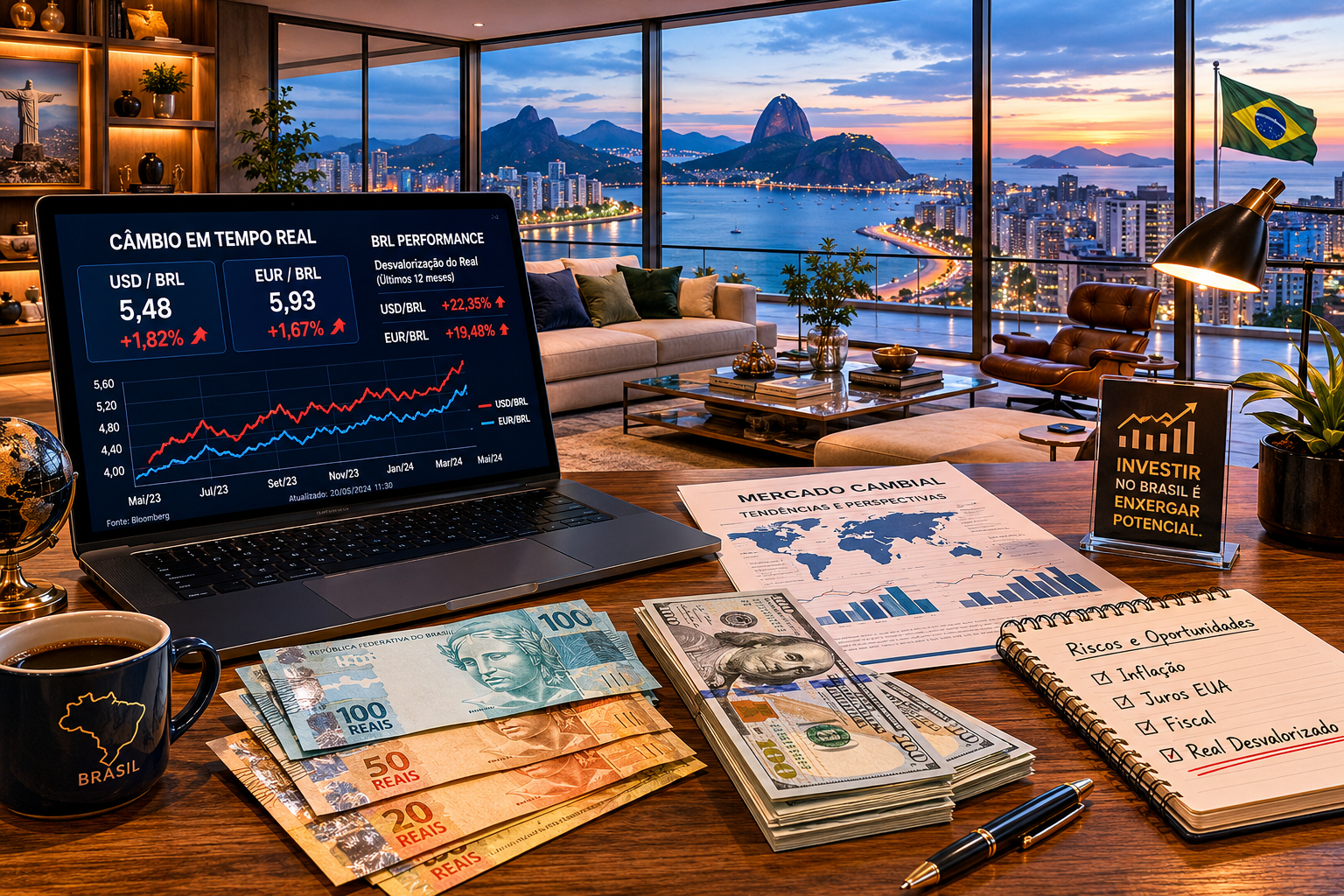
The Brazilian real has faced sustained pressure from domestic fiscal uncertainty, global interest rate cycles, and commodity market volatility. For foreign buyers holding strong currencies, this translates directly into a tangible discount on every square meter of luxury property.
Consider this comparison:
| Currency | Approximate BRL Exchange Rate (2026) | Effective Discount vs. 2019 |
|---|---|---|
| US Dollar (USD) | ~5.8 BRL per USD | ~38% more purchasing power |
| Euro (EUR) | ~6.3 BRL per EUR | ~42% more purchasing power |
| British Pound (GBP) | ~7.4 BRL per GBP | ~45% more purchasing power |
Note: Exchange rates are approximate and subject to market fluctuation.
This is not a temporary arbitrage. Structural factors — including Brazil’s fiscal deficit management timeline and the Federal Reserve’s rate posture — suggest the BRL will remain under relative pressure through 2026 and beyond. For foreign buyers, this creates a rare multi-year window to acquire premium Brazilian assets at a meaningful discount to their intrinsic long-term value.
High-end properties in Brazil are priced in reais but appreciate in line with global luxury benchmarks. When a property’s value rises in BRL terms and the BRL itself eventually strengthens, foreign investors benefit from a double-compounding effect: asset appreciation plus currency recovery.
“Luxury real estate in Brazil functions as a dual-return vehicle for foreign capital — capturing local market appreciation while holding an embedded currency recovery option.”
Brazil’s Luxury Market in Numbers: The 2025 Baseline
Before understanding 2026 recovery strategies, it is essential to understand what the market delivered in 2025. The data is striking.
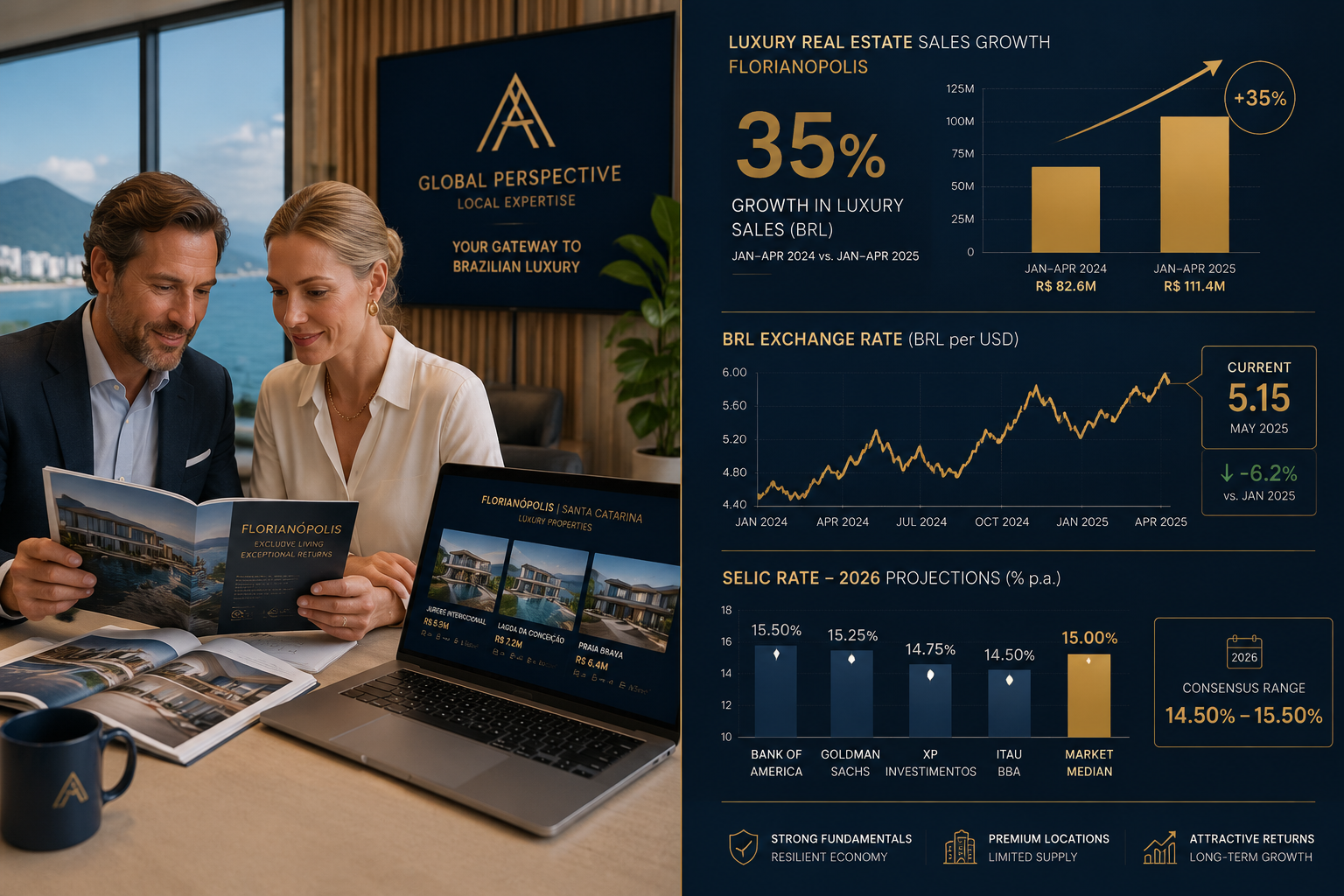
In 2025, 10,607 luxury residential units priced above R$ 2 million were sold across Brazilian capitals, generating R$ 52.2 billion in total transaction value — a 35% increase from 2024. [1] This segment accounted for 29.4% of the total residential market value, a remarkable concentration of wealth in a single tier.
Simultaneously, the investment market saw a decisive shift toward high-value transactions. In 2025, 53% of total investment volume came from deals above the equivalent of EUR 50 million, up from 42% in 2024. [3] This signals that institutional and ultra-high-net-worth buyers are concentrating capital in premium assets, reducing supply of truly differentiated properties.
What drove this surge?
- A buyer base that is largely credit-independent, insulated from Selic rate fluctuations
- Scarcity of genuinely differentiated luxury products in desirable locations
- Growing domestic and international demand for lifestyle-integrated residences [6]
- Increased awareness of Brazilian luxury assets among foreign family offices and private wealth managers
The 2025 record establishes a high baseline. Entering 2026, the market is not collapsing — it is consolidating. [2] For foreign buyers, a consolidating luxury market with stable prices and a weak real is arguably more attractive than a frenzied seller’s market.
Weak BRL Advantage for Foreign Buyers: High-End Residential Recovery Strategies in Brazil 2026
The Weak BRL Advantage for Foreign Buyers: High-End Residential Recovery Strategies in Brazil 2026 is not a single tactic — it is a layered investment framework. The most effective strategies combine currency positioning, location selection, asset type, and entry timing.
Strategy 1: Target Coastal Lifestyle Markets with Strong Appreciation Fundamentals
Not all Brazilian luxury markets are equal. São Paulo and Rio de Janeiro dominate transaction volume, but coastal cities — particularly Florianopolis — offer a compelling combination of lifestyle quality, infrastructure growth, and relative undervaluation compared to global peers.
Florianopolis has emerged as Brazil’s most internationally recognized lifestyle destination, attracting a growing community of digital nomads, entrepreneurs, and retirees from Europe and North America. The city’s real estate market has shown consistent upward momentum, driven by limited buildable land, strong rental demand, and a quality of life that rivals Mediterranean coastal cities at a fraction of the cost.
For a deeper understanding of life in Florianopolis — its infrastructure, culture, and daily rhythms — the city consistently ranks among Brazil’s most livable urban centers, a factor that underpins long-term property demand.
Specific neighborhoods within Florianopolis, such as the Ingleses region, are experiencing accelerated infrastructure investment and population growth. The growth of the Ingleses region reflects a broader pattern of value migration from saturated urban cores to well-connected coastal communities.
Strategy 2: Enter Pre-Construction to Maximize Currency and Appreciation Leverage
Buying off-plan (na planta) is one of the most powerful tools available to foreign buyers in the current environment. It combines three distinct advantages:
- Lower entry price: Pre-construction units are typically priced 20-30% below comparable completed properties.
- Currency lock-in: The purchase price is fixed in BRL at today’s favorable exchange rate.
- Appreciation during construction: Brazilian luxury projects typically appreciate 15-25% between launch and delivery.
The mathematics of buying pre-construction and the value it creates are well-documented in the Brazilian market. For foreign buyers, this appreciation occurs in a currency that may strengthen over the medium term, amplifying total returns when measured in USD or EUR.
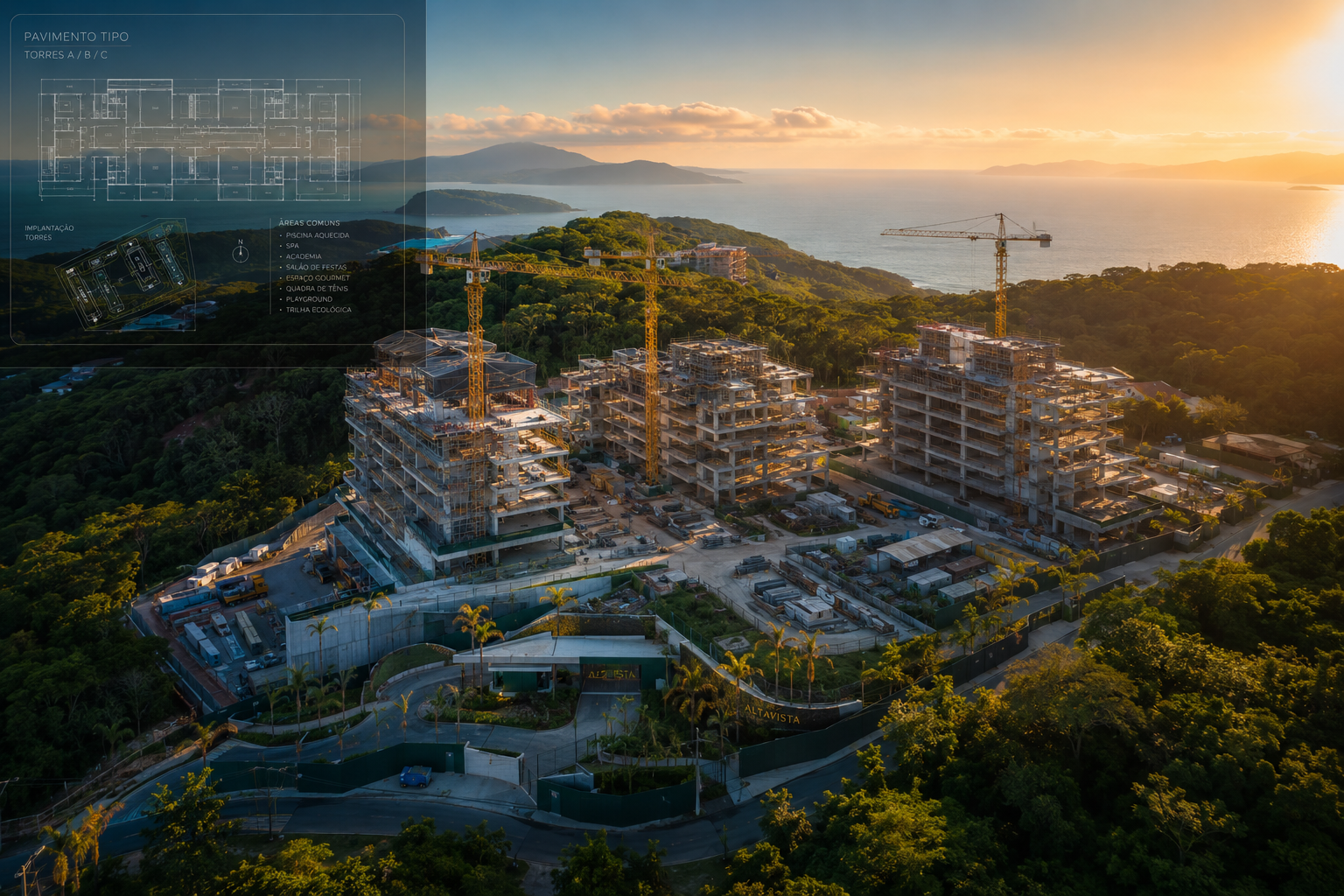
Projects like Tramonto and Solis in Florianopolis represent the type of high-specification, lifestyle-integrated developments that align with 2026 buyer preferences for curated residential experiences. [6]
Strategy 3: Focus on Asset Quality and Integrated Living Experiences
The 2026 luxury buyer — domestic or foreign — is highly selective. Price alone no longer drives decisions. Buyers are evaluating:
- Location scarcity: Is this a truly irreplaceable site?
- Design and specifications: Does the project offer genuinely differentiated architecture and finishes?
- Integrated services: Are leisure, wellness, and operational services built into the project from inception? [6]
- Flexible layouts: Do the units accommodate multifunctional use and lifestyle evolution? [6]
Foreign buyers should apply the same rigor. A luxury unit in a generic tower is not equivalent to a unit in a thoughtfully designed, service-integrated development with genuine scarcity. The latter holds value through economic cycles; the former is vulnerable to oversupply.
Strategy 4: Explore the Middle Market for Diversification
Capital boutiques are restructuring Brazil’s real estate middle market. Firms like Ilion Partners and LP Bens are creating investment vehicles for transactions between R$ 50 million and R$ 500 million, with Ilion Partners alone managing R$ 700 million across 23 projects. [4]
For foreign investors with larger capital allocations, co-investing alongside these boutiques — or accessing their structured vehicles — provides diversification across multiple assets and geographies within Brazil, while benefiting from professional asset management and governance standards. [5]
Location Intelligence: Where to Focus Foreign Capital in 2026
Selecting the right location is as important as the currency advantage itself. The best places to invest in Brazilian property share a common set of characteristics: constrained land supply, growing high-income population, strong rental demand, and improving infrastructure.
Top-tier markets for foreign buyers in 2026:
| City/Region | Key Advantage | Foreign Buyer Appeal |
|---|---|---|
| Florianopolis | Coastal lifestyle, tech hub, limited land | Very High |
| São Paulo (Itaim, Vila Nova) | Liquidity, global connectivity | High |
| Rio de Janeiro (Leblon, Ipanema) | International brand recognition | Moderate-High |
| Porto Alegre | Undervalued, strong fundamentals | Emerging |
| Balneário Camboriú | Ultra-luxury coastal, strong appreciation | High |
Florianopolis stands out for foreign buyers specifically because its price-per-square-meter remains significantly below comparable coastal markets in Europe or the United States, even before applying the BRL discount. A luxury apartment in Florianopolis priced at R$ 2.5 million translates to approximately USD 430,000 at current exchange rates — a fraction of what equivalent quality commands in Miami, Lisbon, or Barcelona.
Navigating the 2026 Market: Risks and Mitigants
No investment strategy is without risk. Foreign buyers pursuing the Weak BRL Advantage for Foreign Buyers: High-End Residential Recovery Strategies in Brazil 2026 must account for:
Key Risks:
- Currency volatility: The BRL can move sharply in either direction. A strengthening real increases acquisition costs for buyers who have not yet closed.
- Regulatory complexity: Foreign ownership of Brazilian property is permitted but requires careful legal structuring, particularly for rural or coastal land categories.
- Developer quality: Not all developers deliver on specifications and timelines. Due diligence on track record, financial health, and project registration is essential.
- Interest rate environment: While the Selic rate is projected to moderate toward 12.50% in 2026 [9], it remains high by global standards, affecting domestic buyer competition and rental yield calculations.
Mitigants:
- Engage a Brazilian real estate attorney specializing in foreign transactions before signing any documents.
- Prioritize developers with verifiable track records of on-time, on-specification delivery. Construction progress transparency, such as regular site updates, is a positive indicator.
- Structure purchases through a Brazilian legal entity (LTDA or SA) for tax efficiency and inheritance planning.
- Diversify across two or three assets rather than concentrating in a single property.
The Macro Tailwinds Supporting the Recovery Thesis
Beyond the currency advantage, several macro factors reinforce the high-end residential recovery thesis for 2026.
Improving credit conditions: Projections for a Selic rate reduction toward 12.50% in 2026 will gradually improve credit accessibility for domestic buyers, expanding the pool of potential future purchasers and supporting price floors. [9]
Price stability as a foundation: The high-end segment is entering 2026 with stable prices rather than speculative inflation. [2] This stability, driven by genuine scarcity and a credit-independent buyer base, [8] creates a safer entry point for foreign capital than a market experiencing rapid price escalation.
Operational discipline among developers: The 2026 market is characterized by a shift toward governance, data-driven decision-making, and execution discipline among leading developers. [5] This reduces project risk and improves delivery reliability — critical factors for foreign buyers who cannot monitor construction daily.
Luxury as inflation hedge: Globally, high-net-worth investors are increasing allocations to luxury real estate as a hedge against persistent inflation. [7] Brazilian luxury assets, priced at a structural discount due to BRL weakness, offer this hedge at a compelling entry point.
Growing international awareness: Brazil’s luxury market is increasingly visible to European and North American wealth managers. The 2025 record sales figures [1] have attracted coverage in international financial media, accelerating foreign buyer interest heading into 2026.
Practical Steps for Foreign Buyers Entering the Brazilian Luxury Market
Translating strategy into action requires a structured approach. The following sequence reduces risk and maximizes the currency advantage:
- Define your objective: Primary residence, vacation property, rental income, or capital appreciation? Each objective influences location, asset type, and holding period.
- Engage local legal and tax counsel: Before any transaction, retain a Brazilian attorney and a tax advisor familiar with foreign investment structures.
- Establish a Brazilian bank account or entity: Required for property transactions and rental income management.
- Identify target markets and shortlist developments: Focus on developers with transparent track records and projects that align with 2026 buyer preferences for quality and integrated living.
- Conduct currency timing analysis: Work with a foreign exchange specialist to optimize the BRL conversion timing within your transaction window.
- Negotiate in BRL: Always negotiate and contract in Brazilian reais to capture the full currency advantage.
- Plan your exit or income strategy: Define whether you will hold for appreciation, generate rental income, or pursue a medium-term resale. Brazil’s luxury rental market in coastal cities is robust, particularly for furnished, service-integrated units.
For those ready to explore specific opportunities, reviewing available developments from established Brazilian developers provides a practical starting point for shortlisting assets that meet 2026 quality standards.
Conclusion
The convergence of a persistently weak Brazilian real, record-setting luxury market momentum, and a 2026 consolidation phase that rewards quality over speculation creates one of the most compelling foreign buyer entry windows in Brazil’s modern real estate history.
The Weak BRL Advantage for Foreign Buyers: High-End Residential Recovery Strategies in Brazil 2026 is not a speculative bet — it is a structured opportunity grounded in currency mathematics, supply scarcity, improving macro conditions, and genuine lifestyle value. Foreign buyers who act with discipline — prioritizing location quality, developer credibility, pre-construction leverage, and proper legal structuring — are positioned to capture returns that are difficult to replicate in saturated Western property markets.
Actionable next steps:
- Consult a Brazilian real estate attorney to understand foreign ownership structures and tax implications before committing capital.
- Identify two to three target markets — Florianopolis deserves priority consideration — and shortlist three to five developments meeting 2026 quality criteria.
- Engage a foreign exchange specialist to model currency scenarios and optimize your BRL conversion strategy.
- Visit target developments in person or arrange virtual site tours with verified developers to assess construction progress and specifications.
- Set a decision timeline: the consolidation phase of 2026 will not last indefinitely. Price stability today is tomorrow’s baseline for the next appreciation cycle.
Brazil’s luxury residential market is recovering with discipline. Foreign buyers holding strong currencies have a rare, time-limited advantage. The strategy is clear; the execution window is open.
References
[1] Mercado Imobiliario Luxo Recorde 52 Bilhoes – https://forbes.com.br/forbes-money/forbes-real-estate/2026/03/mercado-imobiliario-luxo-recorde-52-bilhoes/?utm_source=openai
[2] Mercado De Alta Renda Entra Em 2026 Com Crescimento Contido E Precos Mais Estaveis – https://forbes.com.br/forbes-money/forbes-real-estate/2026/01/mercado-de-alta-renda-entra-em-2026-com-crescimento-contido-e-precos-mais-estaveis/?utm_source=openai
[3] Investment Market – https://www.cbre.com.br/en/insights/books/nl-real-estate-market-outlook-2026/investment-market?utm_source=openai
[4] Boutiques Capital Middle Market Imobiliario Lp Bens Ilion Partners 2026 – https://news.griinstitute.org/en/real-estate/boutiques-capital-middle-market-imobiliario-lp-bens-ilion-partners-2026?utm_source=openai
[5] Real Estate Em 2026 – https://www.colliers.com/pt-br/artigo/real-estate-em-2026?utm_source=openai
[6] Tendencias Mercado Imobiliario Alto Padrao Sao Paulo – https://iapartamentos.com.br/tendencias-mercado-imobiliario-alto-padrao-sao-paulo/?utm_source=openai
[7] Ciclos Mercado Imobiliario 2026 Luxo – https://manicamarin.com.br/artigo/investimento/ciclos-mercado-imobiliario-2026-luxo?utm_source=openai
[8] Mercado Imobiliario De Alto Padrao Entra Em 2026 Com Precos Mais Estaveis – https://blog.bnsir.com.br/bnsir-na-midia/mercado-imobiliario-de-alto-padrao-entra-em-2026-com-precos-mais-estaveis?utm_source=openai
[9] 5 Tendencias Que Definem O Mercado Imobiliario No Brasil Em 2026 – https://www.negociossc.com.br/blog/5-tendencias-que-definem-o-mercado-imobiliario-no-brasil-em-2026/?utm_source=openai