

Brazil is committing R$372.3 billion to infrastructure through 2029 — and the ripple effects on residential real estate are already reshaping how developers choose land, structure partnerships, and price units near new corridors [2]. The scale of this public investment, channeled through the Novo Programa de Aceleração do Crescimento (Novo PAC), is not a distant policy promise. Contracts are signed, physical-financial schedules are locked, and construction crews are already active on highway and railway projects across every major Brazilian region [4]. For developers, investors, and homebuyers, understanding the geography of Infrastructure Megaprojects 2026: R$372 Billion Novo PAC Boost for Highway-Adjacent Residential Developments is now a core competitive skill.
Key Takeaways
- The Novo PAC allocates R$372.3 billion to infrastructure across Brazil through 2029, with highways and railways as top priorities.
- Highway-adjacent land values historically surge 15-40% within three years of confirmed public works announcements.
- Developers who map Novo PAC corridors early gain first-mover advantage in site selection and pre-launch pricing.
- Public-private partnership models allow residential developers to co-invest in access roads and utilities alongside federal works.
- Coastal markets like Florianopolis are already demonstrating how infrastructure-linked growth translates into sustained property appreciation.
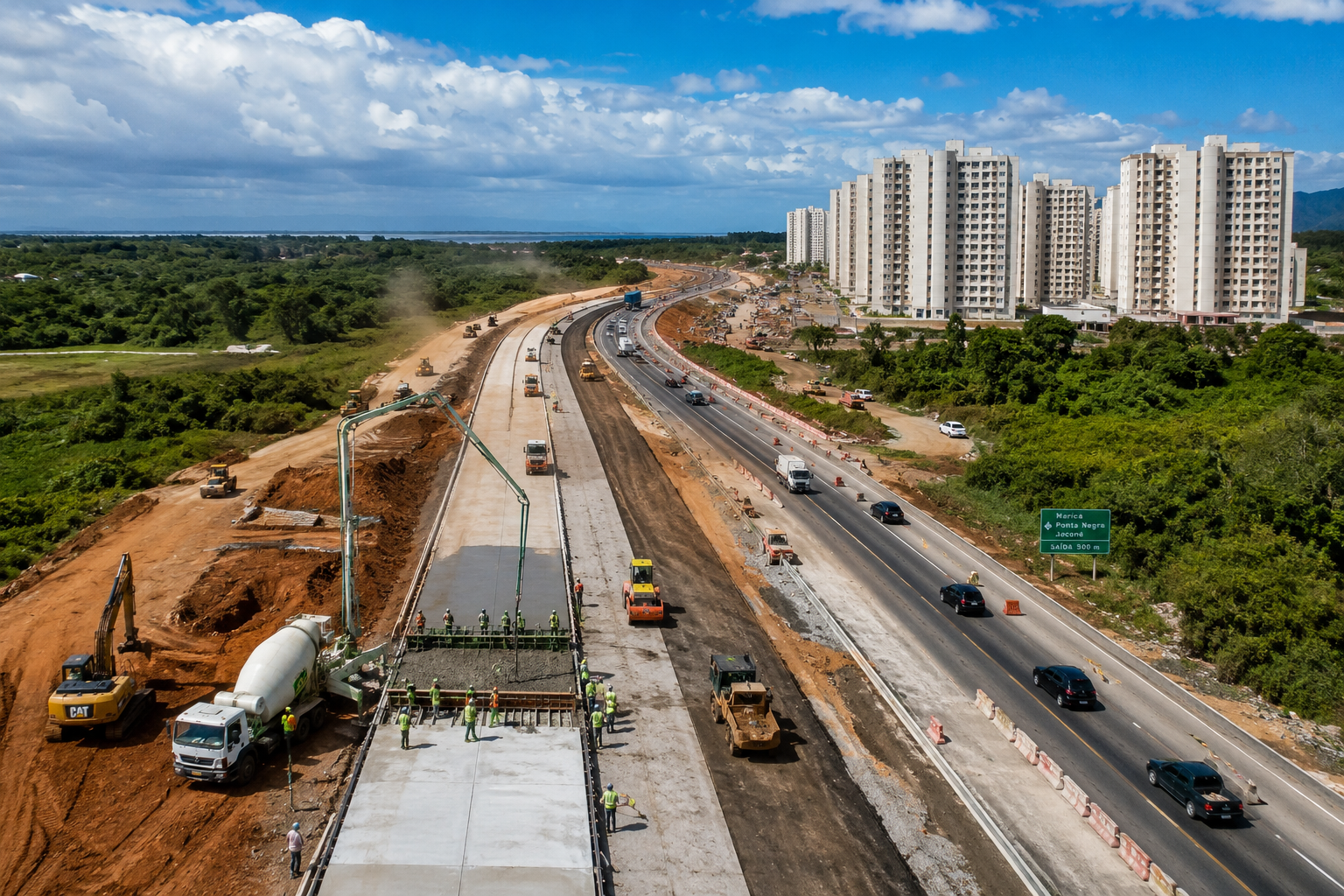
What the Novo PAC Actually Funds — and Why It Matters for Residential Real Estate
The federal government launched Novo PAC as a successor to the original PAC program, tripling the investment envelope compared to earlier cycles [2]. The program spans six thematic axes: transportation, energy, water and sanitation, cities, health and education, and digital infrastructure [5]. For residential developers, the most immediately relevant axis is transportation, which covers highway duplication, new federal road construction, and freight railway expansion.
The Ministry of Transportation has confirmed that highway and railway works under Novo PAC carry guaranteed resources and locked physical-financial schedules — meaning projects will not stall mid-construction due to budget gaps [4]. This guarantee is significant. In previous infrastructure cycles, stalled works created stranded land investments for developers who had positioned too early. The current program’s funding structure reduces that risk materially.
Key transportation allocations include:
| Infrastructure Type | Estimated Investment | Primary Regions Benefited |
|---|---|---|
| Federal highway duplication | R$80+ billion | South, Southeast, Northeast |
| New highway construction | R$45+ billion | Center-West, North |
| Railway expansion (freight/passenger) | R$60+ billion | Southeast, Center-West |
| Urban mobility and access roads | R$30+ billion | Metropolitan areas nationwide |
Beyond transportation, the sanitation and urban infrastructure axes create secondary value for residential projects. When a municipality receives Novo PAC funding for water treatment and sewage networks, previously unbuildable peripheral land becomes viable for medium-density housing. Developers who track sanitation project timelines alongside highway works can identify compound value-creation zones — areas where multiple Novo PAC axes converge simultaneously.
The Bahia state presentation by the Ministry of Casa Civil illustrates this convergence clearly: major highway investments were announced alongside port upgrades and urban mobility projects, creating integrated development corridors rather than isolated road improvements [1]. Developers who understand these multi-axis dynamics can position residential projects to benefit from layered infrastructure improvements rather than a single road project.
How Highway-Adjacent Land Values Respond to Infrastructure Megaprojects 2026
The relationship between confirmed infrastructure investment and land value appreciation follows a predictable but time-sensitive pattern. The moment a project moves from proposal to signed contract — with published physical-financial schedules — land within a 5-kilometer radius of the corridor begins repricing. This window, often called the “announcement premium,” is the most valuable entry point for developers.
“Infrastructure does not just move people and goods — it moves capital. The developer who reads the project map before the bulldozer arrives captures the margin that the market will later price in automatically.”
Historical Brazilian data from previous PAC cycles shows land appreciation of 15-40% within 36 months of confirmed highway works in previously underserved corridors. The variance depends on three factors: proximity to urban centers, existing land use (agricultural land reprices faster than already-subdivided plots), and the presence of complementary investments like sanitation and digital connectivity.
The three phases of infrastructure-driven land appreciation:
- Announcement phase — Land near confirmed corridors begins repricing as informed buyers and developers acquire positions. Appreciation is 5-15% above baseline market growth.
- Construction phase — Active works attract labor, logistics, and service businesses. Secondary land uses (commercial, logistics) compete with residential for parcels. Appreciation accelerates to 20-35%.
- Completion phase — Commute times drop, connectivity improves, and the residential market broadens to include end-users rather than just investors. Sustained appreciation of 10-20% per year in the first post-completion cycle is common in Brazilian markets.
Developers who enter during Phase 1 capture the full appreciation curve. Those who wait until Phase 3 pay market prices that already reflect infrastructure value — reducing margin and increasing risk.
For context on how this plays out in practice, the real estate market in Greater Florianopolis demonstrates exactly this pattern: infrastructure improvements to access corridors have driven sustained appreciation across multiple market cycles, rewarding early-positioning developers.

Site Selection Tactics for Developers Targeting Novo PAC Corridors
Translating the R$372 billion investment map into actionable site selection requires a structured methodology. The federal government publishes Novo PAC project portfolios by state and by infrastructure type, with GPS-referenced corridor maps available through the Ministry of Transportation and Casa Civil. Cross-referencing these maps with municipal zoning data and existing land ownership records creates a shortlist of acquisition targets.
A practical four-step site selection framework:
Step 1 — Map confirmed corridors. Use only projects with signed contracts and published physical-financial schedules [4]. Proposals and feasibility studies do not carry the same land-value signal. The distinction between “announced” and “contracted” is critical.
Step 2 — Identify the 5-kilometer influence zone. Within this radius, filter for parcels with residential zoning potential or rezoning likelihood. Parcels adjacent to planned interchange points (on-ramps, off-ramps, service roads) carry the highest premium because they benefit from both connectivity and commercial spillover.
Step 3 — Assess complementary infrastructure. Parcels where Novo PAC highway investment overlaps with sanitation or urban mobility funding represent compound value-creation zones. A parcel that gains road access AND sewage connectivity simultaneously moves from marginal to prime residential land in a single infrastructure cycle.
Step 4 — Model absorption timelines. Highway-adjacent residential projects in inland markets typically require 18-36 months from land acquisition to sales launch. Developers must align their project timeline with the infrastructure completion schedule to ensure that access improvements are visible to buyers at the point of sale.
The best places to invest in Brazilian property consistently share one characteristic: they sit at the intersection of infrastructure investment and population growth pressure. Novo PAC corridors in the Center-West and Northeast are creating new versions of this intersection in markets that were previously overlooked.
Partnership Models with Public Works Programs
Beyond land acquisition, developers can structure formal partnerships with public works programs to reduce infrastructure costs and accelerate project delivery. Three models are gaining traction in 2026:
Model 1 — Access road co-investment. A developer funds the construction of a secondary access road connecting a residential project to a Novo PAC highway, in exchange for naming rights, commercial strip rights along the road, or a municipal tax incentive. The public authority gains infrastructure at reduced cost; the developer gains a direct connection that enhances project value.
Model 2 — Utility extension agreements. When Novo PAC sanitation works pass within 2 kilometers of a development site, developers can negotiate extension agreements with municipal utilities to bring water and sewage connections to the project. The cost is shared, and the developer gains infrastructure that would otherwise require a decade of municipal budget cycles.
Model 3 — Social housing integration. Novo PAC includes a significant social housing component [5]. Developers who include a percentage of subsidized units within market-rate projects can access federal financing lines, infrastructure subsidies, and expedited licensing — reducing the effective cost of the overall project.
Regional Hotspots: Where Infrastructure Megaprojects 2026 Create the Strongest Residential Opportunity
Not all Novo PAC corridors carry equal residential development potential. The strongest opportunities emerge where highway investment intersects with existing population pressure and constrained housing supply.
Northeast Brazil — Bahia and Pernambuco corridors. The federal government has highlighted major highway and port investments across Bahia, creating logistics corridors that connect inland agricultural regions to coastal export hubs [1]. Residential demand along these corridors is driven by logistics workers, agribusiness professionals, and a growing middle class seeking affordable homeownership outside congested state capitals.
Center-West — Mato Grosso and Goias expansion. Agricultural export growth has already driven population increases in secondary cities across the Center-West. Novo PAC highway duplication projects in this region are reducing travel times between production zones and processing centers, creating new residential demand nodes in cities that lacked adequate housing stock.
South Brazil — Santa Catarina and Parana connectivity. The southern region benefits from both highway and railway investments under Novo PAC [3]. Santa Catarina, in particular, is experiencing a convergence of infrastructure investment and organic population growth driven by quality-of-life migration. Markets like Florianopolis and its surrounding municipalities are already demonstrating the appreciation dynamics that infrastructure-linked growth produces.
For investors considering the southern corridor, the advantages of investing in studios in Florianopolis illustrate how infrastructure-supported demand translates into strong rental yields and capital appreciation — a model applicable to other Novo PAC-linked markets.
The growth of the Ingleses region in Florianopolis further demonstrates how infrastructure improvements to access corridors drive quality-of-life improvements that attract new residents and sustain property values across market cycles.
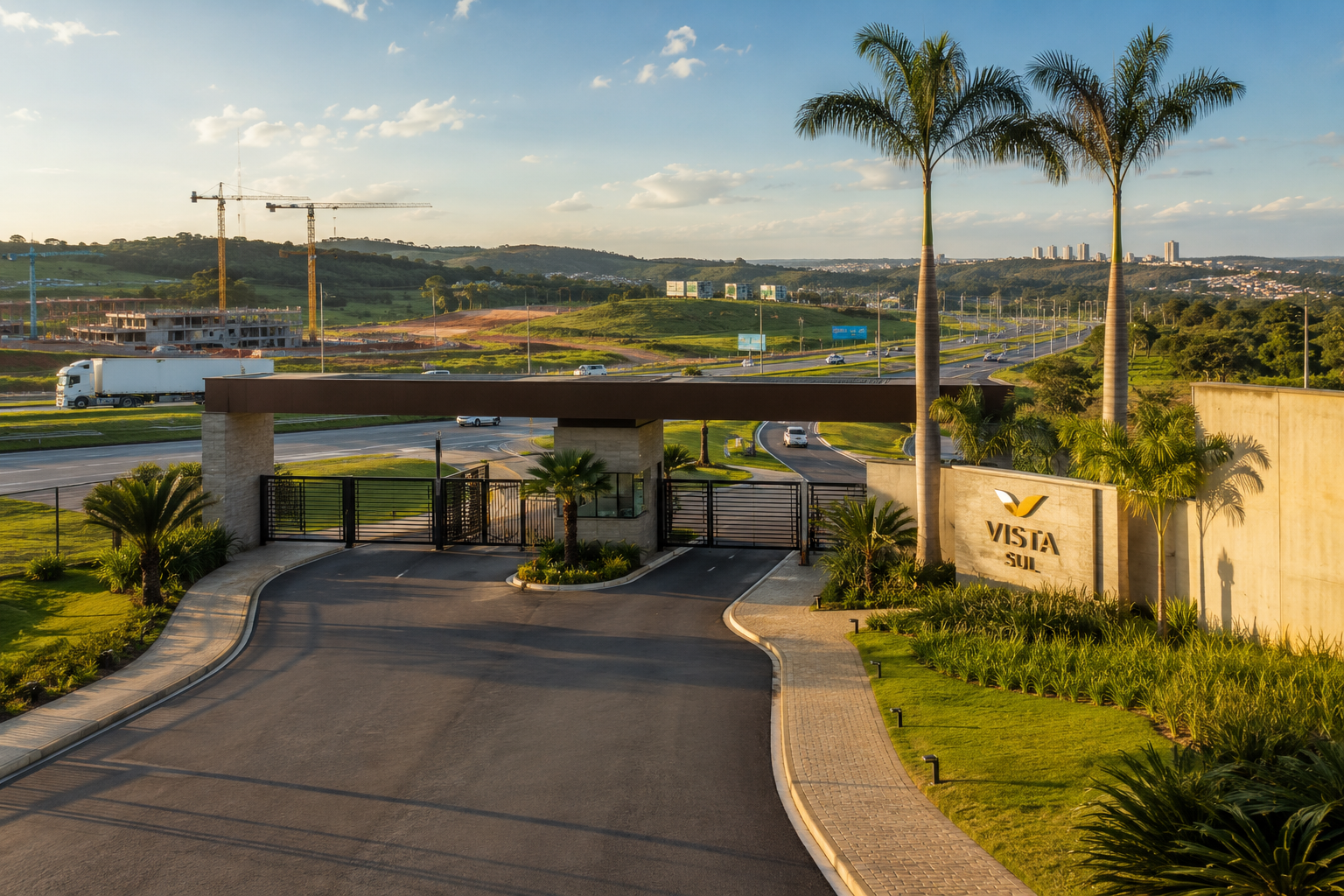
Financial Structuring: Capturing Infrastructure Value in Project Economics
Understanding the infrastructure opportunity is necessary but not sufficient. Developers must also structure project finances to capture the value created by Novo PAC investment rather than simply benefiting from it passively.
Land acquisition timing is the primary lever. Acquiring land during Phase 1 (announcement phase) at pre-infrastructure prices, then launching sales during Phase 2 (construction phase) when the market has partially repriced, generates the strongest margin. This requires capital availability and risk tolerance that not all developers maintain — but joint ventures and land banking funds can provide access for smaller operators.
Pre-launch pricing strategy must account for infrastructure milestones. Projects near Novo PAC corridors can justify price-per-square-meter premiums of 10-25% over comparable projects without infrastructure adjacency, provided the marketing narrative clearly connects the project to confirmed (not proposed) infrastructure works. Buyers respond to specificity: “This project is 800 meters from the BR-101 duplication currently under construction with a confirmed 2027 completion” is a more powerful sales argument than a general reference to regional growth.
The value appreciation for off-plan buyers is particularly pronounced in infrastructure-adjacent projects, where the appreciation curve from land acquisition to project delivery is steeper than in already-mature markets. This dynamic makes off-plan launches near Novo PAC corridors especially attractive for investors seeking capital gains rather than immediate yield.
Financing access improves with infrastructure adjacency. Brazilian development finance institutions, including Caixa Economica Federal and BNDES, have historically offered preferential financing terms for projects in areas receiving public infrastructure investment. Developers who can document a project’s proximity to Novo PAC works — and demonstrate how the infrastructure improves project viability — gain access to lower-cost capital that directly improves returns.
For developers with active projects, tracking construction progress and communicating milestones to buyers builds confidence and supports secondary market liquidity. The construction progress at Tramonto developments demonstrates how transparent milestone communication strengthens buyer confidence and supports pricing power throughout the construction cycle.
Risk Factors and Due Diligence Essentials
No infrastructure-linked investment thesis is without risk. Developers and investors must conduct rigorous due diligence before committing capital to Novo PAC-adjacent sites.
Key risks to assess:
- Schedule slippage. Even with guaranteed resources, construction timelines can extend due to environmental licensing delays, land acquisition disputes along the right-of-way, or supply chain disruptions. Developers should build 12-18 month schedule buffers into their project timelines.
- Corridor route changes. Final engineering designs sometimes shift highway alignments by several kilometers from preliminary maps. Developers should acquire land only after final engineering approval (projeto executivo) is published, not based on preliminary corridor maps.
- Zoning misalignment. Infrastructure investment does not automatically trigger residential zoning approvals. Developers must engage with municipal planning authorities early to confirm that residential use is permitted or achievable through rezoning processes.
- Market absorption capacity. Inland markets newly opened by highway investment may have limited existing demand. Developers must model realistic absorption rates based on local employment growth, migration trends, and income levels — not simply on infrastructure proximity.
Thorough due diligence on these factors separates developers who build sustainable businesses from those who acquire land based on enthusiasm and lose capital when infrastructure timelines or market conditions disappoint.
Conclusion
Infrastructure Megaprojects 2026: R$372 Billion Novo PAC Boost for Highway-Adjacent Residential Developments represents one of the most significant structural opportunities in Brazilian real estate in a generation. The combination of guaranteed funding, locked construction schedules, and multi-axis infrastructure investment creates identifiable zones of land value appreciation that disciplined developers can systematically target.
Actionable next steps for developers and investors:
- Download the official Novo PAC project portfolio by state from the Ministry of Casa Civil and cross-reference with municipal zoning maps to identify Phase 1 acquisition targets.
- Engage a specialized real estate attorney to review land titles and zoning status for parcels within 5 kilometers of confirmed highway corridors before making any acquisition offer.
- Initiate conversations with municipal planning authorities in target markets to assess rezoning feasibility and identify any existing infrastructure extension agreements.
- Model project economics using Phase 1 land costs and Phase 2 sales prices to confirm that margin targets are achievable before committing capital.
- Explore co-investment structures — access road agreements, utility extension partnerships, or social housing integration — that reduce effective infrastructure costs and accelerate licensing.
- Monitor construction progress on Novo PAC works quarterly and align project launch timing with visible construction milestones that buyers can verify independently.
The developers who act on this analysis in 2026 — before the broader market fully prices in Novo PAC’s geographic impact — will capture the appreciation curve that infrastructure investment reliably generates. Those who wait for the market to confirm what the project maps already show will pay full price for value that early movers created.
For those exploring specific markets where infrastructure and residential demand already intersect, reviewing current development opportunities in high-growth corridors provides a concrete starting point for applying these principles.
References
[1] Ministro Da Casa Civil Apresenta Grandes Investimentos Do Novo Pac Para A Bahia – https://www.gov.br/casacivil/pt-br/assuntos/noticias/ministro-da-casa-civil-apresenta-grandes-investimentos-do-novo-pac-para-a-bahia
[2] Governo Lanca Novo Pac E Triplica Investimentos Em Infraestrutura – https://santaportal.com.br/geral/governo-lanca-novo-pac-e-triplica-investimentos-em-infraestrutura
[3] De Saneamento A Rodovias Por Que Os Planos De Investimento Voltaram Ao Setor – https://www.bloomberglinea.com.br/negocios/de-saneamento-a-rodovias-por-que-os-planos-de-investimento-voltaram-ao-setor/
[4] Obras De Rodovias E Ferrovias Do Novo Pac Tem Recursos E Cronograma Fisico Financeiro Garantidos Diz Renan Filho – https://www.gov.br/casacivil/pt-br/assuntos/noticias-do-novo-pac/obras-de-rodovias-e-ferrovias-do-novo-pac-tem-recursos-e-cronograma-fisico-financeiro-garantidos-diz-renan-filho
[5] Governo Federal Lana Novo Pac – https://www.cnt.org.br/agencia-cnt/governo-federal-lana-novo-pac
[6] legis.senado.leg.br – https://legis.senado.leg.br/escriba-servicosweb/reuniao/pdf/12528