

Between 2016 and 2025, the number of rented housing units in Brazil surged by 54.1%, climbing from 12.2 million to 18.9 million [1]. That single figure tells a story developers, investors, and urban planners can no longer afford to ignore. Brazil’s next wave of residential demand — shaped by internal migration and the rise of compact units — is actively reshaping development in major cities, and the window to act on this shift is narrowing fast.
This article breaks down the forces driving that transformation, where the strongest opportunities lie in 2026, and how developers can design, price, and position compact units to serve both end-users and yield-seeking investors.
Key Takeaways
- Rented housing units in Brazil grew by more than 54% between 2016 and 2025, signaling a structural shift away from traditional homeownership.
- Compact apartments — typically 40 to 45 square meters or smaller — now represent roughly 70% of new residential launches in Sao Paulo.
- Brazil’s average household size has fallen to approximately 2.3 persons, fueling demand for smaller, more efficient urban living spaces.
- Internal migration toward secondary cities and metropolitan outskirts is accelerating, supported by government housing programs and employment growth.
- Studio and compact units in Sao Paulo are delivering rental yields of approximately 7.2% annually, making them competitive investment assets.
The Migration Engine: Who Is Moving and Where
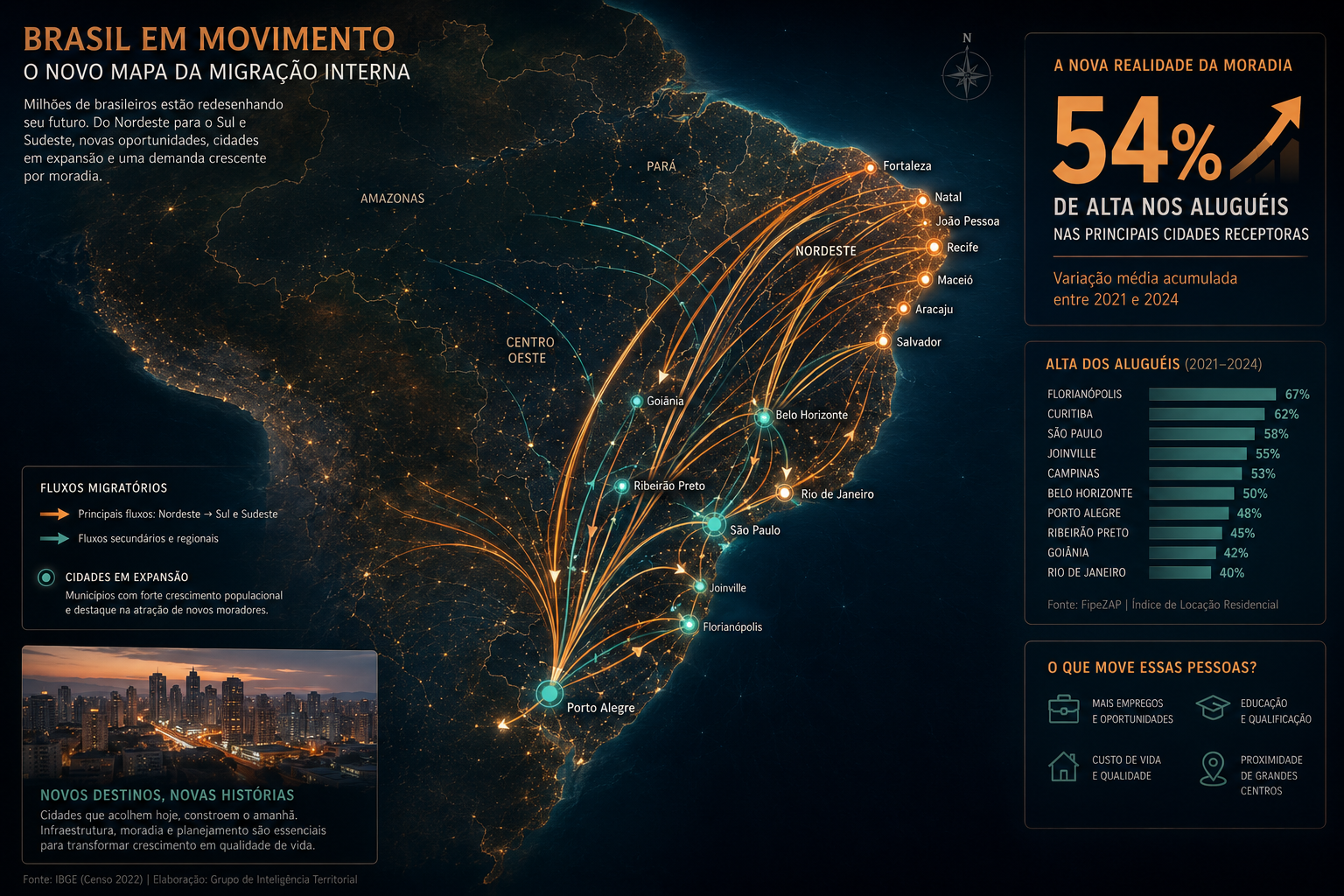
Brazil has always been a country of internal movement. For decades, the dominant flow ran from the rural northeast toward the industrial southeast. In 2026, that pattern is evolving. While Sao Paulo and Rio de Janeiro remain magnets, secondary cities — including Florianopolis, Campinas, Goiania, and Manaus — are absorbing growing shares of domestic migration [6].
Several forces are combining to redirect these flows:
- Affordability pressure in megacities: Land and construction costs in Sao Paulo’s central districts have pushed entry-level buyers and renters toward the urban periphery or toward smaller cities altogether.
- Remote and hybrid work: Technology sector growth and the normalization of remote work have freed a segment of the workforce from geographic constraints, enabling relocation to cities with lower costs and higher quality of life.
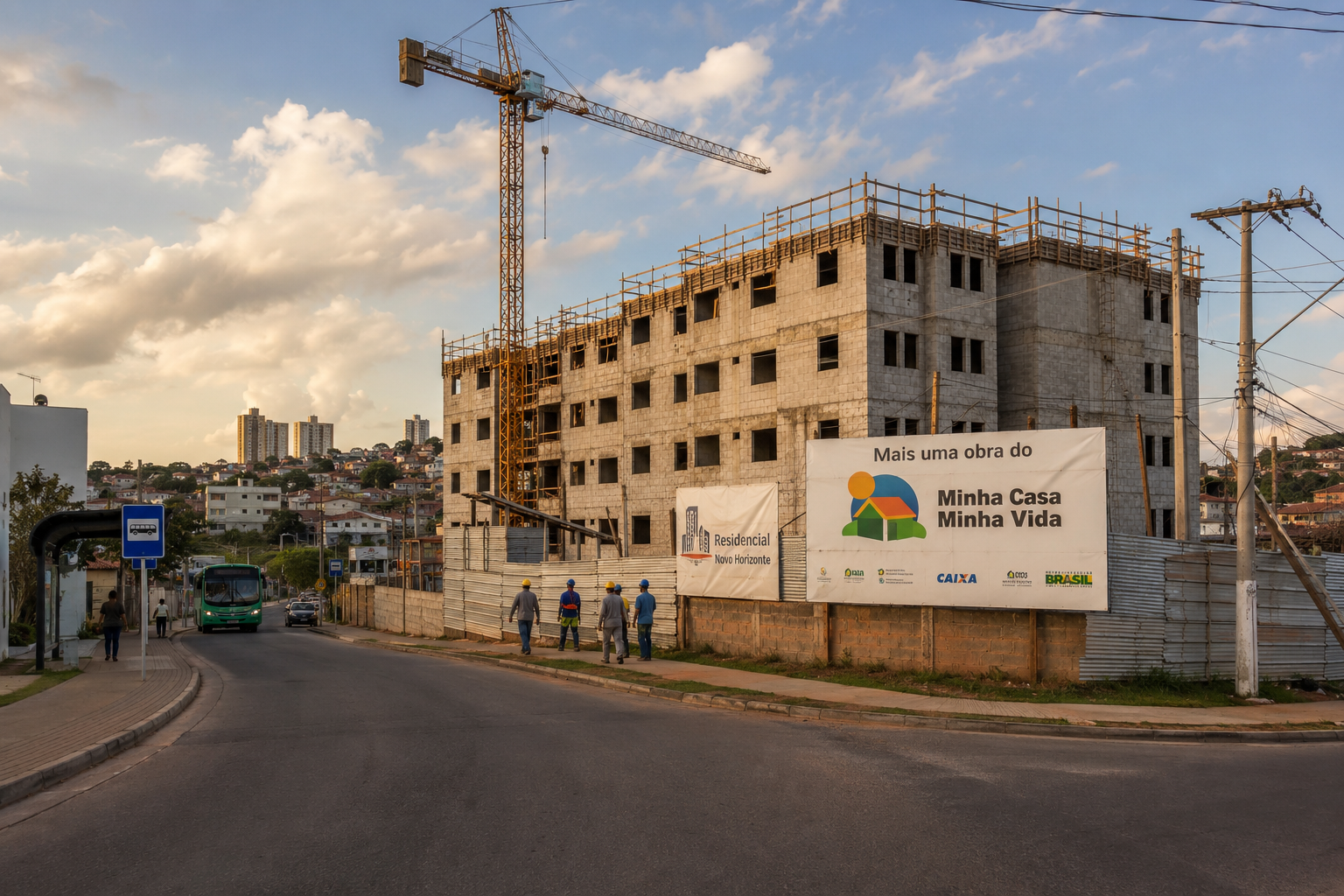
- Government housing incentives: In 2026, the Brazilian government allocated R$15 billion to the Minha Casa, Minha Vida (MCMV) program, targeting 500,000 new housing units with a deliberate focus on secondary cities and metropolitan outskirts [6].
The result is a more distributed demand map. Cities like Florianopolis — already recognized as a top location for high-return property investment — are attracting both young professionals and retirees seeking urban amenities without megacity costs.
What this means for developers: Demand is no longer concentrated in a handful of central districts. Projects positioned in well-connected secondary cities, or in transit-accessible metropolitan outskirts, are increasingly competitive with core-city addresses.
Demographic Shifts Driving the Compact Unit Revolution
The migration story cannot be separated from a deeper demographic transformation. Brazil’s average household size declined from 3.3 persons in 2000 to approximately 2.3 persons by 2026 [5]. Single-person households now represent 18 to 20% of all Brazilian households [5]. These are not temporary fluctuations — they are structural changes rooted in delayed marriage, lower birth rates, rising divorce rates, and longer life expectancy.
This shrinking household profile has a direct impact on unit design. A family of 2.3 persons does not need a 90-square-meter three-bedroom apartment. What they need — and what the market is increasingly delivering — is a well-designed, efficiently planned unit that maximizes every square meter.
“Younger generations, particularly Generation Z, prioritize location and amenities over the size of living spaces.” [2]
That priority shift is not simply a lifestyle preference. It is a rational economic response to urban housing costs. When a central location commands a premium, the trade-off between space and access becomes straightforward for younger buyers and renters.
The proportion of fully paid homeownership in Brazil fell from 66.8% in 2016 to 60.2% in 2025 [4]. With the Selic rate at 15% per annum, real estate financing has become significantly more expensive, pushing more Brazilians into the rental market rather than ownership [4]. This dynamic strengthens the investment case for compact rental units, which benefit from both structural demand and a constrained supply of affordable ownership options.
The Compact Unit Market: Data, Yields, and Design Principles
How Compact Units Are Reshaping Development in Major Cities
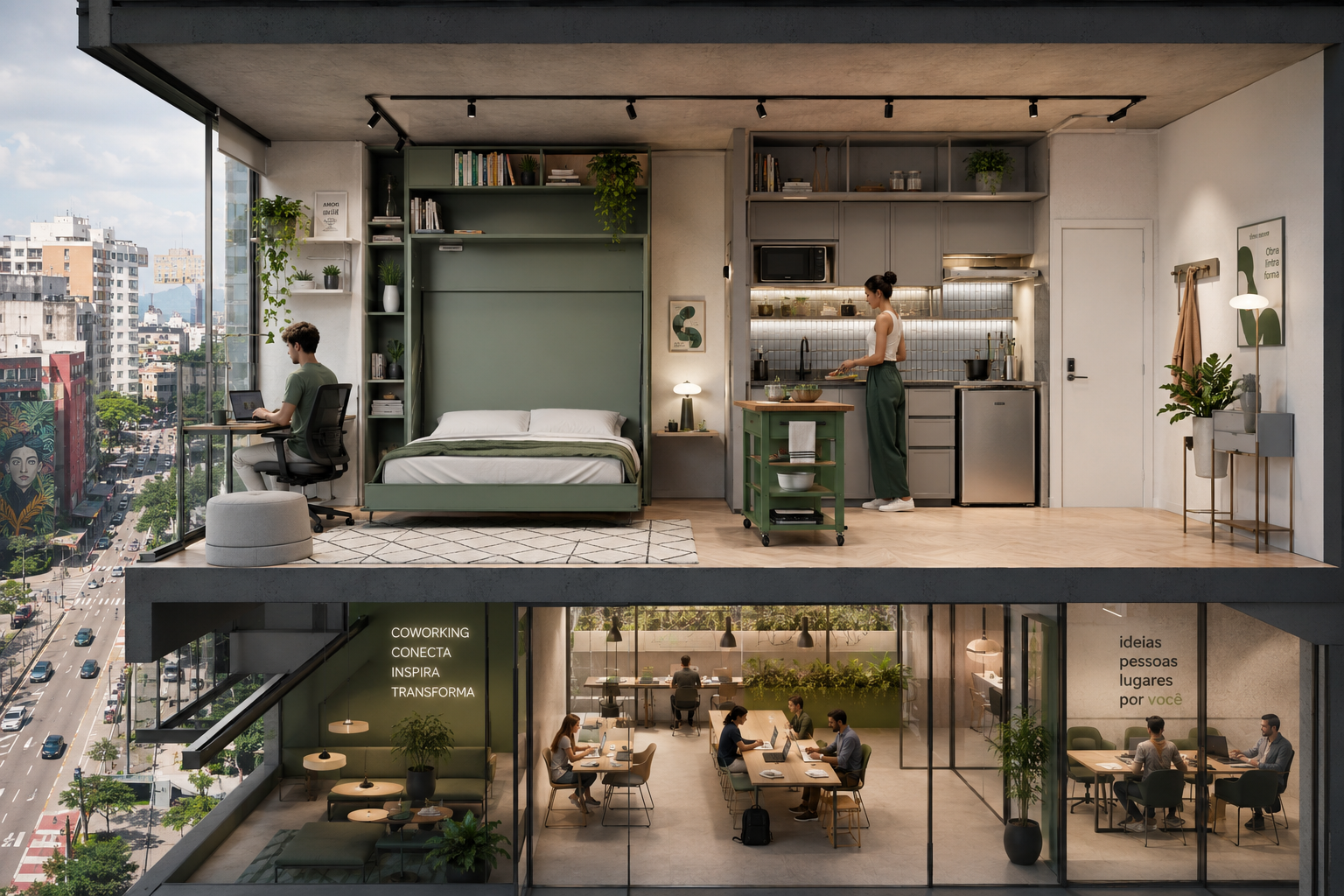
In 2024, compact apartments constituted approximately 70% of new residential launches in Sao Paulo, with unit sizes typically ranging between 40 and 45 square meters or less [2]. Studios accounted for 34% of new housing launches between 2016 and 2022, up sharply from 12% in earlier periods [3]. The number of apartments in Brazil overall grew by 48.7% from 2016 to 2025 [1].
This is not a niche trend. It is the dominant format of new residential supply in Brazil’s largest market.
Revisions to Sao Paulo’s zoning laws played a direct role in enabling this shift. By incentivizing higher-density development near transit corridors and reducing minimum unit size requirements, the city’s regulatory framework aligned with market demand [3]. Other Brazilian municipalities are watching closely, and similar regulatory adjustments are beginning to appear in secondary cities.
Rental Yields and Investment Performance
For investors, the numbers are compelling. In Sao Paulo, compact apartments and studios have achieved rental yields of approximately 7.2% annually [7]. That figure compares favorably with fixed-income alternatives, particularly when factoring in asset appreciation potential in high-demand urban corridors.
| Unit Type | Typical Size | Avg. Annual Yield (SP) | Primary Demand Driver |
|---|---|---|---|
| Studio | 20-30 sqm | ~7.2% | Young professionals, students |
| Compact 1BR | 35-45 sqm | ~6.0-6.8% | Couples, solo migrants |
| Standard 2BR | 55-70 sqm | ~4.5-5.5% | Small families |
| Larger 3BR | 80+ sqm | ~3.5-4.5% | Established families |
The yield premium for compact units reflects both their lower entry price point and the depth of rental demand in urban centers. For investors considering off-plan purchases, compact units in high-migration destinations can deliver appreciation during the construction phase before rental income even begins.
What Buyers and Renters Actually Want
The research is consistent: compact unit buyers and renters are not simply accepting smaller spaces — they are actively choosing them in exchange for specific benefits. Those benefits include:
- Location: Proximity to employment hubs, universities, and transit.
- Amenities: Co-working spaces, gyms, rooftop areas, and package lockers that extend the functional footprint of the unit.
- Design quality: Efficient layouts with convertible furniture, integrated storage, and natural light that make 40 square meters feel larger than they are.
- Digital infrastructure: Reliable high-speed internet is a non-negotiable for remote workers and Gen Z tenants.
Developers who treat compact units as simply “smaller versions” of standard apartments miss the point. The format requires a fundamentally different design philosophy — one where every square meter is intentional.
Where the Opportunity Is Strongest in 2026
Secondary Cities and Metropolitan Outskirts
The MCMV program’s R$15 billion allocation in 2026 is not flowing primarily to Sao Paulo’s Paulista Avenue [6]. It is targeting the outskirts of major metros and secondary cities where land costs allow for viable unit economics at accessible price points. Developers who position projects in these corridors benefit from both government-subsidized demand and the organic migration flows described earlier.
Florianopolis offers a clear example. The city’s real estate market has shown consistent strength, with strong sales performance driven by migration from larger cities and a growing technology sector. The Ingleses region of Florianopolis illustrates how infrastructure investment and quality-of-life factors combine to drive property appreciation in areas that were considered peripheral just a decade ago.
For investors interested in studio-format assets specifically, the advantages of investing in studios in Florianopolis are well-documented: lower capital outlay, strong rental demand from a growing professional population, and a market that has outperformed broader Brazilian residential benchmarks.
Northeast Interiors and Emerging Corridors
Beyond the south and southeast, Brazil’s northeast is experiencing its own residential demand wave. Cities like Fortaleza, Recife, and Natal are seeing increased investment in compact residential formats, driven by improving infrastructure, tourism-linked employment, and MCMV-funded development. These markets carry higher risk but also higher potential for early-mover appreciation.
Design and Pricing Strategies for Developers
For developers aiming to capture this demand wave, several principles apply:
Price per square meter, not per unit: Compact units must be priced to reflect their efficiency premium, not discounted as inferior products. A well-designed 38-square-meter studio in a prime location commands a higher price per square meter than a poorly designed 60-square-meter apartment nearby.
Amenity investment is not optional: Shared spaces — co-working areas, social lounges, fitness facilities — directly influence occupancy rates and rental yields. They also reduce the perceived sacrifice of smaller private space.
Build for the tenant, design for the investor: Units that photograph well, have flexible furniture systems, and can be managed remotely attract both short-term rental platforms and institutional investors.
Phased delivery and off-plan positioning: Projects like those tracked through Quadragon’s active developments demonstrate how phased construction and transparent progress reporting build buyer confidence in off-plan purchases.
Regulatory and Financing Landscape in 2026
The regulatory environment in 2026 is broadly supportive of compact residential development, though challenges remain. Zoning reforms in Sao Paulo have set a precedent that other cities are beginning to follow [3]. However, municipal-level implementation varies significantly, and developers entering new markets must conduct thorough due diligence on local zoning codes, environmental licensing requirements, and infrastructure capacity.
On the financing side, the elevated Selic rate continues to constrain mortgage affordability for end-buyers [4]. This has two implications for developers:
- Rental demand remains elevated: Buyers who cannot finance ownership become long-term renters, sustaining occupancy rates for rental-focused compact developments.
- Construction financing is more expensive: Developers must manage cash flow carefully, making off-plan sales strategies and phased delivery schedules more important than ever.
The MCMV program provides a partial counterweight by subsidizing financing for lower-income buyers, effectively creating a floor of demand in the affordable segment [6]. Developers who can structure projects to qualify for MCMV financing — while also appealing to investor buyers at higher price points — access a broader demand base.
Innovative financing structures, including the use of real estate investment funds (FIIs) and emerging digital asset mechanisms, are also expanding the capital available for compact residential development. The intersection of cryptocurrency and real estate development represents one frontier that forward-thinking developers are beginning to explore.
Conclusion: Actionable Steps for Developers and Investors
Brazil’s next wave of residential demand — driven by internal migration and the rise of compact units — is not a future scenario. It is the present reality reshaping development in major cities and secondary markets alike. The data from 2026 is unambiguous: households are shrinking, renting is growing, compact formats dominate new supply, and migration is redistributing demand across a broader geographic map.
For those positioned to act, the following steps are most relevant:
- Identify high-migration secondary cities where land costs remain viable and infrastructure investment is accelerating. Florianopolis, Campinas, Goiania, and select northeast markets deserve close attention.
- Commission demand studies before land acquisition, focusing specifically on household size trends, rental vacancy rates, and proximity to employment and transit.
- Design compact units with the tenant experience as the primary brief, not as a cost-reduction exercise. Amenity quality and layout efficiency are the variables that separate high-yield assets from underperforming ones.
- Explore off-plan investment opportunities in markets with demonstrated sales velocity and transparent construction progress — characteristics that protect investor capital and support pre-delivery appreciation.
- Monitor MCMV program allocations to identify which secondary cities and metropolitan corridors are receiving government-backed demand stimulus in 2026.
For investors and developers seeking current opportunities aligned with these trends, reviewing active residential projects in high-demand Brazilian markets is a practical starting point. Those who understand the structural forces at work — demographic, migratory, regulatory, and financial — are best placed to capture the returns that Brazil’s evolving residential landscape is generating.
References
[1] Rented Housing Units Grew More Than 50 Since 2016 – https://agenciadenoticias.ibge.gov.br/en/agencia-news/2184-news-agency/news/46458-rented-housing-units-grew-more-than-50-since-2016?utm_source=openai
[2] Novos Apartamentos Compactos Sao Desenhados Sob Medida Para A Geracao Z – https://www.terra.com.br/economia/novos-apartamentos-compactos-sao-desenhados-sob-medida-para-a-geracao-z%2C674ebe9b72669b058e3e1c39b12e9a22gvf618rw.html?utm_source=openai
[3] S2226585626000373 – https://www.sciencedirect.com/science/article/pii/S2226585626000373?utm_source=openai
[4] IBGE Data Shows That Brazilians Are Increasingly Far From Owning Their Own Homes – https://en.clickpetroleoegas.com.br/ibge-data-shows-that-brazilians-are-increasingly-far-from-owning-their-own-homes-rents-are-skyrocketing-apartments-are-taking-over-the-capit-mhbb01/?utm_source=openai
[5] Shrinking Family Profiles Driving Compact Housing Designs 2026 – https://quadragon.com.br/shrinking-family-profiles-driving-compact-housing-designs-2026-profitable-micro-units-in-urban-brazil/?utm_source=openai
[6] Secondary Cities Housing Boom 2026 – https://quadragon.com.br/secondary-cities-housing-boom-2026-mcmv-driven-development-plays-in-northeast-interiors-and-sao-paulo-outskirts/?utm_source=openai
[7] Mercado Imoveis Compactos SP Studio Flat – https://proptechbr.com/blog/mercado-imoveis-compactos-sp-studio-flat?utm_source=openai