

Luxury real estate buyers in Rio de Janeiro are no longer just purchasing square meters — they are buying into a curated lifestyle, a brand promise, and a level of service that rivals the world’s finest hotels. In 2026, this shift is reshaping the city’s property landscape in a fundamental way. Co-Branded Luxury Projects in Rio 2026: Partnering with Hospitality Brands for Premium Differentiation has emerged as one of the most powerful strategies in Brazilian real estate, attracting high-net-worth investors, aging demographics seeking service-rich living, and global capital looking for experiential assets with strong appreciation potential.
Key Takeaways
- Co-branded luxury developments in Rio pair real estate assets with globally recognized hospitality brands, delivering premium pricing power and stronger investor returns.
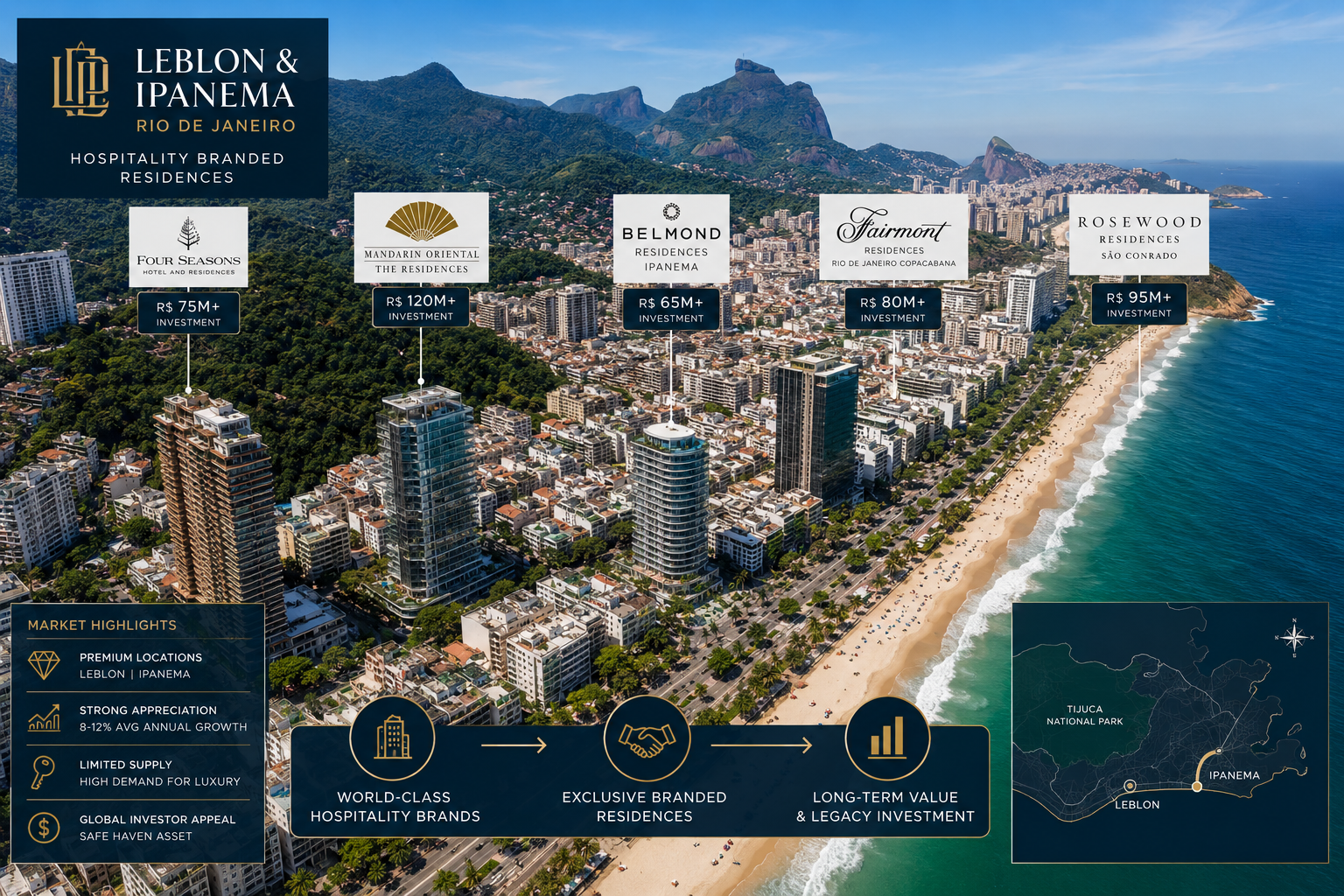
- Flagship projects such as the Sofitel Rio de Janeiro Ipanema and the planned Four Seasons Hotel Rio de Janeiro at Leblon are setting new benchmarks for experiential property in the city.
- Aging affluent demographics are a primary driver of demand for service-oriented, branded residences that offer hotel-grade amenities and care.
- Strategic partnerships between developers, financial institutions, and hospitality operators — such as the Accor and BTG Pactual collaboration — are unlocking capital and credibility for these projects.
- Investors who understand the co-branding model can identify early-stage opportunities in Rio with significant upside, particularly when buying before construction completion.
Why Co-Branded Luxury Is Redefining Rio’s Property Market
Rio de Janeiro has long been one of South America’s most iconic addresses. Yet for years, its luxury real estate sector lagged behind São Paulo in terms of branded residential development. That gap is closing rapidly. In 2026, a new generation of co-branded luxury projects is transforming neighborhoods like Ipanema, Leblon, and Barra da Tijuca into destinations that compete with Miami, Dubai, and the French Riviera for the attention of global wealth.
The co-branding model works by fusing the credibility of an established hospitality or lifestyle brand with the physical asset of a residential or mixed-use development. Buyers are not just acquiring a property — they are gaining access to a brand’s service standards, design philosophy, concierge infrastructure, and global reputation. This alignment creates a perception of quality that standalone developments struggle to replicate.
What makes Rio particularly compelling in 2026?
- A recovering tourism economy boosted by international events and infrastructure upgrades
- A growing population of affluent Brazilians and foreign buyers seeking premium urban living
- A scarcity of beachfront land in high-demand neighborhoods like Ipanema and Leblon
- Increasing interest from aging high-net-worth individuals who prioritize service, wellness, and community
For developers and investors exploring opportunities in Brazilian real estate, Rio’s co-branded luxury sector represents one of the most compelling value propositions currently available in the country.
The Flagship Projects Driving Co-Branded Luxury in Rio 2026
Sofitel Rio de Janeiro Ipanema: A Blueprint for Brand-Led Transformation
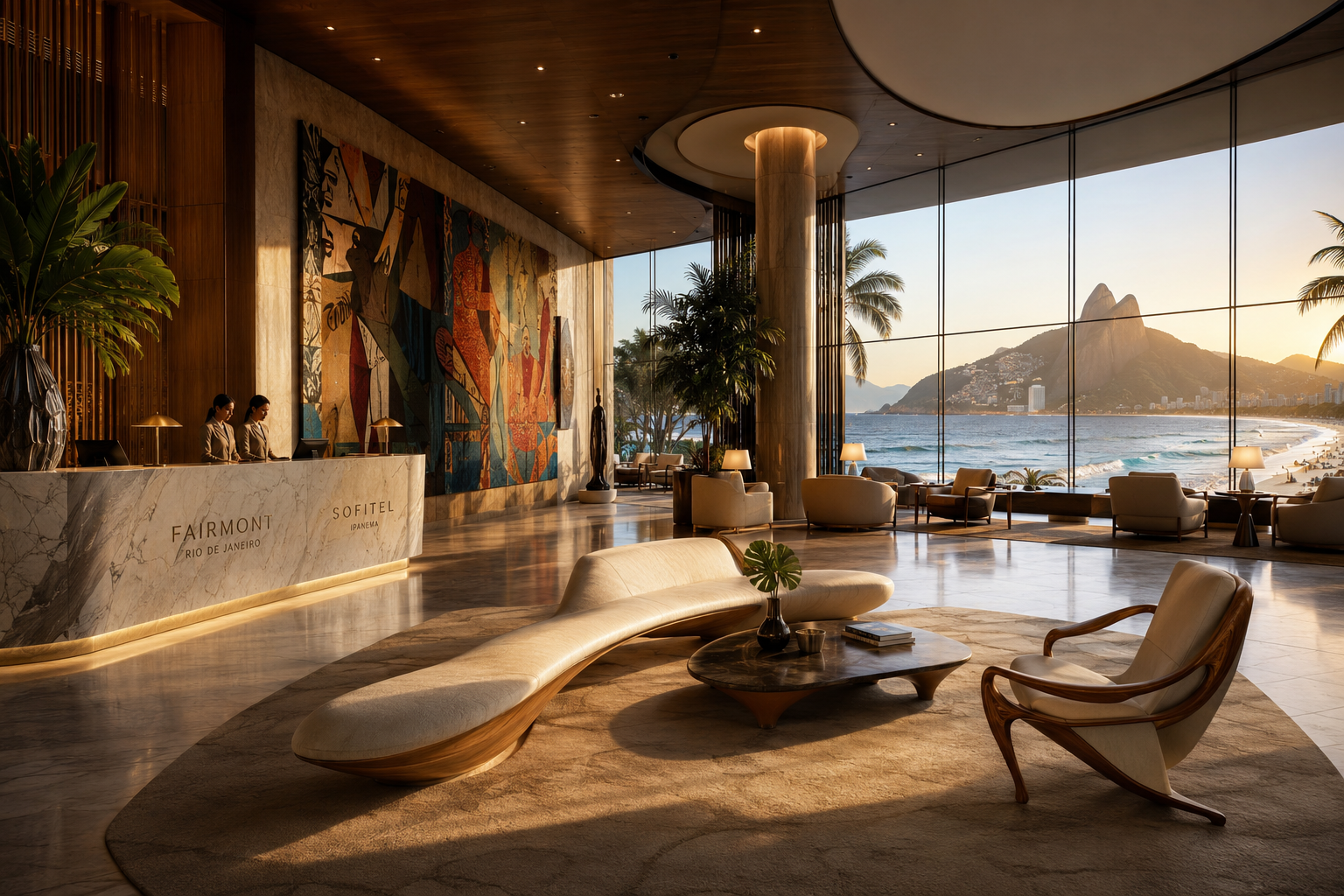
The most closely watched co-branded development in Rio right now is the complete transformation of the Sofitel Rio de Janeiro Ipanema. Accor, in partnership with BTG Pactual — Brazil’s largest investment bank — is converting the property into Sofitel’s first flagship hotel in Brazil, with a scheduled opening at the end of 2026 [1][6]. The project will deliver 172 rooms and suites, blending French elegance with the energy and color of Carioca culture.
The architectural redesign is being led by Patricia Anastassiadis, a renowned Brazilian architect whose approach centers on a contemporary interpretation of quiet luxury. Her design integrates the hotel’s beachfront position with its natural and cultural surroundings, creating spaces that feel both globally sophisticated and deeply local [2].
“Quiet luxury is not about minimalism for its own sake — it is about intentionality. Every surface, every view, every material choice communicates a brand promise.”
The interiors go further, featuring furniture by Oscar Niemeyer and Sergio Rodrigues alongside contemporary artworks by Artur Lescher and Heloisa Crocco [7]. This integration of Brazilian design heritage into a global luxury brand framework is precisely what differentiates a co-branded project from a standard hotel renovation.
Key amenities of the transformed Sofitel Ipanema include:
| Amenity | Details |
|---|---|
| Rooms and Suites | 172 units with beachfront positioning |
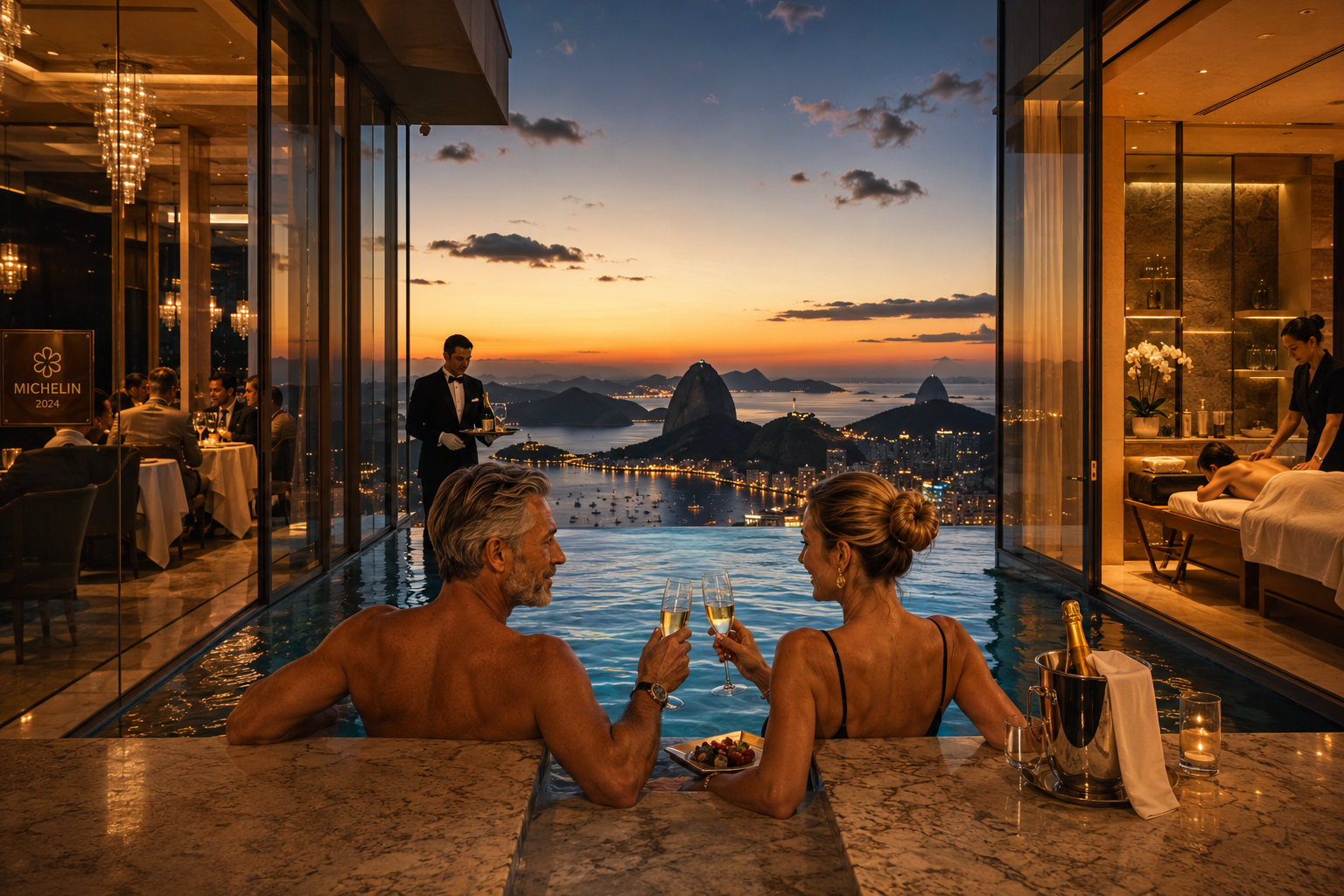
| Culinary Offering | Lasai, a two-Michelin-starred restaurant by chef Rafa Costa e Silva [3] |
| Rooftop Experience | Infinity pool with panoramic views of Ipanema beach [4] |
| Wellness | Full spa and fitness center |
| Beach Club | Private beach club access |
| Club Millésime | 21st-floor exclusive lounge with dedicated butler service [4] |
The inclusion of Lasai — already one of Brazil’s most celebrated dining destinations — illustrates how co-branded luxury projects layer multiple brand partnerships to amplify the overall value proposition. A two-Michelin-starred restaurant is not simply an amenity; it is a statement of intent that attracts a specific caliber of resident and guest.
Four Seasons Hotel Rio de Janeiro at Leblon: Capital Meets Global Brand Power
The second major co-branded development reshaping Rio’s luxury landscape is the planned Four Seasons Hotel Rio de Janeiro at Leblon. In partnership with Catuaí Asset, Four Seasons plans to transform the existing Hotel Marina Palace into approximately 120 rooms and suites with panoramic ocean views, targeting a 2029 opening [5].
This project marks Four Seasons’ return to Brazil and reflects the brand’s broader strategy to expand into high-profile South American destinations, building on existing properties in Buenos Aires, Bogotá, and Cartagena [5]. For Rio, the arrival of Four Seasons carries enormous symbolic weight — it signals that the city has reached a threshold of market maturity that justifies one of the world’s most selective luxury hospitality brands.
The renovation approach is instructive for developers considering co-branded projects. Rather than demolishing the existing structure, the project preserves the architectural legacy of Hotel Marina Palace while introducing modern luxury elements [5]. This balance of heritage and innovation is a recurring theme in successful co-branded luxury developments globally.
The Strategic Logic Behind Hospitality Brand Partnerships
Co-Branded Luxury Projects in Rio 2026: Partnering with Hospitality Brands for Premium Differentiation is not simply a trend driven by aesthetics. There is a rigorous commercial logic underpinning every successful partnership.
Why Developers Seek Brand Partners
For real estate developers, aligning with a recognized hospitality brand delivers several measurable advantages:
- Pricing premium: Branded residences typically command a 20–30% price premium over comparable non-branded properties in the same market.
- Faster absorption: Brand recognition reduces the sales cycle, particularly among international buyers who rely on brand trust as a proxy for quality assurance.
- Access to capital: Institutional investors and banks are more willing to finance projects with a credible brand partner, as demonstrated by the Accor and BTG Pactual collaboration [6].
- Operational infrastructure: Hospitality brands bring proven management systems, staff training protocols, and service standards that developers cannot build from scratch.
Why Hospitality Brands Enter Real Estate
For brands like Accor and Four Seasons, co-branded real estate partnerships offer:
- Asset-light expansion: Brands can grow their footprint without owning the underlying real estate, generating management fees and licensing income.
- Brand visibility in prime locations: A co-branded development in Ipanema or Leblon keeps the brand present in aspirational neighborhoods with high foot traffic and media attention.
- Loyalty ecosystem expansion: Residents and guests who live within a branded property become long-term participants in the brand’s loyalty and rewards programs.
The Role of Financial Partners
The Accor and BTG Pactual partnership for the Sofitel Ipanema is a model worth studying closely [6]. BTG Pactual brings institutional credibility, access to capital markets, and a sophisticated understanding of Brazilian real estate cycles. Accor brings the brand, the operational expertise, and the global distribution network. The combination creates a project that neither party could execute as effectively alone.
This tripartite structure — developer, hospitality brand, and financial institution — is increasingly the standard for premium co-branded developments in Brazil’s major cities.
Aging Demographics: The Hidden Driver of Co-Branded Luxury Demand
One of the most underappreciated forces behind Co-Branded Luxury Projects in Rio 2026: Partnering with Hospitality Brands for Premium Differentiation is demographic. Brazil’s population is aging, and its wealthiest cohort — those aged 55 and above — is actively seeking a new model of urban living that combines the autonomy of ownership with the convenience of hotel-grade services.
This demographic does not want to manage maintenance staff, deal with security concerns, or navigate the complexities of aging infrastructure. They want:
- 24-hour concierge and security
- On-demand wellness and medical services
- Curated social and cultural programming
- Restaurant-quality dining without leaving the building
- Housekeeping and property management included
Co-branded luxury developments address every one of these needs. The Club Millésime concept at Sofitel Ipanema — a dedicated floor with butler service and personalized attention [4] — is a direct response to this demand. It reframes the hotel experience as a residential lifestyle, making the transition from traditional homeownership to branded living feel natural rather than disruptive.
Developers who understand this demographic shift are positioning their projects accordingly. For investors who are already tracking real estate investment opportunities in Brazil, the aging affluent segment represents a demand driver that will only intensify over the next decade.
Design, Art, and Culture as Competitive Differentiators
In a market where every luxury development claims premium finishes and ocean views, design and cultural programming have become the true differentiators. The Sofitel Ipanema’s decision to feature furniture by Oscar Niemeyer and Sergio Rodrigues — two of Brazil’s most celebrated designers — alongside works by contemporary artists Artur Lescher and Heloisa Crocco [7] is a deliberate strategy to create an environment that cannot be replicated.
This approach transforms the property from a building into a cultural institution. Residents and guests are not simply occupying a luxury space — they are living inside a curated collection of Brazilian art and design. That distinction carries enormous value for buyers who see their home as an extension of their personal identity and cultural values.
Design elements that drive premium differentiation:
- Locally sourced materials that connect the property to its geographic context
- Commissioned artworks from established and emerging Brazilian artists
- Architecture that responds to climate, light, and landscape rather than imposing a generic global template
- Culinary programming that elevates food from amenity to cultural experience
The partnership with Lasai [3] exemplifies this philosophy. Chef Rafa Costa e Silva’s two-Michelin-starred restaurant is not a hotel restaurant in the conventional sense — it is a dining destination in its own right, one that brings a specific clientele to the property and elevates the entire building’s cultural status.
Investment Implications: What Buyers and Investors Should Know
For investors evaluating co-branded luxury projects in Rio, several principles should guide decision-making.
Buy Early, Buy Smart
The most significant appreciation in co-branded luxury developments typically occurs between the announcement phase and the completion of construction. Buyers who commit early — before the brand’s full marketing machinery activates — capture the greatest upside. This is a principle that applies across Brazilian real estate markets, as explored in detail for those buying property off-plan in Brazil.
Evaluate the Brand Partner Carefully
Not all hospitality brand partnerships are equal. The key questions to ask:
- Does the brand have a proven track record in residential or mixed-use co-branded projects?
- Is the brand’s target demographic aligned with the local buyer pool?
- What are the ongoing management fee structures, and how do they affect net returns?
- Does the brand bring genuine operational expertise, or is it primarily a licensing arrangement?
Consider the Full Ecosystem
The strongest co-branded developments create an ecosystem of value — dining, wellness, culture, community — that makes the property more than the sum of its parts. The Sofitel Ipanema project, with its Michelin-starred restaurant, rooftop pool, private beach club, and butler service [3][4], is a textbook example of ecosystem thinking applied to luxury real estate.
Investors interested in understanding how premium developments are being structured in Brazil’s most dynamic markets can explore current projects and developments to benchmark quality and positioning.
Monitor Emerging Neighborhoods
While Ipanema and Leblon command the highest prices and the most global attention, the co-branded luxury model is beginning to influence development patterns in other Rio neighborhoods. Barra da Tijuca, with its larger land parcels and growing infrastructure, is attracting developer interest for projects that can deliver the full co-branded experience at a slightly lower entry point.
For investors who have been tracking the performance dynamics of Brazil’s real estate sector, understanding how sales performance is transforming Brazilian property markets provides useful context for evaluating Rio’s trajectory.
Risks and Considerations
No investment thesis is complete without an honest assessment of risk. Co-branded luxury projects in Rio carry several considerations that buyers should weigh carefully.
Execution risk: Large-scale transformations like the Sofitel Ipanema involve complex construction, regulatory approvals, and brand integration processes. Delays are common, and buyers should factor timeline uncertainty into their planning.
Brand dependency: The value premium of a co-branded property is partly tied to the ongoing health and reputation of the brand partner. A brand that loses relevance or faces reputational challenges can erode property values.
Management fee structures: Branded residences typically involve ongoing management fees that can be substantial. Buyers should model the full cost of ownership, including these fees, before committing.
Market liquidity: The pool of buyers for ultra-premium branded residences in Rio, while growing, remains smaller than the broader luxury market. Exit timelines may be longer than for conventional properties.
For those exploring the intersection of innovative financing and real estate investment, understanding cryptocurrency and real estate investment trends in Brazil offers additional context on how capital is flowing into premium developments.
Conclusion
Co-Branded Luxury Projects in Rio 2026: Partnering with Hospitality Brands for Premium Differentiation represents one of the most significant structural shifts in Brazilian real estate in a generation. The convergence of global hospitality brands, institutional capital, world-class design, and a growing affluent demographic seeking service-rich living has created a market segment with genuine long-term momentum.
The Sofitel Rio de Janeiro Ipanema and the planned Four Seasons Hotel Rio de Janeiro at Leblon are not isolated developments — they are leading indicators of a broader transformation that will reshape how luxury real estate is conceived, marketed, and valued in Rio for years to come.
Actionable next steps for investors and buyers:
- Conduct due diligence on brand partnerships — assess the hospitality brand’s track record in co-branded residential projects specifically, not just hotel management.
- Engage early — the most favorable pricing windows in co-branded developments open before construction completion; monitor project announcements closely.
- Evaluate the full amenity ecosystem — properties with multi-layered value propositions (dining, wellness, culture, service) outperform those with a single brand differentiator.
- Consult specialists in Brazilian luxury real estate — the regulatory and financing landscape for premium co-branded projects has unique characteristics that require local expertise.
- Think long-term — the aging affluent demographic driving demand for service-oriented branded residences is a structural trend, not a cycle. Properties that serve this demographic well will hold value through market fluctuations.
To explore current premium development opportunities and understand how leading developers are approaching the Brazilian luxury market, visit Quadragon’s portfolio of developments or get in touch with the team directly.
References
[1] Sofitel Rio De Janeiro Ipanema An Iconic Transformation Redefining Sofitel In Brazil – press.accor.com
[2] Sofitel Rio De Janeiro Ipanema A Transformation Set To Redefine Sofitel In Brazil – hoteldesigns.net
[3] Sofitel Rio De Janeiro Ipanema Lasai – gastronominho.com.br
[4] Sofitel Rio De Janeiro Ipanema – thenewstays.com
[5] Four Seasons Catua Asset Plan Luxury Beachfront Hotel In Rio De Janeiro – soulofhospitality.com
[6] Com Accor E Btg Sofitel Volta Ao Rio Apos Sete Anos – veja.abril.com.br
[7] Article140400 – hotelnewsresource.com