
Only 3% of short-term rental investors in Southern beach markets are currently targeting the micro-market segments that consistently deliver 12-15% net returns — while the majority crowd into oversaturated hubs and watch their margins shrink. In 2026, the gap between average and exceptional Airbnb performance is not about luck or timing. It is about precision: knowing which sub-markets to enter, which regulatory environments to navigate, and which operational levers to pull. This guide on Airbnb Yield Optimization Beyond Regulations 2026: Micro-Market Selection for 12-15% Returns in Southern Beach Hubs breaks down exactly how sophisticated investors are achieving those returns today.
Key Takeaways
- Micro-market selection — not broad city-level analysis — is the single most powerful driver of superior short-term rental yields in 2026.
- Gulf Shores/Orange Beach, Alabama, currently offers the most favorable combination of STR-friendly regulations, strong ADR, and net ROIs of 10-15%.
- Regulatory compliance is a competitive moat: markets with strict licensing weed out amateur operators and protect yields for compliant investors.
- Emerging Southern beach hubs like Balneário Camboriú, Brazil, offer underserved demand and professional management upside that established U.S. markets cannot match.
- Dynamic pricing, niche tourism targeting, and pre-construction entry points are the three operational strategies that separate top-performing listings from the average.
Why Most Investors Get Southern Beach Markets Wrong
The most common mistake in short-term rental investing is treating an entire coastal city as a single market. Myrtle Beach, South Carolina, for example, shows an average annual revenue of just $26,016, an ADR of $248, and an occupancy rate of 38% — with active listings growing by 120.7% in a single year [3]. Those headline numbers discourage many investors. But within Myrtle Beach, specific zip codes near the Grand Strand’s quieter northern sections or oceanfront corridors outperform the city average by 40-60%.
The same logic applies across every Southern beach hub. Micro-market selection — analyzing performance at the neighborhood, street, or even building level — is what separates investors earning 6% gross yields from those reaching 12-15% net returns.
The Saturation Trap
Sean Rakidzich, a 155-property STR operator, puts it plainly: focus on markets with low entry prices and thin competition, because saturated Sun Belt cities compress margins [5]. In 2026, that warning is more relevant than ever. Supply growth in major coastal markets has outpaced demand recovery in several areas, squeezing RevPAR and forcing underprepared investors to discount aggressively.
The solution is not to avoid Southern beaches. It is to go deeper into the data and find the pockets of genuine scarcity.
The 2026 Southern Beach Market Landscape: A Data-Driven Comparison
Understanding where to invest requires a clear-eyed look at current performance metrics across the leading Southern beach hubs.
Key West, Florida
Key West remains the revenue king among U.S. coastal STR markets. According to StaySTRA data, the market generated an average annual STR revenue of $128,009 over the trailing 12 months ending February 2026, with an ADR of $689 [1]. However, entry prices are prohibitive for most investors, and the regulatory environment has tightened considerably. The path to 12-15% net returns here requires either significant capital or a highly differentiated luxury product.
Gulf Shores and Orange Beach, Alabama
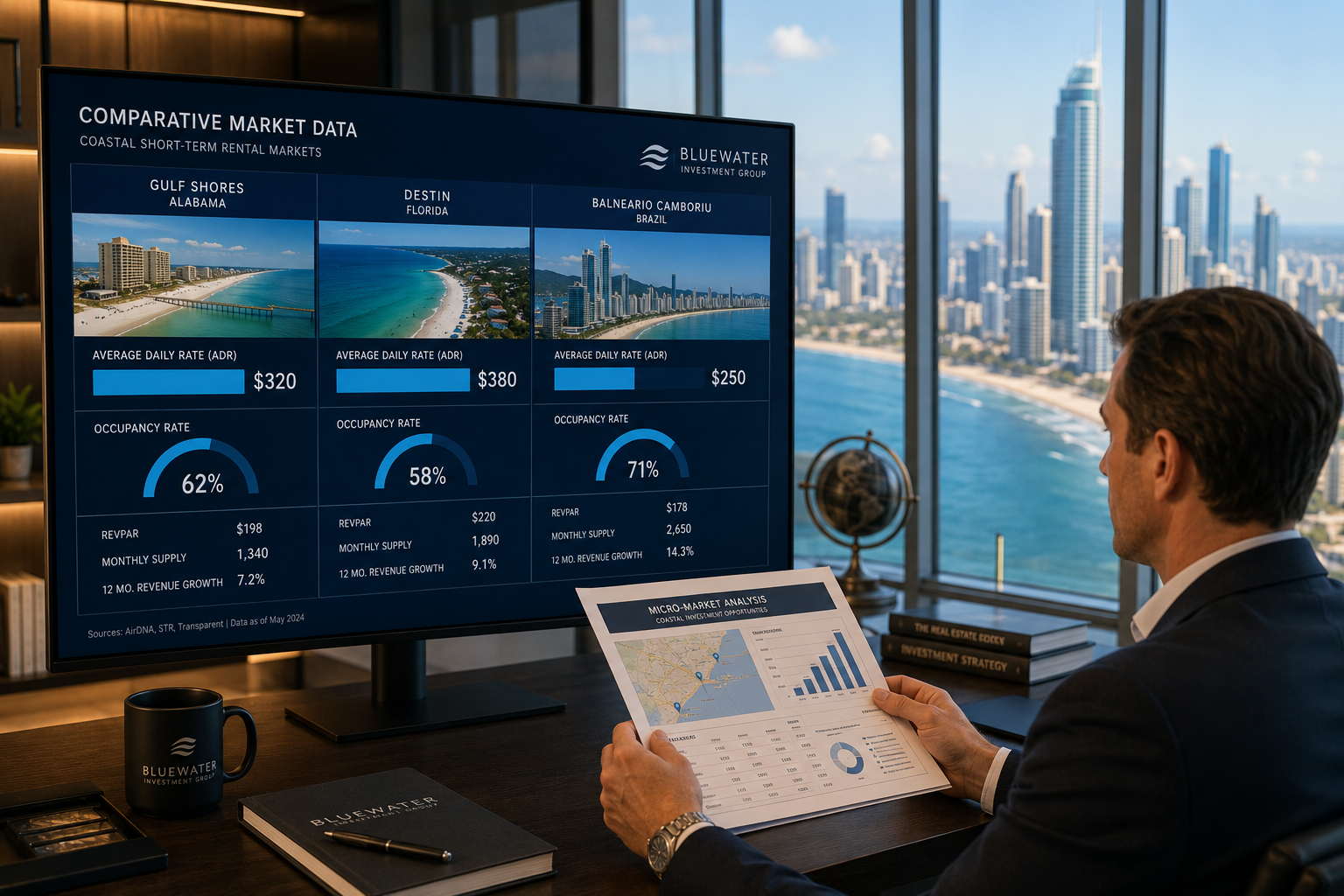
This market represents the most compelling risk-adjusted opportunity in the U.S. Southern beach landscape right now. Current metrics include:
| Metric | Gulf Shores / Orange Beach |
|---|---|
| Average Daily Rate (ADR) | $320 |
| Occupancy Rate | 62% |
| RevPAR | $198/night |
| Monthly Revenue | ~$5,950 |
| Annual Gross Revenue | $65,000 – $95,000 |
| Net ROI Range | 10-15% |
| Median Condo Price | $500,000 |
| Regulatory Environment | STR-friendly, licensing required |
[2]
The STR-friendly regulatory stance of Alabama’s Gulf Coast is a meaningful competitive advantage. Licensing requirements exist but are straightforward, and the local government has not moved toward the restrictive caps seen in Florida’s larger markets. For investors seeking Airbnb yield optimization beyond regulations in 2026, this combination of strong ADR, solid occupancy, and a cooperative regulatory climate is difficult to beat.
Destin and 30A, Florida
The Emerald Coast commands premium rates — an ADR of $380, occupancy of 58%, and RevPAR of $220 per night, equating to roughly $6,600 monthly [2]. Annual gross revenues range from $70,000 to $110,000, with net ROIs of 7-11%. The higher entry price (median above $700,000) compresses yields compared to Gulf Shores, but the brand recognition and repeat-visitor loyalty of 30A properties support premium pricing power.
Key insight: Within the 30A corridor, micro-markets matter enormously. A property in Rosemary Beach or WaterColor commands 25-35% higher ADR than a comparable unit in Fort Walton Beach, despite similar distances from the water.
Miami Beach, Florida
Miami Beach shows an average annual revenue of $43,924, an ADR of $364, and an occupancy rate of 41.3%, with supply growing 78.5% [4]. The regulatory environment is strict, with 85% of listings showing active registration [2]. This is actually a positive signal for compliant investors: regulatory friction reduces competition from casual hosts and protects the revenue pool for operators who do the compliance work correctly.
Comparing DSCR Viability
At current DSCR loan rates near 7.5%, a property needs approximately $50,000 in annual gross revenue on a $400,000 purchase to achieve a 1.0 DSCR [1]. Gulf Shores comfortably clears this threshold. Key West exceeds it dramatically. Destin and Miami Beach meet it on mid-range properties. Myrtle Beach, with its average of $26,016 in annual revenue, requires careful micro-market selection to achieve DSCR viability.
Micro-Market Selection Framework for 12-15% Returns
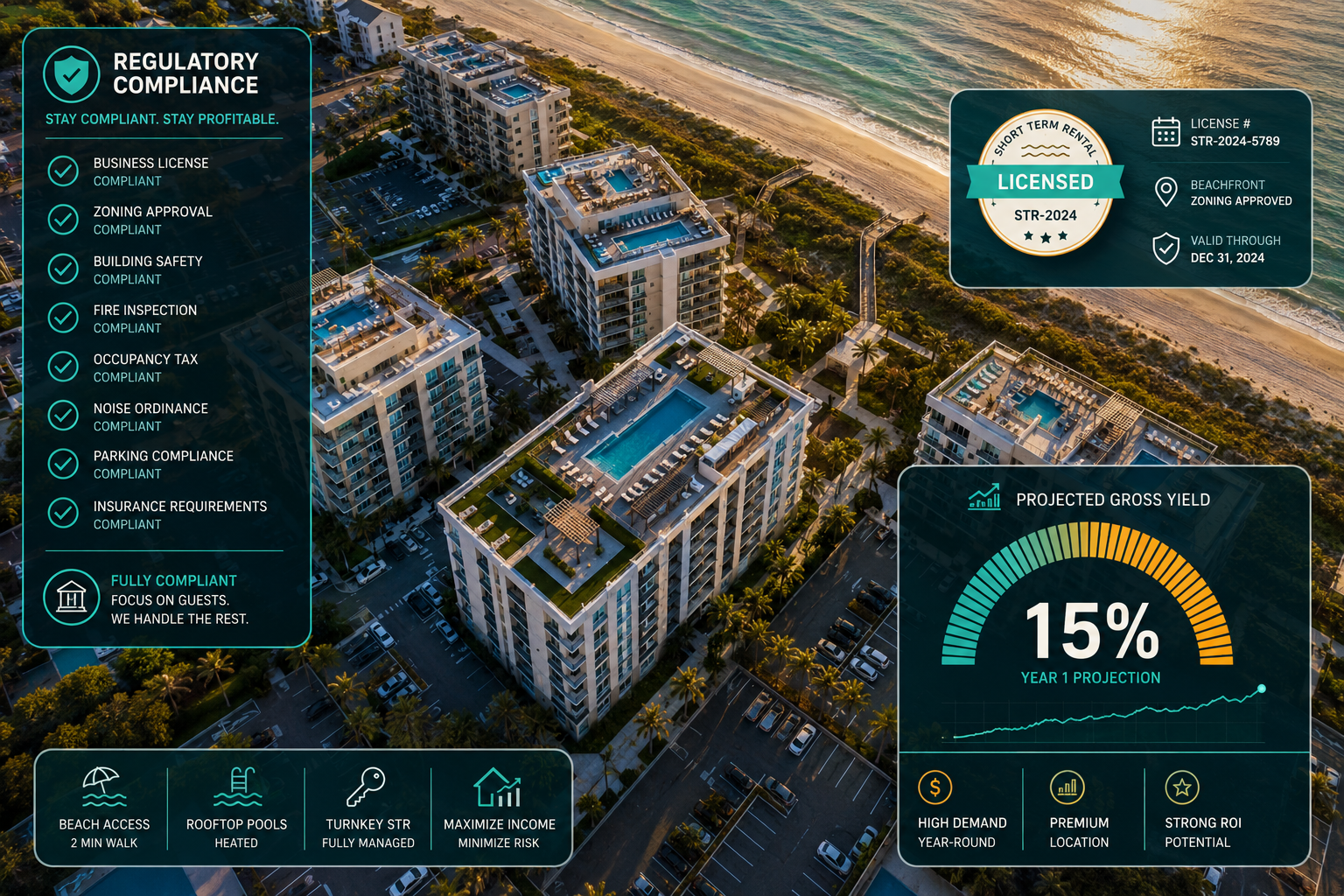
Achieving the upper end of the return range — 12-15% net — requires a systematic approach to market selection that goes beyond reading city-level reports.
Step 1: Identify Demand Drivers That Are Structurally Durable
Not all beach demand is equal. Markets driven by:
- Niche tourism (fishing tournaments, surf competitions, music festivals)
- Medical or wellness tourism (proximity to health facilities, wellness retreats)
- Drive-market proximity (within 4-6 hours of major metro populations)
…tend to show more stable year-round occupancy than markets dependent on a single seasonal peak. Gulf Shores benefits from all three: it draws Gulf fishing enthusiasts, wellness-focused travelers from Atlanta and Birmingham, and is within driving distance of 20+ million people in the Southeast.
Step 2: Analyze Supply Constraints at the Micro Level
Look for sub-markets where new supply is physically or legally constrained. Barrier islands, historic districts, and areas with strict building height limits naturally cap supply growth. When demand grows but supply cannot follow, ADR and occupancy both rise — the ideal conditions for yield expansion.
Step 3: Stress-Test Against Seasonal Volatility
Destin/30A peaks sharply in summer and drops significantly in winter [2]. A property generating $110,000 in a strong year may produce $70,000 in a weak one. Build financial models using the lower end of the revenue range and stress-test against a 20% revenue decline before committing capital.
Step 4: Calculate True Net Yield
Gross revenue figures are marketing tools. True net yield accounts for:
- Platform fees (typically 3% for hosts on Airbnb)
- Professional property management (20-30% of gross revenue)
- Maintenance reserves (5-8% of gross revenue)
- Insurance (STR-specific policies run 2-3x standard homeowner rates)
- Local taxes and licensing fees
- Mortgage debt service
A property generating $85,000 gross in Gulf Shores, purchased for $500,000 with a 25% down payment, can realistically achieve 11-14% cash-on-cash return after all expenses — landing squarely in the target range.
The Emerging Opportunity: Balneário Camboriú and Brazilian Southern Beach Hubs
While U.S. Southern beach markets offer proven data and established infrastructure, the most compelling frontier for Airbnb yield optimization beyond regulations 2026 may lie further south. Balneário Camboriú, located on Brazil’s Santa Catarina coast, has emerged as one of Latin America’s most dynamic short-term rental markets.
The city’s combination of high-rise luxury condominiums, a booming domestic tourism base, and a growing international profile creates demand conditions that U.S. secondary markets cannot replicate. For investors exploring the best places to invest in Brazil property for high returns, Balneário Camboriú consistently ranks at the top.
Why Balneário Camboriú Outperforms Expectations
Several structural factors drive superior yields in this market:
- Underserved professional management: The STR management industry in Balneário Camboriú is less mature than in Florida or Alabama, meaning operators who bring professional-grade systems capture outsized market share.
- Pre-construction entry pricing: Buying at launch prices and entering the rental market at completion captures both capital appreciation and rental yield — a dual-return structure that U.S. markets rarely offer at scale. Investors interested in the advantages of buying pre-construction real estate can find compelling opportunities here.
- Niche tourism demand: The city attracts high-spending domestic tourists from São Paulo, Curitiba, and Porto Alegre, as well as growing numbers of Argentine and Uruguayan visitors, creating a diversified demand base.
- Studio and compact unit demand: The advantages of investing in studios in Florianópolis and the broader Santa Catarina coast apply directly to Balneário Camboriú: compact, well-located units with premium amenities generate the highest yield-per-square-meter in the market.
Regulatory Context in Brazil
Brazil’s STR regulatory environment in 2026 is still evolving at the municipal level. Unlike Miami Beach’s strict registration requirements or New York’s near-prohibition, most Brazilian coastal municipalities — including those in the Santa Catarina region — have adopted a licensing-based approach that is workable for professional operators. This creates a window of opportunity before regulations potentially tighten, similar to the early-stage advantage U.S. investors enjoyed in Gulf Shores a decade ago.
The growth of the Ingleses region in Florianópolis — a neighboring coastal hub — illustrates how rapidly infrastructure and property values can appreciate when professional investment capital enters an underserved beach market.
Operational Strategies That Drive the 12-15% Return Target
Selecting the right micro-market is necessary but not sufficient. Operational excellence is what converts a good location into a top-performing asset.
Dynamic Pricing as a Non-Negotiable
Static pricing is the single largest yield killer in short-term rental management. Professional operators use dynamic pricing tools that adjust rates daily based on:
- Local event calendars
- Competitor inventory and pricing
- Forward-looking booking pace
- Weather forecasts for outdoor-dependent markets
In Gulf Shores, a property using dynamic pricing during the summer peak can capture ADR 25-40% above the market average during high-demand weekends, while maintaining competitive rates during shoulder periods to protect occupancy.
Niche Positioning and Listing Optimization
Generic “beachfront condo” listings compete on price alone. Listings positioned around specific traveler identities — fishing families, wellness retreaters, remote workers, wedding groups — command premium rates and generate repeat bookings that reduce platform dependency.
Professional Management vs. Self-Management
At scale, professional property management (20-30% of gross revenue) is almost always worth the cost. Managers with local market expertise optimize pricing, handle maintenance proactively, and manage guest communication at a quality level that protects review scores — which directly impact search ranking and booking conversion on Airbnb’s platform.
For investors in the Tramonto development and other new-construction projects in the Santa Catarina coastal market, partnering with an experienced local management company from day one is a critical success factor.
Navigating the Regulatory Landscape in 2026
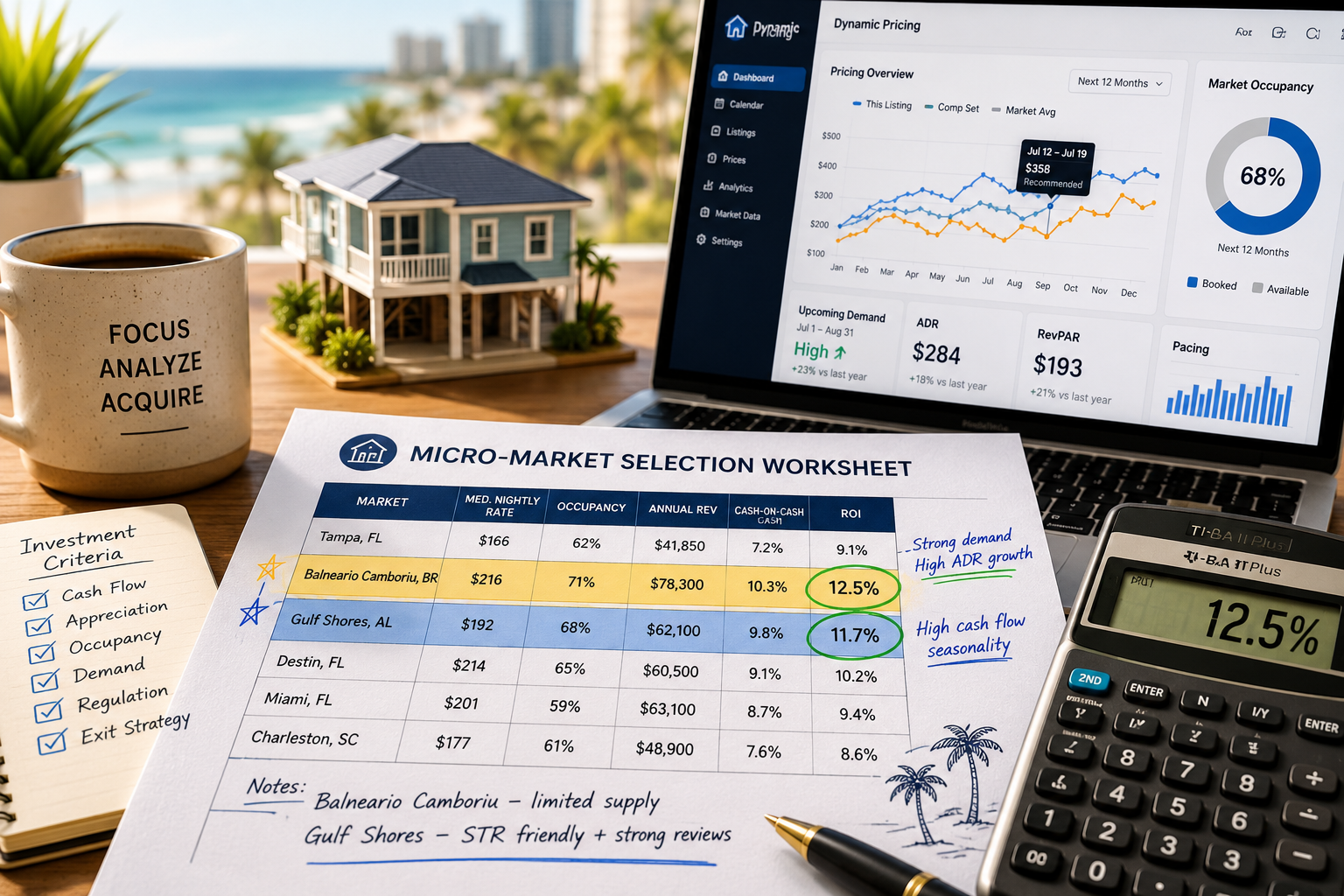
Regulatory risk is real, but it is also manageable — and for well-prepared investors, it is a source of competitive advantage.
The Compliance Moat
Markets with strict STR regulations — Miami Beach being the clearest example, with 85% of listings showing active registration [2] — effectively function as barriers to entry. Amateur hosts who cannot navigate the compliance process exit the market, reducing supply and supporting yields for operators who remain. Viewing regulation as a filter rather than a threat reframes the entire risk calculus.
Key Regulatory Variables to Monitor
- Permit caps: Some municipalities limit the total number of STR permits issued. Entry before cap implementation locks in operating rights.
- Owner-occupancy requirements: Rules requiring hosts to live on-site eliminate entire investor categories from competing.
- Minimum stay requirements: Regulations mandating 30+ night minimums effectively convert STR properties to medium-term rentals — a different but still viable strategy.
- HOA restrictions: In condo-heavy markets like Gulf Shores and Balneário Camboriú, HOA rules can be more restrictive than municipal regulations. Always verify at the building level before purchasing.
The real estate market performance in Greater Florianópolis provides a useful case study in how a market can absorb regulatory evolution while continuing to deliver strong investor returns — a pattern likely to repeat across Southern beach hubs in coming years.
Conclusion: Actionable Next Steps for 2026
The path to 12-15% net returns in Southern beach short-term rental markets in 2026 is clear, but it requires discipline and specificity. Broad market optimism is not a strategy. Micro-market precision is.
Actionable next steps for investors:
Narrow the geography. Stop analyzing cities and start analyzing zip codes, building types, and street-level supply constraints. Use AirROI, StaySTRA, and AirDNA data at the sub-market level before making any capital commitment.
Run a true net yield model. Build a financial model that accounts for all operating expenses, debt service at current DSCR rates, and a 20% revenue stress scenario. If the investment still pencils at the lower end, proceed.
Prioritize STR-friendly or compliance-moat markets. Gulf Shores/Orange Beach offers the best current combination of regulatory friendliness and strong fundamentals. Miami Beach and Destin reward operators who handle compliance correctly.
Explore pre-construction opportunities in emerging Southern beach hubs. Balneário Camboriú and the broader Santa Catarina coast offer the dual-return structure — capital appreciation plus rental yield — that established U.S. markets can no longer provide at entry-level price points. Explore the current development pipeline to identify opportunities aligned with this strategy.
Invest in operational infrastructure before launch. Dynamic pricing tools, professional photography, niche positioning, and a vetted local management partner are not optional extras. They are the operational foundation that converts a good property into a top-quartile performer.
Contact specialists with local market expertise. For investors targeting the Brazilian Southern beach market, working with developers and advisors who understand both the local regulatory environment and STR demand dynamics is essential. Reach out to a specialist team to discuss specific opportunities before the pre-construction window closes.
The investors who will look back on 2026 as a defining year for their portfolios are not waiting for perfect conditions. They are selecting micro-markets with precision, building compliant operations, and capturing yields that the broader market has not yet discovered.
References
[1] Best Airbnb Markets To Invest 2026 Staystra Data – https://staystra.com/best-airbnb-markets-to-invest-2026-staystra-data/?utm_source=openai
[2] Best Markets For Airbnb Investing 2026 – https://honestcasa.com/blog/best-markets-for-airbnb-investing-2026?utm_source=openai
[3] Myrtle Beach – https://www.airroi.com/report/world/united-states/south-carolina/myrtle-beach?utm_source=openai
[4] Miami Beach – https://www.airroi.com/report/world/united-states/florida/miami-beach?utm_source=openai
[5] Is Airbnb A Good Investment 2026 – https://www.rakidzich.com/articles/is-airbnb-a-good-investment-2026?utm_source=openai