
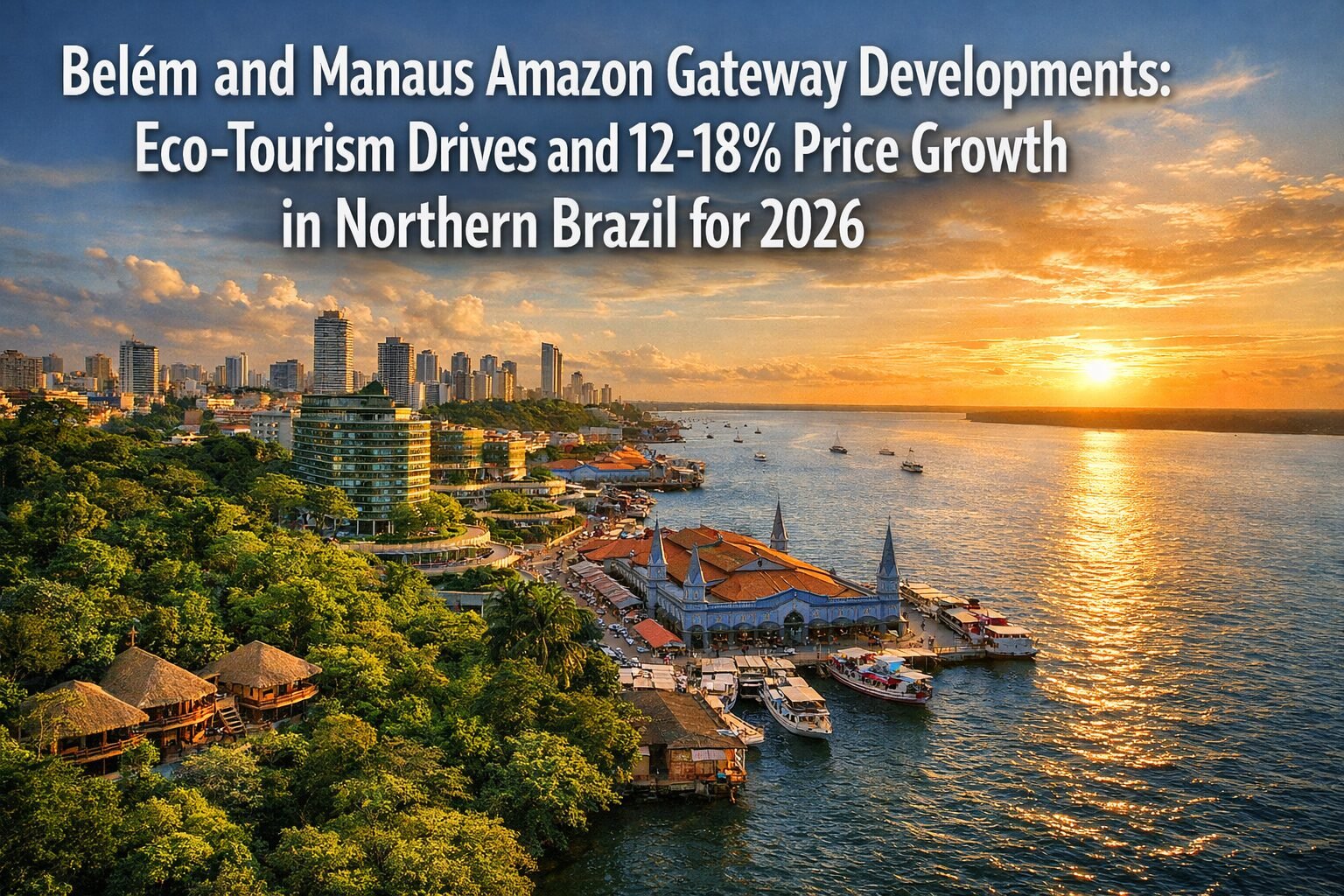
Northern Brazil is experiencing a remarkable transformation that few investors saw coming. The Belém and Manaus Amazon Gateway Developments: Eco-Tourism Drives and 12-18% Price Growth in Northern Brazil for 2026 represents one of the most compelling opportunities in the Brazilian real estate market today. While coastal cities like Rio de Janeiro and São Paulo have long dominated investment conversations, the Amazon gateway cities are emerging as untapped hotspots where eco-tourism booms and improved connectivity are creating unprecedented demand for sustainable development projects.
The numbers tell a powerful story. Nearly $1 billion has been invested to transform Belém into a showcase of the Amazon region, with over BRL 4 billion (approximately $722 million USD) in structural investments directed toward infrastructure that benefits local populations[1]. This massive capital injection is not just about building roads and bridges—it represents a fundamental shift in how Northern Brazil positions itself on the global stage.
For developers and investors seeking premium pricing opportunities, the region offers something unique: the ability to build sustainable, low-density projects that command higher margins while contributing to environmental preservation. The 12-18% price growth projected for 2026 reflects not just speculation, but tangible improvements in infrastructure, accessibility, and international recognition.
Key Takeaways
✅ Massive Infrastructure Investment: Over BRL 4 billion invested in Belém’s transformation, with airport improvements, BRT systems, and linear park developments creating lasting value[1]
✅ Eco-Tourism Boom: COP30 climate conference bringing 50,000+ participants to Belém, establishing the city as a global eco-tourism destination[1]
✅ Premium Development Opportunities: Sustainable, low-density projects in Northern Brazil commanding 12-18% price growth as developers capitalize on environmental positioning
✅ Digital Efficiency Gains: 62% reduction in project timelines and $7 million in savings through digital urban planning integration[2]
✅ Multi-Sector Economic Stimulus: Construction, hospitality, transportation, tourism, and food services experiencing significant growth from gateway developments[1]
Understanding the Amazon Gateway Transformation
What Makes Belém and Manaus Strategic Investment Hubs?
The concept of “gateway cities” takes on special meaning when discussing Belém and Manaus. These urban centers serve as the primary entry points to the world’s largest rainforest, positioning them uniquely at the intersection of environmental preservation and economic development. Unlike traditional Brazilian investment markets, these cities offer access to a resource that is becoming increasingly valuable: authentic eco-tourism experiences.
Belém, located at the mouth of the Amazon River, has historically been known as the “Gateway to the Amazon.” The city’s strategic location makes it the natural hub for anyone seeking to explore the eastern Amazon region. Manaus, situated deep in the heart of the rainforest at the confluence of the Negro and Solimões rivers, serves as the commercial and cultural center of the western Amazon.
Both cities are experiencing simultaneous infrastructure upgrades that are fundamentally changing their accessibility and appeal. The selection of Belém to host COP30—the United Nations Climate Change Conference—has accelerated development timelines and attracted international attention to the region’s potential[4].
The COP30 Catalyst Effect
The decision to host COP30 in Belém represents more than just a prestigious event—it’s a catalyst for permanent infrastructure improvements. The conference, expected to bring over 50,000 participants to the city, has justified massive public and private investment in facilities that will serve the region long after the delegates depart[1].
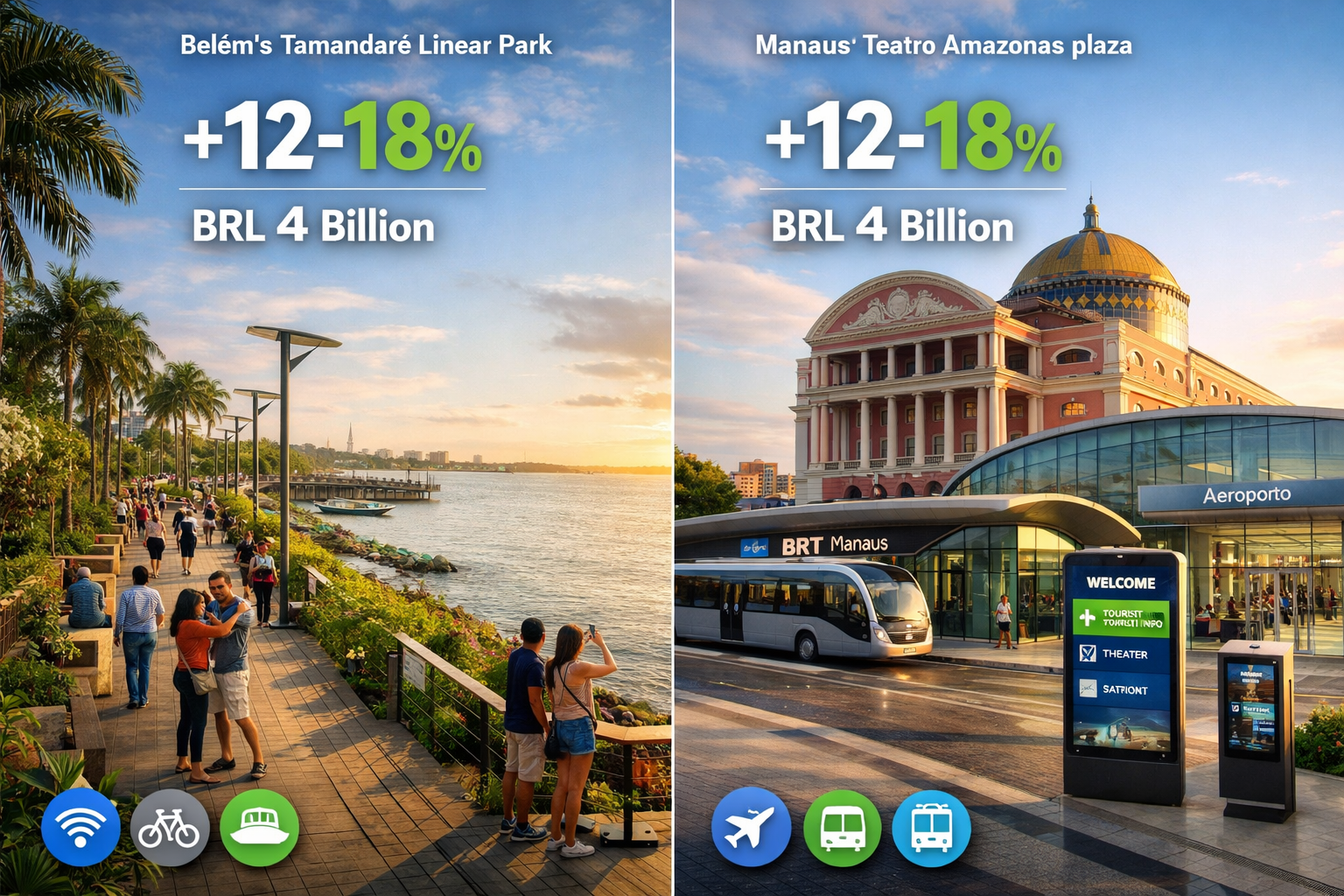
Key improvements include:
- Belém International Airport upgrades to handle increased international traffic
- BRT Centenário line extending directly to the airport for seamless connectivity
- Tamandaré Linear Park reaching 87% completion with BRL 162.8 million invested
- Nova Doca Linear Park achieving 92% completion with BRL 365.9 million allocated
These projects are designed to transform the city’s relationship with its waterways, creating attractive public spaces that enhance quality of life while showcasing sustainable urban planning[1].
For investors exploring best places to invest in Brazil property, the Amazon gateway cities present a compelling alternative to saturated coastal markets.
Belém and Manaus Amazon Gateway Developments: Infrastructure Driving Real Estate Value
Linear Parks and Waterfront Revitalization
The linear park projects in Belém represent a new approach to urban development in the Amazon region. Rather than turning away from the water, these developments embrace the city’s relationship with its rivers and waterways, creating accessible green spaces that serve multiple purposes.
Tamandaré Linear Park has received BRL 162.8 million in investment and has reached 87% completion. The project includes:
- Pedestrian walkways along restored waterways
- Native vegetation landscaping
- Sustainable drainage systems
- Public gathering spaces
- Eco-educational facilities
Nova Doca Linear Park, with BRL 365.9 million allocated and 92% completion, takes the concept even further. This larger project transforms a previously neglected waterfront area into a vibrant public space that attracts both residents and tourists[1].
These parks are not just amenities—they’re value drivers for nearby real estate. Properties within walking distance of these green spaces are experiencing premium pricing, with developers reporting strong interest from both domestic and international buyers seeking sustainable lifestyle options.
Transportation Infrastructure Upgrades
The BRT Centenário line represents a critical piece of the connectivity puzzle. By extending rapid transit directly to the airport, the system makes it easier for tourists to access eco-lodges and sustainable developments in the region. This improved accessibility translates directly into higher occupancy rates and rental yields for hospitality properties.
The airport improvements go beyond simple capacity expansion. Belém International Airport is being repositioned as a modern gateway capable of handling increased international traffic while maintaining environmental standards. These upgrades include:
- Expanded terminal capacity
- Improved customs and immigration processing
- Enhanced cargo facilities for eco-tourism operators
- Sustainable building features and energy systems
For developers considering the Brazilian real estate market, these infrastructure improvements reduce one of the primary barriers to Northern Brazil investment: accessibility concerns.
Digital Integration Reducing Development Risk
One of the most impressive aspects of Belém’s transformation is the use of digital integration in urban planning. The city achieved a 62% reduction in project time and approximately $7 million in savings through digital tools that allow for better coordination between different infrastructure projects[2].
This digital approach includes:
- 3D modeling of urban development projects
- Real-time coordination between construction teams
- Digital permitting and approval processes
- Integrated environmental impact assessments
- Public visualization tools for community engagement
For developers, this digital efficiency translates into reduced risk and faster time-to-market. Projects that might have taken years to permit and construct can now move forward on accelerated timelines, improving return on investment calculations.
Eco-Tourism Boom Creating Premium Development Opportunities
The Sustainable Tourism Market Shift
Global tourism is experiencing a fundamental shift toward sustainable and experiential travel. Travelers, particularly from high-value markets like North America and Europe, are increasingly seeking authentic eco-tourism experiences that allow them to connect with nature while minimizing environmental impact.
The Amazon region represents the ultimate eco-tourism destination, but until recently, the infrastructure to support high-quality sustainable tourism was lacking. The Belém and Manaus Amazon Gateway Developments: Eco-Tourism Drives and 12-18% Price Growth in Northern Brazil for 2026 trend reflects the market’s recognition that this infrastructure gap is closing.
According to environmental advocates, the Amazon’s role in global climate discussions has elevated its profile as a must-visit destination for environmentally conscious travelers[3]. This heightened awareness creates demand for accommodations and experiences that align with sustainability values.
Low-Density Sustainable Development Models
The most successful development projects in the Amazon gateway region are embracing low-density, high-value models that prioritize environmental integration over maximum unit counts. These projects typically feature:
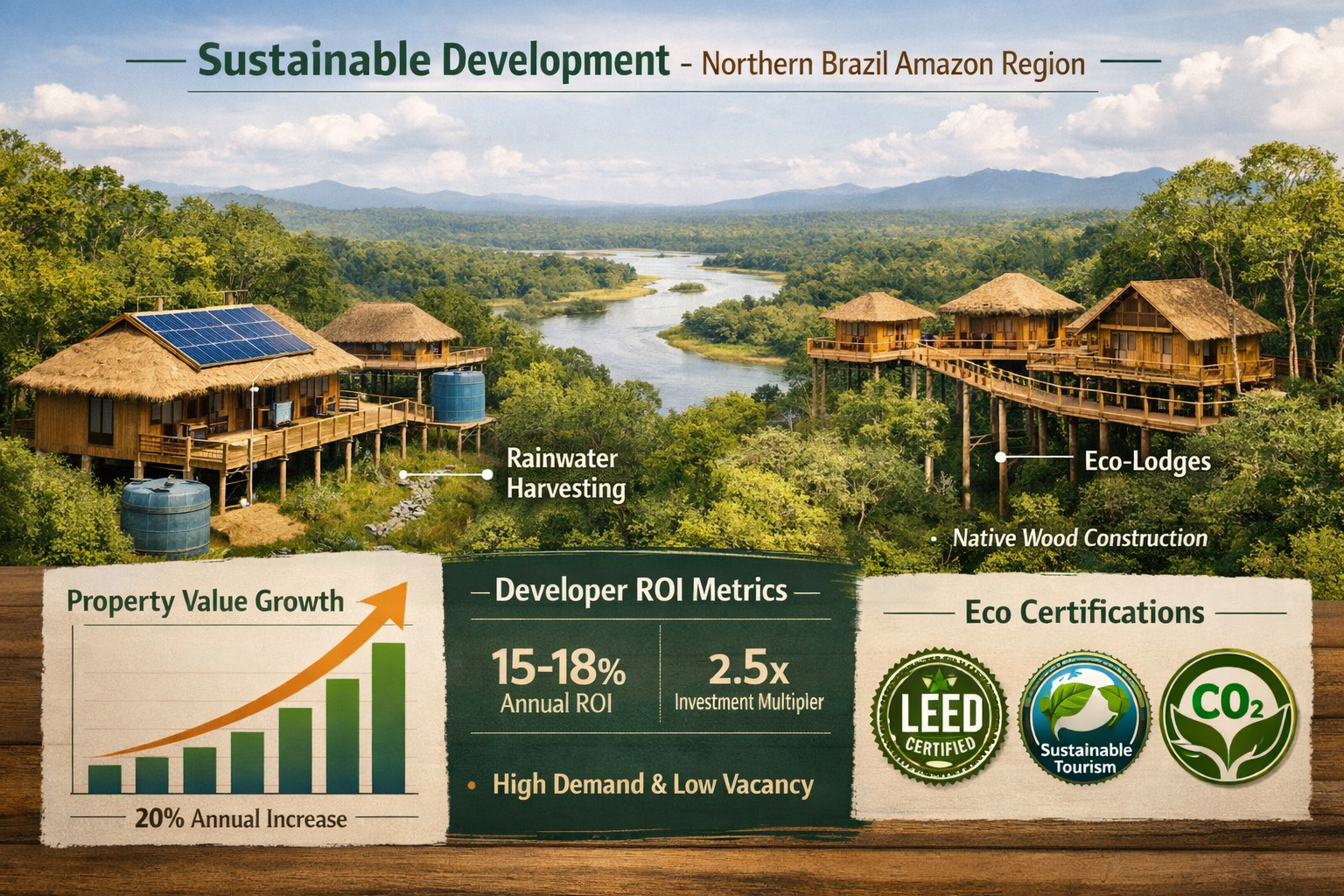
- Eco-lodges with minimal environmental footprint
- Boutique hotels using local materials and traditional construction methods
- Sustainable residential communities with strict environmental covenants
- Mixed-use developments integrating commercial, residential, and conservation areas
These low-density approaches command premium pricing because they offer something increasingly rare: exclusive access to pristine natural environments without the crowding and environmental degradation associated with mass tourism.
Developers report that sustainable projects in the region are achieving 12-18% price growth as buyers recognize the scarcity value of well-executed eco-developments[1][2]. This growth rate significantly exceeds national averages and reflects the unique positioning of Amazon gateway properties.
Eco-Certification and Market Differentiation
Properties that achieve recognized eco-certifications are commanding significant premiums in the Northern Brazil market. Certifications such as LEED, BREEAM, or local Brazilian green building standards provide third-party validation of sustainability claims and attract environmentally conscious buyers.
The certification process typically includes:
- Energy efficiency standards
- Water conservation measures
- Sustainable material sourcing
- Waste management systems
- Biodiversity protection plans
- Community benefit programs
For investors familiar with real estate development strategies, eco-certification represents a clear differentiation strategy that justifies premium pricing and attracts a specific buyer demographic.
Hospitality Sector Expansion
The hospitality sector in Belém and Manaus is experiencing unprecedented growth as international hotel brands recognize the region’s potential. Major hospitality groups are entering the market with properties designed specifically for the eco-tourism segment.
This expansion includes:
- International chain hotels near airports and business districts
- Boutique eco-resorts in pristine natural settings
- River cruise terminals serving as gateways to Amazon experiences
- Serviced apartments catering to extended-stay eco-tourists
The COP30 conference has created immediate demand for over 50,000 room nights, demonstrating the scale of opportunity in the hospitality sector[1]. Many of these facilities will continue serving the growing eco-tourism market long after the conference concludes.
Regulatory Incentives and Risk Mitigation for Interior Region Investments
Understanding the Regulatory Environment
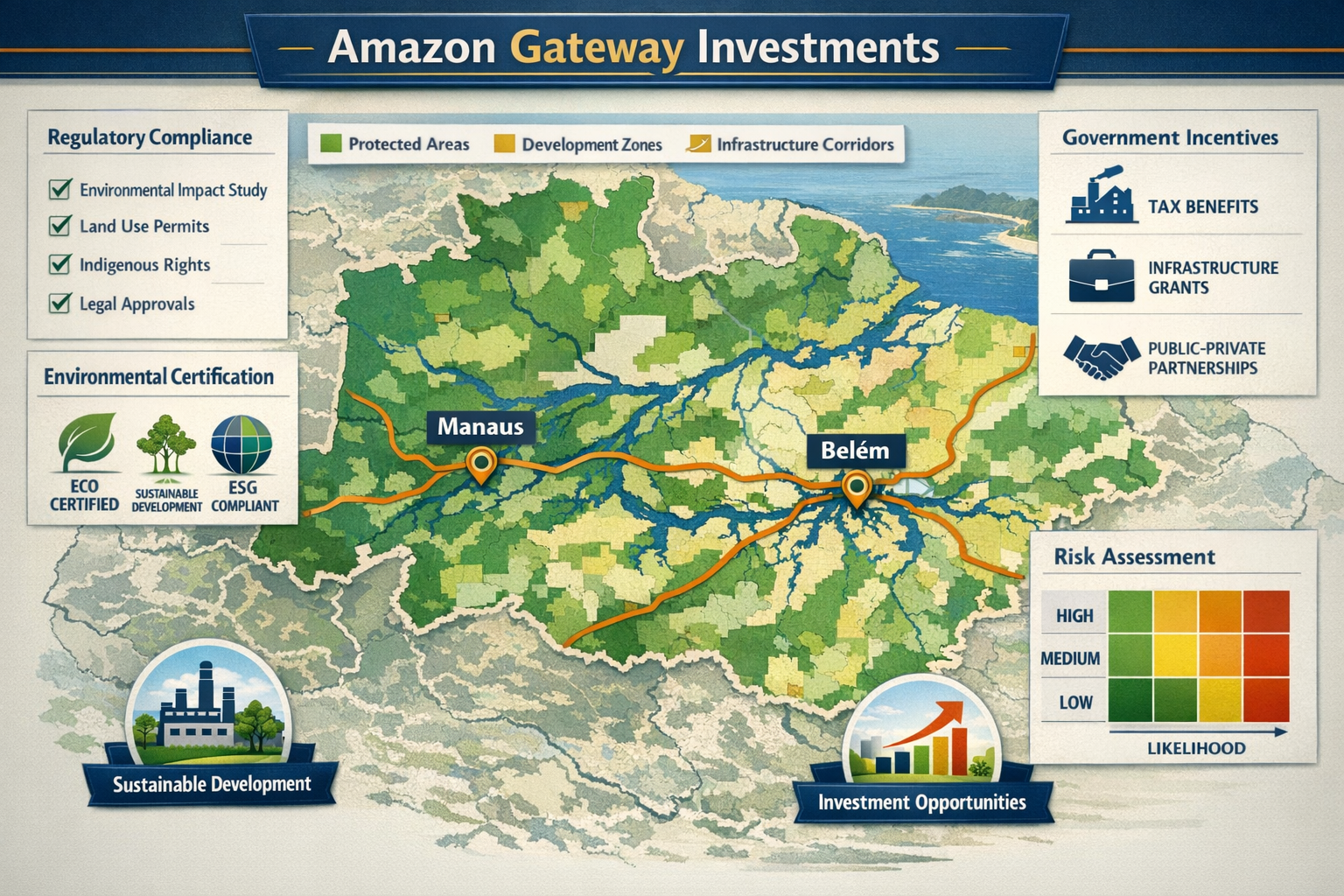
Investing in Northern Brazil requires understanding a complex regulatory environment that balances development needs with environmental protection. However, recent reforms have created clearer pathways for sustainable development while maintaining environmental safeguards.
The Brazilian government has implemented several programs to encourage investment in the Amazon region while ensuring environmental compliance:
- Tax incentives for sustainable development projects
- Streamlined permitting for eco-certified developments
- Infrastructure co-investment programs
- Environmental compliance support for developers
The key to successful navigation of this regulatory environment is early engagement with environmental authorities and commitment to genuine sustainability standards rather than greenwashing.
Federal and State Incentive Programs
Both federal and state governments have recognized that sustainable development in the Amazon region requires financial incentives to offset the additional costs of environmental compliance and remote location challenges.
Federal Programs include:
- Reduced tax rates for sustainable tourism infrastructure
- Financing programs through BNDES (Brazilian Development Bank) for eco-projects
- Export incentives for eco-tourism services
- Research and development credits for sustainable building technologies
State-Level Programs in Pará (Belém) and Amazonas (Manaus) offer additional benefits:
- Property tax reductions for eco-certified buildings
- Fast-track permitting for sustainable projects
- Infrastructure cost-sharing for remote developments
- Marketing support for eco-tourism destinations
These incentive programs can significantly improve project economics, with some developers reporting that incentives reduce total project costs by 15-25%.
Environmental Compliance as Competitive Advantage
Rather than viewing environmental regulations as obstacles, successful developers in the Amazon gateway region treat compliance as a competitive advantage. Projects that exceed minimum environmental standards attract premium buyers and experience faster sales velocities.
Key compliance areas include:
Forest Protection: Maintaining required forest reserves on development sites, often exceeding minimum requirements to create buffer zones and wildlife corridors.
Water Quality: Implementing advanced wastewater treatment systems that return water to natural systems cleaner than it arrived.
Energy Efficiency: Using renewable energy sources, particularly solar power, to minimize carbon footprint and reduce operating costs.
Community Engagement: Developing partnerships with local communities that create employment opportunities and preserve traditional knowledge.
Biodiversity Conservation: Conducting thorough environmental impact assessments and implementing mitigation measures that protect local ecosystems.
Projects that excel in these areas often receive government recognition and marketing support, creating additional value beyond the direct environmental benefits.
Risk Mitigation Strategies for Remote Developments
Developing in Northern Brazil presents unique challenges that require specific risk mitigation strategies:
Supply Chain Risk: Remote locations can create supply chain challenges. Successful developers establish relationships with local suppliers, stockpile critical materials, and build buffer time into construction schedules.
Labor Availability: Skilled construction labor may be limited in remote areas. Training programs for local workers and temporary housing for specialized contractors help address this challenge.
Infrastructure Dependencies: Projects that depend on promised government infrastructure should include contingency plans and phased development approaches that can adjust to infrastructure delays.
Market Absorption: The eco-tourism market, while growing, remains smaller than mass tourism. Developers should conduct thorough market studies and size projects appropriately to avoid oversupply situations.
Environmental Events: The Amazon region experiences seasonal flooding and weather events. Proper site selection, elevated construction, and robust drainage systems are essential.
Political Risk: Changes in environmental policy can affect development timelines. Diversifying across multiple projects and maintaining strong government relationships helps manage this risk.
For investors evaluating opportunities in emerging Brazilian markets, understanding these risks and mitigation strategies is essential for success.
Market Analysis: 12-18% Price Growth Drivers
Quantifying the Growth Opportunity
The projected 12-18% price growth in the Belém and Manaus markets for 2026 is driven by multiple converging factors that create a compelling investment thesis:
Supply Constraints: Environmental regulations naturally limit the supply of developable land in the Amazon region, creating scarcity value for well-positioned properties.
Demand Growth: International eco-tourism arrivals to the Amazon region are projected to grow by 25-30% annually as the region gains recognition as a premier sustainable destination.
Infrastructure Improvements: The BRL 4 billion in infrastructure investments directly increases property values by improving accessibility and quality of life[1].
International Recognition: COP30 and related events are positioning Belém as a global center for environmental leadership, attracting international buyers and investors[4].
Currency Advantages: For international investors, favorable exchange rates can amplify returns when converting back to home currencies.
Comparative Market Analysis
To understand the 12-18% growth projection, it’s helpful to compare Northern Brazil markets with other emerging Brazilian real estate markets:
| Market | 2026 Projected Growth | Primary Drivers | Risk Level |
|---|---|---|---|
| Belém | 15-18% | COP30, infrastructure, eco-tourism | Medium |
| Manaus | 12-16% | Eco-tourism, industrial zone, connectivity | Medium |
| Florianópolis | 8-12% | Beach tourism, quality of life | Low-Medium |
| São Paulo | 5-8% | Economic growth, corporate demand | Low |
| Rio de Janeiro | 4-7% | Tourism recovery, events | Medium |
The data shows that Amazon gateway cities are projecting significantly higher growth than established markets, reflecting their emergence from an undervalued baseline and the catalytic effect of major infrastructure investments.
Investors familiar with market dynamics in established Brazilian markets will recognize that Northern Brazil is in an earlier growth phase with corresponding higher potential returns and risks.
Sector-Specific Growth Patterns
Different property sectors within the Amazon gateway markets are experiencing varying growth rates:
Eco-Tourism Hospitality (18-25% growth): The highest growth sector, driven by international demand for authentic Amazon experiences and limited supply of quality eco-lodges.
Sustainable Residential (12-18% growth): Growing demand from environmental professionals, researchers, and lifestyle buyers seeking proximity to nature.
Mixed-Use Waterfront (15-20% growth): Properties near linear parks and revitalized waterfront areas commanding premium prices as these amenities near completion.
Commercial/Retail (8-12% growth): Moderate growth in commercial properties serving the expanding tourism and local economies.
Industrial/Logistics (10-15% growth): Manaus Free Trade Zone and improved connectivity driving demand for modern industrial facilities.
Understanding these sector-specific patterns allows investors to target the highest-growth opportunities within the broader market.
Investment Timeline Considerations
The 12-18% growth projection for 2026 represents near-term appreciation, but the investment thesis for Amazon gateway cities extends well beyond a single year. Developers and investors should consider multiple time horizons:
Short-Term (2026-2027): COP30 event and immediate post-event period, with rapid appreciation driven by infrastructure completion and international attention.
Medium-Term (2028-2030): Consolidation of eco-tourism market position, with steady growth as word-of-mouth and repeat visitors build sustainable demand.
Long-Term (2030+): Maturation of Amazon gateway cities as established eco-tourism destinations, with growth rates moderating but remaining above national averages.
Investors seeking maximum returns may target short-term appreciation opportunities, while those building long-term portfolios can benefit from the sustained growth trajectory.
Developer Strategies for Premium Pricing
Positioning for the Eco-Conscious Buyer
Successful developers in the Amazon gateway region understand that their target market is fundamentally different from traditional real estate buyers. Eco-conscious buyers prioritize different features and are willing to pay premiums for developments that align with their values.
Key positioning strategies include:
Authentic Sustainability: Buyers in this market are sophisticated and can distinguish between genuine environmental commitment and greenwashing. Developers must demonstrate real sustainability through measurable outcomes, not just marketing claims.
Local Integration: Properties that incorporate local architectural traditions, employ local craftspeople, and source materials from sustainable local suppliers resonate with buyers seeking authentic experiences.
Educational Components: Many eco-developments include interpretive centers, guided nature programs, and partnerships with research institutions that add value beyond the physical property.
Community Benefits: Demonstrating positive impact on local communities through employment, infrastructure improvements, and cultural preservation creates compelling narratives that justify premium pricing.
Transparency: Providing detailed information about environmental performance, including energy consumption, water usage, and carbon footprint, builds trust with environmentally conscious buyers.
Architectural and Design Differentiation
The physical design of properties in the Amazon region must balance modern comfort with environmental sensitivity. Successful projects incorporate:
Passive Climate Control: Using natural ventilation, strategic orientation, and shading to minimize air conditioning needs in the tropical climate.
Local Materials: Incorporating sustainably harvested wood, bamboo, and other regional materials that reduce transportation impacts and create authentic aesthetic.
Minimal Site Disturbance: Elevating structures on pilings to preserve ground-level vegetation and natural drainage patterns.
Biophilic Design: Maximizing connections between interior spaces and surrounding nature through large windows, outdoor living areas, and integration of natural elements.
Renewable Energy: Installing solar panels, micro-hydro systems, or other renewable energy sources to achieve energy independence.
Water Management: Implementing rainwater harvesting, greywater recycling, and natural wastewater treatment systems.
These design elements not only reduce environmental impact but also create unique selling propositions that justify premium pricing in the marketplace.
Marketing to International Buyers
The international buyer segment represents a significant opportunity for Amazon gateway developments. These buyers often have higher purchasing power and are specifically seeking eco-tourism investment properties.
Effective international marketing strategies include:
Digital Presence: High-quality websites with virtual tours, drone footage, and detailed environmental performance data in multiple languages.
Eco-Tourism Partnerships: Collaborating with international eco-tourism operators and travel agencies to reach potential buyers already interested in the Amazon region.
Investment Conferences: Participating in sustainable investment and eco-tourism conferences in key markets like North America and Europe.
Media Relations: Securing coverage in environmental and travel publications that reach affluent, environmentally conscious audiences.
Referral Programs: Creating incentive programs for existing owners to refer friends and family, leveraging the tight-knit nature of the eco-conscious community.
Rental Management: Offering turnkey rental management services that allow international buyers to generate income from their properties when not in personal use.
For developers seeking insights into effective sales strategies, the Amazon gateway market requires specialized approaches that differ from traditional Brazilian real estate marketing.
Challenges and Considerations for Northern Brazil Investment
Infrastructure Dependencies
While significant infrastructure improvements are underway, developers must recognize that infrastructure delivery timelines in remote regions can be unpredictable. Projects that depend heavily on promised government infrastructure should incorporate contingency planning.
Key infrastructure dependencies include:
- Road access to development sites
- Reliable electricity and water service
- Internet and telecommunications connectivity
- Waste management systems
- Emergency services access
Successful developers often invest in self-sufficient infrastructure for their projects rather than relying entirely on municipal services. This might include:
- Private water treatment facilities
- On-site renewable energy generation
- Satellite internet backup systems
- Private security services
- Waste recycling and composting facilities
While these investments increase upfront costs, they reduce operational risk and can become selling points for buyers seeking reliability and sustainability.
Environmental and Social Governance (ESG)
International investors increasingly evaluate opportunities through an ESG lens, making environmental and social governance critical for attracting capital to Amazon gateway developments.
Environmental Governance considerations include:
- Third-party environmental audits
- Transparent reporting of environmental metrics
- Commitment to science-based conservation targets
- Participation in environmental certification programs
- Regular monitoring and disclosure of biodiversity impacts
Social Governance considerations include:
- Fair labor practices and living wages
- Community consultation and benefit-sharing
- Respect for indigenous rights and traditional territories
- Support for local education and healthcare
- Preservation of cultural heritage
Corporate Governance considerations include:
- Transparent ownership structures
- Professional management teams
- Regular financial reporting
- Stakeholder engagement processes
- Ethical business practices
Projects that excel in ESG performance attract institutional investors and can access lower-cost capital through green bonds and sustainable investment funds.
Market Education Requirements
The Amazon gateway market remains relatively unknown to many Brazilian and international investors, requiring significant market education efforts. Developers must invest in educating potential buyers about:
- The region’s growth potential and infrastructure improvements
- The eco-tourism market opportunity and demand drivers
- The regulatory environment and available incentives
- The environmental and social impact of their investments
- The practical aspects of owning property in remote locations
This education process requires patience and resources but is essential for building a sustainable buyer base for Amazon gateway developments.
Competition from Established Eco-Tourism Destinations
While Belém and Manaus offer unique advantages, they face competition from established eco-tourism destinations in other parts of Brazil and Latin America. Places like Costa Rica, the Galápagos Islands, and even other Brazilian regions have head starts in eco-tourism infrastructure and brand recognition.
To compete effectively, Amazon gateway developments must emphasize their unique advantages:
- Access to the world’s largest rainforest
- Authentic indigenous cultural experiences
- Unparalleled biodiversity
- Emerging market pricing before full maturation
- Government support and infrastructure investment
Developers should study successful eco-tourism destinations globally and adapt best practices while maintaining the authentic character that makes the Amazon unique.
Future Outlook: Beyond 2026
Long-Term Growth Trajectory
While the 12-18% growth projection for 2026 is impressive, the long-term outlook for Amazon gateway cities extends well beyond this near-term appreciation. Several trends suggest sustained growth potential:
Climate Change Awareness: As global awareness of climate change intensifies, the Amazon’s role as the “lungs of the planet” will continue attracting attention and visitors[3].
Biodiversity Tourism: Growing interest in biodiversity and wildlife viewing creates sustained demand for Amazon eco-tourism experiences.
Research and Education: The Amazon’s importance for scientific research creates demand for facilities supporting researchers, students, and educational tourism.
Carbon Markets: Emerging carbon credit markets may create additional revenue streams for properties that preserve forest areas.
Wellness Tourism: The Amazon’s reputation for traditional medicine and wellness practices positions it well for the growing wellness tourism market.
These long-term trends suggest that well-positioned Amazon gateway properties could continue appreciating above national averages for years beyond 2026.
Infrastructure Pipeline
The infrastructure improvements completed for COP30 represent just the beginning of planned developments in the region. Future infrastructure projects include:
- Expansion of port facilities in Belém to handle increased cargo and cruise ship traffic
- Additional BRT lines connecting residential areas to employment centers
- Continued expansion of Belém and Manaus airports
- Improved road connectivity to eco-tourism destinations
- Fiber optic network expansion for reliable internet throughout the region
These future improvements will continue driving property values and reducing the infrastructure risk that currently deters some investors.
Regulatory Evolution
The regulatory environment for Amazon development is likely to continue evolving, with potential changes including:
- More sophisticated environmental certification programs
- Carbon credit mechanisms for forest preservation
- Streamlined permitting for certified sustainable projects
- Enhanced incentives for community-benefit developments
- Stricter enforcement against non-compliant projects
Developers who establish strong environmental credentials now will be well-positioned to benefit from future regulatory changes that favor sustainable development.
Market Maturation Phases
The Amazon gateway real estate market will likely progress through several maturation phases:
Phase 1 (2024-2027): Discovery Phase – Early adopters and sophisticated investors recognize the opportunity, driving initial price appreciation and establishing proof of concept.
Phase 2 (2028-2031): Growth Phase – Broader market recognition leads to increased investment, expanded development activity, and continued strong appreciation.
Phase 3 (2032-2035): Maturation Phase – Market becomes established, growth rates moderate but remain healthy, professional management and standards become widespread.
Phase 4 (2035+): Mature Market – Amazon gateway cities are recognized as premier eco-tourism destinations with stable, mature real estate markets.
Understanding these phases helps investors time their entry and exit strategies appropriately.
Conclusion: Capitalizing on the Amazon Gateway Opportunity
The Belém and Manaus Amazon Gateway Developments: Eco-Tourism Drives and 12-18% Price Growth in Northern Brazil for 2026 represents a rare convergence of infrastructure investment, environmental awareness, and market opportunity. For developers and investors willing to embrace sustainable development principles and navigate the unique challenges of the Amazon region, the potential rewards are substantial.
The nearly $1 billion invested in transforming Belém, combined with the global attention from COP30, has created a foundation for sustained growth in Northern Brazil’s real estate markets[1]. The completion of major infrastructure projects like the Tamandaré and Nova Doca Linear Parks, airport improvements, and BRT systems has fundamentally improved the region’s accessibility and appeal[1].
The eco-tourism boom is not a temporary trend but reflects a fundamental shift in global travel preferences toward sustainable, experiential tourism. The Amazon region, with its unparalleled biodiversity and cultural richness, is uniquely positioned to capitalize on this shift. Developers who create authentic, sustainable projects that respect the environment and benefit local communities will find eager buyers willing to pay premium prices.
Actionable Next Steps for Investors and Developers
For those ready to explore opportunities in the Amazon gateway region, consider these actionable steps:
1. Conduct Thorough Due Diligence: Visit Belém and Manaus personally to understand the markets, infrastructure improvements, and development opportunities. Engage local experts who understand the regulatory environment and market dynamics.
2. Develop ESG Framework: Establish clear environmental, social, and governance standards for your projects before beginning development. This framework will guide decision-making and create competitive advantages in attracting capital and buyers.
3. Build Local Partnerships: Success in the Amazon region requires strong relationships with local communities, environmental organizations, and government agencies. Invest time in building these partnerships early.
4. Start with Pilot Projects: Consider beginning with smaller pilot projects to learn the market before committing to large-scale developments. This approach reduces risk while building local knowledge and relationships.
5. Secure Appropriate Financing: Explore green financing options, development bank programs, and sustainable investment funds that offer favorable terms for eco-certified projects.
6. Develop Exit Strategies: Whether planning to hold properties long-term or sell after appreciation, establish clear exit strategies that account for market liquidity and buyer profiles.
7. Stay Informed: The Amazon gateway market is evolving rapidly. Stay current on infrastructure developments, regulatory changes, and market trends through regular engagement with industry news and analysis.
The transformation of Belém and Manaus from overlooked regional cities to emerging eco-tourism gateways represents one of the most compelling real estate opportunities in Brazil today. The combination of massive infrastructure investment, growing environmental awareness, and strategic positioning creates conditions for sustained appreciation and premium pricing for well-executed sustainable developments.
For developers and investors who act now, while the market is still in its early growth phase, the potential to capture significant value appreciation while contributing to environmental preservation and community development is substantial. The 12-18% price growth projected for 2026 is just the beginning of what could be a multi-decade growth story in Northern Brazil.
The Amazon gateway opportunity requires patience, commitment to genuine sustainability, and willingness to navigate unique challenges. But for those who approach it thoughtfully, the rewards—both financial and environmental—can be exceptional. As global attention focuses on the Amazon region and its critical role in addressing climate change, properties that provide sustainable access to this irreplaceable ecosystem will only become more valuable.
For more information on Brazilian real estate investment opportunities and to explore current development projects, visit Quadragon’s main portal or contact our investment team to discuss how you can participate in the Amazon gateway transformation.
References
[1] Belem Under Construction The Final 100 Days Before Cop30 – https://cop30.br/en/news-about-cop30/belem-under-construction-the-final-100-days-before-cop30
[2] Where The World Meets The Amazon A 3d Tour Cop30s Host City Of Belem – https://blog.bentley.com/insights/where-the-world-meets-the-amazon-a-3d-tour-cop30s-host-city-of-belem/
[3] The Amazon In 2026 A Challenging Year Ahead Now Off The Center Stage – https://news.mongabay.com/2025/12/the-amazon-in-2026-a-challenging-year-ahead-now-off-the-center-stage/
[4] Amazon Gateway City Belem Will Host Cop30 Climate Talks – https://www.climatechangenews.com/2023/05/30/amazon-gateway-city-belem-will-host-cop30-climate-talks/