
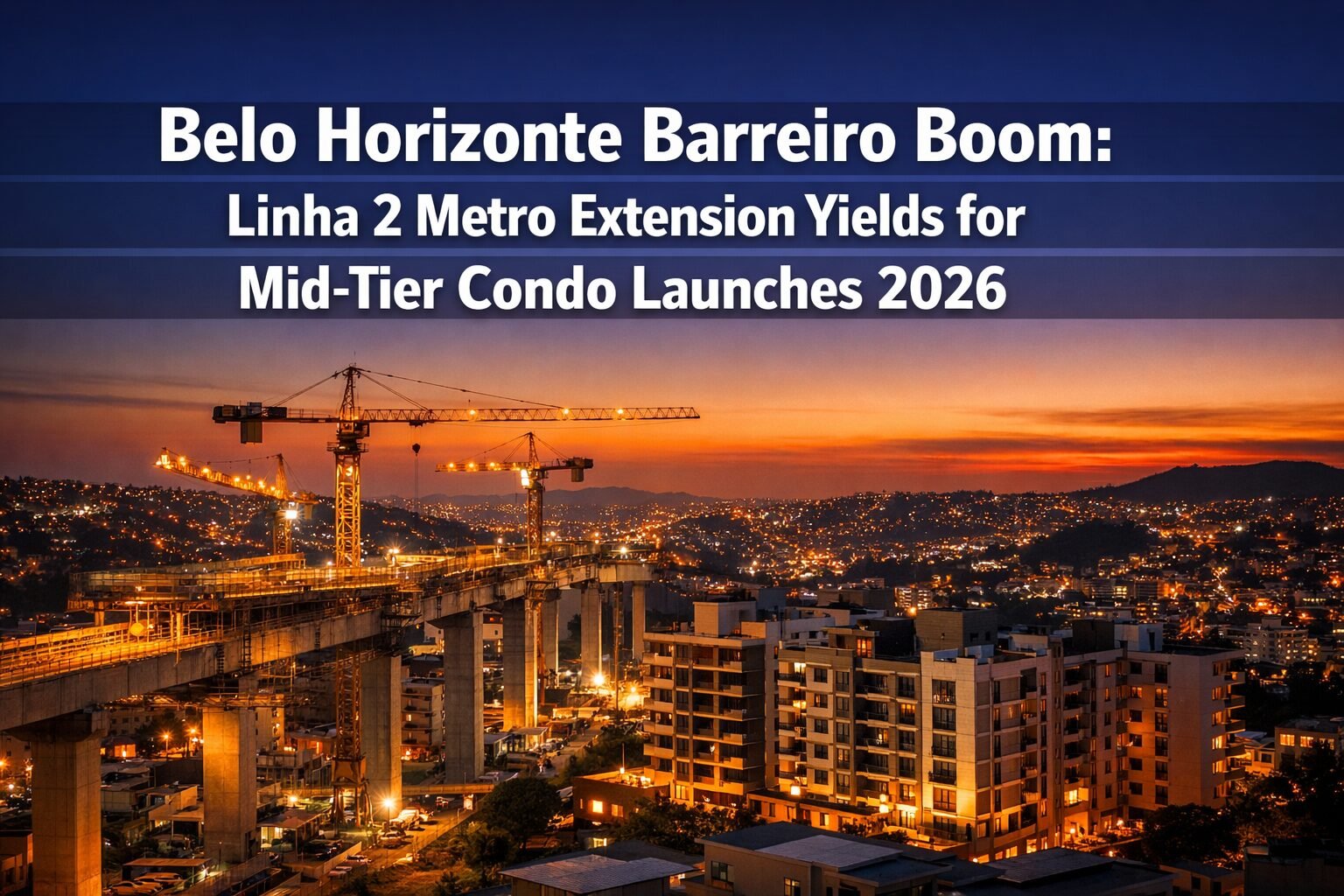
By July 2026, the first two stations of Belo Horizonte’s long-awaited Linha 2 metro will open their doors — and savvy developers who moved early on Nova Suíça and Nova Gameleira are already positioned to capture a wave of demand that the city’s southwest corridor has never seen before.
The Belo Horizonte Barreiro Boom: Linha 2 Metro Extension Yields for Mid-Tier Condo Launches 2026 story is not just about infrastructure. It is about the rare window that opens when confirmed transit timelines meet underpriced residential land. That window is open right now — and it is closing fast.
Key Takeaways 🔑
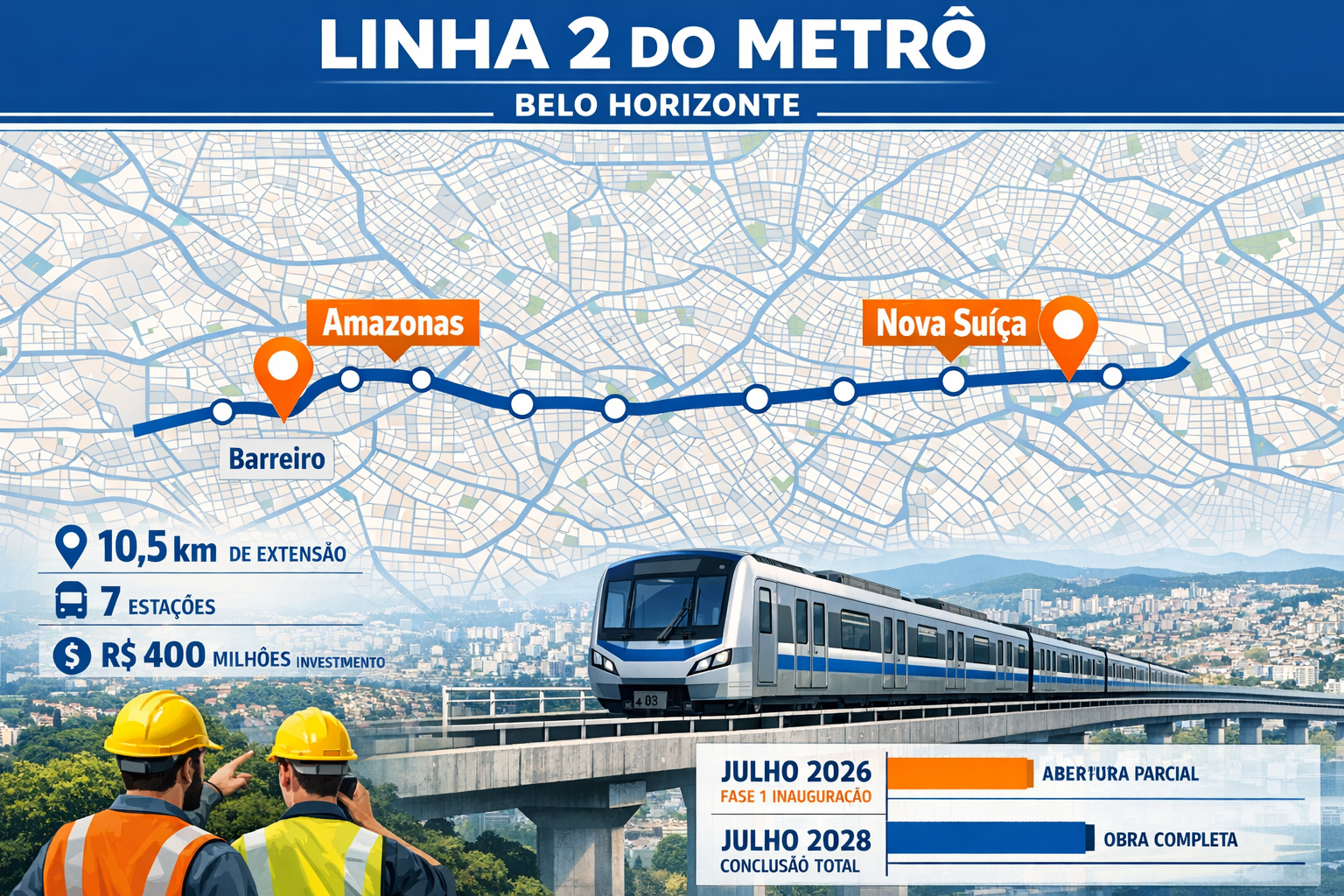
- Phase 1 opens July 2026: Two stations (Nova Suíça to Amazonas) will launch operations, triggering immediate demand for nearby residential units.
- Full line completion by July 2028: All seven stations across 10.5 km will connect the city center to Barreiro in the southwest.
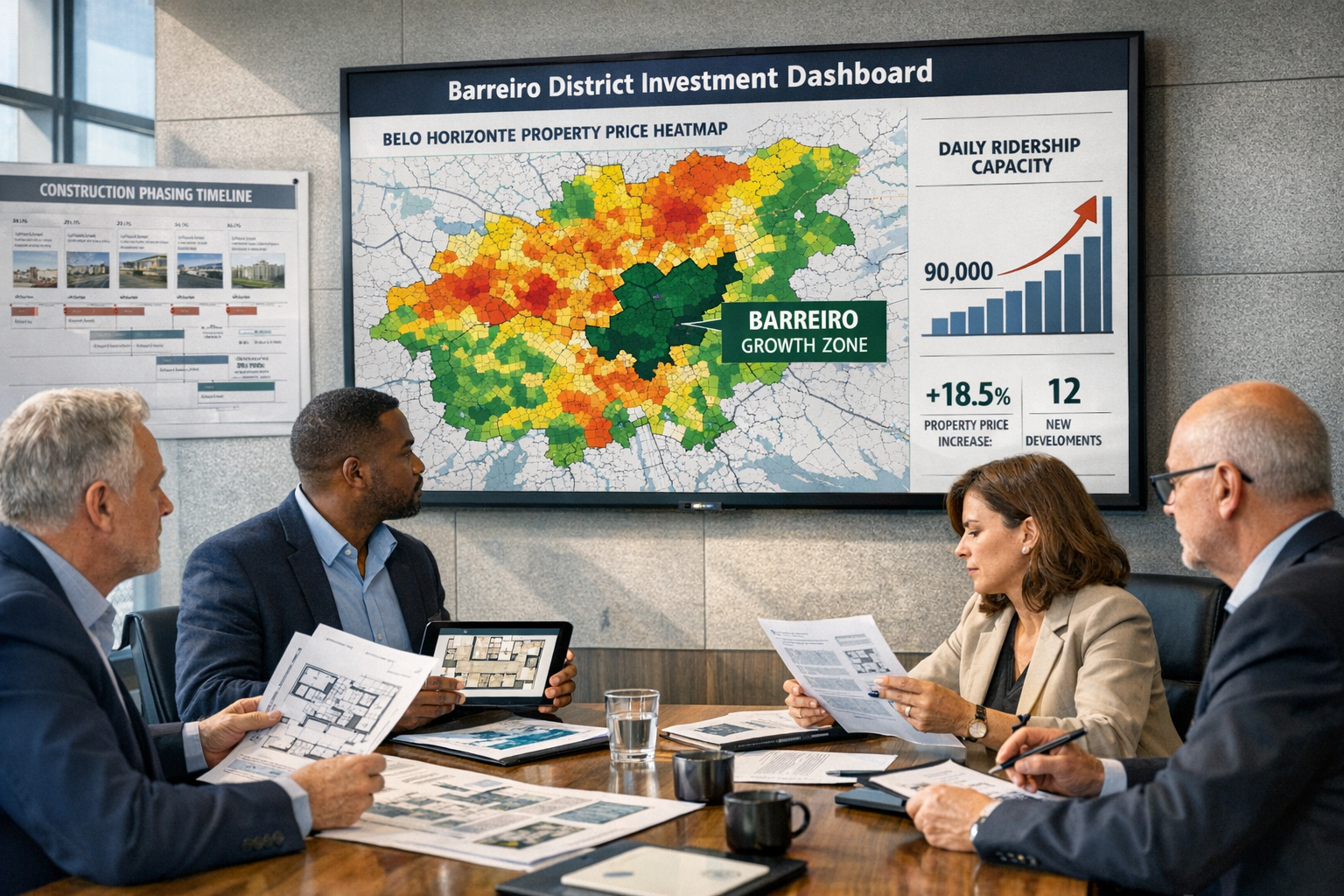
- Ridership set to more than double: Daily capacity is projected to grow from 90,000 to 200,000 passengers as Line 2 and Line 1 modernization combine. [2][3]
- 12–18% return potential: Mid-tier condo launches near early stations are targeting double-digit yields driven by peripheral urbanization dynamics.
- R$400 million in state funding: Confirmed government investment signals low project-cancellation risk for developers and buyers alike. [3]
What the Linha 2 Extension Actually Looks Like
Route, Stations, and Timeline
Linha 2 will run 10.5 kilometers from Nova Suíça in the city’s inner zone all the way southwest to the Barreiro district. Seven modern stations will serve the corridor, with construction phased across two major milestones [4]:
| Milestone | Stations | Target Date |
|---|---|---|
| Phase 1 Opening | Nova Suíça → Amazonas (2 stations) | July 2026 |
| Full Line Completion | All 7 stations to Barreiro | July 2028 |
The phased approach is intentional. Metro leadership confirmed that the two-station initial opening will serve as an operational test phase, allowing the system to validate new rolling stock, ticketing integration, and passenger flow before the full corridor goes live [1].
This is not a soft opening by accident — it is a strategic infrastructure ramp-up that mirrors best practices from metro expansions in São Paulo and Rio de Janeiro.
The Funding Picture
The Minas Gerais state government committed R$400 million to the project, with supplementary resources drawn from the Brumadinho tragedy settlement agreement [3]. The project operates under a 30-year concession framework, with the first five years dedicated to infrastructure build-out, system development, and new train procurement.
💬 “A 30-year concession with state-backed funding is the closest thing to a risk-free infrastructure signal a real estate developer can get.”
Ten new trains are scheduled for delivery during 2026 to serve Line 1 operations, freeing up capacity as Line 2 comes online. Simultaneously, all Line 1 stations will undergo full revitalization, replacing 1980s-era rolling stock with modern equipment [1][3].
Why Barreiro Is the District to Watch in 2026
Peripheral Urbanization: The Engine Behind the Numbers
Barreiro has long been one of Belo Horizonte’s most populous but underserved districts. Home to hundreds of thousands of residents, the area has historically suffered from long commute times and limited formal transit options. The arrival of Linha 2 changes that equation entirely.
When metro access reaches a previously transit-poor neighborhood, a predictable sequence unfolds:
- 🏗️ Land values rise near confirmed station locations
- 🏢 Developers launch mid-tier and affordable units to capture first-mover demand
- 👥 Population density increases as commute times drop
- 🛒 Commercial activity follows residential growth
- 📈 Rental yields compress as prices rise, rewarding early investors
This cycle is well-documented in Brazilian urban markets. The key for developers is front-running demand — launching projects during construction, not after ribbon-cutting.
The Ridership Math
The numbers tell a compelling story. The existing metro system currently serves approximately 90,000 daily passengers on weekdays [2]. Following Line 2 completion and Line 1 modernization, projections point to 200,000 daily passengers — a 122% increase in system capacity [2][3].
That is not just more trains. That is a fundamentally different city for anyone living within walking distance of a metro station.
For context on how transit-driven real estate growth plays out across Brazilian markets, the best places to invest in Brazil property analysis highlights how infrastructure timing consistently ranks as the top predictor of mid-term property appreciation.
The Developer Opportunity: Front-Running Demand With Mid-Tier Condos
Why Mid-Tier Units Are the Sweet Spot
Not every price segment benefits equally from metro expansion. Mid-tier condominiums — typically priced between R$250,000 and R$550,000 in the Barreiro corridor — sit in the optimal zone for several reasons:
- ✅ Accessible to the largest buyer pool: Working families and young professionals who will use the metro daily
- ✅ Eligible for Minha Casa Minha Vida financing tiers: Broadening the qualified buyer base
- ✅ Lower land acquisition costs: Barreiro land is still priced at a significant discount to the city center
- ✅ Higher rental demand density: Transit-adjacent renters prioritize location over luxury finishes
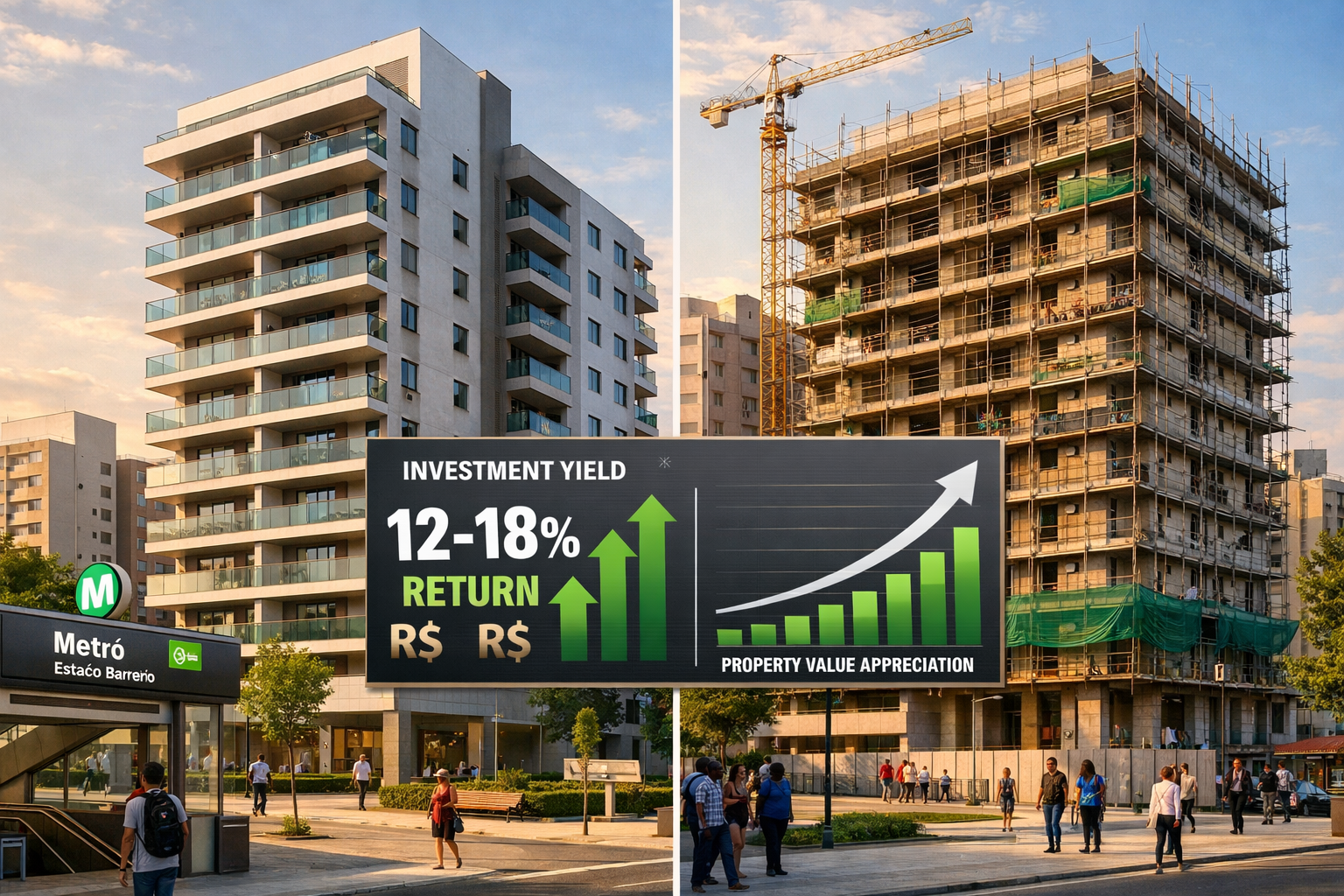
The 12–18% return target cited by developers active in the corridor reflects a combination of appreciation during the construction phase and stabilized rental yields post-delivery. For buyers purchasing off-plan (na planta), the entry price advantage is substantial.
Understanding why buying off-plan can potentialize your gains is essential context for anyone evaluating Barreiro launches in 2026.
Construction Phasing Synced to Metro Timelines
The most sophisticated developers in this cycle are aligning their delivery schedules directly with metro opening dates. Here is what that looks like in practice:
| Developer Action | Timing | Rationale |
|---|---|---|
| Land acquisition | 2023–2024 | Pre-announcement pricing |
| Project launch (off-plan sales) | 2025–2026 | Capture early buyers at base price |
| Construction completion | Mid-to-late 2027 | Deliver before full line opens |
| Rental/resale at peak | 2028+ | Full 7-station line operational |
Projects launching in 2026 that target a 24–30 month construction cycle will deliver units just as the full Barreiro station opens in 2028. That timing alignment is not coincidental — it is the core of the investment thesis.
Nova Suíça and Nova Gameleira: The Early Station Advantage
The two stations opening in July 2026 — Nova Suíça and Amazonas — are not in Barreiro proper, but they anchor the line’s inner-city end. Nova Gameleira, positioned further along the corridor toward Barreiro, sits in a zone where residential land is still priced well below its post-metro potential.
Developers active near Nova Gameleira are betting that the operational credibility of Phase 1 (July 2026) will accelerate buyer confidence for units near Phase 2 stations. Once commuters see trains running, the psychological barrier to purchasing near a “future” station dissolves.
Investment Mechanics: What Buyers and Developers Need to Know
Yield Calculation Framework
For investors evaluating mid-tier condo launches in the Barreiro corridor, a basic yield framework looks like this:
Gross Rental Yield Estimate (Post-2028):
- Average unit size: 55–70 m²
- Estimated monthly rent (metro-adjacent): R$1,800–R$2,400
- Purchase price (off-plan, 2026): R$320,000–R$420,000
- Gross yield range: 6.5%–8.5% annually
Capital Appreciation Estimate (2026–2028):
- Historical transit-adjacent appreciation in BH: 15–25% over 24 months post-announcement
- Conservative 2026–2028 estimate for Barreiro corridor: 12–18%
Combined, these figures produce the total return profile that is drawing institutional and individual investors to the corridor.
For investors exploring how cryptocurrency and alternative assets interact with real estate portfolio construction, the analysis of crypto and real estate incorporation offers relevant context on diversification strategies.
Risk Factors to Monitor
No investment thesis is complete without an honest look at downside risks:
⚠️ Construction delays: Brazilian infrastructure projects have a documented history of timeline slippage. The July 2026 Phase 1 date is confirmed by metro leadership, but Phase 2 (2028) carries more uncertainty [1][4].
⚠️ Demand absorption: Barreiro’s mid-tier market could face oversupply if too many developers launch simultaneously. Monitoring launch volumes is essential.
⚠️ Financing conditions: Brazilian interest rates (Selic) directly affect mortgage affordability. Any significant rate increases could compress the buyer pool.
⚠️ Concession execution risk: The 30-year concession framework is solid on paper, but operational performance of the private concessionaire will determine actual service quality [1].
Comparing Barreiro to Other Brazilian Growth Markets
Belo Horizonte’s Barreiro corridor shares characteristics with other high-performing Brazilian residential investment zones — but with one key differentiator: confirmed state funding at R$400 million removes a layer of uncertainty that plagues many speculative transit projects [3].
For comparison, the Brazilian real estate market outlook in other major cities shows similar transit-driven appreciation patterns, reinforcing that the Barreiro thesis fits a proven national template.
Developers and investors looking at active project launches can explore the full portfolio of current developments to benchmark unit types, pricing structures, and delivery timelines against the Barreiro opportunity.
How to Position Now: Actionable Steps for 2026
The Belo Horizonte Barreiro Boom: Linha 2 Metro Extension Yields for Mid-Tier Condo Launches 2026 opportunity is time-sensitive. Here is a prioritized action framework:
For Developers 🏗️
- Secure land within 800m of confirmed station locations — particularly Nova Gameleira and stations closer to Barreiro terminal
- Target 55–75 m² unit configurations aligned with metro-commuter household profiles
- Launch off-plan sales in H1 2026 to capture the pre-Phase 1 opening momentum
- Sync delivery to Q3 2027–Q1 2028 to hit the market as full-line anticipation peaks
For Individual Investors 💼
- Evaluate off-plan purchases at 2026 launch pricing — this is when the entry advantage is largest
- Prioritize projects within 500–800m walking distance of confirmed station locations
- Model both rental yield and resale scenarios — do not rely on a single exit strategy
- Verify developer track record and construction financing before committing
For Market Watchers 📊
- Track Phase 1 ridership data post-July 2026 — strong early numbers will validate the full-line investment case
- Monitor land registry transactions near station zones for signs of institutional accumulation
- Follow real estate market news and updates for the latest developments in the BH corridor
Conclusion: The Window Is Open — But Not Indefinitely
The Belo Horizonte Barreiro Boom: Linha 2 Metro Extension Yields for Mid-Tier Condo Launches 2026 represents one of the clearest transit-driven real estate opportunities in Brazil’s current market cycle. The combination of confirmed state funding, phased metro opening starting July 2026, and a full-line completion target of July 2028 creates a multi-year appreciation runway that is unusually well-defined.
The developers who will capture the strongest returns are those already in motion — acquiring land, launching off-plan sales, and aligning delivery schedules with metro milestones. For individual investors, the off-plan purchase window in 2026 offers the best entry pricing before Phase 1 operations validate the corridor’s potential to a much wider audience.
Three actions to take today:
- 📍 Map active condo launches within 800m of Nova Suíça, Nova Gameleira, and Barreiro terminal stations
- 📋 Request off-plan pricing and delivery schedules from developers active in the corridor
- 📰 Set alerts for Phase 1 opening news in July 2026 — that moment will mark the beginning of the next pricing tier
The metro is coming. The question is whether your investment arrives before or after the train does.
References
[1] Linha 2 Metro Bh Tera Inicio Antecipado Em 2026 – https://rede98.com.br/98-news/linha-2-metro-bh-tera-inicio-antecipado-em-2026/
[2] Watch – https://www.youtube.com/watch?v=lhNhfNCLj7w
[3] Watch – https://www.youtube.com/watch?v=HCsolR1NPlA
[4] railwaygazette – https://www.railwaygazette.com/metro/belo-horizonte-metro-line-2-construction-starts/67559.article