
Best Place to Invest in Real Estate in Brazil: A Comprehensive 2025 Guide

Brazil’s real estate market is experiencing a remarkable transformation in 2025, attracting investors from around the globe with its unique combination of economic growth, urban development, and stunning natural landscapes. Finding the best place to invest in real estate in Brazil requires understanding regional dynamics, market trends, and long-term appreciation potential that can deliver exceptional returns on investment.
With a population exceeding 215 million people and a GDP ranking among the world’s top economies, Brazil offers diverse investment opportunities across its vast territory [1]. From the bustling financial centers of São Paulo to the pristine beaches of Florianópolis, each region presents distinct advantages for property investors seeking to capitalize on Latin America’s largest real estate market.
Key Takeaways
- 🏖️ Florianópolis leads coastal investments with average annual appreciation rates of 8-12% and strong rental demand from tourism and remote workers
- 📈 São Paulo offers institutional-grade opportunities in commercial and residential sectors with stable, long-term returns in Brazil’s economic powerhouse
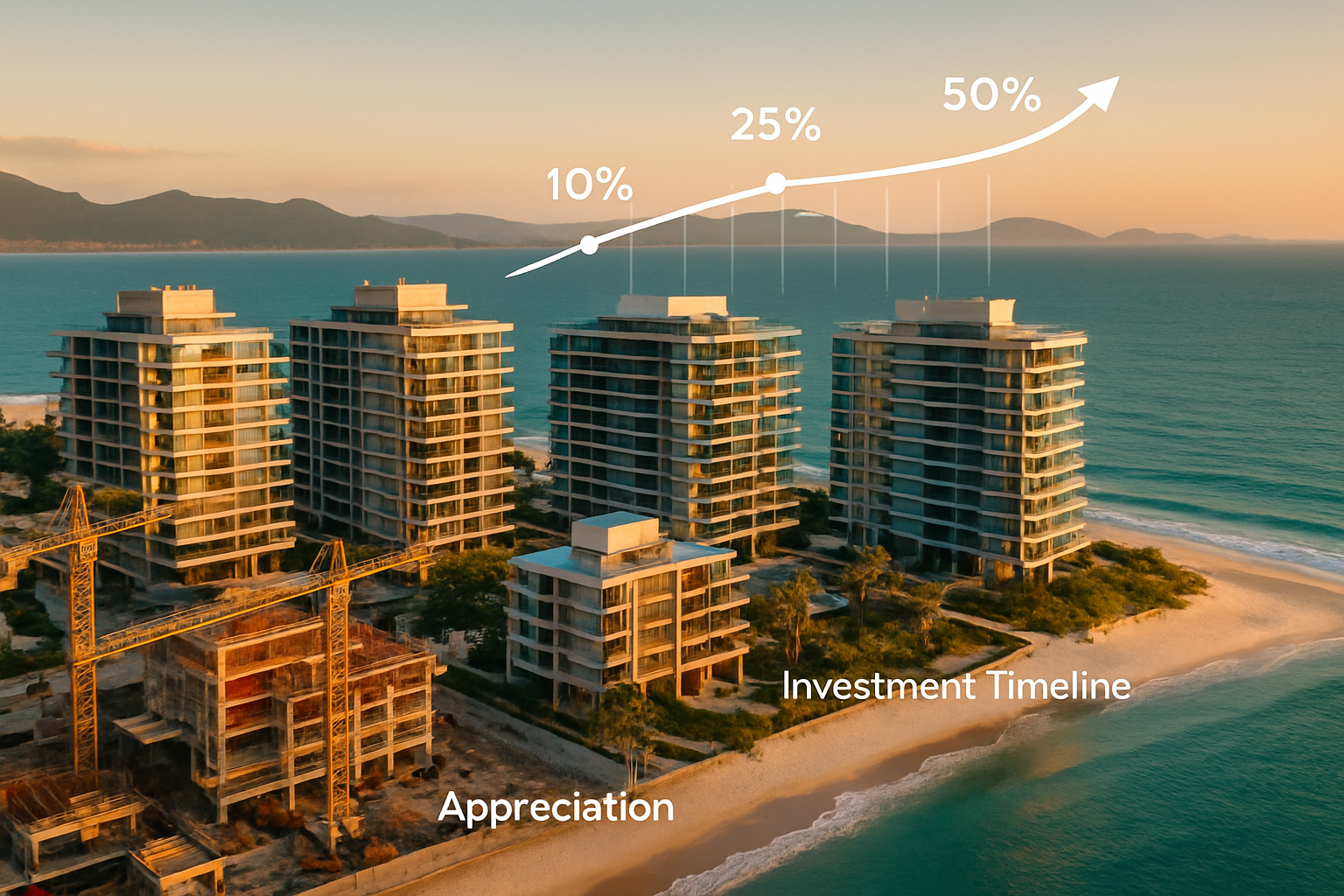
- 💰 Pre-construction purchases can maximize returns through property appreciation during development phases, often yielding 15-25% gains before completion
- 🌴 Regional diversity matters – different Brazilian cities cater to different investment strategies, from high-yield rentals to capital appreciation plays
- 🔍 Due diligence is essential – understanding local regulations, property taxes, and market conditions ensures successful real estate investments in Brazil
Understanding Brazil’s Real Estate Investment Landscape in 2025
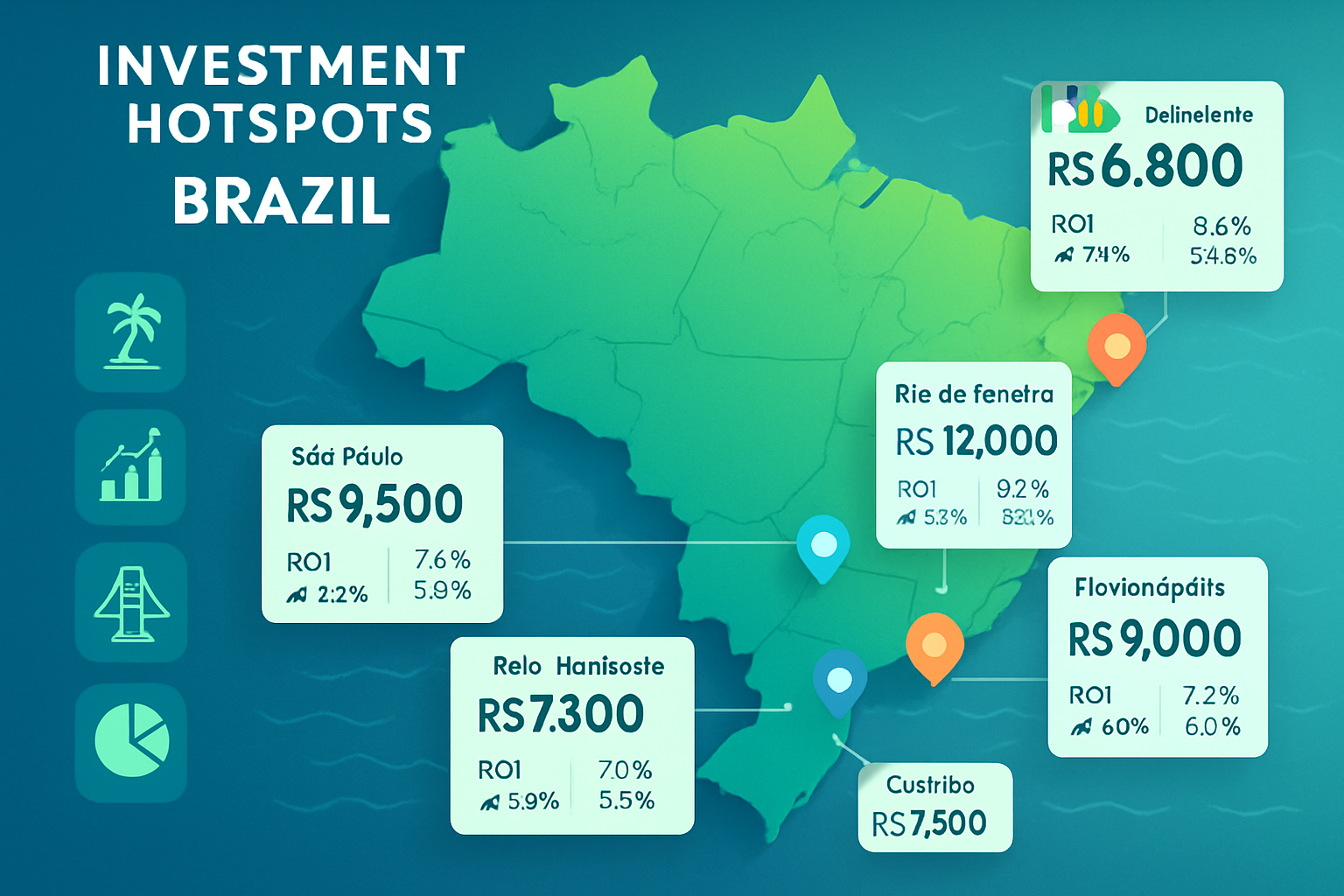
Brazil’s property market has matured significantly over the past decade, establishing robust legal frameworks that protect foreign investors while maintaining attractive entry points compared to other emerging markets. The country’s real estate sector contributes approximately 10% to the national GDP, demonstrating its fundamental importance to economic stability [2].
Key market characteristics that make Brazil attractive for real estate investment include:
- Foreign ownership rights : International investors can purchase property with minimal restrictions
- Diverse property types : From beachfront condos to urban apartments and commercial spaces
- Growing middle class : Increasing domestic demand for quality housing
- Tourism infrastructure : Strong short-term rental markets in coastal and cultural destinations
- Currency advantages : Favorable exchange rates for dollar and euro investors
The Brazilian real estate market in 2025 shows particular strength in secondary cities that combine quality of life with economic opportunity, creating ideal conditions for both capital appreciation and rental income generation.
Economic Factors Driving Investment Opportunities
Brazil’s economic recovery following global challenges has created compelling investment windows. Interest rates have stabilized, inflation is under control, and government infrastructure investments are unlocking previously underdeveloped regions [3].
Critical economic indicators for 2025:
| Economic Factor | Current Status | Impact on Real Estate |
|---|---|---|
| Interest Rates | 9.5-10.5% | Moderate borrowing costs |
| Inflation | 4.2% annually | Stable price growth |
| GDP Growth | 2.3% projected | Expanding economy |
| Foreign Investment | $65 billion annually | Strong capital inflow |
| Tourism Revenue | $8.2 billion annually | Rental demand support |
Best Place to Invest in Real Estate in Brazil: Top Cities Ranked
Identifying the best place to invest in real estate in Brazil depends on investment objectives, risk tolerance, and time horizon. Each major city offers unique advantages that cater to different investor profiles and strategies.
🥇 Florianópolis: The Coastal Investment Champion
Florianópolis consistently ranks as one of Brazil’s most desirable cities for real estate investment, combining exceptional quality of life with strong appreciation fundamentals. Located on Santa Catarina Island, this coastal paradise attracts both domestic migrants and international buyers seeking beachfront properties with investment potential.
Why Florianópolis excels for property investment:
- Appreciation rates : Historical annual growth of 8-12% in prime locations
- Rental yields : Short-term vacation rentals generate 6-10% annual returns
- Infrastructure development : Ongoing improvements to highways, airports, and urban services
- Population growth : 3.2% annual increase, among Brazil’s fastest-growing capitals
- Quality of life : Consistently rated Brazil’s best city for living standards
The growth of regions like English in Florianópolis demonstrates how neighborhood-level development drives property values. Strategic infrastructure investments and commercial expansion create appreciation catalysts that benefit early investors.
Investment opportunities in Florianópolis include beachfront condominiums, studio apartments near universities, and mixed-use developments in emerging neighborhoods. The city’s limited geographic footprint on an island creates natural supply constraints that support long-term value growth.
🥈 São Paulo: Brazil’s Economic Powerhouse
As Latin America’s largest city and Brazil’s financial capital, São Paulo offers institutional-grade investment opportunities with market depth unmatched elsewhere in the country. The metropolitan area houses over 22 million residents and generates approximately 33% of Brazil’s GDP [4].
São Paulo investment advantages:
- Market liquidity : Largest buyer pool ensures easy property resale
- Diverse neighborhoods : From luxury Jardins to emerging Vila Madalena
- Commercial opportunities : Office buildings, retail spaces, and mixed-use developments
- Rental demand : Constant need from corporate relocations and students
- Infrastructure : World-class transportation, healthcare, and education facilities
Investors seeking stable, long-term returns find São Paulo’s established neighborhoods particularly attractive. Properties in prime locations like Itaim Bibi, Pinheiros, and Vila Olímpia maintain value even during economic fluctuations due to consistent corporate demand.
The city’s commercial real estate sector offers opportunities in office buildings, retail centers, and logistics facilities that generate predictable income streams for institutional investors and high-net-worth individuals.
🥉 Rio de Janeiro: Tourism and Lifestyle Investment
Rio de Janeiro combines iconic tourism appeal with residential investment potential, particularly in neighborhoods like Leblon, Ipanema, and Barra da Tijuca. The city’s international recognition creates consistent demand from vacation rental markets and lifestyle buyers.
Rio de Janeiro investment profile:
- Tourism foundation : 2.8 million international visitors annually
- Luxury market : High-end properties in premium beachfront locations
- Event-driven demand : Major cultural, sporting, and business events
- Rental income : Strong short-term rental performance in tourist zones
- Appreciation potential : Selective neighborhoods show 5-8% annual growth
While Rio faces urban challenges, strategic investments in secured, well-managed developments can deliver excellent returns, particularly properties catering to international tourists and affluent domestic buyers.
Other Promising Markets for Real Estate Investment
Beyond the top three, several Brazilian cities offer compelling investment opportunities for those seeking the best place to invest in real estate in Brazil :
Belo Horizonte : Brazil’s third-largest metropolitan area combines affordability with steady appreciation. The city’s diversified economy and growing tech sector create rental demand from young professionals.
Curitiba : Known for exceptional urban planning and quality of life, Curitiba attracts investors seeking stable, medium-term returns in a well-managed city environment.
Brasília : As the federal capital, Brasília offers unique opportunities in government-adjacent properties and commercial real estate serving the public sector.
Fortaleza : This northeastern coastal city provides entry-level investment opportunities with tourism-driven rental potential and lower property prices compared to southern markets.
Investment Strategies: Maximizing Returns in Brazilian Real Estate
Successful real estate investment in Brazil requires strategic approach selection based on capital availability, risk tolerance, and investment timeline. Different strategies yield varying returns and require distinct levels of involvement.
Pre-Construction Investment Strategy
Purchasing properties during the construction phase represents one of the most profitable approaches in Brazil’s real estate market. Developers offer significant discounts to early buyers, and properties typically appreciate 15-25% from purchase to completion.
Benefits of pre-construction investment:
- ✅ Lower entry prices : 20-30% discounts compared to completed units
- ✅ Payment flexibility : Extended payment plans during construction
- ✅ Appreciation during construction : Value increases as project progresses
- ✅ First choice : Select best units, floors, and views
- ✅ New condition : Modern amenities and warranty coverage
Investors should partner with reputable developers who have proven track records of completing projects on schedule and maintaining quality standards. The Tramonto development exemplifies how well-executed projects deliver value to early investors through strategic location selection and quality construction.
Rental Income Strategy
Brazil’s growing tourism sector and urban migration patterns create robust rental markets in key cities. Investors can choose between long-term residential rentals and short-term vacation rentals, each offering distinct advantages.
Long-term rental characteristics:
- Stable monthly income (4-6% annual yields)
- Lower management requirements
- Tenant stability and predictable cash flow
- Suitable for urban apartments near employment centers
Short-term vacation rental characteristics:
- Higher income potential (6-10% annual yields)
- Seasonal fluctuations require active management
- Premium locations command higher nightly rates
- Platforms like Airbnb facilitate international bookings
Studio apartments in Florianópolis offer particularly attractive rental investment opportunities, combining affordability with strong demand from students, young professionals, and tourists seeking compact, well-located accommodations.
Capital Appreciation Strategy
Long-term investors focusing on wealth accumulation prioritize locations with strong appreciation fundamentals over immediate rental income. This strategy requires patience but can deliver superior returns over 5-10 year horizons.
Key factors for appreciation-focused investing:
- Infrastructure development: New highways, airports, or public transportation
- Neighborhood gentrification: Emerging areas attracting young professionals
- Supply constraints: Limited developable land or building restrictions
- Economic growth: Regional GDP expansion and job creation
- Quality of life improvements: Parks, schools, and cultural amenities
Investors should research market trends and performance indicators to identify neighborhoods positioned for significant appreciation. Early entry into developing areas can yield returns exceeding 100% over a decade.
Practical Considerations for Foreign Investors
International investors must navigate specific legal, financial, and practical considerations when entering Brazil’s real estate market. Understanding these requirements ensures smooth transactions and protects investment capital.
Legal Requirements and Documentation
Foreign nationals can purchase property in Brazil with minimal restrictions, though certain border and coastal areas require government approval. The process requires obtaining a CPF (Cadastro de Pessoas Físicas) tax identification number, which can be acquired at Brazilian consulates or online [5].
Essential documentation includes:
- Valid passport and visa (if applicable)
- CPF tax identification number
- Proof of funds and income source
- Legal representation through Brazilian attorney
- Property deed (escritura) registered at local registry office
Working with experienced real estate professionals who understand foreign investor needs simplifies the acquisition process and ensures compliance with all legal requirements.
Financing Options for Property Purchase
While Brazilian banks offer mortgages to foreign buyers, terms are typically less favorable than those available to residents. Most international investors purchase properties with cash or arrange financing in their home countries.
Financing considerations:
- Brazilian mortgages: Available but require significant documentation and higher interest rates (9-12%)
- Developer financing: Many projects offer installment plans during construction
- Home country financing: Leveraging equity in existing properties often provides better terms
- Currency risk : Exchange rate fluctuations impact total investment costs
The extended payment plans offered for pre-construction developments provide effective financing alternatives, allowing investors to spread payments over 24-36 months without interest charges.
Tax Implications and Ongoing Costs
Understanding Brazil’s property tax structure helps investors accurately calculate total returns and avoid surprises. Both acquisition and ongoing ownership involve various taxes and fees.
Key taxes and costs:
| Tax/Cost | Rate/Amount | When Applied |
|---|---|---|
| Property Transfer Tax (ITBI) | 2-4% of value | At purchase |
| Annual Property Tax (IPTU) | 0.5-1.5% of value | Yearly |
| Rental Income Tax | 15-27.5% | Monthly/annually |
| Capital Gains Tax | 15% | For sale |
| Condominium Fees | Varies by property | Monthly |
Professional tax advisors can structure investments to optimize tax efficiency while ensuring full compliance with Brazilian regulations. Many investors establish Brazilian legal entities to hold properties, which can provide tax advantages for certain investment structures.
Due Diligence: Protecting Your Brazilian Real Estate Investment
Thorough due diligence separates successful investments from costly mistakes. Brazil’s real estate market offers excellent opportunities, but investors must verify property details, legal status, and market conditions before committing capital.
Property Verification Checklist
Before finalizing any purchase, investors should complete comprehensive property verification:
- ✓ Title search : Confirm clean ownership without liens or disputes
- ✓ Property inspection : Assess physical condition and identify needed repairs
- ✓ Zoning verification : Ensure property use complies with local regulations
- ✓ Condominium review : Examine financial health and management quality
- ✓ Market analysis : Compare pricing with similar properties in the area
- ✓ Developer reputation : Research completion history and financial stability
- ✓ Legal review : Have attorney examine all contracts and documentation
Partnering with established developers who maintain transparent operations and proven track records significantly reduces investment risk. Reviewing current development projects provides insight into quality standards and completion timelines.
Understanding Local Market Dynamics
Each Brazilian city and neighborhood operates under unique market conditions that influence property values and rental potential. Successful investors dedicate time to understanding local dynamics before committing capital.
Critical market research areas:
- Supply and demand balance : Current inventory versus buyer/renter demand
- Price trends : Historical appreciation rates and current trajectory
- Rental market strength : Vacancy rates and average rental yields
- Economic drivers : Major employers, industries, and growth sectors
- Infrastructure projects : Planned developments affecting property values
- Demographic trends : Population growth, age distribution, income levels
Accessing local market insights and analysis helps investors make informed decisions based on current conditions rather than outdated assumptions or generalizations about Brazil’s diverse markets.
Future Outlook: Best Place to Invest in Real Estate in Brazil Beyond 2025
Brazil’s real estate market continues evolving, with emerging trends creating new opportunities for forward-thinking investors. Understanding these developments helps position portfolios for long-term success.
Emerging Investment Trends
Several trends are reshaping where and how investors approach Brazilian real estate:
Remote work migration : Professionals leaving expensive urban centers for coastal cities with better quality of life, driving demand in places like Florianópolis and Balneário Camboriú.
Sustainable development : Growing preference for eco-friendly buildings with energy efficiency, green spaces, and environmental certifications commanding premium prices.
Technology integration : Smart home features, high-speed internet infrastructure, and digital building management becoming standard expectations.
Mixed-use developments : Projects combining residential, commercial, and recreational spaces in walkable communities gaining popularity.
Cryptocurrency integration in real estate transactions represents an innovative frontier, with some Brazilian developers accepting digital currencies and exploring blockchain-based property ownership models.
Regional Development Priorities
Government infrastructure investments and private sector development are transforming specific regions into tomorrow’s investment hotspots:
Northeastern coast expansion : Cities like Fortaleza, Natal, and Maceió receiving tourism infrastructure investments that support property value growth.
Interior city development : Mid-sized cities in São Paulo and Minas Gerais states attracting manufacturing and technology companies, creating employment-driven housing demand.
Coastal corridor enhancement : Highway improvements connecting southern beach cities facilitating regional integration and property appreciation.
Amazon region sustainable development : Carefully planned eco-tourism and sustainable communities in northern Brazil creating unique investment niches.
Investors who identify these emerging markets early can capture exceptional returns as regions transition from underdeveloped to established investment destinations.
Taking Action: Your Next Steps in Brazilian Real Estate Investment
Finding the best place to invest in real estate in Brazil requires aligning personal investment objectives with market opportunities, conducting thorough research, and partnering with experienced professionals who understand local conditions.
Developing Your Investment Strategy
Begin by clarifying investment goals and constraints:
- Define objectives : Capital appreciation, rental income, or lifestyle property?
- Establish budget : Total capital available and financing requirements
- Determine timeline : Short-term flip, medium-term hold, or long-term appreciation?
- Assess risk tolerance : Comfort with market volatility and development risk
- Consider involvement level : Hands-on management or passive investment?
These foundational decisions guide city selection, property type, and acquisition strategy. Exploring available developments provides concrete examples of how different projects serve varying investment profiles.
Partnering with Local Experts
Successful Brazilian real estate investment typically involves assembling a team of qualified professionals:
- Real estate attorney : Legal compliance and contract review
- Property manager : Rental management and maintenance coordination
- Tax advisor : Optimization of tax structure and compliance
- Real estate agent : Market knowledge and property identification
- Developer/builder : For pre-construction investments
Establishing relationships with trustworthy professionals protects investments and provides ongoing market intelligence. Connecting with experienced developers offers direct access to upcoming opportunities and market insights.
Starting Your Investment Journey
The path to successful Brazilian real estate investment follows these practical steps:
Phase 1 – Research (1-2 months)
- Study market reports and city comparisons
- Review investment opportunities and market trends
- Connect with developers and real estate professionals
- Clarify investment criteria and budget
Phase 2 – Selection (1-2 months)
- Visit target cities and inspect properties
- Compare multiple options across locations
- Conduct due diligence on shortlisted properties
- Negotiate terms and pricing
Phase 3 – Acquisition (1-2 months)
- Finalize legal documentation
- Secure financing if applicable
- Complete purchase transaction
- Establish property management
Phase 4 – Management (Ongoing)
- Monitor property performance
- Optimize rental operations
- Track market conditions
- Plan exit strategy or portfolio expansion
Brazil’s real estate market rewards patient, well-informed investors who approach opportunities with realistic expectations and proper professional support.
Conclusion
Determining the best place to invest in real estate in Brazil ultimately depends on individual investment objectives, but Florianópolis emerges as the standout choice for most investors in 2025. Its combination of strong appreciation fundamentals, robust rental markets, exceptional quality of life, and ongoing infrastructure development creates an ideal environment for both capital growth and income generation.
São Paulo offers unmatched market depth and institutional-grade opportunities for larger investors seeking stability, while Rio de Janeiro provides lifestyle-oriented investments with tourism-driven rental potential. Secondary markets like Belo Horizonte, Curitiba, and northeastern coastal cities present compelling value opportunities for investors willing to explore beyond the most established markets.
Key success factors for Brazilian real estate investment include:
- 🎯 Strategic location selection based on appreciation drivers and rental demand
- 📊 Thorough market research understanding local conditions and trends
- 🤝 Professional partnerships with experienced developers and advisors
- ⏰ Appropriate timing leveraging pre-construction opportunities and market cycles
- 📋 Comprehensive due diligence protecting capital through verification and legal compliance
The Brazilian real estate market in 2025 offers exceptional opportunities for investors who approach the market with knowledge, patience, and strategic thinking. Whether seeking beachfront vacation properties, urban rental apartments, or long-term appreciation plays, Brazil’s diverse markets provide options for every investment profile.
Take the next step in your Brazilian real estate journey by researching specific markets, connecting with experienced professionals, and exploring current development opportunities. The combination of favorable market conditions, attractive valuations, and strong fundamentals makes 2025 an excellent time to establish or expand your Brazilian property portfolio.
For personalized guidance on investment opportunities in Florianópolis and surrounding regions , connect with experienced developers who understand local market dynamics and can match properties to your specific investment objectives.
References
[1] Brazilian Institute of Geography and Statistics (IBGE). “Population and GDP Estimates 2025.” Official Government Statistics, 2025.
[2] National Association of Real Estate Developers (ABRAINC). “Real Estate Sector Contribution to Brazilian GDP.” Industry Report, 2024.
[3] Central Bank of Brazil. “Economic Indicators and Monetary Policy Report.” Quarterly Publication, Q1 2025.
[4] São Paulo State Statistics Foundation (SEADE). “Metropolitan Area Economic Output Analysis.” Regional Economic Report, 2025.
[5] Brazilian Federal Revenue Service. “Foreign National Property Ownership Requirements.” Official Regulatory Guidelines, 2025.