
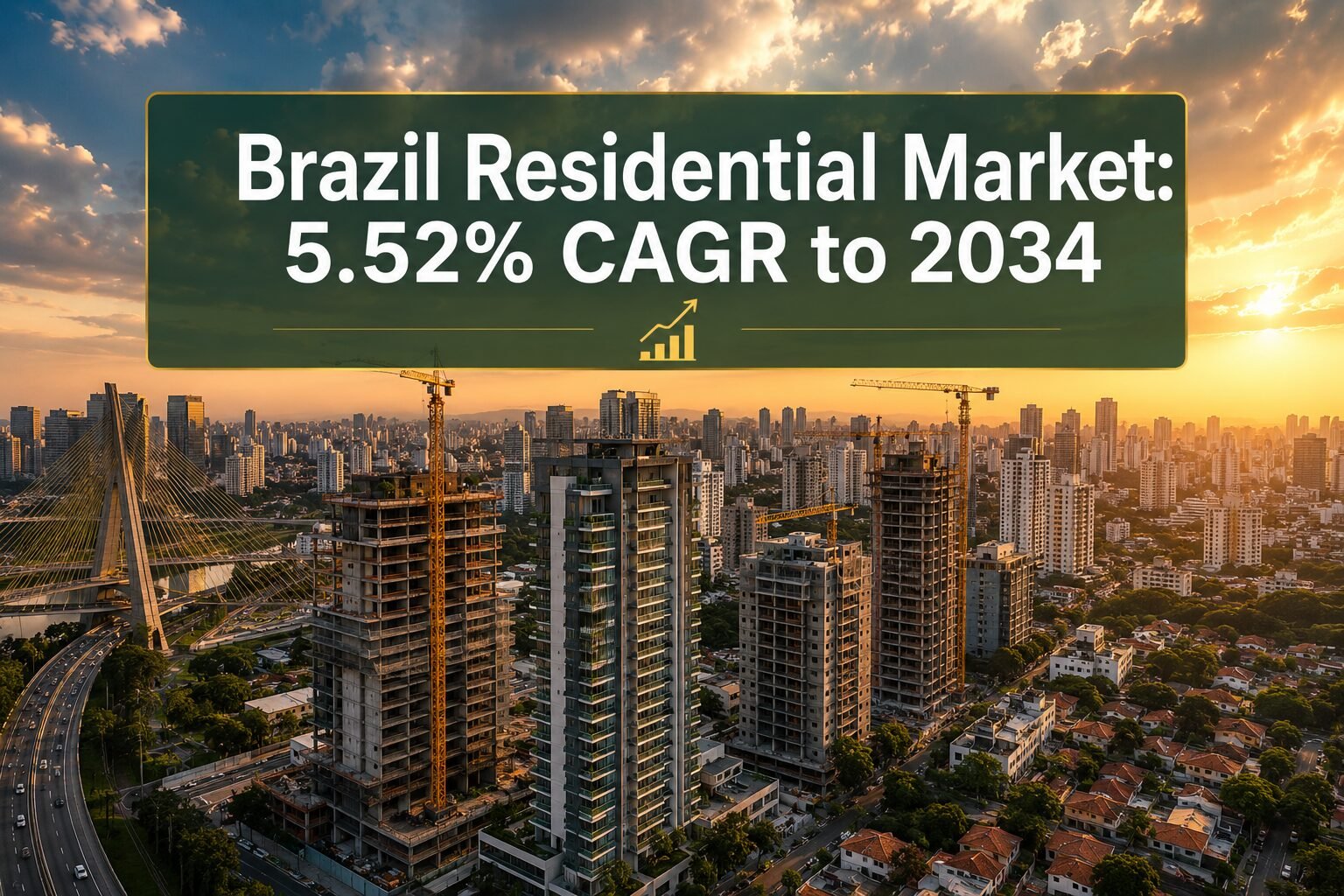
Brazil’s residential real estate sector is set to nearly double in value — from USD 63.2 billion in 2025 to USD 102.6 billion by 2034 — and the developers who understand the structural forces behind that number will be the ones best positioned to capture it. This trajectory, reflecting Brazil Residential Market’s 5.52% CAGR to 2034: Mid-Tier Strategies for Developers in Urban Expansion, is not driven by speculation or short-term policy cycles. It is anchored in deep demographic shifts, a rapidly urbanizing population, and a middle class with growing purchasing power and clear housing preferences [1].
For developers, planners, and investors operating in this space, the question is not whether the market will grow — the data is unambiguous. The question is where to deploy capital, how to position product, and which urban corridors will generate the most durable returns over the next decade.
Key Takeaways
- Brazil’s residential real estate market is projected to grow from USD 63.2 billion in 2025 to USD 102.6 billion by 2034, a CAGR of 5.52%.
- Urbanization and middle-class expansion are the two most powerful structural demand drivers.
- The mid-tier housing segment — modern, well-located apartments with quality amenities — represents the highest-volume opportunity for developers.
- The Southeast region, led by São Paulo and Rio de Janeiro, accounts for 41.3% of Brazil’s construction market activity.
- Sustainable design, technology integration, and off-plan sales strategies are becoming essential competitive tools.
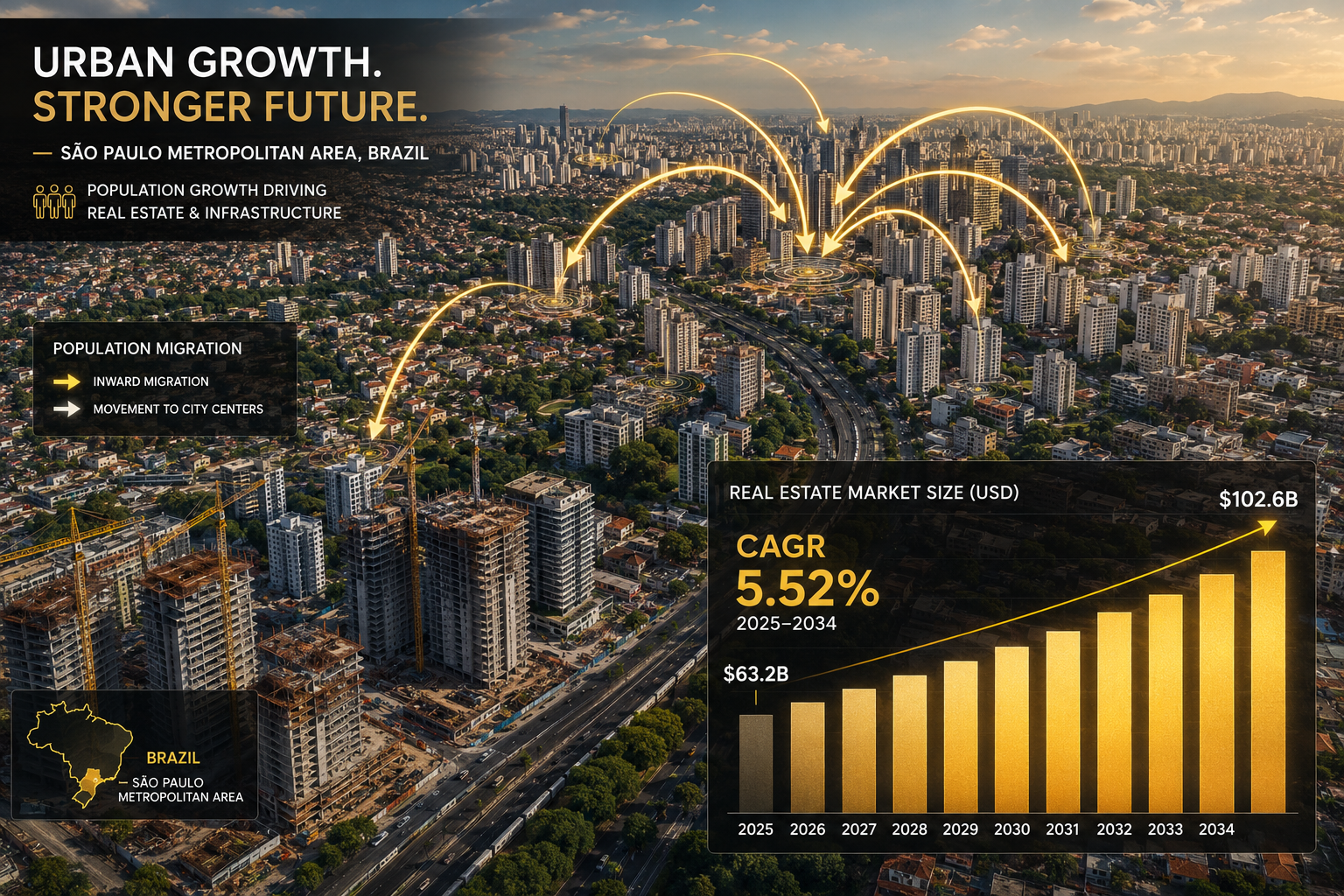
Understanding the $63.2B to $102.6B Growth Trajectory
The scale of Brazil’s residential market expansion is significant even by global emerging-market standards. A compound annual growth rate of 5.52% sustained over nearly a decade reflects structural demand, not cyclical noise. To understand why this growth is credible, it helps to examine the three forces most responsible for it.
Urbanization as the Primary Demand Engine
Brazil is already one of the most urbanized countries in Latin America, with roughly 87% of its population living in cities. Yet internal migration continues at pace, with secondary and tertiary cities absorbing overflow from São Paulo, Rio de Janeiro, and Brasília [1]. This movement creates continuous pressure on urban housing supply. Multi-family residential buildings and high-density apartment projects are the natural response — and developers who build in well-connected urban corridors are meeting demand that is both immediate and long-term.
The urbanization trend also reshapes what buyers want. Proximity to employment hubs, public transport, schools, and commercial services is no longer a premium feature — it is a baseline expectation. Developers who treat location strategy as a secondary concern are increasingly at a disadvantage.
Middle-Class Demand and the Apartment Dominance Story
Brazil’s expanding middle class is the single most important buyer cohort for residential developers targeting the mid-tier segment. These households — typically earning between BRL 4,000 and BRL 10,000 per month — are not looking for basic shelter. They want modern finishes, communal amenities, digital infrastructure, and access to urban convenience [1].
This cohort has driven a decisive shift toward apartment living. Multi-family residential units now dominate new supply in major Brazilian cities, and the preference shows no sign of reversing. Apartments offer lower per-unit land costs, higher density efficiency, and the amenity packages that middle-class buyers prioritize.
“The expanding middle class is driving demand for modern, well-located properties with access to amenities, prompting developers to focus on mid-tier housing segments.” [1]
For developers, this means the apartment format is not just a product choice — it is a market imperative. Those who continue to focus heavily on single-family detached housing in urban cores are working against the dominant demand pattern.
Interest Rates, Mortgage Access, and Price Momentum
Brazil’s Central Bank has made sustained efforts to reduce interest rates, which has meaningfully improved mortgage accessibility for mid-tier buyers [1]. As of February 2026, the average mortgage rate stood at 10.71% — still elevated by developed-market standards, but significantly lower than historical peaks that locked many households out of formal homeownership [3].
The effect on prices has been measurable. Brazil’s FIPEZAP house price index rose 5.62% year-on-year in Q1 2026, marking the twenty-ninth consecutive quarter of sustained price increases [3]. That kind of consistency signals genuine supply-demand imbalance, not speculative froth. For developers, it confirms that well-positioned residential product is holding and gaining value even in a high-rate environment.
To explore which specific Brazilian cities are generating the strongest investment returns in this environment, the best places to invest in Brazil property analysis provides a useful regional breakdown.
Regional Dynamics: Where the Market Is Actually Growing
Not all of Brazil’s residential growth is distributed evenly. Understanding regional concentration is essential for developers making capital allocation decisions.
Southeast Dominance and Its Implications
The Southeast region — anchored by São Paulo and Rio de Janeiro — accounts for 41.3% of Brazil’s total construction market activity in 2026 [2]. This concentration reflects the region’s economic density, infrastructure quality, and population size. For developers, the Southeast offers the deepest liquidity, the most active buyer pool, and the strongest secondary market for resale.
However, Southeast dominance also means higher land costs, more intense competition, and longer regulatory timelines. Developers entering this market need to be sophisticated about site selection, project phasing, and product differentiation.
| Region | Market Share (Construction) | Key Cities | Growth Characteristics |
|---|---|---|---|
| Southeast | 41.3% | São Paulo, Rio de Janeiro | High density, strong liquidity |
| South | ~18% | Curitiba, Florianópolis, Porto Alegre | Rising middle class, quality of life premium |
| Northeast | ~17% | Fortaleza, Recife, Salvador | Government program beneficiaries, emerging demand |
| Center-West | ~12% | Brasília, Goiânia | Government employment base, stable demand |
| North | ~11% | Manaus, Belém | Infrastructure-constrained, long-term potential |
The South Region’s Rising Profile
Cities in Brazil’s South region — particularly Florianópolis, Curitiba, and Porto Alegre — are attracting growing developer attention. Florianópolis, in particular, has seen consistent real estate market appreciation driven by quality-of-life migration, tech sector growth, and tourism-related demand.
The Florianópolis real estate market performance in 2025 illustrates how secondary markets within Brazil can outperform national averages when the fundamentals align. For developers willing to move beyond São Paulo, cities like Florianópolis offer lower land costs, less saturated competitive environments, and buyers with strong purchasing power.
The growth of the Ingleses region in Florianópolis is a concrete example of how specific urban neighborhoods can generate outsized appreciation when infrastructure investment and lifestyle demand converge.
Mid-Tier Strategies for Developers in Urban Expansion
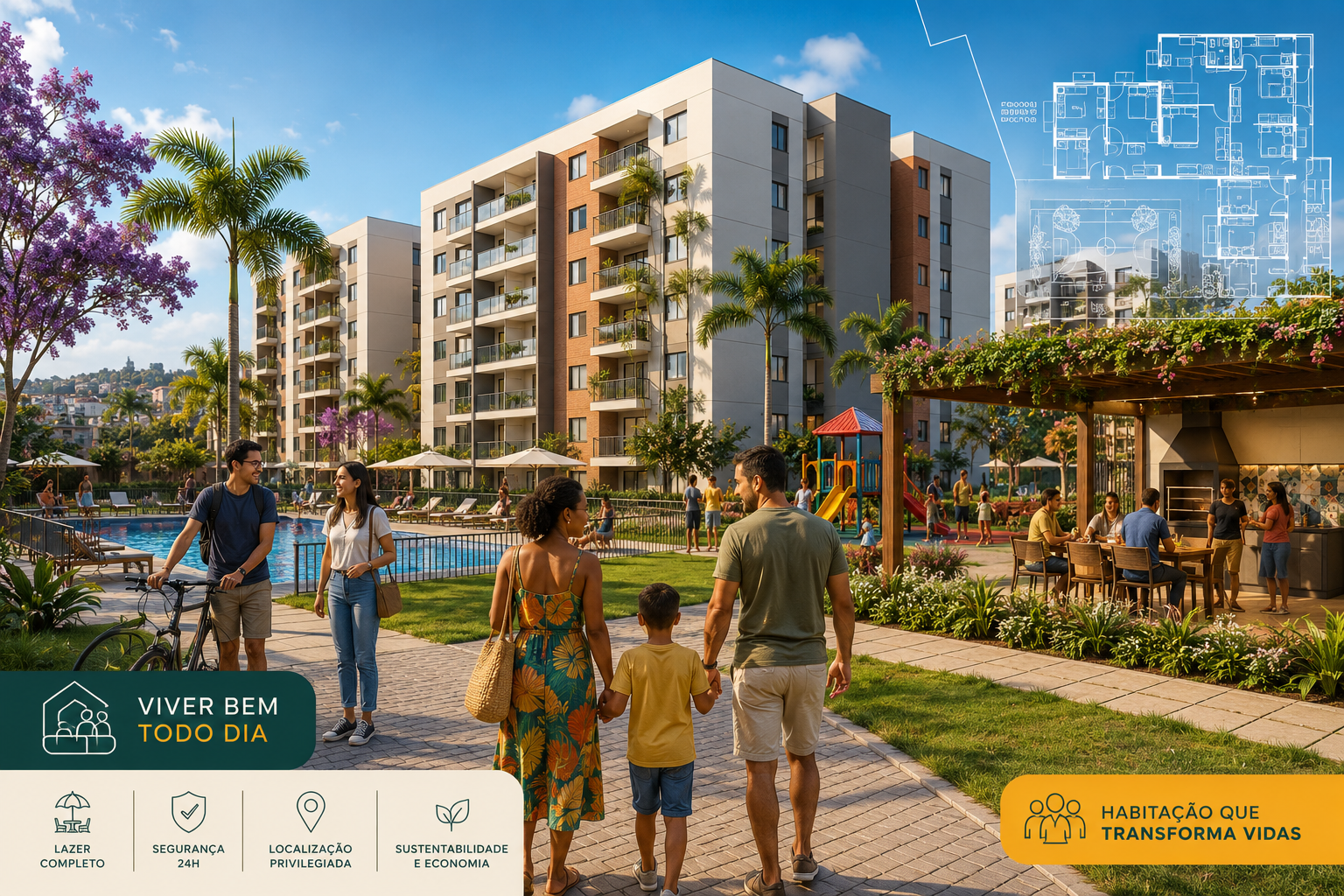
The core thesis of Brazil Residential Market’s 5.52% CAGR to 2034: Mid-Tier Strategies for Developers in Urban Expansion is that the most durable opportunity for developers lies in the mid-tier segment — not at the luxury end, where demand is thin and cyclically sensitive, and not at the social housing end, where margins are compressed and government dependency is high.
Defining the Mid-Tier Opportunity
Mid-tier residential in Brazil’s current market context means properties priced between approximately BRL 350,000 and BRL 800,000, targeting households with stable formal employment, access to mortgage financing, and aspirations for modern urban living. This segment benefits from both government-backed financing programs and conventional mortgage products, giving it a broader buyer base than either extreme.
Key characteristics of successful mid-tier projects in 2026:
- Unit size: 45 to 85 square meters, optimized for urban living without excess
- Amenities: Fitness facilities, co-working spaces, pet areas, green common areas
- Location: Within 2 kilometers of major transit corridors or employment centers
- Technology: Smart home features, fiber connectivity, digital access control
- Sustainability: Energy-efficient systems, water recycling, green certification
Cost-Effective Construction Without Compromising Quality
Developers targeting the mid-tier segment face a fundamental tension: buyers in this cohort have rising quality expectations, but price sensitivity limits how much cost can be passed through. The solution lies in construction methodology, not material compromise [4].
Prefabrication and modular construction techniques are gaining traction in Brazil’s residential sector. These approaches reduce on-site labor costs, improve schedule predictability, and can actually enhance quality consistency compared to traditional methods. Developers who invest in these capabilities early gain a structural cost advantage that compounds over multiple projects.
The residential construction sector is projected to grow at approximately 4.1% CAGR from 2026 to 2034 [2], meaning the pipeline of new supply will be substantial. Developers who can deliver quality product at competitive price points — through construction efficiency rather than specification reduction — will consistently outperform those who compete on price alone.
Off-Plan Sales and Pre-Launch Strategies
One of the most effective tools for mid-tier developers in Brazil’s urban expansion context is the off-plan sales model. Selling units before or during construction allows developers to validate demand, secure financing, and reduce inventory risk simultaneously.
For buyers, purchasing off-plan in a rising market has historically delivered strong returns. The advantages of buying off-plan in Brazilian real estate are well-documented — buyers who enter at pre-launch pricing capture appreciation that occurs during the construction period, which in Brazil’s current market can represent 15-25% gains before the keys are handed over.
Developers who build strong pre-launch marketing capabilities — including virtual tours, digital sales platforms, and transparent construction progress reporting — consistently achieve higher absorption rates and better pricing than those relying on traditional sales approaches [4].
Government Programs as a Demand Multiplier
Brazil’s ‘Casa Verde e Amarela’ program and its successor initiatives provide subsidies and low-interest loans to eligible families, effectively expanding the addressable buyer pool for developers who structure projects within qualifying price bands [1]. For mid-tier developers, this is not a charity play — it is a market access strategy.
Projects priced at the upper boundary of government program eligibility can attract buyers who would otherwise be locked out of formal homeownership. This expands demand, improves absorption velocity, and reduces the risk of unsold inventory.
Technology, Sustainability, and the Competitive Edge
The structural growth in Brazil’s residential market creates a rising tide, but not all developers will benefit equally. The differentiators in the next decade will be technology adoption and sustainability credentials.
Digital Platforms and Virtual Engagement
Online property search, virtual tours, and digital transaction platforms have moved from novelty to necessity in Brazil’s residential market [4]. Buyers — particularly in the 25-45 age bracket that dominates mid-tier demand — conduct the majority of their property research digitally before engaging with a sales team.
Developers who invest in high-quality digital presentation, 3D visualization, and seamless online inquiry management convert a higher proportion of digital interest into actual sales. This is not a marketing luxury — it is a sales infrastructure requirement.
The Quadragon Tramonto development is an example of how transparent construction progress updates and digital engagement can build buyer confidence throughout the development cycle.
Sustainable Design as a Market Differentiator
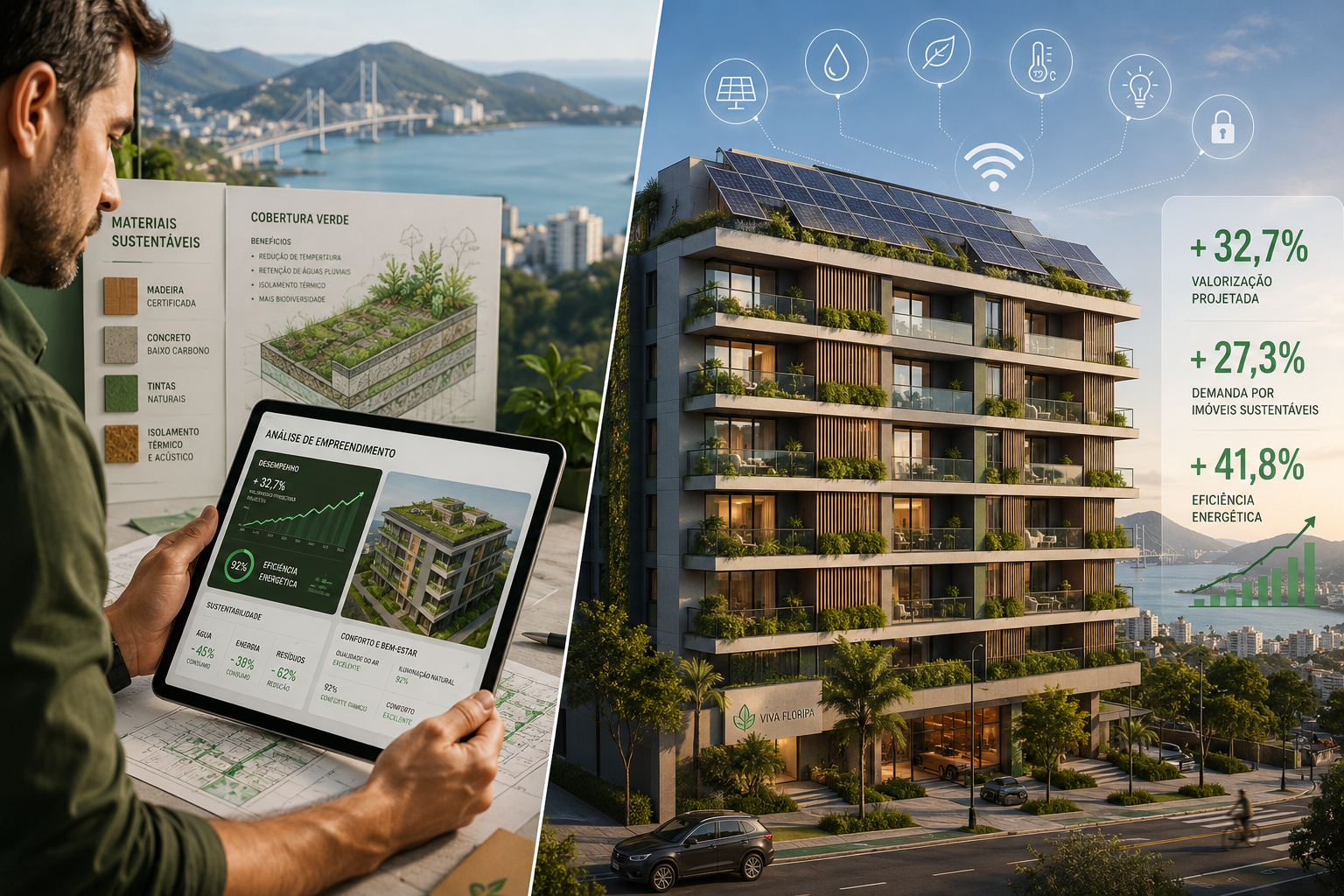
Environmental considerations are increasingly influencing buyer decisions in Brazil’s mid-tier residential market [4]. Green building certifications, energy-efficient systems, and sustainable materials are transitioning from premium features to expected standards, particularly among younger buyers.
Beyond buyer preference, sustainable design offers developers tangible operational benefits: lower long-term maintenance costs for common areas, reduced utility expenses that improve the value proposition for buyers, and access to green financing instruments that can lower project funding costs.
For developers considering studio and compact apartment formats — which are particularly efficient from a sustainability standpoint — the investment case for studio apartments in Florianópolis provides a useful framework for understanding how smaller unit formats can deliver strong returns while meeting sustainability goals.
Risk Factors and How to Manage Them
No market analysis is complete without an honest assessment of risk. Brazil’s residential sector has genuine headwinds that developers must account for in their planning.
Interest rate volatility: While rates have declined from historical peaks, Brazil’s monetary policy environment remains sensitive to inflation pressures. A rate increase cycle could reduce mortgage affordability and slow absorption in the mid-tier segment.
Regulatory complexity: Brazil’s construction permitting and environmental licensing processes vary significantly by municipality and can introduce material delays. Developers who underestimate regulatory timelines consistently face cost overruns.
Currency risk: For developers or investors with USD-denominated capital, BRL volatility introduces an additional layer of uncertainty. Hedging strategies and local financing structures can mitigate but not eliminate this exposure.
Supply concentration risk: The Southeast’s dominance means that a localized economic shock in São Paulo or Rio de Janeiro could disproportionately affect national market metrics. Geographic diversification across regions reduces this exposure.
Developers who build robust scenario planning into their project feasibility models — stress-testing against 200-300 basis point rate increases, 12-18 month permitting delays, and 15-20% cost inflation — are far better positioned to navigate these risks than those who model only base-case assumptions.
Conclusion: Positioning for a Decade of Structural Growth
Brazil’s residential real estate market is not experiencing a temporary boom — it is undergoing a structural transformation driven by urbanization, demographic expansion, and rising middle-class aspirations. The trajectory from USD 63.2 billion in 2025 to USD 102.6 billion by 2034 is built on foundations that are unlikely to erode within the planning horizon of most development projects.
For developers, the actionable priorities are clear:
- Concentrate product development in the mid-tier segment, targeting the BRL 350,000-800,000 price band where demand depth is greatest and buyer financing access is broadest.
- Prioritize urban locations with strong transit and amenity access, as location quality is the single most durable driver of mid-tier buyer preference.
- Invest in construction efficiency through prefabrication and modular methods to protect margins as input costs rise.
- Build digital sales infrastructure that meets buyers where they research — online, before they ever speak to a salesperson.
- Incorporate sustainability features from the design stage, not as an afterthought, to meet evolving buyer expectations and access green financing.
- Evaluate secondary markets in the South and Northeast regions, where land costs are lower, competition is less intense, and demand fundamentals are strengthening.
The Grande Florianópolis real estate market outlook offers a practical case study in how these principles apply in a high-growth secondary market. Developers who study markets like this — understanding what drives appreciation and what buyer profiles are emerging — will be better equipped to replicate that success in other urban expansion corridors across Brazil.
The 5.52% CAGR is a headline number. The real opportunity lies in the execution details that separate developers who capture that growth from those who merely observe it.
References
[1] Brazil Residential Real Estate Market – https://www.imarcgroup.com/brazil-residential-real-estate-market?utm_source=openai
[2] Brazil Construction Market – https://www.imarcgroup.com/brazil-construction-market?utm_source=openai
[3] Price History – https://www.globalpropertyguide.com/latin-america/brazil/price-history?utm_source=openai
[4] Brazil Residential Real Estate Industry 17321 – https://www.datainsightsmarket.com/reports/brazil-residential-real-estate-industry-17321?utm_source=openai