
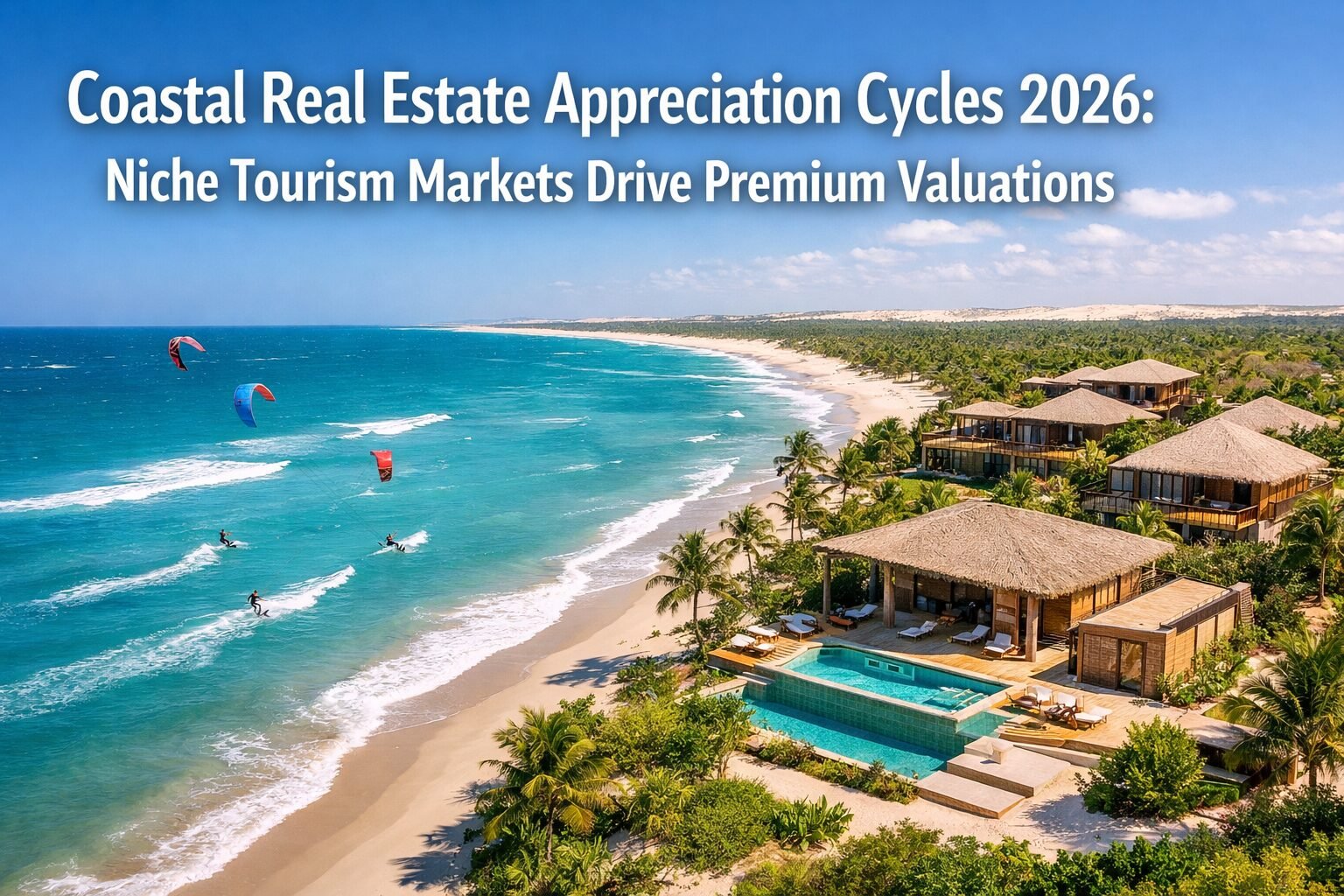
The coastal real estate market is undergoing a fundamental transformation that will separate winning developers from those left behind. While generic beachfront properties face increasing competition and commoditization, specialized developments targeting kitesurf enthusiasts, wellness seekers, and eco-conscious luxury travelers are commanding premium valuations up to 40% higher than comparable traditional properties. This shift represents more than a trend—it signals the beginning of a new appreciation cycle driven by sustainability, lifestyle prioritization, and the scarcity of high-quality coastal land that can support niche tourism infrastructure.
Understanding Coastal Real Estate Appreciation Cycles 2026: Positioning Developments for Niche Tourism Markets (Kitesurf, Wellness, Eco-Luxury) requires recognizing that today’s affluent buyers and investors no longer seek generic beach access. They pursue authentic experiences, environmental responsibility, and properties that serve as both lifestyle assets and income-generating investments through specialized rental markets.
Key Takeaways
- Niche tourism markets (kitesurf, wellness, eco-luxury) are driving coastal appreciation rates 15-40% higher than generic beach properties in 2026
- Ceará’s kitesurfing coast and similar specialized destinations are experiencing investor demand from European and North American buyers seeking year-round rental yields
- Lifestyle-driven purchasing has replaced speculative investment as the primary buyer motivation, creating more stable long-term appreciation patterns
- Scarcity of developable beachfront land combined with stricter environmental regulations is intensifying competition for premium coastal sites
- Developers who integrate sustainability with specialized amenities capture higher initial sales prices and sustained rental premiums
The Fundamental Shift: From Generic Beach Properties to Specialized Tourism Destinations
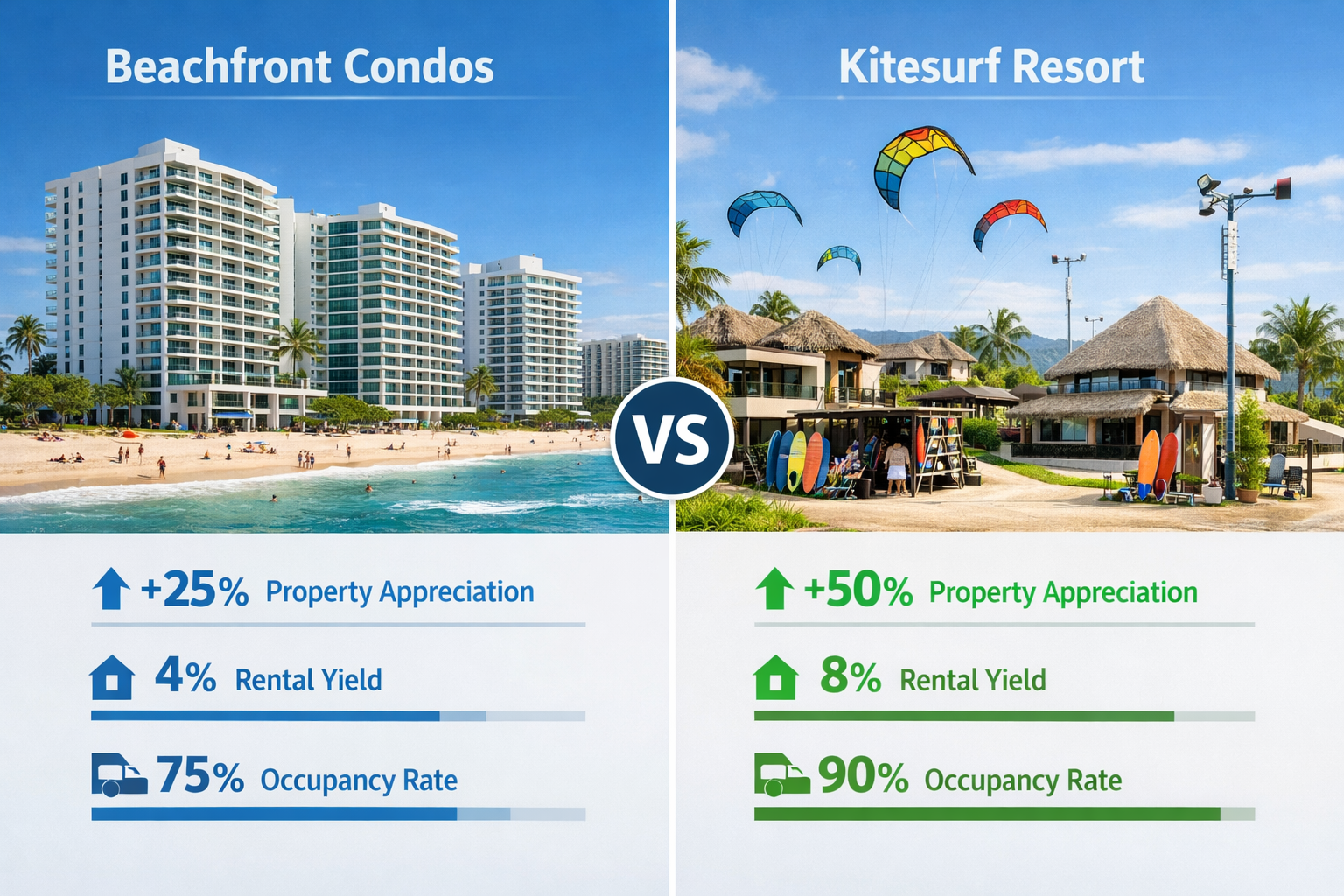
The coastal real estate landscape has evolved dramatically from the days when any beachfront property commanded premium prices simply by virtue of location. In 2026, the market has matured into distinct segments where specialization drives valuation.
Why Niche Tourism Markets Command Premium Valuations
Traditional coastal developments face three critical challenges that specialized properties overcome:
Commoditization pressure – Generic beach condominiums compete primarily on price, creating downward pressure on margins and rental rates. When every property offers similar amenities (pool, beach access, standard finishes), differentiation becomes nearly impossible.
Seasonal volatility – Properties without specialized appeal experience severe occupancy fluctuations, with peak seasons generating strong returns but shoulder periods sitting vacant. This creates cash flow unpredictability that sophisticated investors increasingly avoid.
Limited buyer pool – Standard beach properties appeal to the broadest market but fail to create the passionate buyer engagement that drives bidding wars and premium pricing. Research shows that luxury single-family homes increased 1.1% year-over-year in February 2026 [3], demonstrating stable but modest appreciation for traditional luxury segments.
In contrast, developments positioned for niche tourism markets benefit from:
✅ Premium pricing power – Specialized amenities justify 20-40% higher per-square-meter pricing ✅ Extended seasons – Kitesurf destinations with consistent wind patterns maintain 75-85% annual occupancy ✅ Passionate buyer communities – Enthusiasts pay premiums to access their preferred activities ✅ Reduced competition – Fewer comparable properties in specialized segments ✅ Higher rental yields – Specialized properties command nightly rates 30-60% above generic alternatives
The Brazil Coastal Advantage for Niche Positioning
Brazil’s extensive coastline presents unique opportunities for developers who understand regional specialization. The country’s diverse coastal geography naturally segments into distinct tourism niches, each supporting different development strategies.
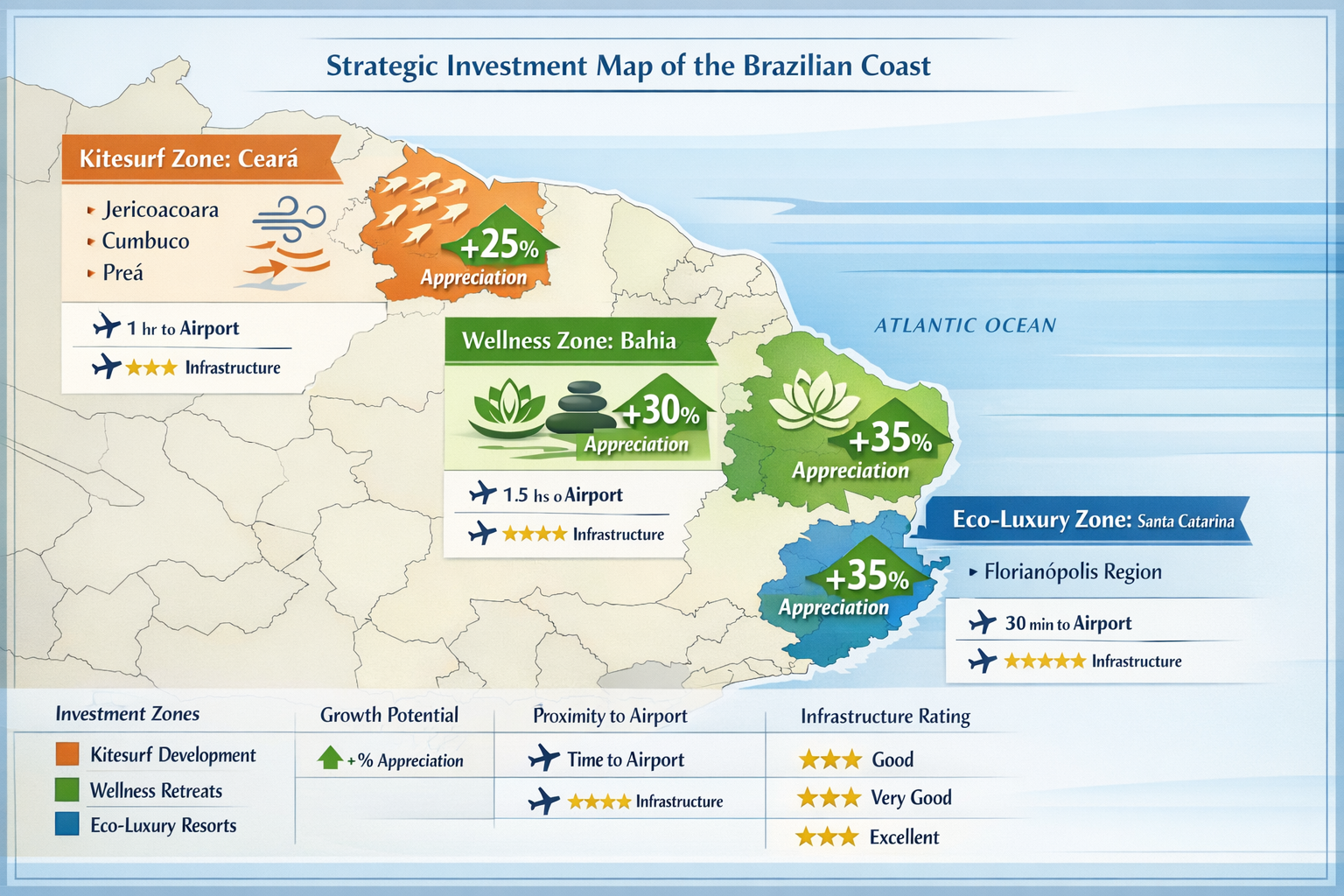
Ceará Coast (Cumbuco, Preá, Jericoacoara) has emerged as a global kitesurfing destination, with year-round trade winds creating ideal conditions that European destinations cannot match. The region is experiencing a kitesurfing boom directly driving real estate appreciation [1], with European investors purchasing vacation rentals and boutique hotels at impressive returns.
The growth of regions like Florianópolis demonstrates how infrastructure development and quality of life improvements support sustained appreciation in coastal markets. Understanding these regional dynamics is essential for positioning developments within the broader appreciation cycle.
Bahia’s Discovery Coast attracts wellness-focused travelers seeking authentic cultural experiences combined with pristine natural environments. Properties that integrate local healing traditions, organic cuisine, and environmental preservation appeal to the rapidly growing wellness tourism segment.
Santa Catarina (Florianópolis region) positions naturally for eco-luxury developments, with sophisticated infrastructure, environmental consciousness, and proximity to major Brazilian markets. The real estate market performance in Florianópolis reflects strong fundamentals supporting premium development positioning.
Coastal Real Estate Appreciation Cycles 2026: Understanding the Kitesurf Market Opportunity
The kitesurfing segment represents one of the most compelling opportunities within Coastal Real Estate Appreciation Cycles 2026: Positioning Developments for Niche Tourism Markets (Kitesurf, Wellness, Eco-Luxury) due to specific geographic requirements that create natural scarcity and pricing power.
Geographic and Infrastructure Requirements
Successful kitesurf developments require precise environmental conditions that cannot be replicated:
Consistent wind patterns – Year-round winds of 15-25 knots create the foundation for viable kitesurf destinations. Only specific coastal areas provide this consistency, immediately limiting supply.
Safe launch areas – Beaches with gradual depth increases, minimal obstacles, and adequate space for launching and landing equipment are essential. Rocky coastlines or steep drop-offs eliminate many otherwise attractive locations.
Water conditions – Flat water lagoons appeal to beginners and freestyle kiters, while wave conditions attract experienced riders. The best developments offer access to both conditions.
Proximity to services – Equipment rental, instruction, repair facilities, and storage must be readily accessible. Developments that integrate these services command premium positioning.
The European Investor Phenomenon
European investors are driving significant capital into Brazilian kitesurf destinations [1], motivated by several compelling factors:
🌍 Climate arbitrage – Brazil offers consistent conditions during European winter months, creating natural seasonal demand from Northern Hemisphere kiters seeking warm-weather training and recreation.
💰 Currency advantages – Real-to-Euro exchange rates provide purchasing power advantages for European buyers, effectively discounting Brazilian property prices by 20-30% compared to comparable European coastal locations.
📈 Rental yield potential – Properties positioned for kitesurf tourism generate 8-12% annual rental yields, significantly exceeding European coastal property returns of 3-5%.
🏖️ Personal use combined with investment – Buyers maintain properties for personal use during peak kitesurf seasons while generating rental income during other periods.
Design Considerations for Kitesurf-Focused Developments
Developers capturing premium valuations in this segment incorporate specific design elements:
Equipment storage and maintenance facilities – Dedicated, secure storage for expensive kitesurf equipment (kites, boards, harnesses) with freshwater washing stations and drying areas.
Launch and landing zones – Designated beach areas with adequate space and safety protocols for equipment handling.
Instruction and community spaces – Areas for lessons, equipment demonstrations, and social gathering that foster community among kitesurf enthusiasts.
Flexible accommodation configurations – Layouts accommodating groups of kiters traveling together, with adequate storage for multiple equipment sets.
Transportation logistics – Proximity to beaches with optimal conditions and shuttle services for accessing different launch sites based on wind direction.
Properties incorporating these elements achieve initial sales prices 25-35% above comparable generic beach properties and maintain occupancy rates 20-30 percentage points higher throughout the year.
Wellness and Eco-Luxury: Capturing the Lifestyle-Driven Appreciation Wave
The wellness and eco-luxury segments represent the highest-value opportunities within Coastal Real Estate Appreciation Cycles 2026: Positioning Developments for Niche Tourism Markets (Kitesurf, Wellness, Eco-Luxury), driven by fundamental shifts in buyer motivation and values.
The Lifestyle-Driven Buyer Transformation
Buyer motivation has fundamentally shifted from speculative investment toward lifestyle priorities, long-term security, and viewing coastal real estate as a stable store of value [3] within diversified portfolios. This behavioral change reduces sensitivity to interest-rate fluctuations and supports sustained demand for premium properties.
The implications for developers are profound:
Price sensitivity decreases – Lifestyle buyers focus on experience quality and property uniqueness rather than purely financial metrics. Properties delivering authentic wellness experiences or genuine environmental stewardship command premiums that would be unjustifiable in purely investment-driven markets.
Holding periods extend – Lifestyle-motivated buyers typically maintain ownership for 7-15 years compared to 3-5 years for speculative investors, creating more stable markets with reduced volatility.
Word-of-mouth marketing intensifies – Passionate owners become brand ambassadors, driving organic demand through their social networks and reducing marketing costs for developers.
Rental management simplifies – Owners who use properties personally maintain them to higher standards and are more selective about rental guests, improving property conditions and guest experiences.
Wellness Tourism Infrastructure Requirements
Successful wellness-focused developments integrate specific amenities and design principles:
Holistic programming spaces – Yoga studios, meditation pavilions, treatment rooms, and fitness facilities designed with natural materials and optimal natural lighting.
Culinary wellness integration – Organic gardens, farm-to-table dining facilities, juice bars, and cooking instruction spaces that support nutritional wellness.
Nature immersion design – Architecture that blurs indoor-outdoor boundaries, maximizes natural ventilation, incorporates biophilic design principles, and minimizes environmental impact.
Healing and spa facilities – Hydrotherapy circuits, massage and bodywork spaces, sauna and steam facilities using local healing traditions and materials.
Community and social spaces – Areas fostering connection among wellness-focused guests while respecting individual retreat needs.
Properties successfully integrating these elements achieve initial pricing premiums of 30-45% and maintain rental rates 40-60% above generic luxury properties in comparable locations.
Eco-Luxury: Sustainability as Premium Positioning
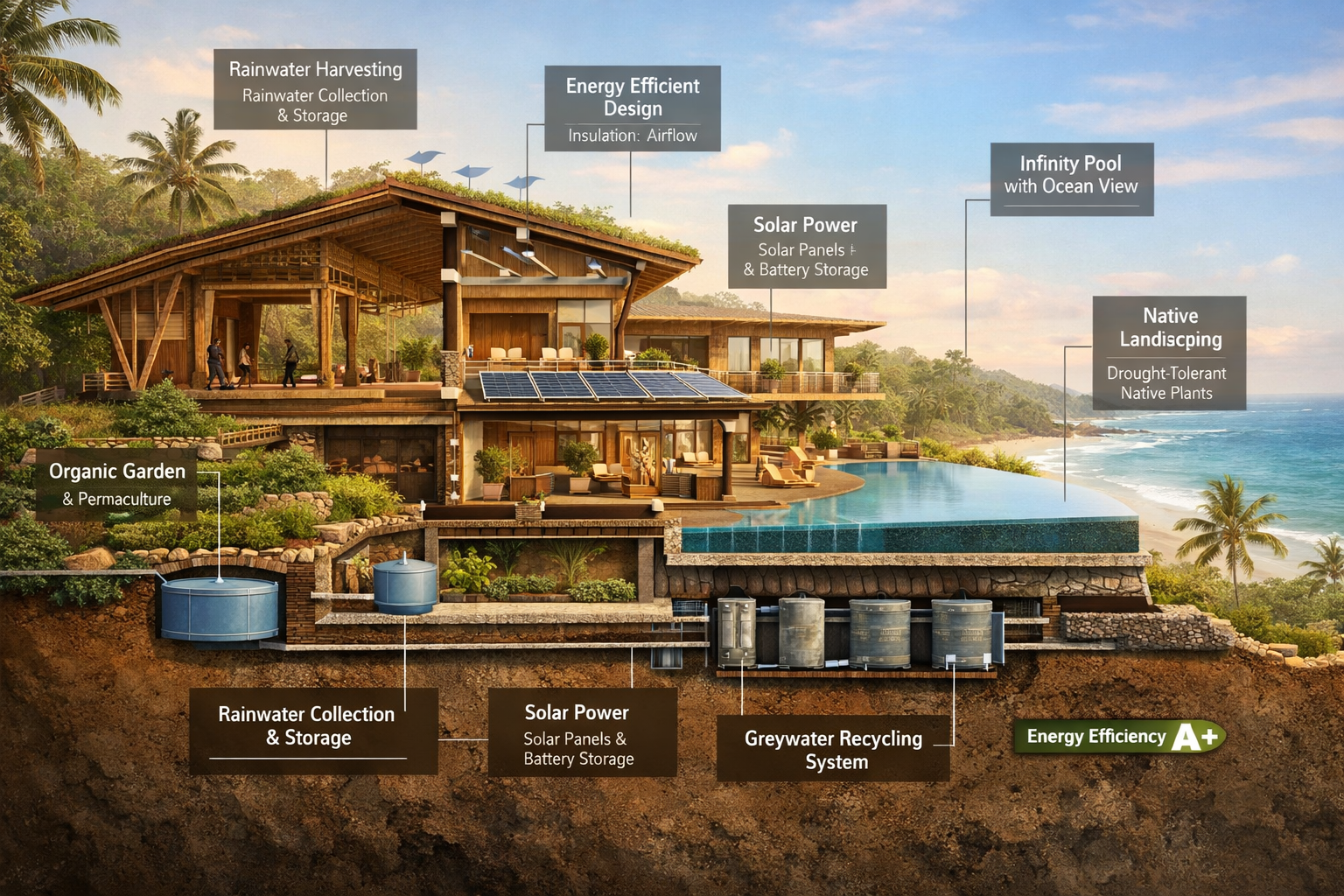
The eco-luxury segment has matured beyond greenwashing to represent genuine environmental stewardship combined with uncompromising luxury experiences. Sophisticated buyers increasingly demand verifiable sustainability credentials:
Certified green building standards – LEED, BREEAM, or local equivalent certifications providing third-party verification of environmental performance.
Renewable energy integration – Solar, wind, or other renewable energy systems reducing or eliminating grid dependence.
Water conservation and management – Rainwater harvesting, greywater recycling, native landscaping requiring minimal irrigation.
Waste reduction systems – Composting, recycling infrastructure, and operational protocols minimizing waste generation.
Local material sourcing – Construction materials sourced regionally, reducing transportation impacts while supporting local economies.
Biodiversity protection – Site planning that preserves native ecosystems, creates wildlife corridors, and enhances rather than degrades environmental conditions.
The outdoor resort real estate sector continues gaining momentum heading into 2026 [2], particularly in coastal and warm-weather markets where investors seek combined lifestyle and rental value opportunities.
The financial case for eco-luxury positioning strengthens annually as:
- Operating costs decrease 20-40% through energy and water efficiency
- Maintenance costs reduce through durable, appropriate material selection
- Rental premiums of 35-50% reflect buyer willingness to pay for sustainability
- Resale values appreciate faster as environmental regulations tighten
- Insurance costs potentially decrease through climate-resilient design
For developers evaluating investment opportunities in Brazilian property markets, understanding how sustainability credentials drive premium positioning is essential for capturing the highest-value market segments.
Strategic Positioning for the 2026 Appreciation Cycle
2026 is positioned as optimal timing for market entry before the next appreciation wave [5], with buyer confidence projected to strengthen as markets continue evolving toward more balanced conditions following 2025’s moderation.
Market Timing and Entry Strategy
Several converging factors create favorable conditions for developers entering niche coastal markets in 2026:
Land acquisition opportunities – Market moderation in 2025 created opportunities to acquire premium coastal sites at more favorable valuations before the next appreciation wave begins.
Construction cost stabilization – Improved global financing conditions and lower development costs [4] could support more active 2026 markets, particularly before peak seasonal buying periods.
Regulatory clarity – Environmental and zoning regulations have stabilized in key coastal markets, reducing approval uncertainty and timeline risks.
Infrastructure improvements – Government and private investment in coastal infrastructure (airports, roads, utilities) is enhancing accessibility and reducing operational challenges for new developments.
Buyer confidence recovery – Following 2025’s market adjustment, buyers are returning with more realistic expectations and stronger financial positions, creating healthier transaction dynamics.
Site Selection Criteria for Niche Tourism Developments
Successful positioning within Coastal Real Estate Appreciation Cycles 2026: Positioning Developments for Niche Tourism Markets (Kitesurf, Wellness, Eco-Luxury) begins with rigorous site selection:
Airport proximity and access – International airports within 90-120 minutes drive time are essential for attracting international tourists and investors. Secondary considerations include domestic airport connections and flight frequency.
Road infrastructure and safety – Well-maintained access roads with adequate safety standards are non-negotiable. Remote locations with poor access struggle regardless of natural amenities.
Beach quality and environmental protection – Pristine beaches with strong environmental protection frameworks maintain long-term value. Areas with degraded coastal environments or weak environmental enforcement face appreciation headwinds.
Zoning and construction permits – Clear zoning for intended development types and reasonable permitting processes prevent costly delays. Markets with uncertain or arbitrary approval processes introduce unacceptable risk.
Utility infrastructure – Reliable electricity, water, sewage, and telecommunications infrastructure reduce operational complexity and capital requirements. Off-grid capabilities can supplement but rarely fully replace grid connections.
Local labor and service availability – Construction, maintenance, and operational labor availability affects both development costs and long-term operational viability.
Competitive landscape – Understanding existing and planned competing developments prevents oversupply situations that compress pricing and occupancy.
Financial Modeling for Niche Tourism Properties
Traditional coastal development financial models require adjustment for niche tourism positioning:
Higher initial development costs – Specialized amenities and sustainability features typically increase development costs by 15-30% compared to generic developments.
Premium pricing capture – Initial sales prices 25-45% above comparable generic properties offset higher development costs while improving project returns.
Extended absorption periods – Niche properties appeal to smaller buyer pools, potentially extending sales timelines by 20-40%. However, reduced price competition and premium positioning often compensate through higher per-unit margins.
Rental yield modeling – Niche properties generate higher rental rates but require specialized marketing and management. Accurate modeling includes:
- Seasonal rate variations reflecting activity-specific demand patterns
- Occupancy rates based on comparable specialized properties rather than generic market averages
- Management costs for specialized services and amenities
- Maintenance costs for specialized equipment and facilities
Appreciation projections – Historical appreciation rates for generic coastal properties provide poor guidance for niche segments. Better benchmarks include:
- Comparable specialized developments in similar markets
- Premium adjustments for scarcity and specialization
- Infrastructure improvement impacts on accessibility and desirability
The potential for property appreciation when purchasing during development phases creates additional opportunities for early buyers in well-positioned projects.
Risk Mitigation Strategies
Niche tourism developments face specific risks requiring proactive management:
Market concentration risk – Over-dependence on single tourism segments creates vulnerability to activity-specific trends. Successful developments incorporate flexibility for multiple use cases.
Environmental and climate risks – Coastal properties face increasing climate-related risks including sea-level rise, storm intensity, and coastal erosion. Rigorous environmental assessment and climate-resilient design are essential.
Regulatory changes – Environmental regulations, tourism policies, and zoning rules can change, affecting development viability. Engaging with regulatory processes and maintaining compliance buffers protects against adverse changes.
Infrastructure dependency – Reliance on external infrastructure (airports, roads, utilities) creates vulnerability to service disruptions or deterioration. Developments with redundancy and self-sufficiency capabilities reduce this exposure.
Demand volatility – Niche markets can experience rapid demand shifts based on trends, economic conditions, or competitive dynamics. Diversification across multiple niches and strong brand positioning provide resilience.
Implementation: From Concept to Market-Leading Development
Translating strategic positioning into successful developments requires systematic execution across multiple dimensions:
Design and Planning Phase
Market research and validation – Comprehensive analysis of target buyer demographics, competitive positioning, pricing sensitivity, and demand drivers. Primary research with potential buyers validates assumptions before significant capital commitment.
Architectural and engineering integration – Early collaboration between architects, engineers, and sustainability consultants ensures specialized amenities and environmental features integrate seamlessly rather than being added as afterthoughts.
Regulatory engagement – Proactive engagement with permitting authorities, environmental agencies, and community stakeholders accelerates approvals and prevents costly redesigns.
Financial structuring – Capital structures appropriate for extended development timelines and specialized positioning, including equity from strategic partners aligned with project vision.
Construction and Development Phase
Sustainability verification – Third-party certification processes (LEED, BREEAM, etc.) conducted concurrently with construction rather than retrofitted afterward.
Quality control for specialized features – Enhanced oversight for specialized amenities ensuring they meet the exacting standards of niche market buyers.
Phasing strategies – Development phasing that demonstrates concept viability, generates early cash flow, and allows market feedback to inform subsequent phases.
Community building – Early engagement with target buyer communities through events, content marketing, and preview opportunities that build anticipation and social proof.
For developers working in markets like Florianópolis, understanding how sales performance is transforming the local real estate market provides context for positioning new developments within evolving market dynamics.
Marketing and Sales Phase
Specialized marketing channels – Distribution through niche-specific media, influencers, events, and communities rather than generic real estate marketing channels.
Experience-based selling – Site visits that allow potential buyers to experience the lifestyle and activities the development enables, not just view property features.
Community-driven sales – Leveraging early buyers as ambassadors who attract their networks, creating organic demand and reducing customer acquisition costs.
Financing facilitation – Partnerships with lenders understanding niche property valuations and rental potential, facilitating buyer financing.
Operational Phase
Specialized property management – Management teams with expertise in niche tourism markets, activity coordination, and the specific operational requirements of specialized amenities.
Owner community cultivation – Programs and communications fostering community among owners, increasing satisfaction and referrals while reducing turnover.
Continuous improvement – Systematic collection of guest and owner feedback driving ongoing amenity improvements and service enhancements.
Brand evolution – Marketing and positioning that evolves with market trends while maintaining core brand identity and values.
Conclusion
Coastal Real Estate Appreciation Cycles 2026: Positioning Developments for Niche Tourism Markets (Kitesurf, Wellness, Eco-Luxury) represents a fundamental market transformation that will define coastal real estate success for the next decade. Generic beach properties face commoditization and compressed margins, while specialized developments targeting passionate communities command premium valuations, superior rental yields, and more stable appreciation patterns.
The evidence is compelling: Ceará’s kitesurfing coast is experiencing investor-driven appreciation [1], lifestyle priorities are reshaping luxury real estate markets [3], and outdoor resort real estate continues gaining momentum [2]. These trends converge to create exceptional opportunities for developers who understand niche positioning.
The scarcity of developable coastal land combined with strengthening environmental regulations means that well-positioned specialized developments will become increasingly valuable assets that cannot be easily replicated. Properties integrating authentic sustainability with specialized amenities for passionate communities will capture the highest valuations and most stable long-term appreciation.
Actionable Next Steps
For developers and investors seeking to capitalize on these opportunities:
- Conduct rigorous market research identifying underserved niche tourism segments in target coastal markets
- Secure premium coastal sites before the next appreciation wave drives land prices higher
- Engage specialized consultants with expertise in target niches (kitesurf, wellness, eco-luxury) early in design processes
- Build strategic partnerships with niche community leaders, influencers, and organizations
- Prioritize genuine sustainability over superficial green marketing, pursuing third-party certifications
- Develop financial models reflecting niche property economics rather than generic coastal property assumptions
- Create phased development plans allowing market validation and course correction
The coastal real estate appreciation cycle of 2026 and beyond belongs to developers who recognize that specialization, sustainability, and authentic lifestyle experiences drive premium valuations in mature markets. Generic beach properties will continue serving mass markets at compressed margins, while specialized developments capturing passionate niche communities will achieve the exceptional returns that define market leadership.
For developers exploring opportunities in high-potential markets, reviewing current development projects and their positioning strategies provides valuable insights into successful market approaches. Understanding what to expect from evolving real estate markets helps inform strategic positioning decisions.
The time to position for the next appreciation cycle is now—before land scarcity intensifies, before competition increases, and before the most compelling opportunities are captured by more forward-thinking developers. Those who act decisively with clear strategic positioning will define the premium coastal real estate market for years to come.
References
[1] Best Cities To Invest In Brazilian Real Estate 2026 Edition – https://www.brazilbeachhouse.com/blogg/2025/12/1/best-cities-to-invest-in-brazilian-real-estate-2026-edition
[2] Top Outdoor Resort Markets 2026 – https://outdoorresortrealestate.com/top-outdoor-resort-markets-2026/
[3] Lifestyle And Stability Are Reshaping The Luxury Real Estate Market In 2026 – https://www.luxuryhomemarketing.com/blog/lifestyle-and-stability-are-reshaping-the-luxury-real-estate-market-in-2026
[4] Marci S Top Five Economic Insights For The Month – https://www.bahamasrealty.com/blog/posts/2026/03/03/marci-s-top-five-economic-insights-for-the-month/
[5] The 2026 Coastal Real Estate Outlook: Why Now Is The Time To Secure A Luxury Intracoastal Build – https://www.thecheekteam.com/blog/135/The+2026+Coastal+Real+Estate+Outlook:+Why+Now+Is+the+Time+to+Secure+a+Luxury+Intracoastal+Build