


While high-rise apartments have dominated Brazil’s urban landscape for decades, a quiet revolution is transforming Curitiba’s suburban neighborhoods. Curitiba’s Suburban Villa Revival 2026: Balancing Space and Connectivity in Southern Brazil’s Emerging Family Market represents a fundamental shift in how middle-class families approach homeownership in one of Brazil’s most innovative cities. 🏡
As remote work becomes permanent and families prioritize outdoor space, suburban villas with gardens are experiencing unprecedented demand. This trend, combined with Curitiba’s legendary urban planning expertise and expanding infrastructure, creates unique opportunities for developers who can deliver the perfect balance: spacious living environments connected seamlessly to urban centers.
The numbers tell a compelling story. Properties in Curitiba are selling in just 45 days on average, with values increasing 18% year-over-year [1]. But the real opportunity lies in suburban developments that command 10-15% premiums by integrating smart technology and sustainable features that modern families demand.
Key Takeaways
- Rapid market velocity: Curitiba properties sell in an average of 45 days, creating a dynamic seller’s market with strong demand for suburban villas
- Premium pricing potential: Developers can achieve 10-15% premiums by integrating smart home technology and green features into suburban villa developments
- Infrastructure advantage: Curitiba’s expanding public transit network and smart city initiatives make suburban living viable without sacrificing connectivity
- Family-focused demand: Middle-class buyers increasingly prioritize outdoor space, gardens, and room for home offices over central apartment living
- Sustainable growth: Smart neighborhood projects like Bairro Novo da Caximba demonstrate how suburban development can align with environmental goals
Understanding Curitiba’s Suburban Villa Revival 2026
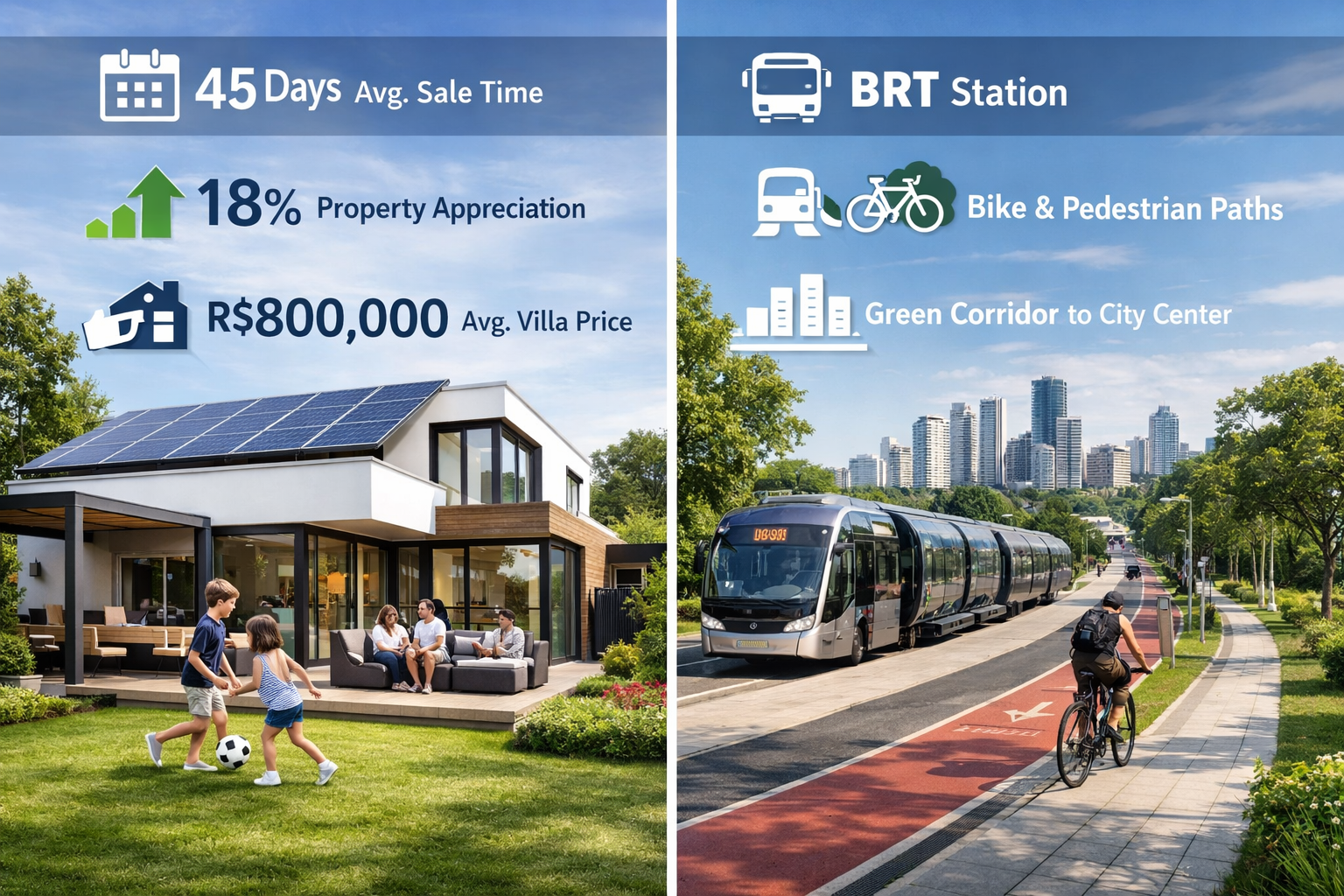
The suburban villa revival in Curitiba represents more than just a housing trend—it’s a fundamental reimagining of urban living in Southern Brazil. Unlike previous suburban expansions that created disconnected bedroom communities, Curitiba’s Suburban Villa Revival 2026: Balancing Space and Connectivity in Southern Brazil’s Emerging Family Market leverages the city’s sophisticated transit infrastructure to offer the best of both worlds.
The Driving Forces Behind Suburban Demand
Several converging factors are fueling this suburban renaissance:
Economic accessibility: With three-bedroom houses averaging R$800,000 and the price per square meter at R$10,703 as of January 2025 [1], suburban villas offer competitive value compared to central apartments of similar size. For families seeking space without sacrificing quality, this pricing structure creates compelling opportunities.
Work-from-home permanence: The pandemic accelerated remote work adoption, but in 2026, it’s become a permanent fixture. Families no longer need daily commutes, making suburban locations with home office space highly desirable.
Quality of life priorities: Modern Brazilian families increasingly value:
- Private outdoor spaces for children
- Gardens for leisure and urban agriculture
- Reduced noise and pollution
- Community-oriented neighborhoods
- Room for multi-generational living
Infrastructure maturation: Curitiba’s legendary Bus Rapid Transit (BRT) system continues expanding into suburban areas, ensuring residents maintain connectivity to employment centers, schools, and cultural amenities.
Market Performance Indicators
The strength of Curitiba’s real estate market provides a solid foundation for suburban villa development:
| Metric | Value | Trend |
|---|---|---|
| Average Sale Time | 45 days | ⬇️ Decreasing |
| Annual Appreciation | 18% | ⬆️ Strong growth |
| Average 3-BR House | R$800,000 | ⬆️ Increasing |
| Price per m² | R$10,703 | ⬆️ Rising steadily |
| Luxury Segment Growth | 19.5% | ⬆️ Expanding |
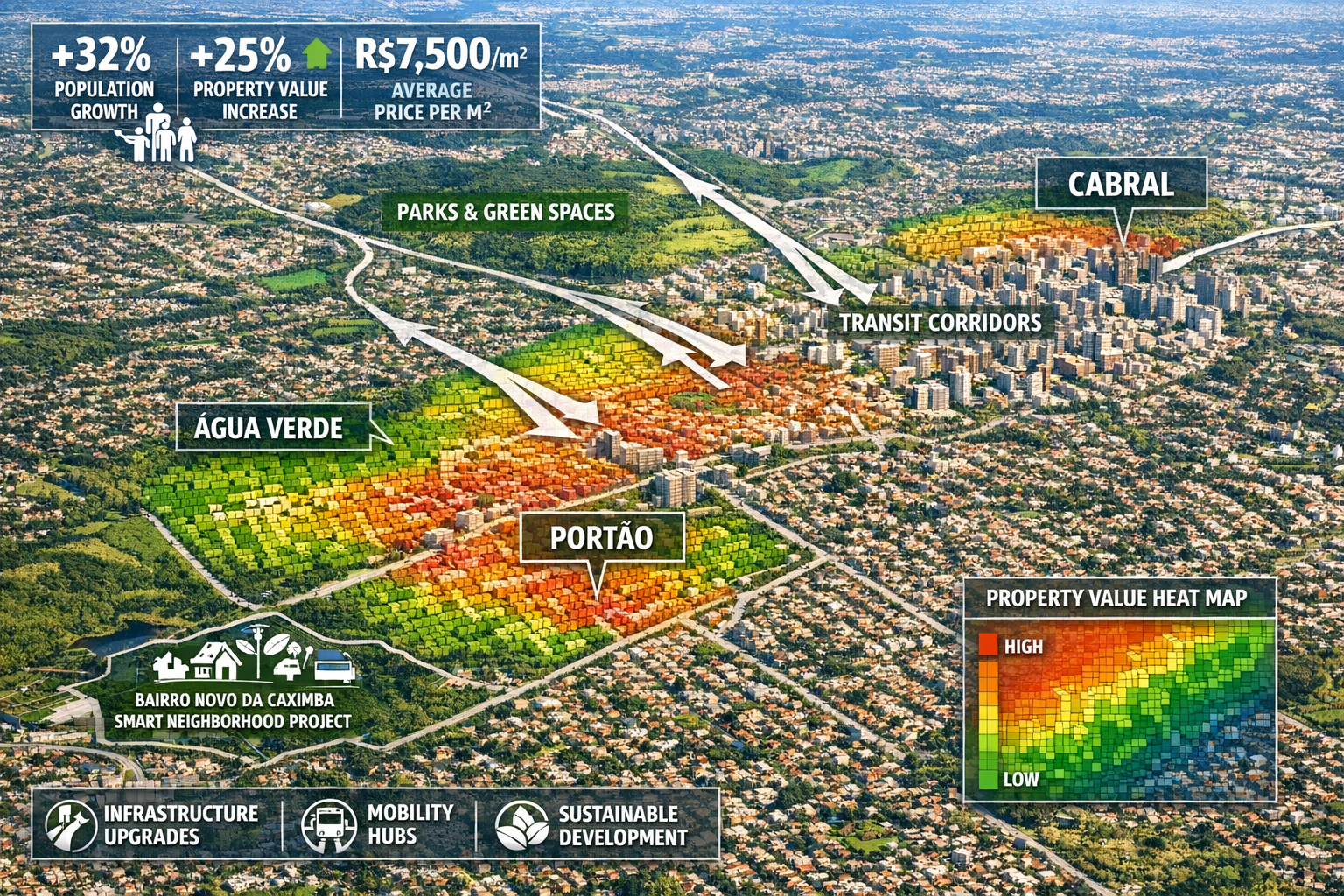
Neighborhoods like Batel, Água Verde, and Campo Comprido saw value increases up to 32.2% in 2024 [1], demonstrating that well-connected areas with quality infrastructure command premium pricing.
For investors exploring opportunities across Brazil’s property market, Curitiba’s suburban villa segment offers compelling risk-adjusted returns.
The Smart City Advantage
Curitiba’s commitment to intelligent urban development provides unique advantages for suburban villa projects. The city will host Smart City Expo Curitiba 2026, the largest smart city event in the Americas [4], reinforcing its position as a leader in urban innovation.
This commitment translates into practical benefits for suburban developments:
✅ Advanced infrastructure planning ensures new suburban areas receive proper utilities, drainage, and connectivity from day one
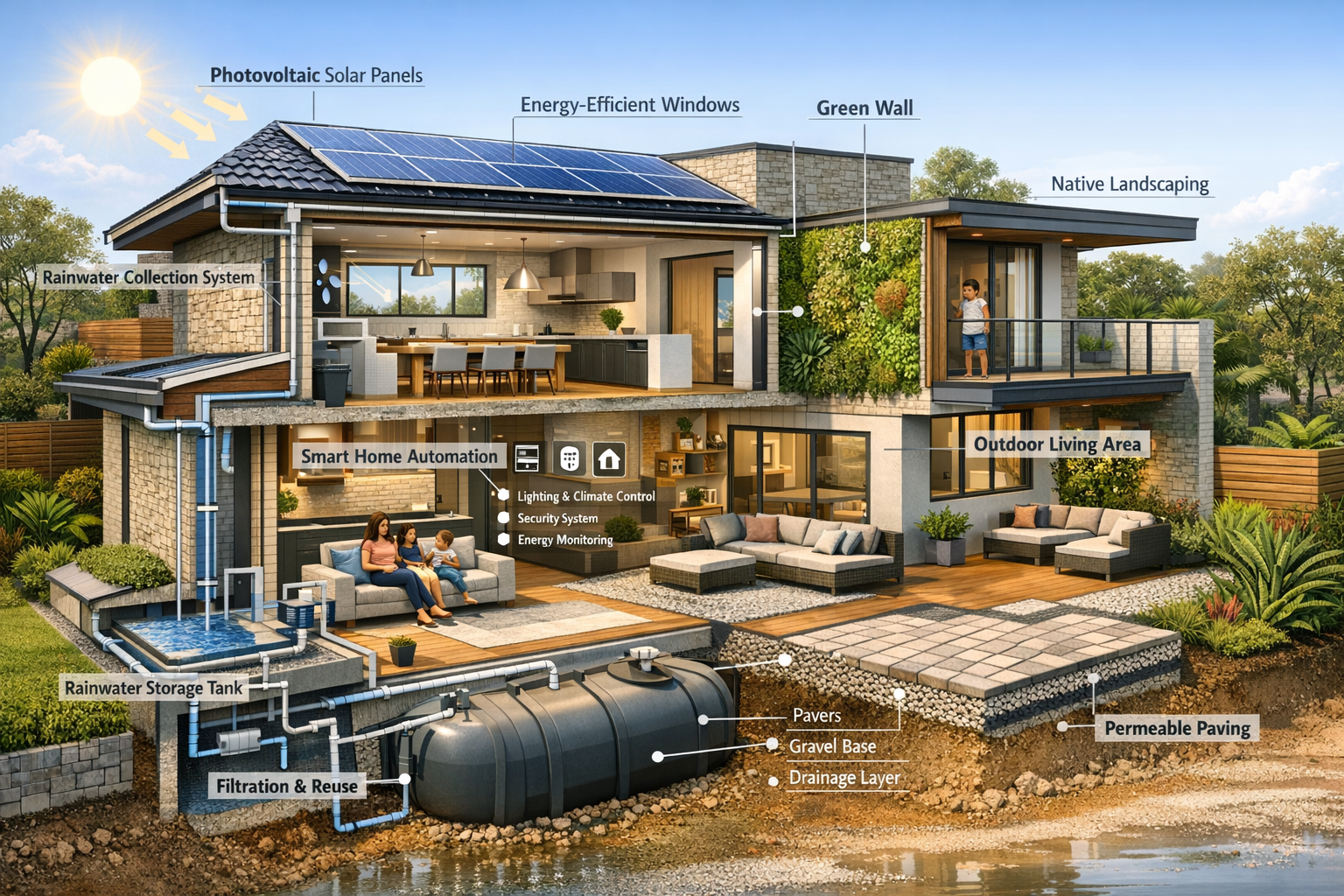
✅ Environmental integration through projects like Bairro Novo da Caximba, Brazil’s first smart neighborhood, which features photovoltaic solar systems, permeable paving, and rainwater collection [2]
✅ Climate resilience demonstrated by the Climate Risk Management Project relocating 1,693 households from flood-prone areas to protected housing with comprehensive infrastructure [3]
✅ Transit-oriented development that prioritizes accessibility to public transportation hubs, making suburban living practical without car dependency
Balancing Space and Connectivity: The Development Formula
Successfully executing Curitiba’s Suburban Villa Revival 2026: Balancing Space and Connectivity in Southern Brazil’s Emerging Family Market requires developers to master a delicate balance. Families want space, but they won’t accept isolation. They desire nature, but demand modern conveniences. Understanding this equilibrium is essential for capturing the premium pricing this market offers.
The Space Component: What Families Actually Want
Modern suburban villas in Curitiba must deliver specific spatial features that justify the move from urban apartments:
Functional outdoor areas: Not just decorative gardens, but usable spaces for:
- Children’s play areas with safety features
- Outdoor dining and entertainment zones
- Small vegetable gardens or green walls
- Pet-friendly landscaping
- Privacy screening from neighbors
Flexible interior layouts: With new apartments averaging 70 square meters but ranging up to 565 square meters [1], villa developments should offer:
- Dedicated home office spaces with proper lighting and connectivity
- Multi-purpose rooms that adapt as families grow
- Open-plan living areas that maximize perceived space
- Storage solutions that reduce clutter
- Potential for future expansion
Sustainable design elements: Features that reduce operating costs while appealing to environmentally conscious buyers:
- Photovoltaic solar systems reducing energy bills by 40-60%
- Rainwater collection for irrigation and non-potable uses
- Permeable paving that manages drainage naturally
- Natural ventilation reducing air conditioning dependency
- Native vegetation requiring minimal water and maintenance
These features aren’t just amenities—they’re value propositions that justify premium pricing and accelerate sales velocity.
The Connectivity Component: Infrastructure Integration
Space without connectivity creates isolation. Successful suburban villa developments must ensure residents maintain seamless access to urban opportunities.
Transit proximity: Properties near public transportation hubs command premium pricing [1]. Developers should:
- Site projects within 800 meters of BRT stations
- Include bike paths connecting to transit nodes
- Provide secure bicycle storage facilities
- Design pedestrian-friendly street networks
- Consider shuttle services during development phase
Digital infrastructure: In 2026, connectivity means more than roads:
- Fiber optic internet as standard (minimum 100 Mbps)
- 5G mobile coverage throughout development
- Smart home pre-wiring for automation systems
- Community Wi-Fi in common areas
- Electric vehicle charging infrastructure
Essential services accessibility: Families need convenient access to:
- Quality schools (public and private options)
- Healthcare facilities and pharmacies
- Supermarkets and commercial services
- Parks and recreational facilities
- Cultural and entertainment venues
Emerging Neighborhoods Leading the Revival
Agua Verde, Portao, and Cabral currently have the highest concentration of new-build developments in Curitiba [1]. These neighborhoods exemplify successful suburban villa development because they offer:
🏘️ Established infrastructure with mature street networks and utilities
🌳 Green spaces integrated into neighborhood planning
🚌 Transit connections linking to central employment districts
🏫 Educational facilities serving families with children
💼 Mixed-use potential allowing home-based businesses and local commerce
Developers entering these markets benefit from proven demand while still capturing growth potential. Similar dynamics are emerging in other Brazilian markets, as seen in Florianópolis’s evolving neighborhoods.
The Premium Pricing Strategy
Developers can command 10-15% premiums over standard suburban housing by integrating smart technology and green features. Here’s the formula:
Base villa price: R$800,000 (market average for 3-bedroom house)
Premium features adding 10-15% value:
- Solar panel system (R$40,000-60,000 investment)
- Smart home automation (R$20,000-30,000)
- Rainwater collection (R$15,000-25,000)
- Premium landscaping with native plants (R$25,000-35,000)
- Enhanced insulation and energy efficiency (R$20,000-30,000)
Total investment in premium features: R$120,000-180,000
Achievable sale price: R$880,000-920,000
Net premium captured: R$80,000-120,000 (after feature costs)
This represents a 10-15% margin improvement while delivering genuine value that accelerates sales velocity and enhances buyer satisfaction.
Strategic Opportunities in Curitiba’s Suburban Villa Market
Curitiba’s Suburban Villa Revival 2026: Balancing Space and Connectivity in Southern Brazil’s Emerging Family Market presents multiple strategic entry points for developers, investors, and builders. Understanding where opportunities exist—and how to capitalize on them—separates successful projects from missed potential.
Target Buyer Segments
Different buyer segments drive demand for suburban villas, each with specific needs and purchasing patterns:
Young professional families (30-45 years old):
- Dual-income households seeking space for growing families
- Value home office functionality and digital connectivity
- Willing to pay premiums for sustainable features
- Prioritize school quality and child-friendly neighborhoods
- Average budget: R$700,000-1,000,000
Established families upgrading (40-55 years old):
- Selling central apartments to gain outdoor space
- Often accommodate aging parents or adult children
- Focus on long-term value and neighborhood stability
- Appreciate quality construction and low maintenance
- Average budget: R$900,000-1,500,000
Remote workers and digital entrepreneurs:
- Location-flexible professionals prioritizing quality of life
- Need dedicated workspace with excellent connectivity
- Value community amenities and lifestyle features
- Often relocating from São Paulo or Rio de Janeiro
- Average budget: R$800,000-1,200,000
Development Models That Work
Several development approaches are proving successful in Curitiba’s suburban villa market:
Gated community clusters (15-40 units):
- Shared amenities (pool, gym, event space)
- Professional security and maintenance
- Community governance structure
- Consistent architectural standards
- Higher per-unit margins but longer development timeline
Infill villa developments (4-12 units):
- Smaller parcels in established neighborhoods
- Faster permitting and construction
- Lower capital requirements
- Integration with existing community
- Quicker sales velocity and capital return
Smart neighborhood master plans (100+ units):
- Comprehensive infrastructure from inception
- Mixed housing types and price points
- Integrated commercial and recreational facilities
- Phased development reducing risk
- Long-term value creation and brand building
The Bairro Novo da Caximba smart neighborhood project demonstrates how large-scale planning can incorporate sustainability while addressing social needs, resettling over 1,100 families with modern infrastructure [2].
Financing and Investment Considerations
Understanding financing dynamics helps developers structure projects for success:
Buyer financing availability: Brazilian mortgage rates have stabilized, making suburban villas accessible to middle-class buyers. Developers should:
- Partner with multiple financial institutions
- Offer construction-phase payment plans
- Structure pricing to fit common loan-to-value ratios
- Provide financing assistance services
Developer financing strategies:
- Pre-sales financing to reduce capital requirements
- Phased development minimizing exposure
- Strategic land banking in emerging corridors
- Partnership structures sharing risk and returns
For investors seeking appreciation potential through pre-construction purchases, Curitiba’s suburban villa market offers compelling opportunities given the 18% annual appreciation rates [1].
Regulatory and Planning Considerations
Curitiba’s 60-year commitment to master planning [2] creates both opportunities and requirements:
Zoning advantages:
- Clear suburban residential designations
- Predictable approval processes
- Infrastructure coordination with city planning
- Environmental protection standards
Sustainability requirements:
- Green building certifications increasingly expected
- Stormwater management regulations
- Energy efficiency standards
- Native vegetation preservation
Smart city integration:
- Digital infrastructure requirements
- Connectivity standards for new developments
- Integration with city monitoring systems
- Participation in smart city initiatives
Competitive Positioning
With luxury residential segments growing 19.5% and superluxury increasing 24.1% [1], differentiation becomes critical:
Technology differentiation:
- Smart home systems as standard
- Energy monitoring and optimization
- Security integration with mobile apps
- Community communication platforms
Sustainability leadership:
- Net-zero energy capable designs
- Water self-sufficiency features
- Organic waste composting systems
- Electric vehicle infrastructure
Community building:
- Shared gardens and green spaces
- Co-working facilities for residents
- Children’s play areas and programming
- Events and social connectivity
Design excellence:
- Architectural quality and consistency
- Indoor-outdoor flow optimization
- Natural light maximization
- Flexible spaces adapting to life changes
Risk Mitigation Strategies
Smart developers address potential challenges proactively:
⚠️ Market timing risk: Stagger unit releases to match absorption rates and maintain pricing power
⚠️ Construction cost volatility: Lock supplier contracts early and build contingency buffers of 10-15%
⚠️ Infrastructure delays: Choose locations with existing utilities or secure city commitments before launch
⚠️ Competitive pressure: Differentiate through unique features rather than competing solely on price
⚠️ Regulatory changes: Maintain relationships with planning authorities and stay ahead of policy shifts
Future Outlook and Market Evolution
The trajectory of Curitiba’s Suburban Villa Revival 2026: Balancing Space and Connectivity in Southern Brazil’s Emerging Family Market points toward sustained growth with evolving characteristics.
Short-term Trends (2026-2027)
Accelerating sales velocity: Market analysts expect selling times to decrease even further from the current 45-day average [1], potentially reaching 30-35 days for well-positioned suburban villas.
Premium feature standardization: Smart home technology and solar systems will transition from premium options to expected standards, raising baseline quality expectations.
Transit expansion impact: As BRT corridors extend into suburban areas, previously marginal locations will become viable for villa development.
Medium-term Evolution (2028-2030)
Neighborhood maturation: Early suburban villa developments will establish track records, creating secondary market liquidity and validating appreciation assumptions.
Infrastructure completion: Major smart neighborhood projects will demonstrate integrated planning success, influencing future development standards.
Demographic shifts: As millennials enter peak homebuying years, demand for family-oriented suburban villas will intensify.
Long-term Transformation (2030+)
Sustainable living normalization: Environmental features will become non-negotiable rather than premium additions, driven by both regulation and buyer expectations.
Multi-modal connectivity: Suburban areas will feature comprehensive transit options including autonomous vehicles, enhanced cycling infrastructure, and integrated mobility platforms.
Smart city maturation: Curitiba’s leadership in urban innovation will create competitive advantages for suburban developments incorporating advanced technology.
The broader Brazilian real estate market trends suggest that Curitiba’s suburban villa revival represents a template that may expand to other secondary cities.
Conclusion
Curitiba’s Suburban Villa Revival 2026: Balancing Space and Connectivity in Southern Brazil’s Emerging Family Market represents a transformative opportunity for developers, investors, and families alike. The convergence of strong market fundamentals—45-day average sales, 18% annual appreciation, and robust demand—with evolving lifestyle preferences creates a compelling value proposition.
Success in this market requires understanding that modern suburban living isn’t about isolation or compromise. It’s about delivering genuine space for families to grow while maintaining seamless connectivity to urban opportunities. Developers who integrate smart technology, sustainable features, and thoughtful design can command 10-15% premiums while accelerating sales velocity.
The emerging neighborhoods of Agua Verde, Portao, and Cabral demonstrate proven demand, while innovative projects like Bairro Novo da Caximba showcase how suburban development can align with environmental and social goals. As Curitiba prepares to host Smart City Expo Curitiba 2026, the city’s commitment to intelligent urban development provides a foundation for sustainable suburban growth.
Actionable Next Steps
For developers and investors ready to participate in this market:
- Conduct site analysis in emerging suburban corridors with transit connectivity
- Engage planning authorities early to understand zoning and sustainability requirements
- Design for premiums by integrating smart home technology and green features from conception
- Build strategic partnerships with technology providers, sustainable materials suppliers, and financing institutions
- Focus on buyer segments with clear needs and purchasing power
- Monitor infrastructure projects that will enhance suburban connectivity
- Consider phased approaches that reduce risk while capturing market momentum
The suburban villa revival in Curitiba isn’t a temporary trend—it’s a fundamental shift in how Southern Brazil’s emerging family market approaches homeownership. Developers who recognize this transformation and execute with excellence will capture both immediate returns and long-term value creation.
For those exploring investment opportunities in Brazil’s evolving property markets, Curitiba’s suburban villa segment offers a compelling combination of strong fundamentals, clear demand drivers, and attractive risk-adjusted returns.
References
[1] Curitiba Real Estate Market – https://thelatinvestor.com/blogs/news/curitiba-real-estate-market
[2] Brazils Curitiba Has Been Following Its Master Plan For 60 Years – https://www.asce.org/publications-and-news/civil-engineering-source/civil-engineering-magazine/issues/magazine-issue/article/2025/07/brazils-curitiba-has-been-following-its-master-plan-for-60-years
[3] Curitiba The Most Intelligent City In The World – https://innovationsoftheworld.com/curitiba-the-most-intelligent-city-in-the-world/
[4] Smart City Expo Curitiba 2026 – https://www.smartcitiesworld.net/events/smart-city-expo-curitiba-2026