
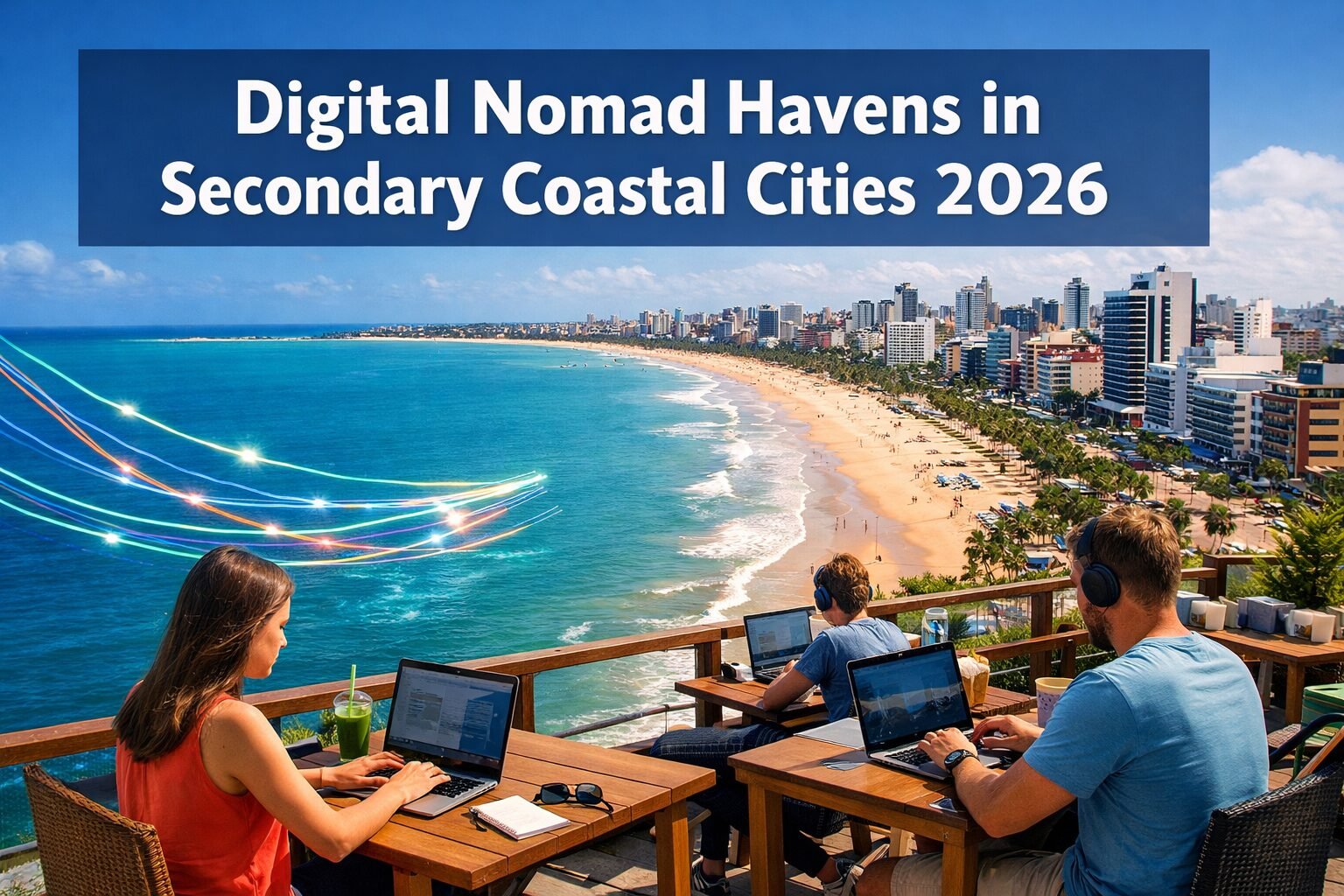
The global digital nomad population has exploded beyond 40 million people in 2026, creating unprecedented demand for purpose-built remote work accommodations [6]. While traditional hubs like Barcelona, Bali, and Lisbon have reached saturation, savvy real estate developers are discovering extraordinary opportunities in secondary coastal cities where infrastructure investment meets untapped demand. The shift from “Barcelona to Belgrade” and “Bali to Da Nang” represents more than a trend—it’s a fundamental restructuring of where remote workers choose to live and work [4].
This comprehensive guide explores how Digital Nomad Havens in Secondary Coastal Cities 2026: Building High-Speed Internet and Office-Ready Properties for Premium Rents creates exceptional investment opportunities, particularly in emerging markets like João Pessoa, Brazil, where favorable currency conditions and timezone alignment with U.S. East Coast clients deliver outsized returns for international investors.
Key Takeaways
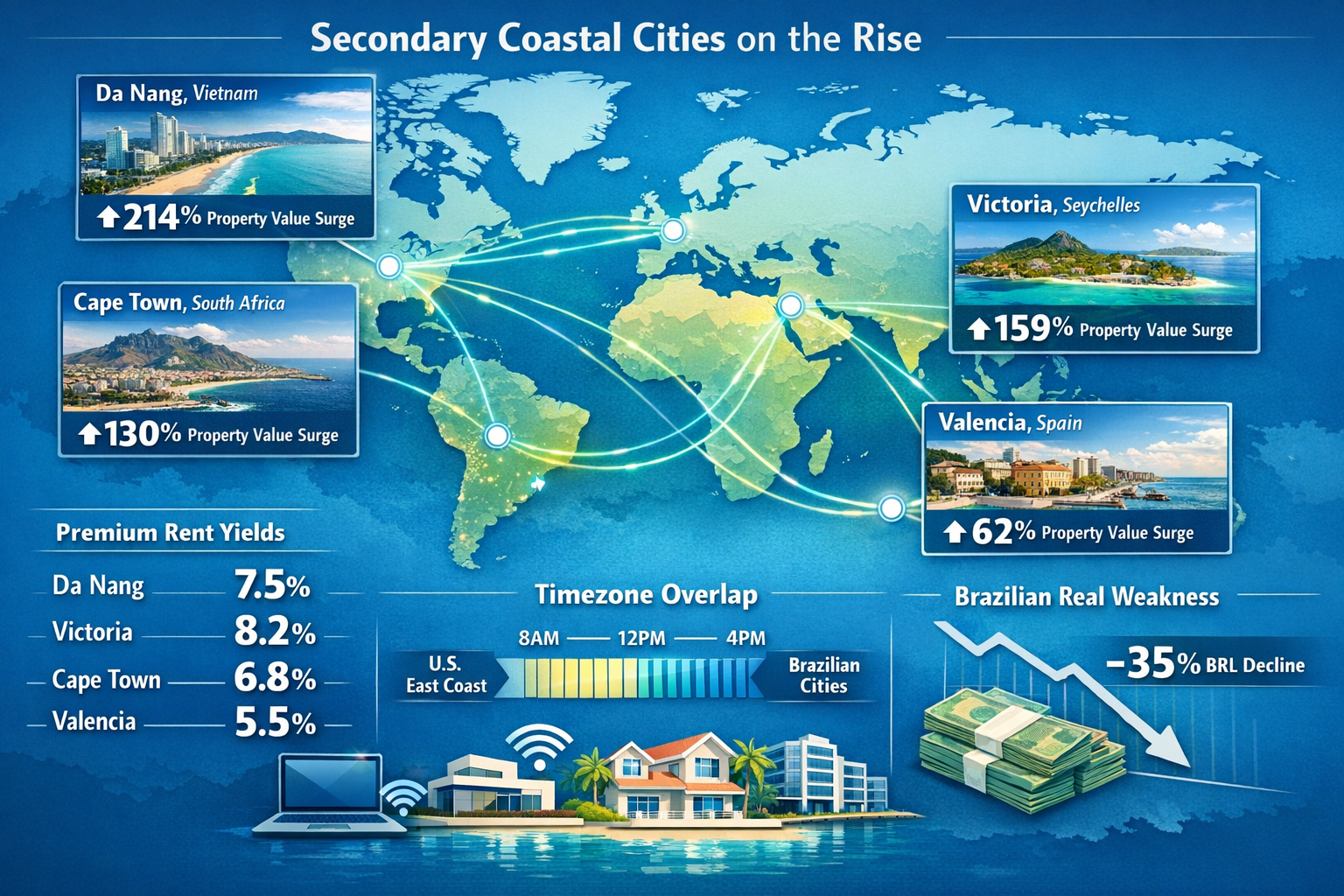
- Secondary coastal cities like Da Nang (+214% growth) and Victoria, Seychelles (+159% growth) are outpacing traditional nomad hubs, creating prime opportunities for infrastructure-focused property development [1]
- João Pessoa and similar Brazilian coastal cities offer unique advantages: U.S. East Coast timezone alignment, weak BRL currency benefits for international investors, and growing fiber-optic infrastructure
- Premium rents require specific amenities: 1Gbps+ internet speeds, dedicated ergonomic workspaces, backup power systems, and soundproofing are non-negotiable for capturing high-paying digital nomads
- Market saturation in primary hubs (Canggu +0% growth, Ko Samui +0% growth) signals capital should flow toward emerging secondary destinations with room for appreciation [1]
- Government visa programs in secondary markets create competitive advantages and long-term demand stability for purpose-built nomad properties [7]
The Secondary Coastal City Advantage: Why Digital Nomads Are Leaving Saturated Markets
Market Saturation in Traditional Hubs
The data tells a compelling story. Canggu, Bali—once the poster child for digital nomad destinations—shows +0% growth in 2026 despite +332% historical growth from 2021-2026 [1]. Similarly, Ko Samui, Thailand plateaued at +0% growth after years of explosive expansion [1]. These established coastal hubs have reached capacity, with rising costs, overcrowding, and declining quality of life pushing remote workers to seek alternatives.
Traditional primary coastal cities now face:
- Oversupply of basic accommodations without premium work-focused amenities
- Rising rental costs that eliminate cost-of-living advantages
- Infrastructure strain from rapid, unplanned growth
- Loss of authentic local culture that initially attracted nomads
The Rise of Secondary Coastal Alternatives
Secondary coastal cities are capturing the exodus from saturated markets. Da Nang, Vietnam leads this transformation with +214% year-over-year growth, ranking #2 overall among remote work destinations globally [4]. The city combines reliable infrastructure, welcoming expat communities, and coastal lifestyle at a fraction of primary hub costs.
Other secondary coastal cities showing remarkable growth include:
| City | Historical Growth | 2026 Growth | Key Advantages |
|---|---|---|---|
| Victoria, Seychelles | +159% | +52% | Ultra-premium market, Indian Ocean access |
| Cape Town, South Africa | +130% | +18% | Coworking with backup power solutions |
| Valencia, Spain | +62% | +9% | European connectivity, bike infrastructure |
| João Pessoa, Brazil | Emerging | High potential | U.S. timezone, weak BRL, fiber expansion |
For investors exploring best places to invest in Brazil property, these secondary coastal markets represent the next wave of appreciation potential.
Why Secondary Cities Outperform: The Infrastructure-Quality Balance
Digital nomads in 2026 prioritize quality infrastructure, safety, and community over lowest-cost options [4]. Secondary coastal cities offer this balance:
✅ Lower development costs enable premium amenities at competitive rents
✅ Government support through targeted visa programs and infrastructure investment
✅ Authentic local culture preserved while accommodating remote workers
✅ Room for appreciation as markets mature from emerging to established status
The shift represents a fundamental change: digital nomads now seek sustainable long-term bases rather than short-term adventures, creating demand for purpose-built, office-ready properties that command premium rents.
Building Digital Nomad Havens in Secondary Coastal Cities 2026: Essential Infrastructure and Design Requirements
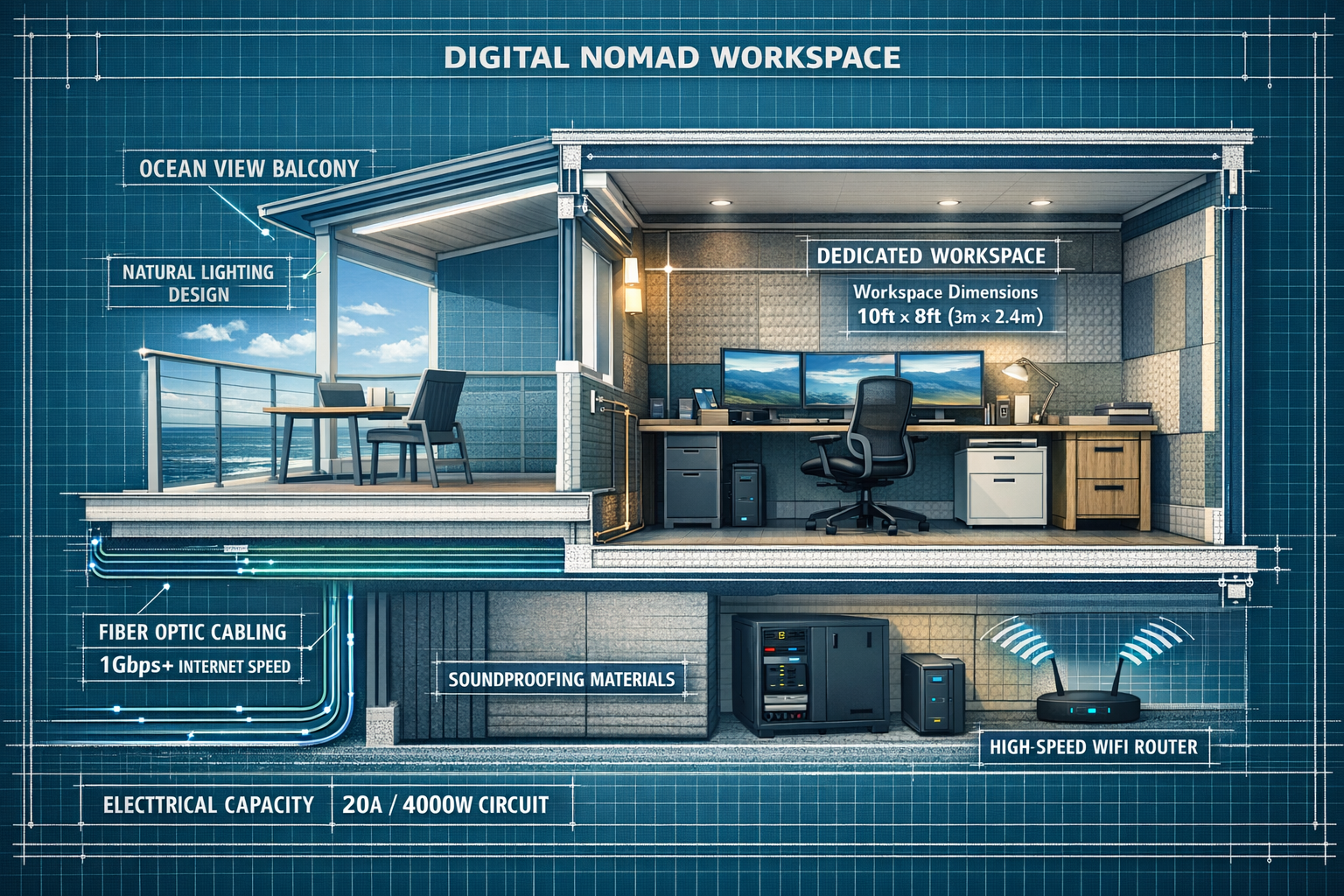
Creating properties that capture premium digital nomad rents requires understanding the non-negotiable infrastructure and design elements that differentiate basic accommodations from professional remote work havens.
High-Speed Internet: The Foundation of Premium Rents
Internet connectivity isn’t just an amenity—it’s the fundamental requirement that determines whether a property can attract high-earning digital nomads. Properties targeting premium rents must provide:
Minimum Internet Specifications:
- 1Gbps+ fiber-optic connection (symmetrical upload/download)
- Redundant ISP connections for failover protection
- Enterprise-grade WiFi 6 routers with mesh network coverage
- Ethernet ports in dedicated workspace areas
- Monthly speed testing and performance guarantees
Cities like Valencia demonstrate the importance of reliable connectivity, with established WiFi infrastructure contributing to its +62% historical growth and sustained +9% expansion in 2026 [1]. Cape Town’s coworking spaces now feature backup power solutions specifically to address load shedding concerns, improving work reliability and attracting nomads despite infrastructure challenges [2].
For Brazilian secondary coastal cities like João Pessoa, fiber-optic expansion creates opportunities. The growth of regions like Ingleses in Florianópolis demonstrates how infrastructure investment drives property appreciation in coastal markets.
Dedicated Office-Ready Workspaces: Design Specifications
Premium digital nomad properties require purpose-built workspaces, not afterthought desk corners. Essential design elements include:
Workspace Requirements:
🖥️ Ergonomic furniture: Adjustable standing desks, Herman Miller-quality chairs
🔌 Power infrastructure: Multiple outlets, USB charging ports, surge protection
💡 Lighting design: Natural light optimization plus adjustable task lighting (5000K-6500K)
🔇 Acoustic treatment: Soundproofing for video calls (STC rating 50+)
🌡️ Climate control: Individual workspace temperature management
📐 Space allocation: Minimum 15-20 square meters for dedicated work area
Properties that integrate these elements can command 30-50% premium rents over comparable accommodations without professional workspace design.
Backup Power and Reliability Systems
Internet speed means nothing during power outages. Secondary coastal cities often face infrastructure challenges that require proactive solutions:
- Uninterruptible Power Supply (UPS) systems for internet equipment
- Backup generators for extended outages
- Solar power integration for sustainable backup capacity
- Battery storage systems for seamless transitions
Cape Town’s coworking spaces pioneered backup power as a competitive advantage [2], demonstrating how addressing local infrastructure gaps creates market differentiation.
Additional Premium Amenities
Beyond workspace basics, properties capturing top-tier rents include:
✨ Community spaces: Coworking lounges, networking areas
🏋️ Wellness facilities: Gym, yoga studio, meditation spaces
🏖️ Lifestyle integration: Beach access, outdoor workspaces
🔐 Security systems: 24/7 monitoring, secure package delivery
🚗 Transportation: Bike storage, EV charging, proximity to transit
The advantages of investing in studio properties in Florianópolis highlight how compact, well-designed spaces with premium amenities outperform larger properties lacking essential features.
Digital Nomad Havens in Secondary Coastal Cities 2026: The João Pessoa Opportunity and Brazilian Market Advantages
Why João Pessoa Represents the Ideal Secondary Coastal Investment
João Pessoa, capital of Paraíba state in northeastern Brazil, exemplifies the perfect storm of conditions for building profitable digital nomad havens:
Geographic and Timezone Advantages:
- U.S. East Coast timezone alignment (only 1-2 hour difference)
- Easternmost point of the Americas, enabling early morning calls with Europe
- Year-round tropical climate with consistent temperatures
- 18 kilometers of urban beaches providing coastal lifestyle appeal
Economic Factors:
- Weak Brazilian Real (BRL) creates exceptional value for USD/EUR investors
- Lower construction costs compared to saturated markets
- Growing middle class providing local demand stability
- Government infrastructure investment in fiber-optic networks
Market Position:
- Emerging rather than saturated, offering appreciation runway
- Authentic Brazilian culture without mass tourism overdevelopment
- Safety profile superior to larger Brazilian metropolitan areas
- Growing expat community creating network effects
Currency Advantage: Leveraging Weak BRL for International Yields
The Brazilian Real’s weakness against major currencies creates extraordinary opportunities for international investors building Digital Nomad Havens in Secondary Coastal Cities 2026:
Investment Scenario Example:
- Construction cost: R$500,000 (≈$100,000 USD at 5:1 exchange rate)
- Monthly premium rent: $1,500 USD (charged in dollars to international nomads)
- Annual gross yield: 18% in USD terms
- Currency appreciation potential: Additional gains as BRL strengthens long-term
This currency dynamic enables developers to:
✅ Build premium properties at emerging market costs
✅ Charge international rates in hard currency
✅ Capture both rental yield and currency appreciation
✅ Reinvest profits at favorable exchange rates
The real estate market dynamics in Greater Florianópolis demonstrate similar patterns, where international demand meets favorable local economics.
Timezone Alignment: The Undervalued Competitive Advantage
While most discussions of secondary coastal cities focus on cost and lifestyle, timezone alignment represents a crucial but undervalued factor for digital nomads working with U.S. clients:
U.S. East Coast Alignment Benefits:
- 9 AM-5 PM overlap with New York, Miami, Boston
- No midnight calls unlike Asian nomad hubs
- Same-day communication possible with European clients
- Work-life balance maintaining normal business hours
This advantage positions João Pessoa and similar Brazilian coastal cities as superior alternatives to Southeast Asian hubs for the large segment of digital nomads serving North American and European clients.
Developers can market properties specifically to this segment, commanding premium rents from professionals who value timezone convenience alongside coastal lifestyle.
Infrastructure Development and Fiber-Optic Expansion
Brazilian coastal cities are experiencing significant fiber-optic infrastructure expansion, closing the connectivity gap with established nomad hubs:
- Government broadband initiatives expanding coverage to secondary cities
- Private ISP competition driving speeds above 500Mbps in urban areas
- 5G network rollout providing backup connectivity options
- Coworking space growth validating remote work demand
Properties positioned to capture this infrastructure wave—particularly those with dedicated fiber-optic connections and redundant systems—will command premium positioning as the market matures.
Financial Modeling: Premium Rent Expectations and ROI Projections for Office-Ready Properties
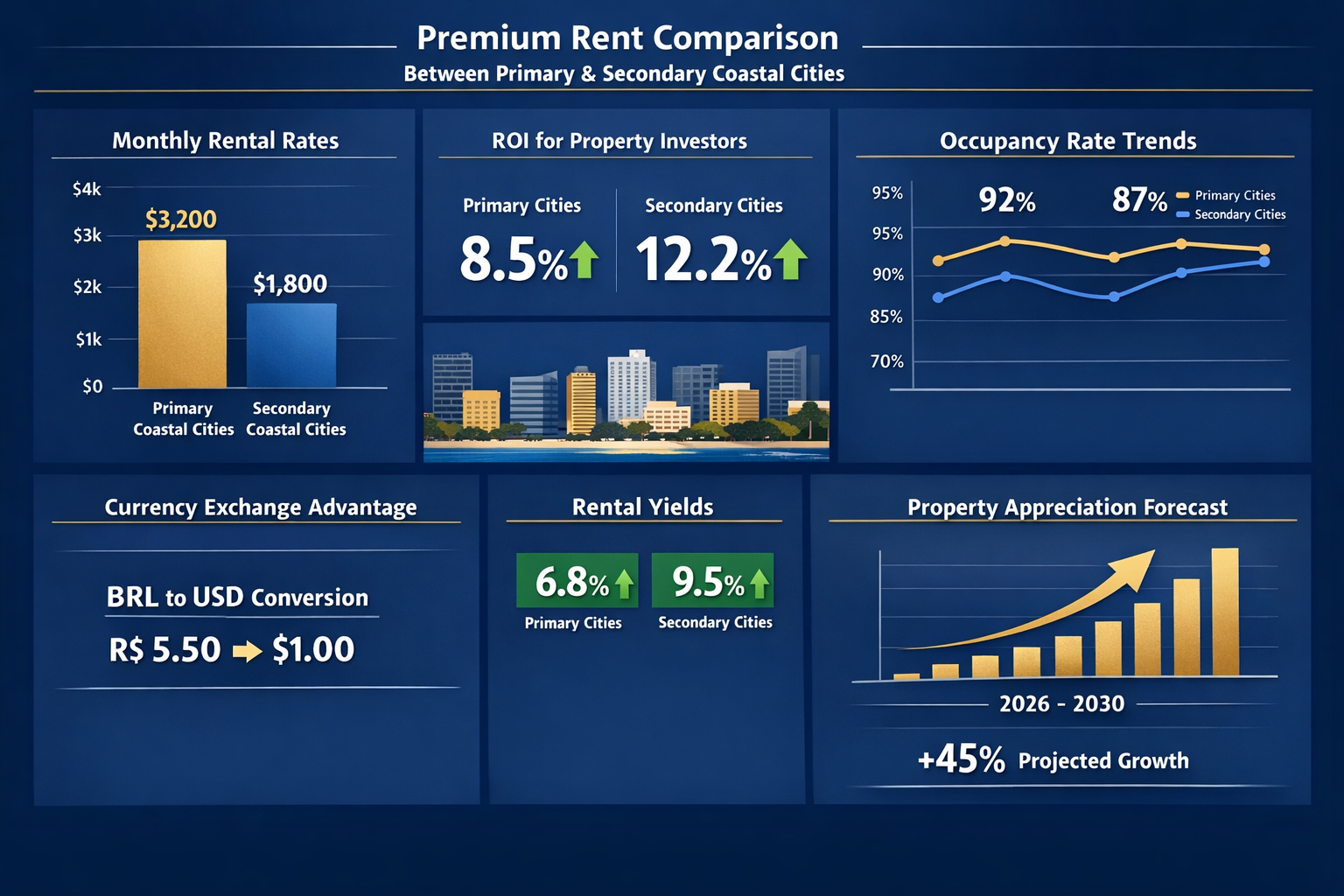
Understanding the financial performance of Digital Nomad Havens in Secondary Coastal Cities 2026 requires analyzing rent premiums, occupancy rates, and total return projections.
Premium Rent Benchmarks: What Office-Ready Properties Command
Properties with professional-grade infrastructure command significant premiums over standard vacation rentals:
Monthly Rent Comparison (Secondary Coastal Cities):
| Property Type | Standard Rental | Office-Ready Premium | Premium % |
|---|---|---|---|
| Studio (30-40m²) | $600-800 | $900-1,200 | +50% |
| 1-Bedroom (50-60m²) | $800-1,100 | $1,300-1,800 | +60% |
| 2-Bedroom (80-100m²) | $1,200-1,600 | $2,000-2,800 | +65% |
Premium properties with 1Gbps+ internet, dedicated workspaces, backup power, and professional amenities consistently achieve these elevated rates while maintaining higher occupancy than standard rentals.
Occupancy Rate Advantages
Digital nomads seeking professional workspaces tend toward longer stays and higher booking consistency:
- Average stay duration: 2-4 months (vs. 1-2 weeks for tourists)
- Off-season stability: Remote workers aren’t bound by vacation schedules
- Repeat bookings: Quality workspace creates loyalty and referrals
- Annual occupancy: 75-85% achievable (vs. 50-65% for standard vacation rentals)
This occupancy advantage, combined with premium rents, creates superior cash flow profiles for purpose-built nomad properties.
ROI Projections: Secondary Coastal Cities vs. Saturated Markets
João Pessoa Example (USD-based analysis):
- Property acquisition/construction: $100,000
- Monthly premium rent: $1,500
- Annual gross income: $18,000
- Operating expenses (20%): $3,600
- Net annual income: $14,400
- Cash-on-cash return: 14.4%
- Appreciation potential: 5-8% annually as market matures
Comparison to Saturated Markets:
- Canggu, Bali: 6-8% yields, minimal appreciation (+0% growth) [1]
- Ko Samui, Thailand: 7-9% yields, market saturation (+0% growth) [1]
- Valencia, Spain: 5-7% yields, mature market (+9% growth) [1]
Secondary coastal cities with emerging infrastructure offer superior total returns through the combination of:
- Higher cash yields from lower acquisition costs
- Appreciation runway as markets mature
- Currency upside in markets like Brazil
- First-mover advantages before competition intensifies
Risk Mitigation Strategies
Investing in emerging secondary coastal markets requires addressing specific risks:
Infrastructure Risk:
- Invest only in properties with verified fiber-optic access
- Install redundant internet connections from multiple ISPs
- Include backup power systems in development budgets
Market Risk:
- Target cities with existing expat communities and coworking spaces
- Focus on destinations with government visa programs [7]
- Diversify across multiple secondary markets rather than concentrating
Currency Risk (Brazil-specific):
- Charge rents in hard currency (USD/EUR)
- Maintain operating reserves in stable currencies
- Consider currency hedging for large portfolios
Regulatory Risk:
- Work with local legal experts on short-term rental regulations
- Structure properties for flexibility (short-term or long-term rentals)
- Monitor visa program changes affecting nomad inflows
The performance transformation in Florianópolis’s real estate market demonstrates how professional development approaches succeed even in emerging markets.
Marketing and Positioning: Capturing Premium Digital Nomad Tenants
Target Audience Segmentation
Not all digital nomads are created equal. Premium office-ready properties should target:
High-Value Segments:
💼 Senior remote professionals ($75K+ annual income)
👨💻 Tech workers and developers requiring reliable infrastructure
📊 Consultants and freelancers serving U.S./European clients
🎨 Creative professionals valuing lifestyle and workspace quality
🏢 Startup founders seeking cost-effective operational bases
These segments prioritize reliability and productivity over lowest cost, making them ideal tenants for premium properties.
Marketing Channels and Positioning
Reaching premium digital nomads requires strategic channel selection:
Primary Marketing Channels:
- Nomad-specific platforms: Nomad List, Remote Year, WiFi Tribe
- Professional networks: LinkedIn groups, Slack communities
- Content marketing: SEO-optimized listings emphasizing workspace features
- Influencer partnerships: Nomad bloggers and YouTubers
- Direct booking websites: Bypassing OTA commissions for longer stays
Positioning Messaging:
- Emphasize workspace quality and internet speeds in all descriptions
- Highlight timezone advantages for U.S./European client work
- Showcase backup systems and reliability features
- Include speed test results and technical specifications
- Feature testimonials from professional remote workers
Properties that clearly communicate technical specifications and professional amenities attract higher-quality tenants willing to pay premium rates.
Pricing Strategy for Premium Properties
Optimize pricing to capture maximum value while maintaining occupancy:
Pricing Tactics:
- Monthly discounts: 10-15% off nightly rates for 30+ day stays
- Quarterly packages: Additional 5-10% off for 90+ day commitments
- Seasonal stability: Minimal price variation (nomads work year-round)
- Value-added services: Cleaning, laundry, coworking passes included
- Transparent pricing: All-inclusive rates with no hidden fees
Premium positioning requires consistent quality delivery—properties must deliver on infrastructure promises or face negative reviews that undermine market position.
Government Visa Programs and Regulatory Considerations
Digital Nomad Visa Landscape in 2026
Government recognition of remote workers as long-stay, low-impact visitors has created competitive infrastructure advantages in secondary coastal cities [7]. Key visa programs supporting nomad haven development include:
Leading Programs:
- Brazil: Digital nomad visa launched 2022, allowing 1-year stays
- Cape Verde: Special remote work authorization for coastal access
- Croatia: Digital nomad residence permit (emerging coastal alternative)
- Seychelles: Workcation program for island professionals
These programs create demand stability by removing visa uncertainty that previously limited nomad stays in emerging markets.
Regulatory Compliance for Short-Term Rentals
Secondary coastal cities often have less restrictive regulations than saturated primary markets:
Regulatory Advantages:
- Fewer licensing requirements than Barcelona, Lisbon, or Bali
- Lower taxation on rental income in emerging markets
- Flexible zoning allowing mixed residential/commercial use
- Government support for tourism-adjacent development
However, developers must still ensure compliance with:
✅ Property registration for short-term rentals
✅ Tax obligations (income tax, VAT, municipal taxes)
✅ Safety and building code requirements
✅ Insurance coverage for commercial rental use
Working with local legal experts prevents costly compliance issues as markets mature and regulations evolve.
Future Outlook: Emerging Secondary Coastal Markets to Watch
Next-Wave Destinations
Beyond current leaders, several secondary coastal cities show early-stage potential for digital nomad haven development:
Africa:
- Taghazout, Morocco: Surf culture, improving connectivity
- Zanzibar, Tanzania: Indian Ocean access, visa-friendly
- Essaouira, Morocco: Coastal charm, European proximity
Latin America:
- Cartagena, Colombia: Caribbean coast, digital nomad visa
- Puerto Escondido, Mexico: Pacific beaches, growing infrastructure
- Punta del Este, Uruguay: Sophisticated, stable governance
Eastern Europe:
- Varna, Bulgaria: Black Sea access, EU membership
- Budva, Montenegro: Adriatic coast, low taxation
- Klaipėda, Lithuania: Baltic Sea, tech-friendly ecosystem
Asia-Pacific:
- Hoi An, Vietnam: Secondary to Da Nang, cultural appeal
- Galle, Sri Lanka: Indian Ocean, colonial architecture
- Siargao, Philippines: Island lifestyle, improving connectivity
Investors entering these markets early—with proper infrastructure planning—position for outsized returns as markets mature from emerging to established status.
Technology Trends Shaping Future Development
Several technological developments will influence Digital Nomad Havens in Secondary Coastal Cities 2026 and beyond:
Infrastructure Evolution:
- Starlink and satellite internet reducing fiber-optic dependency
- 5G expansion providing reliable backup connectivity
- Smart building systems optimizing workspace environments
- Renewable energy integration addressing power reliability
Workspace Innovation:
- Hybrid coworking-residential models blurring boundaries
- Soundproof pod installations for video call privacy
- Ergonomic automation (standing desk scheduling, lighting adjustment)
- Community management platforms connecting nomad residents
Properties incorporating these innovations will maintain competitive advantages as the market evolves.
Sustainability and Long-Term Value Creation
The most successful digital nomad havens will balance profit optimization with sustainable development:
🌱 Environmental sustainability: Solar power, water conservation, eco-friendly materials
🤝 Community integration: Supporting local businesses, cultural preservation
🏗️ Infrastructure contribution: Improving broader community connectivity
📈 Long-term value focus: Building appreciation through quality rather than extraction
Secondary coastal cities offer opportunities to develop responsibly from the ground up, avoiding the overtourism and cultural displacement that plagued primary hubs.
Developers who prioritize sustainability create properties with enduring value and positive community relationships that facilitate long-term success.
Conclusion
Digital Nomad Havens in Secondary Coastal Cities 2026: Building High-Speed Internet and Office-Ready Properties for Premium Rents represents one of the most compelling real estate investment opportunities in the current market. The convergence of market saturation in traditional hubs, explosive growth in secondary destinations like Da Nang (+214%) and Victoria, Seychelles (+159%), and the 40+ million global digital nomad population creates unprecedented demand for purpose-built remote work properties [1][6].
Secondary coastal cities—particularly emerging markets like João Pessoa, Brazil—offer unique advantages that established hubs cannot match: lower development costs, currency benefits for international investors, timezone alignment with major client markets, and significant appreciation runway as infrastructure matures. Properties delivering 1Gbps+ internet speeds, dedicated ergonomic workspaces, backup power systems, and professional amenities command 50-65% premium rents while achieving higher occupancy rates than standard vacation rentals.
The shift from “Barcelona to Belgrade” and “Bali to Da Nang” isn’t temporary—it represents a fundamental restructuring of where remote workers choose to live [4]. Digital nomads in 2026 prioritize quality infrastructure, safety, and community over lowest-cost options, creating sustainable demand for premium properties that deliver professional work environments alongside coastal lifestyle appeal.
Actionable Next Steps
For investors and developers ready to capitalize on this opportunity:
- Conduct market research on secondary coastal cities with existing fiber-optic infrastructure and emerging expat communities
- Analyze currency advantages in markets like Brazil where weak local currency creates exceptional USD/EUR yields
- Partner with local experts who understand regulatory requirements and construction standards
- Prioritize internet infrastructure above all other amenities—1Gbps+ connectivity is non-negotiable
- Design purpose-built workspaces with ergonomic furniture, soundproofing, and professional lighting
- Implement backup systems for power and connectivity to ensure reliability
- Target marketing to high-income remote professionals through nomad-specific platforms and communities
- Monitor visa program developments that create demand stability in target markets [7]
The window for first-mover advantages in secondary coastal markets remains open, but infrastructure development and competition will intensify as more capital recognizes the opportunity. Investors who act now—with proper planning and quality execution—position for exceptional returns through the combination of premium rental yields, property appreciation, and potential currency gains.
For those exploring opportunities in Brazilian coastal markets specifically, understanding life in Florianópolis and the appreciation potential of pre-construction purchases provides valuable context for the broader secondary city opportunity.
The future of digital nomadism is being built today in secondary coastal cities. The question isn’t whether these markets will mature—it’s whether investors will position themselves to capture the value creation as they do.
References
[1] Fastest Growing Remote Work Hubs – https://nomads.com/fastest-growing-remote-work-hubs
[2] Best Places For Digital Nomads – https://www.jetpacglobal.com/blog/best-places-for-digital-nomads/
[4] Where To Go As A Digital Nomad In 2026 – https://thenomadcloud.com/where-to-go-as-a-digital-nomad-in-2026/
[6] The Digital Nomad Boom 2025 – https://www.localyze.com/blog/the-digital-nomad-boom-2025
[7] Digital Nomad Visa Index 2026 – https://immigrantinvest.com/reports/digital-nomad-visa-index-2026/