
Brazil’s real estate market holds an estimated R$10 trillion in assets, yet fewer than 5% of individual investors have ever accessed commercial-grade property investments directly. That gap is closing fast. The convergence of Drex Digital Currency and Property Tokenization: Fractional Ownership Opportunities for Brazil Developers in 2026 is reshaping who can own a piece of a São Paulo office tower or a Rio de Janeiro logistics hub — and how developers can monetize assets faster than ever before.
Key Takeaways
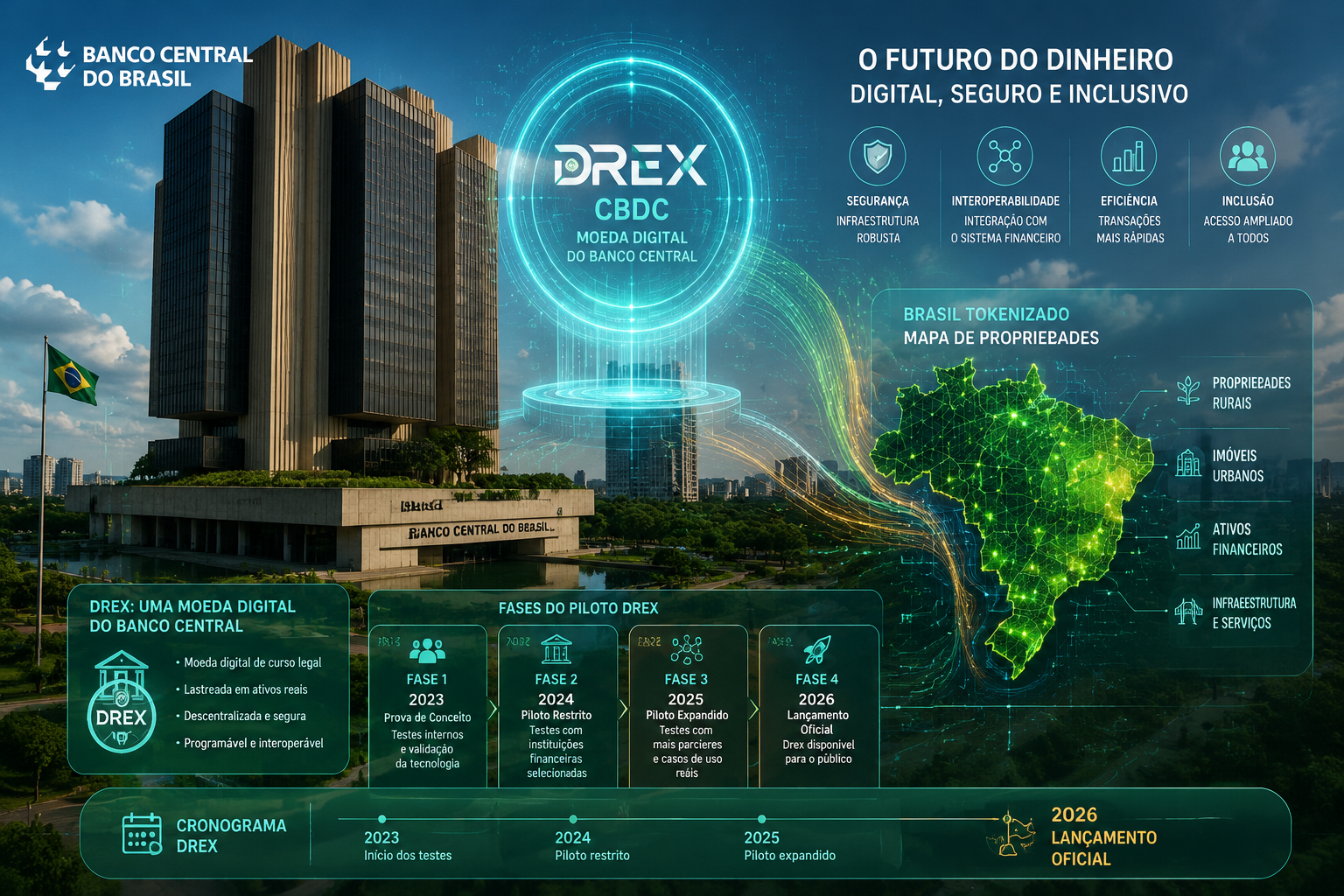
- Drex, Brazil’s central bank digital currency, has been repositioned as a tokenization and settlement infrastructure rather than a simple retail payment tool, with a 2026 launch focused on credit and asset-backed operations.
- Real estate tokenization allows developers to divide property ownership into digital tokens, lowering entry barriers for investors and accelerating capital formation.
- Fractional ownership via blockchain-based tokens can reduce transaction costs, improve liquidity, and attract a broader investor base for Brazilian developers.
- Regulatory compliance under the Banco Central do Brasil (BCB) and the Comissão de Valores Mobiliários (CVM) is essential before launching any tokenized real estate offering.
- Developers who integrate Drex-compatible infrastructure now will be positioned ahead of competitors when full-scale token settlement becomes operational.
What Is Drex and Why It Matters for Brazilian Real Estate
Drex is Brazil’s official central bank digital currency (CBDC), developed and overseen by the Banco Central do Brasil [7]. Unlike cryptocurrencies such as Bitcoin, Drex is a sovereign digital asset — fully backed by the Brazilian Real and designed to operate within a regulated financial ecosystem.
Critically, Drex has been formally repositioned away from functioning as a simple retail payment currency. Its current architecture focuses on tokenization infrastructure and lien reconciliation, meaning it is built to settle transactions involving tokenized assets — including real estate [2]. The 2026 launch phase prioritizes credit operations and collateral management, not everyday consumer payments [10].
This pivot is significant. It means Drex is not competing with Pix (Brazil’s instant payment system). Instead, it is building the settlement rails that tokenized property transactions will eventually run on. For developers, this is the equivalent of a new financial highway being constructed specifically for asset-backed digital transactions.
“Drex is not just a digital currency — it is the programmable settlement layer that makes tokenized real estate legally and financially viable at scale in Brazil.”
The Banco Central do Brasil has reaffirmed its commitment to the Drex project despite earlier speculation about delays [8]. Pilot programs involving major Brazilian banks, fintechs, and asset managers have tested smart contract-based settlement, collateral tokenization, and privacy-preserving transaction protocols. The infrastructure is maturing rapidly.
For those already exploring the intersection of blockchain and property investment, the article on cryptocurrencies and real estate development provides useful foundational context on how digital assets are entering the Brazilian market.
How Property Tokenization Works in Brazil’s 2026 Market
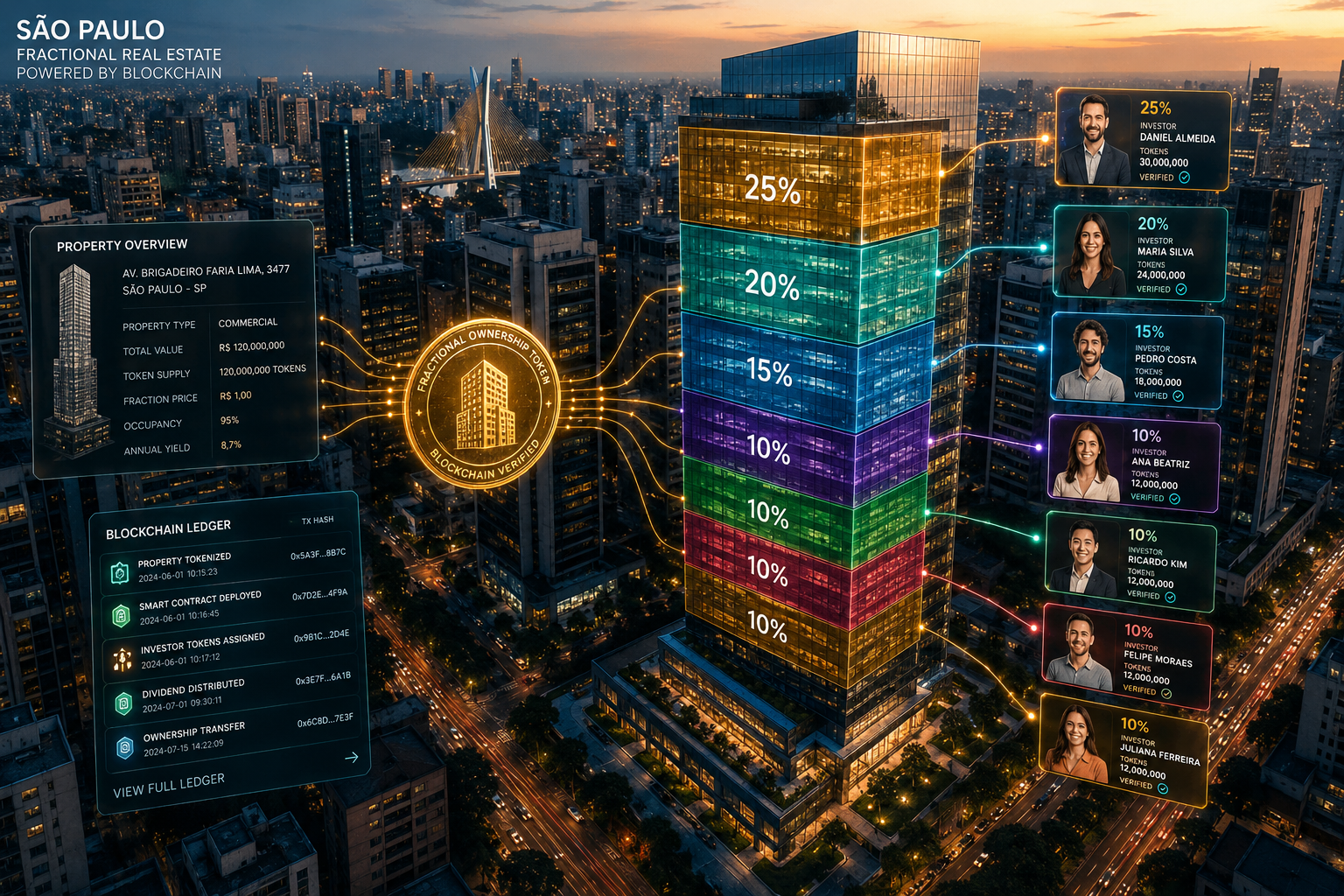
Property tokenization is the process of converting ownership rights in a real estate asset into digital tokens recorded on a blockchain. Each token represents a fractional share of the underlying property — its value, income rights, and eventual sale proceeds.
The Tokenization Process Step by Step
| Step | Action | Key Party Involved |
|---|---|---|
| 1 | Asset selection and legal structuring | Developer, legal counsel |
| 2 | SPE (Special Purpose Entity) creation | Notary, corporate lawyers |
| 3 | Token issuance on a regulated platform | Tokenization platform, CVM |
| 4 | Investor KYC and onboarding | Platform, financial institution |
| 5 | Token sale and capital raise | Developer, investors |
| 6 | Ongoing income distribution via smart contract | Smart contract, Drex rails |
| 7 | Secondary market trading | Exchange or OTC platform |
Brazil’s legal framework for tokenized securities has matured significantly. The CVM (Brazil’s securities regulator) has issued guidance treating real estate tokens as securities when they carry profit expectations, meaning they fall under existing investor protection rules [4]. This is actually a strength: it gives institutional investors the regulatory certainty they need to participate.
The Drex infrastructure adds a critical layer. Because Drex tokens are programmable, smart contracts can automate rental income distribution, enforce lien priority, and settle secondary market trades — all in real time and with full audit trails [1]. The BCB’s pilot programs have already tested property-related tokenization scenarios, with results showing significant reductions in settlement time compared to traditional cartório-based processes [7].
Why Fractional Ownership Changes the Investment Landscape
Traditional commercial real estate in Brazil requires large capital commitments. A mid-sized office building in São Paulo’s Faria Lima district might require a minimum investment of R$500,000 or more through conventional channels. Tokenization can reduce that threshold to R$1,000 or less per investor.
This democratization effect has several consequences for developers:
- Larger investor pools: Thousands of retail investors can replace a handful of institutional buyers.
- Faster capital raises: Token sales can close in days rather than months.
- Improved liquidity: Token holders can trade their positions on secondary markets without requiring the developer to refinance or sell the asset.
- Marketing differentiation: Tokenized projects attract media attention and tech-savvy investor demographics.
Real estate tokenization in Brazil is already gaining momentum, with multiple platforms launching token offerings tied to commercial properties in São Paulo and residential developments in high-growth coastal markets [6]. For developers exploring high-return locations, understanding the best places to invest in Brazil property is a logical starting point before structuring a token offering.
Drex Digital Currency and Property Tokenization: Fractional Ownership Opportunities for Brazil Developers in 2026 — Regulatory and Technical Integration
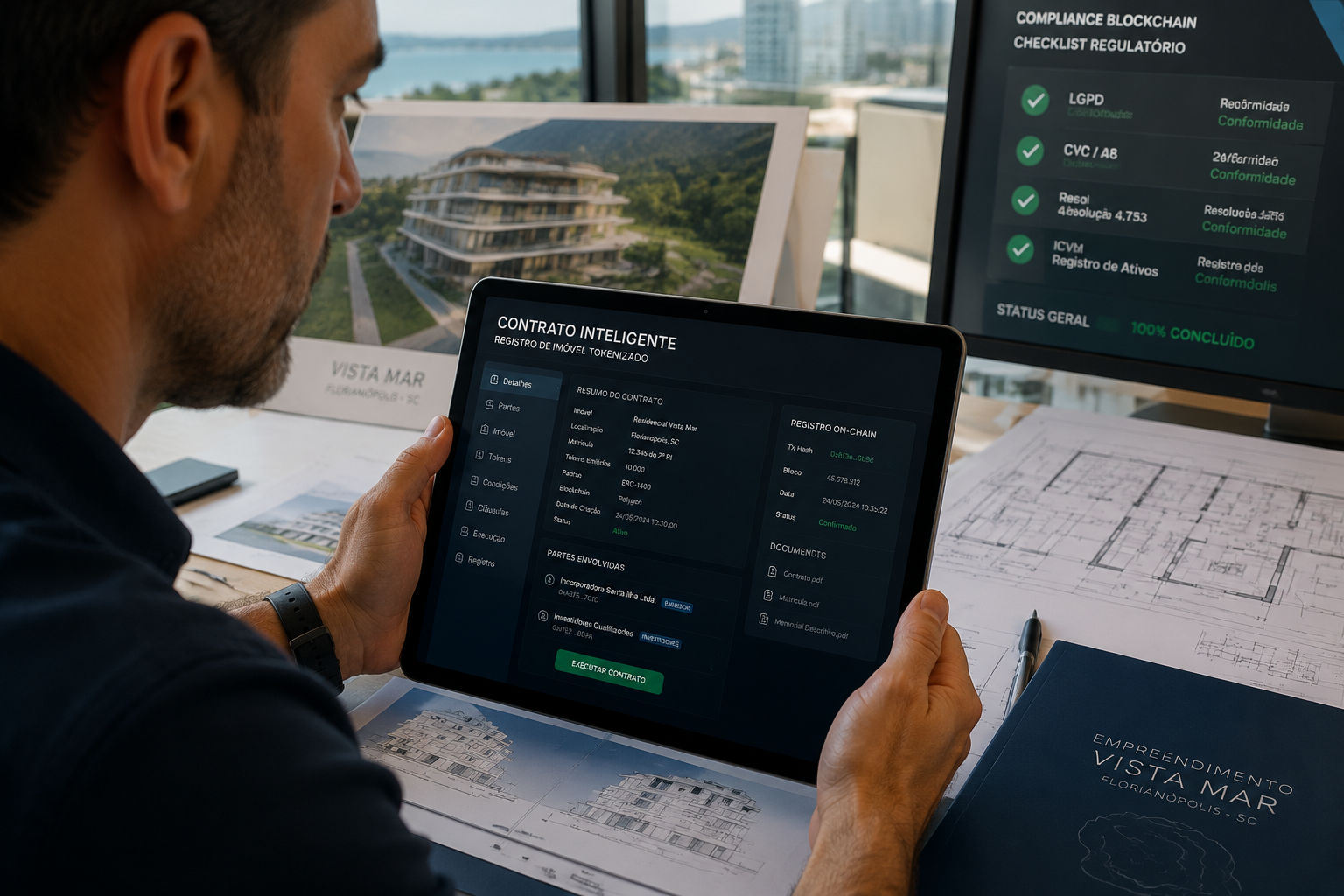
Understanding the opportunity is one thing. Building a compliant, technically sound tokenized offering is another. This section covers what developers need to know to operate within Brazil’s evolving regulatory framework.
Regulatory Framework: BCB and CVM Compliance
Two regulators govern tokenized real estate in Brazil:
1. Banco Central do Brasil (BCB): Controls the Drex infrastructure, payment settlement, and any CBDC-related transactions. Developers using Drex-compatible platforms must work with BCB-authorized financial institutions.
2. Comissão de Valores Mobiliários (CVM): Governs the issuance and trading of tokenized securities. CVM Resolution 88 (2022) established a regulatory sandbox for tokenized offerings, and subsequent guidance has clarified disclosure requirements for real estate tokens [4].
Failure to comply with CVM rules can result in the token offering being classified as an unregistered securities offering — a serious legal risk. Developers should engage securities lawyers with specific experience in digital asset offerings before proceeding.
Drex’s Technical Architecture and What Developers Must Prepare For
Drex is being built on a permissioned distributed ledger, not a fully public blockchain [10]. This means:
- Transactions are visible to authorized participants (banks, regulators) but not the general public.
- Privacy-preserving protocols are being tested to protect commercially sensitive transaction data [9].
- Smart contracts on the Drex network must be audited and approved by participating financial institutions.
For developers, this has practical implications. Token platforms that integrate with Drex will need to connect through BCB-authorized intermediaries — typically banks or licensed payment institutions. Developers cannot simply deploy a token on Ethereum and call it “Drex-compatible.”
The recommended path is to partner with a regulated tokenization platform that already has BCB and CVM relationships. Several Brazilian fintechs and blockchain companies have completed or are completing this regulatory groundwork as of 2026 [3].
Stablecoin Interaction and International Capital
Drex’s pivot also has implications for international investors. As Brazil clarifies its stablecoin regulation in 2026, the relationship between Drex and USD-pegged stablecoins like USDC and USDT becomes important for attracting foreign capital into tokenized Brazilian real estate [3]. Developers targeting international investors should structure their offerings to accommodate both Drex settlement and stablecoin payment rails where legally permitted.
Yield Enhancement and Competitive Advantages for Developers
The financial case for tokenization goes beyond simply raising capital. Developers who structure tokenized offerings thoughtfully can achieve meaningful yield enhancement compared to traditional financing routes.
How Tokenization Improves Developer Economics
Lower cost of capital: By accessing a broader investor base directly, developers can reduce dependence on expensive bank credit. Brazilian real estate financing rates have historically been high relative to global benchmarks, making alternative capital sources attractive.
Retained upside through token structures: Developers can retain a percentage of tokens (e.g., 20-30%) while selling the majority to investors. As the property appreciates, the developer’s retained tokens increase in value — creating an equity upside that traditional bank financing does not offer.
Faster project cycles: Tokenized pre-sales can fund construction phases more efficiently. For developers already familiar with the value of buying property off-plan in Brazil, tokenization extends this model to a much wider investor audience.
Recurring fee income: Developers who operate their own token platforms or partner with platforms can earn ongoing management fees from token holders — creating a recurring revenue stream beyond the initial capital raise.
Risk Considerations Developers Must Address
Tokenization is not without risks. Developers should be aware of:
- Smart contract vulnerabilities: Code errors can result in loss of funds. Independent audits are mandatory.
- Liquidity risk: Secondary markets for real estate tokens in Brazil are still developing. Investors may face difficulty selling tokens if demand is thin.
- Regulatory evolution: Brazil’s digital asset rules are still being refined. What is compliant today may require adjustment as new CVM or BCB guidance emerges.
- Market education: Many Brazilian retail investors are still unfamiliar with tokenized assets. Developer marketing budgets must include investor education components.
A recent academic analysis of blockchain applications in Brazilian real estate confirms that while the technology offers significant efficiency gains, governance structures and investor protection mechanisms remain areas requiring careful attention [5].
Practical Steps for Developers Ready to Enter the Tokenized Market
For developers who want to move from awareness to action in 2026, the following roadmap provides a structured approach.
A Developer’s Tokenization Readiness Checklist
- Legal audit: Confirm the property’s title is clear and free of encumbrances. Tokenization amplifies any title defects.
- SPE structuring: Work with corporate lawyers to establish a Special Purpose Entity that will hold the asset and issue tokens.
- Platform selection: Choose a CVM-registered tokenization platform with demonstrated BCB compliance.
- Token economics design: Define token supply, minimum investment, income distribution schedule, and exit mechanisms.
- Investor disclosure document: Prepare a CVM-compliant offering memorandum covering all material risks.
- Smart contract audit: Commission an independent technical audit of all smart contracts before deployment.
- Marketing and investor relations: Build an investor communication strategy that includes ongoing reporting obligations.
Developers operating in high-growth markets like Florianópolis — where demand for innovative investment structures is particularly strong — are well-positioned to be early movers. The Ingleses region of Florianópolis exemplifies the type of high-appreciation market where tokenized fractional ownership could attract significant investor interest.
For developers looking at specific project types, studio apartments in Florianópolis represent an asset class with strong rental yields that translates well into tokenized income-distribution structures.
The broader Florianópolis real estate market performance also provides useful context for developers assessing which markets are most receptive to innovative financing structures.
Conclusion
The convergence of Drex Digital Currency and Property Tokenization: Fractional Ownership Opportunities for Brazil Developers in 2026 represents one of the most significant structural shifts in Brazilian real estate finance in decades. The technology is proven, the regulatory framework is taking shape, and the demand from investors seeking access to high-yield property assets is substantial.
Actionable next steps for developers:
- Engage a securities lawyer with digital asset experience to assess your project’s tokenization eligibility under current CVM rules.
- Contact BCB-authorized tokenization platforms to understand integration requirements and timelines.
- Audit your existing property portfolio to identify assets with clean titles and strong income profiles — these are the best candidates for early token offerings.
- Begin investor education efforts now. The developers who build trust with retail and institutional token investors before the market matures will capture the largest share of capital.
- Monitor BCB Drex pilot program announcements closely, as the transition from pilot to full operational status will trigger a significant expansion of eligible transaction types.
Brazil’s tokenized real estate market is not a distant future concept — it is being built right now, and the developers who act in 2026 will define the standards that the entire industry follows.
References
[1] Brazils Drex Fuels Property Token Pilot – https://news.tokenizer.estate/brazils-drex-fuels-property-token-pilot/
[2] Brazil Shelves Digital Currency For Now – https://www.fundssociety.com/en/news/alternatives/brazil-shelves-digital-currency-for-now/
[3] 15575501 Brazil Stablecoin Regulation 2026 What Drex S Pivot Means For Usdc And Usdt Inflows – https://eco.com/support/en/articles/15575501-brazil-stablecoin-regulation-2026-what-drex-s-pivot-means-for-usdc-and-usdt-inflows
[4] Real Estate Tokenization In Brazil 2026 Latin Americas Biggest Market Makes Its Move – https://blog.tokenizer.estate/real-estate-tokenization-in-brazil-2026-latin-americas-biggest-market-makes-its-move
[5] Wjarr 2026 1033 – https://wjarr.com/sites/default/files/fulltext_pdf/WJARR-2026-1033.pdf
[6] Real Estate Tokenization Arrives In Brazil 2026 – https://royalbinary.io/en/blog/real-estate-tokenization-arrives-in-brazil-2026
[7] Digital Brazilian Real – https://www.bcb.gov.br/en/financialstability/digital_brazilian_real
[8] Central Bank Of Brazil Reaffirms Commitment To Drex Cbdc Project 34141 – https://phemex.com/news/article/central-bank-of-brazil-reaffirms-commitment-to-drex-cbdc-project-34141
[9] Drex Prepara O Fim Do Dinheiro Anonimo No Brasil – https://en.clickpetroleoegas.com.br/drex-prepara-o-fim-do-dinheiro-anonimo-no-brasil-e-permitira-ao-governo-rastrear-grandes-transacoes-como-a-compra-de-carros-e-imoveis-em-tempo-real-ctl01/