
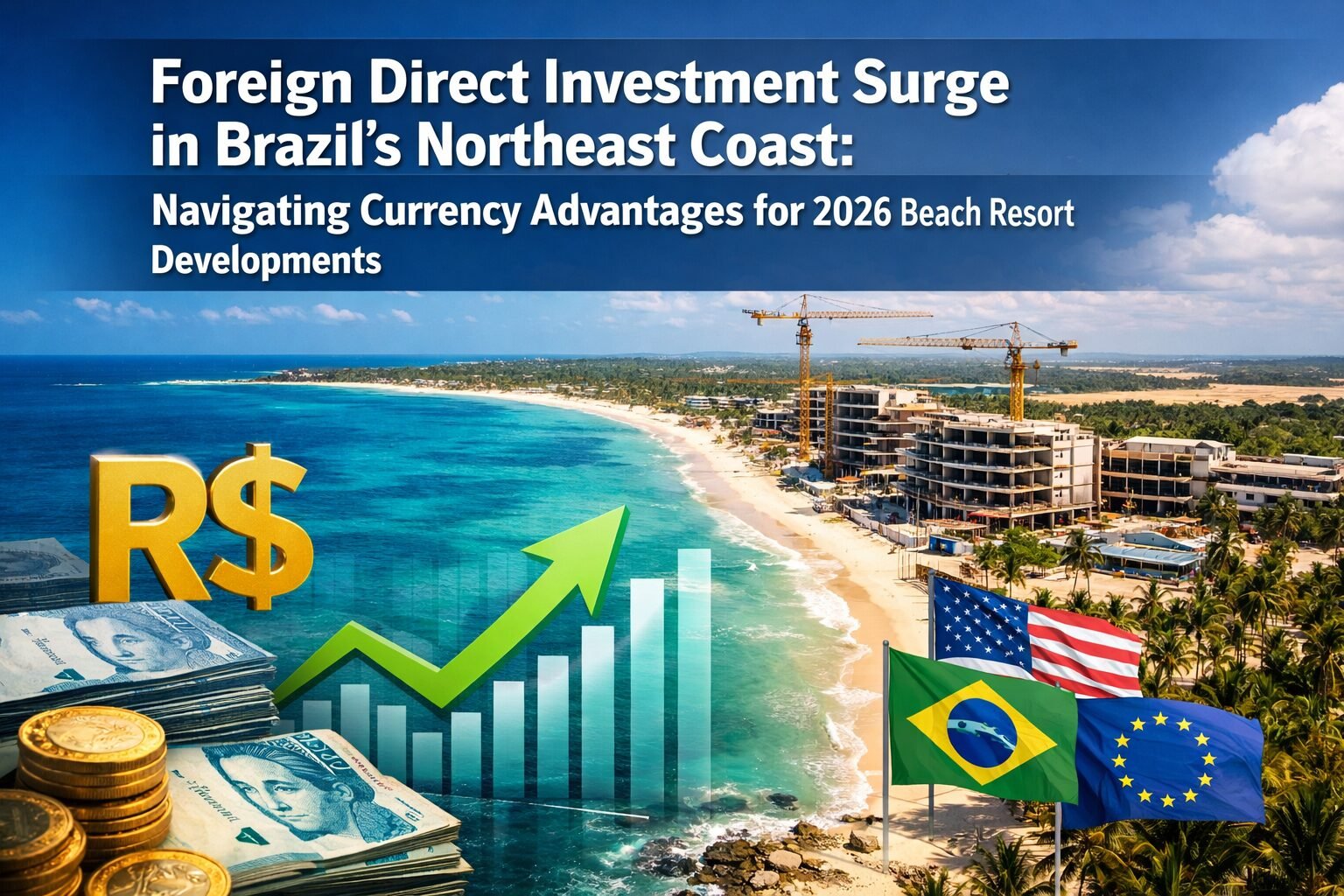
Brazil’s Northeast coast is experiencing an unprecedented wave of international capital, transforming pristine beaches into world-class resort destinations. As the Foreign Direct Investment Surge in Brazil’s Northeast Coast: Navigating Currency Advantages for 2026 Beach Resort Developments gains momentum, savvy investors are capitalizing on regulatory reforms, favorable currency conditions, and high-yield coastal opportunities that promise exceptional returns. With net FDI inflows reaching $8.2 billion in January 2026 alone—a remarkable 22.4% increase from the previous year—the timing has never been better for international developers to enter this dynamic market[3].
Key Takeaways
- 🏖️ Record Capital Inflows: Brazil recorded $8.2 billion in net FDI during January 2026, representing a 22.4% year-over-year increase, with significant allocation toward coastal development projects[3]
- 💰 Currency Stabilization: The Brazilian real has stabilized against the US dollar after recent volatility, creating favorable conditions for foreign investors to maximize purchasing power[5]
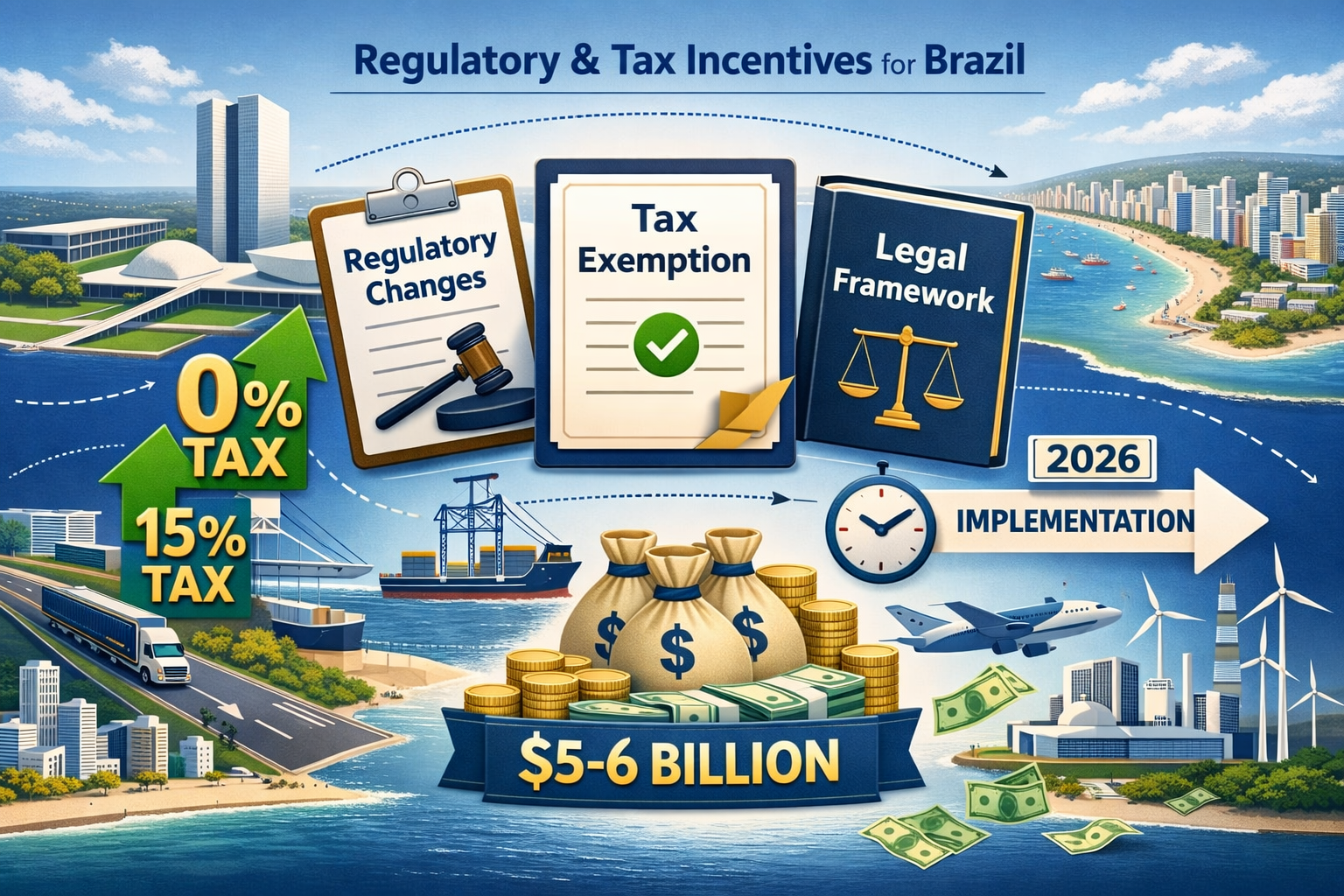
- 📊 Tax Incentives: New income-tax exemptions are expected to inject $5-6 billion into Brazil’s economy in 2026, boosting consumer spending and resort occupancy potential[5]
- 🌊 Emerging Coastal Hubs: Cities like Natal, Fortaleza, and Recife are attracting international capital through infrastructure improvements and streamlined development approvals
- 📈 Infrastructure Focus: Foreign investment in highways, railways, ports, and airports is enhancing accessibility to Northeast coastal regions, increasing property values and tourism potential[6]
Understanding the Foreign Direct Investment Landscape in Brazil’s Northeast
The 2026 FDI Boom: Numbers That Tell the Story
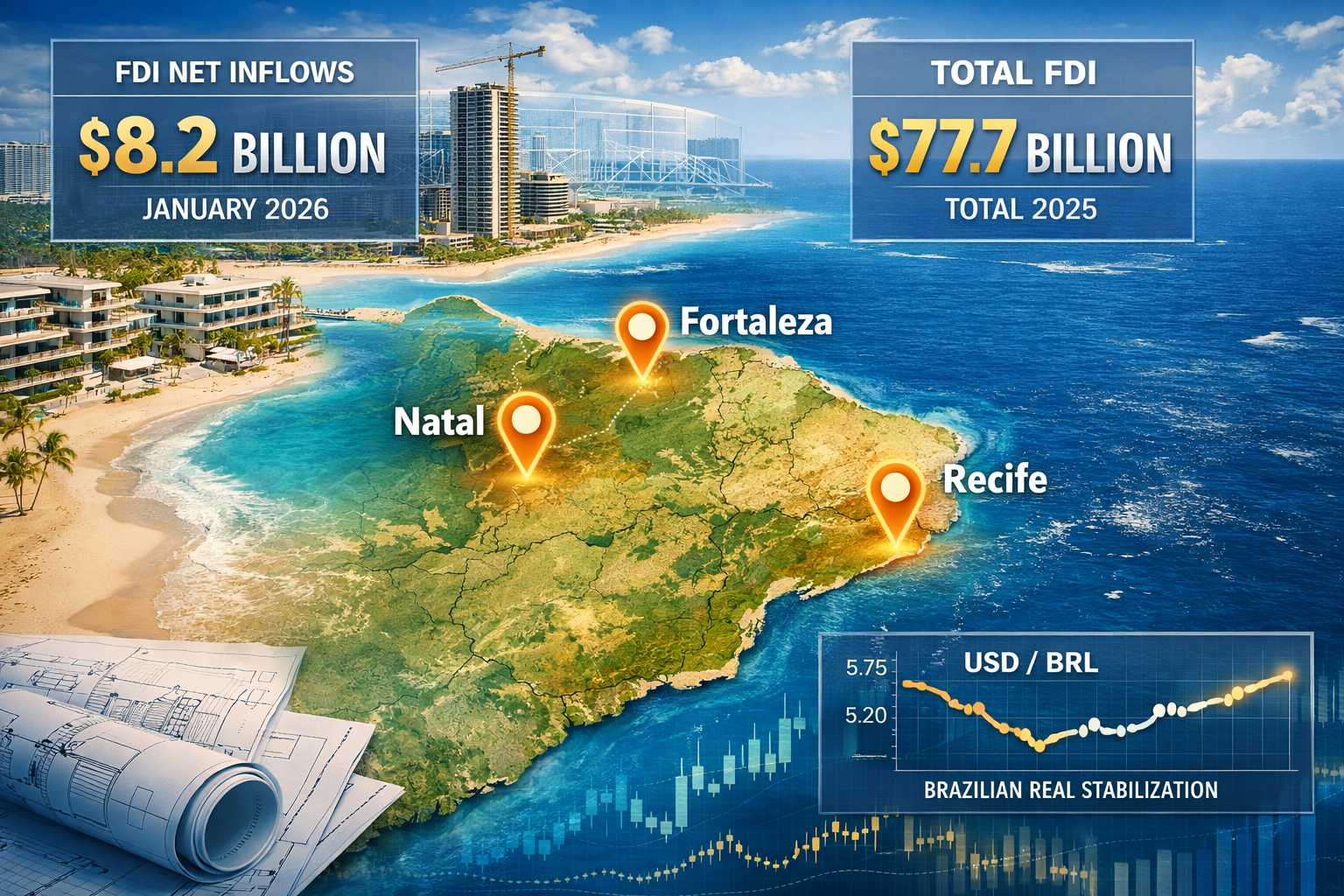
Brazil’s foreign investment landscape has transformed dramatically, with total FDI inflows reaching $77.7 billion in 2025, equivalent to 3.41% of GDP—a 4.8% increase from 2024[3]. This surge reflects growing international confidence in Brazil’s economic stability and growth potential, particularly in the coastal resort development sector.
The Northeast region has emerged as a primary beneficiary of this capital influx. Unlike previous investment cycles that concentrated heavily on São Paulo and Rio de Janeiro, the current Foreign Direct Investment Surge in Brazil’s Northeast Coast: Navigating Currency Advantages for 2026 Beach Resort Developments is redirecting capital toward previously undervalued coastal markets.
Key Investment Metrics for 2026:
| Indicator | Value | Year-over-Year Change |
|---|---|---|
| Net FDI Inflows (Jan 2026) | $8.2 billion | +22.4% |
| Total FDI (2025) | $77.7 billion | +4.8% |
| FDI as % of GDP | 3.41% | Stable |
| Infrastructure Investment | $20.2 billion | Growing |
Why International Capital is Flowing to Coastal Developments
Several converging factors make Brazil’s Northeast coast particularly attractive for foreign property investment:
1. Undervalued Real Estate Markets 🏡
Compared to saturated markets in Southeast Brazil, Northeast coastal properties offer acquisition costs 40-60% lower while delivering comparable or superior tourism appeal.
2. Year-Round Tourism Demand ☀️
The Northeast enjoys consistent tropical weather, creating 12-month occupancy potential that significantly outperforms seasonal resort markets.
3. Growing Domestic Middle Class 📊
Brazil’s expanding middle class, bolstered by new tax exemptions, represents a substantial domestic tourism market alongside international visitors.
4. Infrastructure Modernization 🛫
Major airports in Natal, Fortaleza, and Recife have undergone significant expansions, with direct international flights increasing accessibility for European and North American tourists.
“The combination of currency advantages, regulatory improvements, and infrastructure development has created a perfect storm of opportunity for foreign investors in Brazil’s coastal resort sector.” — Investment Analysis, 2026
Navigating Currency Advantages: The Brazilian Real Opportunity
Currency Stabilization Creates Investment Windows
After experiencing significant volatility throughout 2024 and early 2025, the Brazilian real has stabilized against the US dollar, creating predictable conditions for foreign investors[5]. This stabilization is particularly advantageous for developers planning multi-year resort construction projects, as it reduces currency risk and improves financial planning accuracy.
For international investors, this stability means:
- Enhanced Purchasing Power: Foreign currency maintains consistent value throughout project development phases
- Predictable Returns: Revenue projections become more reliable when currency fluctuations decrease
- Reduced Hedging Costs: Lower volatility minimizes the need for expensive currency hedging strategies
- Improved Financing Terms: Brazilian banks offer more favorable loan terms when currency risk decreases
Timing Your Investment for Maximum Currency Benefit
The current currency environment presents specific advantages for 2026 beach resort developments. American investors, in particular, show increased confidence in the bilateral relationship with Brazil, supported by expectations of declining interest rates and continued currency stability[1].
Strategic Currency Considerations:
- Lock in Construction Contracts Early: Secure labor and materials pricing in Brazilian reals while the currency remains stable
- Structure Revenue in Multiple Currencies: Design resort operations to accept payments in USD, EUR, and BRL to diversify currency exposure
- Leverage Local Financing: Brazilian development loans often provide better terms than foreign financing when the real is stable
- Plan Exit Strategies: Consider currency trends when timing property sales or refinancing decisions
The Foreign Direct Investment Surge in Brazil’s Northeast Coast: Navigating Currency Advantages for 2026 Beach Resort Developments is particularly pronounced among European investors, who benefit from favorable EUR/BRL exchange rates that enhance acquisition power by 15-25% compared to 2023 levels.
Regulatory Changes and Tax Incentives Driving Development
New Income Tax Exemptions Boost Consumer Spending
President Lula’s government implemented a transformative income-tax exemption expected to inject $5-6 billion into the economy in 2026, directly boosting consumer purchasing power[5]. This policy change has profound implications for beach resort developments:
- Increased Domestic Tourism: Brazilian families have more disposable income for vacation spending
- Higher Occupancy Rates: Resorts can maintain stronger booking levels during traditionally slower periods
- Premium Service Demand: Wealthier domestic tourists seek upscale accommodations and amenities
- Extended Stay Durations: Families can afford longer vacations, improving per-guest revenue
Streamlined Development Approvals in Northeast States
Several Northeast states have implemented fast-track approval processes for foreign-funded resort developments that meet sustainability and employment criteria. Natal, in particular, has reduced average approval timelines from 18-24 months to just 8-12 months for qualifying projects.
Key Regulatory Improvements:
✅ Environmental Licensing Acceleration: Coordinated federal and state reviews reduce redundant processes
✅ One-Stop Development Offices: Centralized agencies handle multiple permit requirements
✅ Tax Holiday Programs: Qualifying resorts receive 5-10 year property tax exemptions
✅ Employment Incentives: Tax credits for hiring and training local workforce
Infrastructure Investment as Regulatory Priority
Infrastructure remains a focal point for foreign capital investment, with highways, railways, ports, and airports receiving substantial attention[6]. The Brazilian government has designated coastal access improvements as national priorities, recognizing their importance for tourism development.
Recent infrastructure commitments include:
- Highway Expansion: New coastal highways connecting Natal to Fortaleza reducing travel time by 40%
- Airport Modernization: $2.3 billion allocated for Northeast airport improvements through 2027
- Port Development: Enhanced cruise ship facilities in Recife and Salvador
- Utility Infrastructure: Guaranteed power and water capacity for designated resort development zones
These improvements directly enhance the viability and profitability of beach resort projects, making the Foreign Direct Investment Surge in Brazil’s Northeast Coast: Navigating Currency Advantages for 2026 Beach Resort Developments increasingly attractive to institutional investors.
For those interested in broader Brazilian property market trends, understanding these regulatory shifts provides essential context for investment decisions.
Case Study: Emerging Hubs Like Natal Leading the Way
Natal: The Rising Star of Northeast Coastal Development
Natal, capital of Rio Grande do Norte state, exemplifies the transformation occurring across Brazil’s Northeast coast. Once overlooked by international developers, Natal has emerged as a premier destination for foreign resort investment due to several strategic advantages:
Geographic Excellence 🌍
- Closest Brazilian city to Europe and Africa
- 300+ days of sunshine annually
- Pristine beaches with natural dune formations
- Protected marine ecosystems attracting eco-tourism
Investment Infrastructure 💼
- Dedicated foreign investment office with English-speaking staff
- Pre-approved development zones with guaranteed utilities
- Partnership programs connecting foreign investors with local construction firms
- Transparent land title verification systems
Market Performance 📈
Recent resort developments in Natal have demonstrated exceptional returns:
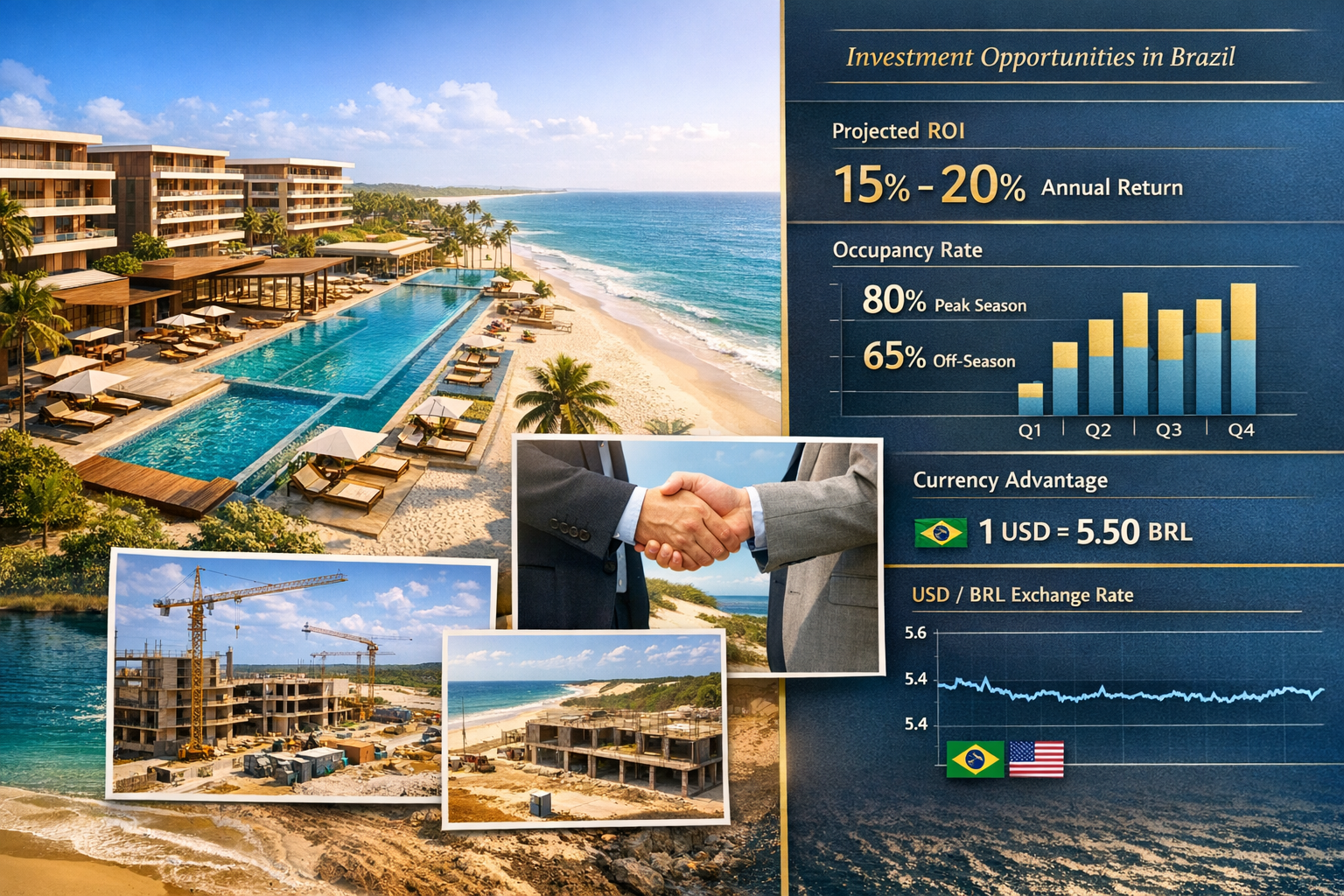
- Occupancy Rates: 75-85% annual average (vs. 60-70% national average)
- Daily Rates: $180-350 USD for beachfront properties
- Property Appreciation: 12-18% annually in designated resort zones
- International Visitor Growth: 35% increase in European tourists (2024-2025)
Successful Foreign-Funded Projects Setting Benchmarks
Several recently completed resort developments in Natal provide valuable case studies for prospective investors:
Project Alpha (Portuguese Developer, €45M Investment)
- 180-room beachfront resort with spa and conference facilities
- Construction completed in 22 months (vs. 30-month projection)
- Achieved 68% occupancy within first six months of operation
- 15% ROI in year one, with projections of 22% by year three
Project Beta (American Investment Group, $62M)
- Mixed-use development with 120 resort units and 80 residential condos
- Residential units 100% sold before construction completion
- Resort component operating at 82% occupancy
- Currency hedging strategy protected against BRL fluctuations
These success stories demonstrate how the Foreign Direct Investment Surge in Brazil’s Northeast Coast: Navigating Currency Advantages for 2026 Beach Resort Developments translates into tangible financial performance.
Fortaleza and Recife: Alternative Emerging Markets
While Natal leads in growth metrics, Fortaleza and Recife offer distinct advantages for different investor profiles:
Fortaleza Advantages:
- Larger metropolitan population (2.7 million) supporting domestic tourism
- Established international airport with direct flights to Miami, Lisbon, and Buenos Aires
- Strong cultural tourism component (music, festivals, cuisine)
- More developed commercial infrastructure for resort operations
Recife Advantages:
- Historical architecture and cultural heritage attracting upscale tourists
- Strong business tourism supporting conference and corporate retreat facilities
- Proximity to Porto de Galinhas (consistently rated among Brazil’s best beaches)
- Established luxury hospitality market providing operational benchmarks
Investors can explore additional Brazilian investment opportunities to compare Northeast coastal markets with other high-performing regions.
High-Yield Coastal Projects: Investment Structures and Returns
Understanding Resort Development ROI Potential
Beach resort developments in Brazil’s Northeast offer multiple revenue streams that compound to create exceptional return profiles:
Primary Revenue Sources:
Daily Room Rates (45-55% of revenue)
- Standard rooms: $120-180 USD
- Ocean-view suites: $220-350 USD
- Premium villas: $400-650 USD
Food & Beverage Operations (25-30% of revenue)
- Restaurant and bar services
- Room service and minibar
- Special event catering
Amenity Services (10-15% of revenue)
- Spa and wellness treatments
- Water sports and activities
- Tour and excursion bookings
Event and Conference Facilities (8-12% of revenue)
- Wedding packages
- Corporate retreats
- Conference hosting
Projected Financial Performance (Typical 150-Room Resort):
| Metric | Year 1 | Year 3 | Year 5 |
|---|---|---|---|
| Average Occupancy | 62% | 78% | 85% |
| Annual Revenue | $8.2M | $12.8M | $15.6M |
| Operating Margin | 28% | 38% | 42% |
| ROI | 8-12% | 18-24% | 25-32% |
Mixed-Use Developments: Maximizing Land Value
The most successful projects combine resort operations with residential components, creating diversified revenue and accelerated capital recovery:
Hybrid Development Model:
- Resort Component (60% of units): Managed hotel rooms generating operational income
- Residential Component (40% of units): Sold condos providing immediate capital return
- Shared Amenities: Pools, restaurants, and facilities serving both segments
- Management Flexibility: Residential owners can enter rental programs for additional income
This structure allows developers to:
- Recover 40-60% of initial investment through residential sales before resort operations begin
- Reduce financing costs by demonstrating pre-sold inventory
- Create ongoing management fee revenue from residential rental programs
- Establish market presence before competitors enter the area
Energy and Natural Resources Integration
Following broader Brazilian investment trends where energy and natural resources account for 8 of the top 10 transactions with a combined value of $20.2 billion[1], forward-thinking resort developments are integrating sustainable energy components:
Renewable Energy Features:
- Solar panel installations reducing operational costs by 30-45%
- Rainwater harvesting systems for landscape irrigation
- Waste-to-energy programs for organic kitchen waste
- Wind energy partnerships in coastal locations
These features not only reduce operational expenses but also appeal to environmentally conscious tourists willing to pay premium rates for sustainable accommodations.
Similar to strategies discussed in Florianópolis market developments, Northeast coastal projects benefit from comprehensive planning that addresses both immediate returns and long-term value appreciation.
M&A Activity and Investment Timing for 2026
Current M&A Landscape and Future Projections
While M&A transaction volume reached its lowest level in five years with just 33 deals in October 2025, FDI inflows are expected to translate into increased M&A activity throughout the first half of 2026[1]. This creates unique opportunities for investors to acquire existing properties or development rights at favorable valuations.
Foreign buyers’ involvement in major M&A deals remains limited, appearing in only 2 of the top 10 transactions in 2025—significantly below 2023 when they accounted for half of major deals[1]. This reduced competition creates advantageous negotiating positions for new entrants to the market.
Strategic Timing Considerations:
🎯 Q1-Q2 2026: Optimal period for acquisitions as FDI capital seeks deployment
🎯 Q3 2026: Construction initiation window for 2027-2028 completion
🎯 Q4 2026: Pre-sales launch for mixed-use developments
🎯 2027-2028: Operations commencement and stabilization phase
Partnership Structures with Brazilian Developers
Foreign investors can mitigate regulatory complexity and accelerate development timelines through strategic partnerships with established Brazilian construction firms. Common partnership structures include:
Joint Venture Models:
- Foreign investor provides 60-70% capital
- Brazilian partner contributes land, permits, and local expertise
- Profit sharing proportional to investment with performance bonuses
- Clear exit mechanisms defined at partnership inception
Development Management Agreements:
- Foreign investor owns 100% of project
- Brazilian firm manages construction for fixed fee plus performance incentives
- Investor maintains control while leveraging local expertise
- Reduced partnership complexity and clearer ownership structure
Land Lease with Purchase Options:
- Foreign entity leases land with option to purchase upon completion
- Reduces initial capital requirements
- Provides flexibility if market conditions change
- Common in areas with complex land title histories
These structures enable foreign investors to participate in the Foreign Direct Investment Surge in Brazil’s Northeast Coast: Navigating Currency Advantages for 2026 Beach Resort Developments while managing risk and complexity.
For insights into how construction projects progress in Brazilian markets, examining completed developments provides valuable operational benchmarks.
Risk Management and Due Diligence Essentials
Legal and Title Verification
Brazil’s property ownership system differs significantly from North American and European models. Comprehensive due diligence must include:
Critical Verification Steps:
- Title Chain Analysis: Review 20+ year ownership history
- Environmental Clearances: Confirm coastal zone development permissions
- Indigenous Land Claims: Verify no competing claims on property
- Tax Lien Searches: Ensure no outstanding municipal or federal obligations
- Zoning Confirmation: Validate permitted uses and density allowances
Recommended Professional Team:
- Brazilian real estate attorney (licensed in property state)
- International tax advisor familiar with Brazil-home country treaties
- Environmental consultant for coastal development compliance
- Surveyor for boundary verification and topographic analysis
Currency Risk Mitigation Strategies
Despite recent stabilization, prudent investors implement currency protection mechanisms:
Hedging Approaches:
💱 Forward Contracts: Lock in exchange rates for scheduled payments
💱 Natural Hedging: Match revenue and expense currencies
💱 Diversified Banking: Maintain accounts in multiple currencies
💱 Revenue Pricing: Accept payments in USD/EUR for international guests
Political and Economic Considerations
Brazil’s political landscape requires ongoing monitoring. Key factors to track:
- Federal Policy Changes: Tax regulations, foreign ownership rules, environmental laws
- State-Level Incentives: Northeast states compete for investment through varying incentive packages
- Interest Rate Trends: Brazilian central bank policy affects financing costs and currency values
- Infrastructure Commitments: Government follow-through on promised coastal improvements
“Successful foreign investment in Brazilian real estate requires equal attention to opportunity identification and comprehensive risk management. The Northeast coast offers exceptional potential, but only for investors who conduct thorough due diligence.” — Investment Advisory, 2026
Understanding broader market dynamics helps investors contextualize Northeast coastal opportunities within Brazil’s overall economic trajectory.
Operational Excellence: Managing Northeast Resort Properties
Staffing and Local Employment Requirements
Brazilian labor law requires specific employment practices that affect resort operations:
Key Employment Regulations:
- Local Hiring Preferences: Tax incentives for employing state residents
- Training Requirements: Mandatory hospitality training programs
- Seasonal Employment Rules: Specific contracts for high-season temporary staff
- Benefits Obligations: Health insurance, meal allowances, transportation support
Optimal Staffing Structure (150-Room Resort):
- Management: 8-12 positions (mix of international and Brazilian executives)
- Guest Services: 25-35 positions (front desk, concierge, activities)
- Housekeeping: 30-40 positions (rooms, public areas, laundry)
- Food & Beverage: 35-45 positions (restaurant, bar, kitchen, room service)
- Maintenance: 15-20 positions (facilities, grounds, pool, technical)
- Administrative: 10-15 positions (accounting, HR, purchasing, IT)
Marketing to International and Domestic Audiences
Successful Northeast resorts implement dual-market strategies:
International Marketing Focus:
- European Markets: Emphasize year-round sunshine, exotic appeal, value pricing
- North American Markets: Highlight adventure activities, pristine beaches, cultural experiences
- South American Markets: Promote proximity, language advantages, regional cuisine
Domestic Marketing Focus:
- São Paulo/Rio Residents: Position as accessible tropical escape
- Regional Markets: Emphasize luxury amenities unavailable in local hotels
- Business Travelers: Highlight conference facilities and corporate retreat packages
Digital Marketing Priorities:
- Multilingual website (Portuguese, English, Spanish minimum)
- Strategic OTA partnerships (Booking.com, Expedia, local platforms)
- Social media presence targeting key demographic segments
- Influencer partnerships showcasing unique property features
Technology and Guest Experience Innovation
Modern resort guests expect seamless technology integration:
Essential Technology Investments:
- Mobile check-in/checkout systems
- Digital room keys and access control
- Guest communication apps (requests, reservations, information)
- Property management systems with revenue optimization
- Integrated booking engines across all channels
These operational considerations directly impact the financial performance projections underlying the Foreign Direct Investment Surge in Brazil’s Northeast Coast: Navigating Currency Advantages for 2026 Beach Resort Developments.
Sustainability and Long-Term Value Creation
Environmental Stewardship as Competitive Advantage
Brazil’s Northeast coast features fragile ecosystems that require careful development approaches. Properties demonstrating environmental responsibility attract premium-paying guests and favorable regulatory treatment:
Sustainability Best Practices:
🌿 Coastal Preservation: Maintain natural dune systems and native vegetation
🌿 Marine Protection: Support coral reef conservation and responsible water activities
🌿 Waste Management: Implement comprehensive recycling and composting programs
🌿 Energy Efficiency: Solar power, LED lighting, smart climate control systems
🌿 Water Conservation: Low-flow fixtures, greywater recycling, native landscaping
Community Integration and Social Responsibility
Successful long-term operations require positive relationships with local communities:
Community Engagement Strategies:
- Local supplier partnerships for food, beverages, and services
- Scholarship programs for hospitality education
- Support for local cultural events and festivals
- Beach and public space maintenance programs
- Transparent communication about development plans and impacts
Climate Resilience Planning
Coastal properties must address climate change considerations:
Resilience Measures:
- Elevated construction above projected sea-level rise scenarios
- Storm-resistant building materials and design
- Backup power systems for hurricane season
- Comprehensive insurance coverage for climate-related events
- Flexible landscaping that adapts to changing conditions
These sustainability considerations enhance both immediate market appeal and long-term asset value, contributing to the overall success of Northeast coastal investments.
Financing Strategies for Foreign Investors
Brazilian Development Financing Options
Several Brazilian financial institutions offer development loans to foreign investors:
BNDES (Brazilian Development Bank):
- Largest development lender in Latin America
- Favorable rates for projects meeting sustainability criteria
- Requires Brazilian partner or subsidiary structure
- Typical terms: 60-70% LTV, 10-15 year amortization
Commercial Banks:
- Banco do Brasil, Itaú, Bradesco offer foreign investor programs
- Higher rates than BNDES but more flexible requirements
- Typical terms: 50-60% LTV, 7-10 year amortization
- Often require personal guarantees from principals
International Financing Alternatives
Many investors find better terms through home-country or international lenders:
Advantages of International Financing:
- Lower interest rates (often 2-4% less than Brazilian rates)
- Familiar legal frameworks and documentation
- Currency matching (borrow in same currency as investor’s home base)
- Established banking relationships
Disadvantages:
- Lenders less familiar with Brazilian market dynamics
- May require additional collateral beyond project property
- Currency risk if borrowing in different currency than revenues
- Complex cross-border documentation requirements
Equity Partnership Structures
Institutional investors increasingly participate through equity funds:
Fund Investment Benefits:
- Professional management with Brazilian market expertise
- Diversification across multiple properties/locations
- Reduced individual investor capital requirements
- Established operational systems and vendor relationships
Typical Fund Terms:
- Minimum investment: $500,000-$2,000,000 USD
- Target returns: 18-25% IRR over 7-10 year hold period
- Management fees: 1.5-2.5% annually plus 20% performance carry
- Quarterly distributions after stabilization
These financing options enable participation in the Foreign Direct Investment Surge in Brazil’s Northeast Coast: Navigating Currency Advantages for 2026 Beach Resort Developments at various capital scales and risk profiles.
Conclusion: Seizing the Northeast Coast Opportunity
The Foreign Direct Investment Surge in Brazil’s Northeast Coast: Navigating Currency Advantages for 2026 Beach Resort Developments represents a generational opportunity for international investors. With record FDI inflows of $8.2 billion in January 2026 alone, currency stabilization creating favorable exchange conditions, and transformative regulatory changes reducing barriers to entry, the timing has never been more advantageous[3][5].
Brazil’s Northeast coast offers compelling advantages that distinguish it from other emerging resort markets:
✅ Proven Tourism Demand: Consistent year-round weather supporting 75-85% occupancy rates
✅ Infrastructure Investment: $20.2 billion in transportation and utility improvements enhancing accessibility[1]
✅ Regulatory Support: Streamlined approvals and tax incentives specifically targeting foreign resort development
✅ Undervalued Assets: Acquisition costs 40-60% below comparable international beach destinations
✅ Currency Advantages: Stable Brazilian real enabling predictable financial planning and enhanced purchasing power
Actionable Next Steps for Prospective Investors
Immediate Actions (Next 30 Days):
- Conduct Market Research: Review detailed property listings and development opportunities in Natal, Fortaleza, and Recife
- Assemble Professional Team: Identify Brazilian real estate attorney, tax advisor, and local development partner
- Evaluate Financing Options: Compare Brazilian development loans versus international financing alternatives
- Site Visit Planning: Schedule exploratory trip to target markets with meetings arranged with local officials and developers
Medium-Term Actions (60-90 Days):
- Due Diligence Execution: Complete title verification, environmental assessments, and regulatory compliance reviews
- Financial Modeling: Develop comprehensive pro forma projections incorporating currency, occupancy, and operational assumptions
- Partnership Structuring: Finalize joint venture or development management agreements with Brazilian partners
- Preliminary Design: Engage architects familiar with Brazilian coastal regulations and sustainable design
Long-Term Actions (6-12 Months):
- Financing Closure: Secure development funding and establish Brazilian banking relationships
- Permit Acquisition: Complete all required approvals through streamlined fast-track processes
- Construction Initiation: Begin development with qualified contractors and project management oversight
- Pre-Sales Launch: Market residential components to accelerate capital recovery
The convergence of favorable economic conditions, supportive government policies, and undervalued coastal assets creates exceptional circumstances for foreign investors willing to navigate Brazil’s unique market dynamics. Those who act decisively in 2026 will position themselves to capture outsized returns as the Northeast coast emerges as a premier international resort destination.
For investors seeking to explore Brazilian property opportunities or learn more about current market developments, the time to engage with this transformative investment trend is now.
The Foreign Direct Investment Surge in Brazil’s Northeast Coast: Navigating Currency Advantages for 2026 Beach Resort Developments is not merely a financial opportunity—it represents participation in the transformation of one of the world’s most beautiful coastlines into a sustainable, world-class tourism destination that will generate returns for decades to come.
References
[1] Foreign Investment In Brazil Rises Again But Should Only Translate Into M A Activity In 2026 – https://en.senecaevercore.com/post/foreign-investment-in-brazil-rises-again-but-should-only-translate-into-m-a-activity-in-2026
[2] Foreign Direct Investment Of Nominal Gdp – https://www.ceicdata.com/en/indicator/brazil/foreign-direct-investment–of-nominal-gdp
[3] Foreign Direct Investment – https://tradingeconomics.com/brazil/foreign-direct-investment
[4] Ma And Foreign Investment Landscape Inbrazil In 2025 And Outlook For 2026 – https://irglobal.com/article/ma-and-foreign-investment-landscape-inbrazil-in-2025-and-outlook-for-2026/
[5] Global Capital Is Rotating Back To Brazil Heres Why – https://www.franklintempleton.com/articles/2026/etf/global-capital-is-rotating-back-to-brazil-heres-why
[6] Brazil Brief Opportunities For Foreign Investors In 2026 – https://www.vieirarezende.com.br/en/vr-insights/brazil-brief-opportunities-for-foreign-investors-in-2026/
[7] Brazil On The Rise What To Know In 2026 – https://www.efginternational.com/us/insights/2026/brazil_on_the_rise_what_to_know_in_2026.html
[8] Ey Doing Business Latam 2025 2026 – https://www.ey.com/content/dam/ey-unified-site/ey-com/latam/insights/doing-business-latam/documents/ey-doing-business-latam-2025-2026.pdf
[9] Brazil 2026 Building Resiliency In A Fragmenting World – https://fticommunications.com/brazil-2026-building-resiliency-in-a-fragmenting-world/