
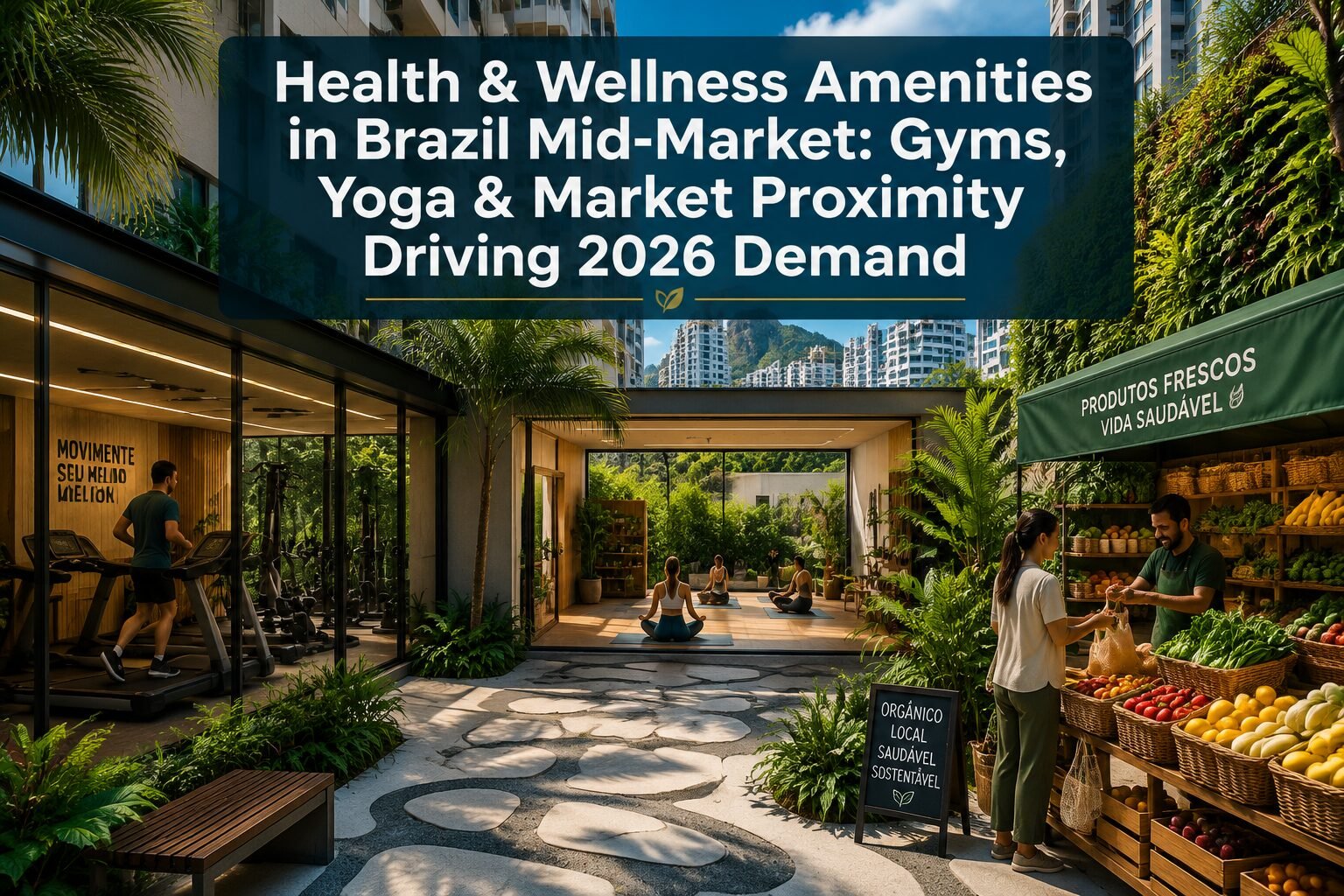
Brazil operates 45,000 fitness centers serving 9.1 million members — a scale that places it among the top five fitness markets in the world [3]. Yet the more consequential shift is not happening inside commercial gyms. It is happening inside residential buildings. Across São Paulo and Rio de Janeiro, mid-market developers are embedding gyms, yoga studios, and healthy food access directly into condominium projects, and buyers are paying measurable premiums for the privilege. The story of Health and Wellness Amenities in Brazil Mid-Market: Gyms, Yoga, and Market Proximity Driving 2026 Demand is ultimately a story about how post-pandemic priorities have permanently restructured what “affordable” housing must deliver.
Key Takeaways
- Wellness-integrated mid-market condominiums in São Paulo command a 10-15% price premium over standard units in the same zones [1].
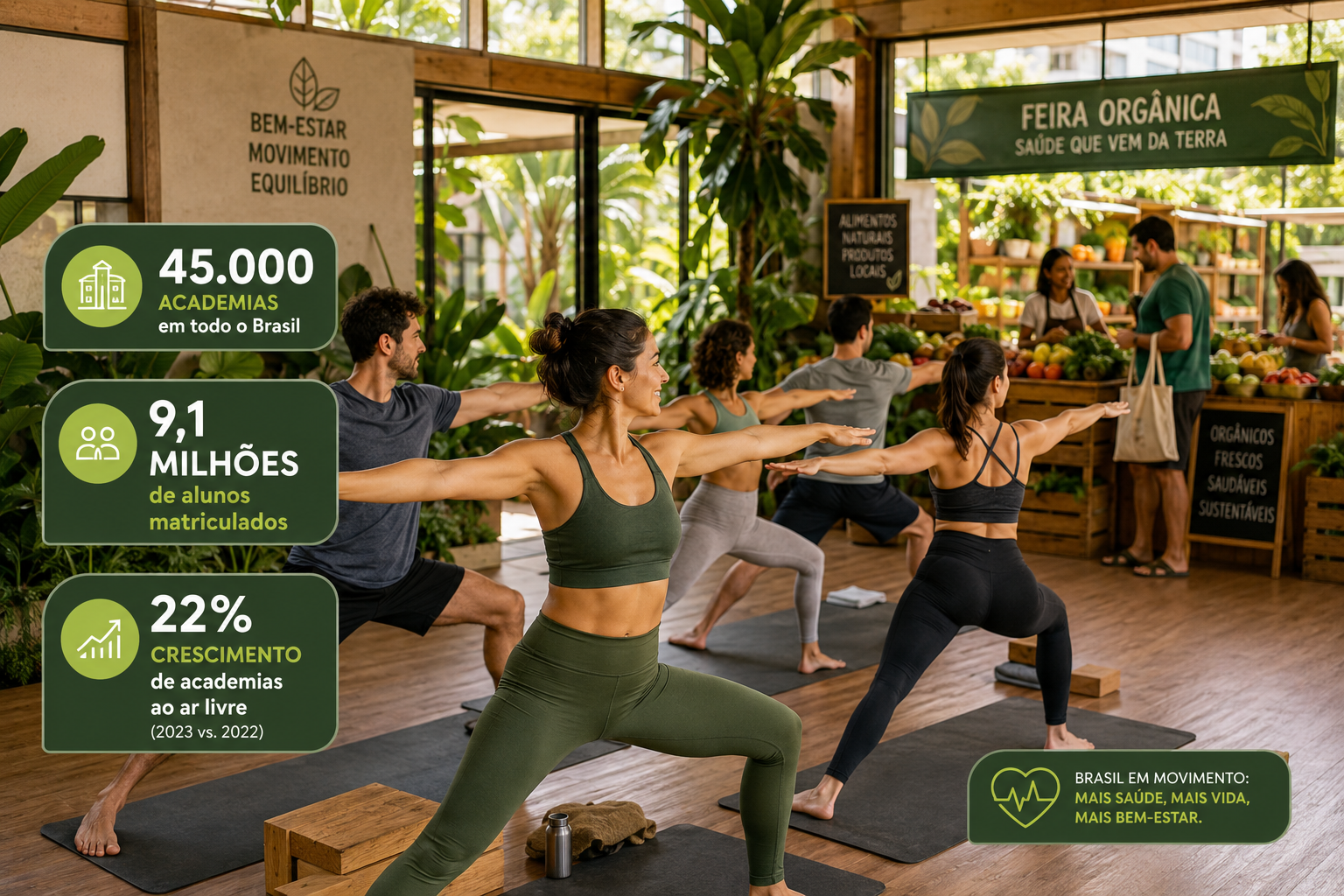
- Brazil’s fitness industry includes 45,000 facilities and 9.1 million members, creating strong cultural demand for on-site wellness access [3].
- Yoga and Pilates practice penetration has risen from roughly 2% to an estimated 4-6% of Brazil’s population, concentrated in urban centers [5].
- Specific amenities — gyms, yoga studios, rooftop gardens, and organic market proximity — each add measurable value to mid-market properties [2].
- Developers are using phased integration strategies to make wellness amenities financially viable in non-luxury projects [2].
The Global Wellness Real Estate Wave Reaches Brazil’s Mid-Market
The global wellness real estate sector reached $584 billion in 2024 and is projected to reach $1.1 trillion by 2029 [1]. Brazil is not a passive observer of this trend. Its two largest urban centers — São Paulo and Rio de Janeiro — are active participants, with developers recalibrating product offerings to meet a buyer population that emerged from the pandemic with fundamentally different expectations about home.
For years, wellness amenities were considered the exclusive domain of luxury towers. A rooftop pool, a spa, a private fitness center — these were differentiators for high-end projects targeting buyers with significant disposable income. The post-pandemic period changed that calculus. Prolonged lockdowns forced millions of Brazilians to confront the inadequacy of their living environments for physical and mental health. When restrictions lifted, the demand signal was clear: wellness features were no longer aspirational extras. They had become baseline requirements for a growing segment of mid-income buyers.
“Wellness amenities have migrated from luxury differentiators to mid-market essentials in less than five years.”
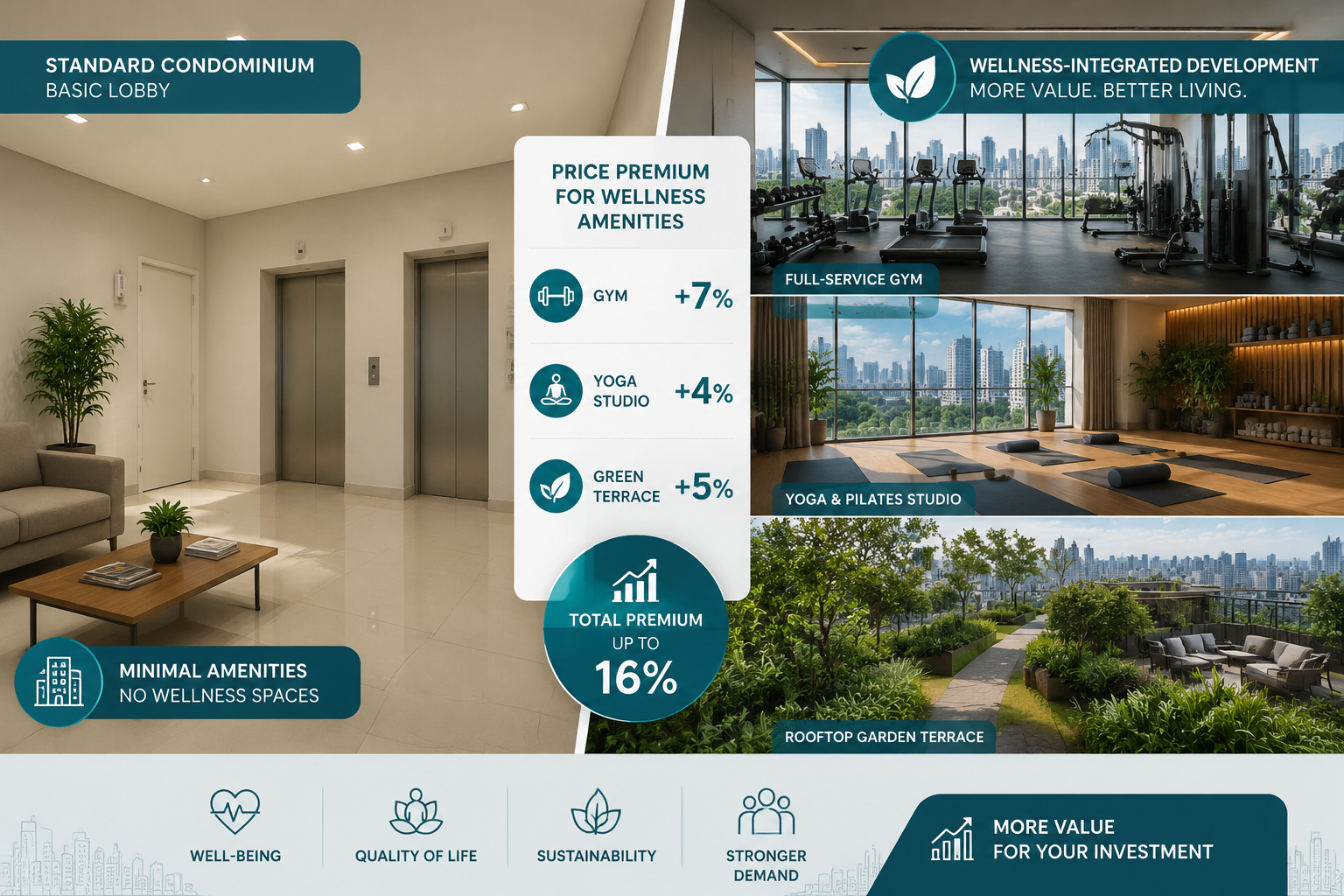
This shift is visible in the data. In São Paulo’s Zona Sul, standard condominiums average R$8,400 per square meter. Wellness-integrated condos in the same zone range from R$9,500 to R$9,800 per square meter — a premium of 10 to 15 percent [1]. That gap exists not because developers are charging more for the same product, but because buyers are demonstrably willing to pay more for a product that supports their daily wellness routines.
For investors and buyers evaluating the best places to invest in Brazil property, understanding which amenity combinations drive the strongest premiums is now a core part of due diligence.
Why Mid-Market, Why Now
The mid-market segment — broadly defined as developments targeting households earning between R$5,000 and R$15,000 per month — represents the largest addressable buyer pool in Brazilian urban real estate. Capturing even a fraction of that pool with a wellness-differentiated product creates significant competitive advantage.
Several converging factors make 2026 a pivotal year for this segment:
- Post-pandemic behavioral persistence: Wellness habits formed during lockdowns have proven durable. Home fitness equipment sales reached 2.1 million units in Brazil, and outdoor fitness facilities grew by 22% [3].
- Urbanization pressure: Density in São Paulo and Rio de Janeiro limits access to parks and public fitness infrastructure, making on-site amenities more valuable.
- Rising health consciousness: Yoga practice penetration climbed from approximately 2% of the population a decade ago to an estimated 4-6% in 2026, driven by urbanization and digital wellness content [5].
- Developer competition: As mid-market projects multiply, wellness amenities serve as meaningful differentiators in crowded submarkets.
Which Amenities Drive the Most Value in Mid-Market Developments
Not all wellness features are created equal in terms of return on investment. Developers operating in the mid-market segment must make careful decisions about which amenities to prioritize, because every square meter allocated to a gym or yoga studio is a square meter not allocated to sellable residential units.
Research on wellness-oriented residential developments in São Paulo and Rio de Janeiro identifies a clear hierarchy of value addition [1] [2]:
| Amenity | Estimated Value Addition |
|---|---|
| Full-service gym | 6-8% |
| Rooftop garden / green terrace | 4-6% |
| Dedicated yoga / Pilates studio | 3-5% |
| Sauna or recovery spa | 2-4% |
| On-site organic market or partnership | 2-3% |
The full-service gym remains the single highest-value amenity, which aligns with Brazil’s broader fitness culture. With 45,000 commercial fitness centers already operating nationally [3], Brazilian consumers have a well-established relationship with gym access. Bringing that access inside the building eliminates commute friction and positions the development as a time-saving, lifestyle-enhancing choice.
The dedicated yoga and Pilates studio deserves particular attention. Urban São Paulo and Rio de Janeiro have become key hubs for Pilates and yoga studios, with affluent and middle-income consumers increasingly seeking holistic wellness solutions [4]. A studio inside a mid-market condominium captures this demand at the point of residence, reducing the need for external memberships and adding a community dimension to wellness practice.
The Market Proximity Factor
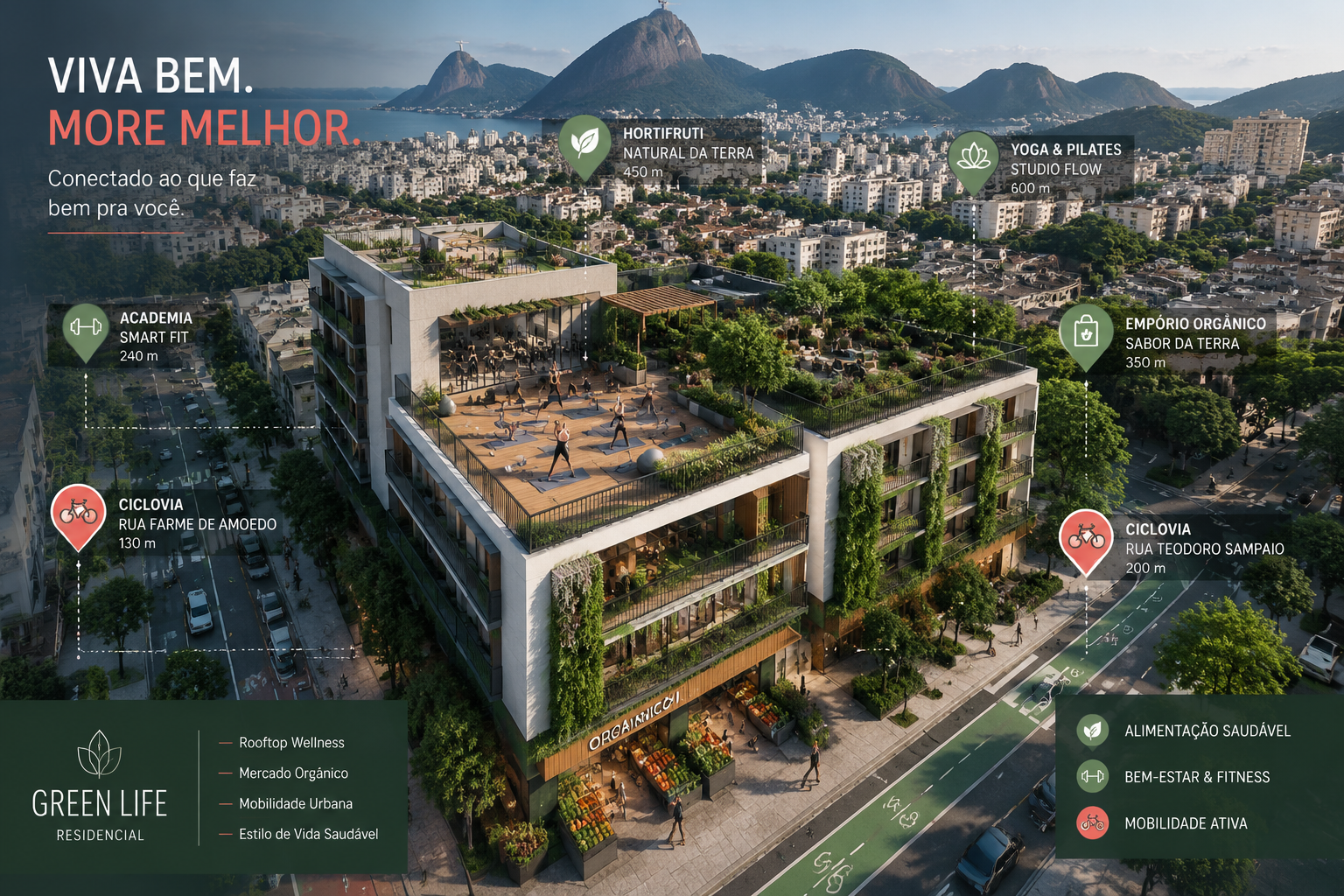
One of the more underappreciated drivers of wellness-related property value is proximity to healthy food retail. The “on-site organic market or partnership” category in the value table above reflects a broader consumer preference for frictionless access to nutritious food.
Developers are responding in two ways. Some are allocating ground-floor commercial space to health food retailers or organic market operators. Others are establishing formal partnerships with delivery services or weekly farmers market operators who use common areas. Both approaches add the 2-3% premium associated with healthy food proximity while generating ancillary income from commercial tenants [2].
This is particularly relevant for developments in neighborhoods where large supermarkets dominate and specialty health food options are sparse. In those contexts, on-site or adjacent market access becomes a genuine quality-of-life differentiator rather than a marketing talking point.
For buyers exploring life in Florianópolis and other Brazilian cities with strong wellness cultures, proximity to organic markets and health food infrastructure is already a standard evaluation criterion.
How Developers Are Integrating Health and Wellness Amenities in Brazil Mid-Market: Gyms, Yoga, and Market Proximity Driving 2026 Demand
The practical challenge for mid-market developers is financial viability. Luxury projects can absorb the cost of a fully equipped spa, a 500-square-meter fitness center, and a rooftop garden without materially affecting per-unit margins. Mid-market projects operate on tighter margins and must justify every amenity investment through measurable impact on absorption rates and sale prices.
The solution that has emerged is phased wellness integration [2]. Under this model, developers launch with core wellness amenities — typically a fitness center and a multipurpose room that can function as a yoga studio — and expand the offering over time as the community grows and revenue allows.
A typical phased approach looks like this:
Phase 1 (Launch):
- Equipped fitness center (200-300 sq meters)
- Multipurpose wellness room (yoga, Pilates, meditation)
- Basic outdoor green space
Phase 2 (Year 2-3):
- Expanded equipment and programming
- Sauna or recovery area
- Organic market partnership or farmers market activation
Phase 3 (Year 4+):
- Full wellness programming calendar
- Rooftop garden or green terrace
- Potential spa or treatment room
This staged approach allows developers to market wellness positioning from day one while managing capital expenditure responsibly. It also creates a compelling narrative for early buyers — they are investing in a community that will grow in amenity richness over time.
The Tramonto development and Solis development represent examples of how thoughtful amenity planning can be embedded into mid-market projects from the ground up, with wellness infrastructure designed into the building’s core rather than retrofitted as an afterthought.
Coastal Markets: A Distinct Wellness Dynamic
The wellness amenity conversation in Brazil is not limited to São Paulo and Rio de Janeiro. Coastal markets — particularly in the Northeast and in Santa Catarina — are developing their own wellness premium dynamics, driven by a different buyer profile: second-home purchasers and remote workers who prioritize lifestyle quality above all else [6].
In coastal developments, the wellness amenity mix shifts somewhat. Outdoor fitness infrastructure, surf and water sports access, and proximity to natural food markets carry more weight than indoor gym square footage. However, the underlying principle is the same: buyers are paying premiums for environments that support active, health-conscious lifestyles.
The growth of the Ingleses region in Florianópolis illustrates this dynamic clearly, with quality of life and wellness infrastructure cited as primary drivers of both population growth and property value appreciation in that coastal zone.
Investment Implications: Health and Wellness Amenities in Brazil Mid-Market: Gyms, Yoga, and Market Proximity Driving 2026 Demand
For property investors, the wellness amenity premium creates a straightforward value proposition: projects that integrate gyms, yoga spaces, and healthy food access command higher per-unit prices and, evidence suggests, faster absorption rates. Faster absorption reduces carrying costs and improves developer returns, which in turn supports the financial case for wellness investment in future projects — a reinforcing cycle.
Several investment implications follow from the data:
1. Amenity-driven premiums are durable. The 10-15% price premium observed in São Paulo’s Zona Sul is not a speculative bubble. It reflects a structural shift in buyer preferences that has persisted through multiple market cycles since 2020 [1].
2. Yoga and Pilates studios punch above their cost. A dedicated yoga studio requires relatively modest square footage and equipment investment compared to a full fitness center, yet it delivers a 3-5% value premium [2]. For mid-market developers managing tight budgets, this is an efficient allocation.
3. Market proximity is an underpriced differentiator. The 2-3% premium associated with organic market access is achievable through partnership arrangements that require minimal capital from the developer [2]. This is one of the highest-return wellness investments available in the mid-market segment.
4. Off-plan purchases in wellness-integrated projects offer compounding upside. Buyers who purchase during the pre-launch phase of a wellness-integrated development benefit from both the standard off-plan appreciation and the amenity premium as the project delivers. Understanding why off-plan purchases can amplify gains is essential context for evaluating these opportunities.
5. The mid-market segment has the most room to run. Luxury wellness real estate in Brazil is already well-developed. The mid-market segment is earlier in its wellness integration cycle, meaning the premium gap between standard and wellness-integrated projects is likely to widen before it narrows [7].
For investors tracking the Florianópolis real estate market outlook and similar high-growth urban markets, wellness amenity integration is one of the clearest signals of a development’s long-term value trajectory.
Risks and Considerations
No investment thesis is complete without acknowledging risks. Several factors could moderate the wellness premium in mid-market Brazilian real estate:
- Oversupply of wellness-branded projects: If every mid-market development claims wellness positioning, the differentiation value erodes. Quality of execution will matter more than marketing language.
- Maintenance cost burden: Fitness centers and yoga studios require ongoing maintenance, staffing, and equipment replacement. Poorly managed amenities can become liabilities rather than assets.
- Economic sensitivity: Mid-market buyers are more sensitive to interest rate cycles than luxury buyers. A sustained period of high Brazilian base rates (Selic) could compress demand across the segment regardless of amenity quality.
Careful project selection — focusing on developers with demonstrated operational track records — mitigates these risks substantially.
Conclusion
The integration of health and wellness amenities into Brazil’s mid-market residential developments is not a passing trend. It is a structural response to permanent changes in how urban Brazilians think about home, health, and daily quality of life. The data is unambiguous: gyms add 6-8% to property values, yoga studios add 3-5%, and healthy food proximity adds 2-3% — premiums that are meaningful in a competitive mid-market environment [1] [2].
For buyers, the actionable priority is identifying projects where wellness amenities are structurally embedded rather than cosmetically applied. Look for developments with dedicated studio space, properly equipped fitness centers, and either on-site market access or documented partnerships with health food operators.
For investors, the off-plan entry point in wellness-integrated mid-market projects offers the strongest risk-adjusted return profile, combining standard pre-delivery appreciation with the compounding effect of amenity premiums as the project matures.
For developers, the phased integration model provides a financially viable path to wellness positioning without sacrificing margin — and the competitive landscape in 2026 makes that positioning increasingly non-negotiable.
To explore specific developments that incorporate these wellness principles, review current Quadragon project listings or contact the team directly for guidance on wellness-integrated opportunities in Brazil’s most dynamic urban markets.
References
[1] Wellness Oriented Residential Developments 2026 Gyms Yoga Spaces And Green Amenities Boosting Mid Market Demand In Sp And Rj – https://quadragon.com.br/wellness-oriented-residential-developments-2026-gyms-yoga-spaces-and-green-amenities-boosting-mid-market-demand-in-sp-and-rj/?utm_source=openai
[2] Wellness Amenities In Mid Market Developments 2026 Integrating Gyms Yoga Spaces And Healthy Markets For Post Pandemic Buyer Premiums – https://quadragon.com.br/wellness-amenities-in-mid-market-developments-2026-integrating-gyms-yoga-spaces-and-healthy-markets-for-post-pandemic-buyer-premiums/?utm_source=openai
[3] Brazil Fitness Industry Statistics – https://worldmetrics.org/brazil-fitness-industry-statistics/?utm_source=openai
[4] Brazil Pilates And Yoga Studios Market – https://www.6wresearch.com/industry-report/brazil-pilates-and-yoga-studios-market?utm_source=openai
[5] Brazil Kw Yoga Mat 840 Market Analysis Forecast Size Trends And Insights – https://www.indexbox.io/store/brazil-kw-yoga-mat-840-market-analysis-forecast-size-trends-and-insights/?utm_source=openai
[6] Wellness Amenities Driving Coastal Property Premiums 2026 Gyms Yoga Studios And Healthy Food Proximity In Northeast Developments – https://quadragon.com.br/wellness-amenities-driving-coastal-property-premiums-2026-gyms-yoga-studios-and-healthy-food-proximity-in-northeast-developments/?utm_source=openai
[7] Wellness Focused Developments In Sao Paulo 2026 Gyms Yoga Spaces And Healthy Amenities Driving Premium Pricing – https://quadragon.com.br/wellness-focused-developments-in-sao-paulo-2026-gyms-yoga-spaces-and-healthy-amenities-driving-premium-pricing/?utm_source=openai