
How to Buy Property in Brazil for Foreigners: Complete 2025 Guide
Picture yourself waking up to the sound of waves crashing on pristine Brazilian beaches, or enjoying your morning coffee overlooking the vibrant streets of São Paulo. For many international investors and expatriates, owning property in Brazil isn’t just a dream—it’s an achievable reality. Understanding how to buy property in Brazil for foreigners opens doors to one of South America’s most dynamic real estate markets, offering everything from beachfront condos to urban investment opportunities.
Brazil welcomes foreign property buyers with surprisingly few restrictions compared to many other countries. Whether you’re seeking a vacation home, rental income property, or long-term investment, the Brazilian real estate market presents compelling opportunities for international buyers in 2025.
Key Takeaways
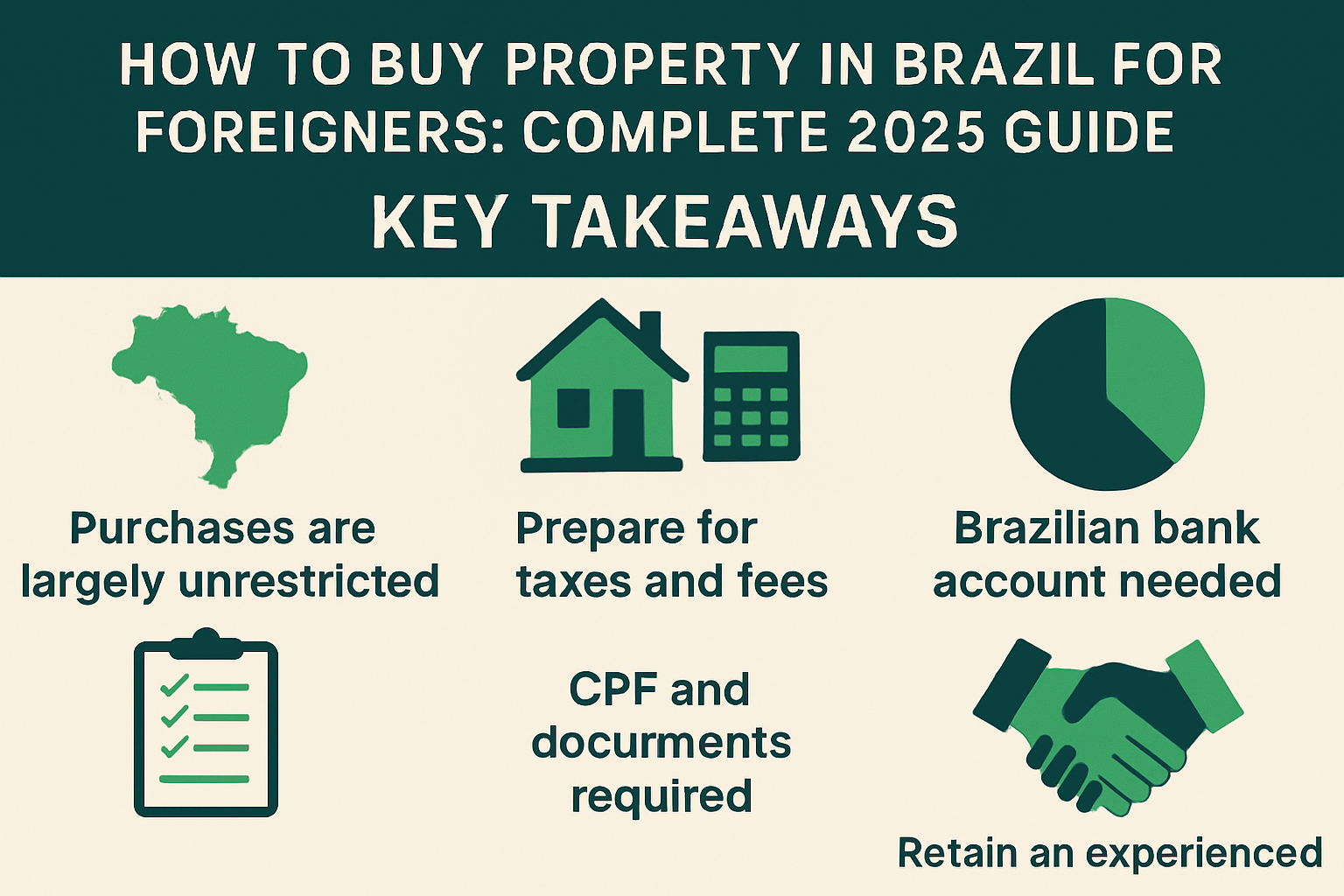
- 🏡 Foreigners can freely purchase property in Brazil with minimal restrictions, except for rural land and border areas
- 📋 Obtaining a CPF (tax identification number) is mandatory before any property transaction can be completed
- 💰 No special taxes apply to foreign buyers—the same rates apply to Brazilian citizens and international investors
- ⚖️ Hiring a qualified Brazilian real estate lawyer is essential to navigate legal requirements and protect your investment
- 🌊 Strategic locations like Florianópolis, Rio de Janeiro, and São Paulo offer the best combination of appreciation potential and rental yields
Understanding Property Ownership Rights for Foreigners in Brazil
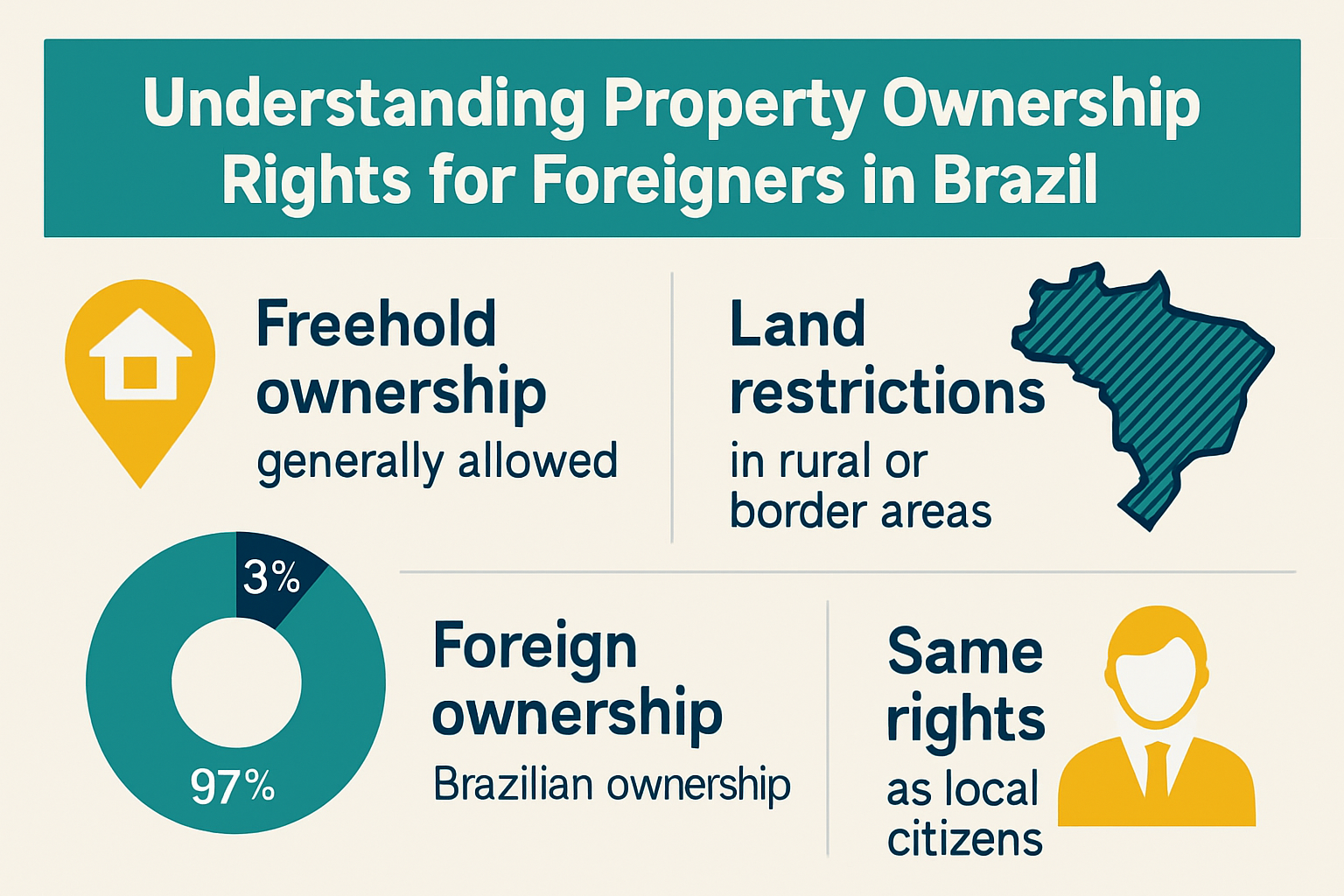
Brazil maintains one of the most open property markets for international buyers in Latin America. The Brazilian Constitution guarantees foreigners the same property rights as Brazilian citizens, with only a few specific exceptions that rarely affect typical residential buyers.
Legal Framework and Restrictions
Foreign individuals and companies can purchase Brazilian real estate without requiring residency or special permits. However, certain limitations exist:
Permitted Property Types:
- Residential apartments and houses
- Commercial properties
- Urban land
- Beachfront properties (with some restrictions)
Restricted Property Types:
- Rural properties larger than specific size limits
- Land within 150 kilometers of international borders
- Properties in certain environmentally protected areas
The Brazilian government implemented these restrictions primarily for national security and environmental protection purposes, not to discourage foreign investment [1]. For most international buyers interested in residential or commercial urban properties, these limitations pose no obstacles.
CPF: Your Gateway to Brazilian Property Ownership
The CPF (Cadastro de Pessoas Físicas) serves as Brazil’s tax identification number and represents the single most important requirement for foreign property buyers. Without a CPF, completing any real estate transaction becomes impossible.
How to Obtain a CPF:
- Visit the Brazilian Federal Revenue Service website or a Brazilian consulate
- Complete the application form with passport information
- Provide proof of address (can be from your home country)
- Pay the small processing fee
- Receive your CPF number (usually within 24-48 hours)
The CPF remains valid indefinitely and allows foreigners to engage in various financial activities beyond property purchases, including opening bank accounts and paying utilities [2].
Step-by-Step Process: How to Buy Property in Brazil for Foreigners
Navigating the Brazilian property market requires understanding local procedures and customs. Following these systematic steps ensures a smooth transaction and protects your investment.
Step 1: Define Your Investment Goals and Budget
Before exploring properties, clarify your objectives:
- Investment purpose: Vacation home, rental income, or capital appreciation?
- Location preferences: Beach, urban center, or emerging neighborhood?
- Budget considerations: Purchase price, taxes, maintenance, and renovation costs
- Timeline: Immediate occupancy or long-term investment?
Exploring the best places to invest in Brazil can help identify regions matching your investment criteria and financial goals.
Step 2: Assemble Your Professional Team
Essential professionals include:
| Professional | Role | Why You Need Them |
|---|---|---|
| Real Estate Lawyer | Legal review, contract preparation | Protects against fraud, ensures clean title |
| Real Estate Agent | Property search, negotiation | Local market knowledge, access to listings |
| Accountant | Tax planning, financial advice | Optimizes tax position, manages obligations |
| Currency Exchange Specialist | International transfers | Secures favorable exchange rates |
Working with experienced real estate developers who understand foreign buyer needs can significantly streamline the process, especially for new construction properties.
Step 3: Property Search and Selection
Brazil’s real estate market offers diverse options across price ranges and property types. Focus your search on:
Key Research Activities:
- Online property portals and developer websites
- In-person property visits (essential before purchase)
- Neighborhood exploration and infrastructure assessment
- Rental market analysis for investment properties
- Future development plans in the area
Cities like Florianópolis have experienced significant growth, with the real estate market showing strong performance in 2025, making them attractive for foreign investors.
Step 4: Due Diligence and Legal Verification
Critical checks your lawyer must perform:
✅ Title verification at the local property registry (Cartório de Registro de Imóveis)
✅ Outstanding debt confirmation (property taxes, condo fees, utilities)
✅ Building permits and compliance with local regulations
✅ Environmental clearances for certain property types
✅ Ownership history to identify potential disputes
Never skip this step. Brazilian property registries maintain comprehensive records, but only thorough verification prevents future legal complications [3].
Step 5: Making an Offer and Negotiating Terms
Brazilian real estate transactions typically involve:
Negotiation Process:
- Submit written offer through your agent or lawyer
- Negotiate price, payment terms, and conditions
- Agree on deposit amount (usually 10-30% of purchase price)
- Establish timeline for final payment and transfer
Payment structures often include:
- Immediate deposit upon offer acceptance
- Installment payments during construction (for new properties)
- Final payment at title transfer
Buying properties during the pre-construction phase can offer significant appreciation potential and flexible payment terms.
Step 6: Signing the Purchase Agreement
Brazil uses two primary contract types:
Promissory Purchase Agreement (Contrato de Promessa de Compra e Venda):
- Preliminary contract establishing terms
- Legally binding on both parties
- Includes deposit payment
- Sets timeline for final transfer
Final Deed of Sale (Escritura Pública):
- Executed before a notary public
- Transfers legal ownership
- Requires all parties or legal representatives present
- Must be registered at property registry
Both documents require careful review by your lawyer before signing. Ensure all terms match your understanding and verbal agreements.
Step 7: Transferring Funds to Brazil
International money transfers to Brazil require compliance with Central Bank regulations:
Transfer Requirements:
- Declare purpose as property purchase
- Provide CPF number and property details
- Use official exchange market (avoid informal channels)
- Maintain documentation for tax purposes
Best practices:
- Compare exchange rates from multiple providers
- Consider timing to optimize currency conversion
- Factor in transfer fees and bank charges
- Allow 3-5 business days for international transfers
Proper documentation of fund sources helps avoid future tax complications and demonstrates compliance with Brazilian regulations [4].
Step 8: Property Registration and Title Transfer
The final step involves registering the deed at the local Cartório de Registro de Imóveis (Property Registry Office):
Registration Process:
- Notary prepares final deed (Escritura Pública)
- All parties sign before notary
- Pay transfer taxes and registration fees
- Submit deed to property registry
- Registry reviews and records transfer
- Receive registered deed (usually 15-30 days)
Only after registration does legal ownership officially transfer. The registered deed serves as definitive proof of ownership.
Financial Considerations: Costs, Taxes, and Ongoing Expenses
Understanding the complete financial picture prevents surprises and enables accurate budgeting for Brazilian property ownership.
Upfront Costs and Fees
Initial expenses typically include:
| Cost Item | Typical Range | Notes |
|---|---|---|
| Property Price | Varies by location | Negotiable |
| Real Estate Agent Commission | 3-6% | Usually paid by seller |
| Legal Fees | 1-2% | Buyer’s responsibility |
| Notary Fees | 0.5-1% | Fixed by state government |
| Property Transfer Tax (ITBI) | 2-4% | Varies by municipality |
| Registration Fees | 0.5-1% | Based on property value |
Example calculation for a R$1,000,000 property:
- Transfer tax (ITBI): R$30,000 (3%)
- Legal fees: R$15,000 (1.5%)
- Notary fees: R$7,000 (0.7%)
- Registration: R$5,000 (0.5%)
- Total additional costs: R$57,000 (5.7%)
Ongoing Property Taxes and Expenses
Annual obligations include:
💰 IPTU (Property Tax): 0.5-1.5% of assessed value annually, paid to municipality
🏢 Condominium Fees: R$300-2,000+ monthly for apartments (includes maintenance, security, amenities)
⚡ Utilities: Electricity, water, gas, internet (similar to international standards)
🏠 Maintenance: 1-2% of property value annually for upkeep
🛡️ Insurance: Optional but recommended, especially for high-value properties
Tax Implications for Foreign Owners
Capital Gains Tax:
When selling property, capital gains face taxation at progressive rates (15-22.5%) on the profit. However, exemptions exist for:
- Primary residences sold below certain thresholds
- Reinvestment in another Brazilian property within 180 days
Rental Income Tax:
Foreign property owners must pay tax on rental income at rates of 15-27.5%, depending on annual income levels. Monthly tax declarations become mandatory for rental properties [5].
Inheritance and Estate Planning:
Brazilian inheritance laws follow civil law traditions, which may differ significantly from common law countries. Proper estate planning with qualified legal counsel ensures smooth property transfer to heirs.
Prime Locations: Where to Buy Property in Brazil
Brazil’s vast geography offers diverse investment opportunities, each with unique characteristics and potential returns.
Florianópolis: The Island Paradise
Known as “Floripa,” this island city combines natural beauty with modern infrastructure:
Investment highlights:
- Consistent property appreciation (8-12% annually in prime areas)
- Strong rental market driven by tourism and digital nomads
- High quality of life with excellent beaches and dining
- Growing tech sector attracting young professionals
The growth of regions like Ingleses in Florianópolis demonstrates the city’s expanding appeal and infrastructure development.
Popular neighborhoods:
- Jurerê Internacional: Luxury beachfront living
- Centro: Urban convenience and historic charm
- Lagoa da Conceição: Bohemian atmosphere with water sports
- Ingleses: Family-friendly with development potential
São Paulo: Urban Investment Powerhouse
Brazil’s economic capital offers commercial and residential opportunities:
Investment advantages:
- Largest rental market in Latin America
- Diverse property types from studios to penthouses
- Strong corporate rental demand
- Established infrastructure and services
Target areas:
- Jardins: Upscale residential with premium values
- Vila Madalena: Trendy neighborhood with cultural appeal
- Itaim Bibi: Business district with high rental yields
- Pinheiros: Mix of residential and commercial opportunities
Rio de Janeiro: Iconic Coastal Living
The “Marvelous City” combines tourism appeal with residential charm:
Market characteristics:
- International recognition drives demand
- Seasonal rental income from tourism
- Varied neighborhoods from beachfront to hillside
- Cultural amenities and entertainment options
Recommended zones:
- Ipanema/Leblon: Premium beachfront locations
- Copacabana: Tourist-friendly with rental potential
- Barra da Tijuca: Modern development with growth potential
- Botafogo: Emerging neighborhood with value opportunities
Emerging Markets Worth Watching
Other promising locations include:
🌴 Bahia (Salvador, Porto Seguro): Affordable beach properties with tourism growth
🏖️ Natal: Northeastern beaches with international airport access
🌳 Curitiba: Southern city with European influence and quality of life
🏔️ Gramado: Mountain resort town with rental income potential
Special Considerations for Foreign Buyers
Currency Exchange and Economic Factors
The Brazilian Real (BRL) experiences volatility against major currencies, creating both opportunities and risks:
Strategies to manage currency risk:
- Time purchases during favorable exchange rate periods
- Consider properties priced in USD (common in luxury segment)
- Use forward contracts to lock in exchange rates
- Diversify investment currency exposure
Brazil’s economy shows resilience and growth potential in 2025, with improving fiscal policies and infrastructure investment attracting international capital [6].
Residency and Visa Considerations
Property ownership does not automatically grant residency in Brazil. However, several visa options exist:
Relevant visa types:
- Investor Visa: Requires significant investment (minimum varies)
- Retirement Visa: For retirees with proven income
- Digital Nomad Visa: New option for remote workers
- Temporary Visa: For extended stays without residency
Consult Brazilian immigration authorities or specialized lawyers for current requirements and application procedures.
Property Management for Absentee Owners
Foreign owners living abroad should arrange professional property management:
Management services typically include:
- Tenant screening and lease administration
- Rent collection and financial reporting
- Maintenance coordination and emergency response
- Utility payment and tax compliance
- Regular property inspections
Management fees usually range from 8-12% of monthly rental income, providing peace of mind for international investors.
Language and Cultural Considerations
While Portuguese remains Brazil’s official language, major cities offer services in English and Spanish:
Practical tips:
- Hire bilingual professionals for legal and financial matters
- Learn basic Portuguese for daily interactions
- Understand Brazilian business culture (relationships matter)
- Be patient with bureaucratic processes
- Build local networks for support and advice
Investment Strategies for Maximum Returns
Buy During Pre-Construction Phase
Purchasing properties during the construction phase offers several advantages:
Benefits:
- Lower initial prices (10-30% below finished value)
- Flexible payment terms during construction
- Appreciation potential before completion
- Choice of best units and locations
- Modern amenities and design
Considerations:
- Construction delays possible
- Developer reputation critical
- Market conditions may change
- Requires patience (1-3 year timeline)
Reviewing project progress updates helps assess developer reliability and construction timelines.
Focus on Rental Income Properties
High-yield property types include:
📚 Student Housing: Near universities with consistent demand
🏖️ Vacation Rentals: Tourist areas with seasonal premium rates
🏢 Studio Apartments: Investing in studios in Florianópolis offers strong yields with lower entry costs
🏨 Short-term Rentals: Airbnb-style properties in prime locations
Diversification Across Regions
Spreading investments across multiple Brazilian cities reduces risk:
Diversification benefits:
- Protection against local market downturns
- Exposure to different economic drivers
- Currency risk mitigation
- Seasonal rental income balancing
Common Pitfalls and How to Avoid Them
Skipping Professional Legal Review
Never proceed without qualified legal counsel. Brazilian property law includes complexities that only experienced lawyers navigate effectively:
⚠️ Risks of DIY approach:
- Hidden liens or debts on property
- Fraudulent sellers or documentation
- Zoning violations or illegal construction
- Future legal disputes over ownership
Investment in legal fees (1-2% of purchase price) prevents potentially catastrophic losses.
Inadequate Due Diligence
Comprehensive property investigation must include:
- Physical inspection for structural issues
- Title search covering minimum 20 years
- Verification of all permits and licenses
- Neighborhood research and future development plans
- Rental market analysis for investment properties
Ignoring Total Cost of Ownership
Many buyers focus solely on purchase price while underestimating:
- Monthly condominium fees (can be substantial)
- Property tax increases over time
- Maintenance and repair costs
- Property management fees for rentals
- Vacancy periods between tenants
Create realistic financial projections including all expenses to assess true investment returns.
Currency Transfer Violations
Using informal channels or failing to properly document international transfers creates serious problems:
- Tax penalties and fines
- Difficulty proving legitimate fund sources
- Complications selling property later
- Potential criminal liability
Always use official banking channels and maintain complete documentation.
Financing Options for Foreign Buyers
Limited Mortgage Availability
Brazilian banks rarely offer mortgages to non-residents, making financing challenging:
Alternative financing strategies:
- Obtain financing in home country (home equity, personal loans)
- Developer payment plans for new construction
- Partner with Brazilian residents for joint purchases
- Use international private banking services
Developer Payment Plans
Many Brazilian developers offer attractive payment structures:
Typical terms:
- 10-30% down payment
- Monthly installments during construction
- Final payment at delivery (30-50% of total)
- Interest rates lower than traditional mortgages
Exploring current development projects reveals available payment options and terms.
Living in Brazil: Lifestyle Considerations
Quality of Life Factors
Brazil offers exceptional lifestyle benefits:
🌞 Climate: Tropical to subtropical with year-round warmth
🏖️ Beaches: World-class coastline spanning 7,500 kilometers
🎉 Culture: Vibrant festivals, music, and culinary traditions
🤝 People: Welcoming, friendly, and socially oriented
⚽ Recreation: Sports, outdoor activities, and entertainment
Understanding life in Florianópolis provides insights into daily living in one of Brazil’s most desirable cities.
Healthcare and Education
Healthcare system:
- Public system (SUS) available but often overcrowded
- Private health insurance recommended (affordable by international standards)
- Excellent private hospitals in major cities
- Growing medical tourism industry
Education options:
- International schools in major cities
- Brazilian public universities (free but competitive)
- Private universities with various specializations
- Growing English-language programs
Safety and Security
Realistic assessment:
- Crime rates vary significantly by city and neighborhood
- Gated communities and condos offer enhanced security
- Common-sense precautions essential
- Research specific areas thoroughly before purchasing
Invest in properties with proper security features: gated access, 24-hour security, surveillance systems, and secure parking.
Future Outlook: Brazilian Real Estate in 2025 and Beyond
Market Trends and Predictions
Brazil’s real estate market demonstrates strong fundamentals for continued growth:
Positive indicators:
- Growing middle class increasing housing demand
- Infrastructure investments improving connectivity
- Technology sector expansion creating employment
- International investor confidence returning
- Sustainable development practices gaining traction
Market analysis for Greater Florianópolis in 2025 shows promising trends that may extend to other Brazilian markets.
Technological Innovation in Real Estate
Emerging trends include:
💻 Digital transactions: Blockchain and smart contracts streamlining purchases
🏗️ Sustainable construction: Green building standards becoming mainstream
💰 Cryptocurrency payments: Crypto and real estate development creating new investment frontiers
📱 PropTech platforms: Technology improving property search and management
Government Policies Supporting Foreign Investment
Brazilian authorities recognize foreign investment importance:
- Streamlined registration processes
- Digital CPF applications
- Improved transparency in property registries
- Economic reforms attracting international capital
Conclusion: Your Path to Brazilian Property Ownership
Understanding how to buy property in Brazil for foreigners empowers international investors to capitalize on one of South America’s most promising real estate markets. While the process involves specific requirements and procedures, Brazil welcomes foreign buyers with minimal restrictions and offers diverse opportunities across price ranges and property types.
Essential steps for success:
- Obtain your CPF as the foundation for all transactions
- Assemble a qualified professional team including lawyer, agent, and accountant
- Conduct thorough due diligence on properties and locations
- Understand total costs beyond purchase price
- Comply with all legal requirements for fund transfers and registration
- Consider pre-construction opportunities for maximum appreciation potential
- Plan for property management if living abroad
The Brazilian real estate market offers compelling value compared to many international destinations, combining affordable prices with high quality of life, natural beauty, and growth potential. Whether seeking a vacation retreat, rental income property, or long-term investment, Brazil provides options for every investor profile.
Ready to Start Your Brazilian Property Journey?
Take action today by:
- Applying for your CPF through the Brazilian Federal Revenue Service
- Researching target locations that match your investment goals
- Connecting with experienced professionals who understand foreign buyer needs
- Exploring available properties from reputable developers
- Contacting real estate specialists for personalized guidance
The path to Brazilian property ownership begins with informed decision-making and proper preparation. With the right approach, knowledge, and professional support, foreign buyers can successfully navigate the process and secure their piece of this vibrant, dynamic country.
Brazil’s combination of natural beauty, economic potential, and welcoming attitude toward foreign investment creates an ideal environment for international property buyers. Start your journey today and discover why thousands of foreigners have already made Brazil their real estate investment destination of choice.
References
[1] Brazilian Constitution, Article 190 – Foreign Land Ownership Regulations, Federal Government of Brazil, 2025
[2] Federal Revenue Service of Brazil, “CPF Registration Guide for Foreign Citizens,” Official Government Portal, 2025
[3] National Association of Property Registrars (ANOREG), “Property Title Verification Procedures,” 2025
[4] Central Bank of Brazil, “International Transfer Regulations for Real Estate Transactions,” Circular 3,691, 2025
[5] Federal Revenue Service of Brazil, “Tax Guide for Non-Resident Property Owners,” 2025
[6] Brazilian Institute of Geography and Statistics (IBGE), “Real Estate Market Report 2025,” Economic Analysis Division