
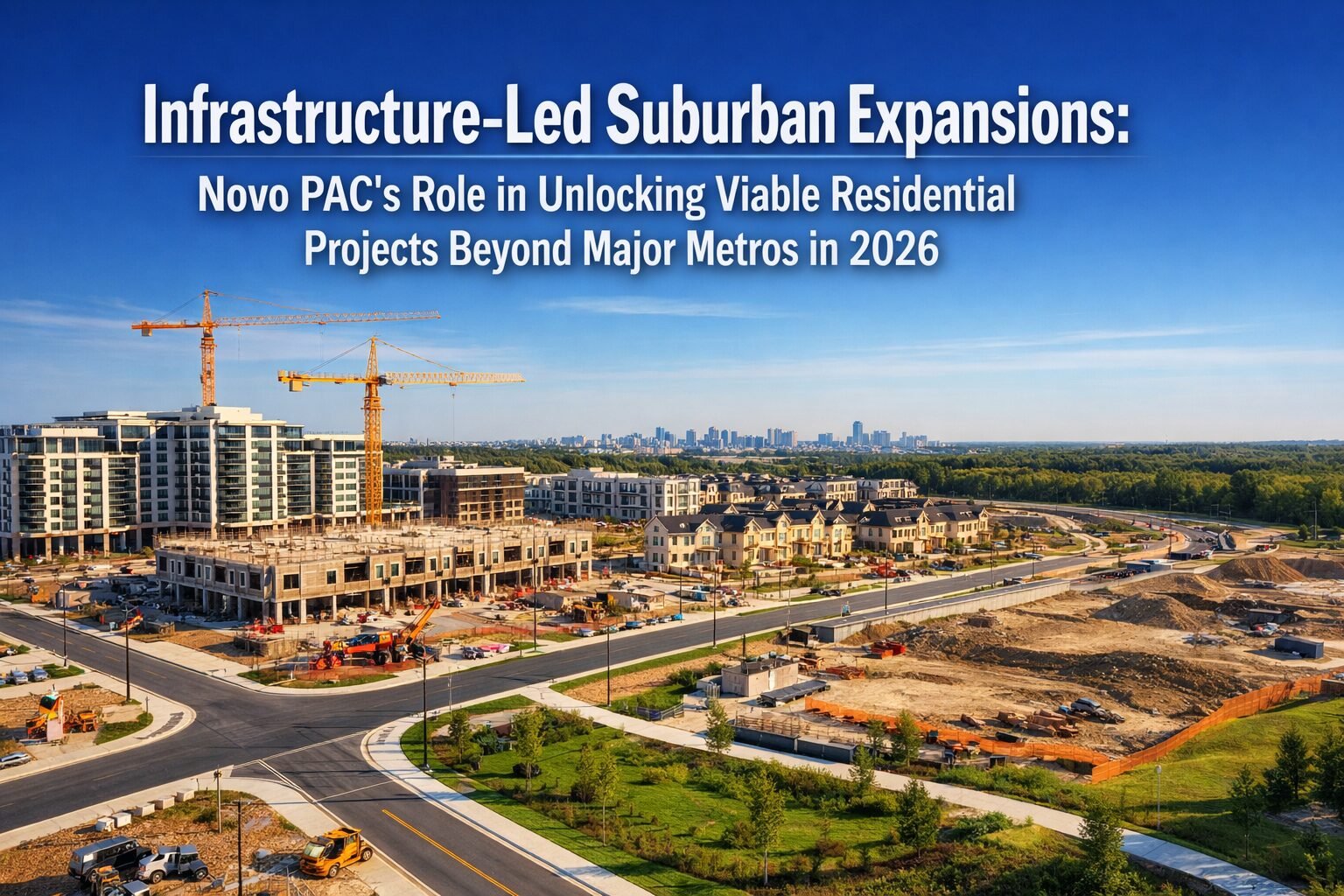
The Brazilian real estate landscape is experiencing a transformative shift in 2026, one that extends far beyond the traditional urban hotspots of São Paulo, Rio de Janeiro, and Brasília. While investors and developers have long focused on prime metropolitan areas, a new opportunity is emerging in previously overlooked suburban territories. Infrastructure-Led Suburban Expansions: Novo PAC’s Role in Unlocking Viable Residential Projects Beyond Major Metros in 2026 represents more than just a policy initiative—it’s reshaping how mid-tier developers approach residential projects, creating viable investment opportunities where infrastructure once posed insurmountable barriers.
The Novo PAC (Programa de Aceleração do Crescimento), Brazil’s revitalized growth acceleration program, is channeling billions of reais into infrastructure development that directly enables residential construction in underserved suburbs. This strategic investment is unlocking land parcels that were previously considered too risky or expensive to develop, creating a pipeline of mid-tier condominium projects with projected appreciation rates of 10-15% over the next three to five years.
Key Takeaways
- 💰 Novo PAC funding is reducing infrastructure costs for suburban developers by 25-40%, making previously unviable residential projects economically feasible in 2026
- 🏗️ Mid-tier condominium developments in underserved suburbs are projecting 10-15% appreciation rates, outpacing saturated urban core markets
- 🛣️ Strategic infrastructure investments in roads, utilities, and public transit are transforming suburban land values and development potential
- 📊 Cost mitigation strategies enabled by government programs are allowing developers to deliver affordable housing while maintaining healthy profit margins
- 🌆 Suburban expansion zones beyond major metros are becoming the new frontier for residential investment, supported by comprehensive infrastructure planning
Understanding Novo PAC’s Infrastructure Investment Strategy
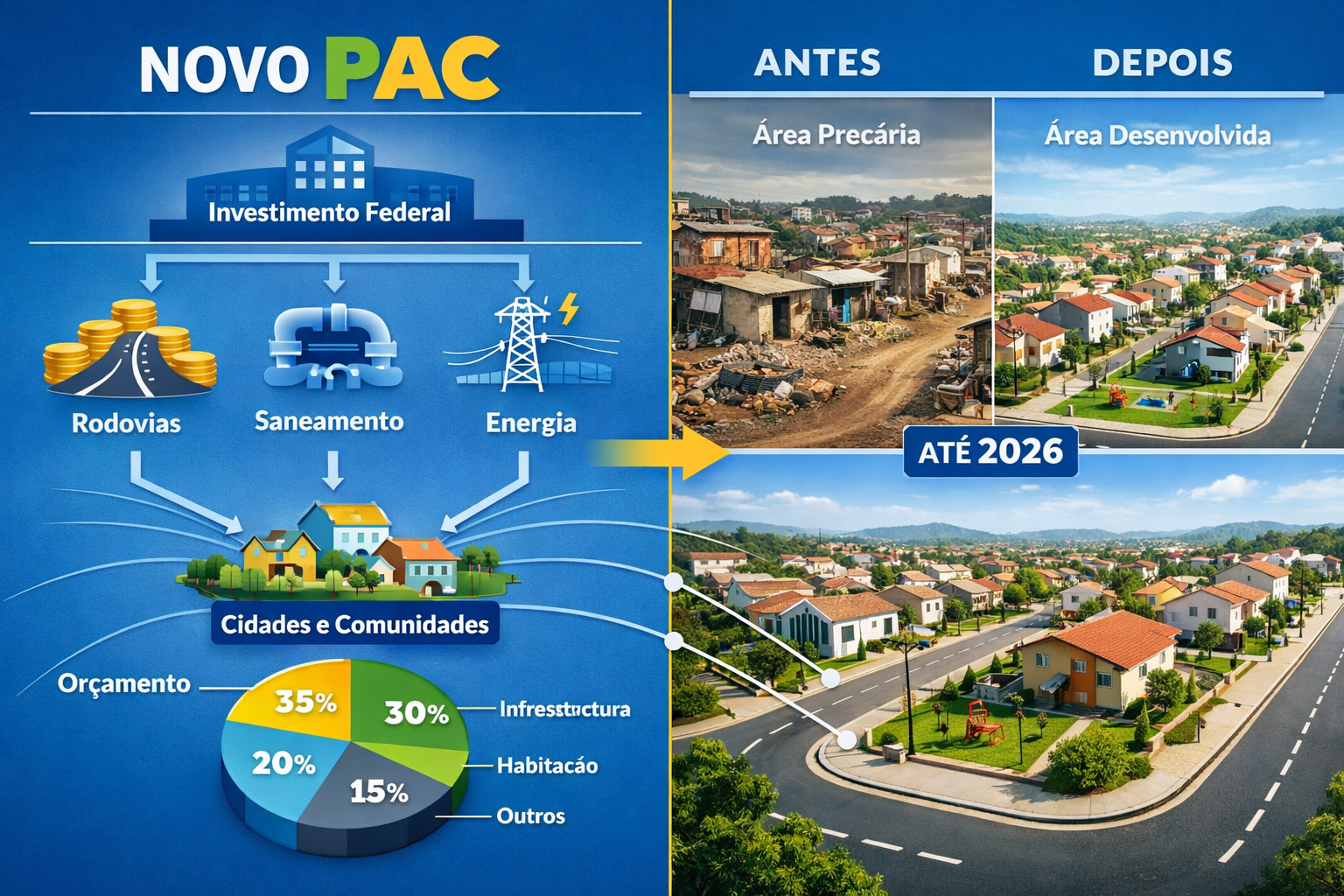
The Novo PAC program, launched with renewed vigor in recent years, represents Brazil’s commitment to addressing long-standing infrastructure deficits that have historically constrained economic development. In 2026, the program’s focus on suburban infrastructure is creating unprecedented opportunities for residential developers who understand how to leverage these investments.
What Makes Novo PAC Different in 2026
Unlike previous iterations of government infrastructure programs, the current Novo PAC framework emphasizes integrated development corridors that combine multiple infrastructure elements simultaneously. This approach includes:
- Road and highway expansions connecting suburban zones to metropolitan employment centers
- Water and sewage infrastructure that previously required developers to bear full installation costs
- Electrical grid modernization supporting higher-density residential development
- Public transportation extensions including bus rapid transit (BRT) systems and metro line expansions
- Digital infrastructure ensuring suburban areas have access to high-speed internet connectivity
The program’s strategic allocation prioritizes regions with high population growth potential but limited existing infrastructure—exactly the zones where mid-tier residential developers can achieve maximum impact. For those exploring opportunities in emerging Brazilian property markets, understanding Novo PAC’s investment map is essential.
Budget Allocation and Regional Focus
In 2026, Novo PAC has allocated approximately R$47 billion specifically for urban infrastructure projects that support residential development. The distribution prioritizes:
| Region Type | Budget Allocation | Primary Infrastructure Focus |
|---|---|---|
| Metropolitan Suburbs | 42% | Transit, utilities, roads |
| Secondary City Peripheries | 31% | Water, sewage, electricity |
| Emerging Growth Corridors | 18% | Highway access, digital infrastructure |
| Coastal Development Zones | 9% | Environmental protection + utilities |
This targeted approach ensures that infrastructure investments create maximum enabling effect for residential development, rather than spreading resources too thin across competing priorities.
How Infrastructure-Led Suburban Expansions Enable Viable Residential Projects
The connection between infrastructure investment and residential development viability is straightforward: infrastructure costs represent 15-30% of total development expenses for suburban projects. When government programs absorb these costs, the entire financial model transforms.
The Economics of Infrastructure Cost Mitigation
Traditional suburban development required developers to:
- Purchase raw land at relatively low prices
- Invest heavily in infrastructure (roads, utilities, drainage)
- Navigate lengthy approval processes for infrastructure permits
- Absorb carrying costs during extended development timelines
- Price units high enough to recover all costs plus profit margins
This model often resulted in final unit prices that exceeded market absorption capacity in suburban areas, killing projects before they launched. Novo PAC fundamentally changes this equation by removing or reducing steps 2-4.
Real Cost Savings for Developers
Based on analysis of mid-tier projects launched in 2026, infrastructure cost mitigation through Novo PAC creates savings of:
- R$45,000-R$75,000 per residential unit in water and sewage infrastructure
- R$25,000-R$40,000 per unit in road access and paving costs
- R$15,000-R$30,000 per unit in electrical grid connection expenses
- R$10,000-R$20,000 per unit in reduced carrying costs due to faster approvals
For a typical 200-unit mid-tier condominium development, these savings total R$19-33 million—enough to reduce unit prices by 12-18% while maintaining developer margins, or to enhance project quality while keeping prices competitive.
Similar dynamics are visible in established markets like Florianópolis, where infrastructure improvements are driving market growth.
Case Studies: Mid-Tier Condo Pipelines in Underserved Suburbs
The theoretical benefits of Infrastructure-Led Suburban Expansions: Novo PAC’s Role in Unlocking Viable Residential Projects Beyond Major Metros in 2026 become tangible when examining actual projects currently under development.
Case Study 1: Jardim Progresso Residential Complex (Greater São Paulo)
Location: Suburban corridor 35km from São Paulo city center
Project Size: 280 units across 4 mid-rise buildings
Target Market: Middle-income families and first-time buyers
Infrastructure Support: Novo PAC-funded road expansion, sewage treatment plant, and BRT extension
Cost Mitigation Achieved:
- Infrastructure savings: R$24.8 million (R$88,500 per unit)
- Approval timeline reduced from 18 months to 9 months
- Unit pricing: R$385,000 (15% below comparable urban projects)
Projected Appreciation: 12-14% over 36 months based on:
- Completion of BRT line (18 months)
- New commercial development following residential
- Population influx driving local service economy
The developer leveraged Novo PAC infrastructure to create a project that would have been financially impossible just three years ago. The combination of reduced development costs and improving location fundamentals creates a compelling value proposition for buyers and strong returns for investors.
Case Study 2: Vila Nova Horizonte (Greater Belo Horizonte)
Location: Previously isolated suburban zone 28km from city center
Project Size: 156 units in 2 mid-rise towers
Target Market: Young professionals seeking affordable homeownership
Infrastructure Support: Highway access improvements, water treatment facility, fiber optic network
Cost Mitigation Achieved:
- Infrastructure savings: R$16.2 million (R$103,800 per unit)
- Land acquisition cost: 40% below urban equivalent
- Total development cost per sqm: R$4,850 vs. R$7,200 urban average
Projected Appreciation: 10-13% over 48 months driven by:
- Highway completion reducing commute times by 35%
- Technology sector employment growth in corridor
- Limited competing supply in price range
This project demonstrates how strategic location selection in infrastructure-enabled zones can create opportunities that balance affordability with appreciation potential. The developer’s ability to offer quality units at accessible prices while maintaining healthy margins exemplifies the Novo PAC impact.
Case Study 3: Parque das Águas (Greater Florianópolis)
Location: Coastal suburban expansion zone
Project Size: 220 units with mixed typologies
Target Market: Second-home buyers and retirees
Infrastructure Support: Coastal road improvements, environmental infrastructure, utility upgrades
Cost Mitigation Achieved:
- Infrastructure savings: R$19.6 million (R$89,100 per unit)
- Environmental compliance costs shared with government
- Accelerated permitting through integrated planning
Projected Appreciation: 14-16% over 36 months based on:
- Coastal location premium
- Limited developable land in region
- Tourism and retirement migration trends
Developers working in regions like Florianópolis are seeing significant opportunities as infrastructure improvements unlock previously constrained markets.
Strategic Advantages of Infrastructure-Led Development in 2026
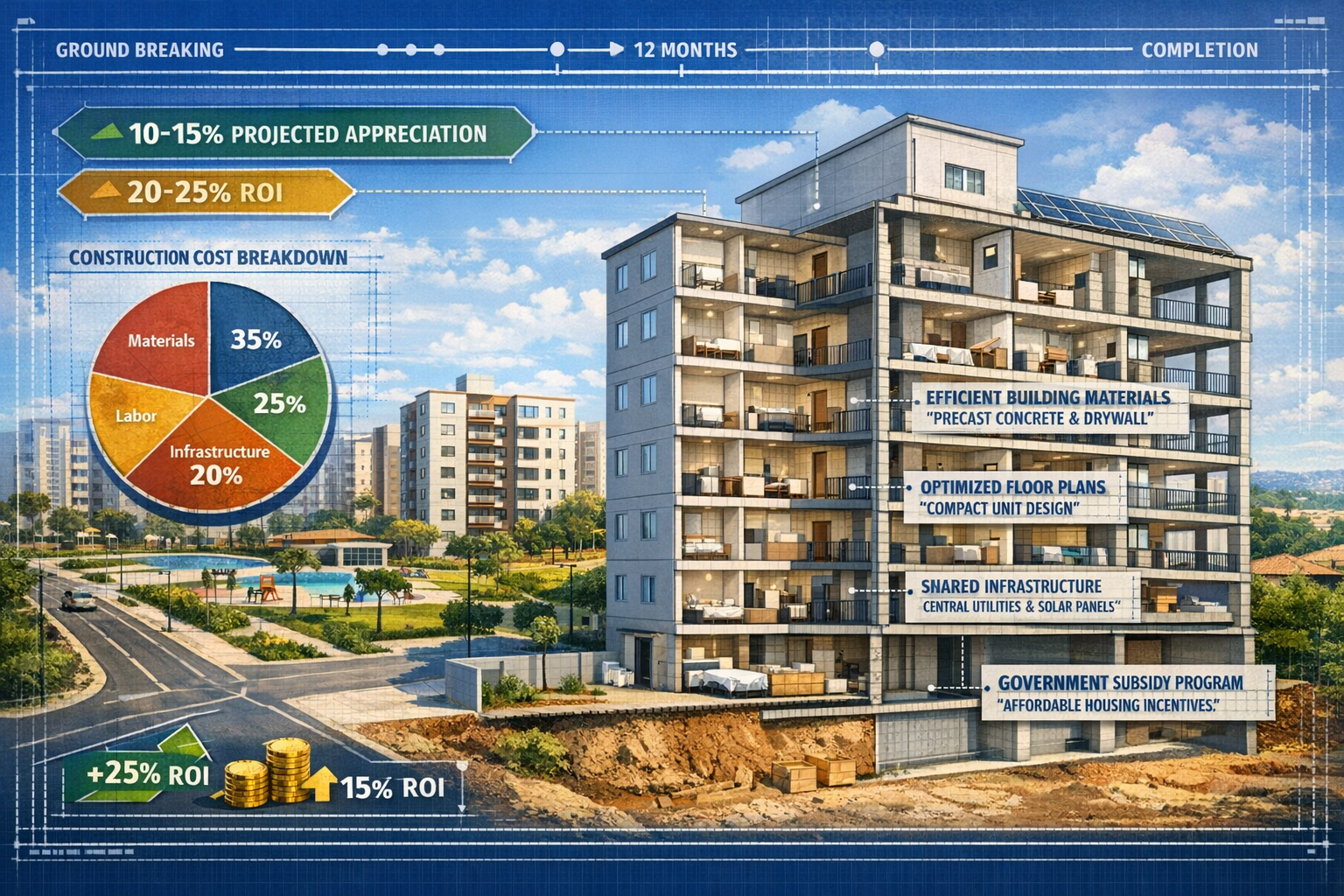
Beyond individual project economics, Infrastructure-Led Suburban Expansions: Novo PAC’s Role in Unlocking Viable Residential Projects Beyond Major Metros in 2026 creates systemic advantages for developers who position themselves strategically.
First-Mover Advantages in Newly Enabled Zones
Developers who identify infrastructure investment zones early can:
- Acquire land at pre-infrastructure prices before speculation drives values up
- Establish market presence before competition intensifies
- Influence local planning through early engagement with municipal authorities
- Capture pent-up demand from buyers priced out of urban markets
The window for these advantages typically lasts 18-36 months after infrastructure announcements but before project completions, making 2026 a critical year for strategic positioning.
Risk Mitigation Through Government Partnership
Projects aligned with Novo PAC infrastructure enjoy several risk-reduction benefits:
✅ Reduced infrastructure completion risk (government commitment vs. developer dependency)
✅ Enhanced permitting certainty (integrated planning processes)
✅ Political support (alignment with national development priorities)
✅ Improved financing terms (banks view government-supported infrastructure favorably)
✅ Market validation (infrastructure investment signals growth potential)
These factors collectively reduce the risk premium that typically affects suburban development, making projects more attractive to conservative investors and institutional capital.
Enhanced Value Propositions for End Buyers
Infrastructure-enabled suburban projects can offer compelling advantages to homebuyers:
- 30-40% lower prices compared to urban equivalents with similar quality
- Modern infrastructure (new systems vs. aging urban infrastructure)
- Improved quality of life (less congestion, more green space, newer amenities)
- Strong appreciation potential (early adoption in growth corridors)
- Government-backed infrastructure reliability (reduced service disruption concerns)
For developers, this translates to faster sales velocity and reduced inventory holding costs—critical factors in project profitability. Those interested in investment opportunities in growing markets should consider how infrastructure timing affects returns.
Implementation Strategies for Developers in 2026
Successfully capitalizing on Infrastructure-Led Suburban Expansions: Novo PAC’s Role in Unlocking Viable Residential Projects Beyond Major Metros in 2026 requires specific strategies and capabilities.
Infrastructure Investment Mapping and Site Selection
Effective developers are:
- Monitoring Novo PAC project announcements and budget allocations quarterly
- Analyzing infrastructure completion timelines to optimize project phasing
- Evaluating land parcels within 2-5km of planned infrastructure improvements
- Assessing local market absorption capacity for different price points
- Modeling appreciation scenarios based on infrastructure completion milestones
The most successful projects align land acquisition timing with infrastructure planning phases, purchasing before public announcements but after sufficient due diligence confirms government commitment.
Project Design Optimization for Suburban Markets
Mid-tier suburban developments require different design approaches than urban projects:
Unit Mix Considerations:
- Larger average unit sizes (75-95 sqm vs. 55-75 sqm urban)
- Higher proportion of 2-3 bedroom units
- Ground-floor units with private outdoor space
- Parking ratios of 1.5-2.0 spaces per unit
Amenity Priorities:
- Family-focused facilities (playgrounds, sports courts, event spaces)
- Security features (gated access, surveillance, controlled entry)
- Green spaces and outdoor areas (gardens, walking paths)
- Practical amenities (bicycle storage, package rooms, pet areas)
Construction Efficiency:
- Standardized floor plans reducing construction complexity
- Materials balancing quality with cost efficiency
- Construction methods optimized for suburban site conditions
- Phasing strategies allowing progressive delivery
These design choices ensure projects meet market expectations while maintaining cost discipline enabled by infrastructure savings.
Financial Structuring and Capital Partnerships
Infrastructure-enabled suburban projects often attract different capital sources:
- Regional banks seeking exposure to government-supported growth corridors
- Pension funds attracted by stable, moderate-return profiles
- Family offices pursuing diversification beyond saturated urban markets
- Impact investors supporting affordable housing creation
- Crowdfunding platforms offering retail investors access to real estate development
The reduced risk profile from government infrastructure support makes these projects particularly suitable for conservative capital seeking real estate exposure with manageable risk levels.
Developers exploring innovative financing approaches can combine traditional structures with emerging models to optimize capital efficiency.
Market Dynamics and Appreciation Drivers
Understanding the 10-15% projected appreciation for infrastructure-enabled suburban projects requires examining the underlying market dynamics.
Supply-Demand Imbalances in Suburban Markets
Brazilian metropolitan areas face significant housing shortages, with demand particularly acute in the R$300,000-R$600,000 price range where middle-income families seek homeownership. Urban land scarcity and high development costs push new supply toward higher price points, creating persistent undersupply in this segment.
Suburban projects enabled by Novo PAC infrastructure can profitably serve this underserved market segment, creating strong absorption dynamics:
- Sales velocities of 8-15 units per month (vs. 3-6 for urban projects)
- Pre-sales rates exceeding 40% before construction completion
- Price escalation of 2-4% annually during construction phase
- Post-delivery appreciation of 6-11% as infrastructure completes
Infrastructure Completion Catalysts
Appreciation projections for suburban projects are closely tied to infrastructure completion milestones:
Phase 1 – Announcement Effect (Months 0-6):
- Land values increase 15-25%
- Developer interest intensifies
- Minimal impact on existing property values
Phase 2 – Construction Visible (Months 6-18):
- Residential project launches accelerate
- Early buyer interest from value-seekers
- Property values increase 5-8%
Phase 3 – Infrastructure Operational (Months 18-36):
- Dramatic improvement in location desirability
- Commercial development follows residential
- Property values increase 10-18%
- Rental markets strengthen
Phase 4 – Mature Development (Months 36+):
- Full integration with metropolitan economy
- Stabilized appreciation at 4-7% annually
- Secondary market liquidity improves
Projects timed to deliver units during Phase 2-3 transition capture maximum appreciation potential for buyers while ensuring developer exit before market saturation.
Demographic and Migration Trends
Several demographic factors support suburban expansion in 2026:
🏡 Remote work normalization reducing daily commute requirements
👨👩👧👦 Family formation among millennials seeking space and affordability
💼 Job decentralization as employers establish suburban offices
🎓 Educational infrastructure following residential development
🏥 Healthcare facilities expanding to serve growing suburban populations
These trends create sustainable demand rather than speculative bubbles, supporting long-term value appreciation.
Markets like Florianópolis demonstrate how demographic shifts drive real estate performance, with infrastructure enabling these natural market forces.
Challenges and Risk Considerations
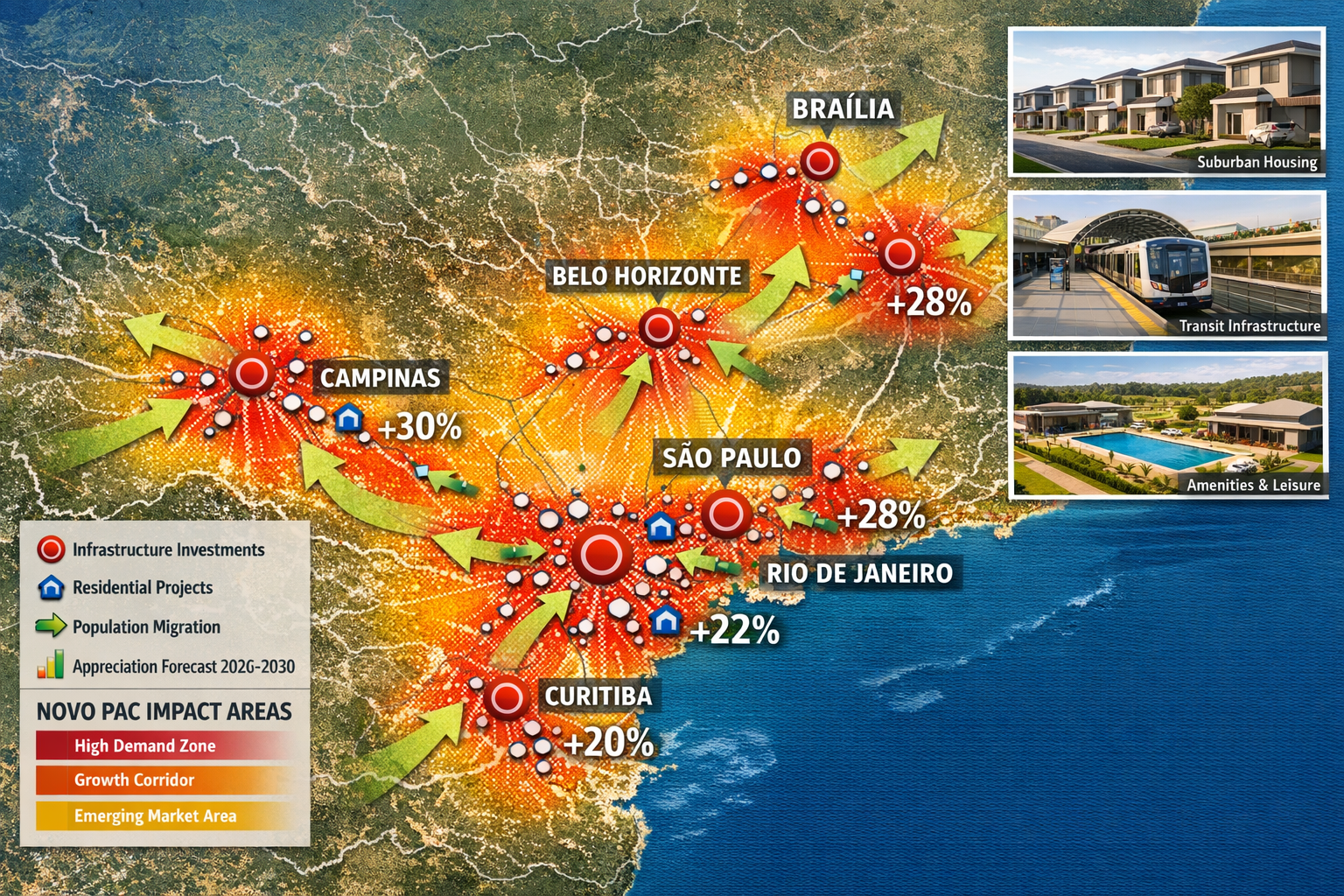
While Infrastructure-Led Suburban Expansions: Novo PAC’s Role in Unlocking Viable Residential Projects Beyond Major Metros in 2026 creates significant opportunities, developers must navigate several challenges.
Infrastructure Delivery Timing Risks
Government infrastructure projects sometimes experience:
- Budget delays affecting completion timelines
- Political changes altering program priorities
- Technical complications extending construction periods
- Contractor performance issues causing schedule slippage
Mitigation Strategies:
- Structure projects to deliver value even with infrastructure delays
- Diversify across multiple infrastructure-dependent locations
- Maintain contingency budgets for extended timelines
- Establish direct communication channels with infrastructure agencies
- Include timeline flexibility in buyer contracts and marketing materials
Market Absorption Capacity
Suburban markets have lower absolute absorption capacity than urban cores, requiring careful project sizing:
- Projects exceeding local absorption can face extended sales periods
- Oversupply can depress prices and appreciation potential
- Competition from multiple developers can saturate markets quickly
Mitigation Strategies:
- Conduct thorough market studies before project sizing
- Phase developments to match absorption rates
- Differentiate through design, amenities, or pricing strategies
- Maintain flexibility to adjust unit mix during sales period
Regulatory and Approval Complexity
Suburban development often involves:
- Multiple jurisdictional authorities
- Environmental compliance requirements
- Infrastructure connection approvals
- Zoning modifications or variances
Mitigation Strategies:
- Engage experienced local legal and regulatory consultants
- Begin approval processes early in project timeline
- Maintain positive relationships with municipal authorities
- Align projects with local master plans and development priorities
Future Outlook: Beyond 2026
The infrastructure-led suburban expansion model pioneered through Novo PAC in 2026 represents a fundamental shift in Brazilian residential development patterns with implications extending well into the next decade.
Program Evolution and Expansion
Government officials have indicated that Novo PAC’s success in enabling residential development will likely lead to:
- Increased budget allocations for suburban infrastructure in 2027-2028
- Geographic expansion to secondary and tertiary cities
- Enhanced coordination between federal, state, and municipal infrastructure planning
- Private sector partnership models allowing developer co-investment in infrastructure
These evolutions will create additional opportunities for developers who establish capabilities and track records in infrastructure-enabled suburban development.
Market Maturation and Sophistication
As the suburban development model matures, expect:
- Institutional capital increasing allocation to suburban residential projects
- Specialized developers emerging focused on infrastructure-enabled markets
- Design innovation optimizing suburban living experiences
- Technology integration enhancing suburban lifestyle appeal
- Mixed-use development creating complete suburban communities
Early movers in 2026 will be best positioned to capitalize on these market evolution trends.
Sustainability and Long-Term Value Creation
The most successful suburban developments will increasingly emphasize:
- Environmental sustainability (green building, renewable energy, water conservation)
- Social infrastructure (schools, healthcare, community facilities)
- Economic diversity (commercial spaces, employment centers, entrepreneurship support)
- Transit orientation (walkability, public transportation access, bicycle infrastructure)
These factors will differentiate projects that deliver lasting value from those that simply capitalize on short-term infrastructure arbitrage.
Conclusion
Infrastructure-Led Suburban Expansions: Novo PAC’s Role in Unlocking Viable Residential Projects Beyond Major Metros in 2026 represents a transformative opportunity for developers, investors, and homebuyers willing to look beyond traditional urban hotspots. The strategic alignment of government infrastructure investment with residential development needs is creating a new generation of viable suburban projects that balance affordability with quality and appreciation potential.
The case studies examined demonstrate that mid-tier condominium developments in infrastructure-enabled suburban zones can achieve:
✅ 25-40% cost reductions through infrastructure cost mitigation
✅ 10-15% appreciation projections over 3-5 years
✅ Strong sales velocity serving underserved market segments
✅ Reduced development risk through government partnership
✅ Enhanced buyer value propositions combining affordability and quality
For developers, the strategic imperative is clear: identify infrastructure investment zones early, optimize project design for suburban markets, structure financing to leverage government support, and execute with timing that captures maximum appreciation potential.
For investors, infrastructure-enabled suburban projects offer compelling risk-adjusted returns with lower entry costs than saturated urban markets and appreciation drivers tied to tangible infrastructure completion rather than speculation.
For homebuyers, these developments provide accessible pathways to homeownership in well-planned communities with modern infrastructure and strong appreciation potential.
Actionable Next Steps
For Developers:
- Map Novo PAC infrastructure investments in target metropolitan regions
- Conduct site selection analysis for land parcels near planned infrastructure
- Develop relationships with infrastructure agencies and municipal authorities
- Create project concepts optimized for suburban market dynamics
- Structure financing partnerships leveraging infrastructure-enabled risk reduction
For Investors:
- Research infrastructure-enabled suburban markets in growth corridors
- Evaluate developer track records in suburban project execution
- Analyze infrastructure completion timelines and appreciation catalysts
- Diversify across multiple suburban zones to manage timing risks
- Consider both development equity and pre-construction unit purchases
For Homebuyers:
- Identify suburban zones with confirmed Novo PAC infrastructure investments
- Compare value propositions between urban and suburban options
- Evaluate infrastructure completion timelines relative to occupancy needs
- Assess developer credibility and project execution capabilities
- Consider early purchase to capture maximum appreciation potential
The suburban expansion enabled by strategic infrastructure investment is not a temporary phenomenon but a fundamental reshaping of Brazilian residential markets. Those who recognize this shift early and position themselves strategically will capture the greatest benefits as underserved suburbs transform into thriving residential communities.
The opportunity is clear, the infrastructure is being built, and the projects are launching. The question is not whether infrastructure-led suburban expansion will succeed, but who will be positioned to benefit most from this transformative market dynamic in 2026 and beyond.
For more insights into emerging opportunities in Brazilian real estate markets, explore our coverage of high-growth regions and market performance trends.