
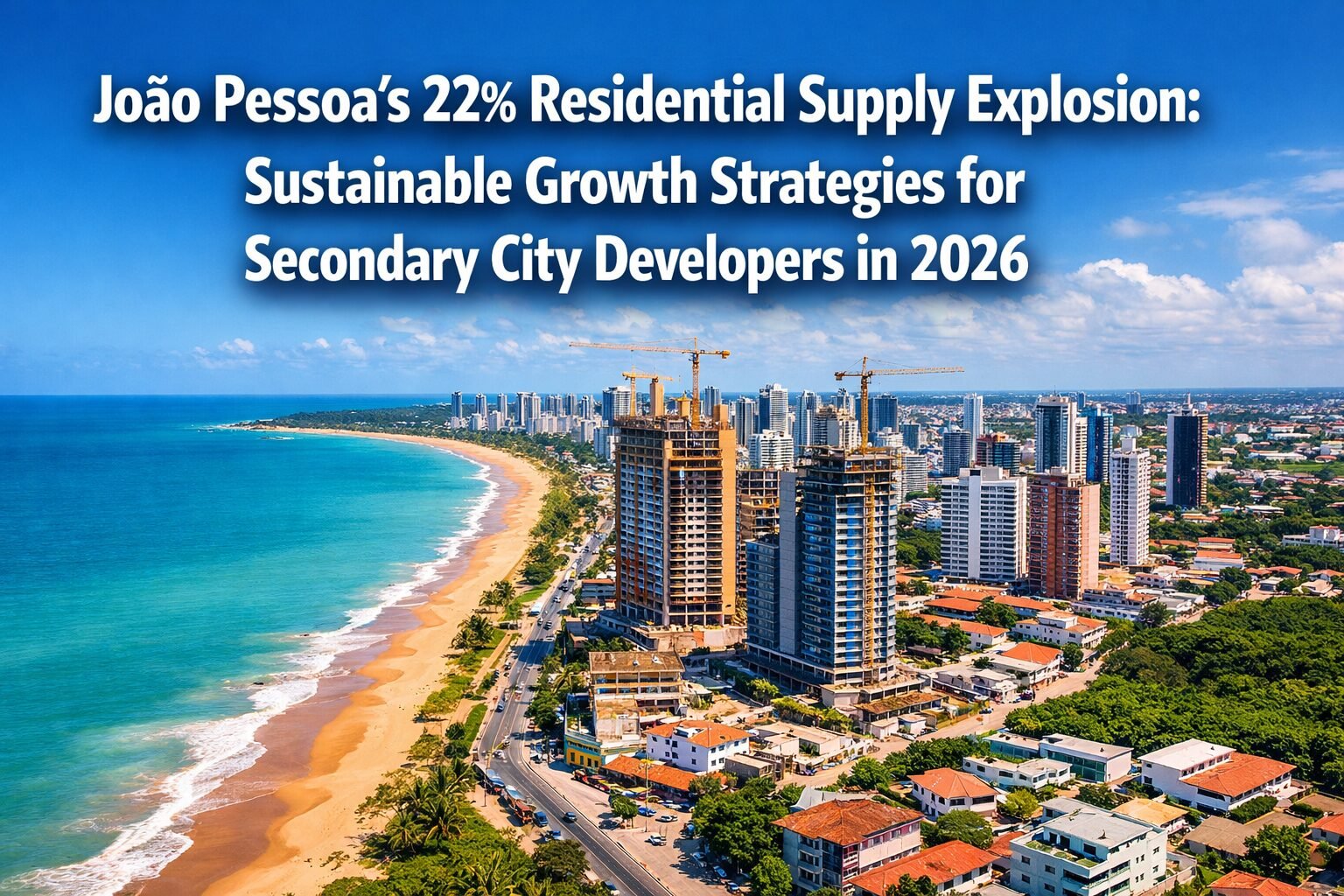
The Brazilian real estate landscape is experiencing a dramatic shift in 2026, and nowhere is this transformation more evident than in João Pessoa, the capital of Paraíba state. While major metropolitan areas like São Paulo and Rio de Janeiro grapple with market saturation and sky-high land costs, this northeastern coastal gem has emerged as a beacon of opportunity for savvy developers. João Pessoa’s 22% Residential Supply Explosion: Sustainable Growth Strategies for Secondary City Developers in 2026 represents more than just impressive statistics—it signals a fundamental rebalancing of Brazil’s urban development priorities toward quality of life, infrastructure modernization, and sustainable growth patterns.
This remarkable surge in residential development stems from a perfect convergence of factors: strategic urban planning policies, infrastructure investments, growing demand from second-home buyers and retirees, and innovative fiscal management partnerships. As developers increasingly recognize the limitations of oversaturated primary markets, João Pessoa offers a compelling blueprint for profitable, sustainable expansion in Brazil’s secondary cities.
Key Takeaways
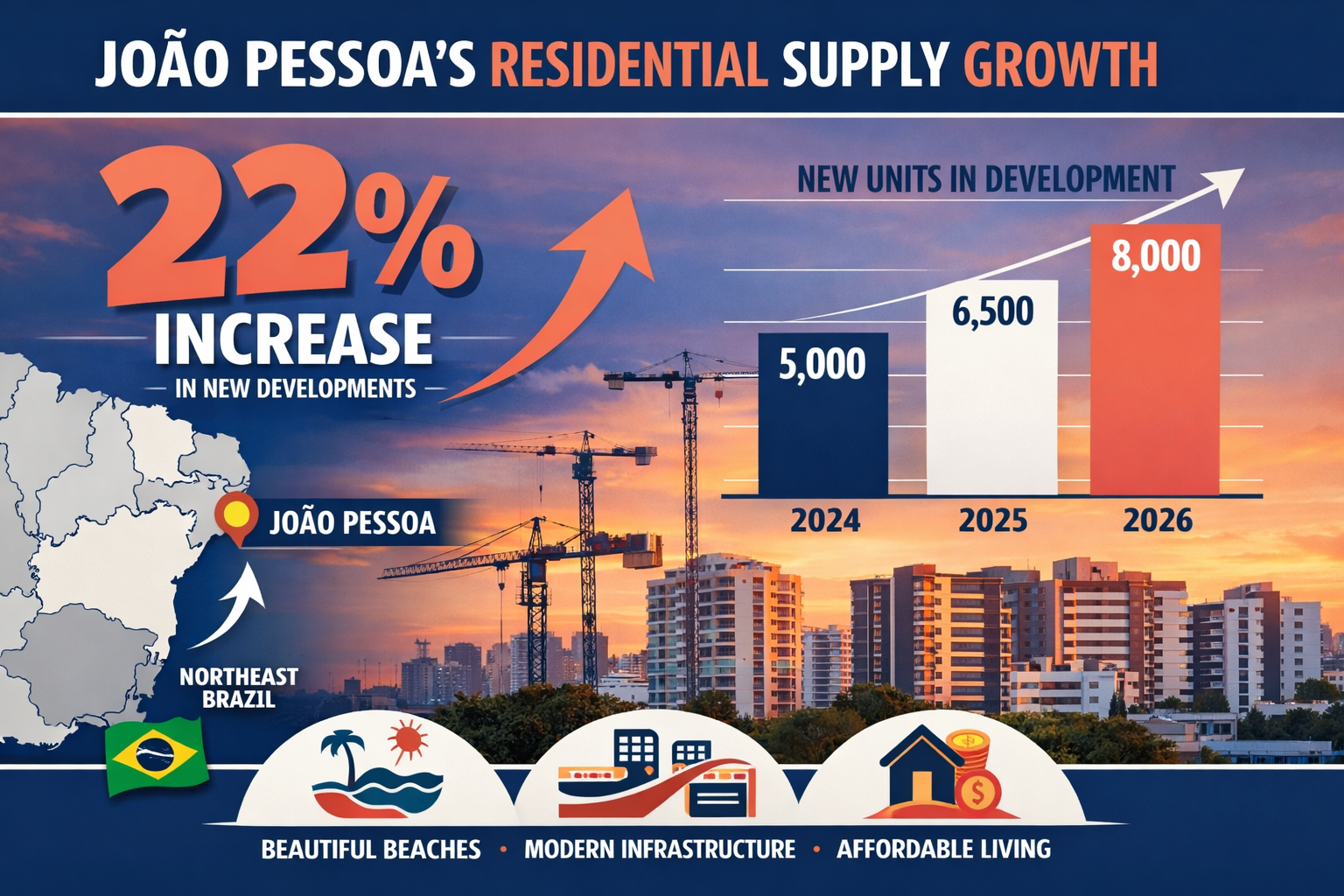
- 🏗️ João Pessoa experienced a 22% increase in residential supply between 2024 and 2026, driven by quality-of-life appeal and strategic infrastructure development
- 📊 Nearly 90,000 properties were identified with significant discrepancies in municipal records, presenting opportunities for developers through improved fiscal management and urban planning coordination
- 🌊 Strategic coastal protection policies have channeled development into inland corridors, creating high-density vertical developments that maximize land efficiency while preserving environmental assets
- 💡 Secondary city markets offer superior risk-adjusted returns compared to saturated capital markets, with lower land acquisition costs and untapped demand from retirement and second-home segments
- 🤝 Public-private partnerships and IDB-backed modernization initiatives are creating transparent, predictable regulatory environments that reduce developer risk and accelerate project approvals
Understanding João Pessoa’s Residential Market Transformation
The 22% Supply Surge: Breaking Down the Numbers
João Pessoa’s residential real estate market has undergone a remarkable transformation that sets it apart from Brazil’s traditional development hubs. The 22% increase in residential supply represents thousands of new units entering a market that was previously underserved relative to its demographic and economic potential. This growth trajectory stands in stark contrast to the modest single-digit expansion rates seen in saturated markets like São Paulo’s established neighborhoods.
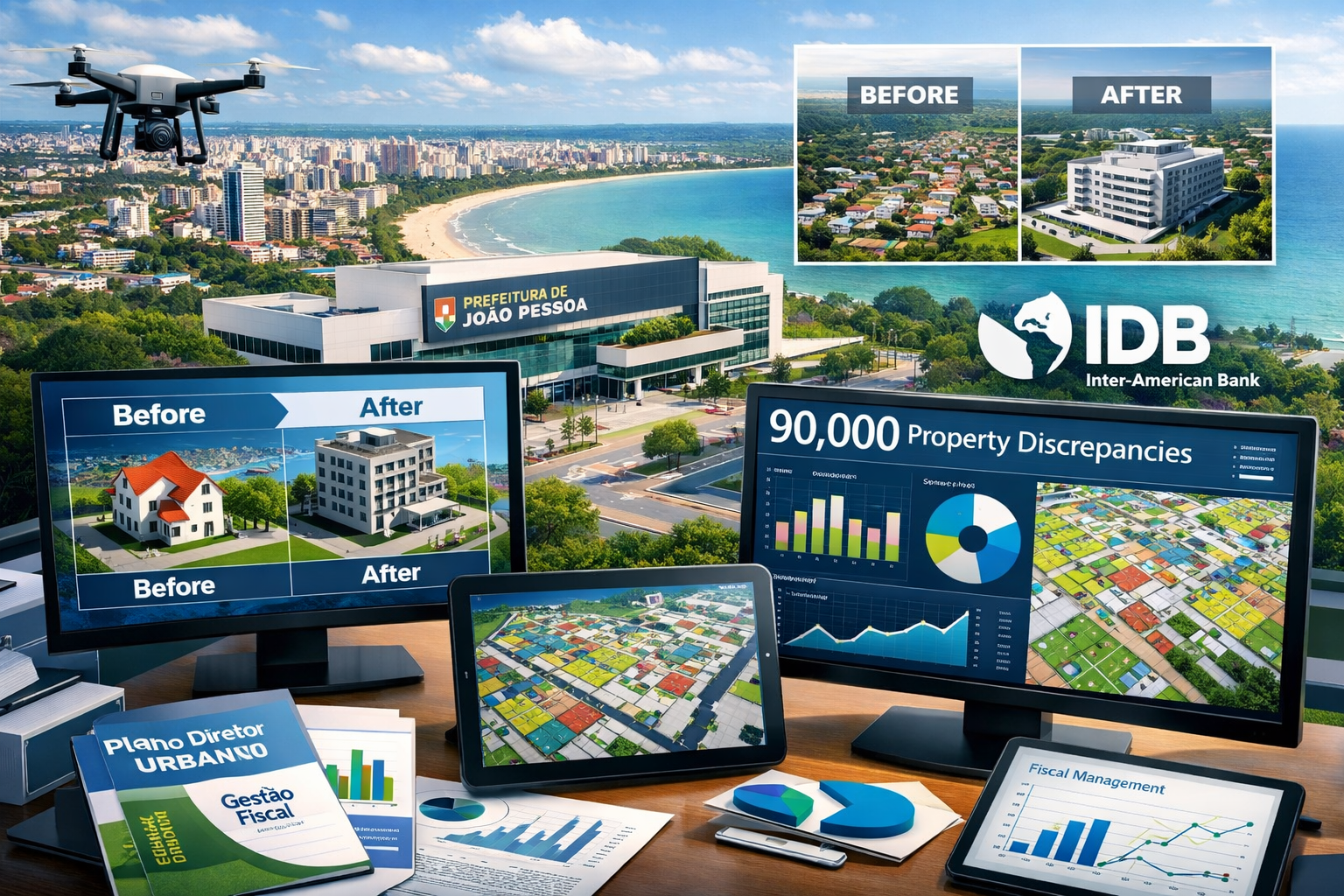
The city’s approximately 400,000 registered properties form the foundation of this expansion, with the recent Inter-American Development Bank (IDB) partnership revealing critical insights into market dynamics. The identification of nearly 90,000 properties with significant discrepancies between recorded and actual built area—differences exceeding 10%—demonstrates both the challenges and opportunities within João Pessoa’s real estate ecosystem.[4]
This data-driven approach to urban management has uncovered 4,471 commercial properties previously misclassified as residential, creating opportunities for developers to better understand true market composition and target their projects accordingly.[4] For developers accustomed to the opacity of many Brazilian secondary markets, this level of transparency represents a competitive advantage.
Geographic and Demographic Drivers
João Pessoa’s position as a northeastern coastal city provides inherent advantages that developers are increasingly capitalizing on. The combination of pristine beaches, tropical climate, and lower cost of living compared to southern metropolitan areas has attracted substantial second-home and retirement demand.[1]
This demographic shift mirrors broader trends across Brazil’s real estate market, where quality-of-life considerations are increasingly outweighing proximity to traditional economic centers. The city’s appeal extends beyond domestic buyers—international investors seeking best places to invest in Brazil property are discovering João Pessoa’s compelling value proposition.
The retirement and second-home segments bring particular advantages for developers:
- Higher price tolerance for quality construction and amenities
- Lower sensitivity to local employment conditions compared to primary residence buyers
- Preference for turnkey solutions that favor professionally developed projects over informal construction
- Longer holding periods that reduce market volatility
Sustainable Growth Strategies for Secondary City Developers in 2026
Strategic Planning Frameworks That Channel Development
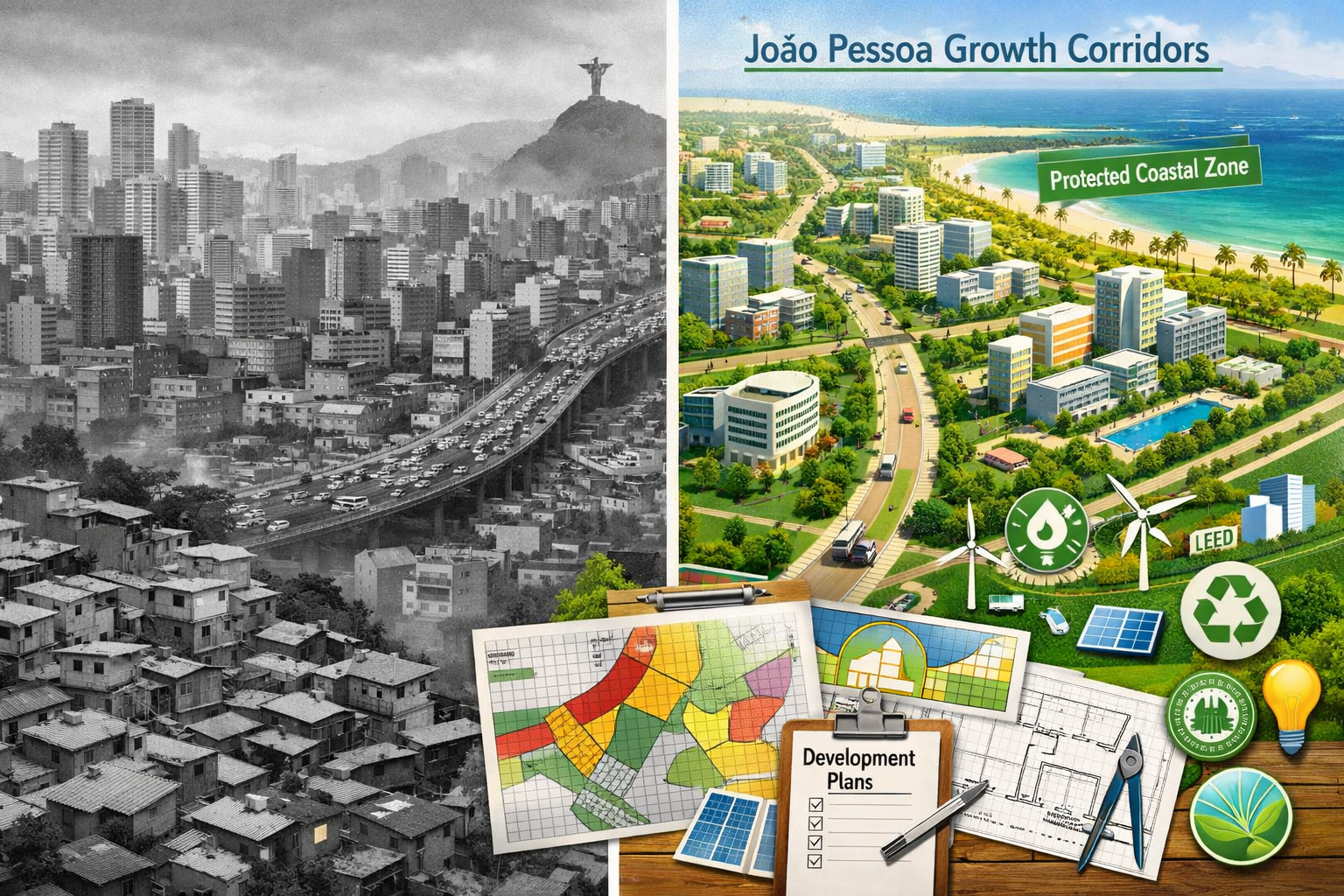
One of the most significant factors behind João Pessoa’s 22% Residential Supply Explosion: Sustainable Growth Strategies for Secondary City Developers in 2026 is the city’s sophisticated approach to urban planning. Unlike many Brazilian cities that experienced haphazard sprawl, João Pessoa has implemented planning frameworks that channel growth while preserving sensitive corridors.[1]
The city’s strategy deliberately directs high-density development into inland corridors, protecting the environmentally sensitive coastal areas that constitute its primary attraction. This approach creates a win-win scenario:
For the City:
- Preservation of natural assets that drive long-term tourism and residential appeal
- More efficient infrastructure deployment in concentrated corridors
- Reduced environmental remediation costs
- Enhanced fiscal sustainability through higher-density tax bases
For Developers:
- Clear regulatory guidance reducing approval uncertainty
- Concentrated demand in designated growth corridors
- Infrastructure investment priorities aligned with development zones
- Reduced environmental compliance costs in pre-approved areas
This planning approach has resulted in a high share of vertical dwellings by 2024, reflecting rapid densification in targeted areas.[1] For developers transitioning from saturated capital markets, this represents familiar territory—vertical development expertise honed in São Paulo or Rio de Janeiro translates directly to João Pessoa’s growth corridors.
Infrastructure Matching and Investment Timing
The concentration of households in vertical developments has created infrastructure matching challenges that savvy developers can anticipate and capitalize on.[1] Understanding the lag between residential delivery and supporting infrastructure provides strategic advantages:
- Early-mover advantages in underserved corridors where infrastructure investment is planned but not yet complete
- Premium positioning for projects that incorporate retail and service components addressing immediate resident needs
- Partnership opportunities with municipal authorities seeking private sector solutions to infrastructure gaps
- Value appreciation as public infrastructure catches up to residential density
The IDB partnership announced in February 2026 specifically addresses the modernization of property tax management and urban policies, signaling sustained commitment to infrastructure development.[4] This institutional backing reduces political risk and provides developers with greater confidence in long-term planning assumptions.
Developers familiar with how performance in sales is transforming real estate markets in other Brazilian secondary cities will recognize similar patterns in João Pessoa—the combination of lifestyle appeal, infrastructure investment, and professional development practices creating virtuous cycles of growth.
Fiscal Modernization as a Developer Advantage
The property cadastre modernization initiative represents more than administrative housekeeping—it fundamentally improves the business environment for professional developers. The identification of 90,000 properties with significant recording discrepancies creates several strategic opportunities:[4]
Competitive Advantages for Compliant Developers:
- Enhanced credibility with buyers through accurate documentation
- Reduced legal risk from clear property records
- Faster transaction closings due to improved municipal systems
- Better access to financing as lenders gain confidence in property records
Market Intelligence Benefits:
- Accurate understanding of true competitive supply
- Identification of underserved property types and price points
- Better demographic targeting based on actual (vs. recorded) property characteristics
- Improved feasibility analysis using reliable comparable data
The correction of 4,471 commercial properties previously registered as residential provides particularly valuable market intelligence.[4] This data reveals actual mixed-use demand patterns that developers can incorporate into project planning, potentially adding retail or office components that enhance project economics.
Lessons from João Pessoa’s Growth for Secondary City Development
Replicating Success: Transferable Strategies
João Pessoa’s 22% Residential Supply Explosion: Sustainable Growth Strategies for Secondary City Developers in 2026 offers a playbook that extends beyond this single market. Developers evaluating other secondary Brazilian cities can apply these key principles:
1. Quality-of-Life Arbitrage
The fundamental driver of João Pessoa’s growth is the quality-of-life differential relative to saturated capitals. Successful secondary city development requires identifying markets where:
- Natural amenities (beaches, mountains, climate) provide inherent appeal
- Cost-of-living advantages create meaningful purchasing power gains
- Cultural and social infrastructure supports middle-class lifestyles
- Connectivity to major centers enables flexible work arrangements
2. Regulatory Alignment
João Pessoa’s planning framework demonstrates the importance of regulatory clarity. Before entering secondary markets, developers should evaluate:
- Master plan coherence: Are growth corridors clearly designated?
- Infrastructure commitment: Do public investment plans align with development zones?
- Environmental clarity: Are protected areas definitively mapped to avoid future restrictions?
- Approval predictability: Do timelines and requirements follow consistent patterns?
3. Institutional Partnerships
The IDB partnership illustrates how institutional involvement reduces risk and accelerates market maturation. Developers should prioritize markets where:
- International development banks are actively engaged
- Federal housing programs are being deployed
- Municipal governments demonstrate fiscal discipline
- Public-private partnership frameworks are established
Brazil’s construction sector in 2026 continues to benefit from housing programs despite persistent risks, making institutional backing particularly valuable.[2]
Vertical Development Expertise as Core Competency
The high share of vertical dwellings in João Pessoa reflects both land economics and lifestyle preferences.[1] For developers, this trend reinforces the importance of vertical development capabilities:
Technical Requirements:
- Structural engineering expertise for mid-rise and high-rise construction
- Elevator and building systems knowledge
- Common area design and management protocols
- Construction logistics in dense urban environments
Market Positioning:
- Amenity packages that justify density premiums
- Unit mix optimization for diverse household types
- Pricing strategies that capture value from views and floor levels
- Marketing approaches that emphasize lifestyle over space
Developers experienced with property appreciation for those buying off-plan understand how vertical development enhances value capture through construction appreciation and amenity differentiation.
Addressing Infrastructure Lag Strategically
The infrastructure matching challenges created by rapid densification require proactive developer strategies:[1]
| Infrastructure Gap | Developer Response | Value Creation |
|---|---|---|
| Retail services | Ground-floor commercial in residential projects | Rental income + resident convenience |
| Public transportation | Shuttle services to transit hubs | Marketing differentiator |
| Schools | Partnerships with educational providers | Family segment attraction |
| Healthcare | Medical office components | Mixed-use revenue diversification |
| Recreation | Enhanced amenity packages | Premium pricing justification |
This approach transforms infrastructure lag from challenge to opportunity, allowing developers to capture value that would otherwise accrue to third-party service providers.
Market Context: Brazil’s Real Estate Landscape in 2026
National Trends Supporting Secondary City Growth
João Pessoa’s performance must be understood within Brazil’s broader real estate dynamics in 2026. Several national trends are creating tailwinds for secondary city development:
Economic Factors:
- Interest rate environment affecting affordability and investment returns
- Regional economic diversification reducing dependence on traditional centers
- Remote work normalization enabling location flexibility
- Middle-class expansion creating demand outside saturated markets
Brazil’s property market predictions for 2026 indicate continued strength in secondary markets as buyers seek value alternatives to expensive capitals.[5]
Demographic Shifts:
- Aging population driving retirement migration
- Young professionals seeking affordable homeownership
- International buyers diversifying across Brazilian regions
- Internal migration from saturated to emerging markets
Policy Environment:
- Federal housing programs supporting middle-income development
- Municipal governments competing for investment through improved business climates
- Environmental regulations creating development constraints in some areas while channeling growth to others
- Infrastructure investment prioritizing connectivity between secondary cities and major centers
Competitive Positioning Against Primary Markets
For developers, the decision to enter secondary markets like João Pessoa involves careful comparison with established alternatives:
Primary Market Challenges (São Paulo, Rio de Janeiro):
- ❌ Land costs consuming 30-40% of project budgets
- ❌ Regulatory complexity and approval delays
- ❌ Market saturation limiting differentiation
- ❌ Price sensitivity constraining premium positioning
- ❌ Infrastructure constraints limiting development sites
Secondary Market Advantages (João Pessoa):
- ✅ Land costs at 15-25% of project budgets
- ✅ Streamlined approvals in growth corridors
- ✅ Undersupplied markets receptive to quality product
- ✅ Price tolerance for superior amenities and finishes
- ✅ Infrastructure investment creating appreciation potential
This risk-adjusted return profile increasingly favors secondary markets, particularly for developers with established brands and operational capabilities that can be leveraged across multiple markets.
Similar dynamics have driven growth in other Brazilian secondary markets, as seen in Florianópolis’s real estate market performance.
Implementation Roadmap for Developers Entering Secondary Markets
Phase 1: Market Selection and Due Diligence
Replicating João Pessoa’s success in other secondary markets requires systematic evaluation:
Quantitative Screening Criteria:
- Population growth rates (target: 1.5%+ annually)
- GDP per capita trends (target: outpacing national average)
- Formal employment growth (target: positive 3-year trend)
- Tourism indicators (target: growing visitor numbers and spending)
- Infrastructure investment (target: committed public projects exceeding 5% of municipal GDP)
Qualitative Assessment Factors:
- Municipal government competence and stability
- Master plan coherence and enforcement
- Environmental asset preservation
- Cultural amenities and social infrastructure
- Connectivity to major economic centers
- Competitive landscape and market maturity
Regulatory Deep Dive:
- Approval timelines and consistency
- Zoning flexibility and density allowances
- Environmental licensing requirements
- Property tax assessment methodologies
- Construction code requirements
The property cadastre modernization in João Pessoa demonstrates the value of markets with improving institutional capacity.[4]
Phase 2: Strategic Positioning and Product Development
Once a target market is selected, developers must craft positioning that captures the specific opportunity:
Market Segmentation:
- Retirement/Second-Home Buyers: Premium finishes, turnkey delivery, amenity-rich
- Young Professionals: Efficient layouts, technology integration, urban location
- Families: Space optimization, proximity to schools, recreational amenities
- Investors: Rental yield optimization, property management services, appreciation potential
Product Strategy:
- Unit mix reflecting demographic analysis
- Amenity packages justified by competitive gaps
- Pricing positioned relative to primary market alternatives
- Delivery timelines aligned with infrastructure development
Brand Positioning:
- Leverage primary market credibility
- Emphasize quality and reliability differentials
- Highlight lifestyle benefits vs. capital markets
- Communicate long-term market commitment
Developers can learn from the advantages of investing in studios in other Brazilian markets when considering unit mix strategies.
Phase 3: Execution and Operational Excellence
Successful secondary market entry requires operational discipline:
Land Acquisition:
- Target growth corridors with infrastructure commitments
- Secure multiple sites to build market presence
- Negotiate vendor financing to optimize capital deployment
- Structure transactions with regulatory approval contingencies
Project Design:
- Engage local architects familiar with regulatory requirements
- Incorporate climate-appropriate design elements
- Plan for infrastructure gaps with self-contained solutions
- Design for construction efficiency given local labor markets
Construction Management:
- Establish relationships with reliable local contractors
- Import specialized trades from primary markets as needed
- Implement quality control protocols from established markets
- Plan logistics for material delivery in secondary market contexts
Sales and Marketing:
- Establish sales presence in both target market and feeder markets (capitals)
- Develop digital marketing reaching remote buyers
- Create experiential marketing showcasing lifestyle benefits
- Offer flexible payment terms appropriate to buyer profiles
Phase 4: Portfolio Expansion and Market Leadership
Initial success should be leveraged into market leadership:
Sequential Development:
- Launch follow-on projects before initial delivery to maintain momentum
- Diversify product types to serve multiple segments
- Expand geographically within the market as understanding deepens
- Consider vertical integration (property management, retail operations)
Brand Building:
- Deliver initial projects to specification and schedule
- Generate buyer testimonials and referrals
- Engage in community development initiatives
- Establish thought leadership in local market
Institutional Relationships:
- Cultivate municipal government partnerships
- Engage with federal housing program administrators
- Develop banking relationships for buyer financing
- Connect with international development institutions
The 22% supply growth in João Pessoa demonstrates the scalability possible in undersupplied secondary markets when developers execute consistently.[1]
Risk Management in Secondary City Development
Identifying and Mitigating Key Risks
While João Pessoa’s 22% Residential Supply Explosion: Sustainable Growth Strategies for Secondary City Developers in 2026 presents compelling opportunities, developers must address specific risk factors:
Market Risks:
- 🎯 Demand volatility: Secondary markets can experience sharper cyclical swings
- Mitigation: Phased development, pre-sales requirements, diversified buyer segments
- 🎯 Absorption uncertainty: Less market history for forecasting
- Mitigation: Conservative absorption assumptions, flexible construction scheduling, robust market research
- 🎯 Price competition: Local developers may compete on price vs. quality
- Mitigation: Clear differentiation, brand positioning, buyer education
Regulatory Risks:
- 🎯 Policy changes: Municipal governments may alter development rules
- Mitigation: Secure approvals before land acquisition, engage in policy dialogue, diversify across markets
- 🎯 Infrastructure delays: Public projects may not deliver on schedule
- Mitigation: Self-contained project solutions, conservative infrastructure assumptions, political engagement
- 🎯 Environmental restrictions: Protected area designations may expand
- Mitigation: Thorough environmental due diligence, avoid sensitive areas, engage environmental consultants
Operational Risks:
- 🎯 Labor availability: Skilled construction labor may be limited
- Mitigation: Early contractor engagement, training programs, labor importation from other markets
- 🎯 Material supply: Supply chains may be less developed
- Mitigation: Early material procurement, relationships with national suppliers, inventory buffers
- 🎯 Quality control: Distance from headquarters complicates oversight
- Mitigation: Local project management, frequent site visits, technology-enabled monitoring
The IDB partnership in João Pessoa demonstrates how institutional engagement can mitigate regulatory and policy risks.[4]
Financial Structuring for Secondary Market Projects
Appropriate financial structuring is critical for managing secondary market risks:
Capital Structure Considerations:
- Higher equity requirements (40-50% vs. 30-40% in primary markets) due to lender caution
- Mezzanine financing to bridge equity/senior debt gap
- Strategic partners with local market knowledge
- Phased capital deployment tied to de-risking milestones
Revenue Recognition:
- Conservative pre-sales requirements (50-60% vs. 40% in established markets)
- Pricing strategies that accelerate early sales (launch discounts, early-bird incentives)
- Payment terms balancing buyer affordability with developer cash flow
- Contingency reserves for absorption delays (15-20% of project costs)
Exit Strategies:
- Portfolio sales to institutional investors after market establishment
- Joint ventures with larger developers for subsequent phases
- Property management platforms capturing ongoing revenue
- Land banking for future development cycles
The Future of Secondary City Development in Brazil
Long-Term Trends Favoring Distributed Growth
João Pessoa’s trajectory reflects broader structural shifts in Brazilian real estate that will continue beyond 2026:
Technology-Enabled Decentralization:
- Remote work reducing economic centralization
- Digital services eliminating urban service advantages
- E-commerce equalizing retail access across geographies
- Telemedicine reducing healthcare location dependence
Quality-of-Life Prioritization:
- Environmental consciousness favoring less polluted cities
- Space preferences shifting toward larger units in lower-density markets
- Recreation and leisure time valued over commute time savings
- Community connection easier in smaller, more manageable cities
Economic Diversification:
- Regional economic development reducing São Paulo/Rio dominance
- Tourism and service economies creating jobs outside traditional centers
- Agricultural modernization generating wealth in interior regions
- Government decentralization distributing public sector employment
Infrastructure Investment:
- Federal programs improving connectivity between secondary cities and capitals
- Airport expansion enabling direct international access
- Digital infrastructure (broadband) eliminating information disadvantages
- Renewable energy projects creating economic activity in diverse locations
These trends suggest that João Pessoa’s 22% growth represents not an anomaly but a leading indicator of broader market rebalancing.
Implications for Developer Strategy
Forward-thinking developers should consider these strategic implications:
- Portfolio Diversification: Build presence across multiple secondary markets rather than concentrating in single primary markets
- Brand Platform Development: Create scalable brands and operational systems that can be deployed across diverse geographies
- Local Partnership Models: Develop joint venture frameworks that combine national expertise with local market knowledge
- Product Standardization: Design flexible product platforms that can be adapted to different secondary market contexts
- Technology Integration: Invest in digital tools that enable efficient management of geographically dispersed projects
The success of cryptocurrency integration in real estate development demonstrates how technological innovation can support expansion into emerging markets.
Policy Recommendations for Sustainable Growth
To ensure that secondary city growth remains sustainable and beneficial, developers should advocate for:
Municipal Level:
- Transparent, predictable approval processes
- Infrastructure investment aligned with development corridors
- Environmental protection integrated with growth management
- Property tax systems that reward quality development
State Level:
- Regional infrastructure connectivity
- Workforce development programs for construction trades
- Environmental licensing coordination across municipalities
- Economic development incentives for secondary cities
Federal Level:
- Housing finance programs accessible in secondary markets
- Infrastructure investment distributed beyond primary markets
- Tax policies that don’t penalize geographic diversification
- Data and research supporting secondary market analysis
The IDB partnership model in João Pessoa demonstrates the value of institutional support for sustainable urban development.[4]
Conclusion: Capitalizing on Brazil’s Secondary City Renaissance
João Pessoa’s 22% Residential Supply Explosion: Sustainable Growth Strategies for Secondary City Developers in 2026 represents far more than a single market success story—it signals a fundamental transformation in Brazilian real estate dynamics. As primary markets grapple with saturation, regulatory complexity, and affordability constraints, secondary cities like João Pessoa offer compelling alternatives for developers seeking growth, profitability, and sustainable impact.
The convergence of strategic urban planning, infrastructure modernization, demographic shifts, and quality-of-life prioritization has created unprecedented opportunities in Brazil’s secondary markets. Developers who can successfully translate their expertise from saturated capitals to emerging cities will capture superior risk-adjusted returns while contributing to more balanced national development.
Key Success Factors
The João Pessoa case study reveals critical success factors for secondary city development:
✅ Strategic market selection based on quality-of-life assets, infrastructure commitment, and institutional capacity
✅ Regulatory alignment with municipal planning frameworks and growth corridors
✅ Product positioning that addresses underserved segments with quality differentiation
✅ Operational excellence adapted to secondary market contexts
✅ Risk management through conservative assumptions and phased deployment
✅ Long-term commitment to building market presence and brand equity
Actionable Next Steps for Developers
For developers ready to capitalize on secondary city opportunities, these immediate actions will accelerate success:
Conduct Systematic Market Screening: Evaluate 5-10 potential secondary markets using the quantitative and qualitative criteria outlined in this article, focusing on cities with similar characteristics to João Pessoa—coastal or natural amenities, growing retirement demand, infrastructure investment, and improving institutional capacity.
Establish Local Intelligence: Visit shortlisted markets, engage local brokers and architects, meet municipal planning officials, and analyze competitive projects to develop ground-level understanding that complements desktop research.
Develop Financial Models: Create pro forma models that reflect secondary market characteristics—lower land costs, higher equity requirements, conservative absorption, and infrastructure lag—to establish realistic return expectations.
Build Institutional Relationships: Connect with federal housing program administrators, development banks like IDB, and municipal economic development offices to understand support programs and partnership opportunities.
Design Pilot Projects: Structure initial projects as market-learning exercises—smaller scale, lower risk, but positioned to establish brand credibility and operational presence for subsequent expansion.
Assemble Cross-Functional Teams: Recruit or develop talent with secondary market experience, combining primary market technical excellence with adaptability to emerging market contexts.
Create Knowledge-Sharing Platforms: Establish internal systems to capture learnings across markets, enabling rapid deployment of successful strategies and avoiding repeated mistakes.
The transformation underway in João Pessoa and similar Brazilian secondary cities represents one of the most significant real estate opportunities of this decade. Developers who move decisively but thoughtfully—combining strategic vision with operational discipline—will not only generate superior returns but will also shape the future of Brazilian urban development toward more sustainable, livable, and economically balanced patterns.
The 22% supply explosion is just the beginning. The question for developers is not whether to participate in secondary city growth, but how quickly and effectively they can position themselves to lead it.
References
[1] Residential Real Estate Market In Brazil – https://www.mordorintelligence.com/industry-reports/residential-real-estate-market-in-brazil
[2] Brazils Construction Sector 2026 Housing Programs Support Rates High Risks Persist – https://www.fastmarkets.com/insights/brazils-construction-sector-2026-housing-programs-support-rates-high-risks-persist/
[3] Price History – https://www.globalpropertyguide.com/latin-america/brazil/price-history
[4] Combining Fiscal Management And Urban Policy Support Infrastructure And Environmental Policies – https://www.iadb.org/en/blog/economic-analysis/combining-fiscal-management-and-urban-policy-support-infrastructure-and-environmental-policies
[5] Brazil Property Market Predictions For 2026 – https://esalesinternational.com/2025/11/20/brazil-property-market-predictions-for-2026/
[6] meiracarlos.com.br – https://meiracarlos.com.br/en/
[7] Brazil Price Forecasts – https://thelatinvestor.com/blogs/news/brazil-price-forecasts
[8] 121025 Interview Strong Brazil Construction Market Key For Rebar Sales To Continue Cbic President – https://www.spglobal.com/energy/en/news-research/latest-news/metals/121025-interview-strong-brazil-construction-market-key-for-rebar-sales-to-continue-cbic-president