
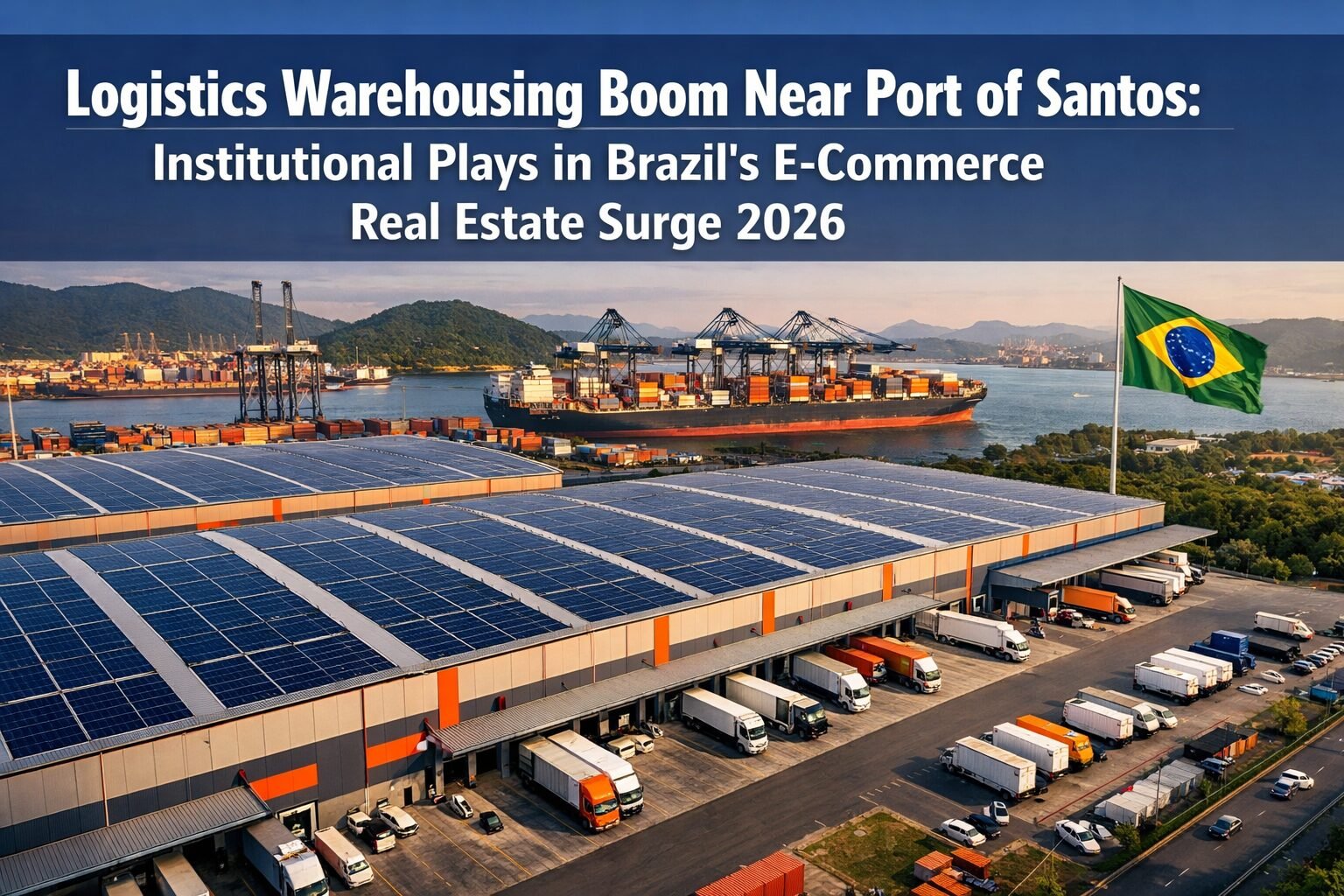
The Port of Santos is experiencing an unprecedented surge that’s reshaping Brazil’s logistics real estate landscape. As the port smashes cargo throughput records month after month in 2026, institutional investors are racing to secure warehouse assets in the surrounding region—and they’re finding record-low vacancy rates that signal a fundamental shift in Brazil’s commercial real estate hierarchy. The Logistics Warehousing Boom Near Port of Santos: Institutional Plays in Brazil’s E-Commerce Real Estate Surge 2026 represents more than just infrastructure expansion; it’s a convergence of e-commerce re-shoring, government-backed port development, and yield-hungry capital seeking alternatives to residential investments amid SELIC stabilization.
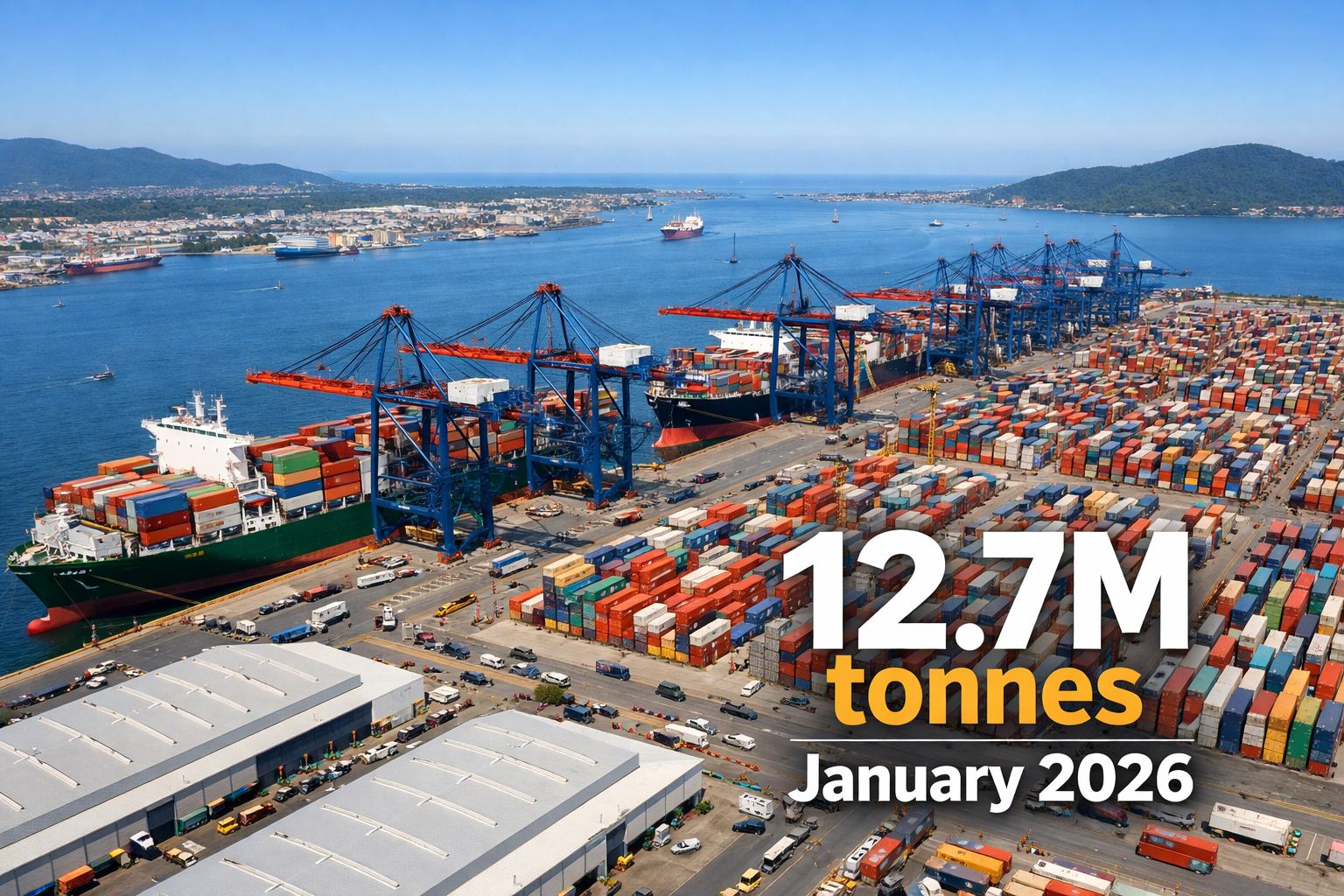
With the Port of Santos handling 12.7 million tonnes in January 2026 alone—a 9.5% year-on-year increase—and federal approval for expansion adding 5.2 million m² of new terminal space, the logistics warehousing sector near Latin America’s busiest port has become the hottest institutional play in Brazilian real estate.[1]
Key Takeaways
- 🚢 Port of Santos recorded 186.4 million tonnes in 2025 and 12.7 million tonnes in January 2026, driving unprecedented demand for adjacent logistics warehousing facilities
- 📈 Institutional investors are targeting logistics yields of 8-12%, significantly outperforming residential real estate as SELIC rates stabilize and vacancy rates drop below 5%
- 🏗️ Federal government approved 56% expansion of port infrastructure, adding 5.2 million m² for eight new terminals with first auctions beginning in 2027
- 📦 E-commerce re-shoring and nearshoring trends are accelerating demand for Grade A warehouse space within 50km of the port, with multinational retailers consolidating distribution networks
- 💰 Projected 20% financial growth for port operations within 3-4 years signals sustained long-term demand for logistics real estate in the Santos corridor
Understanding the Port of Santos Expansion and Its Real Estate Impact
Record-Breaking Throughput Drives Infrastructure Demand
The Port of Santos closed 2025 with historic performance, handling 186.4 million tonnes—a 3.6% increase over the previous record of 179.8 million tonnes set in 2024.[2] This momentum accelerated into 2026, with January throughput reaching 12.7 million tonnes, representing a 9.5% increase from January 2025 and 6.8% above the previous January record.[1]
The cargo surge wasn’t limited to a single commodity. Key drivers included:
- Sugar exports: 36.8% year-on-year increase
- Soybean complex shipments: 79.6% surge
- Container segment: 5.9 million TEUs in 2025
- Vessel calls: 446 ships in January 2026, up 2.5%
This diversified growth pattern signals sustained structural demand rather than temporary spikes, creating confidence among institutional investors evaluating long-term logistics real estate commitments.
Federal Government Expansion: Game-Changer for Logistics Real Estate
In early 2026, President Lula’s government officially approved the expansion of the Port of Santos area, as confirmed by port authority president Anderson Pomini.[1] This wasn’t merely regulatory approval—it represented a massive land acquisition that fundamentally changes the port’s capacity trajectory.
The port acquired approximately 5.2 million m² of additional land from the Secretariat of Federal Assets (SPU), increasing the land-based infrastructure area by 56%—from 9.3 million m² to 14.5 million m².[3] This expansion creates capacity for at least eight new cargo terminals of similar scale to existing major operators like Santos Brasil, BTP, and DP World.
Timeline and Investment Opportunities:
| Phase | Timeline | Investment Implications |
|---|---|---|
| Feasibility Studies | 2026 (Current) | Early-stage land acquisition near expansion zones |
| First Concession Auctions | Beginning 2027 | Terminal operator selection; adjacent warehouse development |
| Tecon 10 Megaterminal Auction | H1 2026 | 622,000 m² facility increasing container capacity by 50% |
| Additional Berths Operational | By 2030 | 15+ new berths added to existing 65, driving logistics demand |
| Projected Financial Growth | 3-4 years | 20% increase in port financial volume from R$ 1.4B (2025) |
For institutional investors, this expansion roadmap provides clear visibility into future logistics demand, enabling strategic positioning in warehouse development and acquisition ahead of terminal operations commencing.
Diversification Beyond Containers: Specialized Warehouse Opportunities
The port’s expansion strategy deliberately targets cargo diversification beyond containers, creating specialized warehouse demand across multiple sectors:[3]
- ⛽ Fuel sector terminals requiring hazardous materials-certified facilities
- 📄 Pulp and paper handling needing climate-controlled storage
- 🌾 Grains and agricultural products requiring bulk storage infrastructure
- 🔥 Flammable materials demanding specialized safety-compliant warehouses
This diversification strategy reduces concentration risk for logistics real estate investors while creating premium rental opportunities for specialized, compliance-certified facilities that command higher yields than standard warehousing.
The Logistics Warehousing Boom: Supply, Demand, and Vacancy Dynamics
Record-Low Vacancy Rates Signal Structural Shortage
The Santos logistics corridor is experiencing vacancy rates below 5% in Grade A warehouse facilities—levels not seen since the early 2010s boom. This tightness reflects several converging factors:
Demand Drivers:
- E-commerce fulfillment re-shoring: Major Brazilian and international retailers consolidating distribution from multiple regional centers to Santos-proximate mega-facilities
- Port throughput growth: 29.5% of Brazil’s total trade flow passes through Santos, requiring adjacent warehousing for customs clearance and distribution
- Supply chain optimization: Companies reducing inventory carrying costs by locating closer to import/export points
- Nearshoring from Asia: Multinational manufacturers establishing Brazilian production requiring logistics support
Supply Constraints:
- Limited land availability in prime 20km radius from port terminals
- Environmental licensing delays for new construction
- Infrastructure gaps (road access, utilities) in secondary locations
- Construction cost inflation limiting speculative development
This supply-demand imbalance has created a landlord’s market with institutional investors achieving rental escalations of 8-15% annually on existing assets while development yields remain attractive at 10-12% on cost.
Institutional Capital Rotation: From Residential to Logistics
Brazil’s stabilizing SELIC rate environment—hovering around 10.5% in early 2026 after the aggressive tightening cycle of 2021-2023—has prompted institutional investors to reassess asset allocation across real estate sectors.
Comparative Yield Analysis (2026):
| Asset Class | Net Yield | Vacancy Risk | Lease Terms | Inflation Protection |
|---|---|---|---|---|
| Grade A Logistics (Santos) | 8-12% | Very Low (<5%) | 5-10 years | IGP-M indexed |
| Residential (São Paulo) | 4-6% | Moderate (8-12%) | 12-30 months | Limited |
| Retail Shopping Centers | 6-8% | Moderate (10-15%) | 3-5 years | Partial |
| Office (CBD) | 5-7% | High (15-20%) | 3-5 years | Partial |
The yield premium of logistics assets, combined with longer lease terms and superior tenant credit quality (multinational logistics operators vs. individual residential tenants), has driven significant capital rotation. Pension funds, insurance companies, and foreign institutional investors are actively seeking opportunities to invest in Brazil’s commercial property sector with logistics warehousing near Santos emerging as a priority allocation.
E-Commerce Growth: The Fundamental Demand Driver
Brazil’s e-commerce sector continues its explosive growth trajectory, with online retail penetration reaching 15% of total retail sales in 2025—still well below the 25-30% levels seen in developed markets. This growth runway provides sustained demand visibility for logistics real estate.
Key e-commerce logistics trends driving warehouse demand:
📱 Same-day and next-day delivery expectations: Requiring warehouse networks within 50km of major population centers, with Santos serving São Paulo metropolitan area (22 million people)
🔄 Reverse logistics infrastructure: E-commerce return rates of 20-30% necessitate dedicated processing facilities near ports for international merchandise
🤖 Automation and technology: Modern fulfillment centers require 12-15 meter clear heights, heavy power infrastructure, and larger footprints (50,000+ m²)
🌐 Cross-border e-commerce: Growing direct-to-consumer imports through Santos requiring customs-bonded warehouse facilities
Major e-commerce players and third-party logistics (3PL) providers have announced significant expansion plans in the Santos corridor for 2026-2028, with several seeking 100,000+ m² facilities—a scale that requires institutional capital and professional development expertise.
Institutional Investment Strategies and Market Entry Points
Direct Ownership vs. Fund Vehicles: Structuring Considerations
Institutional investors entering the Logistics Warehousing Boom Near Port of Santos: Institutional Plays in Brazil’s E-Commerce Real Estate Surge 2026 face several structural options:
1. Direct Asset Acquisition
- ✅ Advantages: Full control, direct tenant relationships, customization flexibility
- ⚠️ Challenges: Minimum R$ 50-150 million tickets, operational management requirements, concentration risk
- 🎯 Best for: Large pension funds, insurance companies with R$ 500M+ real estate allocations
2. Real Estate Investment Funds (FIIs)
- ✅ Advantages: Liquidity (B3-listed), diversification, professional management, tax efficiency
- ⚠️ Challenges: Management fees (0.5-1.5% annually), limited control, market volatility
- 🎯 Best for: Smaller institutions, family offices, investors seeking liquidity
3. Private Equity Real Estate Funds
- ✅ Advantages: Active value-add strategies, development expertise, co-investment opportunities
- ⚠️ Challenges: 5-10 year lockups, higher fees (2/20 typical), minimum commitments R$ 10-50M
- 🎯 Best for: Sophisticated investors seeking development-stage returns
4. Joint Ventures with Developers
- ✅ Advantages: Shared risk, developer expertise, preferential deal flow
- ⚠️ Challenges: Alignment complexity, construction risk, partner dependency
- 🎯 Best for: Institutions new to Brazilian logistics market seeking local expertise
Several specialized logistics real estate funds have emerged in 2026 specifically targeting the Santos corridor, offering institutional investors turnkey exposure with professional asset management and tenant relationships already established.
Geographic Micro-Markets: Where to Focus Investment
Not all locations near the Port of Santos offer equal investment merit. Institutional capital is concentrating in specific micro-markets based on infrastructure quality, land availability, and tenant demand:
Tier 1 Locations (Premium Pricing, Lowest Risk):
- Cubatão Industrial Zone: Immediate port adjacency, established infrastructure, limited new supply
- Guarujá Logistics Corridor: Direct port access via bridge, large land parcels available
- Santos Port Area: Prime for customs-bonded warehouses, highest rents (R$ 35-45/m²/month)
Tier 2 Locations (Value-Add Opportunities):
- São Vicente Industrial: 15km from port, lower land costs, infrastructure development underway
- Praia Grande Logistics Hub: Emerging market, 25km from port, significant land availability
- Bertioga Expansion Zone: 40km from port, greenfield development, environmental approvals required
Tier 3 Locations (Speculative, Higher Risk):
- Interior Paulista Corridor: 50-80km from port, highway-dependent, lower rents (R$ 18-25/m²/month)
Institutional investors with lower risk tolerance are focusing on Tier 1 locations despite premium pricing, while value-add funds target Tier 2 markets where infrastructure improvements can drive significant rental growth and asset appreciation.
Development vs. Stabilized Assets: Risk-Return Profiles
The Santos logistics market offers opportunities across the development lifecycle, each with distinct risk-return characteristics:
Stabilized, Income-Producing Assets:
- 💰 Acquisition yields: 8-9% on fully-leased, institutional-grade properties
- 📊 Tenant profile: Multinational 3PLs, major retailers, established logistics operators
- ⏱️ Time to income: Immediate cash flow
- 🎯 Target investors: Core funds, pension funds, insurance companies seeking stable income
Value-Add Repositioning:
- 💰 Target yields: 10-11% post-repositioning
- 📊 Strategy: Older facilities requiring modernization, tenant upgrades, lease restructuring
- ⏱️ Time to stabilization: 12-24 months
- 🎯 Target investors: Opportunistic funds, experienced operators
Ground-Up Development:
- 💰 Development yields: 11-13% on cost
- 📊 Pre-leasing: Typically 50-70% pre-leased before construction start
- ⏱️ Development timeline: 18-24 months from land acquisition to occupancy
- 🎯 Target investors: Development funds, joint ventures, experienced developers
The development pipeline in the Santos corridor for 2026-2028 exceeds 800,000 m² of new Grade A space, but pre-leasing activity suggests this supply will be readily absorbed given the structural demand drivers and limited existing inventory.
For investors seeking to understand broader real estate investment opportunities in Brazil, the logistics sector represents a compelling alternative to traditional residential and commercial office allocations.
Regulatory, Tax, and Operational Considerations for Institutional Investors
Foreign Investment Framework and Repatriation
International institutional investors entering the Logistics Warehousing Boom Near Port of Santos: Institutional Plays in Brazil’s E-Commerce Real Estate Surge 2026 must navigate Brazil’s foreign investment regulatory framework:
Key Regulatory Requirements:
- Registration with Central Bank (BACEN): Required for all foreign capital inflows
- CMN Resolution 4,373/2014: Governs foreign real estate investment structures
- Tax Treaty Considerations: Withholding tax rates vary by investor domicile (0-25%)
- Repatriation Rights: Full capital and profit repatriation permitted with proper registration
Optimal Investment Structures:
- 🏢 Direct SPV (Sociedade de Propósito Específico): Asset-level ownership, full control
- 🏦 FII Investment: Exempt from withholding tax for certain foreign investors
- 🤝 Quota Holder in Brazilian Fund: Participation in domestic investment vehicles
Tax efficiency varies significantly by structure and investor domicile, with treaty jurisdictions (Luxembourg, Netherlands, certain others) offering preferential withholding rates on rental income and capital gains.
Environmental and Zoning Compliance
Logistics warehouse development near the Port of Santos requires navigation of complex environmental licensing:
Required Approvals:
- 🌳 Environmental Impact Assessment (EIA/RIMA): For projects >50,000 m² or in sensitive areas
- 🏗️ Municipal Zoning Compliance: Industrial zoning designation required
- 💧 Water and Sewage Permits: CETESB (São Paulo environmental agency) approval
- 🚛 Traffic Impact Studies: For facilities generating >500 daily truck movements
The approval timeline typically ranges from 12-18 months for straightforward projects to 24+ months for complex sites, making land acquisition with existing approvals particularly valuable.
Institutional investors increasingly require environmental, social, and governance (ESG) compliance certifications:
- ⭐ LEED Certification: Leadership in Energy and Environmental Design
- ☀️ Solar Installation: Rooftop solar becoming standard for new developments
- ♻️ Sustainability Features: Rainwater harvesting, LED lighting, green building materials
These certifications command rental premiums of 5-10% and attract higher-quality tenants with long-term lease commitments.
Tenant Credit Quality and Lease Structures
The institutional-grade logistics market near Santos features superior tenant credit profiles compared to other commercial real estate sectors:
Typical Tenant Categories:
- Multinational 3PL Operators: DHL, Kuehne+Nagel, DSV, DB Schenker (investment-grade credit)
- Major Retailers: Magazine Luiza, Via, Mercado Livre (strong domestic credit)
- Industrial Manufacturers: Automotive, electronics, consumer goods (varied credit)
- E-commerce Platforms: Amazon, Shopee, AliExpress (strong but shorter operating history)
Standard Lease Terms:
- 📅 Duration: 5-10 years with renewal options
- 💵 Rent Structure: Triple-net (NNN) with tenant responsible for operating expenses
- 📈 Escalation: Annual adjustment by IGP-M (General Market Price Index) or IPCA
- 💰 Security Deposits: 3-6 months rent plus bank guarantees or insurance bonds
- 🚫 Early Termination: Typically prohibited or with significant penalties
The long-term, inflation-indexed lease structures provide institutional investors with predictable cash flows and inflation protection—particularly valuable in Brazil’s historically volatile inflation environment.
Future Outlook: Sustainability of the Logistics Warehousing Boom
Port Expansion Timeline and Phased Demand
The Logistics Warehousing Boom Near Port of Santos: Institutional Plays in Brazil’s E-Commerce Real Estate Surge 2026 isn’t a short-term phenomenon but rather a multi-year structural shift driven by the port’s expansion roadmap.
Projected Demand Phases:
2026-2027: Pre-Auction Positioning
- Land acquisition near expansion zones
- Speculative development in anticipation of terminal auctions
- Estimated new warehouse demand: 250,000-300,000 m²
2027-2029: Terminal Construction Phase
- Eight new terminals begin development following auctions
- Tecon 10 megaterminal becomes operational (622,000 m²)
- Estimated new warehouse demand: 500,000-700,000 m²
2029-2032: Operational Ramp-Up
- New terminals reach full operational capacity
- 15+ additional berths operational
- Port throughput projected to exceed 220 million tonnes annually
- Estimated new warehouse demand: 600,000-800,000 m²
This phased demand trajectory provides institutional investors with clear visibility for staged capital deployment, avoiding oversupply risks while capturing development opportunities as demand materializes.
E-Commerce Penetration and Logistics Intensity
Brazil’s e-commerce sector shows significant growth runway compared to developed markets:
E-Commerce Penetration Comparison (2026):
- 🇧🇷 Brazil: 15% of retail sales
- 🇺🇸 United States: 28% of retail sales
- 🇨🇳 China: 35% of retail sales
- 🇬🇧 United Kingdom: 31% of retail sales
As Brazilian e-commerce penetration approaches developed market levels over the next 5-10 years, the logistics intensity (warehouse space per R$ 1 billion in e-commerce sales) is expected to increase by 40-60%, driven by:
- Faster delivery expectations requiring distributed networks
- Higher SKU variety necessitating larger inventory holdings
- Returns processing infrastructure expansion
- Automation adoption requiring larger facility footprints
This structural trend supports sustained long-term demand for logistics real estate independent of cyclical economic fluctuations.
Competitive Dynamics and Market Consolidation
The Santos logistics real estate market is experiencing consolidation among developers and operators:
Major Players Expanding in Santos Corridor (2026):
- 🏗️ LOG Commercial Properties: Brazil’s largest logistics REIT, expanding Santos portfolio
- 🌎 Prologis: Global logistics giant entering Brazilian market via acquisitions
- 🏢 Cyrela Commercial Properties: Established developer increasing logistics allocation
- 💼 Brookfield Asset Management: International capital targeting Brazilian logistics
This institutional-grade competition is driving quality improvements and standardization of lease terms, making the market more accessible to international investors while potentially compressing yields over the long term as the market matures.
However, the massive expansion of port capacity and sustained e-commerce growth should provide sufficient demand to absorb new supply without significant yield compression through at least 2030, according to market analysts.
Risk Factors and Mitigation Strategies
Despite the compelling opportunity, institutional investors must consider several risk factors:
Economic and Political Risks:
- 📉 GDP growth volatility: Brazil’s economic cycles can impact import/export volumes
- 🏛️ Political uncertainty: Regulatory changes, tax reforms, infrastructure investment priorities
- 💱 Currency fluctuation: Real depreciation impacts foreign investors’ returns
Mitigation: Diversification across multiple assets, dollar-indexed leases for import-dependent tenants, long-term lease structures providing cash flow visibility
Market-Specific Risks:
- 🏗️ Oversupply potential: Aggressive development pipeline could exceed demand absorption
- 🚛 Infrastructure bottlenecks: Road congestion, port access limitations
- 🌍 Global trade disruptions: Shifts in trade patterns, nearshoring reversals
Mitigation: Focus on prime locations with infrastructure advantages, tenant diversification across industries, pre-leasing requirements for development projects
Operational Risks:
- 👷 Construction delays: Brazilian construction timelines often exceed projections
- 📋 Regulatory approvals: Environmental licensing can face unexpected delays
- 🤝 Tenant defaults: Economic downturns can impact tenant credit quality
Mitigation: Partner with experienced local developers, build approval timeline buffers, require strong tenant security deposits and guarantees
For investors exploring the broader Brazilian real estate landscape, understanding market dynamics across different property types provides valuable context for evaluating logistics opportunities relative to other sectors.
Conclusion: Positioning for Long-Term Value Creation
The Logistics Warehousing Boom Near Port of Santos: Institutional Plays in Brazil’s E-Commerce Real Estate Surge 2026 represents a rare convergence of structural demand drivers, government infrastructure investment, and attractive risk-adjusted returns that position logistics real estate as a compelling institutional allocation.
With the Port of Santos handling record cargo volumes, federal approval for 56% expansion adding capacity for eight new terminals, and e-commerce penetration still in early growth stages, the demand trajectory for Grade A warehouse space appears robust through at least 2030. Institutional investors are responding by rotating capital from lower-yielding residential assets into logistics properties offering 8-12% net yields with superior tenant credit quality and long-term lease structures.
Key Success Factors for Institutional Investors:
- Geographic Focus: Prioritize Tier 1 locations within 20km of port terminals with established infrastructure
- Development Expertise: Partner with experienced local developers who understand environmental approvals and construction management
- Tenant Diversification: Seek multi-tenant facilities or diversification across single-tenant assets to reduce concentration risk
- ESG Compliance: Invest in LEED-certified, sustainable facilities that command premium rents and attract quality tenants
- Phased Capital Deployment: Align investment timing with port expansion phases to optimize entry points
Actionable Next Steps:
📊 Conduct Due Diligence: Engage local market experts to evaluate specific micro-markets, development opportunities, and existing asset acquisition targets
🤝 Establish Local Partnerships: Build relationships with established developers, property managers, and leasing agents in the Santos corridor
💼 Structure Investment Vehicles: Work with legal and tax advisors to optimize investment structure based on investor domicile and return objectives
📈 Monitor Market Indicators: Track port throughput data, vacancy rates, rental rate trends, and new supply pipeline to inform timing decisions
🎯 Define Investment Criteria: Establish clear parameters for asset quality, tenant credit requirements, minimum lease terms, and target returns
The logistics warehousing sector near the Port of Santos offers institutional investors a compelling value proposition: stable, inflation-protected income from credit-quality tenants, supported by structural demand drivers that extend well beyond typical real estate cycles. As Brazil’s e-commerce sector continues its growth trajectory and the port expansion unfolds over the coming years, early movers in this market are positioned to capture significant value creation opportunities.
For investors seeking to diversify beyond traditional residential and office allocations, the Santos logistics corridor represents one of Brazil’s most attractive institutional real estate plays in 2026—combining yield, growth potential, and the fundamental strength of Latin America’s most important trade gateway.
References
[1] Port Of Santos Posts Record January Throughput To Open 2026 – https://datamarnews.com/noticias/port-of-santos-posts-record-january-throughput-to-open-2026/
[2] Port Of Santos Sets Historic Record And Handles 186 4 Million Tonnes In 2025 1 – https://www.atribuna.com.br/noticias/portomar/en/port-of-santos-sets-historic-record-and-handles-186-4-million-tonnes-in-2025-1.496433
[3] neofeed.com.br – https://neofeed.com.br/negocios/porto-de-santos-vai-dobrar-de-tamanho-e-ganhar-mais-oito-terminais-de-cargas/en/