

With 170,000 units already under construction and a government mandate to contract one million more by December 31, 2026, Brazil’s Minha Casa Minha Vida program has become the single largest mobilization of affordable housing capital in the country’s recent history [1]. For developers, the MCMV 1M Unit Milestone 2026: Supply Chain Plays for Developers Targeting the Final Push is not a distant policy objective — it is an active competitive arena where procurement strategy, construction technology, and financing structure will determine who captures contracts and who falls behind.
The math is unforgiving. One million units in roughly twelve months demands a pace that Brazil’s construction sector has rarely sustained. Steel prices remain volatile, skilled labor is unevenly distributed across regions, and logistics networks in secondary cities are still maturing. Yet the developers who solve these supply chain puzzles stand to benefit from subsidized financing, FGTS-backed demand, and a government willing to fast-track approvals to hit its headline number.
Key Takeaways
- The Brazilian government has set a binding target of one million new MCMV contracts by the end of 2026, creating an unprecedented window for developers [1].
- Supply chain resilience — through bulk procurement, long-term supplier agreements, and material stockpiling — is now a core competitive differentiator, not a back-office function.
- Modular prefabrication is cutting build times by 30 to 60 percent, with projects completing in 10 to 14 months versus the traditional 18 to 24 months [3].
- Geographic expansion beyond the Northeast into states like Santa Catarina, Rio Grande do Sul, and Piauí is opening lower-cost land plays in secondary cities [2].
- FGTS-backed financing structures reduce buyer default risk and accelerate absorption, making them the preferred financial architecture for developers targeting lower-income segments [2].
The Policy Backdrop: Why 2026 Is the Critical Year
President Luiz Inácio Lula da Silva’s broader housing commitment calls for three million MCMV units during his current term. To stay on track, the government defined a specific sub-target: one million contracts signed in 2026 alone [1]. That figure is not aspirational language — it is tied to budget allocations, FGTS disbursement schedules, and political accountability ahead of the next electoral cycle.
For developers, this creates a rare alignment of demand-side certainty and supply-side urgency. The government needs volume. Developers need contracts. The bottleneck is execution.
Recent program approvals illustrate the geographic spread of this demand:
| State | Units Approved (Recent Tranche) |
|---|---|
| Piauí | 576 |
| Bahia | 160 |
| Rio Grande do Sul | 120 |
| Santa Catarina | 103 |
| Maranhão | 50 |
This distribution signals that the program is deliberately moving beyond its traditional Northeast concentration [2]. For developers with regional flexibility, this creates land acquisition opportunities in markets where competition is still limited and construction costs remain lower than in major metropolitan centers.
“The developers who treat supply chain management as a strategic function — not an operational afterthought — will be the ones who close the most contracts before December 2026.”
Understanding this geographic diversification is essential for any firm evaluating where to position its next project pipeline. Markets like Santa Catarina, for instance, are already demonstrating strong real estate fundamentals. The Grande Florianópolis real estate market has shown sustained appreciation, making state-level MCMV expansion in the South a particularly attractive entry point for developers who can manage logistics efficiently.
Supply Chain Plays for Developers Targeting the Final Push
The MCMV 1M Unit Milestone 2026: Supply Chain Plays for Developers Targeting the Final Push centers on five interconnected strategies. Each addresses a specific vulnerability in the current construction environment.
1. Bulk Procurement and Pre-Season Purchase Agreements
Material cost volatility — particularly for steel and aluminum — is the most immediate threat to project margins. Developers who wait for standard procurement cycles expose themselves to price spikes that can erode the thin margins built into subsidized housing contracts.
The counter-strategy is pre-season bulk purchasing: signing supply agreements 12 to 18 months in advance, locking in unit prices before seasonal demand peaks [4]. This approach requires upfront capital commitment but delivers two critical advantages:
- Price certainty across the full project duration
- Guaranteed material availability during periods of high industry-wide demand
Aluminum is a particular focus. Standardized unit designs — discussed below — allow developers to specify identical window and door dimensions across entire project portfolios, enabling factory-scale aluminum orders that attract significant volume discounts [4].
2. Standardization of Unit Designs
Design standardization is the supply chain multiplier that makes every other strategy more effective. When a developer builds the same floor plan across 500, 1,000, or 5,000 units, the procurement benefits compound:
- A single bill of materials applies across the entire project
- Suppliers can plan production runs in advance
- Factory-produced components arrive pre-fitted, reducing on-site labor time
- Quality control becomes systematic rather than unit-by-unit
This is not a new concept in affordable housing, but its application within MCMV’s current scale requirement has elevated it from a cost-saving tactic to a survival strategy [4]. Developers who maintain five or six distinct floor plan variants across their MCMV portfolio are absorbing unnecessary complexity at exactly the moment when simplicity drives speed.
3. Strategic Stockpiling and Long-Term Supplier Agreements
Beyond bulk purchasing, leading developers are maintaining on-site and warehouse material stockpiles as a buffer against supply chain disruptions [3]. This is especially relevant for:
- Cement and concrete — subject to regional logistics constraints
- Steel rebar — sensitive to global commodity cycles
- Electrical components — increasingly affected by semiconductor-adjacent supply issues
Long-term supplier agreements, typically structured for 24 to 36 months, provide cost predictability and give suppliers the demand visibility they need to scale production. In exchange, developers often receive priority allocation during high-demand periods — a significant advantage when the entire sector is racing toward the same 2026 deadline.
For developers exploring investment opportunities in Brazilian real estate, understanding how supply chain positioning affects project timelines and returns is increasingly part of the due diligence process.
4. FGTS-Backed Financing Architecture
The financial structure of an MCMV project is as important as its physical construction. Developers who engineer their projects to maximize FGTS (Fundo de Garantia do Tempo de Serviço) financing eligibility gain two structural advantages [2]:
Demand-side: FGTS-backed mortgages are among the only genuinely affordable financing options for lower-income Brazilian households. Projects structured for FGTS eligibility tap into a buyer pool with strong, government-supported purchasing power.
Supply-side: Lower buyer default risk means faster sales velocity, which improves cash flow during construction and reduces the developer’s exposure to high-cost bridge financing.
This financing architecture is particularly powerful when combined with phased construction in secondary cities, where land costs are lower and FGTS-eligible demand is concentrated [2].
5. Geographic Positioning in Secondary Cities
Land acquisition strategy is the foundation on which all other supply chain plays rest. Developers acquiring land in secondary cities — where MCMV expansion is now prioritized — benefit from lower per-unit land costs that create more margin headroom for supply chain investment [2].
The phased construction model pairs naturally with this geography: developers stage delivery across multiple phases, managing cash flow while maintaining a continuous pipeline of FGTS-eligible units for sale. This approach also allows procurement teams to apply lessons learned in earlier phases to subsequent ones, improving efficiency as the project scales.

Modular Prefabrication: The Construction Technology Reshaping MCMV Timelines
No single technology is doing more to make the MCMV 1M Unit Milestone achievable than modular prefabrication. The numbers are compelling: modular projects are completing in 10 to 14 months, compared to 18 to 24 months for traditional construction methods — a reduction of 30 to 60 percent in project duration [3].
For a program with a hard end-of-year deadline, this compression is not merely efficient. It is the difference between contracts that count toward the 2026 target and projects that miss the window entirely.
How Modular Prefabrication Changes the Supply Chain Equation
Traditional construction is sequential: foundations first, then structure, then envelope, then fit-out. Each phase depends on the previous one completing. Modular prefabrication breaks this dependency by moving significant portions of the work off-site:
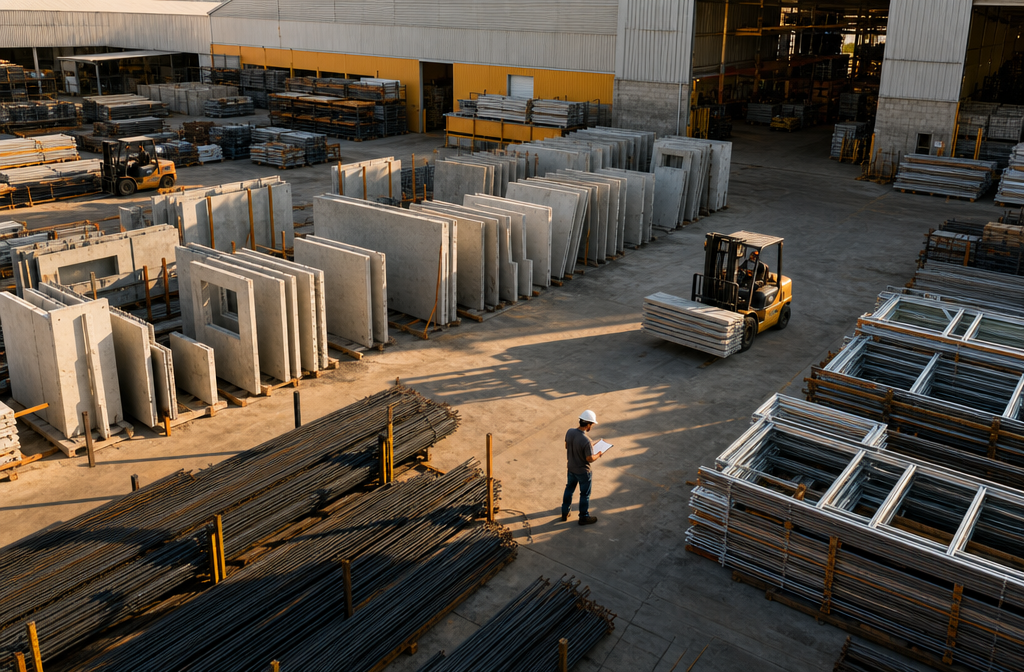
- Wall panels, bathroom pods, and kitchen modules are manufactured in controlled factory environments
- On-site work is compressed to foundation preparation, module placement, and connection
- Weather delays — a significant risk in Brazil’s varied climate zones — are dramatically reduced
- Quality control is more consistent in factory settings than on open construction sites
The supply chain implication is significant. Off-site manufacturing facilities become strategic assets that developers either own, partner with, or contract on a long-term basis [3]. Developers who have secured dedicated factory capacity for 2026 are effectively insulated from the labor and logistics constraints that will slow competitors using traditional methods.
Off-Site Construction in Labor-Constrained Regions
The geographic expansion of MCMV into secondary cities and states with less developed construction labor markets makes off-site construction particularly valuable [2]. A factory in a major manufacturing hub can supply prefabricated components to multiple project sites across a region, allowing a single skilled workforce to serve many projects simultaneously.
This model can cut build times by an additional 20 to 30 percent compared to traditional methods in the same regions [2]. For developers managing multiple MCMV projects simultaneously, the logistics of coordinating factory output with site readiness becomes a core operational competency.
The progress at developments like Tramonto — where accelerated foundation completion has enabled faster overall project timelines — illustrates how construction methodology directly affects delivery speed in the current market environment.
Cost Management as a Competitive Discipline
At MCMV’s subsidized price points, margin management is not a financial preference — it is an operational requirement. The developers who will capture the most contracts in the final push toward one million units are those who have built cost management into every layer of their operation [4].
The three pillars of effective MCMV cost management in 2026:
- Procurement discipline — standardized specifications, bulk agreements, and supplier partnerships that eliminate spot-market exposure
- Construction efficiency — modular and off-site methods that reduce labor hours per unit and compress timelines
- Financial structure — FGTS-optimized project design that accelerates sales and reduces financing costs
These pillars reinforce each other. A developer who standardizes designs can negotiate better bulk procurement terms. Better procurement terms fund investment in modular construction capacity. Modular construction delivers faster completions, which improve cash flow and reduce the cost of capital.
For developers already active in markets with strong real estate fundamentals — such as those examining studio investment opportunities in Florianópolis — the cost management disciplines developed for MCMV projects translate directly into competitive advantages in higher-margin segments as well.
The Risk of Underestimating Supply Chain Complexity
Developers who treat supply chain management as a procurement department function rather than a strategic priority face compounding risks in the current environment:
- Material delays push completion dates past the 2026 contract window
- Cost overruns on subsidized units cannot be passed to buyers
- Labor shortages in secondary cities extend timelines unpredictably
- Global commodity volatility can invalidate project economics mid-construction
The developers who have already signed bulk steel agreements, secured factory capacity for prefabricated components, and structured their FGTS financing packages are operating with a fundamentally different risk profile than those still relying on traditional procurement cycles.

Regional Opportunities Beyond the Northeast
The expansion of MCMV approvals into the South and Southeast of Brazil represents a structural shift in the program’s geography that developers should treat as a long-term positioning signal, not just a 2026 opportunity [2].
States like Santa Catarina and Rio Grande do Sul bring different construction cost structures, different labor market dynamics, and different buyer profiles compared to the Northeast. In Santa Catarina specifically, the combination of MCMV eligibility with the region’s strong economic fundamentals creates a demand environment where absorption rates are likely to be faster than national averages.
Developers evaluating entry into these markets should consider how regional supply chain networks differ from those in more established MCMV geographies. Local supplier relationships, regional logistics infrastructure, and state-level regulatory environments all affect project economics in ways that national procurement strategies may not fully capture.
The growth of the Ingleses region in Florianópolis — characterized by infrastructure investment, quality-of-life improvements, and strong property appreciation — exemplifies the kind of secondary market dynamics that make Southern Brazil an increasingly attractive MCMV expansion territory.
For developers interested in understanding how pre-construction sales performance is evolving in these markets, the sales performance trends in Florianópolis real estate offer a useful benchmark for absorption velocity and pricing dynamics.
Conclusion: Actionable Steps for Developers in the Final Push
The MCMV 1M Unit Milestone 2026: Supply Chain Plays for Developers Targeting the Final Push is not a passive opportunity. The government has set the target, allocated the financing, and expanded the geographic mandate. What remains is execution — and execution at this scale rewards preparation over reaction.
Developers targeting the final push should take the following concrete steps:
- Audit current procurement agreements and identify any materials still subject to spot-market pricing. Prioritize steel, aluminum, and cement for immediate long-term supplier negotiations.
- Evaluate modular and off-site construction partners in target regions. Secure factory capacity commitments before mid-2026, when competition for prefabrication slots will intensify.
- Standardize unit designs across the MCMV portfolio to enable bulk procurement and factory-scale production runs. Resist the temptation to customize at the expense of procurement efficiency.
- Structure all new projects for FGTS eligibility from the initial design phase. Engage FGTS financing specialists early to ensure compliance and maximize buyer accessibility.
- Prioritize land acquisition in secondary cities where MCMV expansion is active, land costs are lower, and competition from other developers is still limited.
- Build material stockpiles for critical inputs with long lead times or high volatility. Treat stockpiling as insurance, not inefficiency.
The developers who treat these supply chain plays as integrated strategy — rather than isolated tactics — will be best positioned to close contracts before the 2026 deadline and build the operational infrastructure that sustains their competitive advantage beyond it.
For developers seeking to understand the full landscape of Brazilian real estate investment opportunities and how MCMV fits within a broader portfolio strategy, exploring current development projects and market intelligence provides a practical starting point for identifying where supply chain investment and market demand align most powerfully.
References
[1] Governo Lula Define Meta De 1 Milhao De Contratos Do Mcmv Para 2026 118091 – https://investidor10.com.br/noticias/governo-lula-define-meta-de-1-milhao-de-contratos-do-mcmv-para-2026-118091/?utm_source=openai
[2] Mcmv Program Expansion 2026 Investing In 1 Million New Units Beyond Northeast Peripheries – https://quadragon.com.br/mcmv-program-expansion-2026-investing-in-1-million-new-units-beyond-northeast-peripheries/?utm_source=openai
[3] Modular Prefab Revolution In Mcmv Projects 2026 Accelerating 1m Unit Delivery Amid Supply Chain Pressures – https://quadragon.com.br/modular-prefab-revolution-in-mcmv-projects-2026-accelerating-1m-unit-delivery-amid-supply-chain-pressures/?utm_source=openai
[4] Mcmv 1 Million Unit Push 2026 Developer Tactics For Contracting And Delivering Subsidized Housing – https://quadragon.com.br/mcmv-1-million-unit-push-2026-developer-tactics-for-contracting-and-delivering-subsidized-housing/?utm_source=openai