
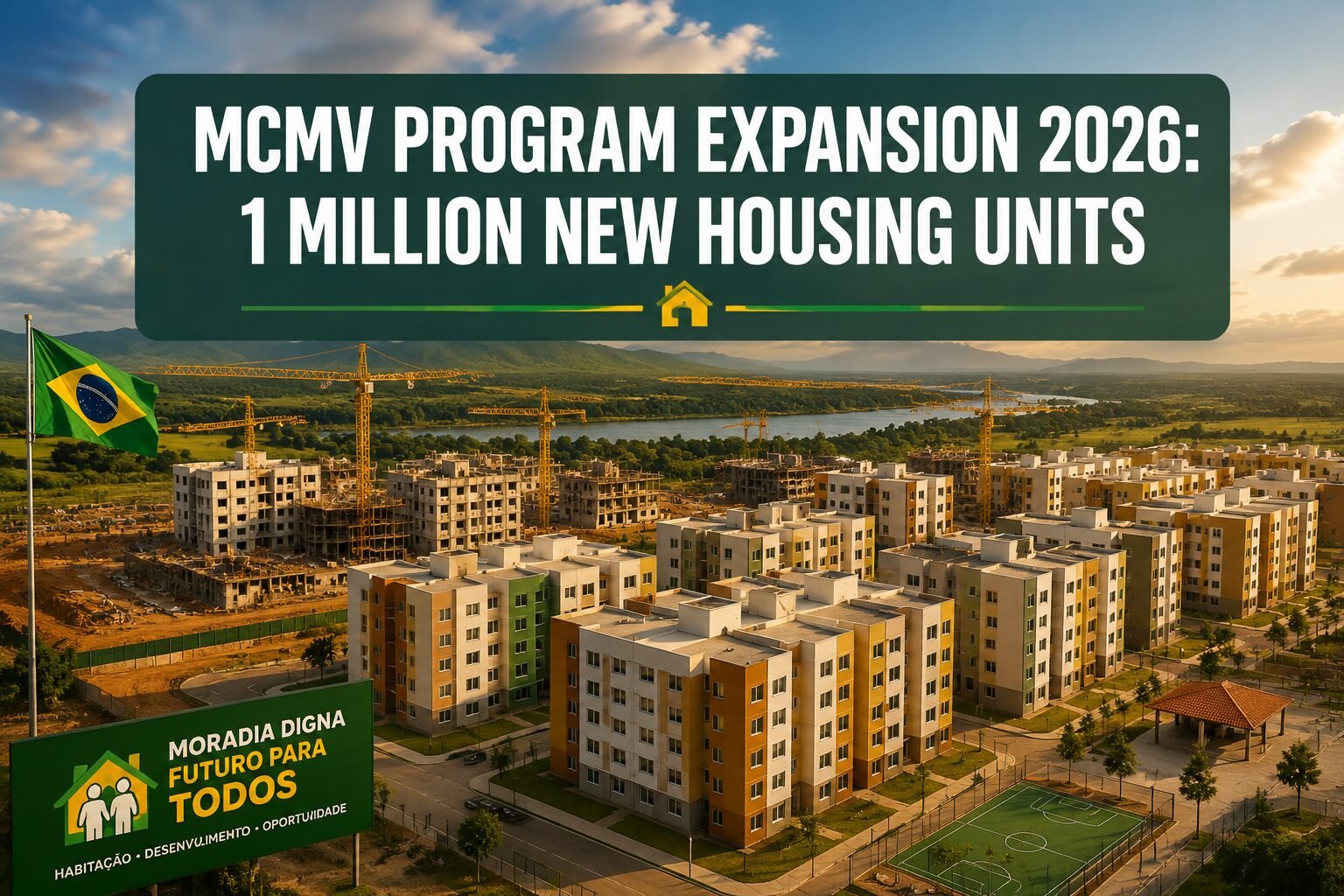
Brazil’s housing deficit sits at roughly 6 million units in 2026 — and the federal government is betting R$15 billion that a dramatically expanded Minha Casa Minha Vida (MCMV) program can close that gap faster than ever before [1]. The MCMV Program Expansion 2026: Investing in 1 Million New Units Beyond Northeast Peripheries is not simply a continuation of past social housing policy. It is a structural shift that is pulling developers, institutional investors, and construction innovators into secondary cities and interior regions that were largely ignored by the market just five years ago.
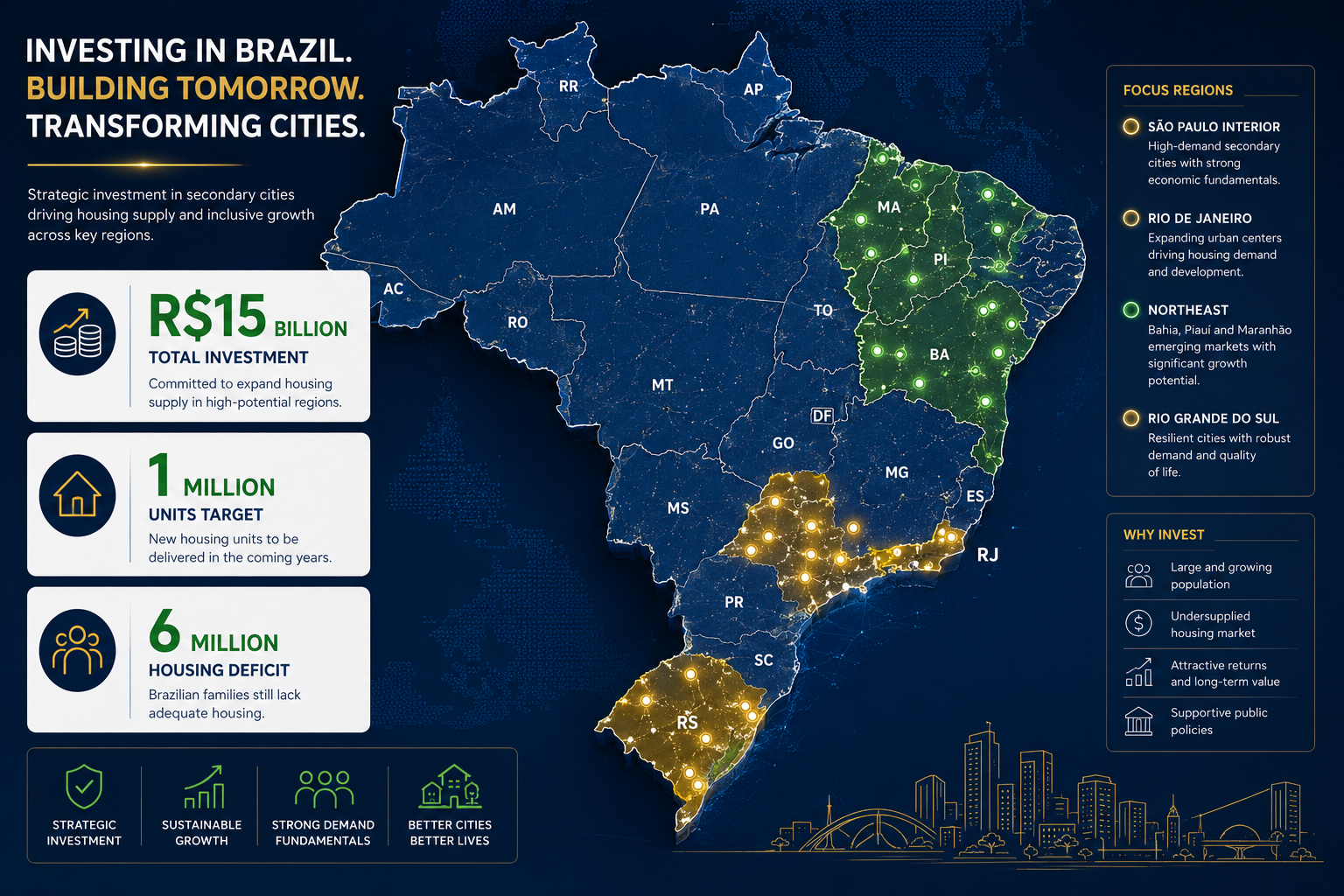
Key Takeaways 🏠
- 🏗️ R$15 billion has been allocated to MCMV in 2026, targeting 1 million new units beyond traditional Northeast peripheries [1]
- 📊 MCMV already accounts for ~50% of all new housing launches nationwide, making it the dominant force in Brazil’s real estate market [2]
- 💰 Income eligibility was raised to R$13,000/month effective April 22, 2026, expanding the buyer pool significantly [3]
- 🏙️ Secondary cities in São Paulo’s interior and Rio de Janeiro’s hinterland are emerging as high-yield investment corridors with projected developer returns of 15–20% [1]
- 🔧 Off-site and industrialized construction methods are compressing timelines and cutting per-unit costs in interior regions [1]
The Scale of Brazil’s 2026 Housing Push
Why 1 Million Units Is a Turning Point
When MCMV accounted for approximately 50% of all new housing launches in 2025 — 224,842 units out of a total 453,005 — it became clear the program had outgrown its original social welfare framing [2]. In 2026, the ambition is even bolder. The federal government’s target of contracting 1 million additional units under the MCMV Program Expansion 2026 framework represents a near-doubling of pace, backed by serious capital and structural policy changes.
💬 “MCMV is no longer just a safety net — it is the engine of Brazil’s entire housing market.”
The R$15 billion allocation is not spread evenly. Priority corridors include the Northeast interior (particularly Piauí, Bahia, and Maranhão), but the program’s most strategically significant new frontier is interior São Paulo and secondary Rio de Janeiro municipalities — markets with stronger purchasing power, better logistics infrastructure, and faster municipal permitting [1].
Updated Income Limits and Price Ceilings 📋
Two critical regulatory changes in 2026 have widened the program’s reach considerably:
| Change | Previous Rule | 2026 Rule |
|---|---|---|
| Monthly income ceiling | R$12,000 | R$13,000 (from April 22, 2026) |
| Max property price (metro >750k pop.) | R$255,000 | R$270,000 (from Jan 1, 2026) |
| Financing structure | FGTS-backed | FGTS-backed + expanded Caixa limits |
The income ceiling increase, effective April 22, 2026, was implemented by Caixa Econômica Federal and directly expands the eligible buyer pool by hundreds of thousands of families [3]. The property price ceiling adjustment — raising the maximum in large metropolitan areas from R$255,000 to R$270,000 — means developers can now build units with higher-quality finishes while remaining within the subsidized framework [4].
For investors and developers, these changes are not cosmetic. They signal that the government is actively managing the program to prevent it from becoming obsolete in markets where land and construction costs have risen.
Geographic Expansion: Beyond the Northeast Periphery
Where the 1 Million Units Are Being Built
The MCMV Program Expansion 2026: Investing in 1 Million New Units Beyond Northeast Peripheries is deliberately targeting a more diverse geographic spread than previous phases. In February 2026, the Ministry of Cities approved 1,009 housing units across five states under the MCMV FAR (Fundo de Arrendamento Residencial) framework [5]:
- 🏘️ Piauí — 576 units (largest single allocation)
- 🏘️ Bahia — 160 units
- 🏘️ Rio Grande do Sul — 120 units
- 🏘️ Santa Catarina — 103 units
- 🏘️ Maranhão — 50 units
While the Northeast remains a core focus, the inclusion of Santa Catarina and Rio Grande do Sul in this batch is significant. These are wealthier southern states with stronger labor markets, higher average incomes, and growing urban populations — exactly the kind of secondary markets that attract institutional capital.
For those interested in the broader dynamics of Brazil’s property investment landscape, exploring the best places to invest in Brazil property for high returns provides important context for how MCMV-driven corridors compare with premium market opportunities.
Interior São Paulo and Rio: The Untapped Opportunity
The most compelling investment narrative within the MCMV expansion involves interior São Paulo — cities like Sorocaba, Ribeirão Preto, São José do Rio Preto, and Campinas’ outer ring. These municipalities offer:
- ✅ Lower land acquisition costs than the capital
- ✅ Faster municipal permitting processes
- ✅ Strong internal migration flows from rural areas
- ✅ Existing industrial and logistics infrastructure
Developers operating in these corridors are finding that MCMV’s subsidized financing structures allow them to reach buyers who are economically active but priced out of the formal credit market in major metros [1]. The combination of FGTS-backed mortgages and the newly raised income ceiling creates a deep, qualified buyer pool.
International pension funds and institutional investors have begun entering this segment, a development that signals genuine confidence in secondary market valuations [1]. When institutional money moves into a market, it typically precedes broader price appreciation — a pattern worth watching closely in 2026.
Developer Tactics and Construction Innovation
How Builders Are Meeting the 1 Million Unit Target
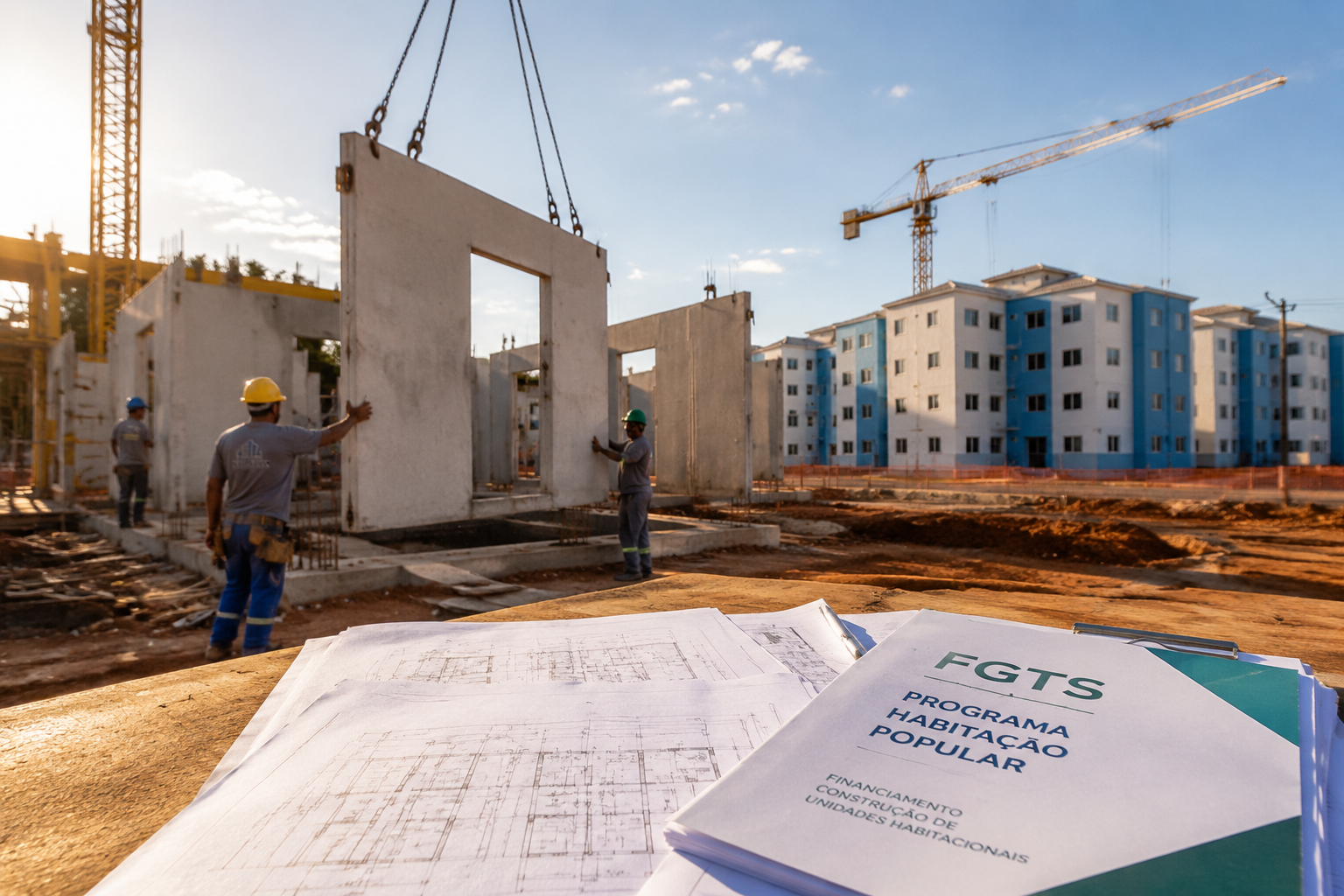
Contracting 1 million additional MCMV units in a single year places enormous pressure on construction supply chains [6]. Developers who are succeeding in this environment are deploying several specific strategies:
1. Pre-Negotiated Bulk Supply Agreements Smart developers are locking in material pricing 12–18 months ahead, particularly for steel, cement, and prefabricated components. This hedges against commodity price volatility driven by the broader infrastructure spending surge.
2. FGTS-Backed Financing Structures By structuring projects to maximize FGTS (Fundo de Garantia do Tempo de Serviço) utilization, developers reduce buyer default risk and accelerate sales velocity. With the Selic rate remaining above 10% in 2026, FGTS-backed financing is one of the few affordable mortgage pathways for lower-income buyers [6].
3. Off-Site and Industrialized Construction The adoption of modular and prefabricated construction techniques is accelerating project timelines and reducing per-unit costs, particularly in interior regions where skilled labor is less abundant [1]. Off-site construction can cut build time by 20–30% compared to traditional methods — a critical advantage when the government is pushing for rapid delivery.
4. Land Banking in Secondary Cities Developers are acquiring land in secondary cities at significantly lower costs than in major metros, then staging construction in phases to manage cash flow under high interest rate conditions [1].
For a closer look at how construction innovation is playing out in real projects, the progress on Tramonto development foundations and accelerated construction pace offers a concrete example of modern building execution.
Projected Returns and Risk Profile 📈
Developers operating within the MCMV framework are projecting yields of 15–20% on multi-family projects in secondary cities, driven by internal migration and demographic demand [1]. This compares favorably with premium urban developments, which face higher land costs, longer sales cycles, and greater exposure to interest rate sensitivity.
The risk profile is also more predictable. MCMV units benefit from government-subsidized financing, which means demand is structurally supported even in economic downturns. The program’s political durability — it has survived multiple administrations — adds another layer of stability for long-term investors.
Those considering off-plan investment strategies should review the advantages of buying property off-plan and how real estate development can amplify investment gains to understand how MCMV-adjacent opportunities can be structured for maximum return.
Investment Implications: MCMV Program Expansion 2026 Beyond Northeast Peripheries
Institutional Capital Enters the Picture
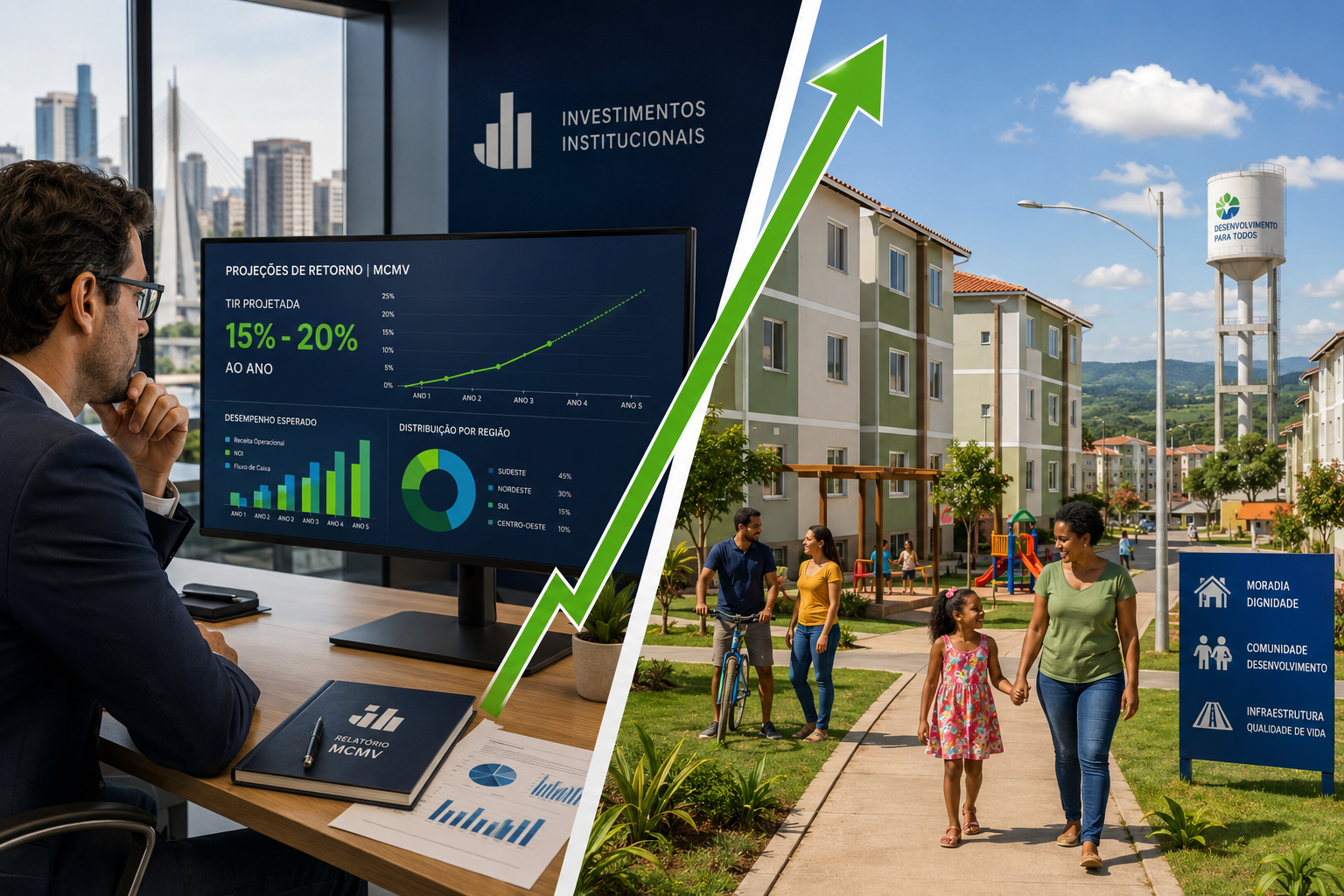
The entry of international pension funds into the MCMV segment is one of the most consequential developments of 2026 [1]. Historically, affordable housing in Brazil was viewed as a purely social policy domain — not an asset class. That perception is changing rapidly.
Several factors are driving institutional interest:
| Factor | Why It Matters |
|---|---|
| Subsidized demand | Government backing reduces vacancy risk |
| Scale | 1 million units creates liquid, diversified exposure |
| Demographic tailwinds | Brazil’s urbanization rate continues to rise |
| Secondary market upside | Interior cities offer appreciation potential |
| Currency diversification | BRL-denominated assets attract EM-focused funds |
For individual investors and smaller developers, the institutional entry is a double-edged signal. On one hand, it validates the market. On the other, it will compress yields over time as competition for quality land and projects increases. Acting in 2026, before full institutionalization, is the strategic window.
Florianópolis and the Southern Corridor
While the Northeast and interior São Paulo dominate MCMV headlines, southern Brazil is quietly emerging as a significant growth corridor. Santa Catarina’s inclusion in the February 2026 Ministry of Cities approvals [5] reflects the state’s growing housing demand, driven by tech sector migration and quality-of-life appeal.
Florianópolis, in particular, represents a market where MCMV-adjacent investment intersects with premium demand. The real estate market in Greater Florianópolis and what to expect in 2025 and beyond highlights how the region’s growth dynamics are creating opportunities across multiple price segments.
For investors interested in the lifestyle and infrastructure factors driving southern Brazil’s appeal, the growth of the Ingleses region in Florianópolis — quality of life, infrastructure, and property appreciation provides valuable ground-level context.
Key Risks to Monitor ⚠️
No investment thesis is complete without a clear-eyed view of risks. For the MCMV expansion, the primary concerns are:
- Supply chain stress: The 1 million unit target is straining construction materials and skilled labor availability [6]
- Interest rate environment: Selic above 10% increases financing costs for developers not fully covered by FGTS structures [6]
- Delivery delays: Ambitious timelines in interior regions may face permitting or infrastructure bottlenecks
- Political risk: Program parameters can shift between administrations, though MCMV has shown remarkable continuity
Conclusion: Acting on the MCMV Opportunity in 2026
The MCMV Program Expansion 2026: Investing in 1 Million New Units Beyond Northeast Peripheries is the most significant structural event in Brazil’s housing market this decade. With R$15 billion in federal backing, expanded income eligibility, raised property price ceilings, and growing institutional validation, the program has created a rare combination of scale, stability, and yield potential [1][3][4].
The strategic opportunity is clearest in interior São Paulo, secondary Rio de Janeiro municipalities, and the emerging southern corridor — markets where land costs remain manageable, permitting is faster, and demographic demand is accelerating. Developers who have adopted industrialized construction methods and FGTS-backed financing structures are already capturing 15–20% projected yields [1][6].
Actionable Next Steps for Investors and Developers 🎯
- Map secondary city land banks in São Paulo’s interior and Rio’s hinterland before institutional buyers compress acquisition prices
- Structure projects around FGTS financing to maximize buyer eligibility and reduce default risk under high Selic conditions
- Explore off-site construction partnerships to accelerate delivery timelines and reduce per-unit costs
- Monitor Ministry of Cities FAR approvals monthly — these announcements signal where government capital is flowing next [5]
- Consult with specialists who understand the intersection of MCMV policy and regional market dynamics
To explore current development opportunities and understand how professional real estate developers are positioning for this expansion, visit Quadragon’s active development portfolio or get in touch directly to discuss investment strategies aligned with the 2026 MCMV expansion.
Brazil’s housing deficit will not close overnight. But the government’s R$15 billion commitment and 1 million unit target have created a decade-defining investment window — and the secondary cities beyond the Northeast periphery are where the most compelling risk-adjusted returns will be found.
References
[1] Secondary Cities Housing Boom 2026 Mcmv Driven Development Plays In Northeast Interiors And Sao Paulo Outskirts – https://quadragon.com.br/secondary-cities-housing-boom-2026-mcmv-driven-development-plays-in-northeast-interiors-and-sao-paulo-outskirts/?utm_source=openai
[2] Minha Casa Minha Vida Ja Responde Por Metade Dos Lancamentos E Vendas Do Mercado Imobiliario – https://veja.abril.com.br/economia/minha-casa-minha-vida-ja-responde-por-metade-dos-lancamentos-e-vendas-do-mercado-imobiliario/?utm_source=openai
[3] Caixa Amplia Limites De Renda E Financiamento Do Mcmv A Partir De Quarta – https://www.cnnbrasil.com.br/economia/macroeconomia/caixa-amplia-limites-de-renda-e-financiamento-do-mcmv-a-partir-de-quarta/?utm_source=openai
[4] Mcmv Teto Dos Imoveis Das Faixas 1 E 2 E Ampliado – https://www.cimentoitambe.com.br/mcmv-teto-dos-imoveis-das-faixas-1-e-2-e-ampliado/?utm_source=openai
[5] Ministerio Das Cidades Divulga Propostas Enquadradas No Mcmv Far – https://cbic.org.br/ministerio-das-cidades-divulga-propostas-enquadradas-no-mcmv-far/?utm_source=openai
[6] Mcmv 1 Million Unit Push 2026 Developer Tactics For Contracting And Delivering Subsidized Housing – https://quadragon.com.br/mcmv-1-million-unit-push-2026-developer-tactics-for-contracting-and-delivering-subsidized-housing/?utm_source=openai