

Brazil’s ambitious housing program is entering its most challenging phase yet. Minha Casa Minha Vida’s 1 Million Unit Push: Supply Chain Strategies for Brazil Developers in 2026 represents a monumental scaling effort that will test every link in the construction supply chain. With the government targeting an additional 1 million housing units to be contracted through 2026—on top of 2 million units already contracted in the previous three years—developers face unprecedented pressure to optimize procurement, manage materials, and deliver affordable housing at scale[5].
The stakes couldn’t be higher. With over 170,000 units currently under construction and expectations to deliver more than 100,000 housing units in 2026 under subsidized lines alone, the program has mobilized approximately $140-145 billion in total investment since 2009[5]. This massive influx of capital and construction activity now accounts for roughly half of all new housing launches in Brazil, making supply chain efficiency not just a competitive advantage but a survival imperative for developers navigating this election-year funding environment.

Key Takeaways
- 🏗️ Scale Challenge: Brazil aims to contract 1 million additional MCMV units through 2026, requiring developers to scale operations from 170,000 units currently under construction
- 💰 Massive Investment: The program has mobilized $140-145 billion since 2009, with new financing rules effective January 2026 expanding access to families earning up to R$12,000 monthly
- 🔗 Supply Chain Priority: Steel and aluminum demand will surge as MCMV captures 53% of national housing launches, demanding optimized procurement partnerships
- 📊 Market Dominance: The program accounts for half of all new housing launches in Brazil, making supply chain mastery essential for profitable delivery
- 🎯 Housing Deficit: With 5.97 million units still needed nationally, MCMV’s expansion creates sustained opportunities for developers with robust logistics capabilities
Understanding Minha Casa Minha Vida’s 1 Million Unit Push: Supply Chain Strategies for Brazil Developers in 2026
The Minha Casa Minha Vida (MCMV) program has evolved from a social housing initiative into Brazil’s dominant force shaping the entire residential construction sector. As of 2026, the program’s expansion to include a new income bracket (Faixa 4) covering families earning up to R$12,000 per month has fundamentally transformed its market reach[2]. This expansion, combined with updated regulations effective January 2, 2026, has increased maximum property values for lower-income families to R$255,000-270,000 in larger urban centers[5].
The Scale of the Challenge
The numbers tell a compelling story. Brazil’s national housing deficit stood at 5.97 million units as of September 2025, down from 6.21 million in 2022[2]. This improvement reflects MCMV’s cumulative impact, with over 1.7 million units contracted since the program resumed in 2023. However, the ambitious goal of contracting an additional 1 million units through 2026 requires developers to nearly quintuple their current construction capacity of 170,000 units[5].
Key Program Metrics (2026):
| Metric | Value | Impact |
|---|---|---|
| Units Under Construction | 170,000+ | Baseline capacity |
| Expected 2026 Deliveries | 100,000+ | Subsidized lines only |
| Additional Target | 1,000,000 | Contracts through 2026 |
| Market Share | 53% | National housing launches |
| Total Investment | $140-145B | Since 2009 inception |
For developers exploring opportunities in Brazil’s property market, understanding MCMV’s supply chain requirements has become essential. The program captured 53% of national housing launches and 47% of sales in Q1 2025, establishing it as the primary driver of construction activity[2].
Critical Supply Chain Strategies for Scaling to 1 Million Units
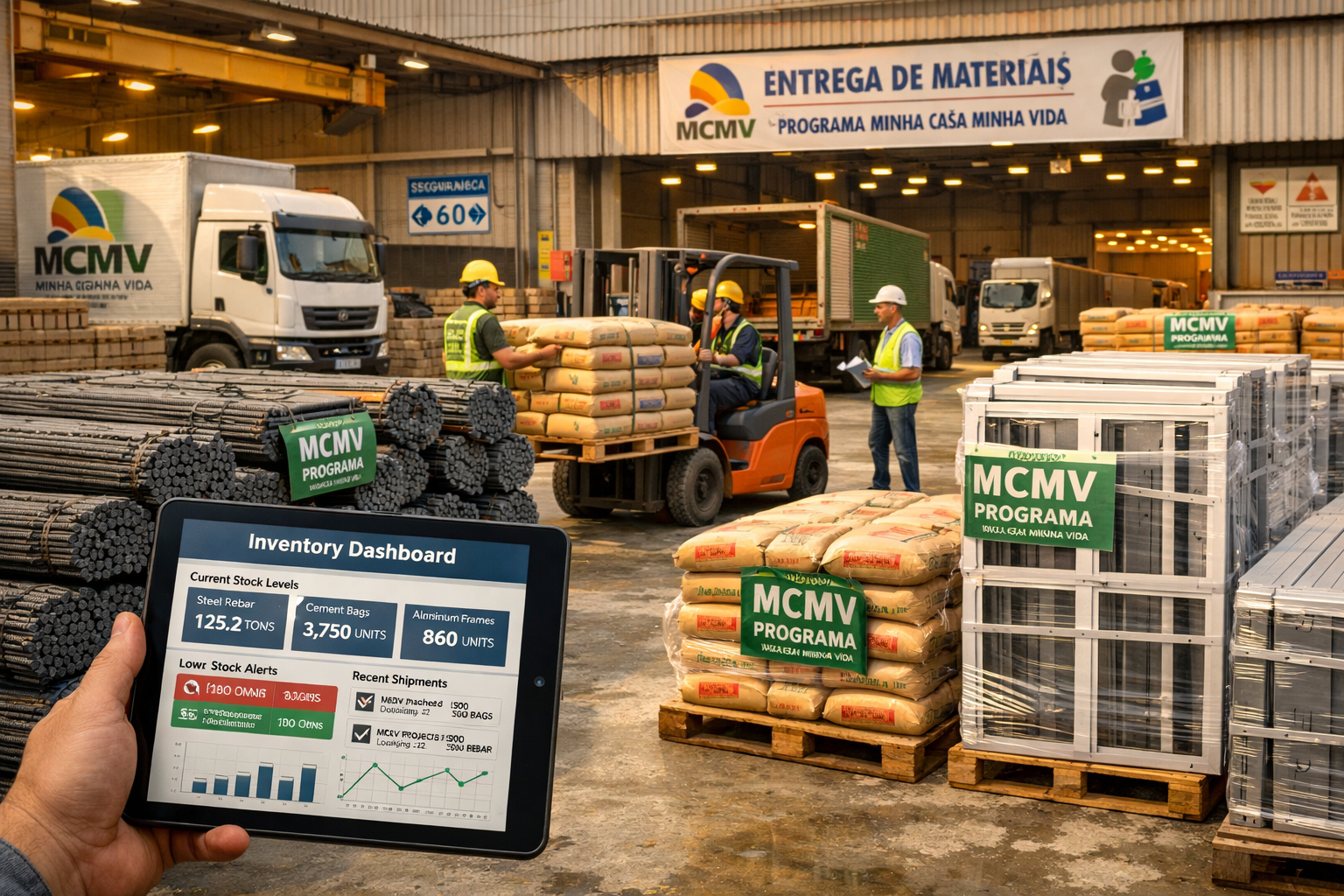
Achieving Minha Casa Minha Vida’s 1 Million Unit Push: Supply Chain Strategies for Brazil Developers in 2026 requires a fundamental rethinking of traditional procurement and logistics approaches. The sheer volume of materials needed—particularly steel and aluminum—demands strategic partnerships and innovative supply chain management.
Steel and Aluminum Procurement Optimization
The construction boom driven by MCMV has created unprecedented demand for structural materials. Steel rebar, aluminum window frames, and metal roofing components represent critical bottlenecks in the supply chain[5]. Developers who secure long-term supply agreements with manufacturers gain significant competitive advantages in project timelines and cost control.
Strategic Procurement Approaches:
- Volume Commitments: Negotiating multi-project supply contracts to secure pricing and availability
- Regional Sourcing: Establishing relationships with local steel mills and aluminum fabricators to reduce transportation costs
- Just-in-Time Delivery: Coordinating material deliveries with construction schedules to minimize on-site storage requirements
- Quality Partnerships: Working with certified suppliers who meet MCMV’s strict quality standards
The real estate market dynamics in regions like Greater Florianópolis demonstrate how localized supply chain strategies can accelerate project delivery while maintaining profitability.
Concrete and Cement Supply Chain Management
With concrete forming the foundation of virtually every MCMV project, cement supply represents another critical vulnerability. The program’s scale demands that developers move beyond transactional purchasing to strategic supply partnerships.
Best Practices Include:
✅ Batching Plant Partnerships: Collaborating with ready-mix concrete suppliers for dedicated production capacity
✅ Bulk Cement Storage: Installing on-site silos to reduce delivery frequency and costs
✅ Alternative Materials: Exploring supplementary cementitious materials to reduce costs and environmental impact
✅ Weather Contingency: Building buffer inventory for rainy season disruptions
Labor and Subcontractor Network Development
Material supply chains represent only half the equation. The rapid scaling required by MCMV’s 1 million unit target demands equally robust labor supply chains. Developers must cultivate networks of qualified subcontractors capable of maintaining quality standards while working at unprecedented speed.
“The program’s expansion to Faixa 4 has created opportunities for developers who can deliver quality housing efficiently, but success requires treating labor as a supply chain component requiring the same strategic management as materials.” – Industry Analysis[2]
For developers interested in understanding property value appreciation through efficient construction, mastering labor supply chains proves essential to capturing pre-construction sales opportunities.
Regional Market Opportunities and Supply Chain Considerations
Minha Casa Minha Vida’s 1 Million Unit Push: Supply Chain Strategies for Brazil Developers in 2026 creates differentiated opportunities across Brazil’s diverse regional markets. Understanding local supply chain dynamics, material availability, and regulatory environments enables developers to identify the most profitable deployment of capital and resources.
São Paulo Metropolitan Region: The Volume Leader
São Paulo’s metropolitan area continues to dominate MCMV activity, with trailing 12-month figures (as of October 2025) showing 111,900 units sold and 136,300 units launched—both surpassing 2024’s already-record performance[2]. This concentration creates both opportunities and challenges for supply chain management.
São Paulo Supply Chain Advantages:
- 🏭 Proximity to major steel mills and cement plants
- 🚛 Well-developed logistics infrastructure for material delivery
- 👷 Large pool of experienced construction labor
- 📋 Established regulatory processes and permitting systems
However, the high concentration of activity also creates competition for materials and labor, requiring developers to establish strong supplier relationships and potentially higher material costs compared to secondary markets.
Secondary Markets: Efficiency Opportunities
Regions like Florianópolis and surrounding areas present compelling opportunities for developers with sophisticated supply chain strategies. While these markets may lack São Paulo’s scale, they often offer:
- Lower land acquisition costs
- Less competition for materials and labor
- Supportive local governments eager for MCMV development
- Growing middle-class populations eligible under expanded Faixa 4 criteria
The key to success in secondary markets lies in adapting supply chain strategies to local conditions. Developers must balance the economies of scale available in major metropolitan areas against the reduced competition and potentially higher margins available in emerging markets.

Technology and Digital Tools for Supply Chain Optimization
Modern supply chain management for MCMV projects increasingly relies on digital tools and technology platforms. Developers scaling to meet the 1 million unit challenge must embrace technological solutions to maintain visibility, control costs, and coordinate complex logistics across multiple simultaneous projects.
Inventory Management Systems
Real-time inventory tracking systems enable developers to:
- Monitor material consumption rates across multiple sites
- Predict reorder points before stockouts occur
- Identify theft or waste patterns requiring intervention
- Optimize storage space allocation on constrained urban sites
Supplier Relationship Management Platforms
Digital platforms connecting developers with material suppliers create transparency and efficiency in procurement processes. These systems enable:
- Competitive Bidding: Soliciting quotes from multiple suppliers simultaneously
- Performance Tracking: Monitoring supplier delivery times, quality metrics, and pricing trends
- Contract Management: Centralizing supply agreements and payment terms
- Risk Assessment: Identifying supplier financial health and capacity constraints
Project Management Integration
Linking supply chain systems with construction project management software creates powerful synergies. When material deliveries synchronize automatically with construction schedules, developers reduce waste, minimize storage requirements, and accelerate project completion.
For developers managing multiple concurrent projects, integrated technology platforms become essential tools for maintaining profitability while scaling operations.
Financial Strategies for Supply Chain Investment
Successfully executing Minha Casa Minha Vida’s 1 Million Unit Push: Supply Chain Strategies for Brazil Developers in 2026 requires significant upfront investment in supply chain infrastructure. Developers must balance the capital requirements of land acquisition, construction, and material procurement while maintaining sufficient liquidity to weather market fluctuations.
Working Capital Management
The time lag between material purchases and project sales creates working capital challenges, particularly for developers scaling rapidly to meet MCMV targets. Strategic approaches include:
- Supplier Credit Terms: Negotiating extended payment terms with key material suppliers
- Staged Material Procurement: Aligning purchases with construction phases to minimize carrying costs
- Pre-Sales Strategies: Maximizing pre-construction sales to generate early cash flow
- Construction Financing: Leveraging MCMV’s favorable financing terms to reduce equity requirements
Volume Discount Strategies
The scale of MCMV development creates opportunities for significant volume discounts on materials. Developers contracting for multiple projects simultaneously can negotiate pricing advantages that smaller competitors cannot match. However, this requires:
- Accurate demand forecasting across the project pipeline
- Sufficient storage capacity or just-in-time delivery coordination
- Financial capacity to commit to large purchase orders
- Risk management for market price fluctuations
Strategic Material Stockpiling
With steel and aluminum prices subject to global commodity market fluctuations, some developers adopt strategic stockpiling approaches during favorable pricing periods. This requires:
- Market Analysis: Monitoring global commodity trends and Brazilian currency fluctuations
- Storage Infrastructure: Securing warehousing or on-site storage capacity
- Capital Allocation: Balancing material inventory against other investment opportunities
- Quality Control: Ensuring proper storage conditions to prevent material degradation
Risk Management in MCMV Supply Chains
The ambitious scale of Minha Casa Minha Vida’s 1 Million Unit Push: Supply Chain Strategies for Brazil Developers in 2026 introduces multiple risk vectors that developers must actively manage. Election-year funding dynamics, commodity price volatility, and regulatory changes all create potential disruptions to carefully planned supply chains.
Political and Funding Risk
With approximately $140-145 billion mobilized since 2009, MCMV represents a massive government commitment[5]. However, political transitions and fiscal pressures can impact program funding and priorities. Developers should:
- Diversify project portfolios across MCMV income brackets (Faixas 1-4)
- Maintain flexibility to pivot to market-rate projects if subsidies change
- Monitor political developments and budget discussions closely
- Build relationships with program administrators at federal and state levels
Commodity Price Volatility
Steel and aluminum prices respond to global supply-demand dynamics, currency fluctuations, and trade policies. Effective risk management strategies include:
- Price Hedging: Using financial instruments to lock in material costs for future projects
- Supplier Partnerships: Negotiating price-adjustment clauses tied to market indices
- Alternative Materials: Maintaining engineering flexibility to substitute materials when economically advantageous
- Cost-Plus Contracting: Structuring some supply agreements with transparent cost pass-through mechanisms
Regulatory Compliance
MCMV projects must meet specific technical standards, environmental requirements, and accessibility guidelines. Supply chain disruptions can occur when:
- Materials fail to meet program specifications
- Environmental permits delay material extraction or processing
- Building code changes require specification modifications
- Quality control failures require material replacement
Proactive compliance management requires close coordination between procurement teams, engineering departments, and quality assurance personnel throughout the supply chain.
Case Studies: Successful Supply Chain Strategies in Practice
Examining real-world examples of developers successfully navigating MCMV’s supply chain challenges provides valuable insights for those scaling operations in 2026.
Case Study 1: Regional Steel Partnership Model
A mid-size developer in Brazil’s Northeast region secured a multi-year supply agreement with a regional steel mill, committing to purchase 60% of their projected rebar requirements across eight planned MCMV projects. In exchange, the developer received:
- 12% discount versus spot market pricing
- Guaranteed delivery priority during high-demand periods
- Extended 90-day payment terms
- Technical support for structural optimization
This partnership enabled the developer to complete projects 15% faster than competitors while maintaining 8% higher gross margins despite similar sales prices.
Case Study 2: Integrated Logistics Platform
A large-scale developer implemented an integrated supply chain management platform connecting 47 suppliers, 12 active construction sites, and corporate procurement teams. The system provided:
- Real-time inventory visibility across all sites
- Automated reorder triggers based on consumption rates
- Supplier performance dashboards tracking delivery times and quality metrics
- Predictive analytics identifying potential material shortages
Within 18 months, the developer reduced material waste by 23%, decreased storage costs by 31%, and improved on-time project completion rates from 67% to 89%.
Case Study 3: Modular Construction Approach
Recognizing the labor supply constraints in their target markets, one innovative developer adopted modular construction techniques for MCMV projects. By prefabricating wall panels, bathroom modules, and other components in a controlled factory environment, they:
- Reduced on-site labor requirements by 40%
- Shortened construction timelines from 14 months to 9 months
- Improved quality control and reduced defect rates
- Simplified supply chain management through factory-based inventory control
This approach required significant upfront investment in manufacturing facilities but enabled the developer to scale rapidly while competitors struggled with labor shortages.
Sustainability and Environmental Considerations in Supply Chain Planning
As MCMV scales toward its 1 million unit target, environmental sustainability increasingly influences supply chain decisions. Developers who proactively address environmental concerns gain competitive advantages through:
Green Material Sourcing
- Certified Sustainable Lumber: Sourcing wood products from responsibly managed forests
- Recycled Steel Content: Prioritizing suppliers using recycled materials in production
- Low-Carbon Cement: Exploring alternative cement formulations with reduced CO2 emissions
- Local Sourcing: Reducing transportation emissions through regional material procurement
Waste Reduction Strategies
Construction waste represents both an environmental concern and an economic inefficiency. Leading developers implement:
- Precise material ordering systems to minimize excess
- On-site sorting and recycling programs for construction debris
- Partnerships with recycling facilities for material recovery
- Design optimization to reduce material consumption per unit
Energy Efficiency Integration
While not strictly supply chain considerations, energy-efficient design choices impact material procurement decisions:
- Solar panel integration requiring early supplier coordination
- High-performance window specifications affecting aluminum procurement
- Insulation materials requiring specialized suppliers
- Water-efficient fixtures and systems
Developers who view sustainability as a value driver rather than a cost position themselves advantageously as environmental standards tighten and buyer preferences evolve.
Future Outlook: Beyond 2026
While Minha Casa Minha Vida’s 1 Million Unit Push: Supply Chain Strategies for Brazil Developers in 2026 focuses on immediate challenges, successful developers must also position themselves for the program’s long-term evolution. With Brazil’s housing deficit still standing at 5.97 million units even after recent progress, MCMV will likely remain a structural driver of construction activity for years to come[2].
Emerging Trends to Monitor
- Digitalization: Increasing adoption of BIM (Building Information Modeling) and digital twins for supply chain optimization
- Automation: Growing use of construction robotics and automated material handling systems
- Prefabrication: Continued shift toward factory-built components and modular construction
- Circular Economy: Development of material reuse and recycling systems within the construction sector
Strategic Positioning
Developers who invest now in supply chain capabilities, technology platforms, and supplier relationships will capture disproportionate value as MCMV continues expanding. The program’s evolution from a purely low-income focus to include middle-class families through Faixa 4 creates opportunities for developers who can efficiently serve multiple market segments[2].
The growth trajectory of emerging markets suggests that MCMV’s impact will extend well beyond traditional metropolitan centers, rewarding developers with flexible, scalable supply chain models capable of adapting to diverse regional conditions.
Conclusion
Minha Casa Minha Vida’s 1 Million Unit Push: Supply Chain Strategies for Brazil Developers in 2026 represents both an unprecedented challenge and a generational opportunity for Brazil’s construction sector. With the program accounting for half of all new housing launches and mobilizing $140-145 billion in investment, developers who master supply chain optimization will capture disproportionate market share and profitability[5].
Success requires moving beyond transactional material procurement to strategic supply chain management encompassing:
- Long-term partnerships with steel, aluminum, and cement suppliers
- Technology platforms providing real-time visibility across multiple projects
- Regional market strategies tailored to local supply chain dynamics
- Financial structures supporting volume procurement and working capital needs
- Risk management systems addressing political, commodity, and regulatory uncertainties
The developers who thrive in this environment will be those who recognize that supply chain excellence is not merely an operational consideration but a core competitive advantage. As Brazil works to address its 5.97 million unit housing deficit, the companies that can efficiently deliver quality affordable housing at scale will define the industry’s future[2].
Actionable Next Steps
For developers preparing to capitalize on MCMV’s expansion:
- Audit Current Supply Chains: Identify bottlenecks and vulnerabilities in existing material procurement and logistics processes
- Develop Supplier Scorecards: Implement systematic evaluation of supplier performance, reliability, and capacity
- Invest in Technology: Evaluate and deploy supply chain management platforms appropriate to your scale and complexity
- Build Strategic Partnerships: Initiate discussions with key material suppliers about multi-project volume commitments
- Explore Regional Opportunities: Analyze secondary markets where supply chain advantages may offset lower scale
- Enhance Financial Planning: Ensure capital structures support the working capital requirements of scaled operations
- Monitor Policy Developments: Stay informed about MCMV program changes, funding levels, and regulatory updates
The path to successfully delivering 1 million additional units runs directly through optimized, resilient, and strategically managed supply chains. Developers who recognize this reality and act decisively will position themselves at the forefront of Brazil’s affordable housing transformation.
For more information about development opportunities and market insights, explore how strategic planning and execution can maximize returns in Brazil’s dynamic real estate market.
References
[1] Brazil S Government Sets A Target Of Building 2 Million Affordable Homes By 2026 – https://tvbrics.com/en/news/brazil-s-government-sets-a-target-of-building-2-million-affordable-homes-by-2026/
[2] Brazil Housing Boom Flash In The Pan Or Lula S Masterstroke Ce7d50d8db88f620 – https://ch.zonebourse.com/actualite-bourse/brazil-housing-boom-flash-in-the-pan-or-lula-s-masterstroke-ce7d50d8db88f620
[3] Minha Casa Minha Vida Brazil039s Public Housing Is Better Than Nothing – https://worldcrunch.com/culture-society/minha-casa-minha-vida-brazil039s-public-housing-is-better-than-nothing/
[4] Scaling Up Affordable Housing Supply – https://unhabitat.org/scaling-up-affordable-housing-supply
[5] Brazils Construction Sector 2026 Housing Programs Support Rates High Risks Persist – https://www.fastmarkets.com/insights/brazils-construction-sector-2026-housing-programs-support-rates-high-risks-persist/