

The Brazilian real estate landscape is experiencing a dramatic shift in 2026. While traditional mass-market developers continue building high-volume, cookie-cutter apartment blocks, a growing segment of lifestyle-oriented developers is capturing premium margins, achieving faster sales cycles, and delivering superior returns to investors. This transformation isn’t just about luxury versus affordability—it’s about understanding what modern buyers truly value: wellness amenities, remote work infrastructure, green spaces, and technology integration.
Niche Market Positioning: How Lifestyle-Oriented Properties Are Outperforming Mass-Market Developments in Brazil’s 2026 Market represents more than a temporary trend. It reflects fundamental changes in buyer priorities, demographic shifts, and evolving investment strategies that favor specialized, amenity-rich developments over generic residential towers. Developers who recognize this shift are reaping substantial rewards through higher rental yields, accelerated absorption rates, and premium pricing power.
Key Takeaways
🏡 Lifestyle-oriented properties with wellness amenities, co-working spaces, and green areas are achieving higher profit margins and faster sales cycles than traditional mass-market developments in Brazil’s 2026 market.
📊 Mid-to-high-end residential properties experienced a remarkable 94% increase in sales volume in 2024 compared to the previous year, signaling robust demand for upscale, amenity-focused living[1].
💰 Smaller luxury units are appreciating at approximately 9% annually, significantly outpacing larger trophy homes that face elevated financing costs and longer selling times[2].
🌿 Properties incorporating smart home technology, eco-friendly designs, and flexible rental arrangements are commanding premium valuations, with smart home adoption expected to reach 20% of Brazil’s residential market by 2026[1].
🏖️ Secondary cities like Balneário Camboriú, Salvador, and João Pessoa are experiencing price growth exceeding 20%, substantially outperforming traditional mass-market segments in major metros[2][3].
Understanding the Shift: From Volume to Value in Brazil’s Real Estate Market
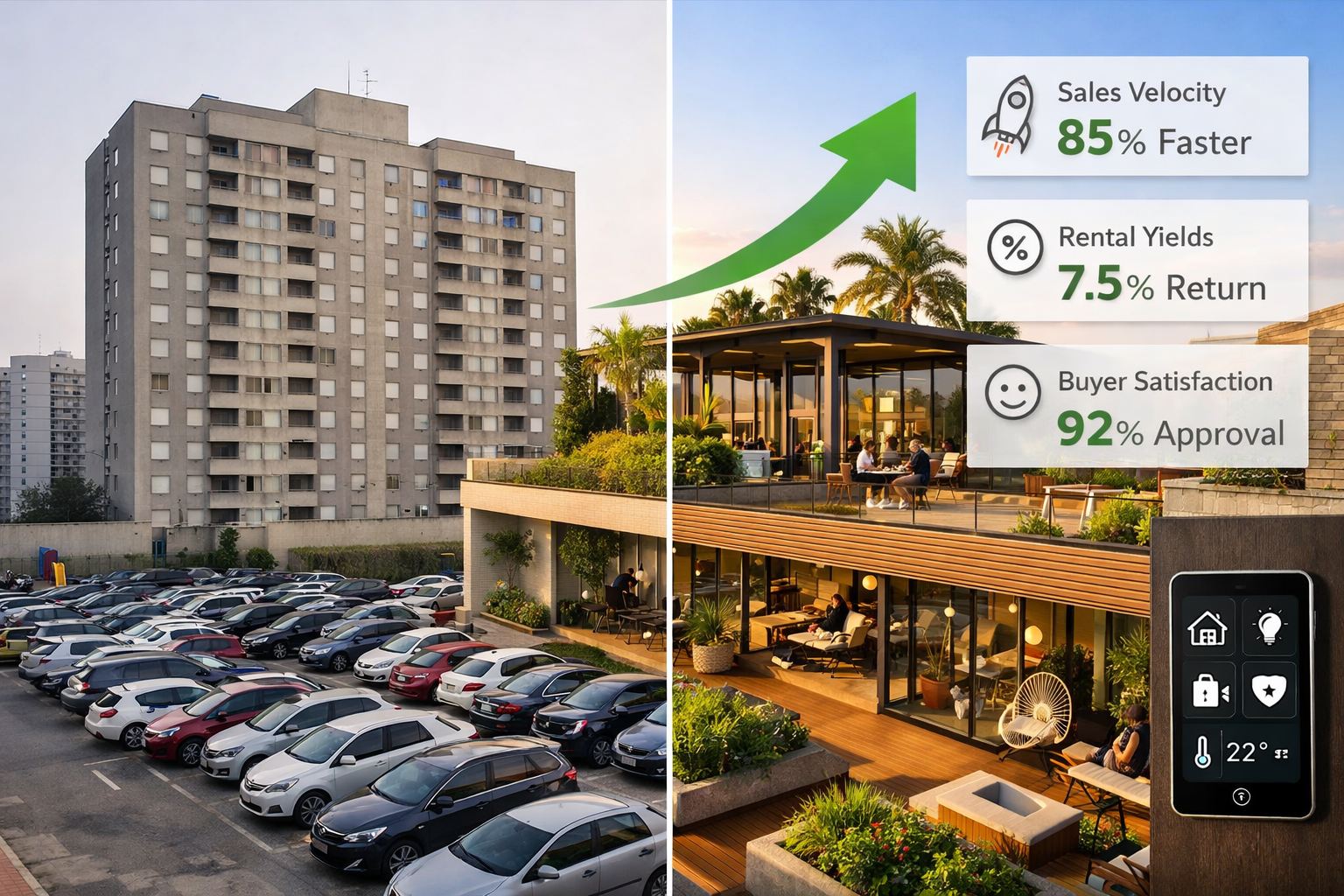
Brazil’s real estate market has historically favored volume-driven development strategies. Large developers focused on constructing hundreds or thousands of standardized units, competing primarily on price and location. However, 2026 marks a pivotal turning point where quality decisively trumps quantity for an expanding segment of buyers and investors.
The Changing Brazilian Buyer Profile
Today’s Brazilian property buyers—whether domestic or international—possess fundamentally different priorities than previous generations. Remote work arrangements, health consciousness, environmental awareness, and technology expectations have reshaped what constitutes an attractive residential property.
Key demographic shifts driving demand include:
- Young professionals seeking work-from-home infrastructure with dedicated office spaces and high-speed connectivity
- Health-conscious buyers prioritizing wellness amenities like fitness centers, yoga studios, and outdoor recreation areas
- Environmentally aware consumers demanding sustainable building practices and green certifications
- Tech-savvy residents expecting smart home integration and digital convenience features
- International investors looking for premium rental yields from tourism and executive housing markets
These buyers willingly pay premium prices for properties that align with their lifestyle values, creating profitable opportunities for developers who position their projects accordingly. Understanding the best places to invest in Brazil property requires recognizing these demographic transformations.
Mass-Market Limitations in 2026
Traditional mass-market developments face significant challenges in Brazil’s 2026 environment:
Limited differentiation: Generic apartment towers struggle to stand out in crowded markets, forcing developers into price-based competition that erodes margins.
Commodity pricing: Without distinctive features or amenities, mass-market units become interchangeable commodities, preventing premium pricing strategies.
Lower rental yields: Basic apartments generate modest rental income compared to lifestyle-oriented properties with premium amenities that command higher rents.
Slower appreciation: Mass-market properties typically appreciate at market-average rates, while niche-positioned developments can significantly outpace general market growth.
Extended sales cycles: Without compelling lifestyle features, mass-market units often sit on the market longer, increasing carrying costs and financial risk.
How Lifestyle-Oriented Properties Are Outperforming: The Data Behind the Trend
The performance gap between lifestyle-oriented developments and traditional mass-market projects has widened dramatically in 2026, supported by compelling market data and sales metrics.
Exceptional Sales Growth in Premium Segments
The numbers tell a clear story. Mid-to-high-end residential properties experienced a 94% increase in sales volume (VGV) in the second quarter of 2024 compared to the same period in 2023[1]. This extraordinary growth demonstrates that buyers are actively seeking—and paying for—properties that offer more than basic shelter.
Brazil’s smart home market reached $2.41 billion in revenue in 2024, representing a 91.06% increase from 2022[1]. This explosive growth reflects consumer appetite for technology-enhanced living spaces that lifestyle-oriented developers are incorporating into their projects. By year-end 2026, approximately 9.9 million Brazilian homes with internet access are expected to incorporate smart devices, with these properties representing roughly 20% of Brazil’s residential market[1].
Geographic Performance: Secondary Cities Leading Growth
While São Paulo and Rio de Janeiro remain important markets, secondary cities with strong lifestyle appeal are delivering superior returns. Salvador and João Pessoa are leading Brazil’s price growth with increases above 20%, substantially exceeding growth in traditional mass-market segments of major metros[2].
Balneário Camboriú has emerged as Brazil’s “vertical luxury capital,” capturing strong domestic and international demand for high-rise luxury developments with record-breaking architecture[3]. The city’s focus on pre-construction apartments, branded residences, and oceanfront condos—all lifestyle-oriented property types—has generated exceptional investor returns.
The growth of regions like Ingleses in Florianópolis demonstrates how quality of life, infrastructure development, and lifestyle amenities drive property appreciation in emerging markets.
Unit Size and Pricing Dynamics
Interestingly, smaller luxury units are outperforming larger trophy homes in 2026. Large luxury apartments face challenges from elevated financing costs and longer selling times, while smaller, moderately-priced apartments with premium finishes and amenities appreciate at approximately 9% annually[2].
This trend reflects affordability constraints combined with lifestyle priorities. Buyers prefer well-designed, amenity-rich smaller units over basic larger apartments, creating opportunities for developers who maximize value per square meter through thoughtful design and premium features.
In prime tourist neighborhoods like Copacabana, average prices per square meter exceed 10,000 reais (approximately $1,800)—comparable to major European capitals[5]. Prices in these lifestyle-oriented locations sometimes double or triple within years, far outpacing mass-market appreciation rates.
Rental Income and Investment Returns
Over 30,000 homes in Rio are offered for seasonal rental, predominantly high-end properties on platforms like Airbnb[5]. These lifestyle-oriented properties generate substantial income, incentivizing owners to invest in premium amenities and finishes that command higher nightly rates.
Properties benefiting from infrastructure improvements—such as those near São Paulo’s Metro Line 6 and Novo PAC urban mobility investments—are projected to experience 50% to 80% cumulative price growth over 5 years in nominal terms[2]. Lifestyle-oriented developments positioned near these infrastructure enhancements capture premium valuations by offering both convenience and quality-of-life benefits.
Key Niche Market Positioning Strategies Driving Success in Brazil’s 2026 Market
Successful developers in 2026 aren’t simply building better apartments—they’re creating comprehensive lifestyle ecosystems that address specific buyer needs and preferences. Several distinct positioning strategies are delivering exceptional results.
Wellness-Focused Developments
Wellness-oriented properties represent one of the fastest-growing niches in Brazil’s 2026 market. These developments integrate health and well-being into every aspect of design and amenity planning.
Core wellness features include:
- 🧘 Yoga and meditation studios with professional instruction programs
- 💪 State-of-the-art fitness centers with personal training services
- 🏊 Lap pools and aquatic fitness facilities for year-round exercise
- 🌳 Walking and jogging trails through landscaped green spaces
- 🥗 Healthy dining options and organic community gardens
- 🧖 Spa facilities including saunas, steam rooms, and massage services
- 🏃 Outdoor fitness equipment and sports courts
Developers positioning properties around wellness themes attract health-conscious buyers willing to pay premium prices for integrated fitness and well-being infrastructure. These amenities also generate recurring revenue through membership fees and service charges, improving overall project economics.
Remote Work-Optimized Properties
The normalization of remote and hybrid work arrangements has created strong demand for work-from-home optimized properties. Developers addressing this need are capturing significant market share from traditional residential projects.
Essential remote work features:
| Feature | Buyer Benefit | Developer Advantage |
|---|---|---|
| Dedicated co-working lounges | Professional workspace outside home | Premium pricing justification |
| High-speed fiber internet | Reliable connectivity for video calls | Competitive differentiation |
| Private office pods | Quiet spaces for focused work | Increased perceived value |
| Meeting rooms with AV equipment | Professional client presentations | Recurring rental revenue |
| Business center services | Printing, scanning, administrative support | Additional income stream |
| Soundproofing between units | Reduced noise interference | Quality construction premium |
These features transform residential properties into live-work environments that support professional productivity while maintaining work-life balance. Buyers recognize the value of not commuting to external co-working spaces, making these amenities highly attractive.
Eco-Friendly and Sustainable Developments
Environmental consciousness has moved from niche concern to mainstream expectation among Brazilian property buyers in 2026. Developers prioritizing eco-friendly designs and sustainable practices are capturing premium market positioning.
High-performance sustainability features include:
- ☀️ Solar panels and renewable energy systems reducing operating costs
- 💧 Rainwater harvesting and greywater recycling for irrigation and non-potable uses
- 🌱 Green roofs and vertical gardens improving insulation and air quality
- ♻️ Waste separation and composting facilities supporting circular economy practices
- 🏗️ Sustainable building materials with low environmental impact
- 🌡️ Energy-efficient HVAC systems and smart climate control
- 🚴 Bike storage and electric vehicle charging infrastructure
Properties with green certifications command premium pricing while delivering lower operating costs to owners—a compelling value proposition. These developments also appeal to international buyers and institutional investors with ESG (Environmental, Social, Governance) mandates.
Technology-Enhanced Smart Living
Smart home technology adoption is accelerating rapidly across Brazil, with properties equipped with these features expected to reach approximately 20% of the residential market by 2026[1]. Developers incorporating comprehensive technology integration are positioning properties as modern, convenient, and future-ready.
Smart home features driving buyer interest:
- 📱 Integrated mobile apps controlling lighting, climate, security, and appliances
- 🔒 Advanced security systems with facial recognition and remote monitoring
- 🎵 Multi-room audio and entertainment systems
- 💡 Automated lighting and climate optimization for energy efficiency
- 🚪 Smart locks and access control for convenience and security
- 📹 Video intercom systems with smartphone integration
- 🤖 Voice-activated controls for hands-free operation
International buyers are particularly drawn to these features, with developers preparing premium projects featuring smart home technology and advanced security systems specifically to meet overseas investor expectations for 2026[4]. Understanding how technology is transforming Florianópolis’s real estate market provides insights into this technological shift.
Tourism and Short-Term Rental Optimization
Brazil’s robust tourism market creates opportunities for rental-optimized lifestyle properties that generate superior yields compared to traditional long-term residential rentals.
Developers are incorporating flexible arrangements for short-term rentals, concierge services, and premium finishes in 2026—lifestyle features that distinguish upscale properties from traditional mass-market offerings[4]. These properties appeal to investors seeking rental income rather than personal use.
Tourism-oriented positioning strategies:
- 🏖️ Prime beachfront or tourist district locations maximizing rental demand
- 🛎️ Concierge services managing bookings, cleaning, and guest services
- 🏨 Hotel-quality finishes and furnishings commanding premium nightly rates
- 🏊 Resort-style amenities (pools, bars, entertainment areas) enhancing guest experience
- 📸 Instagram-worthy design elements supporting online marketing
- 🔑 Flexible rental policies allowing short-term arrangements
- 💼 Professional property management partnerships
Over 30,000 homes in Rio are offered for seasonal rental, generating substantial income and incentivizing property owners to invest in lifestyle amenities and premium finishes[5]. This creates a virtuous cycle where lifestyle features enable higher rental rates, justifying premium acquisition prices.
Regional Market Analysis: Where Niche Positioning Delivers Maximum Impact
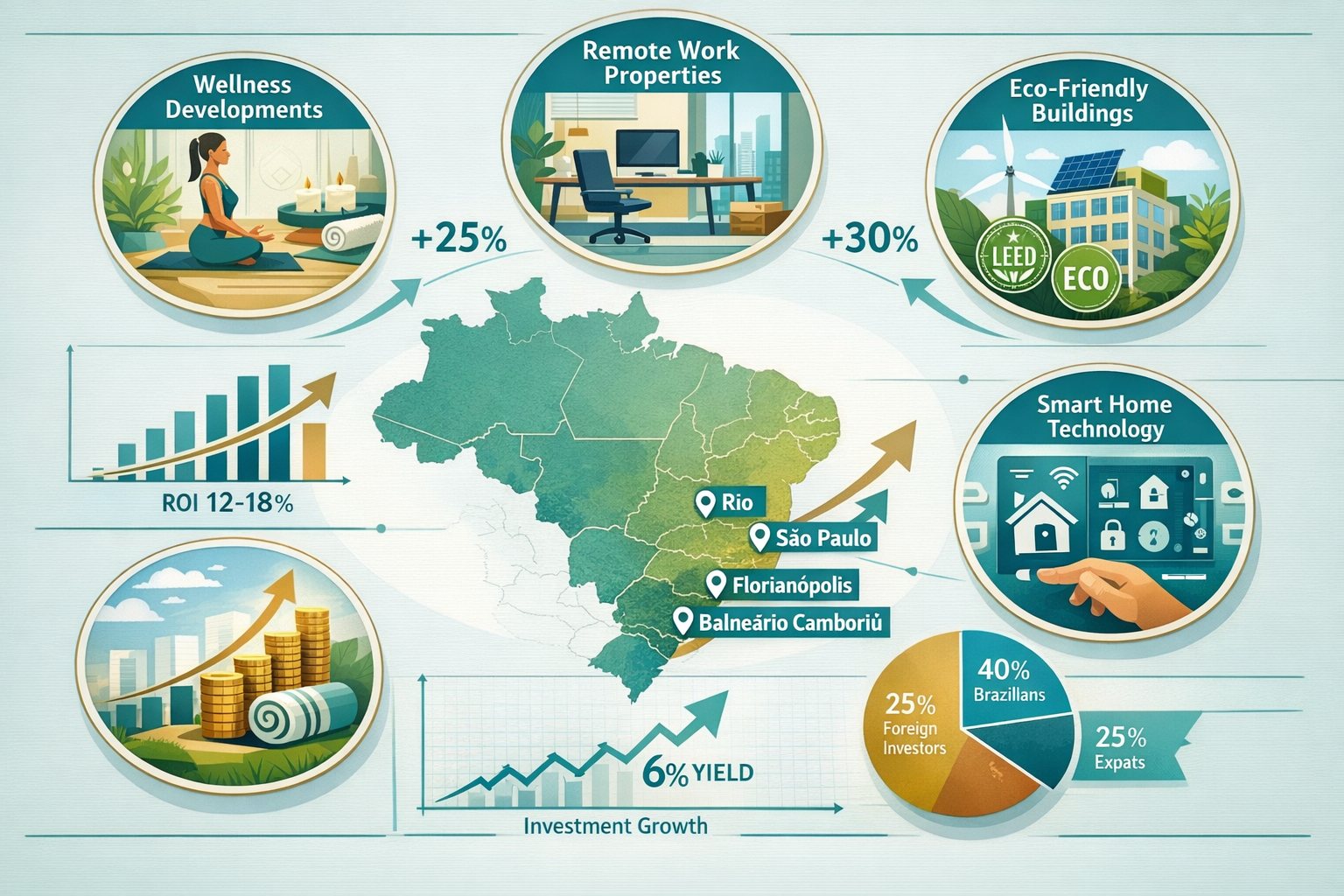
Niche Market Positioning: How Lifestyle-Oriented Properties Are Outperforming Mass-Market Developments in Brazil’s 2026 Market varies significantly by region, with certain cities and neighborhoods offering exceptional opportunities for lifestyle-oriented development strategies.
Rio de Janeiro: International Luxury and Waterfront Living
Rio de Janeiro continues attracting international buyers who are reshaping the market with continued interest in waterfront neighborhoods and luxury segments[4]. Developers preparing premium projects featuring smart home technology, advanced security systems, and lifestyle-focused amenities are specifically targeting overseas investor expectations for 2026.
Prime Rio neighborhoods for lifestyle positioning:
- Copacabana and Ipanema: Beachfront properties with tourism rental potential
- Leblon: Upscale residential with wellness and security focus
- Barra da Tijuca: Modern developments with comprehensive amenity packages
- Botafogo and Flamengo: Emerging lifestyle-oriented neighborhoods with bay views
The concentration of high-end seasonal rentals in Rio creates strong demand for properties with premium finishes and amenities that justify elevated nightly rates.
São Paulo: Infrastructure-Driven Lifestyle Developments
São Paulo’s massive urban mobility investments are creating opportunities for infrastructure-adjacent lifestyle developments. Properties benefiting from Metro Line 6 and Novo PAC projects are projected to experience 50% to 80% cumulative price growth over 5 years[2].
Developers combining transit accessibility with lifestyle amenities are capturing premium positioning by offering both convenience and quality of life. Co-working spaces, wellness facilities, and green areas become even more valuable when residents can easily access employment centers via modern transit infrastructure.
Florianópolis: Quality of Life and Natural Beauty
Florianópolis represents an ideal market for lifestyle-oriented positioning, combining natural beauty, quality of life, and growing infrastructure. The city attracts buyers seeking beach access, outdoor recreation, and relaxed living without sacrificing urban amenities.
Life in Florianópolis offers unique advantages for lifestyle-focused developments, with buyers prioritizing proximity to beaches, nature, and outdoor activities. Developments incorporating these natural assets into their amenity programs capture premium market positioning.
Projects like Solis and Tramonto demonstrate how developers are creating lifestyle-oriented properties that resonate with quality-conscious buyers seeking more than basic housing.
Balneário Camboriú: Vertical Luxury Capital
Balneário Camboriú has emerged as Brazil’s premier destination for high-rise luxury developments with record-breaking architecture[3]. The city captures strong domestic and international demand through lifestyle-oriented property types including pre-construction apartments, branded residences, and oceanfront condos.
The concentration of luxury developments creates a competitive amenity race where developers continuously enhance offerings to differentiate their projects. This benefits buyers who gain access to increasingly sophisticated lifestyle features and services.
Salvador and João Pessoa: Emerging Lifestyle Markets
These secondary cities are leading Brazil’s price growth with increases above 20%[2], substantially exceeding traditional mass-market segments in major metros. Their combination of coastal location, cultural appeal, and relative affordability creates ideal conditions for lifestyle-oriented positioning.
Developers entering these markets with wellness-focused, technology-enhanced, and amenity-rich projects can capture significant market share from traditional mass-market competitors while commanding premium pricing.
Implementation Strategies: How Developers Can Capitalize on Niche Positioning
Successfully implementing Niche Market Positioning: How Lifestyle-Oriented Properties Are Outperforming Mass-Market Developments in Brazil’s 2026 Market requires strategic planning, market research, and execution discipline.
Market Research and Buyer Profiling
Effective niche positioning begins with deep understanding of target buyer segments. Developers should conduct comprehensive research to identify:
- Demographic characteristics: Age, income, profession, family status
- Lifestyle preferences: Wellness priorities, work arrangements, recreational interests
- Technology expectations: Smart home features, connectivity requirements
- Sustainability values: Environmental consciousness, green living priorities
- Investment objectives: Personal use, rental income, appreciation potential
This research informs every aspect of project planning, from location selection to amenity programming to marketing messaging.
Strategic Amenity Selection
Not all amenities deliver equal value. Successful developers prioritize features that:
✅ Address specific target buyer needs rather than generic “nice-to-have” features
✅ Generate revenue or reduce operating costs to improve project economics
✅ Differentiate the property from competing developments
✅ Photograph well for marketing and social media promotion
✅ Require minimal ongoing maintenance to avoid operational burdens
✅ Scale appropriately to project size and buyer expectations
For example, a 50-unit boutique development might include a curated co-working lounge and rooftop yoga deck, while a 200-unit project could support a full-service fitness center and business conference facilities.
Design Integration and Space Planning
Lifestyle amenities should feel integrated into the overall design rather than afterthoughts. Successful projects incorporate:
- Visual connectivity between amenity spaces and natural surroundings
- Flexible programming allowing spaces to serve multiple functions
- Professional-quality finishes matching or exceeding unit interiors
- Intuitive wayfinding making amenities easily accessible
- Outdoor-indoor flow maximizing Brazil’s favorable climate
Thoughtful design amplifies the perceived value of amenities, justifying premium pricing and accelerating sales.
Technology Infrastructure Planning
Smart home features require comprehensive infrastructure planning during construction. Developers should:
- Install structured wiring and network infrastructure supporting current and future technology
- Integrate building management systems allowing centralized control
- Provide high-bandwidth internet connectivity as a standard feature
- Include pre-wired smart home packages with upgrade options
- Ensure cybersecurity measures protecting resident privacy and data
Technology infrastructure represents a relatively small incremental construction cost while delivering significant marketing and positioning value.
Sustainability Certification Pursuit
Pursuing green building certifications (LEED, AQUA-HQE, or similar) provides third-party validation of sustainability claims while potentially qualifying for:
- Tax incentives and rebates reducing development costs
- Expedited permitting in some municipalities
- Lower financing costs from ESG-focused lenders
- Premium pricing justification through certified performance
- Marketing differentiation in crowded markets
The certification process also improves building performance through rigorous design review and quality control.
Pricing Strategy and Value Communication
Lifestyle-oriented properties command premium pricing, but developers must effectively communicate value to justify price premiums. Successful strategies include:
- Amenity valuation: Calculating the cost of equivalent services (gym memberships, co-working spaces) that amenities replace
- Operating cost savings: Demonstrating reduced utility costs from sustainable features
- Rental income potential: Projecting tourism or executive rental yields
- Appreciation forecasts: Showing historical outperformance of lifestyle properties versus mass-market
- Quality-of-life benefits: Articulating intangible wellness, convenience, and lifestyle advantages
Effective value communication transforms price objections into investment justifications.
Financial Performance and Investment Returns
The financial case for Niche Market Positioning: How Lifestyle-Oriented Properties Are Outperforming Mass-Market Developments in Brazil’s 2026 Market extends beyond sales velocity to encompass multiple performance dimensions.
Developer Profit Margins
Lifestyle-oriented developments typically achieve higher profit margins than mass-market projects through:
Premium pricing: Differentiated properties command 15-30% price premiums over comparable generic units
Faster absorption: Compelling lifestyle features accelerate sales, reducing carrying costs and financial risk
Reduced price competition: Unique positioning minimizes direct comparisons with commodity properties
Ancillary revenue: Amenity memberships, services, and parking generate additional income streams
Lower marketing costs: Distinctive properties generate organic interest and referrals, reducing advertising expenses
These margin advantages often exceed the incremental costs of enhanced amenities and finishes, improving overall project returns.
Investor Rental Yields
For buyers seeking rental income, lifestyle-oriented properties deliver superior yields through:
- Higher rental rates: Premium amenities justify 20-40% rental premiums over basic units
- Reduced vacancy: Attractive properties rent faster and maintain higher occupancy
- Tenant quality: Professional amenities attract stable, high-income tenants
- Rental growth: Lifestyle properties typically experience faster rental appreciation
- Short-term rental potential: Tourism-oriented features enable high-yield seasonal rentals
Understanding the advantages of investing in studios in Florianópolis demonstrates how smaller, well-positioned units can generate exceptional returns.
Capital Appreciation Potential
Lifestyle-oriented properties typically appreciate faster than mass-market alternatives due to:
- Supply constraints: Fewer developers successfully execute lifestyle-oriented projects
- Buyer preference evolution: Growing lifestyle consciousness increases demand over time
- Infrastructure improvements: Lifestyle properties near transit and amenities capture maximum appreciation
- Neighborhood transformation: Quality developments catalyze area improvement
- International demand: Global buyers increasingly seek lifestyle-oriented properties
Properties in prime lifestyle-oriented neighborhoods sometimes double or triple in value within years, far outpacing mass-market appreciation[5].
Risk Mitigation Benefits
Counterintuitively, lifestyle-oriented niche positioning can reduce investment risk through:
- Buyer commitment: Lifestyle-focused buyers demonstrate stronger purchase intent
- Economic resilience: Premium buyers weather economic downturns better than mass-market segments
- Diversified revenue: Multiple income streams (sales, rentals, amenity fees) reduce dependence on any single source
- Competitive moats: Distinctive positioning creates barriers to direct competition
- Exit flexibility: Premium properties attract both end-users and investors, expanding potential buyer pools
These risk mitigation benefits make lifestyle-oriented developments attractive to conservative investors and institutional capital.
Challenges and Considerations for Lifestyle-Oriented Development
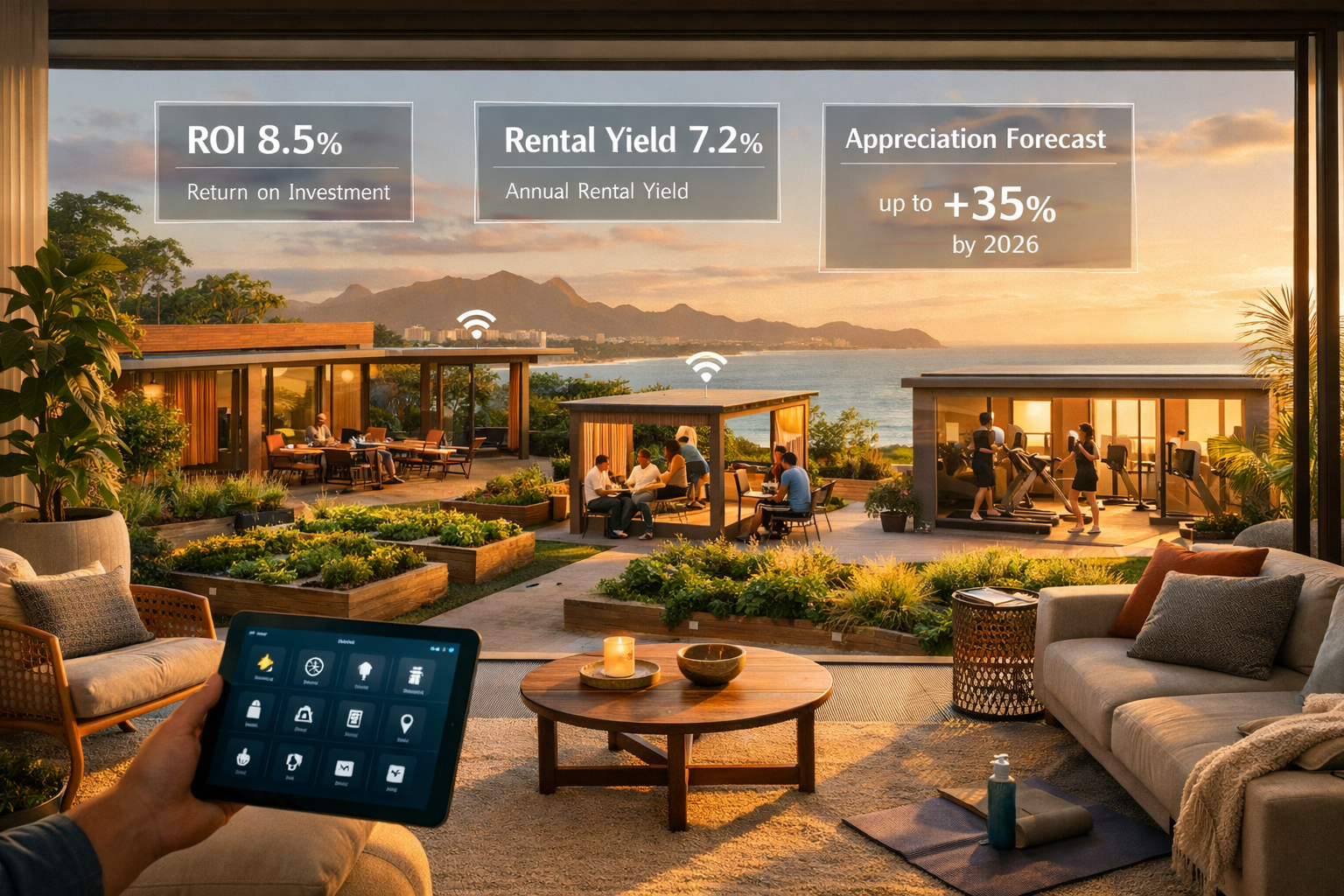
While Niche Market Positioning: How Lifestyle-Oriented Properties Are Outperforming Mass-Market Developments in Brazil’s 2026 Market offers compelling advantages, developers must navigate several challenges and considerations.
Higher Initial Capital Requirements
Lifestyle-oriented developments typically require greater upfront investment in:
- Premium land locations with natural amenities or infrastructure access
- Enhanced architectural design and engineering
- High-quality amenity construction and equipment
- Advanced technology infrastructure
- Sustainable building systems and certifications
- Professional marketing and branding
Developers must secure adequate financing and maintain sufficient capital reserves to complete projects to the quality standards that justify premium positioning.
Operational Complexity
Managing lifestyle-oriented properties involves greater operational complexity than basic residential developments:
- Amenity programming: Scheduling classes, maintaining equipment, managing instructors
- Technology support: Troubleshooting smart home systems, updating software
- Concierge services: Coordinating resident requests and service providers
- Sustainability management: Monitoring green systems, optimizing performance
- Community building: Organizing events and fostering resident engagement
Developers should establish professional property management partnerships or build internal operational capabilities to maintain service quality.
Market Size Limitations
Niche positioning inherently targets smaller buyer segments than mass-market approaches. Developers must:
- Accurately assess target market size to avoid overbuilding
- Maintain disciplined project scaling appropriate to market depth
- Accept potentially slower sales velocity in exchange for premium pricing
- Develop sophisticated marketing to reach dispersed niche buyers
- Consider multiple niche segments within single projects to expand addressable markets
Understanding market limitations prevents oversupply that would undermine premium positioning.
Execution Risk
Lifestyle-oriented positioning requires flawless execution to deliver promised value. Shortcuts or compromises can:
- Damage brand reputation and future sales
- Trigger buyer dissatisfaction and negative reviews
- Undermine premium pricing justification
- Create operational headaches and increased costs
- Generate legal exposure from unfulfilled promises
Developers must maintain unwavering commitment to quality throughout the development process.
Competitive Response
Successful lifestyle-oriented projects inevitably attract competitive imitation. Developers should:
- Continuously innovate amenity offerings and services
- Build strong brand identities that transcend specific features
- Establish operational excellence that competitors struggle to replicate
- Secure prime locations limiting competitive supply
- Develop loyal buyer communities that generate referrals and repeat purchases
Sustainable competitive advantages require ongoing investment and attention.
Future Outlook: The Evolution of Niche Market Positioning Beyond 2026
The trends driving Niche Market Positioning: How Lifestyle-Oriented Properties Are Outperforming Mass-Market Developments in Brazil’s 2026 Market show no signs of reversing. Several emerging developments will likely shape the market’s evolution:
Hyper-Personalization and Micro-Niches
As lifestyle-oriented positioning becomes more common, successful developers will pursue increasingly specialized micro-niches:
- Age-specific communities: Properties designed for specific generational cohorts
- Interest-based developments: Communities organized around hobbies, professions, or values
- Health-focused properties: Developments specifically designed for chronic condition management
- Creative live-work spaces: Properties optimized for artists, content creators, and creative professionals
- Pet-centric communities: Developments with comprehensive pet amenities and services
This hyper-personalization allows developers to command even greater premiums by precisely matching specific buyer needs.
Technology Integration Acceleration
Smart home technology will evolve from differentiator to baseline expectation, with cutting-edge properties incorporating:
- Artificial intelligence-powered home management
- Integrated health monitoring and wellness optimization
- Virtual and augmented reality entertainment systems
- Autonomous vehicle integration and charging
- Advanced energy storage and grid independence
Developers who stay ahead of technology curves will maintain competitive advantages in lifestyle-oriented positioning.
Sustainability Intensification
Environmental consciousness will continue strengthening, with future lifestyle properties featuring:
- Net-zero or net-positive energy performance
- Circular economy principles with zero waste
- Regenerative design that improves local ecosystems
- Climate resilience and adaptation features
- Comprehensive carbon accounting and offsetting
Sustainability will transition from marketing advantage to fundamental requirement for premium positioning.
Experience Economy Integration
Lifestyle-oriented properties will increasingly incorporate experience-based amenities beyond physical facilities:
- Curated cultural programming and events
- Educational workshops and skill-building classes
- Social networking and community building activities
- Wellness retreats and transformation programs
- Concierge lifestyle services and personal assistance
These experiential elements create emotional connections and community bonds that strengthen resident satisfaction and property values.
International Investment Flows
Brazil’s lifestyle-oriented properties will continue attracting international capital seeking:
- Superior rental yields compared to developed markets
- Appreciation potential in emerging economies
- Diversification beyond traditional investment markets
- Lifestyle benefits for personal use or retirement
- Cryptocurrency and alternative investment integration
Understanding how cryptocurrencies are intersecting with real estate development provides insights into evolving investment mechanisms.
Conclusion: Embracing Niche Positioning for Sustainable Competitive Advantage
Niche Market Positioning: How Lifestyle-Oriented Properties Are Outperforming Mass-Market Developments in Brazil’s 2026 Market represents a fundamental transformation in Brazilian real estate development. The evidence is compelling: developers focusing on wellness amenities, remote work infrastructure, sustainable design, and technology integration are achieving superior financial performance through higher margins, faster sales, and premium valuations.
The shift from volume-based commodity development to value-driven lifestyle positioning reflects deeper changes in buyer priorities, demographic trends, and investment strategies. Modern Brazilian buyers—whether domestic professionals or international investors—increasingly value quality of life, health and wellness, environmental sustainability, and technological convenience over simply maximizing square footage or minimizing price.
Key Success Factors
Developers seeking to capitalize on lifestyle-oriented positioning should focus on:
✅ Deep buyer research to understand specific target segment needs and preferences
✅ Strategic amenity selection prioritizing features that deliver genuine value and differentiation
✅ Design excellence integrating lifestyle features seamlessly into overall project vision
✅ Technology infrastructure supporting current and future smart home capabilities
✅ Sustainability commitment pursuing certifications and measurable environmental performance
✅ Operational excellence maintaining service quality that justifies premium positioning
✅ Value communication effectively articulating benefits that justify price premiums
Actionable Next Steps
For developers, investors, and real estate professionals seeking to embrace lifestyle-oriented positioning:
1. Conduct comprehensive market research identifying underserved lifestyle niches in target markets
2. Analyze competitive landscape to identify differentiation opportunities and positioning gaps
3. Develop detailed buyer personas for target segments, including lifestyle preferences and investment criteria
4. Create amenity programs specifically addressing target buyer needs and generating competitive advantages
5. Establish operational partnerships with property managers, technology providers, and service companies
6. Pursue sustainability certifications to validate environmental claims and access green financing
7. Build marketing strategies that effectively communicate lifestyle value propositions to target audiences
8. Monitor performance metrics including absorption rates, pricing premiums, and buyer satisfaction
The Brazilian real estate market’s evolution toward lifestyle-oriented positioning creates exceptional opportunities for developers willing to move beyond traditional mass-market approaches. By focusing on specific buyer needs, delivering genuine lifestyle value, and maintaining operational excellence, developers can achieve superior financial returns while creating properties that genuinely enhance residents’ quality of life.
The future belongs to developers who recognize that in 2026 and beyond, Brazilian buyers are seeking more than shelter—they’re investing in lifestyles, communities, and experiences. Properties that deliver on these expectations will continue outperforming mass-market alternatives, generating premium returns for developers and investors who embrace this transformation.
For those interested in exploring lifestyle-oriented development opportunities, Quadragon’s portfolio demonstrates how thoughtful niche positioning creates exceptional value in Brazil’s evolving real estate market.
References
[1] Brazil Real Estate Market – https://thelatinvestor.com/blogs/news/brazil-real-estate-market
[2] Brazil Price Forecasts – https://thelatinvestor.com/blogs/news/brazil-price-forecasts
[3] Best Cities To Invest In Brazilian Real Estate 2026 Edition – https://www.brazilbeachhouse.com/blogg/2025/12/1/best-cities-to-invest-in-brazilian-real-estate-2026-edition
[4] International Buyers Rio 2025 Trends And 2026 Outlook – https://www.oabitat.com/en/international-buyers-rio-2025-trends-and-2026-outlook/
[5] Impact Tourism Real Estate Market Brazil – https://www.jarniascyril.com/international-real-estate/investing-brazil-real-estate/impact-tourism-real-estate-market-brazil/