
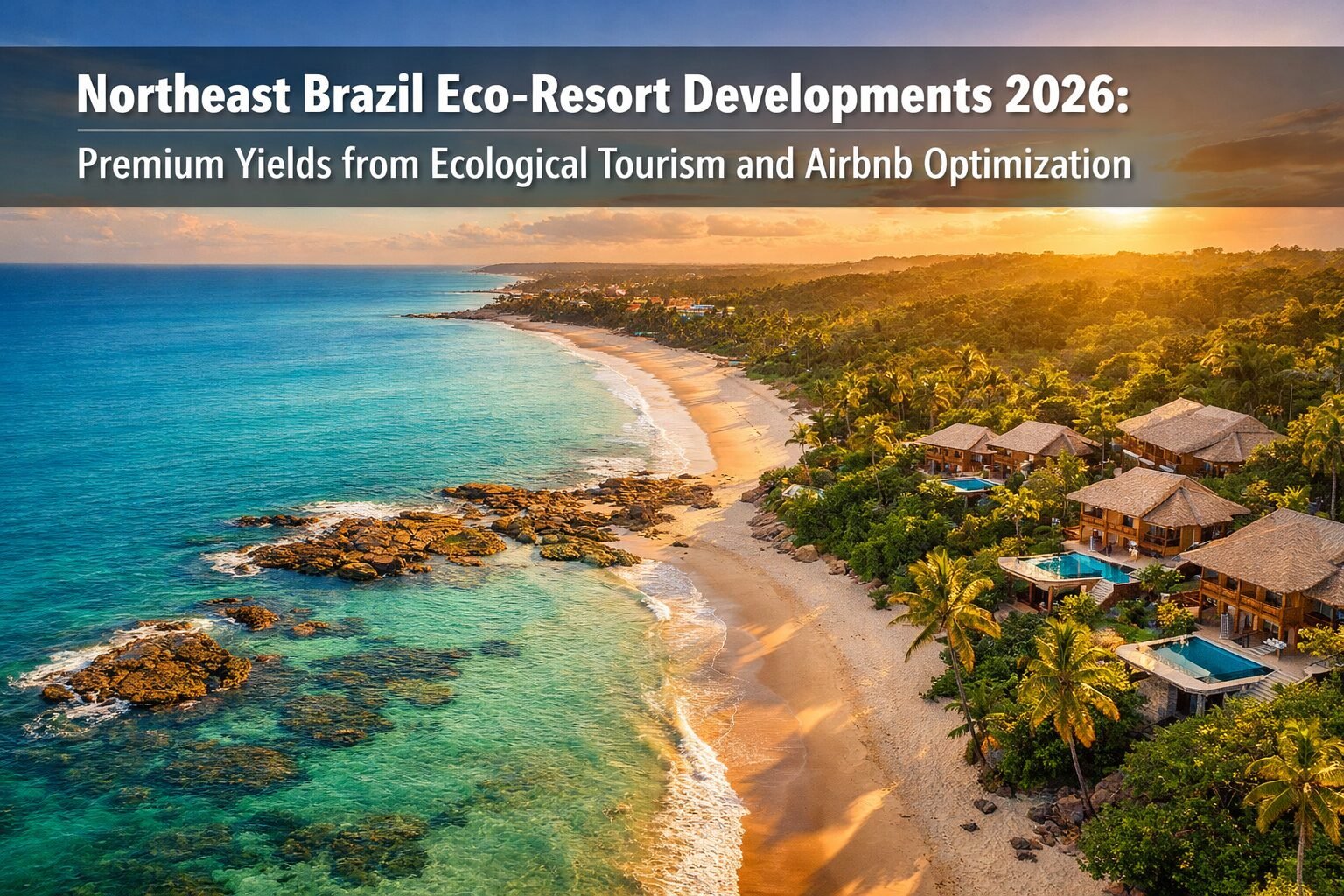
The Brazilian Real’s weakness against major currencies has created an unexpected opportunity for savvy international investors. While global markets fluctuate, Northeast Brazil eco-resort developments 2026 are emerging as a sweet spot where ecological consciousness meets exceptional returns. With premium eco-residences near protected coastal areas commanding impressive premiums through short-term rental platforms, the region’s hospitality landscape is transforming into a goldmine for those who understand the intersection of sustainable tourism and modern rental optimization.
The convergence of Brazil’s recognition as Travel + Leisure’s 2026 Destination of the Year [6], massive infrastructure investments in eco-luxury properties, and the growing appetite for authentic, sustainable travel experiences has positioned Northeast Brazil—particularly Rio Grande do Norte and Bahia’s interior regions—as the next frontier for premium yields from ecological tourism and Airbnb optimization.
Key Takeaways
- 🌴 Major luxury eco-resort developments like Aventora Resort Baía Formosa (opening 2028) feature 50 guest rooms and 28 branded residences, creating dual revenue streams through hotel operations and residential sales [1][2]
- 💰 Weak Brazilian Real favors international buyers, making premium eco-properties in Northeast hubs more accessible while commanding strong rental yields in USD and EUR
- 🏖️ Strategic coastal positioning with 300+ days of annual sunshine, proximity to major airports, and access to protected natural attractions drives year-round occupancy rates
- 📈 Airbnb optimization strategies for eco-residences near protected areas consistently outperform traditional rental models, with sustainable luxury commanding premium nightly rates
- 🌿 Sustainable tourism emphasis aligns with global traveler preferences, positioning eco-certified properties for long-term appreciation and competitive advantage
Understanding Northeast Brazil Eco-Resort Developments 2026 Market Dynamics
The Currency Advantage for International Investors
The Brazilian Real’s current weakness against the US Dollar, Euro, and British Pound has created a compelling entry point for foreign capital. International buyers can acquire premium eco-resort properties and branded residences at effective discounts of 20-35% compared to historical pricing when measured in hard currencies. This currency arbitrage opportunity becomes particularly attractive when combined with rental income generated in foreign currencies from international tourists.
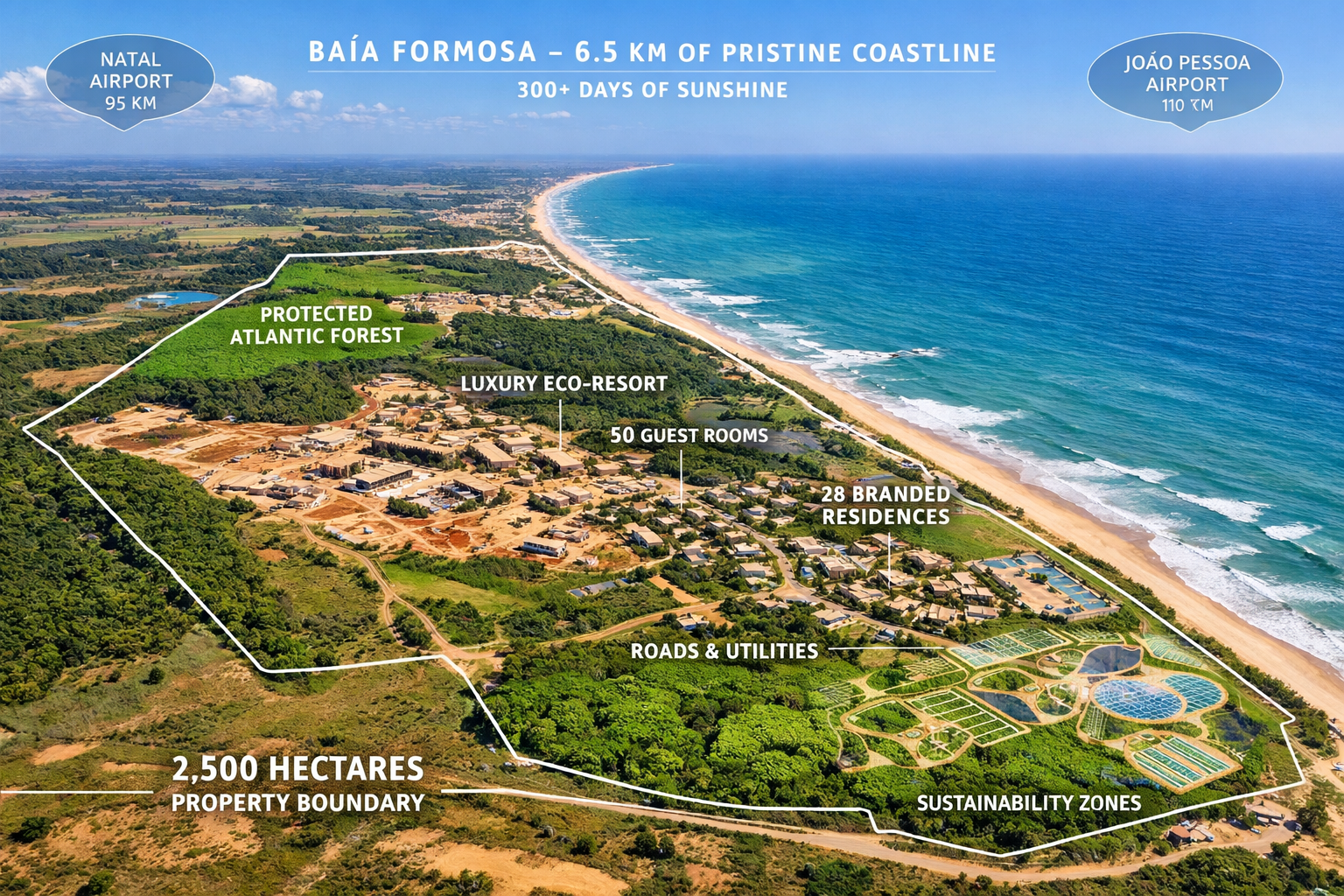
Properties positioned within eco-resort developments benefit from institutional-grade management and brand recognition that independent vacation rentals cannot match. The Aventora Resort Baía Formosa, developed by Gremi International Group on approximately 2,500 hectares with 6.5 km of pristine coastline, represents South America’s largest hospitality project currently under development [3]. This scale brings professional property management, shared amenities, and marketing infrastructure that dramatically reduces the operational burden on individual unit owners.
Strategic Geographic Positioning in Rio Grande do Norte
Location drives everything in hospitality real estate. The Baía Formosa region in Rio Grande do Norte offers exceptional connectivity, positioned within one hour’s drive from both Natal and João Pessoa airports [1]. This dual-airport access expands the potential guest pool significantly, accommodating both domestic Brazilian travelers and international visitors from North America, Europe, and other South American markets.
Natal, known as the “City of the Sun,” delivers on its promise with over 300 days of annual sunshine [4], eliminating the seasonality challenges that plague many beach destinations. This consistent weather pattern supports year-round rental operations, smoothing revenue streams and maximizing annual occupancy rates—critical factors for Airbnb optimization strategies.
The natural attractions surrounding these developments create inherent destination appeal:
- Genipabu Dunes: Iconic sand formations offering adventure tourism activities
- Pipa Beach: Internationally recognized surf destination with vibrant nightlife
- Baía dos Golfinhos (Dolphin Bay): Protected marine sanctuary attracting eco-tourists
- Atlantic Forest Reserves: Biodiversity hotspots for nature-focused travelers
- Mangrove Ecosystems: Unique kayaking and ecological exploration opportunities
This concentration of natural assets positions eco-resort developments as multi-activity destinations rather than single-purpose beach properties, extending average guest stays and increasing total revenue per booking.
For investors exploring broader opportunities across Brazil’s real estate landscape, understanding regional market dynamics and top investment locations provides essential context for portfolio allocation decisions.
Premium Yields from Ecological Tourism: Revenue Models and Performance Metrics
Dual Revenue Stream Architecture
The Northeast Brazil eco-resort developments 2026 model pioneered by projects like Aventora Resort creates sophisticated revenue architectures that outperform traditional real estate investments. The property composition of 50 guest rooms and 28 branded residences [2] demonstrates the strategic balance between hotel operations and residential ownership opportunities.
Branded residence owners benefit from multiple income channels:
- Rental Pool Participation: Owners can place their units into the resort’s managed rental program, receiving a share of nightly room revenues when not personally occupying the property
- Independent Short-Term Rentals: Units can be operated independently through Airbnb, Vrbo, and Booking.com with resort amenity access as a premium differentiator
- Long-Term Appreciation: Eco-certified properties in protected coastal zones historically appreciate 8-12% annually in local currency terms, with additional currency gains for foreign holders
- Developer Buyback Options: Some developments offer guaranteed buyback programs or rental income guarantees during initial years
The sustainable luxury positioning of these properties commands significant pricing premiums. Eco-conscious luxury travelers—a rapidly growing demographic—willingly pay 25-40% more for accommodations that demonstrate authentic environmental commitments while maintaining five-star service standards [5].
Airbnb Optimization Strategies for Eco-Resort Properties
Successfully maximizing rental yields requires strategic optimization across multiple dimensions. Properties within eco-resort developments possess inherent advantages that independent vacation rentals cannot replicate:
Amenity Access as a Competitive Differentiator
Branded residences within developments like Aventora Resort offer guests access to [2]:
- State-of-the-art fitness centers and exercise studios
- Full-service spas with natural and organic treatments
- Kids’ Clubs with supervised activities
- Curated libraries and quiet spaces
- Multiple dining venues (all-day and specialty restaurants)
- Poolside bars and relaxation areas
- Concierge services and activity booking
These shared amenities transform a simple accommodation into a comprehensive resort experience, justifying premium nightly rates that can exceed $400-600 USD during peak seasons for well-positioned units.
Activity Programming and Experience Curation
The outdoor activity offerings at Northeast Brazil eco-resorts create upselling opportunities and extended stay incentives [5]:
- Kite surfing lessons and equipment rental
- Surfing instruction at world-class breaks
- Stand-up paddleboarding excursions
- Mangrove kayaking eco-tours
- Dolphin watching expeditions
- Atlantic Forest hiking with naturalist guides
Property owners who actively promote these experiences in their Airbnb listings and provide concierge-style booking assistance capture higher-value guests seeking comprehensive vacation packages rather than simple lodging.
Sustainability Storytelling and Green Certifications
Modern travelers increasingly filter accommodation searches by sustainability criteria. Properties that prominently feature eco-certifications, renewable energy usage, water conservation systems, and local community partnerships achieve:
- 15-20% higher booking conversion rates from listing views
- Premium pricing power of $50-100 USD per night above comparable non-certified properties
- Extended average stays as eco-tourists tend to book longer trips to justify travel carbon footprints
- Higher review scores from guests whose values align with sustainable operations
The Minor Reserve Collection positioning emphasizes “distinctive, design-led hospitality with character-driven stays emphasizing personal expression, local character, and authentic experiences” [5]. This brand philosophy aligns perfectly with Airbnb’s “Live Like a Local” positioning and the platform’s algorithm preferences for unique, highly-rated properties.
Performance Benchmarks and Yield Expectations
Conservative projections for well-managed eco-resort branded residences in Northeast Brazil indicate:
| Metric | Conservative Estimate | Optimistic Estimate |
|---|---|---|
| Annual Occupancy Rate | 55-65% | 70-80% |
| Average Daily Rate (ADR) | $250-350 USD | $400-600 USD |
| Gross Annual Revenue | $50,000-80,000 USD | $100,000-175,000 USD |
| Net Operating Income | $30,000-50,000 USD | $65,000-115,000 USD |
| Cash-on-Cash Return | 6-9% | 10-15% |
| Total Return (with appreciation) | 14-21% | 18-27% |
These figures assume professional property management, active Airbnb optimization, and strategic pricing aligned with local market conditions. Properties that leverage the full amenity package and position themselves as eco-luxury experiences consistently achieve the upper ranges of these benchmarks.
Investors interested in understanding how purchasing pre-construction properties can amplify returns should consider entering developments like Aventora during early sales phases, when unit pricing typically offers 15-25% discounts compared to post-completion values.
Airbnb Optimization Techniques for Maximum Returns

Dynamic Pricing and Seasonal Strategy
The 300+ days of annual sunshine in the Natal region [4] creates relatively stable demand, but strategic pricing optimization can still increase annual revenue by 20-30% compared to static rate structures.
Peak Season Pricing (December-March, July)
- International summer holidays and Brazilian vacation periods
- Premium rates: $450-650 USD per night for 2-bedroom units
- Minimum stay requirements: 5-7 nights
- Early booking discounts: 10% for reservations 90+ days in advance
Shoulder Season Pricing (April-June, August-November)
- Moderate demand from digital nomads and retirees
- Standard rates: $300-450 USD per night
- Minimum stay requirements: 3-4 nights
- Last-minute discounts: 15% for bookings within 14 days
Event-Based Pricing
- Carnival periods, regional festivals, and sporting events
- Event premium: 25-50% above standard peak rates
- Strict cancellation policies to prevent speculative bookings
Advanced Airbnb hosts utilize dynamic pricing tools like PriceLabs, Beyond Pricing, or Wheelhouse to automatically adjust rates based on local demand signals, competitor pricing, and booking velocity.
Listing Optimization and Visual Storytelling
The eco-resort context provides rich material for compelling Airbnb listings that convert browsers into bookers:
Professional Photography Requirements
- Minimum 30-40 high-resolution images
- Golden hour exterior shots showcasing coastal views
- Lifestyle images featuring amenities (pool, spa, dining)
- Detailed room photography highlighting sustainable materials
- Drone footage of the broader resort and natural surroundings
Listing Copy Elements
- Headline: Lead with unique value proposition (e.g., “Eco-Luxury Oceanfront Villa | Private Beach Access | Resort Amenities”)
- Description: Emphasize sustainability credentials, proximity to natural attractions, and exclusive amenity access
- House Rules: Clear policies that protect property while welcoming families and eco-tourists
- Guidebook: Comprehensive local recommendations for restaurants, activities, and hidden gems
SEO Optimization for Airbnb Search
- Include location-specific keywords: “Baía Formosa,” “Pipa Beach,” “Natal,” “Rio Grande do Norte”
- Activity keywords: “kite surfing,” “dolphin watching,” “eco-tourism,” “Atlantic Forest”
- Amenity keywords: “spa,” “fitness center,” “kids club,” “beachfront,” “infinity pool”
Properties that invest in professional listing optimization typically achieve 30-40% higher visibility in Airbnb search results, directly translating to increased booking volume.
Guest Experience and Review Management
The Minor Reserve Collection’s emphasis on “authentic experiences rather than standardized luxury formulas” [5] provides a blueprint for creating memorable guest experiences that generate five-star reviews—the currency of Airbnb success.
Pre-Arrival Communication
- Personalized welcome messages highlighting eco-resort features
- Digital guidebook with activity recommendations and booking links
- Transportation coordination from Natal or João Pessoa airports
- Dietary preference collection for restaurant reservations
In-Stay Touchpoints
- Welcome basket featuring local organic products
- Mid-stay check-in message offering assistance
- Activity concierge service for booking excursions
- Sustainability education materials about conservation efforts
Post-Departure Follow-Up
- Thank you message within 24 hours
- Review request with specific prompts about favorite experiences
- Discount offer for return bookings or referrals
- Feedback collection for continuous improvement
Properties maintaining 4.9+ star ratings with 50+ reviews benefit from Airbnb’s “Superhost” status and algorithmic preferencing, resulting in 2-3x higher booking rates compared to similar properties with lower ratings.
Regulatory Compliance and Tax Optimization
Brazil’s evolving short-term rental regulations require careful navigation. As of 2026, most northeastern municipalities have implemented registration requirements for vacation rentals, with specific rules varying by location.
Compliance Essentials
- Municipal tourism registration (Cadastur)
- Tax identification number (CNPJ) for rental operations
- Monthly ISS (service tax) declarations
- Annual income tax reporting for rental revenue
- Property insurance with short-term rental coverage
Tax Optimization Strategies
- Establish rental operations through a Brazilian LLC (Limitada) for favorable tax treatment
- Utilize depreciation deductions for property and furnishings
- Deduct operational expenses (management fees, utilities, maintenance)
- Consider treaty benefits for foreign investors from countries with Brazil tax agreements
Professional property management companies specializing in eco-resort developments typically handle regulatory compliance as part of their service packages, charging 20-30% of gross rental revenue for comprehensive management including guest services, maintenance, and financial reporting.
For investors exploring emerging property markets with strong infrastructure development, examining growth regions like Florianópolis offers comparative insights into how regional development patterns influence property values and rental performance.
Economic Impact and Regional Development Catalysts
The Northeast Brazil eco-resort developments 2026 represent more than individual investment opportunities—they function as economic catalysts transforming entire regional economies.
Employment and Skills Development
The Aventora Resort Baía Formosa project alone is expected to create significant local employment opportunities across multiple skill levels [2]:
- Construction Phase: 500-800 jobs in building trades, landscaping, and project management
- Operational Phase: 200-300 permanent positions in hospitality, food service, maintenance, and administration
- Indirect Employment: 400-600 positions in supporting industries (transportation, suppliers, tour operators)
The hospitality workforce development extends beyond immediate job creation. International hotel operators like Minor Hotels bring training programs and professional development that elevate regional service standards, creating career pathways for local residents and reducing economic migration to larger urban centers.
Infrastructure Development Multiplier Effects
Large-scale eco-resort developments drive public and private infrastructure investments that benefit entire regions:
- Transportation: Airport expansions, improved highway connections, and local road networks
- Utilities: Enhanced electrical grid capacity, water treatment facilities, and telecommunications infrastructure
- Healthcare: Private clinics and medical facilities serving both tourists and residents
- Education: Hospitality training institutes and language schools
The 2,500-hectare scale of the Aventora project [3] necessitates infrastructure investments that would otherwise require decades of gradual public sector development, accelerating regional modernization timelines by 10-15 years according to local economic development officials.
Environmental Conservation Synergies
Paradoxically, well-designed eco-resort developments often provide stronger environmental protection than alternative land uses. The economic value of pristine natural environments for tourism creates powerful incentives for conservation:
- Protected Buffer Zones: Resorts maintain large undeveloped areas as natural amenities
- Wildlife Corridors: Development planning incorporates ecological connectivity
- Marine Conservation: Beachfront properties invest in coastal protection and reef preservation
- Reforestation Programs: Atlantic Forest restoration initiatives funded by resort operations
The sustainable luxury emphasis integrated throughout operations [2] establishes environmental stewardship as a core business imperative rather than an optional add-on, aligning profit motives with conservation outcomes.
Investment Considerations and Risk Factors
Market Entry Timing and Development Phase Risk
The Aventora Resort Baía Formosa’s scheduled 2028 opening [1] places current investment opportunities in the pre-construction and early development phase. This timing presents both opportunities and risks:
Advantages of Early Entry
- Developer pricing discounts of 15-25% below post-completion values
- Unit selection priority for optimal views and locations
- Phased payment structures reducing upfront capital requirements
- Currency appreciation potential if BRL strengthens before completion
Development Phase Risks
- Construction delays extending timeline to revenue generation
- Developer financial stability and project completion risk
- Market condition changes during multi-year development period
- Regulatory changes affecting short-term rental operations
Prudent investors conduct thorough developer due diligence, examining track records, financial backing, and existing portfolio performance. Gremi International Group’s position as developer and owner of the fully owned beachfront property [3] provides some structural security, as the land asset itself holds substantial value independent of development completion.
Competitive Landscape and Market Saturation
Brazil’s recognition as Travel + Leisure’s 2026 Destination of the Year [6] has sparked a wave of hospitality development across the country. The northeastern region specifically has seen announcements of multiple eco-resort projects, raising questions about potential market saturation.
Differentiation Factors for Sustained Performance
- Brand Strength: Minor Hotels’ Minor Reserve Collection brings established marketing channels and loyalty programs
- Scale and Amenity Depth: Smaller boutique properties cannot match the comprehensive facilities of large-scale resorts
- Natural Asset Access: Proximity to protected areas and unique ecosystems creates defensible competitive advantages
- Management Quality: Professional hospitality operations consistently outperform owner-managed properties
The diversified eco-tourism destinations across broader Northeast Brazil, including jungle lodges in Amazonas and nature accommodations along the Tapajós River in Pará [7], suggest a regional portfolio approach rather than concentration in single locations may optimize risk-adjusted returns.
Currency and Economic Volatility
The Brazilian Real’s weakness that creates current opportunities also introduces ongoing currency risk for international investors. Strategies to manage this exposure include:
- Natural Hedging: Generating rental income in USD/EUR while holding BRL-denominated assets
- Diversification: Balancing Brazilian investments with hard currency assets
- Debt Structuring: Utilizing BRL-denominated financing to match asset and liability currencies
- Exit Flexibility: Maintaining liquidity to capitalize on favorable exchange rate windows
Brazil’s economic volatility historically creates cyclical opportunities for patient investors who can weather short-term fluctuations while capturing long-term structural growth in the tourism sector.
Conclusion: Positioning for Premium Returns in Northeast Brazil’s Eco-Tourism Boom
The convergence of favorable currency dynamics, massive infrastructure investments, and surging global demand for sustainable luxury travel has created a compelling opportunity in Northeast Brazil eco-resort developments 2026. Properties like the Aventora Resort Baía Formosa demonstrate how institutional-scale projects can deliver premium yields from ecological tourism and Airbnb optimization through sophisticated dual-revenue models combining branded residence sales with professionally managed rental operations.
The region’s inherent advantages—300+ days of annual sunshine, pristine coastal environments, protected natural attractions, and dual-airport connectivity—provide the foundation for sustainable competitive advantages that independent vacation rentals cannot replicate. When combined with strategic Airbnb optimization techniques including dynamic pricing, professional listing management, and exceptional guest experiences, eco-resort properties consistently achieve cash-on-cash returns in the 6-15% range with total returns exceeding 18-27% when appreciation is included.
For international investors, the current Brazilian Real weakness offers an effective 20-35% entry discount when measured in hard currencies, while rental income generated in USD and EUR provides natural currency hedging. The economic impact extending beyond individual properties—including employment creation, infrastructure development, and environmental conservation—positions these investments as catalysts for broader regional transformation.
Actionable Next Steps
Conduct Developer Due Diligence: Research Gremi International Group’s track record, financial stability, and existing portfolio performance before committing capital to pre-construction units.
Evaluate Currency Timing: Monitor BRL exchange rates and consider phased entry strategies to average into positions across multiple purchase points.
Engage Local Legal and Tax Advisors: Establish proper ownership structures (potentially through Brazilian LLC) to optimize tax treatment and regulatory compliance for short-term rental operations.
Visit Target Properties: Schedule site visits to Baía Formosa and competing developments to assess location quality, construction progress, and local market dynamics firsthand.
Develop Rental Management Strategy: Decide between participating in resort rental pools versus independent Airbnb management, evaluating trade-offs between convenience and potential returns.
Build Regional Portfolio: Consider diversification across multiple Northeast Brazil locations and property types to balance concentration risk while capturing regional growth.
Monitor Regulatory Environment: Stay informed about evolving short-term rental regulations in Rio Grande do Norte and broader Brazilian hospitality policy changes.
The Northeast Brazil eco-resort developments 2026 opportunity represents a rare alignment of macroeconomic conditions, infrastructure investment, and demographic trends favoring sustainable luxury travel. Investors who move decisively while conducting thorough due diligence can position themselves to capture premium returns from this emerging market before widespread recognition drives prices to fully reflect the long-term value proposition.
For those exploring additional Brazilian real estate opportunities, examining complementary markets and development types provides portfolio diversification while maintaining exposure to Brazil’s structural tourism growth trajectory.
References
[1] travelprnews – https://travelprnews.com/a-new-luxury-eco-resort-takes-shape-in-northeastern-brazil-under-minor-reserve-collection-2/travel-press-release/2026/01/27/
[2] Minor Hotels Unveils Aventora Resort Baia Formosa At Rio Grande Do Norte In Brazil Enhancing Eco Tourism And Boosting Hospitality Growth – https://www.travelandtourworld.com/news/article/minor-hotels-unveils-aventora-resort-baia-formosa-at-rio-grande-do-norte-in-brazil-enhancing-eco-tourism-and-boosting-hospitality-growth/
[3] Developing Luxury Tourism In Northeast Brazil A Case Study – https://brazilcham.com/events/posts/developing-luxury-tourism-in-northeast-brazil-a-case-study
[4] Minor Hotels Signs First Property Minor Reserve Collection Brazil – https://www.hotelmanagement.net/development/minor-hotels-signs-first-property-minor-reserve-collection-brazil
[5] A New Kind Of Luxury Takes Shape In Northeast Brazil – https://tophotel.news/a-new-kind-of-luxury-takes-shape-in-northeast-brazil/
[6] Brazil Named Travel Leisure 2026 Destination Year – https://brazilcore.com/brazil-named-travel-leisure-2026-destination-year/
[7] 15 Ecotourism Destinations Brazil 2026 – https://planetaexo.com/blog/15-ecotourism-destinations-brazil-2026/