
Brazil’s ambitious infrastructure revival is reshaping the investment landscape across its northern territories. As Novo PAC’s Northern Brazil Expansion: Unlocking Affordable Housing Developments in Fortaleza and Manaus by 2026 gains momentum, developers and investors are witnessing a historic transformation in cities once considered secondary markets. With USD 260 billion in total commitments and strategic allocations targeting urban infrastructure and affordable housing, the northern frontier is emerging as a compelling opportunity for mid-tier residential development.
The convergence of federal investment, regional economic growth, and housing program expansion creates a unique window for stakeholders seeking viable returns in Brazil’s evolving real estate sector.
Key Takeaways
✅ Massive Investment Scale: Brazil’s Novo PAC represents USD 260 billion across 23,000 construction sites, with USD 69.1 billion from private co-investment channeled alongside public spending[1]
✅ Housing Program Expansion: Approximately USD 39.8 billion will flow into housing programs in 2026, with over 100,000 subsidized MCMV units expected for delivery[2]
✅ Northern Growth Advantage: The Northeast region projects 3.4% economic growth through 2034, outpacing Brazil’s 2.5% national average, with cities like Salvador leading at 7.38% CAGR[5]
✅ Improved Affordability Access: Maximum property values for low-income financing increased to 255,000-270,000 Reais in larger urban centers, expanding market accessibility[2]
✅ Infrastructure as Growth Driver: USD 20.7 billion allocated to sanitation, mobility, and disaster prevention creates foundation for sustainable residential development[2]
Understanding Novo PAC’s Strategic Framework and Northern Focus
The Scale and Scope of Brazil’s Growth Acceleration Program
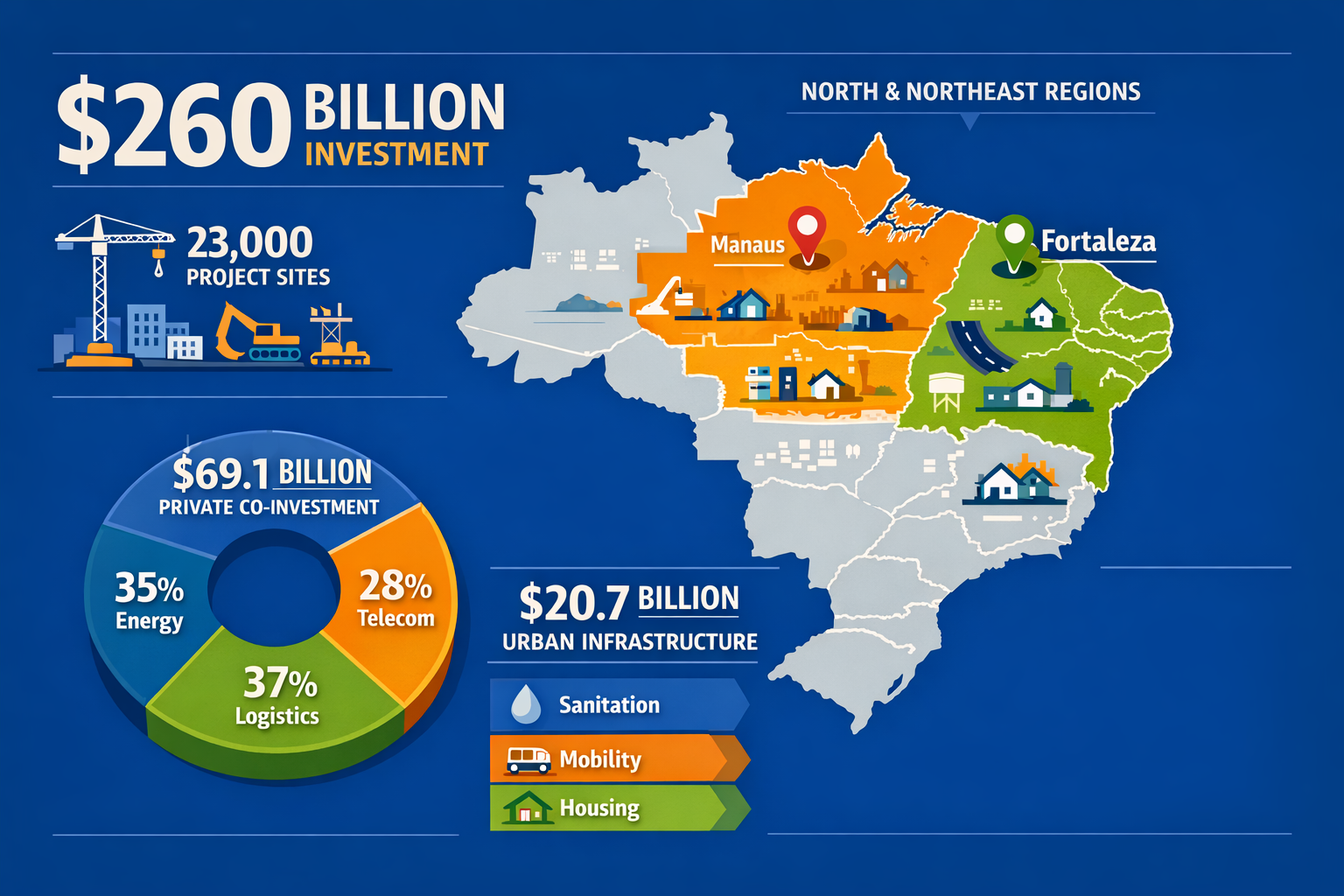
The Novo PAC (New Growth Acceleration Program) represents Brazil’s most comprehensive infrastructure initiative in recent history. Launched to address decades of underinvestment, the program encompasses 23,000 active construction sites nationwide, with a total investment commitment reaching USD 260 billion[1]. This massive allocation combines federal resources with private sector participation, generating USD 69.1 billion in co-investment from commercial partners[1].
What distinguishes this iteration from previous infrastructure programs is its geographic prioritization. The North and Northeast regions receive disproportionate attention, reflecting federal recognition of historical development gaps and untapped economic potential. This strategic emphasis positions cities like Fortaleza and Manaus as primary beneficiaries of infrastructure modernization efforts.
Why Northern Brazil Matters for Housing Development
The northern territories present compelling fundamentals for residential investment:
🏗️ Infrastructure Deficit: Decades of limited investment created substantial gaps in sanitation, transportation, and urban services—gaps now being addressed through targeted PAC allocations
📈 Economic Momentum: The Northeast economy projects 3.4% growth annually through 2034, significantly exceeding Brazil’s overall 2.5% trajectory[5]
🏘️ Housing Demand: Rapid urbanization combined with income growth in lower brackets creates sustained demand for affordable housing solutions
💰 Competitive Entry Points: Property values and construction costs remain below southeastern metropolitan benchmarks, offering better margins for developers
The USD 20.7 billion allocated specifically to urban infrastructure—covering sanitation, mobility, and disaster prevention—creates the foundational conditions necessary for sustainable residential development[2]. For investors exploring opportunities across Brazil, understanding these best places to invest in Brazil property becomes crucial for strategic positioning.
Medium-Term Impact Timeline: 2026 and Beyond
Novo PAC operates on a 2-4 year impact horizon[1], meaning investments initiated in 2024-2025 will materialize as completed infrastructure and operational housing developments by 2026-2027. This timeline creates specific windows for developer engagement:
| Phase | Timeline | Opportunity Type |
|---|---|---|
| Planning & Permitting | 2024-2025 | Land acquisition, project design |
| Infrastructure Completion | 2025-2026 | Construction initiation in newly serviced areas |
| Delivery & Occupancy | 2026-2027 | Unit sales, rental operations, portfolio stabilization |
| Maturity & Appreciation | 2027-2030 | Value realization, secondary market transactions |
This phased approach allows developers to align project timelines with infrastructure delivery, minimizing execution risk while maximizing location advantages.
Affordable Housing Programs Driving Development in Fortaleza and Manaus
MCMV Program Expansion and 2026 Delivery Targets
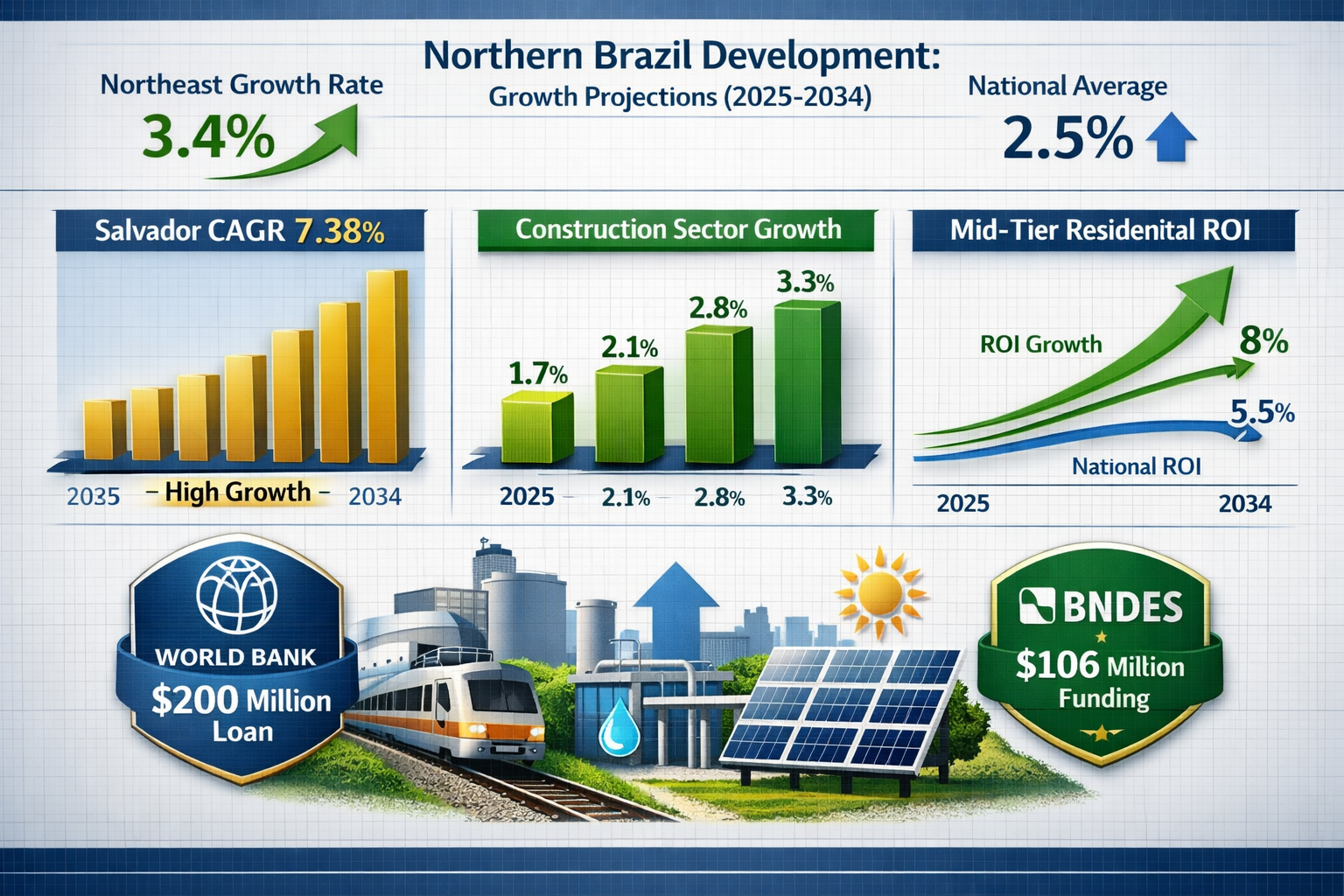
The Minha Casa, Minha Vida (MCMV) program remains Brazil’s cornerstone affordable housing initiative. In 2026, the program expects to deliver more than 100,000 units under subsidized financing lines alone[2], representing a significant acceleration from previous years.
Currently, over 1 million housing units are under construction nationwide through MCMV channels[2], creating a substantial pipeline that will progressively enter the market through 2027. For northern cities, this represents unprecedented supply expansion targeting income brackets historically underserved by private developers.
Enhanced Eligibility and Financing Parameters
Recent program adjustments significantly expanded market accessibility. The maximum property values eligible for subsidized financing increased for income brackets 1 and 2—households earning up to 4,700 Brazilian Reais monthly[2]. In larger urban centers including Fortaleza and Manaus, price ceilings now reach approximately 255,000-270,000 Reais[2].
This adjustment creates a viable development envelope for mid-tier residential projects:
Income Bracket 1 (Up to 2,640 Reais/month)
- Subsidy coverage: Up to 95% of property value
- Target property range: 180,000-220,000 Reais
- Developer opportunity: High-volume, standardized units
Income Bracket 2 (2,640-4,700 Reais/month)
- Subsidy coverage: 70-80% of property value
- Target property range: 220,000-270,000 Reais
- Developer opportunity: Quality-enhanced, differentiated units
These parameters enable developers to design projects that balance affordability requirements with quality standards that attract buyers and generate sustainable returns.
Combined Housing Investment: USD 39.8 Billion in 2026
Total housing investment across all programs—including traditional MCMV and the newly launched “Reforma Casa Brasil” initiative—will reach approximately USD 39.8 billion in 2026[2]. This combined allocation represents the largest annual housing investment in Brazil’s recent history.
The “Reforma Casa Brasil” program specifically targets housing rehabilitation and urban renewal, complementing new construction efforts with neighborhood improvement initiatives. For developers, this creates opportunities beyond ground-up construction, including renovation projects and mixed-use developments in established urban areas.
“Infrastructure is identified as the main growth driver, supported by Novo PAC and social infrastructure funds, while housing segments outside MCMV programs face headwinds from high credit costs.” [2]
This dynamic underscores the importance of aligning development strategies with subsidized program parameters, particularly in markets where conventional financing remains constrained by elevated interest rates.
Fortaleza and Manaus: Project Pipelines and ROI Projections
Fortaleza’s Development Landscape
Fortaleza, the capital of Ceará state, represents one of Northeast Brazil’s most dynamic urban centers. With a metropolitan population exceeding 4 million, the city combines tourism infrastructure, commercial activity, and growing industrial sectors.
Key Development Drivers:
🌊 Tourism Infrastructure: Ongoing investments in coastal development and hospitality sectors create employment and income growth
🏭 Industrial Diversification: Special economic zones and manufacturing facilities generate stable employment base
🚇 Transportation Modernization: Metro expansion and road network improvements under Novo PAC enhance accessibility
📚 Educational Institutions: Multiple universities create demand for student housing and young professional accommodations
Projected ROI for Mid-Tier Residential:
Based on current market conditions and infrastructure investment timelines, mid-tier residential developments (250,000-350,000 Reais per unit) in Fortaleza can expect:
- Construction-to-delivery appreciation: 12-18% over 24-month build cycle
- Rental yields: 6-8% annually for well-located units
- 5-year total return: 45-60% combining appreciation and rental income
- Optimal segments: 2-bedroom units (50-65 sqm) near metro corridors and employment centers
Manaus: The Amazonian Economic Hub
Manaus, capital of Amazonas state, presents a unique development profile. As the primary urban center in the western Amazon, the city benefits from the Zona Franca de Manaus—a special economic zone offering tax incentives that attract manufacturing and technology companies.
Strategic Advantages:
🏭 Industrial Concentration: Electronics, motorcycles, and consumer goods manufacturing create stable employment
🌳 Environmental Premium: Eco-tourism and sustainable development initiatives attract educated, higher-income residents
✈️ Regional Hub Status: Airport and port facilities position Manaus as distribution center for northern Brazil
🎓 Knowledge Economy: Research institutions and technology sector growth generate demand for quality housing
Development Considerations:
Manaus presents higher construction costs due to geographic isolation and material logistics. However, limited competition and strong demand fundamentals offset these challenges:
- Average construction cost: 15-20% above national average
- Sales prices: 20-30% premium over comparable northeastern cities
- Occupancy rates: Consistently above 92% for quality developments
- Tenant profile: Stable employment in manufacturing and services sectors
Projected ROI for Mid-Tier Residential:
- Construction-to-delivery appreciation: 15-22% over 24-month build cycle
- Rental yields: 7-9% annually for well-located units
- 5-year total return: 55-70% combining appreciation and rental income
- Optimal segments: 1-2 bedroom units (45-60 sqm) near industrial zones and commercial centers
Infrastructure Projects Enhancing Development Viability
Specific Novo PAC allocations directly impact residential development feasibility in both cities:
Fortaleza Infrastructure Priorities:
- Sanitation Expansion: Water and sewage network extensions to peripheral neighborhoods
- Metro Line Extensions: Connecting suburban areas to employment centers
- Coastal Protection: Disaster prevention investments protecting beachfront developments
- Road Network Modernization: Improved connectivity reducing commute times
Manaus Infrastructure Priorities:
- Port Modernization: Enhanced cargo handling supporting industrial growth
- Urban Mobility: Bus rapid transit corridors and road improvements
- Water Security: Treatment facilities and distribution network expansion
- Flood Prevention: Drainage systems protecting low-lying residential areas
These infrastructure improvements directly translate to enhanced property values and reduced development risk. Properties within 1 km of completed infrastructure projects typically experience 8-12% appreciation within 18 months of project completion.
Novo PAC’s Northern Brazil Expansion: Strategic Implementation and Developer Opportunities
Regional Growth Trajectories and Comparative Advantages
While Novo PAC’s Northern Brazil Expansion: Unlocking Affordable Housing Developments in Fortaleza and Manaus by 2026 creates opportunities across multiple cities, understanding comparative regional dynamics helps optimize investment allocation.
Northeast Regional Performance:
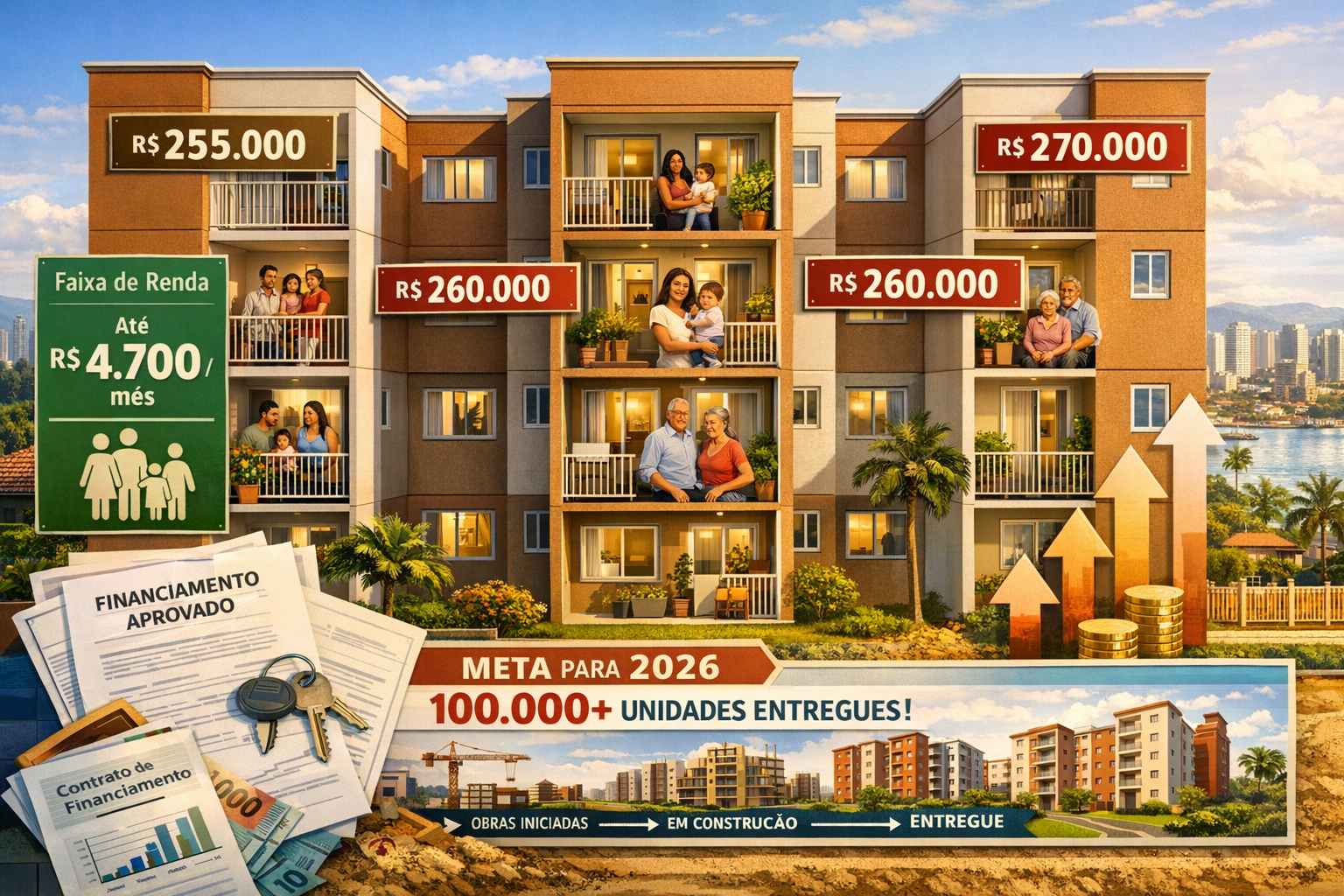
The Northeast economy’s projected 3.4% annual growth through 2034[5] significantly exceeds Brazil’s 2.5% national average, driven by:
- Agricultural modernization and export growth
- Tourism sector expansion
- Manufacturing diversification
- Renewable energy investments (particularly solar and wind)
Salvador’s Leadership Position:
Salvador demonstrates the strongest growth profile with a 7.38% CAGR[1], supported by:
- USD 200 million World Bank policy loan for sustainable urban corridors and solar transmission infrastructure[1]
- USD 106 million in BNDES credit lines for development projects[1]
- Major sanitation retrofits and urban renewal initiatives
While Salvador leads in growth rates, Fortaleza offers more accessible entry points for mid-tier developers, with lower land costs and established construction ecosystems.
Construction Sector Growth Projections and Market Dynamics
Brazil’s construction sector faces mixed signals in 2026. Initial projections from FIESP (Federation of Industries of São Paulo State) estimated 1.7% growth, but optimistic scenarios now point to rates as high as 3.3%[2], driven primarily by:
✅ Housing programs (MCMV and Reforma Casa Brasil) ✅ Public infrastructure investment (Novo PAC) ✅ Social infrastructure funds
However, challenges persist:
⚠️ High credit costs constraining non-subsidized housing segments ⚠️ Fiscal sustainability concerns limiting program expansion potential ⚠️ Weak industrial momentum reducing commercial construction demand
For developers, this environment creates a bifurcated market: subsidized affordable housing segments show strong fundamentals and government support, while luxury and commercial segments face headwinds.
Fiscal Constraints and Program Sustainability
Despite ambitious commitments, economists emphasize concerns about fiscal sustainability[2]. Brazil’s public debt trajectory and budget constraints may limit program expansion beyond current commitments. This creates urgency for developers to:
- Secure financing and permits during 2025-2026 while programs maintain current parameters
- Focus on projects eligible for subsidized financing rather than conventional market-rate developments
- Build relationships with government housing agencies to access priority allocations
- Monitor program adjustments that may affect eligibility or subsidy levels
The most successful developers will be those who align closely with program requirements while maintaining flexibility to adjust as policy evolves.
Actionable Development Strategies for 2026
For Small to Mid-Size Developers (10-50 units per project):
🎯 Focus on MCMV Income Bracket 2: Target households earning 2,640-4,700 Reais monthly with units priced at 220,000-270,000 Reais
📍 Location Selection: Prioritize neighborhoods within 2 km of completed or under-construction Novo PAC infrastructure projects
🏗️ Standardized Design: Utilize proven floor plans and construction methods to control costs and accelerate delivery
🤝 Partnership Approach: Collaborate with local construction firms familiar with regional building practices and supplier networks
For Larger Developers (50+ units per project):
🎯 Mixed-Income Developments: Combine MCMV-eligible units with market-rate units to diversify revenue and risk
📍 Master-Planned Communities: Develop larger parcels with integrated amenities, retail, and community facilities
🏗️ Vertical Integration: Establish regional construction capacity to control quality and costs
🤝 Institutional Partnerships: Engage pension funds and institutional investors seeking stable, government-backed returns
For investors exploring broader Brazilian real estate opportunities, examining valuation strategies for pre-construction purchases provides additional context for maximizing returns.
Risk Factors and Mitigation Strategies
Political and Regulatory Risks
Government housing programs depend on political continuity and fiscal capacity. Potential risks include:
Program Modification: Changes to subsidy levels, eligibility criteria, or funding allocations
- Mitigation: Secure financing commitments and permits before construction initiation; maintain flexibility in unit mix
Permitting Delays: Municipal approval processes can extend timelines unpredictably
- Mitigation: Engage local consultants with established relationships; build buffer time into project schedules
Environmental Regulations: Stricter requirements particularly in Manaus due to Amazon proximity
- Mitigation: Conduct thorough environmental assessments early; incorporate sustainable design features
Market and Economic Risks
Interest Rate Volatility: Brazil’s monetary policy affects both construction financing and buyer affordability
- Mitigation: Focus on subsidized segments less sensitive to rate changes; lock in construction financing early
Construction Cost Inflation: Material and labor costs have shown volatility
- Mitigation: Negotiate fixed-price contracts with suppliers; maintain contingency reserves of 10-15%
Demand Fluctuations: Economic downturns can reduce housing absorption rates
- Mitigation: Target income-stable segments (government employees, established industries); phase construction to match absorption
Execution and Operational Risks
Construction Quality: Maintaining standards while controlling costs requires careful management
- Mitigation: Implement rigorous quality control protocols; use experienced local contractors
Sales and Marketing: Converting construction completions to occupied units determines cash flow
- Mitigation: Initiate pre-sales during construction; establish relationships with local real estate brokers
Property Management: Post-delivery operations affect long-term returns
- Mitigation: Partner with established property management firms; design for low maintenance costs
Conclusion: Positioning for Success in Northern Brazil’s Housing Transformation
Novo PAC’s Northern Brazil Expansion: Unlocking Affordable Housing Developments in Fortaleza and Manaus by 2026 represents a transformative opportunity for developers and investors willing to navigate Brazil’s complex but rewarding housing sector. The convergence of USD 260 billion in infrastructure investment, USD 39.8 billion in housing program allocations, and superior regional economic growth creates conditions rarely seen in emerging markets.
The opportunity window is time-sensitive. Infrastructure projects initiated in 2024-2025 will complete by 2026-2027, creating the optimal moment for residential development. Developers who secure land, financing, and permits during 2025-2026 will be positioned to deliver units precisely as infrastructure improvements enhance neighborhood desirability and accessibility.
Success requires strategic alignment with government programs. Projects designed to meet MCMV eligibility criteria access subsidized financing, guaranteed demand, and reduced market risk. The expansion of income bracket parameters to accommodate properties up to 255,000-270,000 Reais creates viable development economics while serving genuinely underserved populations.
Regional selection matters significantly. While Salvador leads in growth rates, Fortaleza offers more accessible entry points with established construction ecosystems and lower land costs. Manaus presents higher construction costs but commands price premiums and benefits from industrial employment stability. Each market requires tailored strategies reflecting local conditions.
Next Steps for Developers and Investors
Immediate Actions (Q1-Q2 2026):
- Conduct market reconnaissance: Visit Fortaleza and Manaus to assess neighborhoods benefiting from infrastructure completion
- Engage local partners: Establish relationships with construction firms, real estate brokers, and legal advisors familiar with MCMV procedures
- Analyze land opportunities: Identify parcels within 2 km of completed or under-construction Novo PAC projects
- Model project economics: Develop pro forma analyses for 20-50 unit developments targeting income bracket 2
Medium-Term Planning (Q3-Q4 2026):
- Secure financing commitments: Approach banks and government housing agencies for construction and buyer financing
- Initiate permitting processes: Submit applications for environmental clearances and building permits
- Finalize architectural designs: Develop standardized, cost-efficient floor plans meeting MCMV specifications
- Establish construction partnerships: Negotiate fixed-price contracts with general contractors and material suppliers
Long-Term Positioning (2027-2028):
- Execute construction: Maintain rigorous quality control while adhering to budget and schedule
- Implement sales strategies: Launch pre-sales programs and establish broker relationships
- Monitor policy developments: Track program adjustments and prepare to adapt strategies
- Scale successful models: Replicate proven approaches across multiple projects and locations
The transformation of Northern Brazil’s housing landscape is underway. Developers who act decisively, align strategically with government programs, and execute professionally will capture substantial returns while contributing to meaningful improvements in housing accessibility and quality of life.
For those seeking additional insights into Brazil’s evolving real estate sector, exploring recent market developments and understanding broader investment opportunities provides valuable context for strategic decision-making.
The question is not whether Northern Brazil will transform—Novo PAC ensures that transformation is already in motion. The question is which developers will position themselves to benefit from this historic opportunity.
References
[1] Brazil Infrastructure Construction Market – https://www.mordorintelligence.com/industry-reports/brazil-infrastructure-construction-market
[2] Brazils Construction Sector 2026 Housing Programs Support Rates High Risks Persist – https://www.fastmarkets.com/insights/brazils-construction-sector-2026-housing-programs-support-rates-high-risks-persist/
[5] Brazils Northeast Leads Growth Expectations – https://www.coatingsworld.com/brazils-northeast-leads-growth-expectations/