
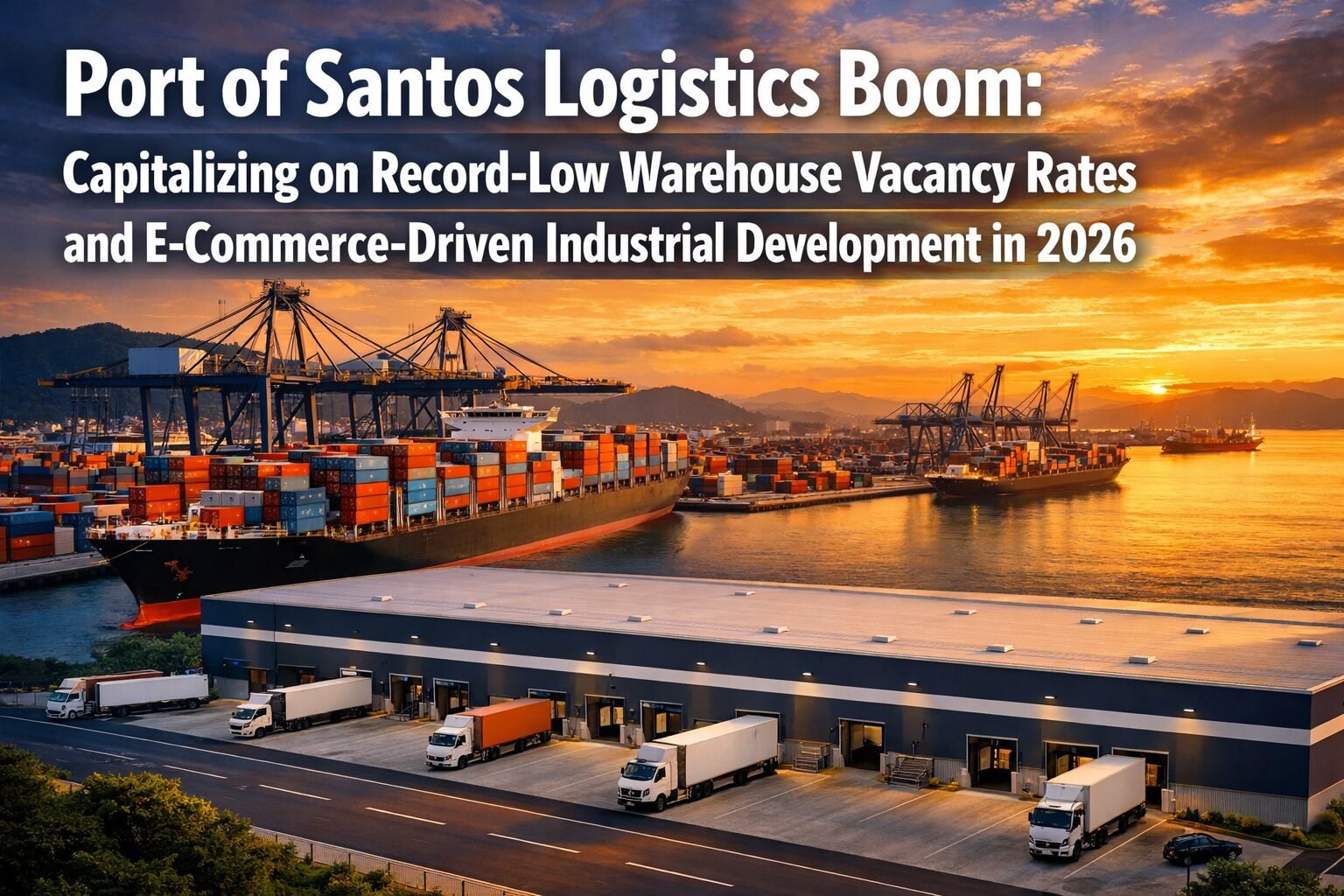
Brazil’s logistics landscape is experiencing a seismic shift, and nowhere is this transformation more evident than at the Port of Santos. As 2026 unfolds, the port has shattered records with unprecedented cargo throughput, triggering an explosive demand for warehouse and industrial space that developers can no longer ignore. The Port of Santos Logistics Boom: Capitalizing on Record-Low Warehouse Vacancy Rates and E-Commerce-Driven Industrial Development in 2026 represents a once-in-a-generation opportunity for savvy investors and developers to enter a high-yield industrial segment driven by e-commerce expansion and global supply-chain restructuring.
In January 2026 alone, the Port of Santos handled an astounding 12.7 million tonnes of cargo—a 9.5% increase from the previous year—while container throughput reached a record 467,000 TEUs [1]. This surge isn’t just a temporary spike; it reflects fundamental shifts in global trade patterns, Brazil’s agricultural export dominance, and the explosive growth of e-commerce fulfillment networks. With warehouse vacancy rates plummeting to historic lows and demand far outstripping supply, the logistics real estate sector near Santos has become one of the most attractive investment opportunities in Latin America.
Key Takeaways
- 📊 Record-breaking performance: Port of Santos handled 12.7 million tonnes in January 2026, marking a 9.5% year-over-year increase and establishing new throughput records [1]
- 🏭 Critical warehouse shortage: Vacancy rates in logistics facilities near Santos have dropped to record lows, with operational constraints and longer waiting times at key terminals [2]
- 🛒 E-commerce explosion: Brazil’s online retail growth is driving unprecedented demand for modern fulfillment centers and last-mile distribution facilities
- 💰 $5+ billion infrastructure investment: Massive modernization plans include digitalization, automation, and green corridor development for BRICS trade [3]
- 🌍 Strategic BRICS hub: Over 60% of Santos cargo connects to China, positioning the port as Latin America’s premier gateway for international trade [3]
Understanding the Port of Santos Logistics Boom in 2026
The Numbers Behind the Boom
The Port of Santos has entered 2026 with momentum that few industry experts predicted. The January 2026 throughput of 12.7 million tonnes represents not just a seasonal peak but a fundamental expansion of Brazil’s trade capacity [1]. This performance exceeded the previous record set in 2024 by 6.8%, demonstrating sustained growth rather than temporary fluctuations.
Container handling reached 467,000 TEUs in January 2026, marking the strongest January performance in the port’s history and surpassing January 2024 by 1.4% [1]. More impressively, the port welcomed 446 vessel calls during the month—a 2.5% increase from 435 ships in January 2025 [1]. These vessels aren’t just passing through; they’re delivering and collecting goods that require immediate warehousing, processing, and distribution.
Agricultural Exports Driving Infrastructure Demand
Brazil’s position as an agricultural powerhouse continues to strengthen, with Santos serving as the primary export gateway. Sugar exports surged 36.8% year-over-year to 1.57 million tonnes in January 2026, reversing the downward trend observed in 2025 [1]. Even more dramatic was the 79.6% increase in the soy complex (beans and meal) to 1.56 million tonnes, fueled by product availability and robust external demand [1].
This agricultural boom creates ripple effects throughout the logistics ecosystem. Specialized warehousing for agricultural products, cold storage facilities, and processing centers are all experiencing capacity constraints. For developers and investors exploring opportunities in Brazil’s growing markets, the industrial segment near Santos presents compelling fundamentals.
Government Support and Expansion Plans
Port Authority President Anderson Pomini announced that Brazil’s government has approved plans to expand the Port of Santos area, specifically designed to support the continued record-setting performance [1]. This governmental backing signals long-term commitment to infrastructure development and provides confidence for private sector investment.
The port has unveiled ambitious plans to invest over $5 billion in infrastructure upgrades, process digitalization, and the creation of “green corridors” for BRICS countries [3]. This massive capital deployment will modernize operations, increase throughput capacity, and create additional demand for supporting logistics infrastructure in the surrounding region.
Record-Low Warehouse Vacancy Rates: The Supply-Demand Imbalance
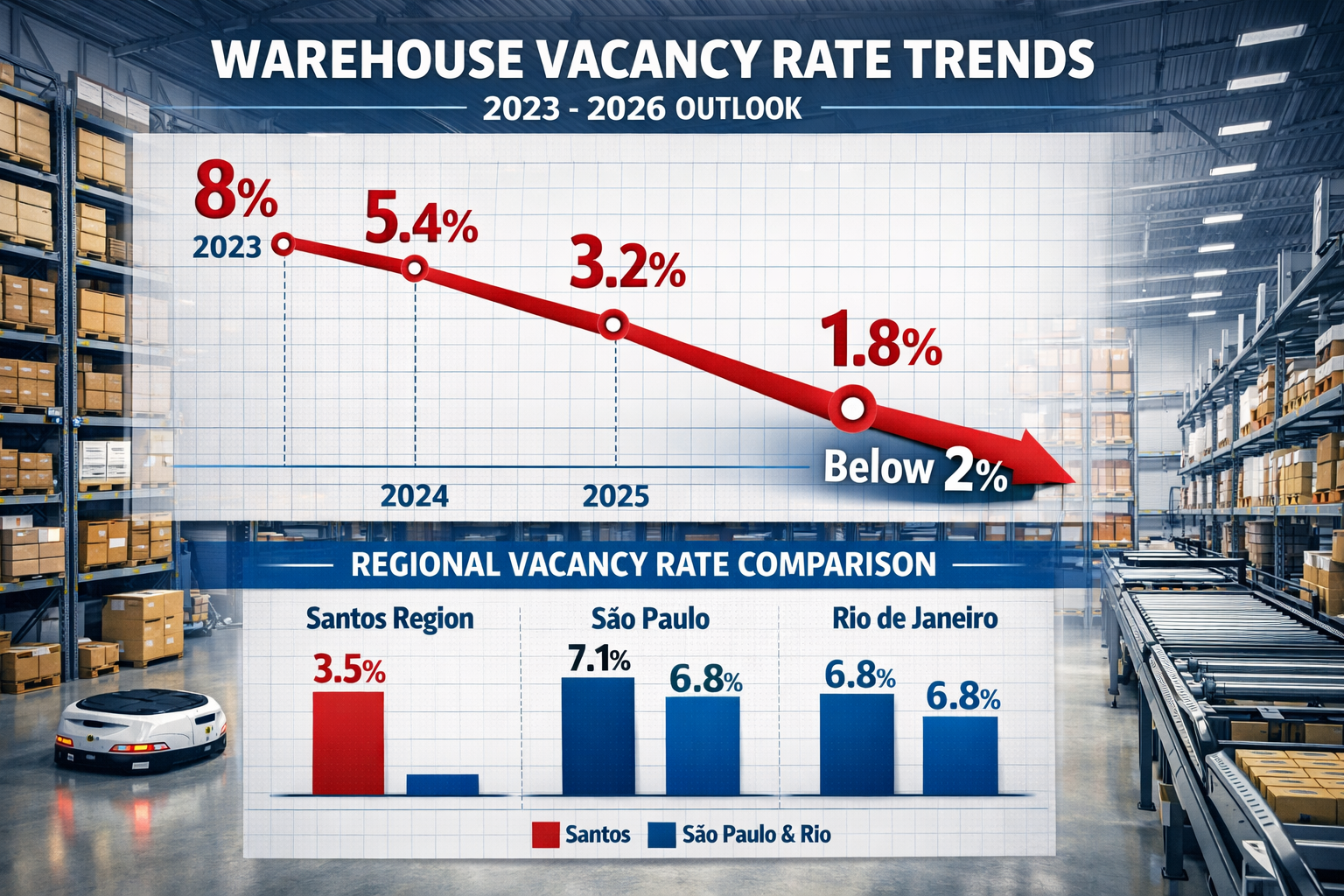
The Vacancy Crisis
The Port of Santos Logistics Boom: Capitalizing on Record-Low Warehouse Vacancy Rates and E-Commerce-Driven Industrial Development in 2026 is characterized by an acute shortage of available warehouse space. As of February 2026, yard occupancy remains mostly within safe limits, but tighter conditions and longer waiting times persist at key terminals such as Santos, Paranaguá, and Itapoá, particularly for out-of-window vessels [2].
This operational constraint reflects a broader reality: demand for logistics space has outpaced supply by a significant margin. Traditional warehouse facilities built for conventional cargo handling are inadequate for modern e-commerce fulfillment requirements, which demand:
- Higher ceiling clearances (32+ feet) for vertical storage optimization
- Advanced fire suppression systems meeting international standards
- Cross-docking capabilities for rapid inventory turnover
- Temperature-controlled zones for perishable goods
- Last-mile distribution positioning within urban proximity
What’s Driving the Shortage?
Several converging factors have created this supply-demand imbalance:
- E-commerce acceleration: Brazilian online retail has grown exponentially, requiring fulfillment centers closer to the Port of Santos for import processing
- Supply-chain re-shoring: Global companies are establishing regional distribution hubs in Brazil rather than shipping directly to end markets
- Just-in-time inventory: Modern logistics practices minimize storage time, requiring more facilities with faster throughput
- Quality gap: Many existing warehouses don’t meet Grade A specifications required by international logistics operators
Investment Implications
For developers and investors, these record-low vacancy rates translate to exceptional rental yields and strong tenant demand. Industrial properties near Santos are commanding premium rents, with lease terms extending 10-15 years for quality facilities. Cap rates remain attractive compared to residential or commercial properties, while tenant creditworthiness is typically superior due to the presence of multinational logistics operators.
Those interested in understanding how real estate development cycles work will recognize that entering the industrial segment during a supply shortage offers significant upside potential as new facilities come online at premium valuations.
E-Commerce-Driven Industrial Development: The Growth Engine
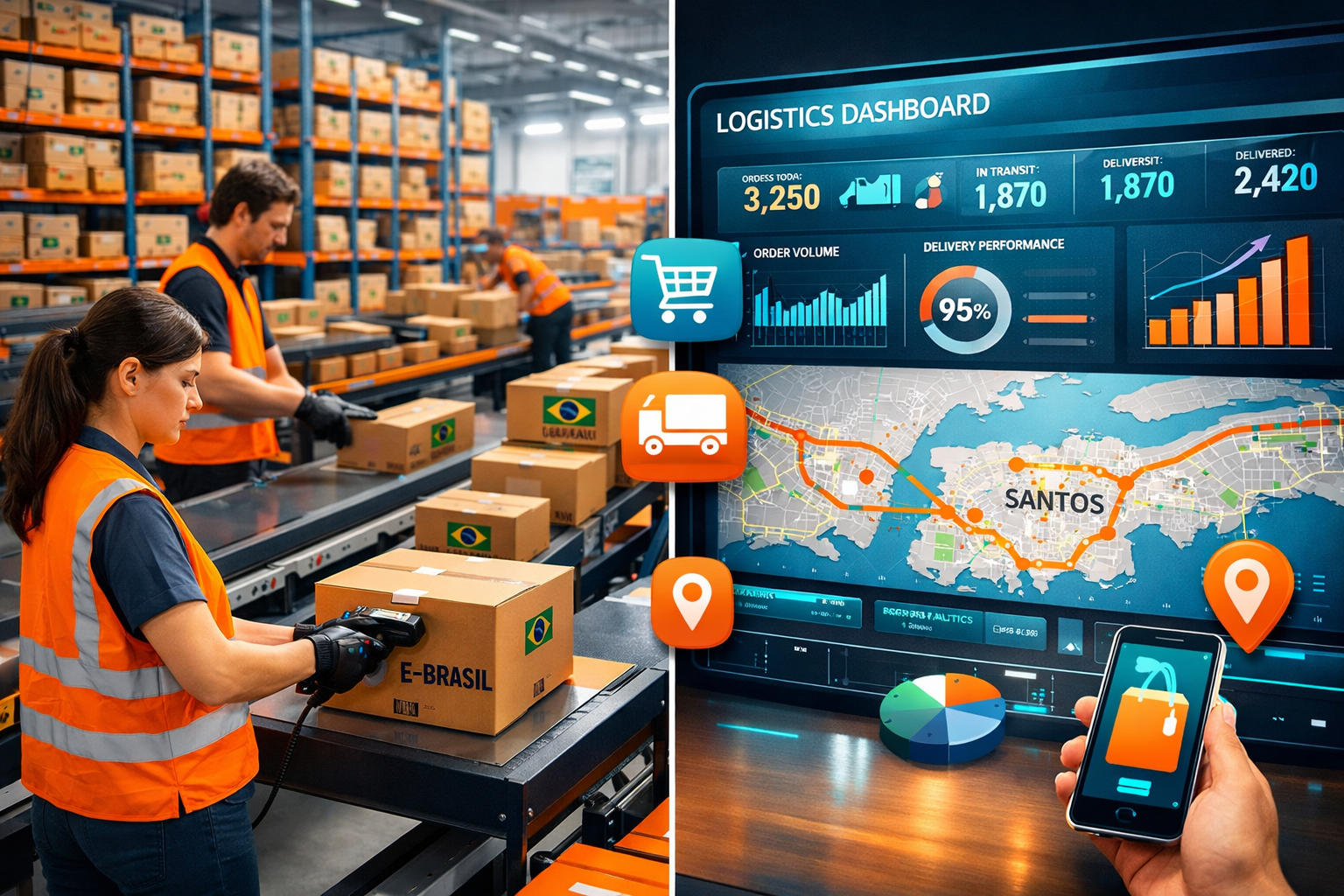
Brazil’s E-Commerce Revolution
Brazil’s e-commerce market has experienced explosive growth, fundamentally reshaping logistics infrastructure requirements. The Port of Santos Logistics Boom: Capitalizing on Record-Low Warehouse Vacancy Rates and E-Commerce-Driven Industrial Development in 2026 is inextricably linked to this digital retail transformation.
Online shopping penetration has increased dramatically, with Brazilian consumers embracing digital commerce for everything from electronics to groceries. This shift requires a completely different logistics infrastructure than traditional retail:
- Fulfillment centers processing thousands of individual orders daily
- Sortation facilities routing packages to specific delivery zones
- Last-mile hubs positioned within urban areas for same-day delivery
- Returns processing centers handling the reverse logistics flow
The BRICS Connection
Santos serves as a key logistics hub for BRICS nations, with more than 60% of the port’s cargo connected to China [3]. The port maintains stable trade with India, South Africa, and Russia, including direct shipping services from St. Petersburg and Novorossiysk [3]. This international connectivity makes Santos the natural entry point for imported goods destined for Brazilian e-commerce platforms.
Chinese manufacturers shipping consumer goods to Brazilian online retailers require immediate warehousing upon arrival. The speed-to-market imperative means that fulfillment centers located within 50 kilometers of the port command significant premiums over facilities further inland.
Technology and Automation Requirements
Port leadership has emphasized the need for new technological solutions and automation to increase capacity and sustainability [3]. Russia has been identified as a potential partner for port technologies and equipment supply [3]. This focus on digitalization extends to warehouse operations, where modern facilities incorporate:
- 🤖 Robotic picking systems for order fulfillment
- 📱 Real-time inventory management with RFID and barcode scanning
- 🚛 Automated loading systems for truck dispatch
- 📊 Predictive analytics for demand forecasting
- ⚡ Energy-efficient operations with solar panels and LED lighting
Developers planning industrial projects near Santos must incorporate these technological capabilities from the design phase to attract premium tenants. Those exploring current development projects can see how modern specifications are evolving to meet these demands.
Sustainability and Green Logistics
The $5+ billion investment plan includes creation of “green corridors” for BRICS countries [3], reflecting growing emphasis on sustainable logistics operations. Modern warehouse developments near Santos are incorporating:
- Solar energy generation reducing operational costs
- Rainwater harvesting systems for non-potable water needs
- Electric vehicle charging infrastructure for delivery fleets
- LEED or equivalent certifications meeting international standards
- Green roofs and permeable surfaces managing stormwater
These sustainability features aren’t just environmental gestures—they’re becoming tenant requirements as multinational corporations commit to carbon-neutral supply chains.
Strategic Opportunities for Developers and Investors
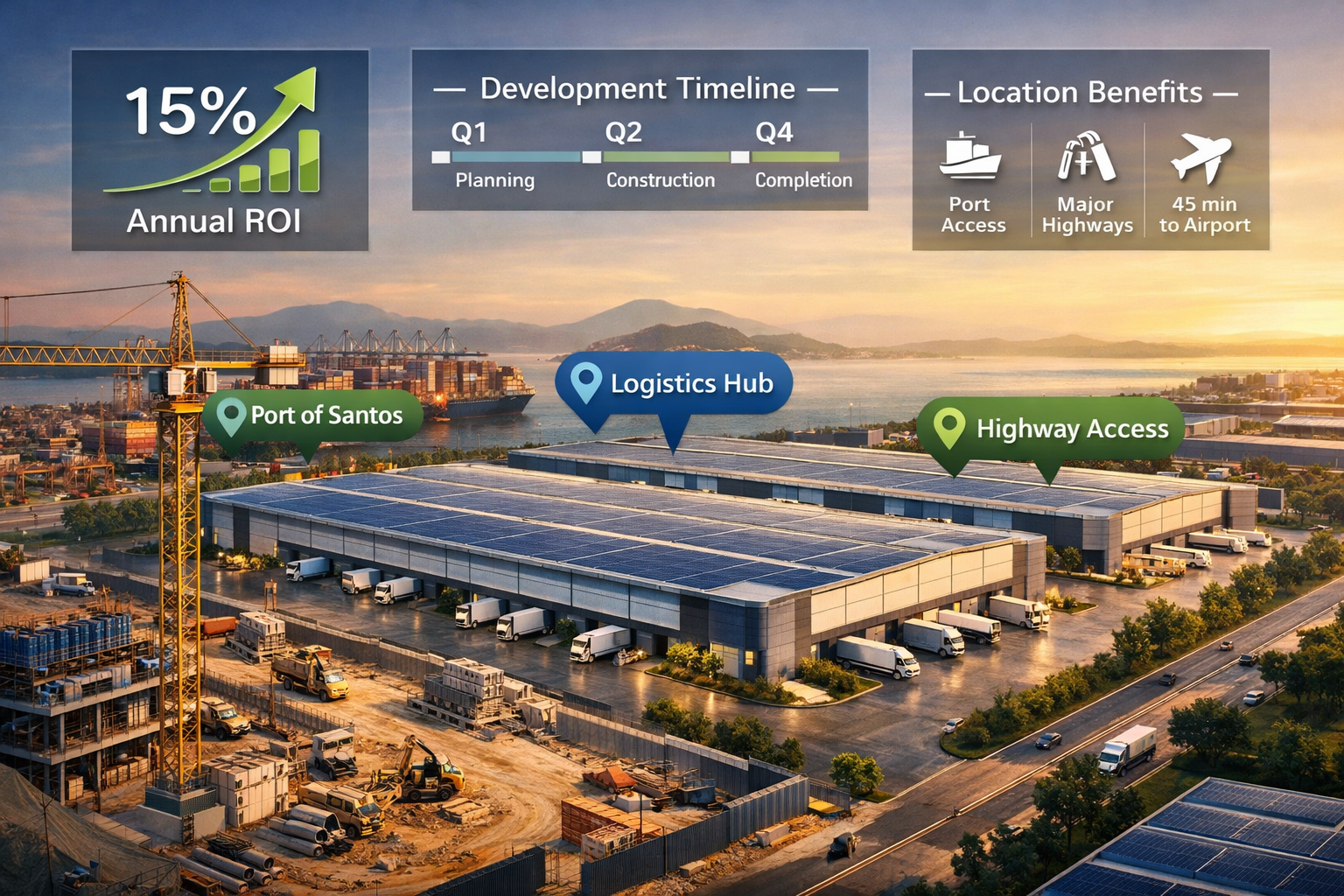
Identifying High-Potential Locations
The Port of Santos Logistics Boom: Capitalizing on Record-Low Warehouse Vacancy Rates and E-Commerce-Driven Industrial Development in 2026 creates specific geographic opportunities. Prime locations for industrial development include:
Immediate Port Proximity (0-10km)
- Ideal for container freight stations and import/export warehousing
- Premium land costs offset by highest rental rates
- Requires specialized zoning and environmental permits
Secondary Ring (10-30km)
- Optimal for fulfillment centers and regional distribution
- Balance of land cost and logistics efficiency
- Strong infrastructure connectivity essential
Last-Mile Hubs (30-50km)
- Urban-proximate locations for final delivery staging
- Smaller footprint facilities (20,000-50,000 sq ft)
- Higher turnover, shorter lease terms
Development Specifications for Maximum Returns
To capitalize on the current market dynamics, developers should prioritize:
| Feature | Specification | Tenant Benefit |
|---|---|---|
| Clear Height | 12+ meters (40+ feet) | Vertical storage optimization |
| Floor Loading | 6+ tonnes per sq meter | Heavy inventory capacity |
| Truck Courts | 50+ meter depth | Simultaneous loading operations |
| Power Supply | 1,000+ kVA capacity | Automated systems operation |
| Fire Suppression | ESFR sprinkler systems | Insurance compliance |
| Security | 24/7 monitoring, access control | Cargo protection |
Financial Modeling and Returns
Industrial developments near Santos are delivering exceptional risk-adjusted returns:
- Development yields: 12-16% on cost for stabilized properties
- Rental growth: 8-12% annually in tight markets
- Occupancy rates: 95%+ for Grade A facilities
- Lease terms: 10-15 years with multinational tenants
- Exit cap rates: 7-9% for institutional-quality assets
For investors familiar with residential development cycles, industrial properties offer lower volatility and more predictable cash flows due to long-term lease structures and creditworthy tenants.
Partnership and Joint Venture Opportunities
Given the specialized nature of industrial development, several partnership structures are emerging:
- Land owner + developer: Landowners contribute sites while developers provide construction expertise
- Developer + operator: Developers build to suit for established logistics operators
- Financial investor + developer: Institutional capital partners with local developers for execution
- International + local: Foreign logistics companies partner with Brazilian developers for market entry
These structures allow participants to leverage their respective strengths while sharing risks and returns. Companies with established development expertise are well-positioned to structure these partnerships effectively.
Navigating Challenges and Risks
Regulatory and Zoning Considerations
Industrial development near major ports involves complex regulatory navigation:
- Environmental licensing (IBAMA and state agencies)
- Industrial zoning compliance with municipal master plans
- Traffic impact studies for truck-heavy operations
- Fire department approvals for large-scale facilities
- Port authority coordination for access routes
Experienced developers understand these processes can extend timelines by 12-24 months, requiring careful project scheduling and stakeholder management.
Infrastructure Dependencies
The success of logistics facilities depends heavily on supporting infrastructure:
- Road connectivity: Direct highway access without residential area routing
- Utility capacity: Adequate power, water, and telecommunications
- Labor availability: Proximity to workforce for 24/7 operations
- Emergency services: Fire and medical response capabilities
Projects should include contingency budgets for infrastructure improvements that may be required by municipal authorities as development conditions.
Market Timing and Competition
While current conditions are favorable, developers must consider:
- Development pipeline: Other projects that may come online simultaneously
- Economic cycles: Brazil’s macroeconomic volatility affecting demand
- Tenant concentration: Dependency on small number of large tenants
- Technology disruption: Automation potentially reducing space requirements
Sophisticated developers conduct absorption studies to understand how much new supply the market can absorb without triggering rental declines.
The BRICS Advantage: International Trade Dynamics
China Connection
With over 60% of Port of Santos cargo connected to China [3], the port has become the primary gateway for Sino-Brazilian trade. This relationship creates specific opportunities:
- Import consolidation centers for Chinese consumer goods
- Export staging facilities for Brazilian agricultural products
- Cross-border e-commerce hubs serving Brazilian online retailers
- Value-added services like quality inspection and repackaging
The stability of this trade relationship, supported by BRICS cooperation frameworks, provides long-term demand visibility for logistics infrastructure.
Diversified Trade Partners
Beyond China, Santos maintains stable trade with India, South Africa, and Russia [3], including direct shipping services from Russian ports. This diversification reduces dependency on any single trade partner and creates opportunities for specialized facilities serving specific commodity flows.
Geopolitical Considerations
Recent geopolitical developments, including U.S. concerns about Chinese investment in Brazilian port infrastructure, may influence development patterns. Developers should monitor these dynamics, as they could affect:
- Foreign investment flows into logistics infrastructure
- Technology partnerships for port and warehouse automation
- Trade route preferences and shipping line decisions
- Government incentives for domestic versus foreign developers
Future Outlook: Sustaining the Boom Through 2026 and Beyond
Projected Growth Trajectories
By the end of 2025, the port’s cargo turnover reached approximately 12 million tons with about 6 million containers, positioning Santos as one of the largest transport complexes in South America [3]. Projections for 2026 and beyond suggest:
- Continued throughput growth of 6-9% annually through 2028
- Container handling expansion driven by e-commerce imports
- Agricultural export increases as Brazil expands cultivation areas
- Infrastructure capacity additions from the $5+ billion investment program
These projections support sustained demand for logistics real estate through the remainder of the decade.
Technology Evolution
The emphasis on digitalization and automation [3] will transform logistics operations:
- Autonomous vehicles for yard operations and last-mile delivery
- AI-powered optimization of warehouse space utilization
- Blockchain integration for supply chain transparency
- IoT sensors for real-time cargo monitoring
Developers incorporating these capabilities from the design phase will command premium valuations and attract the most sophisticated tenants.
Sustainability Imperatives
The “green corridors” initiative [3] reflects growing emphasis on environmental performance:
- Carbon-neutral operations becoming tenant requirements
- Renewable energy integration reducing operational costs
- Circular economy principles in warehouse design and construction
- Climate resilience against extreme weather events
These factors are transitioning from nice-to-have features to essential specifications for institutional-grade properties.
Conclusion: Seizing the Logistics Real Estate Opportunity
The Port of Santos Logistics Boom: Capitalizing on Record-Low Warehouse Vacancy Rates and E-Commerce-Driven Industrial Development in 2026 represents a rare convergence of favorable conditions for industrial real estate development. Record port throughput, plummeting vacancy rates, explosive e-commerce growth, and massive infrastructure investment have created a compelling opportunity for developers and investors willing to enter this specialized segment.
The fundamentals are exceptionally strong: 12.7 million tonnes of cargo handled in January 2026 alone [1], $5+ billion in planned infrastructure investment [3], and over 60% of cargo connected to China [3] through BRICS trade relationships. These aren’t temporary market conditions—they reflect structural shifts in global trade patterns and Brazil’s growing economic importance.
Actionable Next Steps
For developers and investors ready to capitalize on this opportunity:
- Conduct site identification studies within 0-50km of Port of Santos, focusing on areas with strong highway connectivity and industrial zoning
- Engage specialized consultants for environmental licensing, traffic studies, and regulatory navigation
- Develop relationships with potential tenants including multinational logistics operators, e-commerce platforms, and freight forwarders
- Structure appropriate partnerships leveraging land ownership, development expertise, and financial capital
- Incorporate modern specifications including 12+ meter clear heights, advanced fire suppression, and sustainability features
- Monitor the development pipeline to understand competitive supply and optimal timing for market entry
Those interested in exploring development opportunities can learn more about current projects or connect with experienced developers who understand the industrial logistics sector.
The Port of Santos logistics boom isn’t just a 2026 phenomenon—it’s the beginning of a multi-year growth cycle that will reshape Brazil’s logistics infrastructure landscape. Developers who enter this market now, with appropriate expertise and capital, are positioned to generate exceptional returns while building the critical infrastructure that supports Brazil’s continued economic expansion. The opportunity is clear, the timing is right, and the fundamentals are strong. The question isn’t whether to participate in this boom, but how quickly you can position yourself to capitalize on it. 🚢📦
References
[1] Port Of Santos Posts Record January Throughput To Open 2026 – https://datamarnews.com/noticias/port-of-santos-posts-record-january-throughput-to-open-2026/
[2] Latin America Market Update February – https://www.maersk.com/news/articles/2026/02/16/latin-america-market-update-february
[3] Port Of Santos Is Looking For Investors And Technology Brazil Is Preparing A New Generation Brics Hub – https://deliver-2.com/news/warehouses-and-cargo-terminals/port-of-santos-is-looking-for-investors-and-technology-brazil-is-preparing-a-new-generation-brics-hub/