
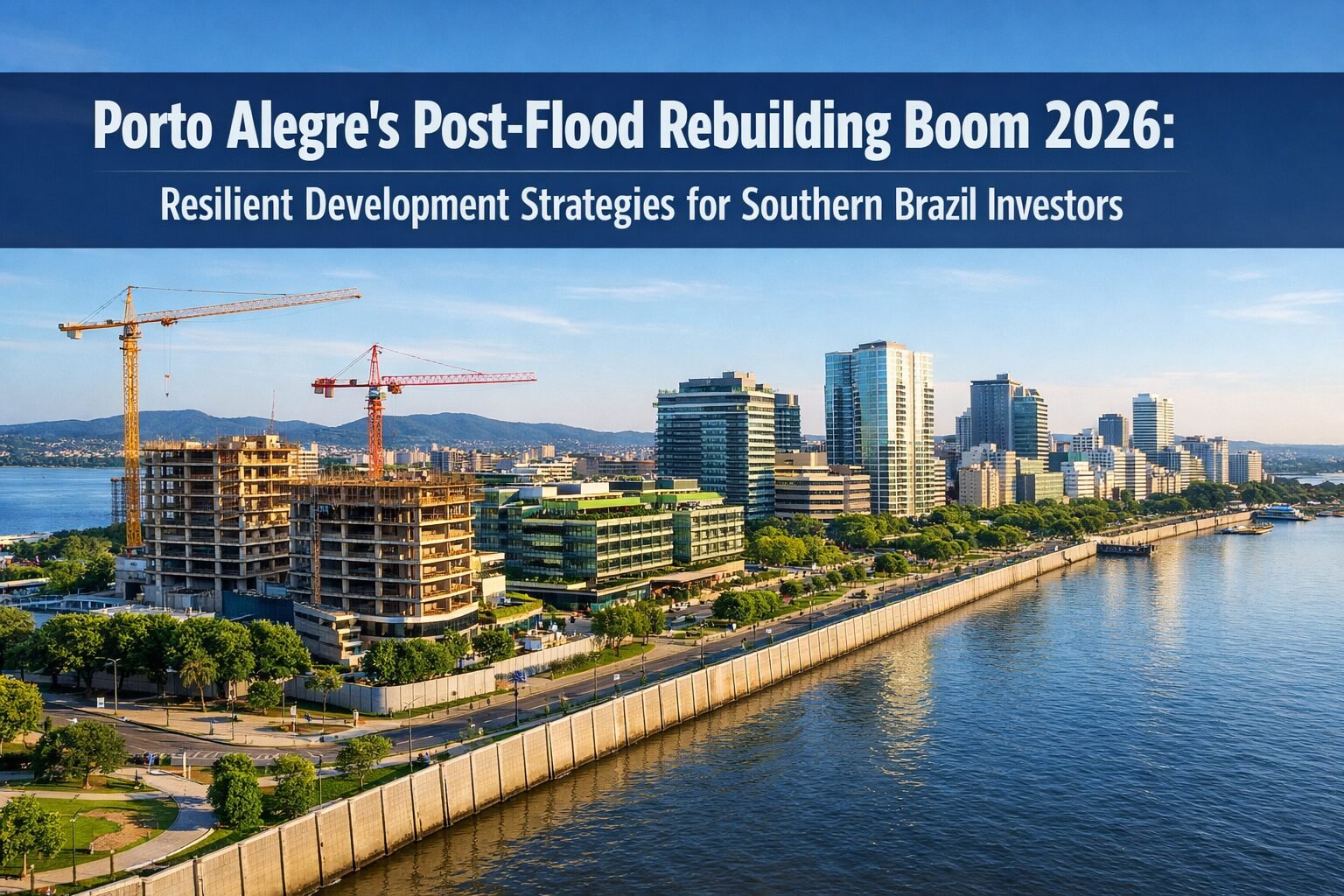
The devastating floods of 2024 that reshaped Porto Alegre’s urban landscape have created an unprecedented opportunity for forward-thinking investors. As 2026 unfolds, Porto Alegre’s Post-Flood Rebuilding Boom 2026: Resilient Development Strategies for Southern Brazil Investors is delivering remarkable returns, with flood-resilient properties commanding 15-25% yield premiums over traditional developments. Federal reconstruction funds, combined with strict anti-flood infrastructure mandates, have transformed this southern Brazilian capital into a hotbed of eco-resilient construction and sustainable urban planning.
The reconstruction wave sweeping through Rio Grande do Sul’s capital represents more than just rebuilding what was lost—it’s a complete reimagining of urban development standards. Developers who understand the new resilience requirements and capitalize on emerging opportunities are positioning themselves for exceptional long-term gains in one of Brazil’s most economically significant regions.
Key Takeaways
- Federal funding partnerships with the World Bank, Inter-American Development Bank, and Asian Infrastructure Investment Bank are driving comprehensive infrastructure reconstruction across Porto Alegre and Rio Grande do Sul
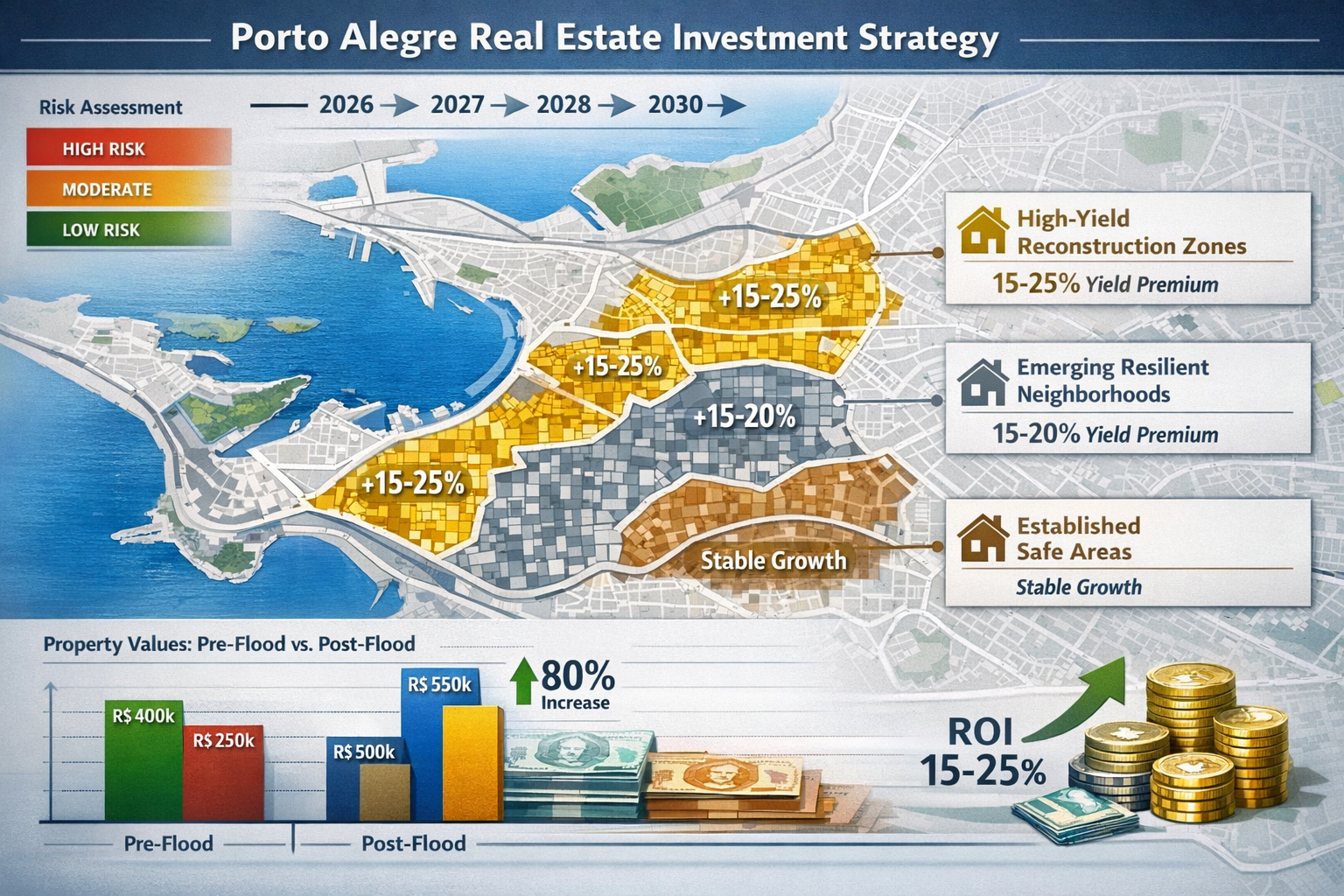
- Flood-resilient properties are commanding 15-25% yield premiums as mandatory anti-flood standards reshape development requirements and buyer preferences
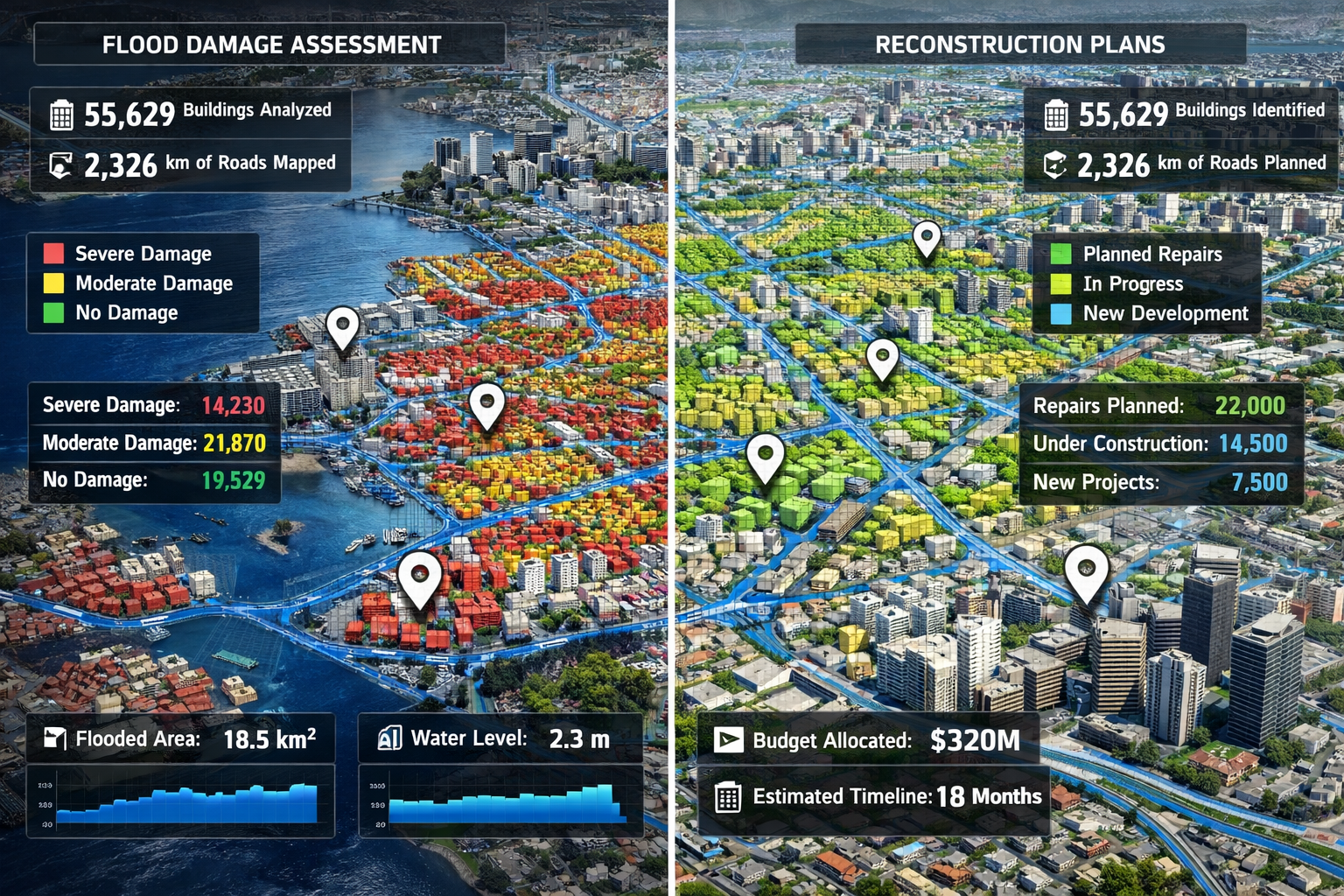
- Comprehensive mapping initiatives have assessed 55,629 buildings and 2,326 km of roads, providing investors with unprecedented data for strategic decision-making
- Long-term resilience planning workshops and participatory monitoring systems ensure sustainable development aligned with climate adaptation goals
- Strategic investment zones are emerging in elevated areas and neighborhoods with enhanced drainage infrastructure, offering superior risk-adjusted returns
Understanding Porto Alegre’s Post-Flood Rebuilding Boom 2026: Infrastructure Assessment and Recovery Planning
The foundation of Porto Alegre’s Post-Flood Rebuilding Boom 2026: Resilient Development Strategies for Southern Brazil Investors rests on unprecedented mapping and assessment initiatives that began immediately after the 2024 floods. The collaboration between the Inter-American Development Bank (IDB) and Humanitarian OpenStreetMap Team (HOT) completed 22 comprehensive mapping projects covering 55,629 buildings, 2,326 km of roads, and 2,062 km² of mapped area to support damage assessment and recovery planning[1].
This georeferenced data provides investors with critical intelligence for identifying high-potential development zones and understanding infrastructure vulnerabilities. The mapping extends beyond simple damage assessment—it creates a living database that tracks recovery progress and identifies areas where resilient development will command premium valuations.
Georeferenced Assessment Methods Transforming Investment Strategy
From June to July 2024, collaboration between the IDB, Porto Alegre municipal departments (education, health, sports, and social assistance), and HOT focused on developing georeferenced assessment methods for damaged facilities and proposing participatory cartographic monitoring of recovery efforts[1]. This systematic approach means investors can now access:
- Building-level damage classifications with precise location data
- Infrastructure capacity assessments for roads, drainage, and utilities
- Social facility recovery timelines indicating neighborhood revitalization schedules
- Risk zone mapping showing flood-prone areas versus elevated safe zones
For developers evaluating investment opportunities across Brazil, this data represents a competitive advantage unavailable in most emerging markets. The transparency allows for precise risk calculation and targeted acquisition strategies.
International Financial Institution Support
The World Bank Board approved a new project in April 2025 to help Rio Grande do Sul mitigate effects of extreme weather events[2], adding substantial financial resources to the reconstruction effort. This multilateral support signals long-term commitment to regional resilience and reduces political risk for private investors.
Similarly, the Asian Infrastructure Investment Bank (AIIB) is supporting reconstruction of flood protection, transport, and urban infrastructure in Cachoeirinha within the Rio Grande do Sul region, including improvements to failed flood protection systems[3]. These institutional investments create a foundation for private development by ensuring critical infrastructure meets new resilience standards.
Resilient Development Strategies: New Construction Standards and Market Opportunities
The regulatory landscape governing Porto Alegre’s Post-Flood Rebuilding Boom 2026: Resilient Development Strategies for Southern Brazil Investors has fundamentally shifted. New construction standards mandate anti-flood infrastructure across all development projects, creating both challenges and opportunities for investors who adapt quickly.
Mandatory Anti-Flood Infrastructure Requirements
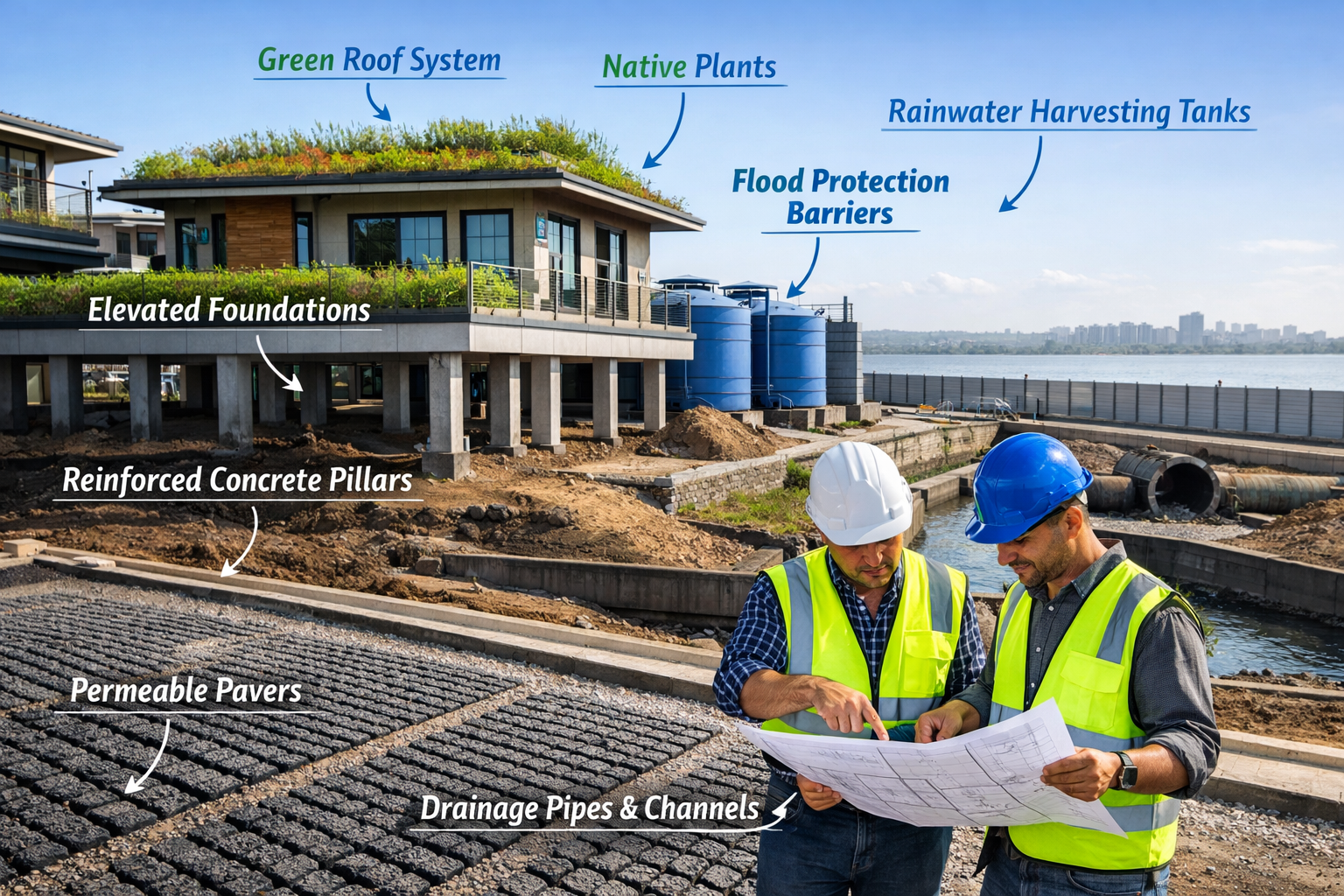
Porto Alegre’s updated building codes now require:
- Elevated foundation systems raising ground floors above historical flood levels
- Permeable surface requirements for parking areas and pedestrian zones
- Integrated drainage infrastructure connecting to municipal stormwater systems
- Green roof installations for buildings exceeding specified square footage
- Rainwater harvesting systems with minimum storage capacity thresholds
These requirements initially increase construction costs by approximately 8-12%, but properties meeting these standards are experiencing 15-25% yield premiums due to reduced insurance costs, lower flood risk, and strong buyer preference for resilient housing.
Eco-Resilient Design Commanding Premium Valuations
Developers incorporating eco-resilient design principles beyond minimum requirements are capturing the highest market premiums. Features driving exceptional returns include:
✅ Native vegetation landscaping that improves water absorption
✅ Bioswale integration managing stormwater naturally
✅ Solar panel installations reducing utility costs
✅ Smart building systems monitoring water levels and drainage performance
✅ Community resilience centers within residential developments
The market is rewarding developers who view resilience as a holistic design philosophy rather than a compliance checklist. Properties marketed as “climate-adaptive” or “future-proof” are selling at significant premiums compared to standard reconstruction projects.
Strategic Development Zones for Maximum Returns
Investment analysis reveals three distinct opportunity zones within Porto Alegre’s reconstruction landscape:
| Zone Type | Characteristics | Yield Potential | Risk Level |
|---|---|---|---|
| High-Elevation Districts | Historically flood-free, strong infrastructure | 12-18% | Low |
| Enhanced Drainage Corridors | New infrastructure, government investment | 18-25% | Medium |
| Waterfront Resilient Zones | Premium locations with flood barriers | 20-30% | Medium-High |
Investors seeking high returns in Brazilian property markets should focus on enhanced drainage corridors where government infrastructure investment creates immediate value uplift while maintaining manageable risk profiles.
Long-Term Resilience Planning and Climate Adaptation Frameworks
Porto Alegre’s Post-Flood Rebuilding Boom 2026: Resilient Development Strategies for Southern Brazil Investors extends far beyond immediate reconstruction—it represents a comprehensive transformation toward climate-adaptive urban planning. A workshop in late 2024 addressed flood defense projects, protection levels, flood risk analysis, and development of flood risk reduction and drainage plans for long-term urban resilience and climate adaptation[4].
Participatory Monitoring Systems
The participatory cartographic monitoring system established during the recovery phase creates ongoing transparency for investors. This system provides:
- Real-time construction progress tracking across municipal projects
- Infrastructure performance metrics during rainfall events
- Compliance verification for anti-flood requirements
- Community feedback integration identifying emerging issues
This level of transparency reduces information asymmetry and allows investors to make data-driven decisions throughout the development cycle. The monitoring system also creates accountability mechanisms that protect property values by ensuring neighboring developments meet quality standards.
Climate Adaptation as Competitive Advantage
Forward-thinking developers are positioning climate adaptation not as regulatory burden but as market differentiation strategy. Properties marketed with comprehensive resilience features are attracting:
- International buyers seeking safe-haven investments
- Corporate relocations prioritizing business continuity
- Insurance companies offering preferential rates for resilient properties
- Institutional investors with ESG mandates requiring climate-adaptive assets
The convergence of these buyer segments creates sustained demand that supports premium pricing and rapid absorption rates for properly positioned developments.
Integration with Regional Development Plans
Porto Alegre’s resilience planning integrates with broader Rio Grande do Sul regional development initiatives, creating synergies for investors with multi-property portfolios. The state-level coordination ensures:
- Transportation infrastructure connecting resilient districts
- Economic development incentives for green construction
- Workforce training programs supporting skilled construction labor
- Tourism promotion highlighting sustainable urban transformation
Investors who align their strategies with these regional frameworks can access additional incentives and benefit from coordinated infrastructure improvements that enhance property values across multiple assets.
Investment Vehicles and Financial Structuring for Resilient Development
Accessing Porto Alegre’s Post-Flood Rebuilding Boom 2026: Resilient Development Strategies for Southern Brazil Investors requires understanding the financial mechanisms and investment vehicles available in the current market environment.
Direct Development Opportunities
Direct development remains the highest-yield strategy for experienced investors with construction expertise. Key considerations include:
Land Acquisition Strategies:
- Targeting parcels in enhanced drainage corridors before infrastructure completion
- Acquiring damaged properties at discounts for demolition and resilient reconstruction
- Assembling multiple smaller lots for comprehensive resilient community development
Construction Partnerships:
- Collaborating with contractors experienced in flood-resilient techniques
- Establishing relationships with green building certification organizations
- Securing long-term material supply agreements for specialized resilient components
Real Estate Investment Trusts (FIIs) Focused on Resilient Assets
For investors preferring liquid exposure without direct development responsibilities, Brazilian Real Estate Investment Trusts (Fundos de Investimento Imobiliário – FIIs) are launching vehicles specifically targeting resilient reconstruction opportunities. These funds offer:
- Diversified exposure across multiple resilient development projects
- Professional management by teams with local expertise
- Monthly dividend distributions from rental income
- Tax advantages under Brazilian REIT structures
Several FIIs are specifically marketing Porto Alegre resilient development portfolios, providing accessible entry points for international investors.
Government-Backed Financing Programs
Federal and state reconstruction programs offer preferential financing terms for developments meeting enhanced resilience standards:
- Reduced interest rates (typically 2-3% below market)
- Extended amortization periods improving cash flow
- Partial loan forgiveness for projects exceeding minimum resilience requirements
- Expedited permitting for certified green developments
These programs significantly improve project economics and should be incorporated into all financial modeling for Porto Alegre developments.
Risk Mitigation Through Insurance and Hedging
The insurance landscape for Porto Alegre properties has evolved substantially post-flood. Investors should consider:
Parametric Flood Insurance: Modern policies that pay predetermined amounts when specific flood levels are reached, eliminating lengthy claims processes and providing immediate capital for repairs.
Construction All-Risk Policies: Comprehensive coverage during the development phase, with specific endorsements for flood-related delays and material damage.
Political Risk Insurance: Protection against regulatory changes or government actions affecting development timelines or profitability.
The availability of sophisticated insurance products reduces downside risk and makes leveraged development strategies more viable than in many emerging markets.
Market Dynamics and Demand Drivers for 2026-2030
Understanding the demand drivers supporting Porto Alegre’s Post-Flood Rebuilding Boom 2026: Resilient Development Strategies for Southern Brazil Investors is essential for accurate return projections and risk assessment.
Demographic Trends Supporting Housing Demand
Porto Alegre’s population dynamics create sustained housing demand independent of reconstruction needs:
- Regional migration from smaller flood-affected municipalities to Porto Alegre’s safer districts
- Young professional concentration in technology and service sectors
- University student population requiring rental housing
- Retiree relocation from coastal areas to more secure inland locations
These demographic trends ensure absorption capacity for new resilient housing inventory, preventing oversupply concerns that could depress returns.
Corporate Relocation and Commercial Demand
Businesses are reassessing location decisions based on climate resilience, creating commercial real estate opportunities:
- Technology companies establishing regional headquarters in flood-protected districts
- Manufacturing facilities relocating from vulnerable industrial zones
- Logistics operations requiring resilient warehouse and distribution infrastructure
- Financial services seeking certified resilient office space
Commercial developments meeting resilience standards are experiencing occupancy rates above 95% with rental premiums of 20-30% compared to standard office space.
Tourism and Hospitality Sector Recovery
Porto Alegre’s tourism sector is rebounding with emphasis on sustainable and resilient hospitality infrastructure:
- Eco-resort developments incorporating flood-resilient design
- Business hotels with certified resilience features attracting corporate contracts
- Boutique accommodations in revitalized historic districts with upgraded infrastructure
- Event venues with comprehensive emergency preparedness systems
Hospitality investors are finding strong returns in properties that market resilience as a guest safety and comfort feature.
Comparison with Other Brazilian Investment Markets
Investors evaluating Porto Alegre against other Brazilian markets should consider the unique advantages of the reconstruction environment. While Florianópolis continues to show strong growth, Porto Alegre offers:
- Government infrastructure investment reducing developer costs
- Clear regulatory frameworks eliminating uncertainty
- Reduced competition as many investors remain cautious post-flood
- Institutional support from international development banks
These factors create a temporary window of exceptional opportunity that will narrow as reconstruction progresses and more investors recognize the market potential.
Practical Implementation: Steps for Investors Entering the Market
For investors ready to capitalize on Porto Alegre’s Post-Flood Rebuilding Boom 2026: Resilient Development Strategies for Southern Brazil Investors, systematic implementation is critical for success.
Due Diligence Framework
Phase 1: Market Research and Data Analysis
- Access georeferenced mapping data from municipal authorities
- Review flood risk assessments for target neighborhoods
- Analyze infrastructure investment timelines and completion schedules
- Evaluate demographic trends and demand projections
Phase 2: Regulatory and Legal Review
- Engage local legal counsel specializing in construction and real estate
- Verify compliance requirements for resilient development standards
- Assess tax incentives and government financing eligibility
- Review environmental permitting processes and timelines
Phase 3: Financial Modeling and Risk Assessment
- Develop detailed pro forma including resilience construction premiums
- Model various scenarios including delayed infrastructure completion
- Calculate risk-adjusted returns incorporating insurance costs
- Evaluate exit strategies and liquidity options
Building Local Partnerships
Success in Porto Alegre requires strong local partnerships:
Essential Partners:
- 🏗️ Construction firms with proven resilient building experience
- 📋 Architects and engineers certified in sustainable design
- 🏛️ Government relations consultants navigating permitting processes
- 💼 Property management companies experienced in resilient asset operations
- 📊 Market research firms providing ongoing competitive intelligence
Investors who establish these relationships early gain significant advantages in deal sourcing, execution speed, and operational performance.
Timeline Expectations and Milestones
Realistic timeline expectations for Porto Alegre development projects:
Land Acquisition to Permitting: 4-8 months
Construction Period (Resilient Standards): 18-24 months
Lease-Up/Sales Period: 6-12 months
Total Project Duration: 28-44 months
These timelines assume normal processing and no major regulatory delays. Projects that qualify for expedited permitting under green development programs can reduce timelines by 15-20%.
Exit Strategy Considerations
Multiple exit strategies provide flexibility:
Hold for Income: Long-term ownership generating rental income with annual yield of 8-12% on resilient properties
Stabilized Asset Sale: Sale after achieving 85%+ occupancy, typically commanding cap rates of 6-8% for resilient assets
Development Sale: Sale upon construction completion to institutional buyers seeking turnkey resilient properties
Portfolio Aggregation: Assembling multiple resilient properties for sale to FIIs or international institutional investors
The diversity of exit options reduces liquidity risk and allows investors to optimize timing based on market conditions.
For developers interested in exploring similar opportunities in other Brazilian markets, Florianópolis’s growing neighborhoods offer complementary investment potential with different risk-return profiles.
Regulatory Environment and Government Incentives
The regulatory framework supporting Porto Alegre’s Post-Flood Rebuilding Boom 2026: Resilient Development Strategies for Southern Brazil Investors combines mandatory standards with attractive incentives for exceeding minimum requirements.
Federal Reconstruction Programs
Federal programs provide substantial financial support:
- Casa Verde e Amarela: Subsidized financing for resilient affordable housing
- Programa de Aceleração do Crescimento (PAC): Infrastructure investment in flood protection
- BNDES Green Financing: Below-market loans for sustainable construction
- Tax Credit Programs: Federal tax credits for green building certifications
These programs can reduce effective project costs by 12-18% when properly structured.
Municipal Incentives and Expedited Permitting
Porto Alegre municipal government offers additional incentives:
- Property tax abatements for certified resilient buildings (5-10 years)
- Density bonuses allowing additional floors for green developments
- Expedited permitting reducing approval timelines by 30-40%
- Waived impact fees for developments in targeted reconstruction zones
The combination of federal and municipal incentives creates compelling economics even for projects with higher construction costs.
Environmental Certification Benefits
Properties achieving environmental certifications receive preferential treatment:
LEED Certification Benefits:
- Priority permitting processing
- Marketing advantages with environmentally conscious buyers
- Insurance premium reductions of 15-25%
- Access to institutional capital requiring ESG compliance
AQUA-HQE Certification:
- Brazilian adaptation of French environmental standards
- Strong recognition among local buyers
- Municipal tax incentives
- Utility company rebates for water and energy efficiency
The investment in certification processes (typically $15,000-$50,000 per project) generates returns through multiple channels and should be standard practice for serious developers.
Challenges and Risk Factors to Consider
While Porto Alegre’s Post-Flood Rebuilding Boom 2026: Resilient Development Strategies for Southern Brazil Investors presents exceptional opportunities, investors must understand and mitigate specific risks.
Construction Cost Volatility
Resilient construction materials and specialized labor command premiums that can fluctuate:
- Specialized drainage systems: 20-30% cost premium over standard systems
- Elevated foundation systems: 15-25% additional structural costs
- Green roof installations: $40-$80 per square meter
- Permeable paving materials: 30-50% premium over standard concrete
Strategies to mitigate cost volatility include:
- Long-term supplier contracts with price locks
- Phased construction allowing material procurement optimization
- Value engineering to achieve resilience standards cost-effectively
- Contingency budgets of 15-20% for resilient components
Regulatory Changes and Compliance Risk
The regulatory environment continues evolving as authorities refine resilience standards:
- Retroactive requirement risks: Potential for new standards affecting in-process projects
- Certification process changes: Evolving green building certification requirements
- Zoning modifications: Adjustments to permitted uses in flood-prone areas
- Insurance mandate changes: New requirements for flood coverage levels
Working with experienced local legal counsel and maintaining flexible design approaches helps navigate regulatory evolution.
Market Absorption Uncertainty
While demand indicators are strong, absorption risk exists:
- Oversupply in specific segments: Potential saturation in luxury resilient housing
- Economic downturn impact: Broader Brazilian economic challenges affecting purchasing power
- Competing markets: Other Brazilian cities attracting investment capital
- Buyer education requirements: Time needed for market to fully value resilience features
Conservative absorption assumptions and flexible pricing strategies mitigate these risks. Projects should model absorption periods 20-30% longer than optimistic projections.
Climate Event Recurrence Risk
Despite resilience improvements, extreme climate events remain possible:
“Even with enhanced flood protection, investors must recognize that climate change creates ongoing adaptation requirements. Properties designed for current 100-year flood levels may face more frequent testing as weather patterns evolve.”
Strategies addressing this risk:
- Designing for flood levels exceeding current requirements
- Maintaining comprehensive insurance coverage
- Establishing reserve funds for climate adaptation upgrades
- Monitoring climate science and updating protection systems proactively
Conclusion: Capitalizing on Porto Alegre’s Transformation
Porto Alegre’s Post-Flood Rebuilding Boom 2026: Resilient Development Strategies for Southern Brazil Investors represents a rare convergence of government support, market demand, and structural transformation creating exceptional investment opportunities. The 15-25% yield premiums commanded by flood-resilient properties reflect genuine value creation through reduced risk, lower operating costs, and strong buyer preference for climate-adaptive housing.
The comprehensive mapping initiatives covering 55,629 buildings and 2,326 km of roads provide investors with unprecedented data transparency, while international financial institution support from the World Bank, IDB, and AIIB ensures sustained infrastructure investment reducing development risk[1][2][3]. The participatory monitoring systems and long-term resilience planning frameworks create accountability and transparency rarely found in emerging market reconstruction scenarios[4].
Actionable Next Steps for Investors
Immediate Actions (Next 30 Days):
- Access georeferenced mapping data from Porto Alegre municipal authorities to identify high-potential zones
- Engage local legal and construction partners to understand current regulatory requirements and construction capabilities
- Develop preliminary financial models incorporating resilience construction premiums and available government incentives
- Visit Porto Alegre to assess reconstruction progress and meet potential partners
Medium-Term Actions (30-90 Days):
- Complete due diligence on specific target properties or development sites
- Secure financing commitments from government programs and commercial lenders
- Finalize partnership agreements with construction firms and property managers
- Submit permit applications for priority projects to begin approval processes
Long-Term Strategic Positioning (90+ Days):
- Execute first acquisition or development project to establish market presence
- Build portfolio of resilient properties across multiple Porto Alegre districts
- Develop expertise in resilient construction becoming recognized market leader
- Establish exit relationships with institutional buyers and FIIs for future liquidity
The window of exceptional opportunity in Porto Alegre’s reconstruction will narrow as more investors recognize the market potential and competition increases. Investors who move decisively in 2026 while maintaining disciplined risk management will position themselves for superior returns in one of Brazil’s most significant urban transformations.
For investors seeking to diversify across Brazilian markets, combining Porto Alegre resilient development with opportunities in other high-growth regions creates balanced portfolios capturing multiple growth drivers while managing geographic concentration risk.
The reconstruction of Porto Alegre is not merely rebuilding what existed—it’s creating a model for climate-adaptive urban development that will define Brazilian real estate standards for decades. Investors participating in this transformation are not just generating financial returns; they’re contributing to sustainable urban resilience that protects communities and creates lasting value.
Ready to explore resilient development opportunities in Porto Alegre? Contact our team to discuss how your investment strategy can capitalize on Southern Brazil’s reconstruction boom while contributing to sustainable urban transformation.
References
[1] Rio Grande Do Sul Brazil Floods Response – https://www.hotosm.org/en/projects/rio-grande-do-sul-brazil-floods-response/
[2] Brazil World Bank Supports Disaster Preparedness Resource Management Rio Grande Sul – https://www.worldbank.org/en/news/press-release/2025/04/29/brazil-world-bank-supports-disaster-preparedness-resource-management-rio-grande-sul
[3] Brazil Recovery And Trade Facilitation Project In Cachoeirinha Rio Grande Do Sul – https://www.aiib.org/en/projects/details/2025/proposed/brazil-recovery-and-trade-facilitation-project-in-cachoeirinha-rio-grande-do-sul.html
[4] Drrspo2 – https://english.rvo.nl/sites/default/files/2024-11/DRRSPO2.PDF