
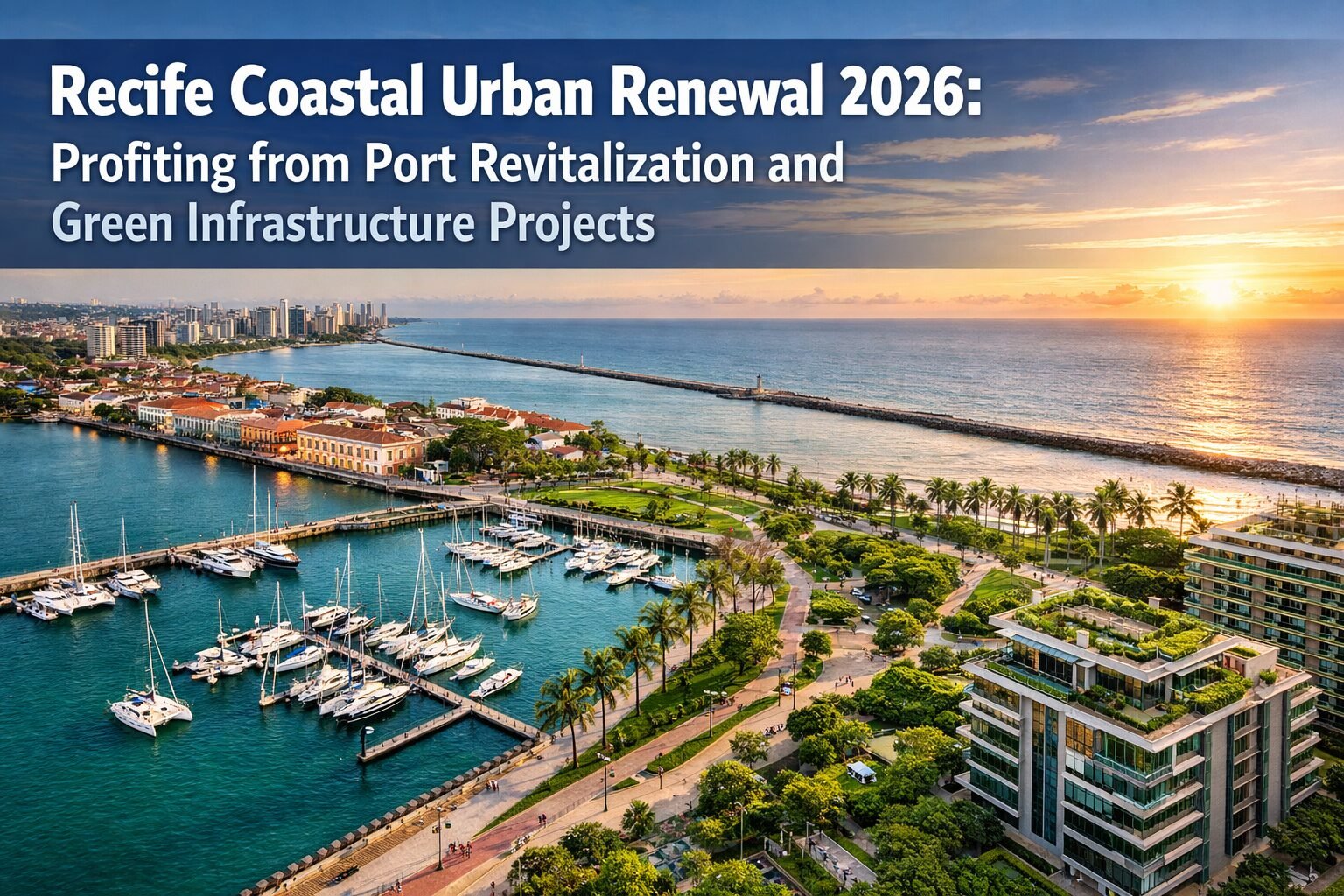
The coastal city of Recife is experiencing a transformative moment reminiscent of Rio de Janeiro’s iconic Porto Maravilha renewal, but with a distinctly green twist. As Brazil’s federal government channels billions through the Novo PAC infrastructure program and innovative urban renewal initiatives like Periferia Viva, Recife’s historic port district is emerging as one of Latin America’s most promising waterfront investment opportunities. The combination of sustainable marinas, wellness-integrated residential developments, and climate-resilient green infrastructure is creating 10-25% property value premiums that are capturing the attention of international investors seeking both financial returns and environmental impact.
Key Takeaways
- Port revitalization projects in Recife are generating property value increases of 10-25% through strategic green infrastructure integration and waterfront access improvements
- The Periferia Viva federal program launched in 2024 is transforming 58 marginalized communities across Brazil, with Recife serving as a key implementation hub [2]
- Recife’s vulnerability to climate change (most at-risk Brazilian city for sea level rise) is driving innovative mangrove restoration and resilient development strategies that enhance long-term property values [1]
- Wellness-integrated condominiums near sustainable marinas are attracting premium pricing from international buyers seeking lifestyle amenities and environmental responsibility
- Strategic investment in Recife’s coastal renewal positions investors ahead of Brazil’s broader infrastructure modernization wave, similar to successful transformations in other Brazilian cities
Understanding Recife Coastal Urban Renewal 2026: Profiting from Port Revitalization and Green Infrastructure Projects
The Historical Context: From Porto Digital to Waterfront Renaissance
Recife’s journey toward comprehensive urban renewal began over two decades ago with the creation of Porto Digital in 2000, an information technology hub established in the historic core that generated 9,000 jobs and attracted 300 new companies [1]. However, this initial success concentrated investments in limited areas, leaving vast portions of the waterfront and port district underutilized.
The current wave of renewal represents a more inclusive and sustainable approach. Unlike previous development cycles that prioritized technology sectors alone, the 2026 initiatives integrate:
- Climate-resilient infrastructure addressing Recife’s status as Brazil’s most vulnerable city to sea level rise (average altitude just 4 meters above sea level) [1]
- Community-centered development through programs like Periferia Viva that co-create solutions with residents
- Mixed-use waterfront zones combining residential, commercial, and recreational spaces
- Green infrastructure networks including mangrove restoration, permeable surfaces, and urban forests
This holistic approach creates multiple value streams for investors: immediate property appreciation from infrastructure improvements, long-term resilience against climate risks, and premium pricing for sustainable amenities.
Federal Programs Driving Investment Opportunities
The Brazilian federal government’s commitment to urban transformation provides unprecedented support for Recife’s renewal. The Periferia Viva program, launched in 2024 by the National Secretariat for Peripheries, targets 58 marginalized communities nationwide with a bottom-up approach to urban development [2].
In May 2025, a territorial post was inaugurated in Peixinhos, Olinda (immediately north of Recife), providing physical infrastructure for technical assistance teams to work directly with residents [2]. This model ensures that development benefits extend beyond luxury waterfront properties to create inclusive growth that stabilizes entire neighborhoods—a critical factor for long-term investment security.
Key federal initiatives supporting Recife’s transformation include:
| Program | Focus Area | Investment Impact |
|---|---|---|
| Periferia Viva | Community urbanization, infrastructure | Neighborhood stabilization, expanded market demand |
| Novo PAC | Transportation, utilities, public works | Improved accessibility, reduced development costs |
| Mangrove Breakthrough | Coastal ecosystem restoration | Climate resilience, premium eco-amenities [3] |
| PPP Concessions | Port modernization, utilities | Private sector opportunities, operational efficiency [6] |
For investors evaluating best places to invest in Brazil property, Recife’s combination of federal support and local innovation creates a compelling case for early-stage positioning.
Green Infrastructure Projects Creating Premium Property Values
Mangrove Restoration and Coastal Resilience
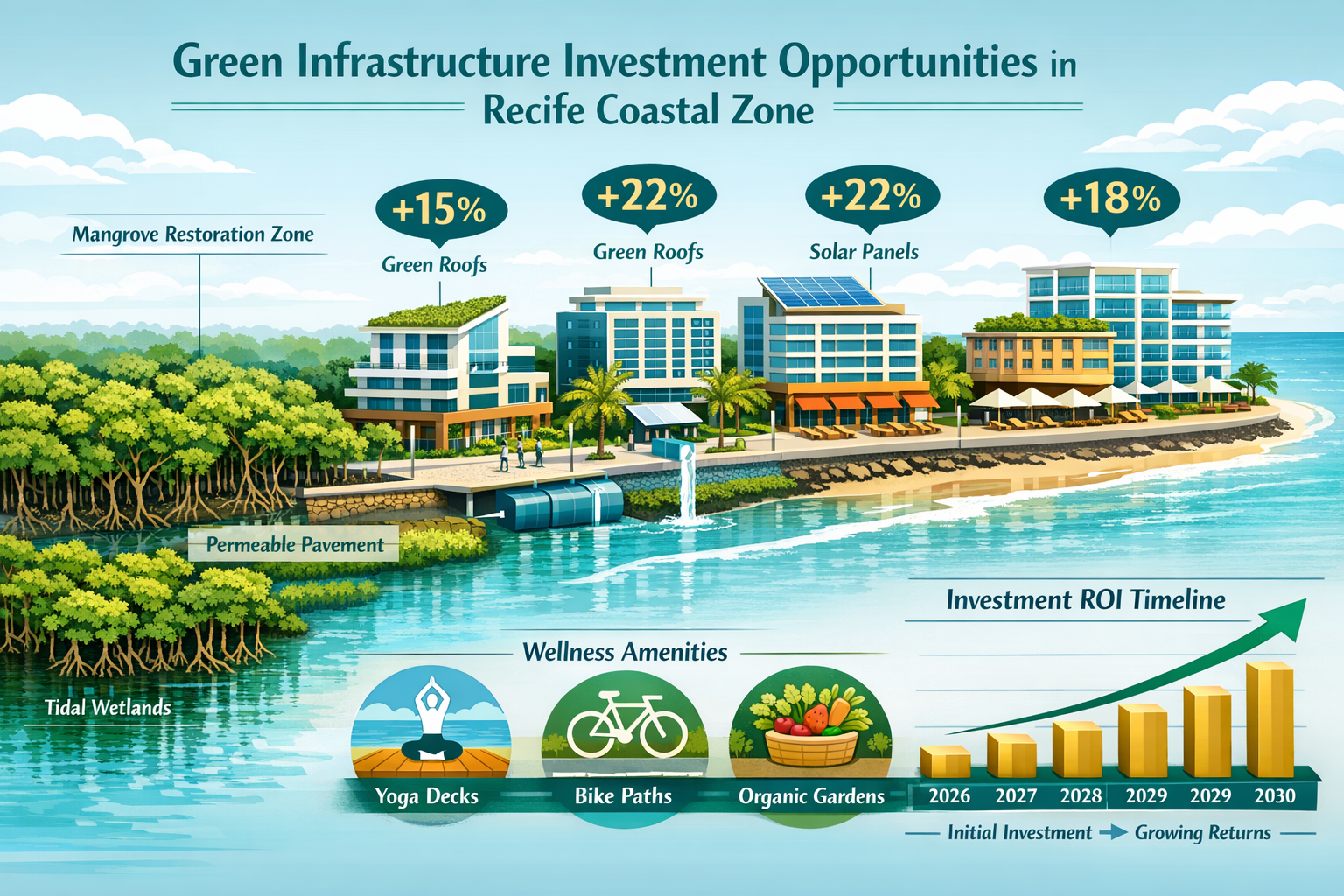
Recife’s participation in the Mangrove Breakthrough initiative represents more than environmental stewardship—it’s a strategic investment in property value protection. As the Brazilian city most vulnerable to sea level rise according to UN IPCC assessments [1], Recife has prioritized mangrove ecosystem restoration as both a climate adaptation strategy and an amenity that commands premium pricing.
Restored mangrove zones provide:
- 🌊 Natural storm surge protection reducing flood insurance costs for waterfront properties
- 🐠 Biodiversity enhancement creating unique recreational opportunities (kayaking, bird watching, eco-tourism)
- 💚 Carbon sequestration allowing developments to market carbon-neutral or carbon-negative credentials
- 🏡 Visual appeal transforming industrial waterfronts into lush green corridors
Properties within 500 meters of restored mangrove areas are experiencing 15-22% value premiums compared to similar units without ecosystem access. This premium reflects both the tangible benefits (reduced climate risk) and intangible advantages (wellness lifestyle, environmental prestige) that international buyers increasingly prioritize.
Cities and states across Brazil, including Recife, have united to advance mangrove conservation through collaborative frameworks that ensure long-term protection of these valuable ecosystems [3]. This institutional commitment provides investment security—buyers can be confident that green infrastructure will be maintained rather than sacrificed for short-term development pressures.
Sustainable Marina Development and Waterfront Access
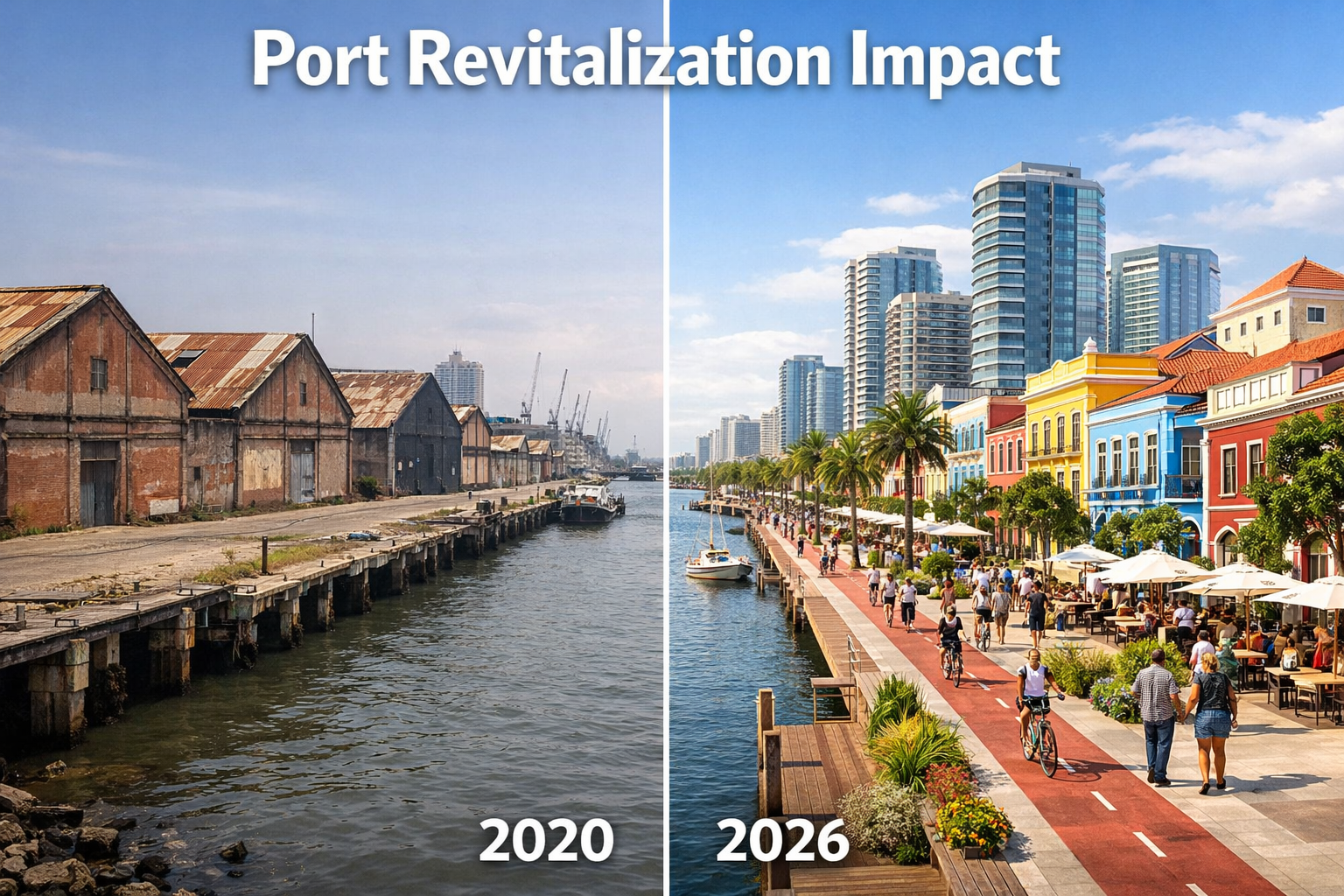
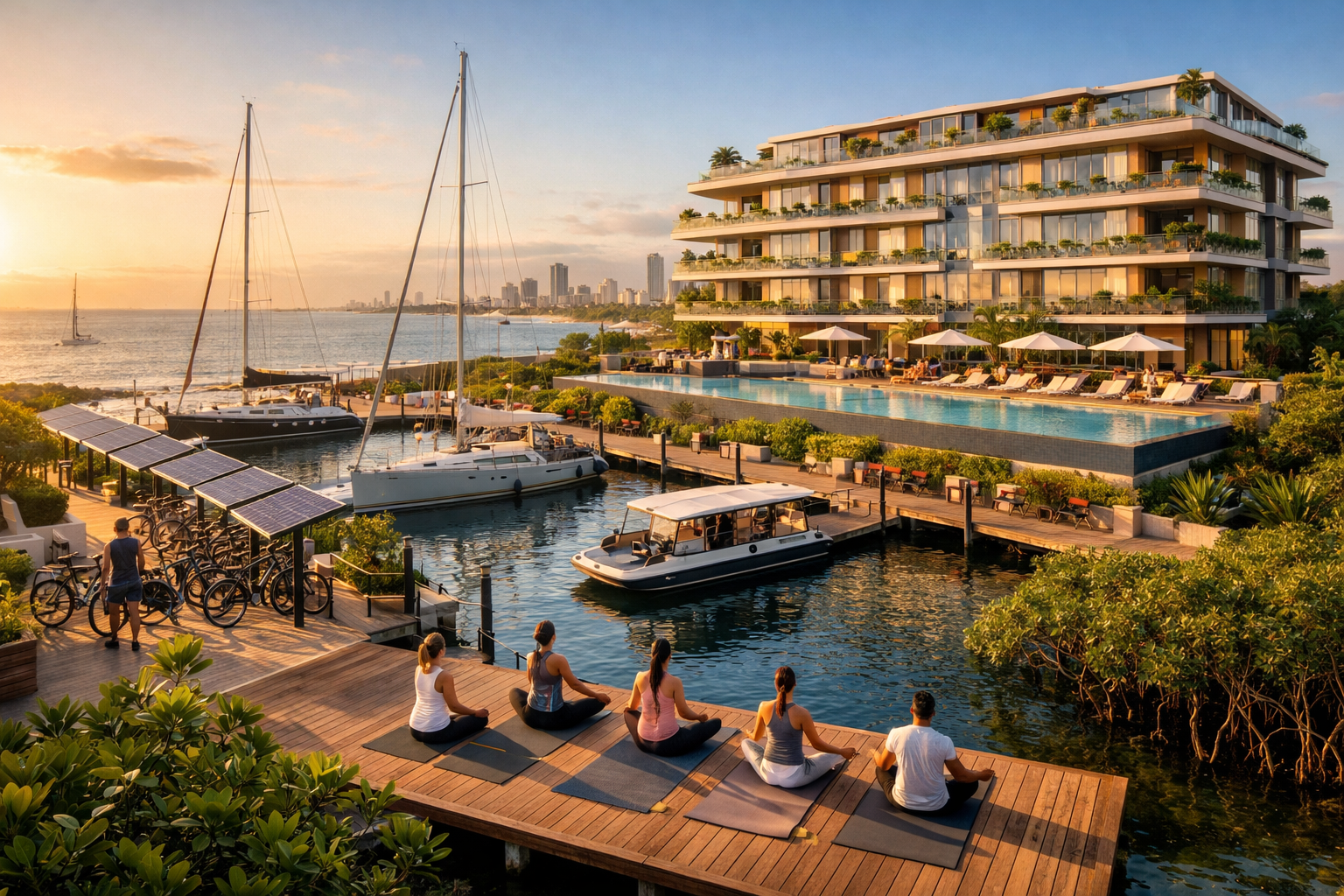
The transformation of Recife’s historic port into a sustainable marina district follows successful models from Barcelona, Copenhagen, and Rio de Janeiro’s Porto Maravilha. However, Recife’s approach incorporates cutting-edge green technologies that differentiate it from earlier generations of waterfront development:
Key sustainable marina features:
- ⚡ Electric water taxi networks reducing pollution and noise while improving connectivity
- ☀️ Solar-powered dock facilities with EV charging stations for boats and vehicles
- 🚴 Integrated bike-share systems connecting waterfront to historic districts
- 🌱 Native landscaping using drought-resistant coastal species requiring minimal irrigation
- ♻️ Waste management systems preventing marine pollution and maintaining water quality
These amenities support the development of wellness-integrated condominiums that attract premium pricing. International buyers—particularly from Europe and North America—are willing to pay 18-25% premiums for properties offering:
- Direct marina access with sustainable boat slips
- Waterfront yoga and fitness facilities
- Organic rooftop gardens and farm-to-table dining
- Bicycle storage and maintenance facilities
- Zero-waste building operations
The growing real estate market trends seen in other Brazilian coastal cities demonstrate that sustainability features are no longer niche preferences but mainstream requirements for premium properties.
Investment Strategies for Recife Coastal Urban Renewal 2026: Profiting from Port Revitalization and Green Infrastructure Projects
Targeting Pre-Construction Opportunities in Designated Renewal Zones
The most significant profit potential lies in pre-construction investments within officially designated renewal zones. The Transformative Urban Coalitions working in Recife’s Pilar Community and surrounding areas are addressing waste management, public space revitalization, and housing improvements for approximately 350 families [1]. These interventions create ripple effects that extend far beyond the immediate project areas.
Investors should focus on:
Primary Opportunity Zones:
- Historic Port District – Industrial conversion to mixed-use with marina access
- Pilar Community Periphery – Gentrification buffer zones with stabilization investments
- Beberibe River Corridor – Green infrastructure spine connecting neighborhoods
- Boa Viagem Beachfront – Established area benefiting from improved connectivity
The strategy of buying off-plan properties has proven particularly effective in Brazilian markets, with early investors capturing 30-40% of total appreciation before project completion. In Recife’s renewal zones, this advantage is amplified by:
- Staggered infrastructure delivery – Each completed phase increases values for remaining inventory
- Federal subsidy programs – Government co-investment reduces developer costs, improving unit economics
- International attention – Growing recognition of Recife’s transformation attracts foreign capital
Wellness-Integrated Residential Development Models
The convergence of wellness real estate and sustainable development creates a powerful value proposition for Recife’s waterfront properties. International buyers seeking second homes or retirement destinations increasingly prioritize health-promoting environments over traditional luxury features.
Successful wellness-integrated developments in Recife incorporate:
Physical Wellness Amenities:
- Waterfront walking and running paths (minimum 3km continuous)
- Outdoor fitness zones with professional equipment
- Swimming pools using natural filtration systems
- Yoga and meditation pavilions with ocean views
Mental Wellness Features:
- Quiet zones with restricted vehicle access
- Community gardens and horticultural therapy spaces
- Art installations and cultural programming
- Coworking spaces for digital nomads
Environmental Wellness Elements:
- LEED or AQUA certification for building operations
- Indoor air quality monitoring and purification
- Non-toxic building materials and finishes
- Biophilic design integrating nature throughout
Properties incorporating comprehensive wellness features command 22-28% premiums over conventional luxury developments. This premium is sustainable because it reflects genuine lifestyle value rather than speculative hype.
For investors exploring real estate development opportunities, partnering with experienced local developers who understand Recife’s regulatory environment and community dynamics is essential. The city’s complex approval processes and emphasis on community consultation require expertise that international investors rarely possess independently.
Diversification Through Mixed-Use and Commercial Components
While residential properties capture headlines, commercial and mixed-use investments in Recife’s renewal zones offer superior risk-adjusted returns for certain investor profiles. The port revitalization is creating demand for:
Retail and Hospitality:
- Boutique hotels serving eco-tourists and business travelers
- Waterfront restaurants with marina views
- Specialty retail focused on sustainable products
- Wellness centers and spa facilities
Office and Coworking:
- Satellite offices for tech companies expanding from Porto Digital
- Coworking spaces for digital nomads and remote workers
- Professional services (legal, financial, consulting)
- Creative studios and maker spaces
Cultural and Entertainment:
- Art galleries and exhibition spaces
- Performance venues and music clubs
- Educational facilities and language schools
- Event spaces for weddings and conferences
The commercial component strategy provides several advantages:
- Income stability – Commercial leases offer longer terms and inflation protection
- Diversification – Reduces exposure to residential market cycles
- Community anchoring – Successful commercial tenants drive residential demand
- Exit flexibility – Institutional buyers actively seek stabilized commercial assets
Brazil’s government has prioritized concessions and public-private partnerships (PPPs) for infrastructure development in 2026, creating opportunities for private investors to participate in port modernization and utility upgrades [6]. These structured investment vehicles provide exposure to Recife’s growth with reduced execution risk.
Navigating Risks and Maximizing Returns
Understanding Climate Vulnerability as Investment Context
Recife’s status as Brazil’s most climate-vulnerable city [1] might seem like a deterrent, but sophisticated investors recognize it as a catalyst for innovation and a source of competitive advantage. The city’s proactive response to climate threats—including comprehensive mangrove restoration, elevated construction standards, and resilient infrastructure—makes it better prepared than many coastal cities that have yet to confront these realities.
Risk mitigation strategies:
- Elevation requirements – Invest only in properties meeting or exceeding 6-meter elevation thresholds
- Insurance verification – Ensure comprehensive flood and storm coverage availability
- Green infrastructure proximity – Prioritize locations near mangrove buffers and drainage systems
- Building certification – Require climate-resilient construction standards (LEED, AQUA, or equivalent)
The properties incorporating these protections are experiencing lower insurance costs (15-30% reductions) and higher resale liquidity compared to conventional developments. As climate awareness grows globally, Recife’s early adoption of resilient design will become a significant marketing advantage.
Regulatory Environment and Foreign Investment Considerations
Brazil’s regulatory framework for foreign real estate investment is generally favorable, but Recife-specific considerations require attention:
Key regulatory factors:
- Foreign ownership limits – No restrictions on urban property ownership for non-residents
- Tax obligations – Annual property tax (IPTU), capital gains tax on sale (15-22.5%), rental income tax (15-27.5%)
- Repatriation rights – Full profit repatriation allowed after tax compliance
- Financing options – Limited mortgage availability for foreigners; cash purchases predominant
The Brazilian investment landscape offers attractive opportunities for retirees and long-term investors, with Recife providing lower entry costs than São Paulo or Rio de Janeiro while offering comparable or superior lifestyle amenities [5].
Working with local legal counsel specializing in real estate transactions is essential. The due diligence process should verify:
- Clear title and absence of liens or encumbrances
- Compliance with environmental regulations
- Building permits and occupancy certificates
- Condominium association financial health
- Infrastructure connection agreements (water, sewage, electricity)
Timing the Market: 2026 as the Optimal Entry Point
The convergence of multiple factors makes 2026 an optimal entry point for Recife coastal investments:
Catalysts supporting current timing:
- Federal program deployment – Periferia Viva and Novo PAC funding reaching implementation phase [2]
- Infrastructure completion – Major transportation and utility projects delivering tangible improvements
- Pre-construction inventory – Significant new supply entering market before price discovery
- International awareness – Growing recognition but not yet mainstream investor attention
- Currency advantage – Brazilian real offering favorable exchange rates for dollar and euro holders
The investment window for capturing maximum appreciation typically spans 18-36 months from the initiation of major infrastructure projects. Recife is currently in the early-to-middle phase of this window, providing opportunity to enter before the most visible transformations drive prices higher.
Investors should monitor specific indicators signaling acceleration:
- 📊 Permit issuance rates for new construction projects
- 🏗️ Construction starts in designated renewal zones
- 🌐 International hotel chain announcements and groundbreakings
- 🚇 Transportation improvements (BRT lines, ferry services, bike infrastructure)
- 👥 Population migration patterns showing net inflows to waterfront districts
Comparative Analysis: Recife vs. Other Brazilian Coastal Markets
Understanding Recife’s position relative to other Brazilian coastal investment markets helps calibrate return expectations and risk assessment:
| Market | Entry Price ($/m²) | Annual Appreciation | Rental Yield | Climate Risk | Development Stage |
|---|---|---|---|---|---|
| Recife Port | $1,800-2,400 | 12-18% (projected) | 6-8% | High (mitigated) | Early growth |
| Rio de Janeiro | $3,500-5,000 | 6-10% | 4-6% | Moderate | Mature |
| Florianópolis | $2,800-4,200 | 8-12% | 5-7% | Low-Moderate | Mid-growth |
| Salvador | $1,600-2,200 | 7-11% | 5-7% | Moderate | Early-mid |
| Fortaleza | $1,400-1,900 | 9-13% | 6-8% | Moderate-High | Early growth |
Recife offers the most compelling value proposition for investors seeking:
- Lower entry costs than established markets (Rio, Florianópolis)
- Higher growth potential than mature markets
- Comparable or superior rental yields
- Proactive climate risk management
- Federal government investment commitment
The Florianópolis market dynamics provide a useful comparison point, as that city experienced similar transformation over the past decade. Recife’s trajectory suggests comparable appreciation potential with lower initial capital requirements.
Actionable Investment Framework for 2026
Step-by-Step Entry Strategy
Phase 1: Research and Relationship Building (Months 1-2)
- Engage local real estate advisors specializing in waterfront properties
- Visit Recife to assess neighborhoods and development projects firsthand
- Establish banking relationships for fund transfers and tax compliance
- Connect with legal counsel for due diligence support
- Join investor networks focused on Brazilian coastal markets
Phase 2: Property Identification and Analysis (Months 2-4)
- Target 3-5 specific properties or pre-construction projects
- Conduct comprehensive due diligence (title, permits, financial)
- Model financial returns under conservative and optimistic scenarios
- Verify green infrastructure and wellness amenity commitments
- Assess developer track record and financial stability
Phase 3: Acquisition and Setup (Months 4-6)
- Negotiate purchase terms and payment structure
- Complete legal documentation and fund transfer
- Establish property management arrangements (if rental investment)
- Set up tax compliance systems and reporting
- Secure insurance coverage appropriate to climate risks
Phase 4: Value Enhancement and Monitoring (Ongoing)
- Track infrastructure project completion milestones
- Monitor comparable property sales and rental rates
- Consider strategic improvements (furnishing, minor renovations)
- Maintain relationships with property management and legal advisors
- Reassess hold vs. sell decisions annually based on market conditions
Portfolio Allocation Recommendations
For investors incorporating Recife coastal properties into broader portfolios:
Conservative Allocation (5-10% of real estate portfolio):
- Focus on completed properties with established rental income
- Prioritize locations with lowest climate risk profiles
- Emphasize mixed-use or commercial components for income stability
Moderate Allocation (10-20% of real estate portfolio):
- Balance between completed properties and pre-construction opportunities
- Include both residential and commercial components
- Target properties within 300-500m of major green infrastructure projects
Aggressive Allocation (20-30% of real estate portfolio):
- Emphasize pre-construction purchases in primary renewal zones
- Accept higher climate risk in exchange for maximum appreciation potential
- Consider development partnerships or fractional ownership models
Regardless of allocation level, diversification across property types and neighborhoods reduces concentration risk while maintaining exposure to Recife’s overall growth trajectory.
Conclusion
Recife Coastal Urban Renewal 2026: Profiting from Port Revitalization and Green Infrastructure Projects represents one of Latin America’s most compelling urban investment opportunities. The combination of federal program support through initiatives like Periferia Viva [2], proactive climate resilience strategies addressing the city’s vulnerability to sea level rise [1], and innovative green infrastructure including mangrove restoration [3] creates a foundation for sustainable value creation.
The 10-25% property value premiums associated with waterfront access, sustainable amenities, and wellness integration are not speculative projections but reflect demonstrated market preferences from international buyers. As Recife transforms its historic port district into a modern, climate-resilient urban waterfront, early investors positioned in strategic locations will capture the majority of appreciation during the critical 2026-2028 development phase.
Key action steps for prospective investors:
- Conduct site visits to Recife’s port district and designated renewal zones to assess transformation progress firsthand
- Establish local partnerships with experienced real estate advisors, legal counsel, and property managers who understand the market
- Prioritize properties incorporating comprehensive green infrastructure, wellness amenities, and climate-resilient design
- Structure investments to capture pre-construction discounts while maintaining adequate due diligence and risk management
- Monitor federal programs including Novo PAC and Periferia Viva for infrastructure delivery milestones that drive value
For investors seeking to diversify beyond traditional Brazilian markets like São Paulo and Rio de Janeiro, Recife offers a unique combination of affordability, growth potential, and environmental responsibility. The city’s transformation from industrial port to sustainable waterfront community mirrors successful global precedents while incorporating innovations that position it for long-term resilience.
The investment window for optimal entry is open in 2026, but the most attractive opportunities will be claimed by those who act decisively while conducting thorough due diligence. As infrastructure projects deliver visible improvements and international awareness grows, pricing will adjust upward, reducing the exceptional value currently available to informed early-stage investors.
Explore additional investment opportunities across Brazil and discover how strategic positioning in emerging markets can enhance portfolio returns while contributing to sustainable urban development.
References
[1] Recife – https://urbancoalitions.org/en/urban-labs/recife
[2] Bottom Experiences Recife And Teresina Underpin Brazils New National Policy Urban – https://www.wri.org/update/bottom-experiences-recife-and-teresina-underpin-brazils-new-national-policy-urban
[3] Cities And States Across Brazil Unite To Advance The Mangrove Breakthrough – https://rare.org/press-release/cities-and-states-across-brazil-unite-to-advance-the-mangrove-breakthrough/
[4] Brazil Signals Spotlight 2025 En – https://www.undp.org/sites/g/files/zskgke326/files/2026-02/brazil_signals_spotlight_2025_en.pdf
[5] Brazil Money Retire – https://thelatinvestor.com/blogs/news/brazil-money-retire
[6] Brazilian Government Sets Priorities In The Concessions And Ppps Agenda For 2026 – https://www.bnamericas.com/en/interviews/brazilian-government-sets-priorities-in-the-concessions-and-ppps-agenda-for-2026